
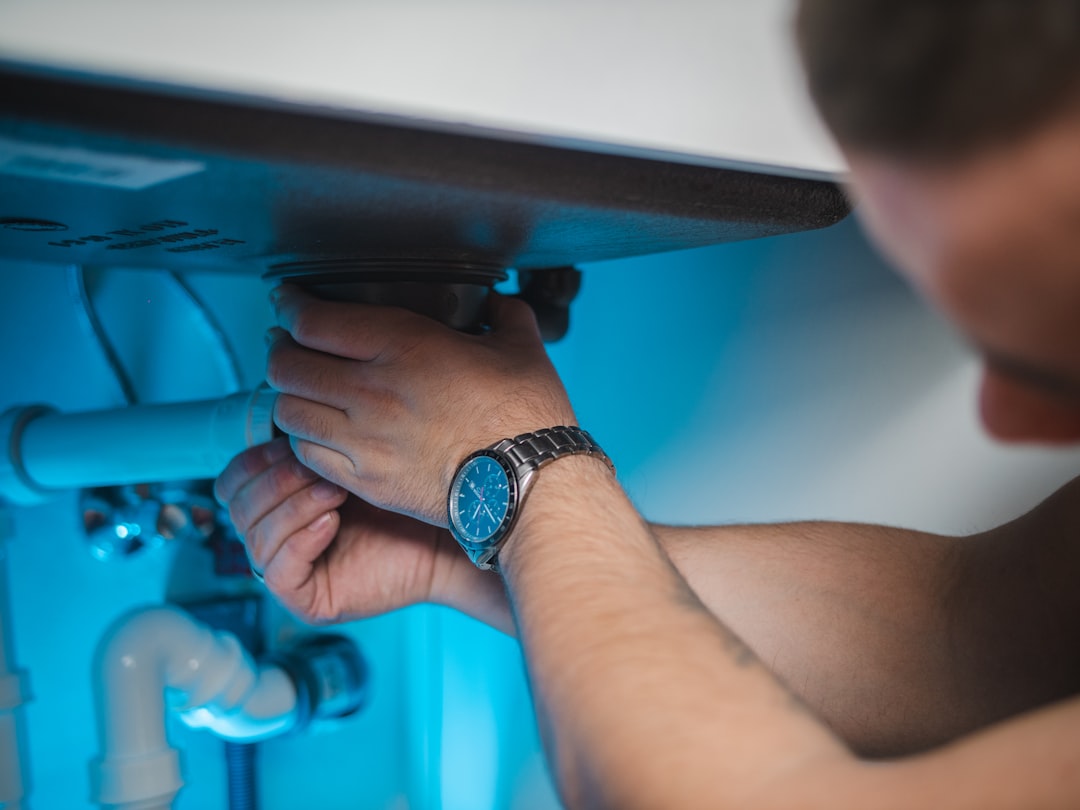
Why Blocked Sink Drains Are More Disruptive Than You Think
Blocked sink drains are one of the most common plumbing problems in Chicagoland homes — and one of the most frustrating to deal with when they strike without warning.
Quick answer: How to unblock a sink drain
- Boiling water — pour slowly down the drain to dissolve grease or soap buildup
- Baking soda + vinegar — pour half a cup of each, wait 10–15 minutes, flush with hot water
- Plunger — cover the overflow opening, create a seal, and plunge firmly
- Drain snake or zip-it tool — use for hair clogs or deeper blockages
- Clean the P-trap — remove, rinse, and refit the curved pipe under the sink
- Call a plumber — if multiple drains are slow, clogs keep returning, or you hear gurgling from other fixtures
Most sink clogs build up gradually. Grease, hair, soap scum, and food particles accumulate over weeks or months until water has nowhere to go. Severn Trent alone cleared the equivalent of six Olympic-sized swimming pools of fats, oils, and grease from sewers in a single year — plus 28,782 blockages caused by items that should never go down a drain in the first place.
The good news? Most sink clogs can be cleared at home in under 20 minutes with basic tools. This guide walks you through exactly how.
I’m Hugh Hodur, President of VanDerBosch Plumbing Inc., and I’ve overseen residential and commercial drain cleaning solutions — including blocked sink drains — across the Chicagoland area for years. Whether it’s a simple kitchen grease buildup or a recurring clog tied to aging pipes, I’ll help you figure out what’s going on and how to fix it.
Common Causes of Blocked Sink Drains
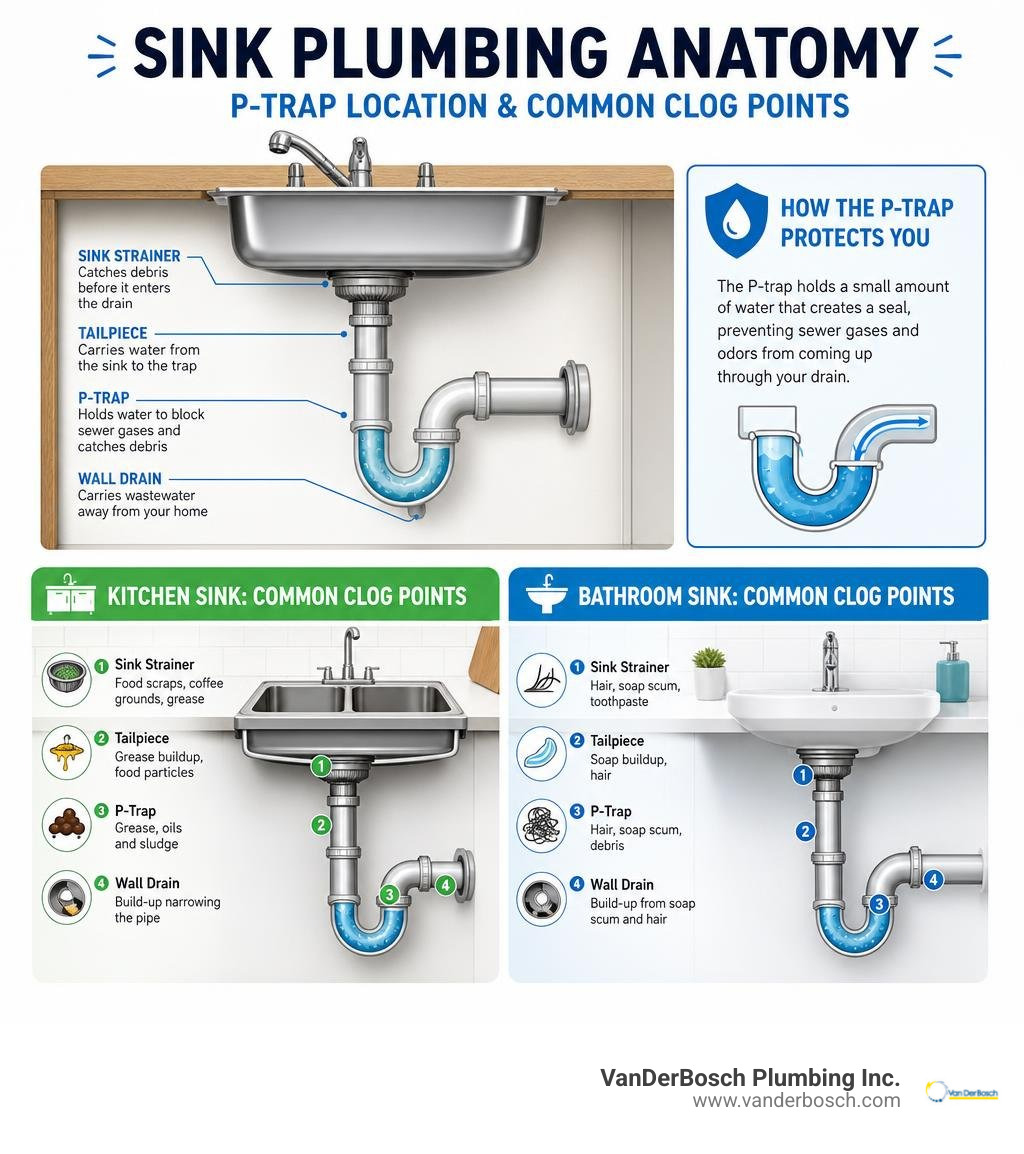
Before you grab your tools, it helps to understand what you are fighting. Kitchen and bathroom sinks operate under entirely different conditions, meaning the culprits behind your blocked sink drains are usually quite different depending on the room.
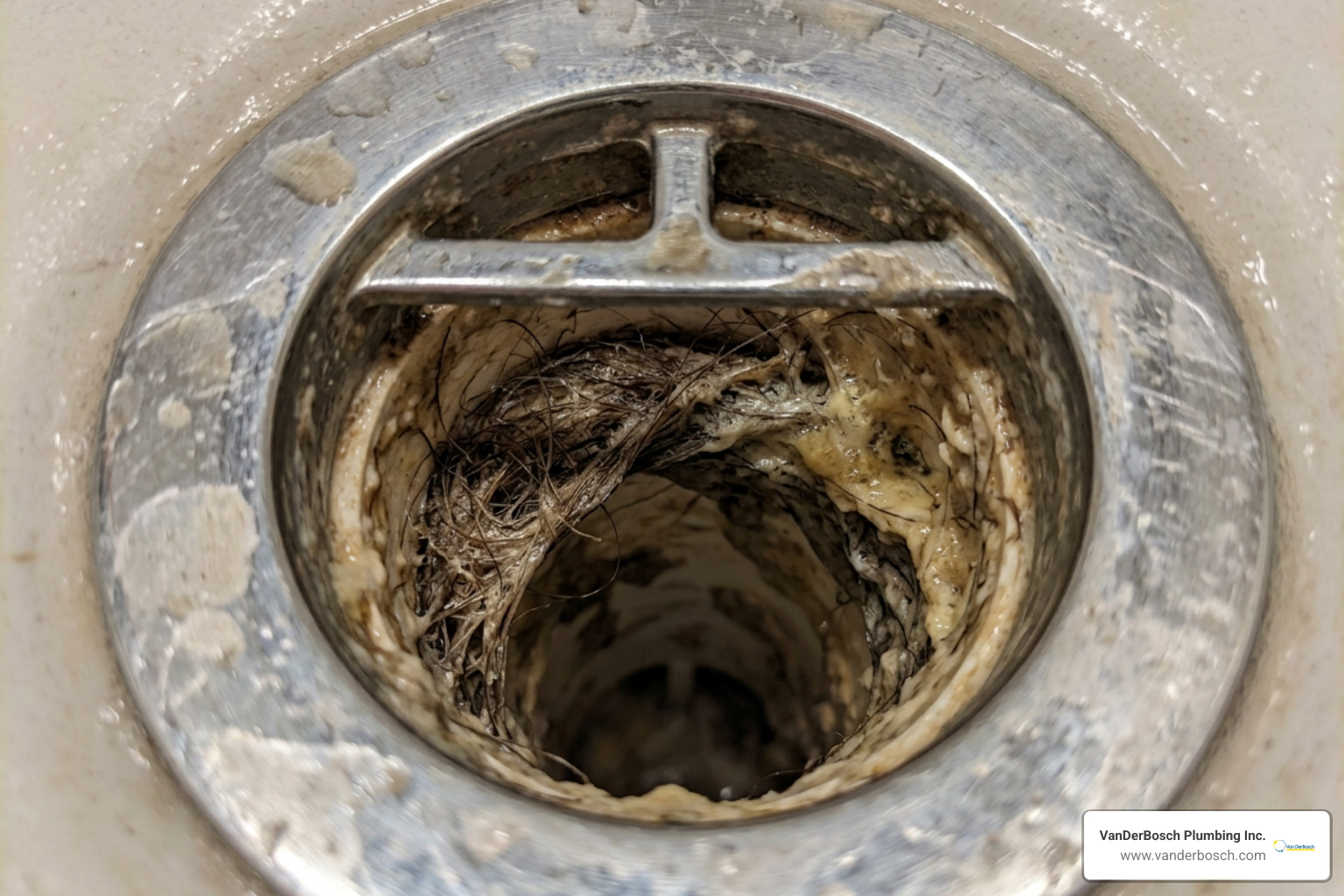
In bathroom sinks, clogs are almost always a sticky mixture of hair, soap scum, and toothpaste residue. Hair acts like a net, catching sticky soap residue and dental hygiene products right at the pop-up stopper or inside the P-trap. Over time, this mixture hardens, narrowing the pipe until water can only squeeze past at a snail’s pace.
In kitchen sinks, the primary offenders are fats, oils, and grease (commonly referred to as FOG) combined with food waste. When warm grease is poured down the drain, it looks like a harmless liquid. However, as soon as it hits the cold pipes hidden behind your walls, it solidifies. This sticky grease lining then traps passing food particles, coffee grounds, and soap residue, eventually forming a solid blockage.
To help you diagnose your specific issue, we have broken down the primary causes of clogs by location:
| Clog Cause | Kitchen Sinks | Bathroom Sinks | Why It Happens |
|---|---|---|---|
| Fats, Oils, and Grease (FOG) | Primary Culprit | Rare | Solidifies inside cold pipes, trapping other debris. |
| Hair & Soap Scum | Rare | Primary Culprit | Hair binds with soap and toothpaste to form dense nets. |
| Food Waste & Starches | Common | None | Starchy foods like rice and pasta expand when wet. |
| Mineral Deposits | Moderate | Moderate | Hard water leaves calcium scale that narrows pipe diameters. |
Understanding these differences is crucial because treating a grease clog requires a completely different approach than removing a dense ball of hair. If you want to dive deeper into why your pipes keep backing up, check out our guide on 5 Reasons Your Drain is Clogged and How to Fix It. For a broader look at what can and cannot go down your plumbing fixtures safely, you can also read the expert analysis in How to unblock a sink – and the things you should never pour down your drain – Which?.
Step-by-Step DIY Solutions for Clogged Sinks
When you are facing a sink full of dirty, standing water, it is easy to panic. But clearing blocked sink drains is highly manageable if you take a systematic approach.
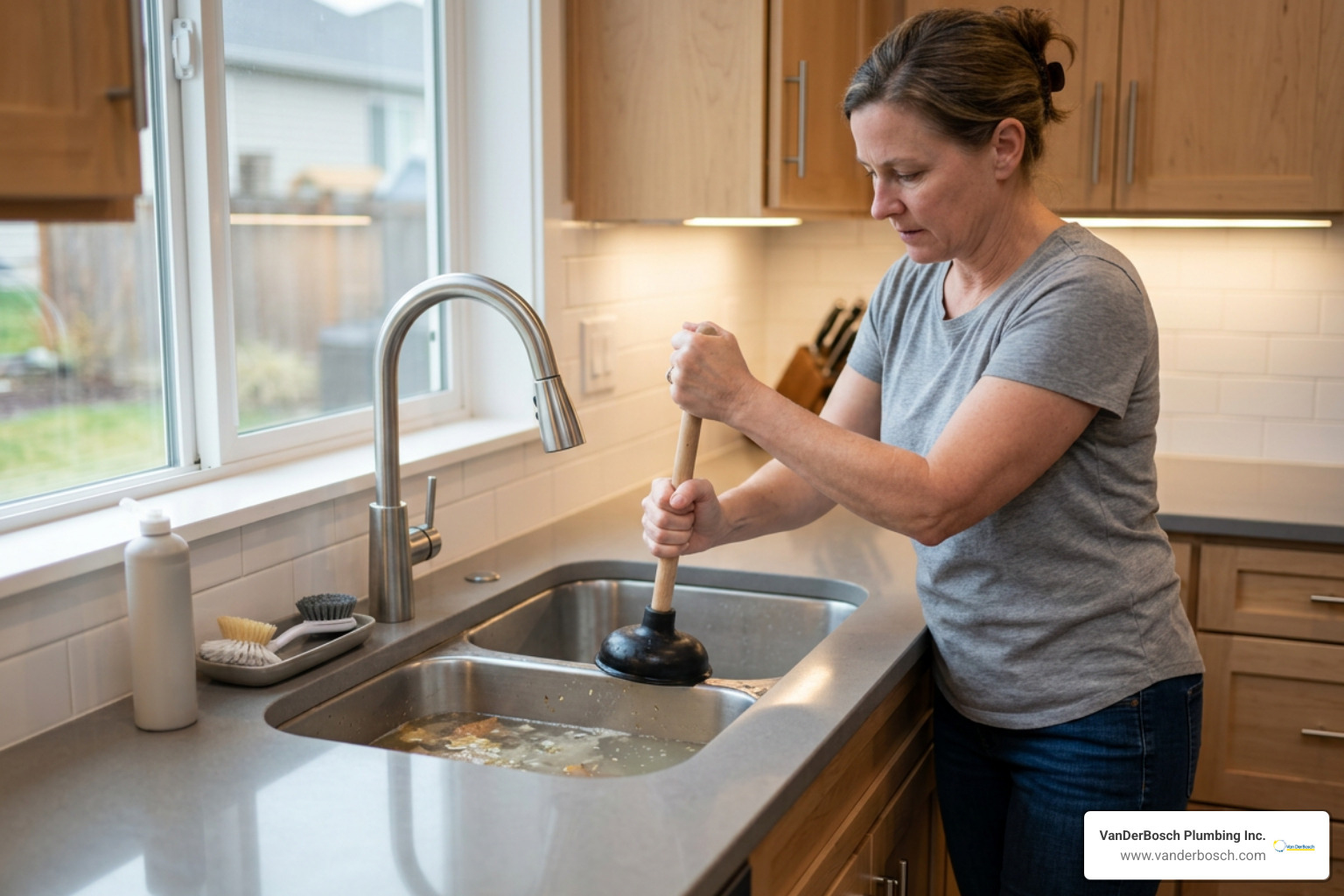
Before you begin, prepare your workspace. Put on some rubber gloves and safety goggles to protect yourself from dirty water splashes. Grab a bucket and some old towels to catch any spills under the sink. If your sink is completely full of standing water, use a small cup or jug to bail the water out into a separate bucket before you start. Having a dry workspace makes mechanical clearing much easier and cleaner.
DIY Methods to Clear Blocked Sink Drains
If your sink is draining slowly but is not completely sealed shut, you can often dissolve the blockage using safe, natural household products.
1. The Boiling Water Flush (Best for Grease)
If you suspect grease is the main culprit in your kitchen sink, heat is your best friend. Boil a full kettle of water and pour it slowly down the drain in two or three separate stages, waiting about a minute between each pour. The hot water melts the solidified grease, allowing it to flush through the system. Note: Only use boiling water if you have metal pipes. If you have PVC (plastic) pipes, stick to hot tap water, as boiling water can soften or distort plastic joints.
2. The Baking Soda and Vinegar Reaction
For a natural fizzing action that eats through organic buildup, try the classic baking soda and vinegar method.
- Pour half a cup of baking soda directly down the plughole.
- Follow it immediately with half a cup of white vinegar.
- Cover the drain with a plug or a wet rag to force the fizzing action downward into the clog rather than up into the sink.
- Let the mixture sit for 15 to 30 minutes.
- Flush the drain thoroughly with hot water.
3. The Soda Crystals Method (The 10-Minute Grease Buster)
If you are dealing with a stubborn kitchen blockage, soda crystals (sodium carbonate) are incredibly effective. Unlike vinegar and baking soda—which mostly create a mild fizzing action—soda crystals create a strong alkaline reaction that chemically breaks down grease and fat.
- Pour 2 to 4 tablespoons of soda crystals directly down the drain.
- Pour a kettle of boiling water over them.
- Wait 10 minutes for the crystals to dissolve the grease.
- Flush with more hot water.
This simple treatment can melt away grease sheets in minutes. If you need more step-by-step home remedies, take a look at our article on How to Fix a Clogged Sink.
Mechanical Tools: Plungers, Snakes, and Zip-Its
When chemical-free dissolution is not enough, it is time to use physical force. Having the right tools on hand makes all the difference.
The Cup Plunger
For sinks, always use a flat cup plunger, not a flange plunger (which is designed for toilets).
- Create a Seal: If you are plunging a bathroom sink, you must block the overflow opening with a wet rag or duct tape. If you don’t, the air pressure you create will simply escape through the overflow, rendering the plunger useless.
- Double Sinks: If you have a double kitchen sink, plug the adjacent drain tightly with a stopper and hold it down with your hand while plunging the clogged side.
- The Technique: Fill the sink with enough water to cover the head of the plunger. Place the plunger over the drain, press down slowly to push out the air, and then plunge up and down vigorously. The pulling motion is actually more important than the pushing motion, as it loosens the debris.
The Zip-It Tool (The Ultimate Hair Grabber)
For bathroom sinks clogged with hair, a plastic barbed hair-removal tool (often called a Zip-It) is incredibly effective. It costs very little and can clear a hair clog in under two minutes without requiring you to disassemble any pipes. Simply slide the flexible plastic strap down the drain, twist it slightly, and pull it back out. The backward-facing barbs will catch and pull out hairballs easily.
The Plumbing Auger (Drain Snake)
If the clog is deeper in the waste pipe, a hand-cranked drain snake is the tool for the job.
- Remove the sink stopper. If it does not lift out, you may need to unscrew the pivot rod under the sink.
- Feed the metal cable into the drain until you feel resistance.
- Turn the crank handle clockwise while applying gentle forward pressure. This helps the tip of the snake chew through or grab the clog.
- Slowly retrieve the cable, bringing the debris out with it.
If you are working on a bathroom sink and need a detailed visual breakdown of stopper removal and snaking, refer to the How to Unclog a Bathroom Sink (2026) — Step-by-Step Guide – PlumbingToolsReview.
How to Safely Remove and Clean a P-Trap
If plunging and snaking from above do not clear the blockage, the clog is likely sitting directly in the P-trap—the U-shaped pipe underneath your sink. This trap is designed to hold a small amount of water to block sewer gases from entering your home, but its shape also makes it a natural trap for heavy debris.
Cleaning the P-trap is a straightforward process, but you must do it carefully to avoid creating leaks.
- Set Up Your Catch Basin: Place a bucket and some towels directly underneath the P-trap. The trap is full of dirty, standing water that will spill out as soon as you loosen the connections.
- Loosen the Slip Nuts: P-traps are held in place by two plastic or metal slip nuts. If you have plastic pipes, you can usually unscrew these nuts by hand. If they are tight, or if you have metal pipes, use slip-joint pliers. Turn them counter-clockwise to loosen.
- Remove and Clean the Trap: Carefully pull the U-shaped pipe straight down. Empty the dirty water and debris into your bucket. Take the trap to another functioning sink and scrub the inside with an old toothbrush or bottle brush to remove all grease and slime.
- Inspect the Wall Pipe: Peer into the pipe leading into the wall. Sometimes, grease builds up right where the trap connects to the wall pipe. Use your finger or a small brush to clear any visible blockages there.
- Reassemble and Check for Leaks: Slide the P-trap back into alignment with the tailpiece and the wall pipe. Hand-tighten the slip nuts, then add an extra quarter-turn with pliers if necessary. Do not over-tighten plastic nuts, as they can crack easily. Run warm water slowly down the drain to test the joints for leaks, adjusting the alignment if you spot any drips.
What Never to Pour Down Your Drain
The easiest way to deal with blocked sink drains is to prevent them from happening in the first place. Your drain pipes are only designed to carry water, mild soaps, and toilet paper.
Yet, millions of liters of fats, oils, and grease enter sewer lines annually, leading to massive blockages. To keep your plumbing running smoothly, keep these items far away from your sink drains:
- Fats, Oils, and Grease (FOG): This includes bacon grease, butter, cooking oil, lard, and greasy gravies. Instead of pouring them down the drain, let them cool and solidify in an empty can, then throw them in the trash.
- Coffee Grounds: Coffee grounds do not dissolve in water. Instead, they clump together inside your P-trap, forming a heavy, paste-like blockage that is incredibly difficult to flush out.
- Starchy Foods (Pasta, Rice, and Potato Peels): These foods act like sponges. Even if they make it past your garbage disposal, they will absorb water, swell up, and create a thick glue inside your waste lines.
- Harsh Chemical Cleaners: While chemical drain cleaners are marketed as quick fixes, they pose serious risks. They generate extreme heat inside your pipes, which can warp or melt PVC lines and corrode older metal plumbing. Furthermore, if the chemical fails to clear the clog, you are left with a sink full of highly toxic, acidic water that makes physical repairs dangerous for anyone working on the pipes.
When to Call a Professional for Blocked Sink Drains
While many minor sink clogs can be resolved with a plunger or a basic zip-it tool, some plumbing issues require professional equipment and training.
You should stop DIY attempts and call a licensed plumber if you experience any of the following warning signs:
- Recurring Clogs: If your sink drains perfectly after you plunge it, only to back up again a week later, you have not fully removed the blockage. There is likely a deep, hardened layer of grease or scale that requires professional removal.
- Multiple Slow Drains: If your kitchen sink, bathroom sink, and shower are all draining slowly at the same time, the blockage is not in an individual sink trap. It is located deep in your home’s main sewer line.
- Gurgling Noises: If you hear gurgling or bubbling sounds coming from your bathroom sink or shower when you run the washing machine or flush the toilet, air is trapped in your system. This points to a blocked main line or a clogged plumbing vent stack.
- Water Backing Up in Unexpected Places: If running water in your kitchen sink causes dirty water to back up into your basement floor drain, you are facing a main line blockage.
In the Chicagoland area, our local infrastructure presents unique challenges. Many older homes in Chicago, Oak Park, and Winnetka feature galvanized steel or cast iron pipes. Over decades, these pipes corrode internally, creating rough, scaled surfaces that catch debris and accelerate clogging.
Additionally, Chicago’s combined sewer system handles both household waste and stormwater. During heavy downpours, the city’s main sewer lines can quickly fill to capacity. If your home has even a minor main line restriction, a heavy rainstorm can easily trigger a basement backup.
When DIY methods fail, we bring advanced diagnostic and clearing tools to the job. We use high-resolution CCTV drain cameras to inspect the inside of your pipes, identifying the exact location and cause of the blockage without any destructive guesswork. For heavy grease buildup or tree root intrusions, we utilize professional hydro jetting equipment. By blasting water through your lines at 3,000 to 8,000 PSI, hydro jetting scours the pipe walls completely clean, restoring them to like-new condition.
If you want to understand how these professional diagnostic and clearing methods work, take a look at A Short Guide to Professional Drain Cleaning.
Frequently Asked Questions about Unclogging Sinks
How do you clear a clogged sink with a garbage disposal?
If your kitchen sink has a garbage disposal and is backing up, the clog is usually located inside the disposal chamber itself or in the discharge pipe immediately following it.
First, never put your hands inside a garbage disposal.
- Turn Off the Power: Unplug the unit under the sink or shut off its breaker.
- Manually Rotate the Blades: Insert a 1/4-inch hex wrench (often called an Allen wrench) into the hole at the very bottom center of the disposal unit under the sink. Flywheel rotation will help break up jammed food particles. Twist the wrench back and forth until it spins freely.
- Check the Dishwasher Connection: If your sink backs up specifically when your dishwasher runs, make sure the knockout plug inside the disposal’s dishwasher inlet was removed during installation. Also, ensure the dishwasher drain hose is not kinked.
- Flush with Cold Water: Once the blades spin freely, restore power and run plenty of cold water through the disposal while running it to wash away the loosened debris.
Why does my sink drain keep clogging every few weeks?
If you find yourself plunging the same sink every few weeks, you are likely dealing with one of three issues:
- A Partial Clog: Your DIY efforts may have only punched a small hole through the blockage rather than removing it entirely. The remaining debris quickly catches new waste, reforming the clog.
- Pipe Scale and Corrosion: In older Chicagoland homes, galvanized pipes scale up internally, narrowing the pipe’s diameter and catching hair and grease easily.
- Tree Root Intrusion: If the issue is recurring and affects multiple fixtures, tree roots may have found their way into small cracks in your underground sewer lines, creating a permanent trap for waste.
To resolve these recurring issues permanently, a professional sewer camera inspection is highly recommended. If you live in the northern suburbs, you can learn more about our local sewer camera and clearing services on our Evanston Plumber – Drain Cleaning page.
Is it safe to use chemical drain cleaners?
We strongly advise against using chemical drain cleaners. Most store-bought chemical unblockers rely on heavy acids or caustic sodium hydroxide. When these chemicals meet a stubborn clog, they sit in one place and generate intense heat through chemical reactions.
This heat can deform and melt modern PVC pipes, causing joints to fail behind your walls. If you have older metal pipes, the acidic chemicals will accelerate corrosion, leading to pinhole leaks. Additionally, these chemicals release toxic fumes that can irritate your eyes and lungs, and they pose a serious burn risk to you or any plumber who has to disassemble the pipes later. Natural alternatives like baking soda, vinegar, or physical tools are always safer and more effective choices.
Conclusion
Dealing with blocked sink drains is never convenient, but with a systematic approach and the right tools, you can resolve most minor clogs on your own. By keeping fats, coffee grounds, and harsh chemicals out of your pipes, you can keep your plumbing running smoothly for years to come.
When a clog proves too stubborn for DIY fixes, or if you are facing a deeper main line issue, we are here to help. At VanDerBosch Plumbing Inc., we have provided licensed residential and light commercial plumbing services across the Chicagoland area for decades.
We serve communities throughout Cook County and DuPage County, including Chicago, Roselle, Niles, Winnetka, Melrose Park, Oakbrook Terrace, Hyde Park, Sauganash, West Ridge, Ukrainian Village, Elmhurst, and Mount Prospect. We stand behind our work with a 100% satisfaction guarantee, 24/7 emergency availability, transparent pricing with no hidden service charges, and a team of experienced, background-checked technicians.
Do not let a slow drain turn into a plumbing emergency. Schedule professional drain cleaning services with VanDerBosch Plumbing Inc. today, and let us restore your home’s plumbing to perfect working order.