
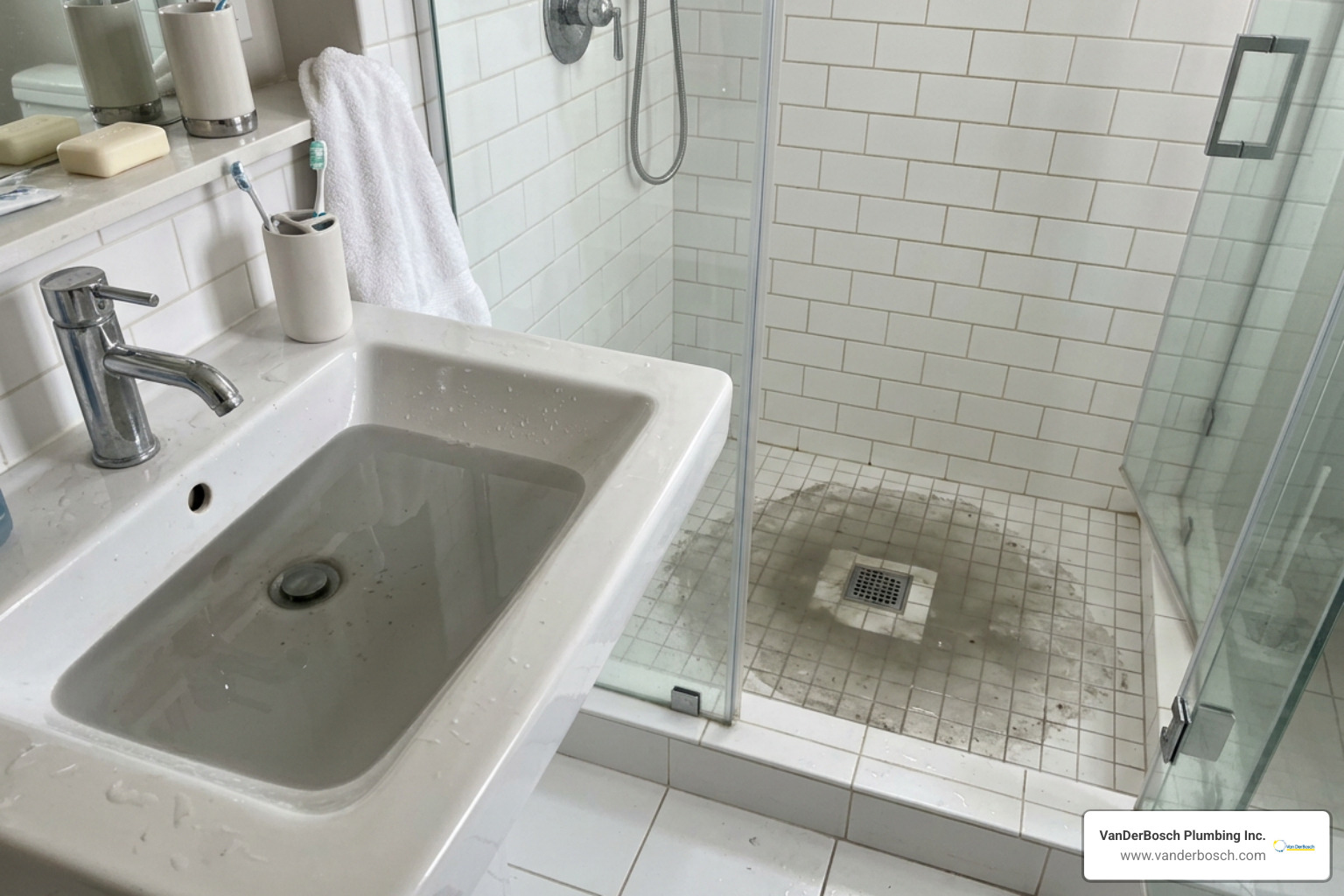
What It Means When Your Shower and Sink Are Both Clogged
A shower and sink clogged at the same time is almost never a coincidence — it’s a sign that something is blocking a shared drain line deeper in your plumbing system.
Quick answer: why are your shower and sink both clogged?
- Shared branch line blockage — Hair, soap scum, or debris has built up in the pipe both fixtures drain into
- Main sewer line blockage — A deeper obstruction is backing up multiple fixtures at once
- Blocked vent stack — A clogged roof vent prevents proper airflow, slowing all connected drains
- Tree root intrusion — Roots have entered a crack in your sewer pipe and are catching debris
- Grease or fatberg buildup — Accumulated grease and waste has narrowed or blocked the shared line
If only your shower and sink are affected, you likely have a branch line clog. If your toilet, basement drain, or other fixtures are also slow or backing up, the problem is probably in your main sewer line — and you should stop using water immediately.
When two drains in the same bathroom start failing together, most homeowners assume they just have two separate clogs. Usually, that’s not what’s happening. Your bathroom fixtures share a common branch drain line before connecting to your home’s main sewer lateral. A blockage anywhere along that shared path will cause both drains to slow down or back up at the same time.
This guide walks you through exactly how to diagnose the problem, which DIY fixes are safe to try, and when it’s time to call in a professional before a slow drain turns into a sewage backup.
I’m Hugh Hodur, President of VanDerBosch Plumbing Inc., and I’ve helped Chicagoland homeowners and businesses resolve everything from stubborn shower and sink clogged situations to full main sewer line failures. In the sections below, I’ll share what I’ve learned from years of hands-on drain and sewer work so you can tackle this problem with confidence.
Why Are Your Shower and Sink Clogged at the Same Time?
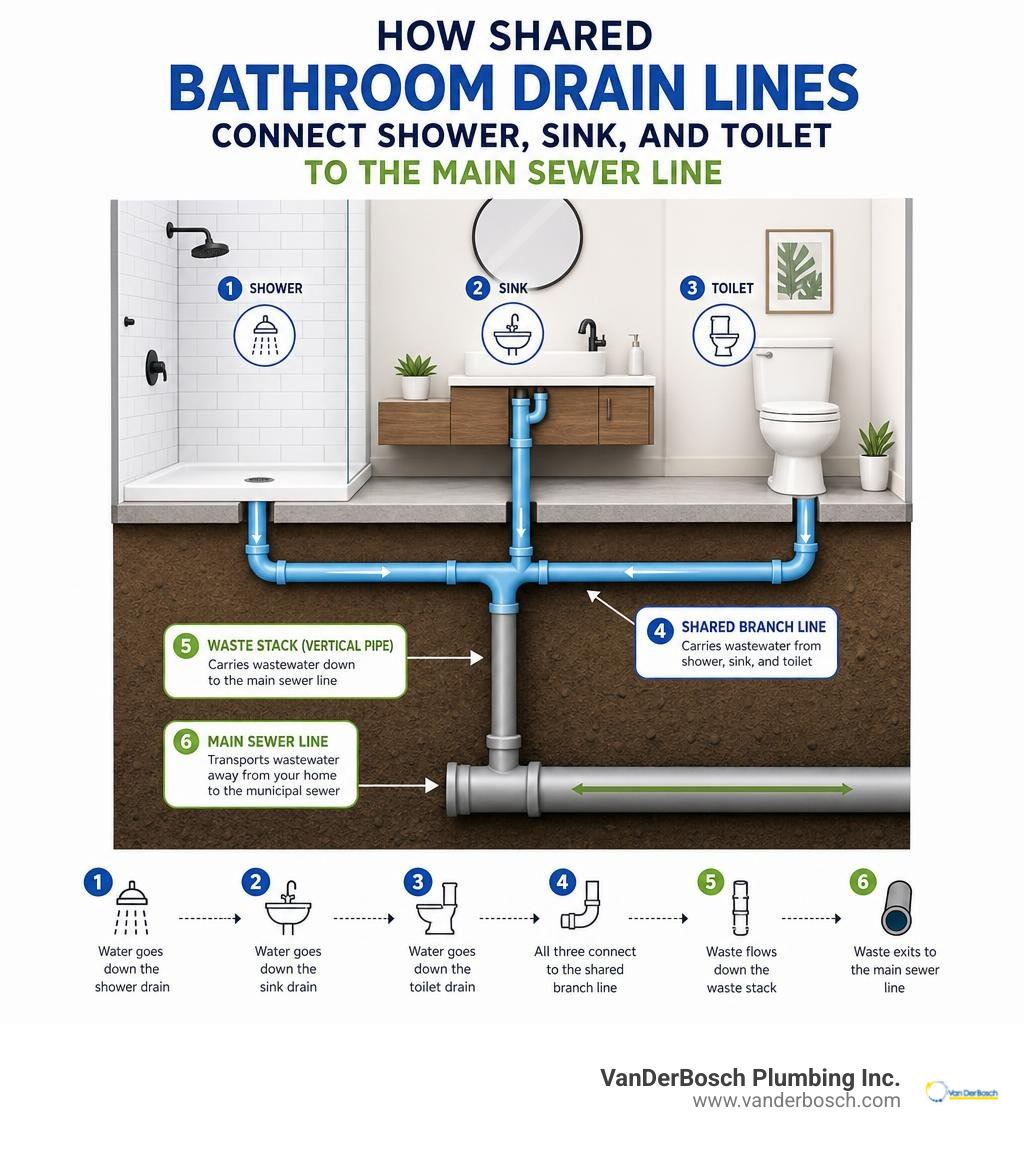
To understand why your bathroom sink and shower are staging a joint protest, you have to look behind the drywall and beneath the floorboards. Your home’s plumbing is not a collection of independent pipes running directly to the street. Instead, it is a carefully engineered tree-like network of branches that join into a single trunk.
When you wash your hands at the sink, that water travels down the sink’s P-trap and enters a horizontal pipe called a branch line. Just a few feet away, the wastewater from your shower enters its own drain, passes through a shower trap, and joins that very same branch line. This shared branch line carries the combined waste to your main vertical stack, which then drops down to the main sewer lateral buried beneath your property.
If a single fixture drains slowly, the blockage is almost always located in that fixture’s individual trap (like the U-shaped pipe under your sink). But when you have a shower and sink clogged simultaneously, the physical blockage is sitting downstream of where those two pipes meet.
Understanding this layout is the key to choosing the right fix. For a deeper look at how individual blockages start and spread, check out our guide on 5 Reasons Your Drain is Clogged and How to Fix It.
Shared Branch Line vs. Main Sewer Line Blockage
How do you determine if the problem is confined to your bathroom’s shared branch line or if your entire home’s sewer lateral is in jeopardy? The secret lies in checking your other plumbing fixtures.
If the clog is in the shared branch line:
- Only the fixtures on that specific branch (usually just the sink and shower in that one bathroom) will back up.
- Running water in the kitchen or flushing a toilet in a different bathroom will have no effect on the clogged bathroom.
- The issue is highly localized, making it easier to target with mechanical DIY tools.
If the clog is in the main sewer line:
- Multiple low-lying drains across the entire house will show signs of distress.
- Because of fixture height, the lowest drains in your home (such as basement floor drains, utility sinks, or a basement shower) will back up first.
- Flushing an upstairs toilet might cause water to bubble up in your downstairs shower basin.
- This is a systemic plumbing emergency that requires immediate attention to prevent severe water damage. You can read more about safeguarding your main line in our article on How to Prevent Clogged Toilets and Sewer Lines.
Warning Signs of a Main Sewer Line Issue
A main sewer line blockage is not something you want to ignore. In the United States alone, there were 12,500 backflow incidents reported in 2023. These incidents can cause thousands of dollars in property damage and present serious health hazards.

Keep a close eye and ear out for these clear red flags:
- Gurgling Noises from Weird Places: If you flush your toilet and hear a wet, bubbling, or gurgling sound coming from your shower drain or bathroom sink, it means air is trapped in the system. The rising water is forcing air back up through the nearest P-trap.
- Water Transferring Between Fixtures: Running your bathroom sink should never cause the water level to rise in your shower. If it does, the wastewater has nowhere to go and is taking the path of least resistance.
- Foul, Persistent Sewage Smells: A blocked main line prevents sewer gases from venting safely through your roof. Instead, these gases escape through your household drains, filling your bathroom with a distinct, noxious odor.
- Liquid Seeping from Your Cleanout: If you notice wet spots or active wastewater trickling out of the cleanout pipe in your yard or basement, your main sewer line is completely full and backing up.
Common Causes of a Simultaneous Shower and Sink Clog
When we receive calls for a shower and sink clogged together in Chicagoland, we usually find a combination of daily debris and environmental factors at play. Pipes don’t block overnight without help; it is typically a gradual process of accumulation.
How Hard Water and Debris Create a Shower and Sink Clogged Scenario
In Cook County and the broader Chicago area, our municipal water contains natural mineral deposits. This hard water (often measuring around 8 grains per gallon) reacts with soap to form a sticky, stubborn substance known as soap scum.
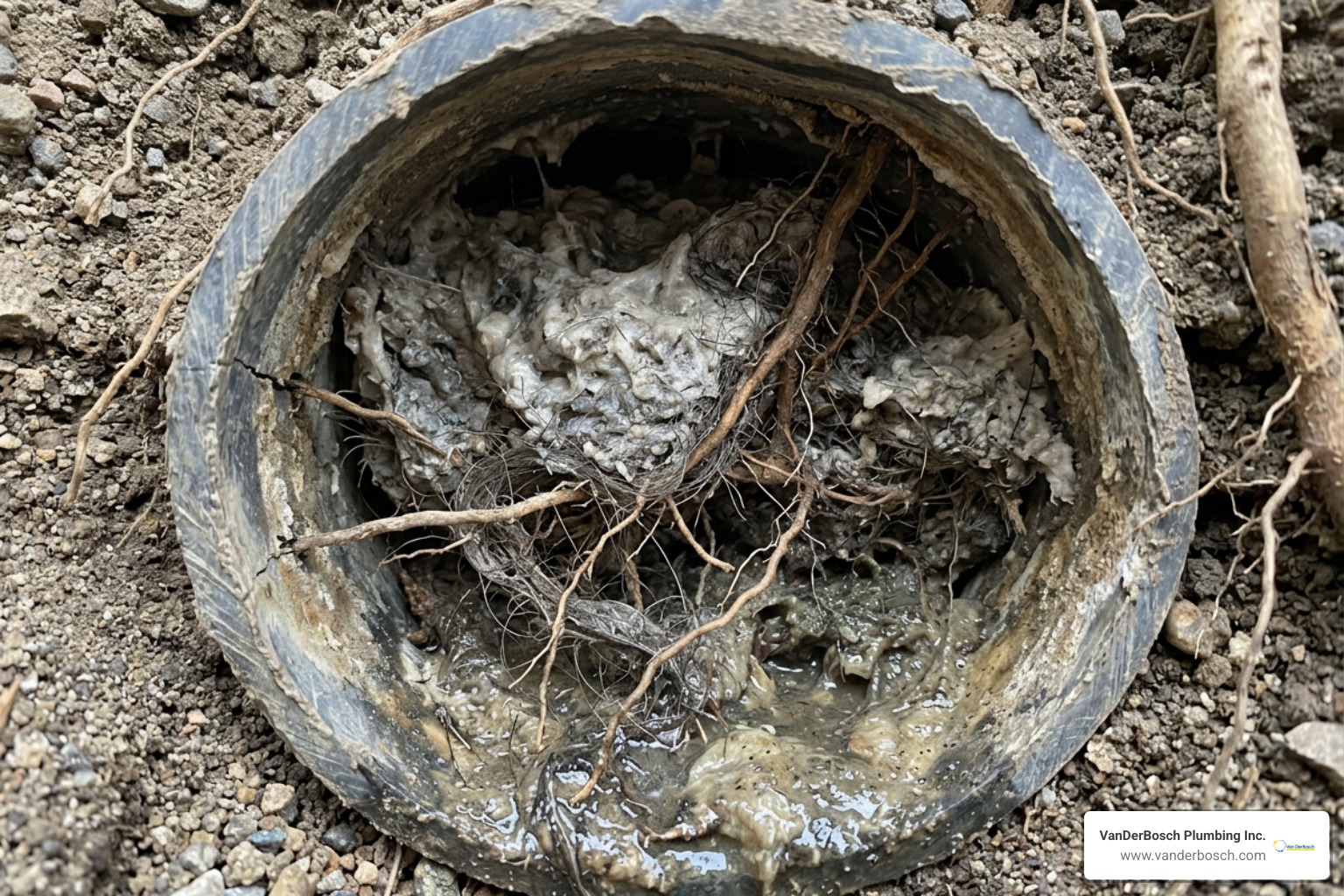
Think of soap scum as the glue of the plumbing world. When you shave, wash your hair, or use body oils, loose hair and organic debris wash down the drain. Instead of flowing freely through the pipes, they stick to the soap scum lining the pipe walls. Over months and years, this mixture hardens, narrowing the pipe’s internal diameter until a minor clump of hair completely seals the line.
If you suspect hair is the main culprit, you can learn more about extracting it safely by reading How to Unclog a Shower Drain – The Home Depot.
Tree Root Intrusion and Structural Pipe Damage
If you live in an older, historic neighborhood like Ukrainian Village, Sauganash, or Winnetka, your home may still rely on original clay or cast-iron sewer pipes. While these materials have character, they are highly susceptible to structural wear and tear over time.
As these pipes age, they can develop hairline cracks. Tree roots, constantly searching for moisture and nutrients, can detect the water vapor escaping these cracks. They find their way inside, growing into dense, net-like root systems that act as a filter, catching toilet paper, hair, and grease. Eventually, this completely blocks the main sewer line.
Furthermore, the ground freeze-thaw cycles we experience every Chicago winter cause the soil to shift, leading to structural sagging (bellies) or collapsed sections in older pipes. If you want to dive deeper into how professional plumbers diagnose and repair these structural issues, read our A Short Guide to Professional Drain Cleaning.
Safe DIY Methods to Clear a Double Drain Blockage
Before you pick up the phone to call us, there are several safe, mechanical DIY methods you can try to clear a local branch line clog.
| Method | Best For | Safety Level | Difficulty |
|---|---|---|---|
| Cup Plunger | Localized blockages near the fixture | High (Safe for all pipes) | Easy |
| Drain Stick / Zip-It | Pulling hair out of the immediate drain inlet | High | Easy |
| Baking Soda & Vinegar | Mild organic buildup and deodorizing | High (Non-corrosive) | Easy |
| Hand Auger (Drain Snake) | Reaching deeper clogs in the branch line | Moderate (Avoid forcing around tight bends) | Moderate |
Step-by-Step Guide to Unclogging a Shower and Sink Clogged System
To tackle a simultaneous clog, we recommend starting with the least invasive method and working your way up.
Step 1: The Drain Stick (Hair Removal)
Before applying pressure, clear out any physical debris near the surface.
- Remove your sink stopper and shower drain cover.
- Insert a plastic barbed drain stick into the drain.
- Twist the stick and slowly pull it back up. You will likely pull up a clump of hair and soap scum.
- Dispose of the debris in the trash (never try to wash it back down!).
Step 2: The Double-Plunge Technique
Plunging a double drain requires a bit of strategy because the sink and shower are connected. If you plunge the shower, the air and water pressure will simply escape out of the open sink drain rather than pushing against the clog.
- Use a wet rag or plumbing tape to completely seal the sink’s overflow hole and the sink drain itself.
- Fill the shower pan with enough water to completely submerge the rubber cup of a flat cup plunger.
- Place the plunger firmly over the shower drain, ensuring a tight seal.
- Perform 15 to 20 quick, forceful plunging motions. Maintain the seal throughout to force water—not air—back and forth through the pipe.
- Remove the plunger and check if the water drains. If it does, run hot water for several minutes to flush out any remaining loose debris. For more sink-specific tips, check out our guide on How to Fix a Clogged Sink.
Step 3: Natural Chemical Reaction (Baking Soda & Vinegar)
If the plunger doesn’t fully clear the blockage, you can use a natural foaming reaction to help break down the remaining soap scum.
- Pour 1/2 cup of baking soda directly down both the shower and sink drains.
- Follow with 1 cup of white vinegar down each drain.
- Cover the drains immediately with a stopper or rag to keep the bubbling reaction focused inside the pipes.
- Wait 20 to 30 minutes, then flush both drains with plenty of hot tap water (do not use boiling water if you have PVC pipes, as extreme heat can soften or warp the plastic joints).
For additional alternative methods, you can watch How to Clear a Clogged Shower Drain in 5 Easy Steps – YouTube or read more about preventative care on 5 Easy Ways to Unclog Your Shower Drain | 2026 | Bungalow .
Why You Must Avoid Chemical Drain Cleaners
When faced with a stubborn double clog, your first instinct might be to purchase a bottle of commercial chemical drain cleaner. The chemical drain cleaner market was valued at an astonishing $2.18 billion in 2023, proving that many homeowners still rely on these products. However, as professional plumbers, we strongly advise against them.
Chemical drain cleaners contain high concentrations of extremely harsh acids or lye. When poured into a clogged drain, they generate intense chemical heat to dissolve organic material. If your pipes are completely blocked, these chemicals will sit directly on the clog, pooling inside your pipes.
This chemical heat can easily warp or melt modern PVC pipes, and it will corrode older cast-iron or galvanized metal pipes, leading to costly leaks behind your walls. Furthermore, if the DIY attempt fails, your pipes will remain filled with toxic, caustic water, making it highly dangerous for any plumber who has to disassemble your pipes later.
How to Locate and Use Your Home’s Sewer Cleanout
If your DIY efforts at the fixtures fail, your next diagnostic step is to locate your home’s sewer cleanout. The cleanout is a dedicated pipe with a removable cap that provides direct access to your main sewer line.
To locate and inspect your cleanout safely:
- Find the Pipe: In Chicagoland homes, the cleanout is typically a 3-to-4-inch diameter pipe located outside near the foundation wall, in the yard in a straight line toward the municipal street sewer, or inside the basement near the main water shut-off valve.
- Put on Safety Gear: Always wear heavy-duty rubber gloves and protective eyewear before opening the cleanout cap.
- Open with Caution: Slowly unscrew the cleanout cap. Stop immediately if you hear hissing or see water starting to seep out around the threads. This indicates that the main line is under heavy pressure, and opening the cap fully will cause wastewater to flood your yard or basement.
- Inspect the Water Level: If you successfully remove the cap and see standing water inside the cleanout pipe, the blockage is located downstream of the cleanout (closer to the street). If the cleanout is completely dry but your bathroom drains are still backed up, the clog is located upstream, somewhere inside your home’s branch lines.
Frequently Asked Questions About Multi-Drain Clogs
Can a clogged toilet cause my shower and sink to back up?
Yes, absolutely. Because the toilet, shower, and sink in a single bathroom usually connect to the same branch line, a severe blockage downstream of their junction will affect all three.
When you flush a clogged toilet under these conditions, the large volume of water cannot pass through the blockage. Instead, it backs up into the lowest available openings—which are almost always your shower drain and bathroom sink. If you hear loud gurgling noises from your sink when you flush, it is a clear warning sign that a backup is imminent.
When should I stop DIY attempts and call a professional?
You should stop DIY attempts immediately if:
- Water is actively backing up into your shower or sink when you run water elsewhere in the house.
- You smell a strong, persistent odor of raw sewage.
- Your DIY snaking or plunging attempts have produced no results after multiple tries.
- You notice water seeping out of your basement floor drains.
It is especially wise to call a professional around major holidays. Around Thanksgiving—a busy period some plumbers refer to as “Brown Friday”—emergency plumbing service searches can spike by as much as 65% due to increased household usage. Don’t wait until a minor slow drain becomes a holiday emergency!
What professional tools will a plumber use to resolve this?
When we arrive at your home, we bring specialized, industrial-grade equipment to diagnose and resolve the issue permanently:
- CCTV Sewer Cameras: We feed a waterproof, high-definition camera into your sewer line to visually inspect the interior of your pipes. This allows us to locate the exact position of the blockage and identify if it is caused by tree roots, a fatberg, or structural pipe damage.
- Hydro-Jetting: Instead of just punching a hole through the clog with a traditional metal snake, we use high-pressure hydro-jetting equipment. Operating at up to 4,000 PSI, hydro-jetting scours the entire interior wall of your pipes, washing away decades of soap scum, grease, and tree roots, restoring your pipes to like-new condition.
- Trenchless Pipe Repair: If our camera reveals structural damage, we can often repair your sewer line from the inside out using trenchless technology, avoiding the need to dig up your yard or basement floor.
To learn more about our advanced diagnostic and clearing methods, visit our Professional Drain Cleaning Services page.
Conclusion
A shower and sink clogged at the same time can feel overwhelming, but understanding how your home’s plumbing works is the first step toward a permanent solution. While minor branch line clogs can often be cleared with a plunger or a drain stick, systemic main line blockages require professional expertise to resolve safely.
At VanDerBosch Plumbing Inc., we have been serving residential and light commercial customers across Chicagoland—including Chicago, Melrose Park, Elmhurst, Niles, Ukrainian Village, Winnetka, and Mount Prospect—for decades. We stand behind our work with a 100% satisfaction guarantee, offering 24/7 emergency availability and transparent pricing with absolutely no hidden service charges. Our experienced, background-checked technicians are always ready to help you get your home flowing smoothly again.
If your DIY efforts haven’t cleared the blockage, or if you suspect a deeper main sewer line issue, don’t wait for the problem to get worse. Schedule Professional Drain Cleaning Services with us today, and let our family take care of yours.