Table of Contents
- Why Commercial Plumbing Maintenance Matters
- Preventive Plumbing Maintenance Schedule
- Commercial Boiler Maintenance Checklist
- Commercial Drain Cleaning Services and Sewer Inspection
- Pipe Inspection, Corrosion Detection, and Leak Prevention
- Water Heater and Pressure System Maintenance
- Smart Monitoring and Sustainability Considerations
- Building Code Compliance and Emergency Preparedness
- Frequently Asked Questions
Last Updated: September 27, 2026
Why Commercial Plumbing Maintenance Matters
A single burst pipe or sewer backup can shut down operations, damage inventory, and create liability issues that cost far more than preventive maintenance ever would. That’s why a structured commercial plumbing maintenance program isn’t optional, it’s essential infrastructure management.
Most property managers and facility directors know maintenance matters, but many treat plumbing as a “call when something breaks” system. The problem with that approach is simple: you don’t see the slow corrosion, the pressure buildup, or the blockage forming until it becomes an emergency. By then, you’re paying for emergency service, potential water damage, and lost business hours.
At VanDerBosch Plumbing Inc., we work with commercial property owners and managers across the region to build maintenance schedules that catch problems early. The goal isn’t to add cost, it’s to prevent the expensive failures that disrupt operations and damage your reputation.
This guide covers the essential elements of a commercial plumbing maintenance checklist for 2026, including daily monitoring, seasonal inspections, regulatory compliance, and modern technologies that help you stay ahead of problems.
Preventive Plumbing Maintenance Schedule
A structured maintenance schedule divides tasks by frequency. Daily and weekly checks catch emerging issues quickly. Monthly inspections verify system performance. Quarterly and annual reviews assess long-term asset condition and plan for capital expenditures.
Daily and Weekly Tasks
Daily monitoring doesn’t require a licensed plumber, it requires someone on-site to notice what’s normal and what isn’t.
Check for visible leaks under sinks, around toilets, and beneath water heaters. Look at the floor around equipment for pooling water or dampness. Listen for unusual sounds: hissing, dripping, or grinding noises often signal pressure problems, loose connections, or debris in lines.
Monitor water pressure at the main shut-off valve. Pressure that drops without explanation may indicate a leak in the wall or underground. Pressure that spikes can damage fixtures and seals. A pressure reducing valve should keep supply pressure between 40-80 PSI in most commercial buildings.
Test the emergency shut-off valve weekly to confirm it operates smoothly. A valve that’s corroded or stuck won’t help during an actual emergency. Turn it off and back on slowly, don’t force it.
Check backflow prevention devices for leaks or visible corrosion. These devices protect your water supply from contamination and are required by code in most jurisdictions. If you see water pooling beneath one, call a licensed technician immediately.
Monthly Inspections
Monthly checks should be documented and performed by someone familiar with your building’s plumbing system.
Inspect all exposed piping for corrosion, especially copper and galvanized steel. Green or white buildup on copper indicates oxidation. Rust stains or pitting on steel mean the pipe wall is thinning. Take photos and note the location, this informs future replacement planning.
Test all shut-off valves (main line, fixtures, equipment) to ensure they operate smoothly. A corroded or stuck valve is useless when you need it. Slow operation or grinding sounds mean the valve needs professional service.
Flush drains in low-use areas. Drains that don’t flow regularly can develop biofilm buildup and odors. Running water through them monthly helps keep them clear.
Check water heater and boiler pressure gauges and temperature readings. Record these numbers in a maintenance log. Trending data shows whether equipment is operating normally or drifting toward failure.
Inspect the floor around the water heater, boiler, and main shut-off for dampness or pooling water. Small leaks are easier to address than major failures.
Quarterly and Annual Reviews
Quarterly reviews combine visual inspection with testing. Annual reviews should include a professional assessment of system condition and planning for replacement or major repair.
Inspect the interior of pipes using a sewer camera if any drains are slow or backing up. Early detection of blockages, tree root intrusion, or pipe collapse prevents emergency service calls. Many facilities schedule sewer line video inspection annually as preventive maintenance rather than waiting for a problem.
Test water pressure throughout the building. Pressure should be consistent at all fixtures. Drops at certain locations may indicate a developing leak or blockage.
Assess the condition of gaskets and seals on all fixtures. Worn seals cause slow leaks that waste water and damage surrounding materials. Replacing seals is inexpensive compared to repairing water damage.
Review your maintenance log for patterns. Are certain drains clogging repeatedly? Is pressure unstable? Is equipment aging? These trends guide replacement decisions and capital budgeting.
Commercial Boiler Maintenance Checklist
Boilers are high-pressure systems that require careful attention. Neglected boilers fail suddenly and create safety risks.
Inspect the boiler exterior monthly for leaks, corrosion, or visible damage. Check the water level gauge and pressure gauge. Record readings in a maintenance log.
Flush the boiler annually to remove sediment and mineral buildup. Sediment reduces efficiency and can cause overheating and failure. A professional technician performs this using hot water circulation.
Test the pressure relief valve quarterly. This valve protects the system from dangerous pressure buildup. If it doesn’t discharge properly, the boiler is at risk.
Inspect the combustion chamber and heat exchanger annually for cracks or corrosion. These components are expensive to replace and critical to safe operation.
Check all piping connections for leaks. Tighten any loose connections. Corroded connections should be replaced before they fail.
Test the automatic shut-off controls monthly. These safety devices must function reliably. If the boiler doesn’t shut off when it should, call a technician immediately.
For steam boilers specifically, inspect the condensate return line and steam trap operation. Malfunctioning traps waste energy and can damage the system.
Commercial Drain Cleaning Services and Sewer Inspection
Drains are the system you don’t think about until they fail. Regular cleaning prevents backups and extends asset life.
Routine Drain Maintenance
Clear drain screens and strainers monthly. Debris accumulates quickly in commercial kitchens, bathrooms, and laundry areas. Clogged screens force water to back up into pipes.
Run hot water through drains weekly to dissolve grease and soap buildup. In kitchens, this is especially important. Grease solidifies as it cools and creates blockages.
Use drain cleaners sparingly and only if recommended by a professional. Chemical cleaners can damage older pipes and harm the environment. Mechanical cleaning is usually safer and more effective.
For buildings with grease traps, schedule professional cleaning on a regular schedule, typically every 30-90 days depending on usage. Overflowed grease traps create health code violations and expensive cleanup.
Sewer Line Video Inspection Protocol
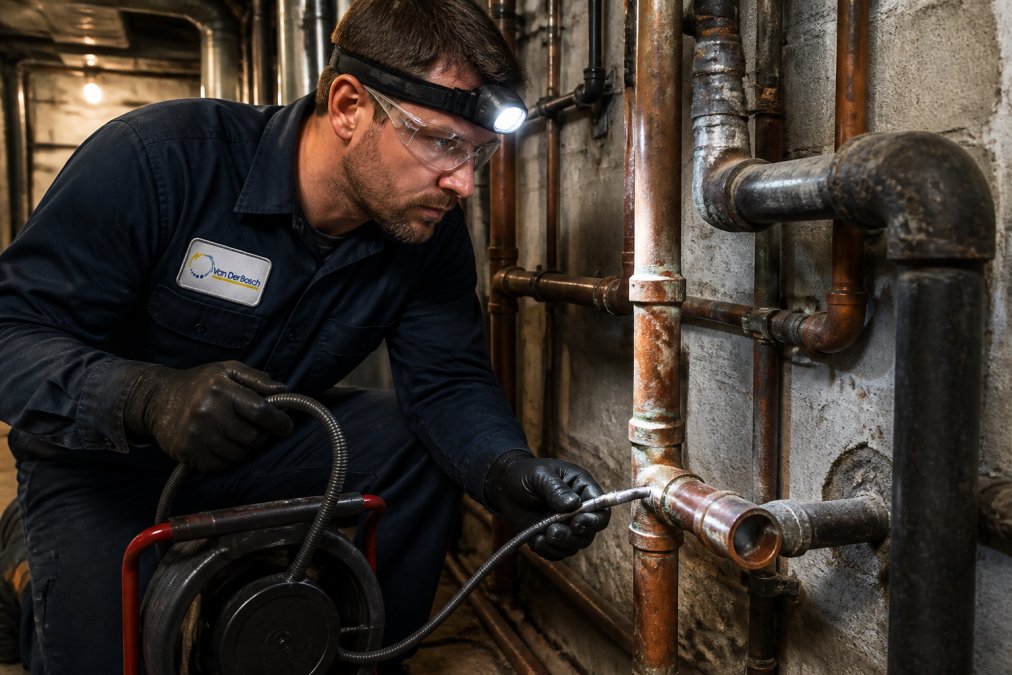
A sewer line video inspection uses a camera to examine the interior of pipes without excavation. It reveals blockages, cracks, root intrusion, and structural damage.
Schedule a sewer line video inspection if drains are slow, backing up, or if you’re planning a major renovation. Many commercial properties benefit from an initial inspection to establish baseline condition, then periodic inspections every 3-5 years.
The inspection identifies the exact location and nature of any problem.
Pipe Inspection, Corrosion Detection, and Leak Prevention
Pipe corrosion is the silent failure mode in older buildings. It happens slowly and invisibly until the pipe fails.
Water Heater and Pressure System Maintenance
Water heaters and pressurized systems require regular flushing and inspection to operate efficiently and safely.
Smart Monitoring and Sustainability Considerations
Modern facilities increasingly use IoT sensors and smart monitoring to track plumbing system performance in real time.
Building Code Compliance and Emergency Preparedness
Commercial plumbing must meet local codes and regulations. Non-compliance creates liability and can result in fines or forced closure.
Frequently Asked Questions
How often should commercial plumbing systems be inspected?
Most commercial properties benefit from professional plumbing inspections at least annually, with quarterly reviews for high-traffic facilities or older buildings. Properties with significant water usage, multiple fixtures, or aging infrastructure may need more frequent checks. A licensed plumber can assess your specific system and recommend an appropriate inspection schedule based on building age, usage patterns, and maintenance history.
What should be included in a commercial plumbing maintenance checklist?
A comprehensive commercial plumbing maintenance checklist covers daily fixture checks, monthly pressure and leak assessments, quarterly drain cleaning, annual boiler servicing, pipe corrosion inspection, backflow prevention device testing, shut-off valve operation, water heater flushing, and sewer line video inspection. The checklist should also address regulatory compliance requirements specific to your facility type and local building codes. VanDerBosch can help develop a customized maintenance plan for your property.
What are the most common commercial plumbing issues to monitor?
Common issues include recurring drain clogs, grease accumulation in kitchen lines, low water pressure from mineral buildup, pipe corrosion in older systems, thermal expansion damage, backflow prevention failures, and sewer line blockages. Early detection through preventive maintenance can prevent costly emergency repairs and system failures. Regular inspections help identify problems before they disrupt operations or create safety hazards.
Why is preventive plumbing maintenance important for businesses?
Preventive maintenance reduces unexpected downtime, extends the life of plumbing infrastructure, prevents water damage and contamination, ensures regulatory compliance, and lowers long-term repair costs. A well-maintained system operates more efficiently, uses less water and energy, and protects your facility from emergency situations that could interrupt business operations. Proactive maintenance also provides documentation for facility audits and insurance purposes.
When should a professional plumber be called for commercial maintenance?
Schedule professional service for annual boiler inspections, sewer line camera inspections, backflow device testing, water heater flushing, and pressure system diagnostics. Call immediately if you notice multiple drains backing up, visible pipe corrosion, water leaks, low pressure, or unusual noises in the plumbing system. VanDerBosch provides same-day service and can respond to both routine maintenance and emergency situations.
How does commercial sewer line inspection work?
Sewer line video inspection uses a small camera attached to a flexible line that travels through your drain pipes to identify blockages, cracks, root intrusion, or buildup. The technician views real-time footage and can pinpoint problem areas without excavation. This diagnostic tool helps determine whether hydro-jetting, repairs, or replacement is needed. VanDerBosch offers sewer video inspection services to help property managers make informed maintenance decisions.
What is the difference between drain cleaning and hydro-jetting?
Standard drain cleaning uses mechanical tools or chemical treatments to clear clogs. Hydro-jetting uses high-pressure water to scour pipe walls, removing buildup, grease, mineral deposits, and debris more thoroughly. Hydro-jetting is often recommended for commercial properties with heavy usage or recurring clogs because it cleans the entire pipe rather than just creating a temporary opening. Your plumber can recommend the best method based on the type and severity of the blockage.