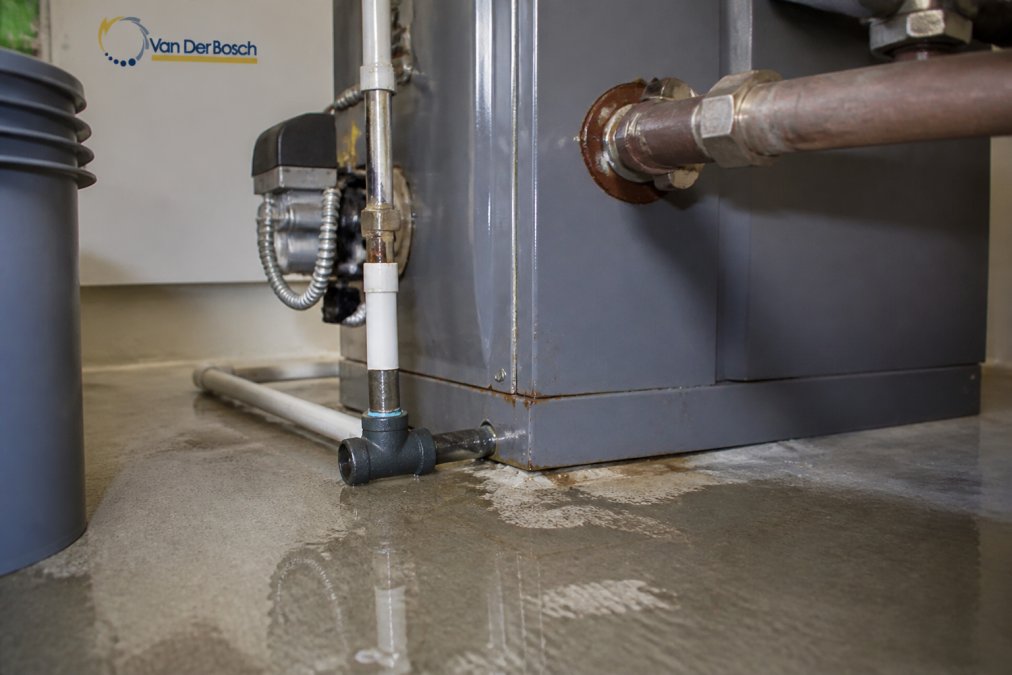
Why Is My Boiler Leaking Water? Causes & Next Steps

Table of Contents

Last Updated: September 23, 2026

Why Is My Boiler Leaking Water? Start Here

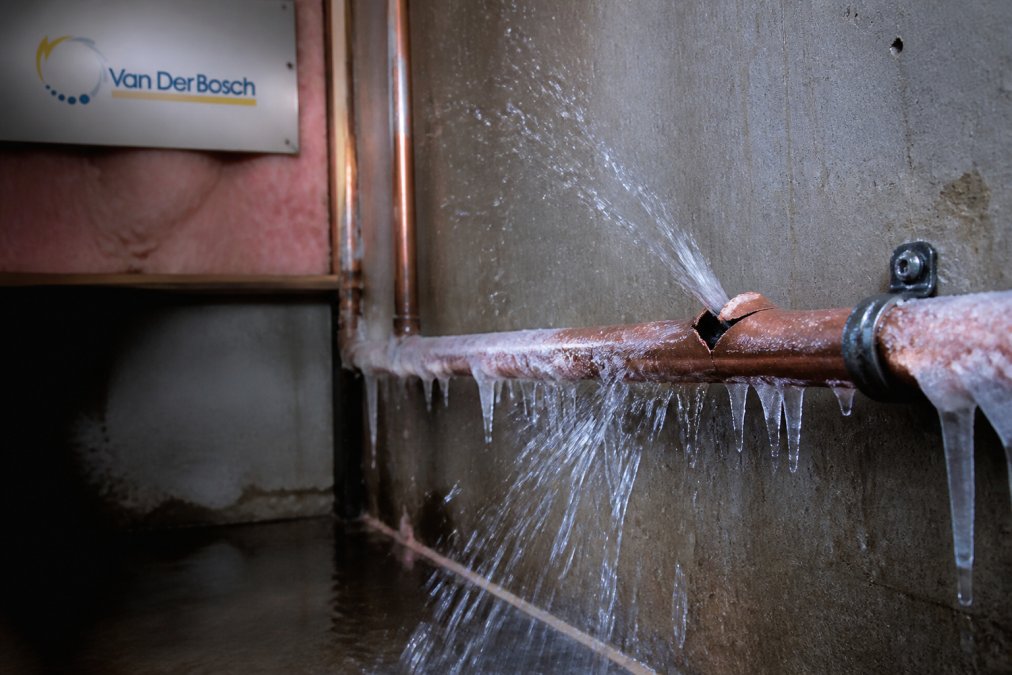
A boiler leaking water usually means one of three things: the pressure relief valve is releasing excess pressure, a seal or fitting has failed, or corrosion has opened a pinhole in the tank or pipes. None of these fix themselves, and a small drip can warp flooring and soak insulation before anyone notices.

Common Causes of a Boiler Leaking Water

Most boiler leaks trace back to pressure problems or worn parts. Two categories cover the majority of cases: the relief valve doing its job, and materials that have aged out.
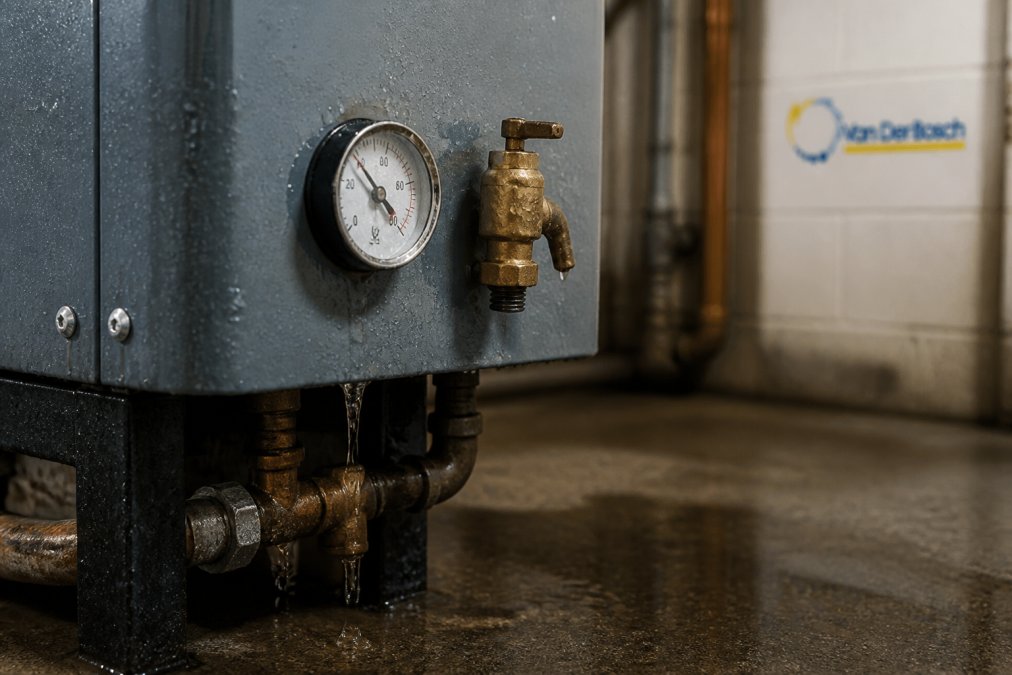
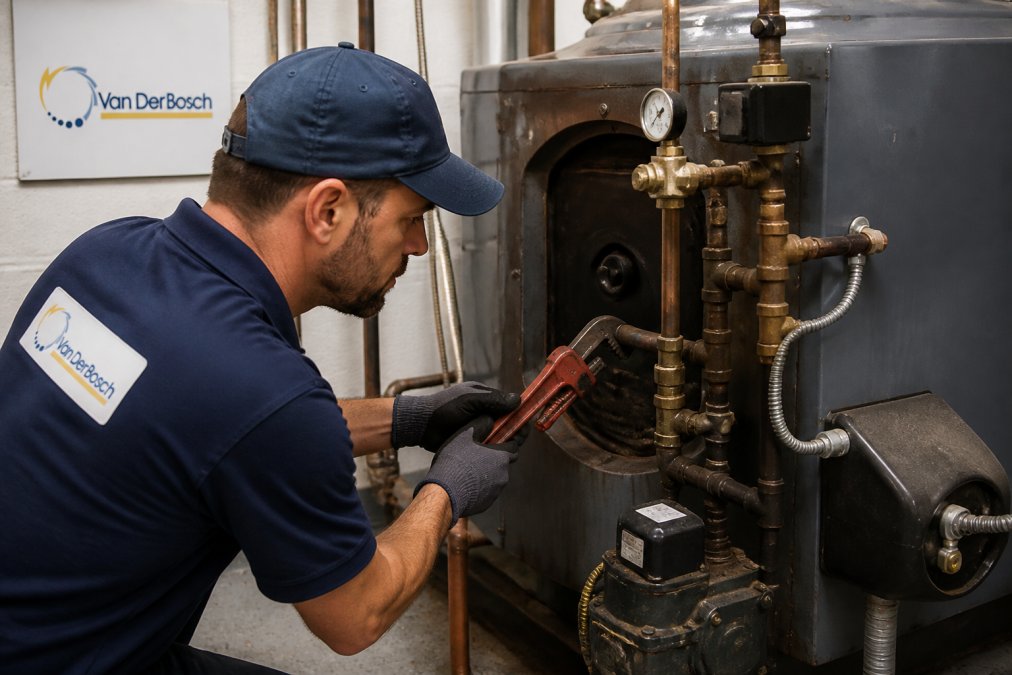
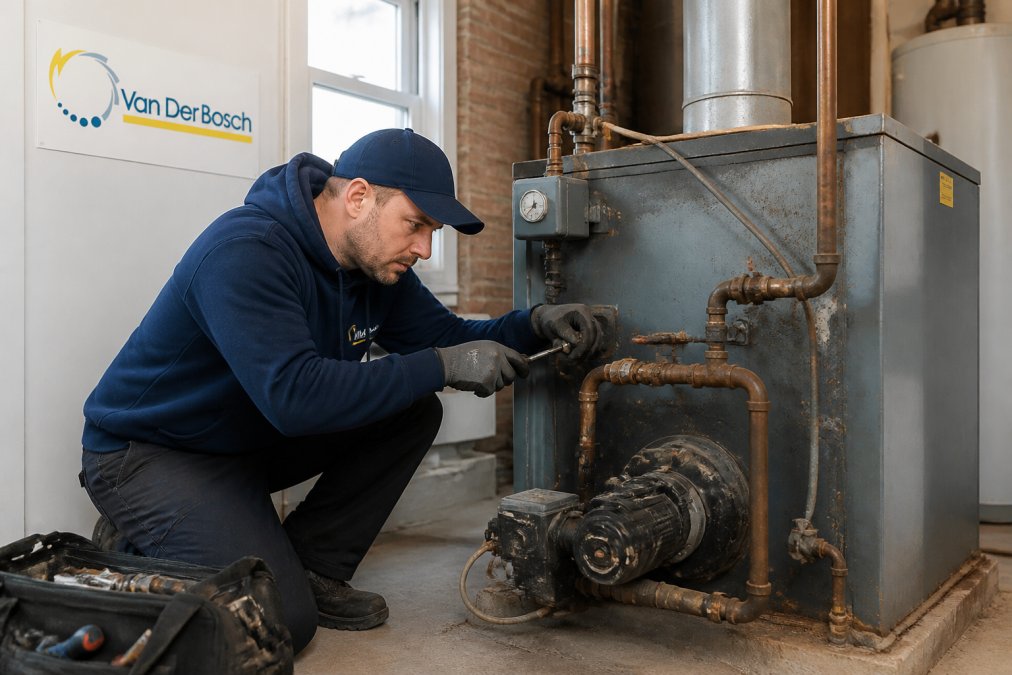
Diagram illustrating a boiler leaking water from the pressure gauge and relief valve onto the floor surface.

High Pressure and the Boiler Pressure Relief Valve Leaking

A boiler pressure relief valve leaking is often a safety feature working as designed. When internal pressure climbs too high, the valve opens to release water and steam before anything bursts.

Common reasons pressure rises:

  • The expansion tank has failed or lost its air charge
  • The fill valve is stuck open, adding water constantly
  • The system was overfilled during a recent service

Corrosion, Loose Fittings, and Seals

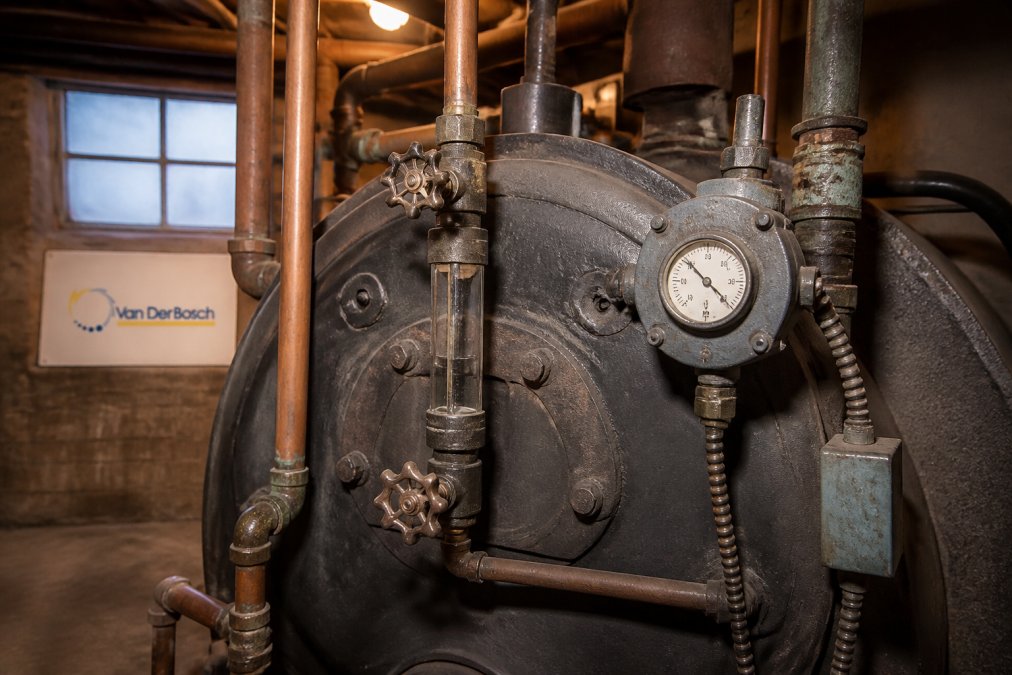
Older boilers, especially the steam systems common in vintage homes, develop rust inside the tank and along pipe joints, eating through metal and loosening seals around fittings.

Watch for:

  • Rust-colored water or stains near joints
  • Mineral crust around pipe connections
  • Damp spots on the boiler jacket itself

Boiler Pressure Relief Valve Leaking: What It Means

A leaking relief valve is a warning, not the problem itself. The valve opens because something else pushed pressure past its limit.

What You Can Safely Check Before Calling a Pro

Safe checks:

  • Read the pressure gauge and note the number
  • Look for the leak’s location (valve, pipe joint, tank, or floor drain nearby)
  • Check whether the expansion tank feels full of water instead of air
  • Confirm the system was recently serviced or refilled
Watch Out
Never open the boiler casing, drain the system, or attempt to adjust the relief valve yourself. Pressurized hot water and steam can cause severe burns, and improper handling can turn a small leak into a dangerous failure.

If the gauge reads high and stays high, or you can’t find the source, call a licensed plumber for a plumbing assessment to pinpoint the cause.

When a Leaking Boiler Is an Emergency

Treat a boiler leak as an emergency when water is near electrical parts, the leak is steady, or you smell gas.

Call for emergency service if you notice:

  • Water pooling around the boiler’s electrical connections
  • A strong gas odor (leave the building first, then call)
  • Steam escaping anywhere other than the relief valve
  • The boiler won’t shut off

Boiler Repair Chicago: What to Expect From a Service Call

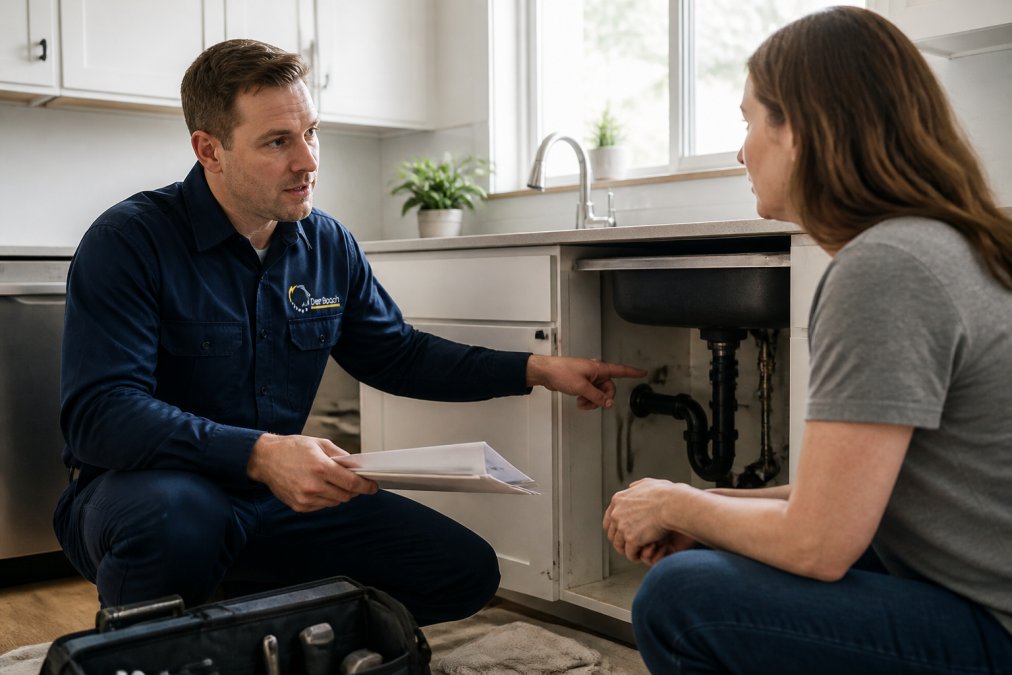
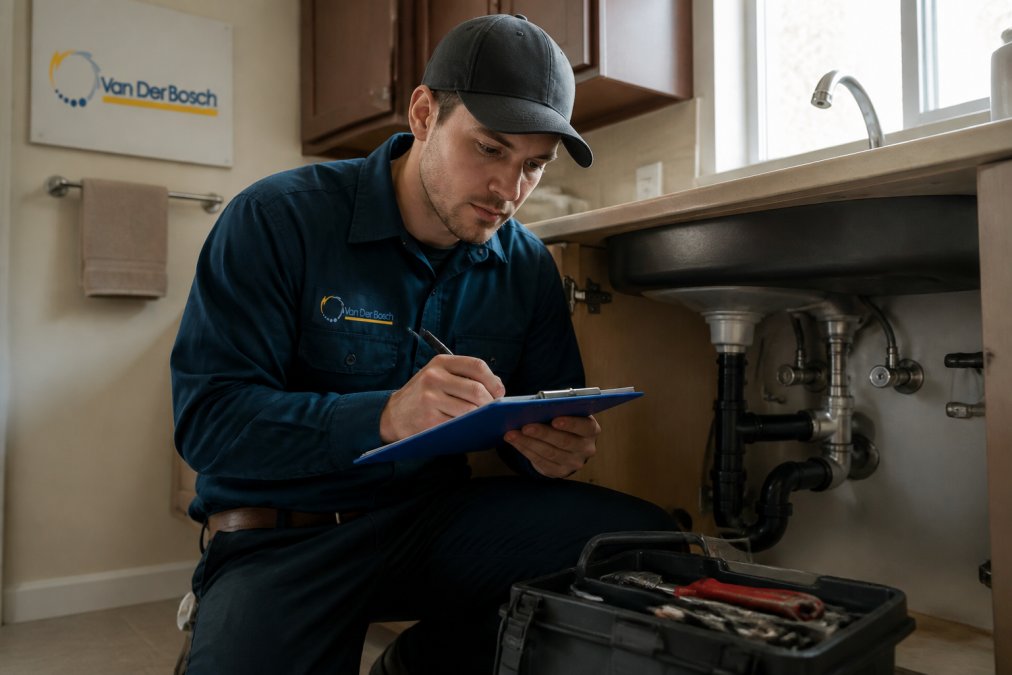
A boiler repair visit should start with diagnosis, not guesswork. The technician inspects the leak, checks system pressure, and tests the expansion tank and relief valve before recommending anything, and documents the findings and proposed work clearly.

The Typical Service Call Flow

  1. Visual inspection of the boiler, jacket, and surrounding pipes
  2. Pressure gauge and expansion tank check
  3. Relief valve, fitting, and seal inspection
  4. A plain-language explanation of the cause and your repair options
  5. A written quote before any work begins

You should get a straight answer about what is wrong and what it takes to fix it. A good technician explains the cause in plain terms and tells you which findings are urgent versus which can wait.

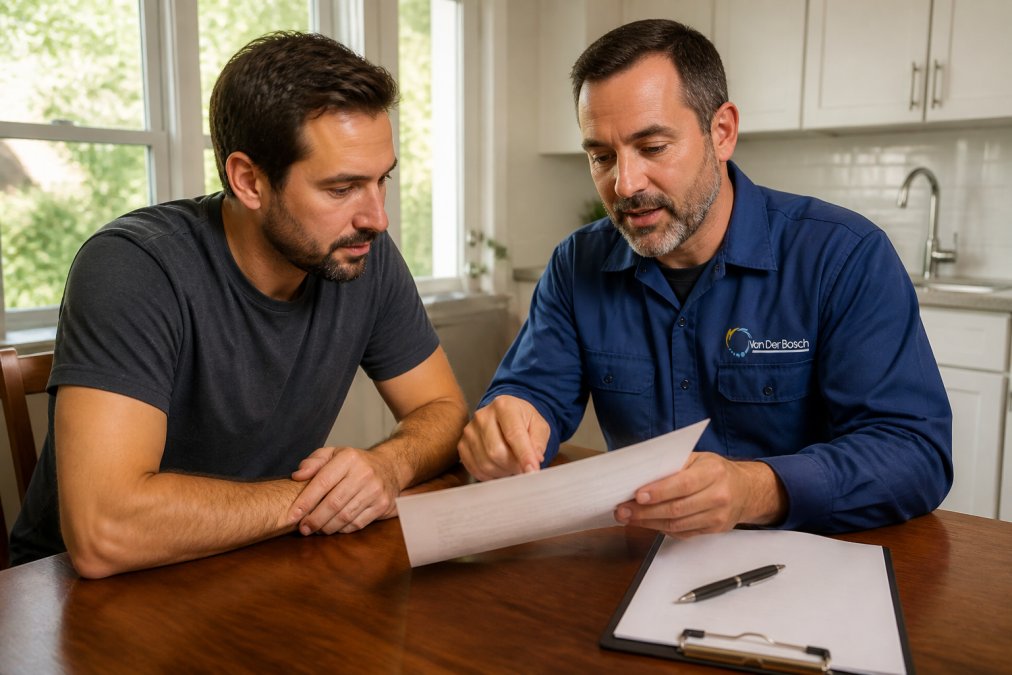
How to Read a Boiler Repair Quote Before You Approve It

Most homeowners approve a quote in a hurry because the boiler is down and the house is cold, exactly when it pays to slow down and read the document.

A clear quote should separate:

Book a Visit →

  • Diagnostic or trip charge, some companies fold this into the repair, others bill it separately. Ask about the company’s policy before the visit.
  • Labor, whether it is billed hourly or as a flat rate for the job, and whether the estimate is a firm number or a range.
  • Parts and materials, listed by name or part number, not lumped into a single line item.
  • Permits, boiler work in many jurisdictions requires a permit, and the cost should be disclosed up front rather than added later.
  • Disposal, removal of an old part or unit is sometimes a separate line.

Red flags to watch for:

  • A single lump-sum figure with no breakdown
  • Verbal estimates with nothing in writing
  • Pressure to approve additional work on the spot before the original problem is confirmed
  • A quote that changes after the technician has already started

What a Fair Invoice Should Show

After the work is done, the invoice should match the approved quote, itemizing labor, each part used, any permit fees, and any diagnostic charge. If a line item wasn’t in the quote, ask about it before paying.

Warranty and Guarantee Fine Print

Ask two questions before you sign off on a repair:

  1. What does the warranty cover, parts, labor, or both? A “lifetime” or “extended” warranty that covers parts only still leaves you paying labor if the same part fails again.
  2. How long is the labor warranty, and does it require annual maintenance to stay valid? Some warranties are voided if you skip a yearly service.

Questions Worth Asking Before You Book

  • Is the diagnostic fee credited toward the repair if I approve the work?
  • Will I get a written quote before work starts?
  • Is the technician licensed and insured for boiler work?
  • Does the repair carry a parts warranty, a labor warranty, or both?
  • If the boiler needs replacement instead, will that be quoted separately?

VanDerBosch handles both modern and vintage boiler systems, including the steam boilers found in many older homes. You can schedule boiler service or review the boiler service page before booking.

Key Takeaway
A written, itemized quote and a written warranty are the two documents that protect you most on a boiler repair. Ask for both before you approve the work. VanDerBosch provides transparent pricing and a 90-day warranty on new equipment.

Repair or Replace? Deciding Factors for an Older Boiler

Repair usually makes sense when the leak is isolated and the boiler is otherwise sound; replacement is worth considering when problems keep stacking up. Because the two quotes cover different scopes, here is how to think through the decision.

The Factors That Actually Move the Decision

  • Age: Older units near the end of their service life rarely justify major repairs. A boiler that has already outlived its expected service window is a poor candidate for an expensive fix.
  • Repair history: Frequent fixes point to a system on its way out. One repair every few years is normal; three in two seasons is a pattern.
  • Leak location: A failed fitting, seal, or relief valve is different from a corroded tank section or a pinhole in the heat exchanger. Fittings and valves are serviceable. A compromised tank or heat exchanger usually is not.
  • Efficiency: An aging boiler can raise your heating and water costs. If the unit is running more to do the same job, that gap is part of the true cost of keeping it.
  • Accessibility: Hard-to-reach components make repairs costlier. A repair that requires opening a wall or ceiling changes the math.
  • Surrounding parts: If pipes, valves, and the expansion tank are also failing, one repair will not hold. You will be back in the same basement next season.
  • Safety history: Any prior issue with the relief valve, flue, or combustion side should weigh heavily toward replacement.

Do not assume replacement is automatic, plenty of leaking boilers are repairable. The right call depends on the specific system, and a professional inspection settles it.

How to Compare a Repair Quote Against a Replacement Quote

A repair quote and a replacement quote are not directly comparable because they cover different scopes. To compare them fairly, line up the same categories on both sides:

Category Repair quote Replacement quote
Equipment Part or component only Full boiler and any required controls
Labor Hours or flat rate for the fix Removal, install, startup, and testing
Permits Usually none for a minor fix Often required for a boiler swap
Disposal Old part only Old boiler and any removed piping
Warranty Parts and/or labor on the repair Parts and/or labor on the new unit
Expected service life Remaining life of the existing unit Service life of the new unit

Cost Factors That Drive Either Path

No two boiler jobs price the same, but the same factors recur:

  • The type and location of the problem
  • Accessibility of the boiler and the failed component
  • Materials and parts required
  • Extent of damage, including any water damage to surrounding structure
  • Diagnostic work required to confirm the cause
  • Whether additional components (expansion tank, relief valve, piping, controls) are affected

A Simple Decision Rule

Pro Tip
Ask the technician to write the expected remaining service life of the existing unit on the repair quote. That single number often makes the repair-versus-replace decision obvious.

If you are weighing repair against replacement on an older system, VanDerBosch can inspect the boiler and walk you through both options before you commit.

Preventing Future Boiler Leaks

Regular maintenance is the cheapest way to avoid a mid-winter emergency. Small checks catch the problems that turn into leaks.

A simple maintenance routine:

  • Schedule an annual boiler inspection before heating season
  • Watch the pressure gauge for changes
  • Keep the area around the boiler dry and clear
  • Fix small drips before they grow
  • Ask about a service agreement for ongoing checks

Frequently Asked Questions

Is a leaking boiler an emergency?

It can be. A small drip from a fitting may not be urgent, but water pooling near electrical components, a steady stream, or a leak combined with a pressure spike or strange noise warrants immediate attention. Shut off the boiler and water supply if safe, and call a licensed plumber. Leaving a leaking boiler running can cause water damage, mold, and safety hazards.

Can I fix a leaking boiler myself?

Most boiler repairs should be left to a licensed professional. Boilers involve pressurized water, gas, and electrical connections. Attempting DIY repairs can lead to serious injury, property damage, or voided warranties. You can safely check the pressure gauge and look for obvious loose fittings, but any repair involving the pressure relief valve, internal components, or gas lines requires a qualified technician.

What causes a boiler pressure relief valve to leak?

A pressure relief valve leaking usually means system pressure has exceeded safe limits. Common causes include a failed expansion tank, a faulty fill valve, or thermal expansion. The valve may also leak if it is corroded or stuck open. Because the relief valve is a safety device, it should be inspected and replaced by a professional if it continues to discharge water.

How do I know if my boiler pressure is too high?

Check the pressure gauge on the boiler. For most residential systems, normal operating pressure is between 12 and 18 psi when hot. If the gauge reads above 30 psi, the pressure is too high and the relief valve may open. High pressure can be caused by a faulty fill valve or a waterlogged expansion tank. Turn off the boiler and call a plumber to diagnose the issue.
Avoiding Hidden Fees in Plumbing Repairs: 2026 Guide

Table of Contents

Last Updated: September 22, 2026

How Hidden Fees Show Up in Plumbing Repairs

Hidden fees plumbing repairs involve charges that appear after the work starts, not before. They show up as vague line items, “shop supplies,” trip charges, or an hourly rate that quietly replaces the flat quote you agreed to.

  • A low phone quote that grows once the technician is inside your home
  • A call-out fee that was never mentioned when you booked
  • Material markups buried in a single lump-sum line

Factors Affecting Plumbing Repair Costs

Legitimate plumbing repair costs come down to a handful of real factors. Knowing them helps you tell a fair quote from a padded one.

The main cost drivers are:

  • Type and location of the problem. A leaking faucet is not a broken sewer line.
  • Accessibility. A pipe behind an open basement wall costs less to reach than one under a finished floor.
  • Materials. Copper, PEX, and cast iron carry different prices and different labor needs.
  • Extent of damage. Water damage, corrosion, and root intrusion all add work.
  • Diagnostic time. Finding the problem can take longer than fixing it.
  • Related components. A failing water heater may also need a new shutoff valve or expansion tank.

Legitimate Cost Drivers vs. Padding

Padding is what turns a fair bill into a bad one. Here’s how to tell the difference.

Line Item

Legitimate Reason

Padding Red Flag

Call-out fee

Covers the trip and initial assessment

Charged again on a return visit for the same job

Material markup

Covers sourcing, transport, and warranty on parts

Markup that isn’t disclosed or itemized

Labor rate

Reflects licensed technician time

Hourly rate swapped in after a flat-rate quote

Permit fees

Required by local code for certain work

Permit charged but never pulled

Disposal fees

Removal of old equipment or debris

Flat “shop supplies” fee with no explanation

Plumbing Repair Estimate Transparency: What a Clear Quote Looks Like

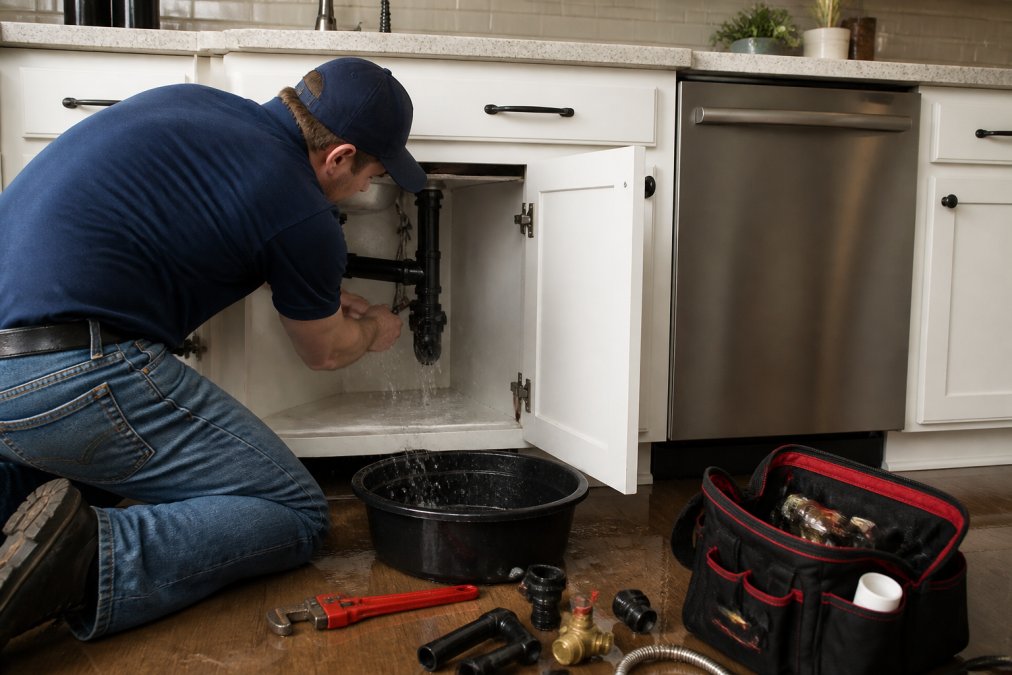
A transparent plumbing repair estimate states the scope, the price, and what happens if the job changes. It should be in writing before work begins. The estimate and the contract are two different documents, though, and the fees that surprise homeowners most often live in the contract, not the estimate.

Article image

A clear quote includes:

  • The specific problem being addressed
  • Whether the price is flat-rate or hourly
  • What’s included (parts, labor, disposal, permits)
  • What’s excluded and what would trigger a change
  • How additional work gets approved before it starts

How to Read a Plumbing Contract for Hidden Fees

Most homeowners skim the estimate, sign the work authorization, and never read the terms on the back. That’s where the charges you didn’t agree to are usually authorized in advance. Before you sign, read for these specific clauses:

  • Open-ended hourly language. Phrases like “time and materials” or “billed at prevailing rates” without a cap or estimate let the final number float. Ask for a not-to-exceed figure or a flat-rate task price.
  • Diagnostic-fee stacking. Some contracts state that the diagnostic fee is credited toward the repair only if the customer approves the recommended work the same day. If you decline, the fee stands alone, and a return visit may trigger a second one.
  • Change-order language. A clause that says the company may perform “necessary additional work” without written approval is the single biggest hidden-fee risk in a plumbing contract. Cross it out or get it amended to require your sign-off.
  • Material sourcing clauses. Language that lets the company substitute “equivalent” parts can shift the price if the substitute costs more. Ask how substitutions are priced and approved.
  • Access and restoration exclusions. Many contracts exclude drywall, flooring, or landscaping repair after the plumbing work. That’s not necessarily unfair, but it should be stated up front so it isn’t a surprise line item later.
  • Cancellation and return-visit terms. Confirm in writing whether a return trip for the same issue is covered or billed again.

Itemized Invoice Breakdown

An itemized invoice lists every charge separately instead of one lump sum. That’s your best defense against surprise costs, and your best tool for auditing the bill against the quote you approved.

Ask for these lines on the final invoice:

  • Parts, with quantity and description
  • Labor hours or the flat-rate task
  • Any permit or inspection fee
  • Disposal or haul-away
  • Taxes

Auditing the Invoice Against the Quote

Before you pay, set the invoice next to the estimate and walk through it line by line. A fair invoice should reconcile to the approved scope. Use this checklist:

  1. Scope match. Does every billed task appear on the original estimate or an approved change order?
  2. Rate match. If the estimate was flat-rate, is the invoice still flat-rate, or did it quietly convert to hourly?
  3. Parts match. Are the parts billed the same ones listed on the estimate, and are quantities reasonable for the job described?
  4. Fee match. Were call-out, diagnostic, permit, and disposal fees disclosed before work began?
  5. Change-order match. For any added work, is there a signed or written approval from you?
  6. Tax and total. Do the line items add up to the total, and is tax applied correctly?
Pro TipPhotograph the invoice and the work area before the technician leaves. If a warranty claim comes up later, that timestamped record settles most disputes fast.

Questions to Ask a Plumber Before Hiring

The best way to avoid hidden fees is to ask about them before you book. A straight answer takes ten seconds. A vague one tells you plenty.

Ask these questions on the phone:

  1. Is your quote flat-rate or hourly?
  2. Is there a call-out or diagnostic fee, and does it apply to the repair?
  3. Will I approve any added work before you start it?
  4. Do you charge again if you have to return for the same issue?
  5. Are permits and disposal included in the quote?
  6. Can I get the scope and price in writing?

Warranty and Guarantee Fine Print

Warranty terms are where hidden costs hide longest. Read the fine print before you sign.

Check three things:

  • What’s covered. Parts only, or parts and labor?
  • How long. Note the exact window and what starts the clock.
  • What voids it. Some warranties drop if another company touches the work.

Contractual Red Flags and the Cost of Delaying Repairs

Some contracts are written to protect the company, not you. Watch for blank scope sections, open-ended hourly language, and clauses that let the provider add charges without your approval.

Red flags to walk away from:

  • A signature request before any price is stated
  • “Time and materials” with no cap or estimate
  • No cancellation or return-visit policy in writing
  • Pressure to approve work on the spot
  • A scope description so vague it could cover almost any repair
  • A clause allowing the company to perform “necessary” additional work without your written approval
  • No stated process for how change orders are priced and approved

What Delaying a Repair Actually Costs

Putting off a plumbing repair rarely saves money. It usually moves the cost from the plumbing system into the structure around it.

  • Slow leaks rot framing and subfloor. Water that drips behind a wall or under a cabinet wicks into wood and drywall. By the time you see a stain, the damage behind it is often larger than the leak itself.
  • Standing water invites mold. Mold growth can begin within a day or two of a persistent leak, and remediation is a separate trade from plumbing, meaning a second contractor and a second bill.
  • Small cracks become burst pipes. A pinhole leak or a hairline crack in a supply line can fail completely under pressure, especially during a freeze-thaw cycle. A burst pipe can flood a basement or a finished lower level in minutes.
  • Sewer problems get worse, not better. A partial blockage that drains slowly tends to become a full backup. Root intrusion and grease buildup don’t clear on their own.
  • Water heaters and boilers fail at the worst time. A unit showing early warning signs, rumbling, inconsistent temperature, visible corrosion, is more likely to fail completely than to heal itself.
Watch OutNever try to stop a gas leak or repair a pressurized line yourself. Shut off the supply if you can do it safely from outside the affected area, then call a licensed plumber or the gas utility. Gas work is not a DIY job.

Warranty and Guarantee Fine Print

Warranty terms are where hidden costs hide longest. Read the fine print before you sign.

Check three things:

  • What’s covered. Parts only, or parts and labor? A parts-only warranty means you still pay labor if the part fails, that’s a hidden fee waiting to happen.
  • How long. Note the exact window and what starts the clock, the install date, the invoice date, or the manufacturer’s ship date.
  • What voids it. Some warranties drop if another company touches the work, if maintenance isn’t documented, or if the failure is attributed to a pre-existing condition.

Why DIY Repairs and Cheap Quotes Often Cost More

A cheap quote and a DIY fix share the same flaw: they skip diagnosis. The visible symptom is rarely the whole problem.

Common DIY mistakes that raise the final bill:

  • Snaking a drain that actually needs hydro jetting
  • Tightening a fitting until the pipe cracks
  • Replacing a fixture without fixing the valve behind it
  • Sealing a leak that’s feeding hidden water damage
  • A surprise invoice is a trust problem, and trust is the one thing a plumbing company can’t fake. VanDerBosch is licensed and insured, we don’t charge a service fee, and we back new equipment with a 90-day warranty. Our technicians are available seven days a week for everything from burst pipes to vintage steam boilers. Get started with VanDerBosch and know the price before the work begins. Visit vanderbosch.com to schedule service.
Key TakeawayThe cheapest quote is rarely the cheapest job. Compare scope, not price. A quote that names the problem and the fix is worth more than one that only names a number.

Frequently Asked Questions

How can I tell if my plumber is overcharging me?

Compare the itemized invoice against the quote you approved. Labor hours, material quantities, and any permits or disposal charges should match what was discussed. Ask for a written explanation of any line that changed after work began. Legitimate changes usually trace back to conditions found during the repair, such as hidden corrosion or limited access, and a licensed plumber should be able to walk you through each one without hesitation.

Is it normal for a plumber to charge a call-out fee?

Some plumbing companies charge a service or call-out fee just to send a technician, while others build that cost into their labor rates. Neither approach is wrong, but the fee should be disclosed before you book. Ask whether the fee is waived if you approve the repair, and whether it covers a diagnostic visit or only travel time. Understanding this upfront helps you compare quotes fairly instead of being surprised on the invoice.

What factors typically influence the final cost of a plumbing repair?

Factors affecting plumbing repair costs include the type and location of the problem, how accessible the pipes or fixture are, the materials required, the extent of damage, diagnostic work needed, and whether other components are affected. A leak under a sink is usually simpler than a slab leak or a sewer line issue. Emergency timing, permit requirements, and disposal of old equipment can also shift the total. A transparent quote should list which of these apply to your job.

Why do plumbing repair estimates sometimes change after work begins?

Estimates can change when a plumber finds conditions that were not visible during the initial assessment, such as corroded pipe sections behind a wall, a failed shutoff valve, or a cracked fitting inside a drain line. In those cases, a reputable company pauses, explains what was found, and gets your approval before continuing. If a quote changes without that conversation, that is a red flag worth questioning before you pay the invoice.


How to Fix a Burst Pipe in Winter: Emergency Steps

Table of Contents

Last Updated: September 21, 2026

What to Do First When a Pipe Bursts in Winter

A burst pipe can release several gallons of water per minute, so the first five minutes matter most. This guide walks through the emergency steps that limit damage before a plumber arrives.

Here’s the order that matters most:

  1. Shut off the water supply
  2. Cut power to flooded areas
  3. Drain the remaining water
  4. Document everything for your insurance claim

Shut Off the Water and Cut the Power

Find your main shutoff valve and close it. If you can’t find it, call your water utility for an emergency shutoff.

Drain the Lines and Document the Damage

Open every faucet in the house, hot and cold, and flush toilets to drain trapped water and reduce pressure on the break.

How to Shut Off the Main Water Valve in Your Home

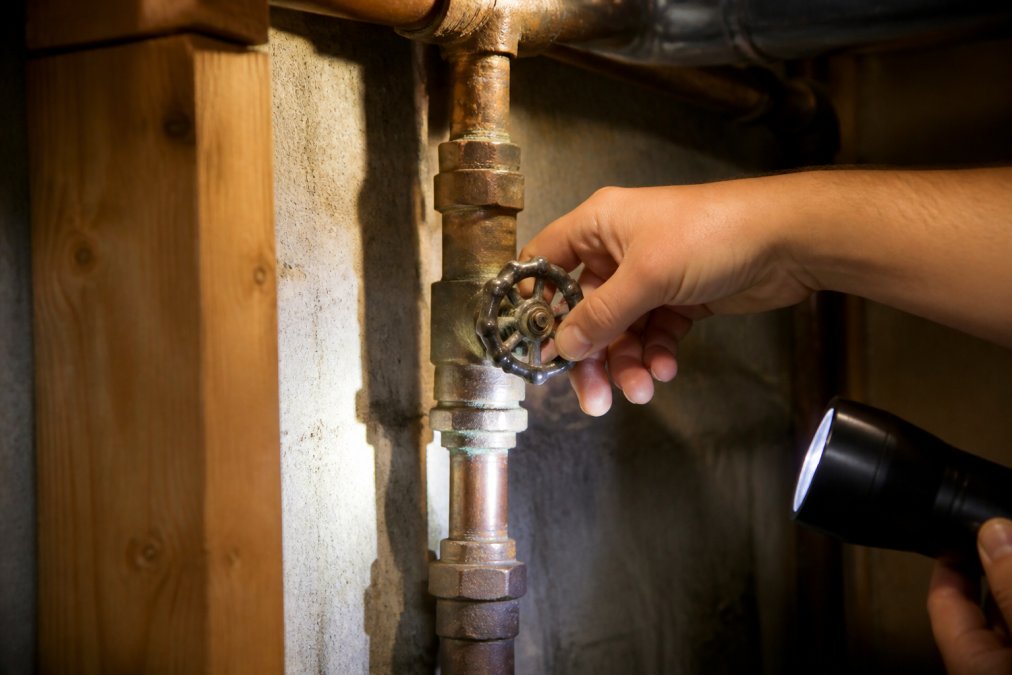
The main water valve is usually in the basement, near the water meter, or along the front wall facing the street. Knowing how to shut off main water valve hardware before an emergency saves critical minutes.

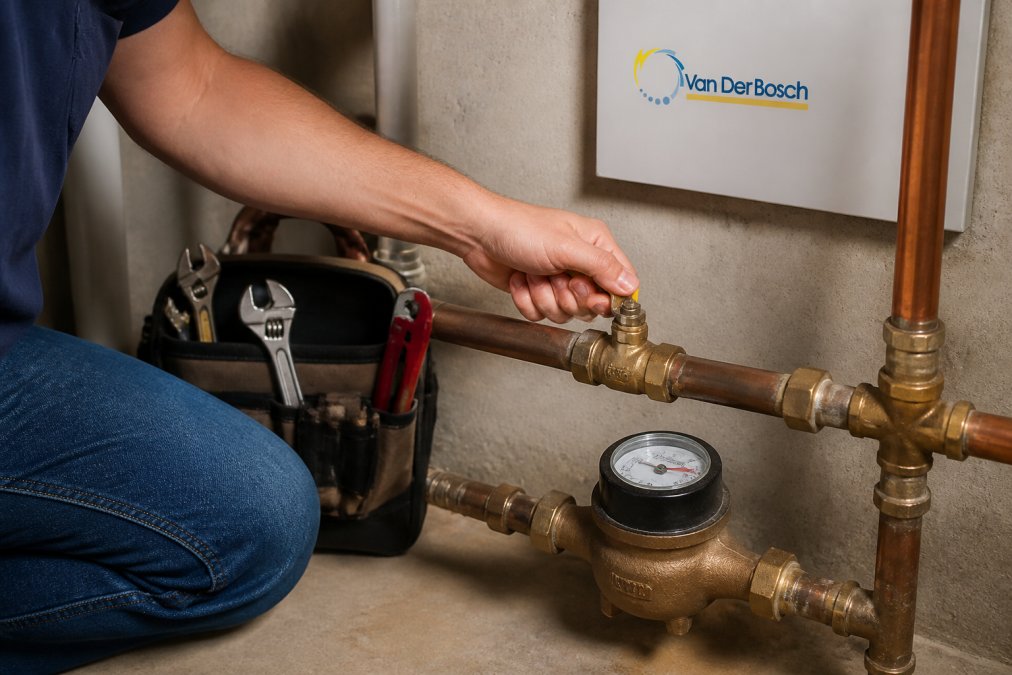
Homeowner turning a brass ball valve on a main water line to prevent damage from a burst pipe in the basement.

Gate Valves, Ball Valves, and Older Fixtures

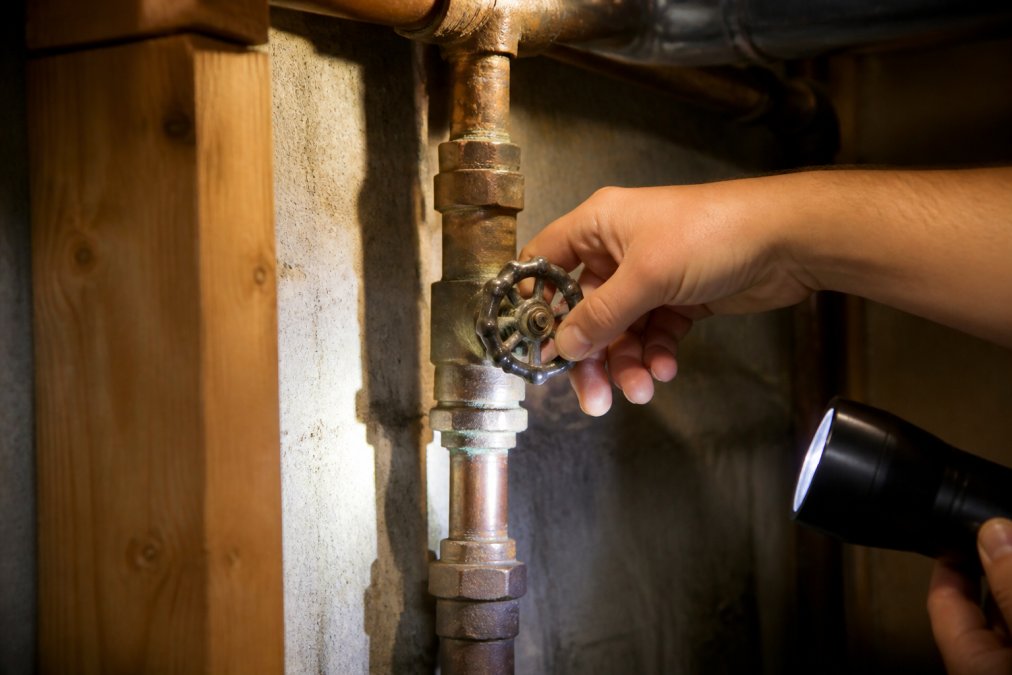
Older homes often have gate valves, a round handle you turn clockwise until it stops. They can seize if untouched for years, so test yours before winter. Newer homes usually have ball valves, where a quarter turn of the lever shuts the water off completely.

Can You Fix a Burst Pipe Yourself?

A burst pipe is different from a leak. A pinhole drip is contained; a burst pipe means the pipe wall has failed under household pressure. You can slow a small leak long enough to protect your floors, but you cannot restore a split pipe to service with tape and a clamp. Treat any DIY step as a holding action measured in hours, not a fix.

Here is the honest split:

  • Pinhole leak or weeping joint: A pipe clamp, self-fusing silicone tape, or a rubber patch with a hose clamp may hold until a plumber arrives.
  • Split, ruptured, or separated pipe: Shut the water off, leave it off, and call a licensed plumber.
  • Frozen section that has not split: Thaw it slowly and watch for a leak once flow returns.
  • Pipe on a boiler, steam system, or gas line: Do not touch it. These are pressurized or hazardous systems and belong to a licensed technician.

Temporary Fixes for Small Leaks

For a pinhole leak, shut the water off, dry the pipe, wrap self-fusing silicone tape around the leak, and finish with a hose clamp. Open the main valve slowly and watch the patch; if it weeps, close the valve and stop. A sleeve clamp, a rubber pad backed by a metal plate, works better on a straight run of copper or galvanized pipe than tape alone.

Repair or Replace the Failed Section?

This decision determines whether you are back on the same call next winter. A plumber evaluating a burst section looks at several factors:

  • Age and material of the pipe. Galvanized steel that has already failed once is usually near the end of its service life. Copper and PEX behave differently.
  • Extent of the failure. One clean split in a straight run is a candidate for a sectional repair. Multiple weak spots, pitting, or a long corroded stretch point toward replacement of the run.
  • Condition of surrounding pipe. If the metal on either side of the break is thin or discolored, patching the break just moves the next failure a few feet down the line.
  • Accessibility. A pipe in an open basement is straightforward to replace. A pipe inside a finished wall or under a slab changes the labor and the decision.
  • Recurring history. A line that has frozen or leaked more than once is telling you something about how it was installed or insulated.

Material Compatibility Matters

Connecting new pipe to old is not one-size-fits-all. Copper, PEX, galvanized steel, and cast iron each require different transition fittings, and mismatched connections are a common source of future leaks and corrosion. A dielectric union, for example, is used where copper meets galvanized steel to prevent galvanic corrosion. If a repair ties new material into an older system, that transition is part of the work.

When to Stop and Call a Licensed Plumber

Call a plumber right away if:

  • Water is still spraying after your patch
  • The break is behind a wall, under a slab, or in a ceiling cavity
  • You see rust, corrosion, green staining, or multiple weak spots along the pipe
  • The pipe is part of your boiler, steam system, or gas line
  • The same line has frozen or leaked before
  • You cannot find or fully close the main shutoff valve

Pressurized systems, gas lines, and boiler components are not DIY territory. A frozen pipe repair or burst pipe repair from a licensed technician protects your home, your safety, and your ability to file a clean insurance claim.

Watch Out
Never use a torch or open flame to thaw a pipe. It can ignite nearby wood framing and cause a house fire. Use a hair dryer, heat lamp, or portable heater instead, and never leave a heat source unattended.

The Insurance Angle Most Guides Skip

A burst pipe claim can go sideways for reasons unrelated to the water. Insurers look at whether the home was maintained, whether the loss was sudden or the result of long-term neglect, and whether the repair was done by a qualified professional. A DIY patch that fails weeks later and causes a second loss can complicate the claim.

Book a Visit →

Frozen Pipe Prevention Tips for Cold Months

Frozen pipe prevention comes down to three things: keep pipes warm, keep water moving, and know your weak spots. Fall prep beats an emergency call in January.

Start with these steps:

  • Insulate pipes in basements, crawl spaces, and attics
  • Seal gaps around exterior walls where cold air enters
  • Disconnect garden hoses and shut off outdoor spigots
  • Keep cabinet doors open under sinks on exterior walls
  • Let faucets drip during hard freezes

Insulation, Heat Tape, and Drip Strategy

Foam pipe insulation is easy to install, wrap it around any pipe running through an unheated space. Heat tape adds protection for pipes that freeze every year; plug it in before the first hard freeze. The drip strategy works because moving water freezes slower than still water, so a slow trickle overnight keeps the line clear.

Pro Tip
Focus your insulation budget on pipes along exterior walls and in unheated crawl spaces. Those freeze first, and they’re the hardest to reach once they burst.

How Winter Cold Causes Pipes to Burst

Water expands when it freezes, creating enormous pressure inside a sealed pipe (Essential Tasks After it Warms Up). The pipe doesn’t always split where the ice forms, pressure pushes downstream, so the break often shows up somewhere else. Older homes with galvanized steel pipes and cast iron drainage are especially vulnerable, since these materials weaken with age and lead solder joints can fail under stress.

What Affects the Cost of Burst Pipe Repair

There is no flat rate for a burst pipe, and any quote given before someone sees the break is a guess. A plumber can explain the factors that drive the number so you understand why two similar-sounding jobs can land in very different places.

The main factors:

  • Location of the break. A pipe in an open, unfinished basement is fast to reach. A pipe inside a finished wall, above a ceiling, or under a slab takes more labor to expose and more work to close back up.
  • Accessibility and restoration. Cutting into drywall, tile, or a ceiling adds scope. The plumbing repair and the drywall or finish repair are usually separate line items.
  • Pipe material. Copper, PEX, galvanized steel, and cast iron each require different fittings, tools, and techniques. Transitioning between old and new material adds a step.
  • Extent of damage. A single split section is a smaller job than a failed run with multiple weak points. If the plumber finds corrosion along the line, the scope changes.
  • Diagnostic work. Finding the break is not always obvious. Water travels along framing and can surface far from the actual failure, so leak detection may be part of the job.
  • Related components. If the burst pipe affected a water heater, boiler, or sump pump, those systems may need inspection or service as part of the same visit.
  • Time and conditions. After-hours and emergency calls, and work in a flooded or frozen space, affect how long the job takes.

Repair vs. Replace: The Cost Logic

This decision most affects what you ultimately spend, and it is where a cheap repair can become an expensive one.

  • The pipe has failed more than once
  • The material is galvanized steel or another aging system near the end of its life
  • Corrosion or pitting extends beyond the visible break
  • The line is already open and accessible, so the labor is largely paid for
  • You plan to stay in the home long enough to benefit from the reliability

What a Fair Quote Looks Like

A written estimate should separate the plumbing repair from restoration work, list materials, and describe the scope, what is being repaired or replaced and why. Ask whether the quote covers just the visible break or the full failed section, and what happens if additional weak spots are found once the pipe is exposed. Be cautious of any quote given without an inspection; a phone estimate for a burst pipe is a placeholder, not a price.

Key Takeaway
Get an inspection before you agree to a repair. A licensed plumber can tell you whether a section needs a patch or a full replacement, and that decision changes the scope of the work, and the cost, far more than any other factor.

Why the Cheapest Patch Is Not Always the Cheapest Outcome

A patch that fails in February means a second emergency call, a second round of water damage, and possibly a second insurance claim. Compare the total cost of getting through the winter reliably, not just the cost of stopping the leak today. For older homes with aging pipe, that comparison often favors doing the job once, correctly, while the line is already open.

Frequently Asked Questions

What is the first thing to do when a pipe bursts?

Shut off your home’s main water valve immediately to stop water from feeding the break. If the leak is near electrical outlets, wiring, or a breaker panel, turn off the power to that area at the breaker box before you touch anything wet. Then open the lowest faucet in the house to drain remaining water and reduce pressure. If you cannot reach the valve or the leak is spraying near live wiring, leave the area and call a licensed plumber.

Can I fix a burst pipe myself or do I need a plumber?

You can slow a small, accessible leak with a pipe clamp or silicone tape, but those are short-term measures, not repairs. A burst pipe usually means the pipe wall has split from ice expansion or corrosion, and the surrounding section is often weakened too. A licensed plumber can cut out the damaged section, check for additional freeze damage, and restore the line safely. If the pipe is behind a wall, in a crawlspace, or part of a pressurized system, leave it to a professional.

Why do pipes burst during cold weather?

Water expands as it freezes, and that expansion puts pressure on the pipe walls. The burst often happens not where the ice forms but downstream, where pressure builds between the ice blockage and a closed faucet. Pipes in unheated basements, crawlspaces, exterior walls, and garages are the most vulnerable. Older homes with galvanized steel or aging copper lines are at higher risk because the metal has already thinned from corrosion.

How much does burst pipe repair cost?

Pricing depends on several factors: where the pipe is located, how accessible it is, what material it is made of, how much of the line needs replacing, and whether water damage affected other areas. A pipe in an open basement is a different job than one inside a finished wall. Pricing depends on several factors: where the pipe is located, how accessible it is, what material it is made of, how much of the line needs replacing, and whether water damage affected other areas. A pipe in an open basement is a different job than one inside a finished wall. Visit the website to review current pricing or request a quote.

Hiring Plumbers for Vintage Homes: What to Know

Table of Contents

Last Updated: September 20, 2026

Why Vintage Homes Need Specialized Plumbing Experience

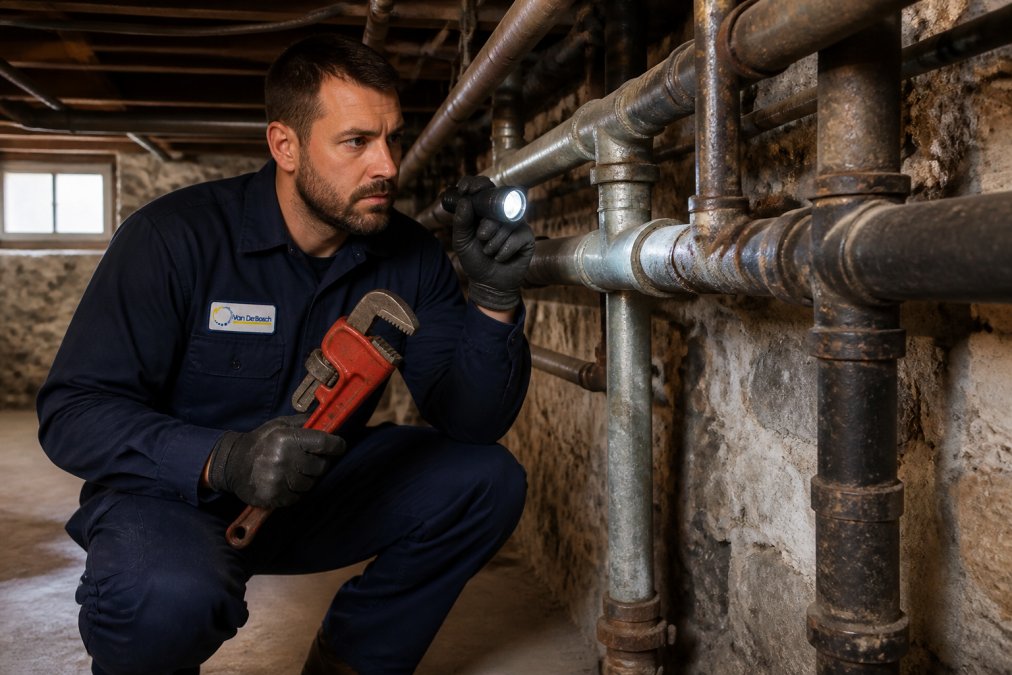
Hiring plumbers for vintage homes requires a different skill set than working on newer construction. Older properties often have plumbing systems that modern technicians rarely encounter, and mistakes during repair or replacement can damage both the mechanical systems and the home’s historic character.

A plumber experienced with vintage homes understands the materials, code requirements, and structural considerations that come with properties built decades ago. They know how to diagnose problems in galvanized steel and cast iron pipes, and recognize when lead solder is present.

When you hire the wrong plumber for a vintage home, you risk expensive mistakes. An inexperienced technician might recommend replacing an entire system when repair is possible, or they might install modern materials that conflict with the existing infrastructure. The specialized expertise matters because vintage plumbing systems operate differently and require different solutions.

Article image

Common Plumbing Issues in Older Homes

Vintage homes were built with materials and methods that no longer meet modern standards. Understanding what typically fails in older plumbing systems helps you recognize when professional service is needed.

Galvanized Steel and Cast Iron Deterioration

Galvanized steel pipes corrode over time as the zinc coating breaks down, restricting water flow. Cast iron drainage pipes can last 75 to 100 years but eventually corrode from the inside. Signs include slow drains, rust-colored water, or damp basement spots. A plumber experienced with vintage homes can assess whether targeted repair or full re-plumbing is the practical choice.

Lead Solder and Fixture Corrosion

Homes built before the 1980s often have copper pipes joined with lead solder, which was banned in 1986. While the risk from lead in solder is lower than from lead service lines, it’s a consideration for homes with young children. Old brass faucets and valve bodies also corrode, causing metallic-tasting water or green/blue staining. A plumber can determine which fixtures are worth restoring and which should be replaced.

Signs of Failing Pipes in Old Houses

Warning signs of failing vintage plumbing include: slow drains that persist despite plunging (suggesting corrosion in the pipes), discolored water with reddish or brownish tints, damp basement spots near pipes, recurring clogs in the same drain, and low water pressure. Multiple slow drains suggest the problem is in the main line rather than individual fixtures. A professional inspection with a sewer camera can pinpoint the exact location and severity of corrosion, helping you understand whether repair or replacement is the right approach.

Steam Boiler Maintenance for Historic Properties

Many vintage homes in the area rely on steam boilers for heat. These systems are fundamentally different from modern hot-water or forced-air systems, and they require specialized knowledge to maintain and repair.

Steam boilers heat water to steam that travels through pipes to radiators, then condense and return to the boiler. They’re more complex than modern systems and require specialized knowledge. Common problems include water hammer, leaking radiator valves, and pressure loss. Many general plumbers avoid steam systems because they’re less common now. Regular inspection of water level, pressure relief valves, and return lines prevents problems. If your home has a steam boiler, hire a plumber who specializes in these systems.

Code Compliance and Permitting in Vintage Home Repairs

Upgrading plumbing in a vintage home involves navigating building codes that have evolved significantly since the home was built. Modern code requirements exist for safety and performance, but applying them to older systems creates practical challenges. Understanding these requirements and how to meet them helps you work with a plumber who can balance compliance with the realities of vintage infrastructure.

Why Codes Change and What It Means for Your Home

Building codes evolve to reflect safety and best practices. A home built in 1950 was compliant then, but its plumbing may not meet today’s standards. This doesn’t mean it’s unsafe, modern code simply requires different materials, sizing, venting, or installation methods.

Material Compatibility: Connecting Old to New

Connecting modern materials to legacy systems requires specialized knowledge. Joining dissimilar metals (copper to galvanized steel, for example) causes galvanic corrosion unless a dielectric union isolates them. PEX cannot be directly joined to cast iron, a transition fitting is required. A plumber knows which fittings are code-approved and how to install them correctly to prevent future corrosion.

Permitting and Inspection

Permits are required by code for most plumbing repairs and replacements. Skipping them creates liability and can complicate home sales or insurance claims. Inspectors verify that new materials meet code, connections are proper, systems are pressure-tested, and drainage has correct trap configuration, vent sizing, and slope.

Variances and Alternative Compliance

In some cases, vintage homes qualify for variance or alternative compliance if the work meets the intent of the code.

Insurance and Code Compliance

Some insurance companies require code-compliant plumbing or charge higher premiums for outdated materials. A full or partial replumbing can improve insurability and may reduce premiums. When hiring a plumber, ask whether they’re familiar with the local building department’s approach to older homes.

Questions to Ask Before Hiring a Plumber

Asking the right questions helps you identify whether a plumber has the experience needed for your vintage home.

Experience with Historic Plumbing Systems

Ask: “How many vintage homes have you worked on, and what materials did they have?” A plumber with genuine experience can describe specific challenges and solutions. Ask about experience with galvanized steel, cast iron, and lead solder. If your home uses steam heat, confirm they’ve worked on steam boilers, this is essential.

Repair vs. Replacement Approach

Ask: “Under what circumstances would you recommend repair versus replacement?” Listen for a balanced answer that considers system age, damage extent, and cost-benefit. Be wary of immediate full-system replacement recommendations. Ask about experience with targeted repairs and connecting modern materials to older systems safely.

Licensing, Insurance, and Warranties

Verify the plumber is licensed in your state and carries liability insurance. Ask what warranty they offer on their work and what it covers. For vintage homes, ask whether they warranty work on older systems specifically, as some plumbers limit warranties on repairs to older pipes or fixtures.

Protecting Your Home’s Mechanical and Aesthetic Integrity

When plumbing fails in a vintage home, homeowners face a fundamental choice: repair the failing section or replumb the entire system. This decision involves trade-offs between cost, longevity, safety, and the home’s character. Understanding the factors that favor each approach helps you make an informed decision with your plumber.

When Repair Makes Sense

Targeted repair is often the right choice if the problem is localized and the surrounding system is sound. Repair is most practical when the failing section is easily accessible, the rest of the system is relatively new or recently upgraded, water quality and pressure are normal, and the repair doesn’t require major structural disruption.

When Full or Partial Replumbing Is Necessary

Replumbing becomes the practical choice when corrosion is widespread, when multiple sections are failing, or when the cost of repeated repairs approaches the cost of replacement.

Signs that replumbing may be unavoidable:

  • Multiple drains are slow or backing up, suggesting corrosion throughout the drainage system
  • Water is persistently discolored or has a metallic taste, indicating rust throughout the supply lines
  • You’ve had more than one major leak in the past five years
  • The home is 80+ years old and the original plumbing has never been replaced
  • Inspection with a sewer camera reveals corrosion or deterioration in multiple sections of the main drain line
  • You’re planning a major renovation (kitchen, bathroom, or addition) that requires opening walls anyway

Material Choices and Historic Preservation

Copper is durable, compatible with older systems, and visible in basements without looking out of place in a vintage home. It’s more expensive than PEX but has a longer track record in older homes.

The Long-Term Cost Perspective

The decision between repair and replacement should account for long-term reliability, not just immediate cost. A series of repairs to a failing galvanized system may cost less upfront but lead to emergency service calls, water damage, and repeated disruption. Replumbing costs more initially but eliminates the risk of cascading failures.

Preventative Maintenance for Vintage Plumbing

Regular maintenance extends the life of vintage plumbing systems and catches problems before they become emergencies.

Vintage homes deserve plumbers who understand their unique needs. When you’re ready to address plumbing concerns in an older property, contact VanDerBosch Plumbing Inc. Our technicians have extensive experience with historic plumbing systems, steam boilers, and the specialized materials found in vintage homes. We’ll assess your situation honestly, explain your options, and help you make decisions that protect both your home’s function and its character. Call today to schedule a consultation.

Frequently Asked Questions

What are the most common plumbing issues in vintage homes?

Older homes often have galvanized steel or cast iron pipes that corrode over time, leading to reduced water pressure, discolored water, and frequent clogs. Lead solder in fixture connections and outdated plumbing materials create additional concerns. Steam boiler systems common in historic properties require specialized knowledge. A licensed plumber experienced with vintage homes can identify which issues need immediate attention and which can be addressed gradually.

How do I know if my vintage home needs a full repipe?

Signs that suggest re-plumbing may be necessary include persistent low water pressure throughout the home, recurring clogs despite cleaning, rusty or discolored water, frequent leaks in multiple locations, and visible corrosion on exposed pipes. The age of your plumbing system, the materials used, and your repair history all factor into this decision. A professional plumbing diagnostics assessment can determine whether targeted repairs or a full system modernization makes sense for your property and budget.

Should I hire a specialist for antique plumbing fixtures?

Yes, if your vintage home has original or period-appropriate fixtures, a plumber experienced with historic properties can often advise on compatible replacements that maintain your home’s aesthetic while meeting current plumbing codes.

What questions should I ask before hiring a plumber for an older property?

Ask about their experience with vintage homes and the specific era of your property. Inquire whether they carry liability insurance. Request references from similar projects. Ask about their diagnostic process and how they handle unexpected discoveries during work. Understanding their approach to balancing preservation with functionality helps ensure they align with your goals.

Licensed Plumbers for Steam Boilers: What You Need to Know

Table of Contents

Last Updated: September 19, 2026

Why Steam Boilers Require Specialized Licensed Plumbers

Steam boilers operate under pressure and involve complex mechanical and safety systems that differ fundamentally from standard plumbing repair. Only licensed plumbers for steam boilers have the specialized knowledge to diagnose problems, perform repairs safely, and ensure the system meets building codes.

Steam heating involves pressurized vessels, condensate return lines, venting systems, and safety controls like the pressuretrol and low water cutoff. These components interact in ways that demand specific training. A general plumber may lack the expertise to troubleshoot a steam boiler’s unique failures.

Older homes in the region often rely on cast iron steam boilers that have operated for decades. These systems require technicians who understand vintage equipment behavior, common failure patterns, and how to maintain them without unnecessary replacement.

The stakes are higher with boiler work. A misdiagnosed problem or improper repair can lead to system failure during winter, safety hazards, or inefficient operation that wastes fuel. This is why hiring someone with proper licensing and steam heating experience matters.

Signs of Steam Boiler Failure and When to Call a Professional

Common Warning Signs

Uneven heating across radiators is one of the earliest indicators. If some rooms stay warm while others remain cold, the problem may be air trapped in the system, a blocked vent on a radiator, or insufficient steam reaching certain lines.

Banging or hammering sounds in the pipes, called water hammer, suggest condensate isn’t draining properly from the steam lines back to the boiler. This happens when the condensate return system fails or when the boiler’s water level drops too low. Water hammer can damage piping and accelerate wear on the system.

A sight glass that shows water level fluctuating wildly or staying too high or too low indicates a problem with the low water cutoff, the float mechanism, or the water feed system.

Rust staining around the boiler or on nearby walls suggests a slow leak. Small leaks allow air into the system and water out, both of which degrade performance.

A boiler that cycles on and off frequently, or one that won’t maintain pressure, points to multiple possible causes: a faulty pressuretrol, a leaking relief valve, a cracked heat exchanger, or low water level.

Safety Concerns That Demand Immediate Attention

If you smell gas near the boiler, stop using it immediately and call for emergency service. Gas leaks are dangerous and need a licensed technician to locate and repair the source.

A boiler that leaks water actively or shows signs of a major crack should not operate. Continuing to run a damaged boiler risks flooding, electrical hazards, and potential steam or hot water release.

If the relief valve is continuously dripping or venting steam, the boiler may be building excess pressure. Have this inspected promptly.

Signs of carbon monoxide, such as soot buildup around the boiler, a yellow flame instead of blue, or water dripping from the flue pipe, mean the boiler is not combusting fuel cleanly. This requires immediate professional diagnosis.

Boiler Repair vs. Replacement: Making the Right Decision

Deciding whether to repair or replace a steam boiler depends on several practical factors, not just the immediate problem.

Age of the system is the first consideration. A boiler that is 15 years old or newer and has been maintained reasonably well is usually worth repairing. An older unit, especially one over 25 or 30 years, may be nearing the end of its useful life.

Severity and cost of the repair matter significantly. A faulty pressuretrol or a leaking valve may cost a moderate amount to fix and restore full function. A cracked heat exchanger or a major leak in the boiler shell is far more expensive and may approach or exceed the cost of a new unit.

Repair history is telling. If the boiler has needed multiple repairs in the past few years, it may be entering a phase of accelerating failures. At some point, the cost of ongoing repairs exceeds the cost of replacement.

Efficiency and fuel consumption should factor into long-term economics. If your heating bills are climbing and the boiler is aging, replacement with a modern unit could reduce fuel costs over time.

Availability of replacement parts can influence the decision. For very old or obscure boiler models, replacement parts may be hard to source, making repair difficult or expensive. Newer boilers have readily available components.

Condition of surrounding components matters too. If the piping, radiators, and condensate return system are in good shape, a boiler repair makes sense. If you discover that major repiping or radiator work is also needed, replacement with a modern system becomes more attractive.

The key is that repair is often the right choice for a mid-life boiler with a single significant problem. Replacement makes sense for an aging unit with declining reliability, high repair costs, or poor efficiency.

What to Expect During a Professional Boiler Service Call

The technician will ask about symptoms: when the problem started, what you’ve noticed, and whether the boiler has had previous repairs.

They’ll perform a visual inspection of the boiler, checking the sight glass for proper water level, examining the exterior for leaks or corrosion, and inspecting piping and connections.

Book a Visit →

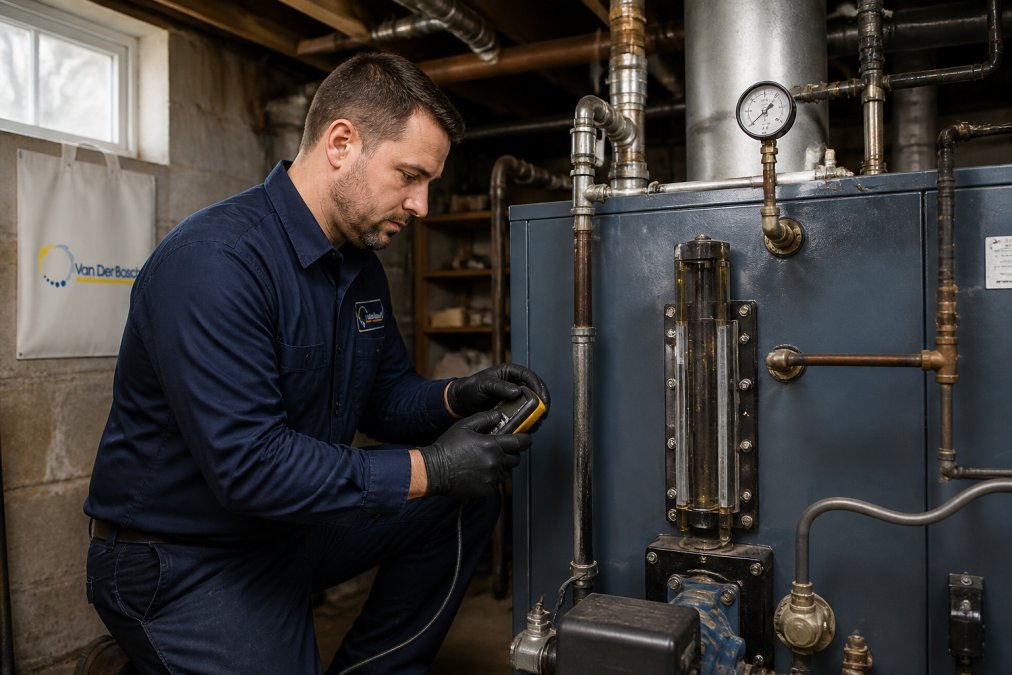
Professional technician in work clothes using diagnostic equipment to inspect a steam boiler in a residential basement, with sight glass, piping, and pressure gauges visible

They’ll test the pressuretrol, low water cutoff, and relief valve to confirm they’re functioning correctly and may use a combustion analyzer to check fuel combustion efficiency and safety.

If the problem is straightforward, the technician may repair it during the visit. If the issue is more complex, they’ll explain your options: repair, replacement, or a temporary fix while you decide.

Licensing, Insurance, and Certification Standards for Steam Boiler Technicians

Not every plumber is qualified to work on steam boilers. Licensing requirements exist to protect homeowners and ensure work is done safely.

A licensed plumber for steam boilers must hold a valid plumbing license issued by the state or local jurisdiction. The licensing process requires documented training, apprenticeship hours, and passing an examination covering plumbing codes, safety, and technical knowledge.

Many steam boiler specialists pursue additional certifications in heating systems, boiler operation, or steam heating, demonstrating deeper expertise in boiler-specific work.

General liability insurance is essential. This protects you if the technician accidentally damages your property during the service call. A reputable company carries this coverage as standard practice.

Some jurisdictions require a separate license or endorsement specifically for boiler work. Ask whether your technician holds any boiler-specific certifications or endorsements.

Verification matters. Before hiring, confirm that the technician’s license is current and in good standing by checking with your state or local licensing board. This takes a few minutes and gives you assurance that you’re working with someone who has met professional standards.

Preventative Maintenance and System Longevity

Regular maintenance extends the life of a steam boiler and prevents many common failures. A well-maintained system operates more efficiently, costs less to run, and is less likely to fail unexpectedly.

Annual inspection before the heating season begins is the foundation of good maintenance. A technician checks water level controls, tests the relief valve, inspects piping for corrosion or leaks, and confirms that the combustion process is clean and efficient.

Keeping the boiler and surrounding area clean matters. Dust and debris can interfere with controls and air intake. Regular cleaning prevents buildup that reduces efficiency.

Monitoring the water level and ensuring the automatic feed system is working properly prevents low-water conditions that can damage the boiler. If you notice the water level dropping frequently, have the feed system inspected.

Flushing the condensate return line periodically removes sediment and mineral buildup that can block the return of condensate to the boiler. This is especially important in areas with hard water.

Addressing small problems quickly prevents them from becoming large ones. A small leak, a slow response from a control valve, or a radiator that’s not heating properly should be investigated rather than ignored.

Systems that receive this level of attention often operate reliably for 30 years or more. Neglected boilers tend to fail sooner and require more frequent repairs.

How to Choose a Licensed Boiler Technician You Can Trust

Finding the right technician starts with verifying credentials and understanding what you’re paying for.

Check licensing and insurance. Confirm that the company holds a valid plumbing license and carries general liability insurance.

Conclusion

Hiring licensed plumbers for steam boilers ensures that your heating system receives expert care from someone trained to diagnose and repair these specialized systems safely. Steam boilers operate under pressure and involve controls and piping that demand specific knowledge. A general plumber may not have this expertise.


Frequently Asked Questions

Is a plumber the right professional to fix a steam boiler?

Yes, but only if the plumber is licensed and has specific training in steam heating systems. Not all plumbers work on boilers, many focus only on water supply and drainage. Steam boilers operate under pressure and require knowledge of pressuretrol controls, low water cutoffs, and condensate return systems. A licensed plumber with steam boiler experience can diagnose and repair these systems safely. If a plumber tells you they don’t service steam boilers, ask for a referral to someone who does.

What are the signs that a steam boiler needs professional service?

Watch for uneven heating across radiators, clanking or banging sounds in the pipes (water hammer), leaking water around the boiler base, a sight glass that’s empty or unclear, rust or corrosion on the exterior, or a boiler that won’t fire up. Some of these issues can be addressed by a licensed plumber; others may require a heating specialist. When in doubt, call a professional for inspection rather than attempting repairs yourself, steam systems operate under pressure and pose safety risks.

How often should a steam boiler be inspected by a professional?

Annual inspection before the heating season is standard practice for residential steam boilers. Older systems in particular benefit from regular preventative maintenance to catch wear early and keep the system running efficiently. A professional inspection includes checking the pressuretrol, low water cutoff, sight glass, and overall system condition. Regular maintenance can extend boiler life, improve heating performance, and prevent emergency breakdowns during cold weather.

What factors should I consider when deciding between boiler repair and replacement?

Consider the boiler’s age, the cost of the repair, frequency of recent problems, and overall system efficiency. A boiler that’s 20+ years old and requires frequent repairs may be a candidate for replacement, especially if repair costs are high. Conversely, a newer system with an isolated problem may be worth repairing. A licensed plumber can assess the damage and help you understand whether repair or replacement makes sense for your situation and budget.

Benefits of No Service Charge Plumbers

Table of Contents

**

What ‘No Service Charge’ Actually Means

When no service charge plumbers advertise their model, they’re eliminating the upfront diagnostic fee that most plumbing companies charge just to show up and assess your problem. Instead of paying separately for the visit itself, you pay only for the actual work and materials needed to fix the issue.

This is different from a free estimate or free consultation. A true no service charge model means there’s no trip fee, no dispatch charge, and no diagnostic fee, regardless of whether you decide to hire them or not. At VanDerBosch, we operate on this principle because we believe homeowners shouldn’t pay extra just to understand what’s wrong with their plumbing.

The catch that many homeowners worry about: Are these costs hidden elsewhere? The answer depends on the plumber’s business model. Some companies that advertise no service charges build those costs into their hourly rates or parts markup. Others genuinely absorb the cost as part of their operating model. Understanding the difference matters when you’re comparing quotes.

Why Traditional Service Fees Exist

Most plumbing companies charge a service call fee to cover technician time, fuel, vehicle wear, insurance, and overhead. Service fees also filter casual inquiries and reduce no-show appointments. However, this creates a barrier for homeowners, if your pipe bursts at 2 AM, a dispatch fee may make you hesitate calling for help that could prevent serious water damage.

Does Eliminating the Service Fee Actually Save You Money?

This is the question that matters most when you’re comparing plumbers. The answer depends on what happens to those diagnostic costs.

The cost doesn’t disappear, it gets redistributed. A plumber’s overhead and diagnostic time are real expenses. If a company doesn’t charge a service fee, they recover those costs through higher hourly rates, higher parts markups, or minimum labor charges. The question is whether the total cost to you is lower, higher, or the same.

For small repairs, a no-service-charge model often saves money. If you need a simple fix, a leaky faucet, a running toilet, a clogged drain, and the plumber can solve it in 30 minutes to an hour, you avoid paying a separate diagnostic fee. The total cost is lower because the repair itself is quick. This is where the no-service-charge advantage is real.

For complex diagnostics, the advantage disappears. If your problem requires investigation, a sewer camera inspection, multiple visits to pinpoint an intermittent leak, or extensive troubleshooting, the plumber’s diagnostic time gets billed as labor. You may pay more because the hourly rate is higher to compensate for the waived service fee.

For jobs where you don’t hire the plumber, the no-service-charge model saves you money. If you call three plumbers for estimates and only hire one, you avoid paying diagnostic fees to the two you didn’t use. This is a real advantage, especially if you’re comparing multiple quotes.

For follow-up visits, the structure matters. Some no-service-charge plumbers waive the fee on the initial visit but charge a full diagnostic fee if you call back. Others waive it on callbacks too. Ask this question before you hire. If the first repair didn’t fully solve the problem, you don’t want a surprise charge for the follow-up.

The Real Trade-Off: Transparency vs. Simplicity

A service fee model is transparent: you see the diagnostic cost as a separate line item. A no-service-charge model simplifies the initial decision but can obscure total cost if hourly rates or parts pricing are higher. Neither is inherently better, compare total costs across quotes, not just the presence of a service fee.

When a Service Fee Actually Protects You

A service fee can protect you if it’s credited toward the repair cost. Ask whether the fee will be credited if you hire them. If it will, the fee is less of a barrier. If it won’t, you’re paying separately for diagnosis and work.

The Real Benefits of No Service Charge Plumbers

Transparent Pricing From the Start

When there’s no service charge, your quote is simpler. You’re not calculating whether the diagnostic fee will be credited or whether you’ll be charged again for a follow-up visit. VanDerBosch’s approach to transparent pricing means you know upfront what the repair will cost before work begins.

Lower Barrier to Emergency Service

With no service charge, the decision to call becomes simpler during emergencies. Homeowners are more likely to call quickly if they’re not paying extra for diagnosis, which can mean the difference between contained water damage and significant structural problems. For recurring issues, no service charge means you can call back without penalty if the first fix didn’t fully solve the problem.

No Hidden Costs or Surprises

A no service charge model eliminates one category of hidden cost: you’re not paying for the visit. What you pay for is the work and materials. The risk is that some plumbers use “no service charge” as marketing while padding labor rates or parts costs. That’s why it’s important to ask specific questions about how they price their work.

Understanding Plumbing Repair Cost Factors

Several factors affect what you’ll pay for a repair: type and location of the problem, accessibility, materials and equipment needed, extent of damage, diagnostic work required, and whether additional components are affected. A no service charge plumber should still be transparent about these factors when giving you an estimate.

Book a Visit →

Red Flags of ‘Free Estimate’ Marketing

Not all “no charge” offers are created equal. Some plumbing companies use free estimates as a marketing hook while building their real costs into other places. Understanding how these costs get hidden is the key to spotting them in your own quote.

How ‘No Service Charge’ Companies Recover Diagnostic Costs

A plumber must recoup diagnostic costs somewhere if not charging a service fee. Common methods include inflated hourly labor rates, higher parts markups, diagnostic fees disguised as “site evaluation” or “inspection” charges, minimum labor charges on small repairs, and full diagnostic fees for follow-up visits. When comparing quotes, calculate total labor cost and verify parts pricing.

Red Flags to Watch For

Red flags include vague pricing over the phone, pressure to decide immediately, hourly rates significantly below market, unclear warranty language, refusal to provide written estimates, fear-based marketing without cause, and no mention of licensing or insurance. A straightforward plumber can give you a ballpark range based on your description and puts estimates in writing.

How to Spot Hidden Costs in Your Quote

When you receive an estimate, look for these patterns:

  • Line-item breakdown. A detailed estimate shows labor hours, hourly rate, specific parts with individual prices, and any fees separately. If the quote is just one lump sum, ask for a breakdown.
  • Comparison across quotes. If one plumber quotes significantly different hours for the same job, ask why. One may be more efficient, or they may have a different approach. Don’t assume the lower hour count is always better, sometimes it means they’re underestimating the work.
  • Parts pricing verification. For major components (water heaters, sump pumps, fixtures), you can sometimes look up the wholesale cost online. A reasonable markup is typical. If the quoted price is significantly higher, ask why.
  • Total cost comparison. Add up labor + parts + any fees on each estimate. The cheapest hourly rate doesn’t always mean the cheapest total job.

A honest no service charge plumber competes on reliability and fair pricing, not on hidden costs or fear tactics. They should be transparent about their hourly rate, parts pricing, and any minimum charges before you commit.

Questions to Ask a Plumber Before Hiring

Before you commit to any plumber, ask these questions to understand how they price work and whether they’re a good fit:

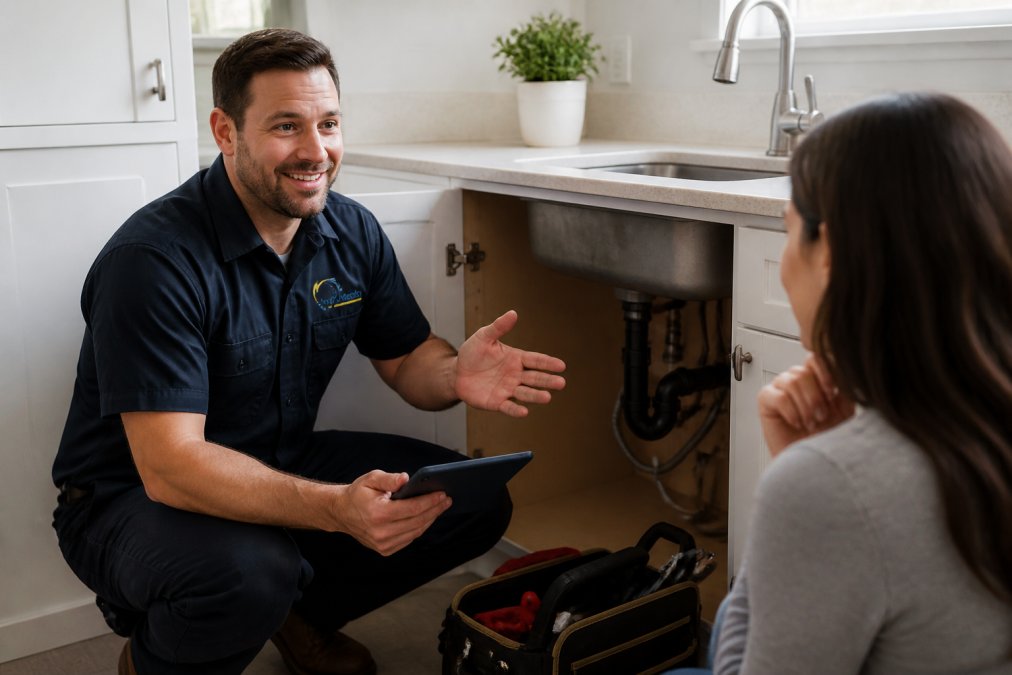
Professional plumber discussing home repairs with a client while vetting no service charge plumbers

1. How do you charge for your work? Listen for clarity. Do they charge by the hour, by the job, or a combination? Are parts marked up at a flat rate or a percentage?

2. Will you provide a written estimate before starting work? A written estimate protects you. It should list the work to be done and the cost.

3. What’s your warranty on the repair? VanDerBosch offers a 90-day warranty on new equipment and a 100% satisfaction guarantee. Other plumbers may offer different terms. Know what you’re getting.

4. If you find additional problems during the repair, will you call me before proceeding? This prevents surprise costs. A good plumber stops and asks before expanding the scope of work.

5. Are you licensed and insured? This protects you if something goes wrong.


Frequently Asked Questions

Do all plumbers charge a service call fee?

No. Many plumbing companies charge a dispatch fee, trip charge, or diagnostic fee just to show up and assess the problem. However, some plumbers operate on a no service charge model, meaning you only pay for the actual repair work and parts. This approach eliminates the barrier to getting a professional onsite assessment, which is especially valuable during emergencies like burst pipes or sewer backups when you need answers quickly.

What plumbing repair cost factors should I understand before calling for service?

Several factors affect plumbing repair pricing: the type and location of the problem, accessibility of the pipes or equipment, materials and parts required, extent of damage, diagnostic work needed, and whether additional components are affected. For example, a clogged toilet in an easily accessible bathroom costs less than repairing a sewer line issue requiring excavation. Labor costs, travel time, and technician expertise also play a role. A professional plumber should explain these factors clearly so you understand why the estimate is what it is.

What should I ask a plumber before hiring them?

Ask about their licensing and insurance, whether they charge a service call fee or dispatch fee, how they price labor (hourly rate versus flat rate), what’s included in their estimate, their warranty on repairs, and their availability for emergencies. Also ask if they offer same-day service and what their typical response time is. Request a detailed written estimate that breaks down parts, labor, and any other costs. These questions help you compare fairly and avoid surprises when the bill arrives.

How can I avoid getting ripped off by a plumber?

Work with a plumber who provides transparent pricing upfront, explains what they’re charging for, and offers a written estimate before starting work. Be cautious of companies that advertise ‘free estimates’ but then pressure you into immediate repairs or quote unexpectedly high prices once they assess the problem. Ask for references, verify licensing and insurance, and compare quotes from multiple plumbers. A no service charge model reduces one common pressure tactic, but always confirm what the final bill will include.

Book Emergency Plumbing Repair Online: A Quick Guide

Table of Contents

Last Updated: September 18, 2026

What Counts as a Plumbing Emergency

A plumbing emergency is any situation where water damage, health hazards, or system failure threatens your home or business right now. The most common emergencies include burst pipes flooding a room, sewage backing up into drains, gas leaks, no hot water in winter, or a toilet overflowing. These situations demand immediate attention, not tomorrow, but today.

A slow drain, dripping faucet, or minor leak under the sink can wait for a scheduled appointment. But if water is actively flowing where it shouldn’t be, if you smell gas, or if multiple fixtures stop working at once, you need urgent action.

Emergencies cause active damage or create safety risks. Everything else can be addressed during business hours. Understanding the difference helps you know when to book emergency plumbing repair online.

Immediate Steps Before Booking Emergency Plumbing Repair Online

Before you reach out to schedule service, take a few critical steps to minimize damage and give the technician useful information when they arrive.

Locate Your Water Shut-Off Valve

The first thing you should do in any water emergency is stop the flow at the source. Every home has a main water shut-off valve, usually located near the water meter in a basement, crawlspace, or utility closet. In some cases, it’s outside near the foundation. Knowing where this valve is before an emergency happens is invaluable.

Article image

Securing the water supply prevents further property damage while you consult this emergency plumbing guide to determine the next logical steps for a permanent fix.

The valve typically has a handle you turn clockwise to stop water flow. Some older homes have a gate valve that requires multiple full turns. If you can’t find it, look near the water meter, the valve is usually within a few feet. If you’re renting, ask your landlord or property manager.

Shutting off the water prevents further damage while you wait for a professional.

Document the Problem

Take a photo or video showing where the water is coming from and any visible damage. This helps the technician prepare and creates an insurance record if needed.

Note when the problem started, whether the water is clear or discolored, and any odors. These details help the technician diagnose faster.

Burst Pipe Repair and Temporary Containment

Burst pipes are damaging because water flows continuously until stopped. They typically occur in winter when water freezes and expands, but can also result from age, corrosion, or physical damage.

Turn off the main water valve immediately. If the burst is inside a wall, under the floor, or in a crawlspace, you may only notice water pooling or wet spots.

While waiting, move furniture away from the affected area. Place a bucket under ceiling drips and open windows to improve air circulation and prevent mold.

Do not attempt DIY repairs with solder, epoxy putty, or tape, these fail quickly and risk injury. A licensed professional has the tools to properly assess and restore your water line.

How to Book Online and What to Expect

Having the right information ready before booking makes the process smoother and helps the technician arrive prepared.

What Information You’ll Need to Provide

Have these details ready:

  • Your address and phone number
  • Description of the problem, for example, “water spraying from under the kitchen sink” or “toilet overflowing”
  • When it started, suddenly or gradually over days?
  • Photos or video if available
  • Access information, locked doors, gates, or side entrances

The Online Booking Process

VanDerBosch’s online booking system lets you describe your emergency and select available times. You’ll receive a confirmation with your appointment window.

You can also call if you prefer to speak with someone directly.

What Happens When the Technician Arrives

The technician will inspect the affected area, ask when the issue started, and explain what they found.

The technician will explain repair options. For a burst pipe, they’ll discuss whether the damaged section can be replaced or if the entire line needs attention. For a sewer backup, they may recommend a camera inspection before hydro jetting or excavation. For a gas leak, they’ll explain that your gas utility must confirm safety before repair.

Preparing Your Home for the Visit

Clear the area around the problem for easy access. Remove items from under sinks, move basement storage, and secure pets in another room.

Let the technician know if you’ve turned off the main water valve. If the problem involves gas, confirm you’ve called your gas utility.

After the Repair

The technician will test the system and explain what they did and why the problem occurred. Ask for a summary of the work and any warranty that applies.

To book emergency plumbing repair online, visit https://www.vanderbosch.com/ or call to speak with someone directly.

Understanding Plumbing Repair Cost Factors

Emergency repair costs vary based on what’s broken, where it’s located, and existing damage. Understanding cost drivers helps you make informed decisions.

Type of Problem

Simple fixes like replacing a fill valve or tightening connections cost far less than burst pipes requiring replacement. Sewer blockages requiring hydro jetting or camera inspection add diagnostic costs.

Location and Accessibility

A leak under the kitchen sink is straightforward to repair. A burst pipe hidden behind a wall, under the floor, or in a crawlspace requires locating it first, which may involve opening walls or digging. Difficult access increases labor costs and may require drywall removal and patching.

Extent of Damage

A pinhole leak costs less than a burst section. Flooded basements may require water removal and drying services. Mold remediation adds cost if water sat for hours. Early detection keeps costs lower.

Materials and Equipment

Replacing a short copper section costs less than replacing corroded galvanized steel throughout the home. Frozen pipes may need thawing and insulation. Some repairs require specialized equipment like sewer cameras or hydro jetting.

Diagnostic Work

Some emergencies require investigation before repair. A sewer camera inspection identifies blockage location and prevents unnecessary digging. Gas leaks require detection equipment to pinpoint the source. Diagnostic services add cost but solve problems correctly.

What to Ask When Getting a Repair Estimate

Ask the technician to explain what they found, why it happened, and what repair options exist. Ask whether repair is permanent or temporary, and why replacement is recommended if suggested. A professional should explain their reasoning before you commit.

Contact VanDerBosch directly or visit https://www.vanderbosch.com/ to schedule an inspection and receive a detailed estimate.

Gas Leak Signs and When to Call Emergency Services

Gas leaks are dangerous because natural gas is odorless. Utility companies add a chemical odorant that smells like rotten eggs or sulfur. If you smell that odor near your gas line, meter, or appliances, you may have a leak.

Other signs include hissing sounds near gas lines, dead plants or grass where underground gas lines run, or visible damage to connections.

If you suspect a gas leak, do not use electrical switches, lighters, or open flames. Leave your home immediately and call your gas utility’s emergency line. Once they confirm safety, call a licensed plumber for repairs.

VanDerBosch provides gas line repair and installation. Contact your gas utility first for initial detection and emergency response. Once the danger is addressed, a licensed plumber can assess repair or replacement needs.

Why Online Booking Beats Phone-Only Scheduling

Online booking is available 24/7, so you can submit your request immediately without waiting on hold or repeating information.

Online booking creates a clear record, confirms your appointment, and lets you upload photos so the technician can prepare.

Phone-only scheduling requires waiting on hold and hoping you’ve communicated clearly. Online booking simplifies the process and lets you book at your own pace.

VanDerBosch’s online booking system lets you describe your situation and select an available time without a phone call. You can also call if you prefer.

Conclusion

Knowing what counts as urgent, shutting off your water, and documenting the problem puts you in control. Online booking connects you with a licensed professional without delay.

VanDerBosch Plumbing Inc. is available for emergency repair of burst pipes, sewer backups, gas leaks, and other urgent plumbing issues. Contact VanDerBosch today to book emergency plumbing repair online, or visit https://www.vanderbosch.com/ to schedule service.

Frequently Asked Questions

What constitutes a plumbing emergency?

A plumbing emergency typically involves active water damage, gas leaks, sewage backup, or a complete loss of water supply. Burst pipes, overflowing toilets that won’t stop, and major leaks that flood your home or basement all require immediate professional attention. If water is actively damaging your property or you smell gas near plumbing fixtures, contact emergency services right away rather than waiting for standard business hours.

Can I really book emergency plumbing repair online, or do I need to call?

Many plumbing companies, including those offering emergency service, now allow online booking through their websites or apps. Online booking lets you specify your emergency, upload photos, and confirm your address without phone tag. However, if you’re in active danger (gas leak, electrical hazard, major flooding), prioritize calling 911 or the emergency dispatcher first, then book follow-up professional service once immediate safety is secured.

What factors influence the cost of emergency plumbing repairs?

Emergency plumbing repair costs depend on the type and location of the problem, accessibility of the damaged pipes or fixtures, materials needed, extent of damage, whether diagnostic work is required, and the time of day or day of the week the service is performed. A simple clogged toilet costs less than burst pipe repair or sewer line work. The best way to understand pricing for your specific situation is to describe the problem during booking so the company can provide an assessment.

What should I do while waiting for an emergency plumber to arrive?

Turn off your water at the main shut-off valve if there is active leaking or flooding. Place towels or buckets under drips to contain water damage. If the emergency involves a gas smell, evacuate the building and call your gas company or emergency services immediately—do not try to locate the leak yourself. Move valuables away from the affected area and take photos for insurance documentation. Stay accessible so the technician can reach you when they arrive.


When a pipe bursts at midnight or sewage backs up into your home, you need a plumber who answers immediately and arrives ready to work. VanDerBosch Plumbing Inc. handles emergency repair for residential and light commercial properties across the Chicagoland area. Licensed technicians, no service charges, and a 100% satisfaction guarantee mean you get professional help without surprises. Call today or book online to get emergency plumbing repair scheduled now.

Vintage Steam Boiler Maintenance Tips for Older Homes

Table of Contents

Last Updated: September 17, 2026

Why Vintage Steam Boilers Need a Different Maintenance Approach

Steam boiler maintenance in an older home is not the same job as servicing a modern hot-water system. A steam boiler boils water into steam, pushes it through cast iron radiators, and relies on the condensate return to send water back to the boiler, a cycle that behaves differently from a forced-hot-water system.

That difference matters most in older housing stock, where original steam systems still run on the same pipes and radiators installed decades ago. This guide covers what a homeowner can safely check, what belongs with a licensed technician, and how to decide between repair and replacement.

The single most important habit is checking the water level. A steam boiler that runs low on water can crack its own cast iron sections, and that damage is rarely worth repairing.

Watch OutNever add water to a hot steam boiler or open any valve on a running system. Steam and near-boiling water under pressure cause severe burns, and introducing cold water into a hot cast iron boiler can crack it. Wait until the system is off and cool.

Steam Boiler Maintenance Tips You Can Safely Do Yourself

A short monthly walkthrough catches most problems before they become repairs. None of it requires opening the boiler or touching gas and electrical components.

Check the Water Level Through the Sight Glass

The sight glass is the vertical tube on the side of the boiler showing the water line. On most residential steam boilers, water should sit roughly halfway up the glass when the system is cold and off.

If the level is low, let the boiler cool completely, then add water per the manufacturer’s instructions.

Inspect Radiators, Valves, and Vents

Walk the house and check each radiator while the system runs.

  • Feel for uneven heat. A radiator that stays cold at the bottom while the top heats usually points to trapped condensate or a blocked return.
  • Listen at the air vent. A vent that hisses continuously, spits water, or stays silent when steam arrives is likely failed.
  • Look for rust trails and weeping at valve stems. Small leaks at a radiator valve are common and usually repairable.
  • Check that thermostatic radiator valves, if fitted, are set sensibly rather than wide open in unused rooms.
Pro TipPhotograph your sight glass level and radiator vents before calling anyone. A technician who can see the water line and vent condition ahead of the visit arrives better prepared, and you get a more useful conversation about what the system is actually doing.

Signs of Steam Boiler Failure Every Owner Should Recognize

Signs of steam boiler failure usually show up as noise, water, or heat loss before the system stops entirely. Catching them early is the difference between a repair and a replacement.

Article image

Watch for these:

  • Clanging, banging, or water hammer. Pounding pipes often mean condensate is trapped in the pipes and steam is slamming into water. Left alone, this stresses joints and can crack cast iron.
  • A rising or falling water line. A level that climbs on its own suggests a faulty feeder or a blocked return.
  • Boiler pressure that will not hold steady. The pressuretrol and low water cut-off are safety controls, not conveniences. If pressure drifts, those controls need testing.
  • Water pooling near the boiler or under radiators.
  • A yellow or flickering burner flame instead of a steady blue flame, or any smell of gas.
Watch OutIf you smell gas, hear a hissing sound near a gas line, or see a yellow burner flame, leave the building immediately and call your gas utility’s emergency line from outside. Do not flip switches, light anything, or attempt to relight the boiler. Gas line work belongs to a licensed professional.

When Steam Boiler Repair Requires a Licensed Professional

Steam boiler repair is not a homeowner task once the work moves past the sight glass and radiator vents. Anything involving the burner, gas valve, pressuretrol, low water cut-off, or the boiler itself belongs with a licensed technician.

Call a professional when you see:

  • Any gas smell, yellow flame, or soot around the burner
  • A water level that will not stay put
  • Persistent clanging that continues after radiators are vented
  • Water on the floor near the boiler
  • A boiler that runs but produces no heat

Annual Service Checklist: What a Thorough Boiler Inspection Covers

An annual inspection is the cheapest insurance a vintage steam system has. Knowing what each step actually does helps you tell a real inspection from a quick look at the flame.

Book a Visit →

What Each Step Detects

Sight glass and water level. The glass is cleaned or replaced if clouded, since a stained glass hides the true water line. A technician verifies the level against the manufacturer’s mark and watches for drift while the boiler sits idle, a sign of a leaking return or a feeder that is not holding.

How Often to Schedule Service

Most steam systems benefit from one full annual service, ideally in late summer or early fall before the first cold snap. Between visits, a monthly walkthrough, water level, radiator heat, vent noise, catches changes early, and a mid-season sight glass check is worth the few minutes after a hard cold stretch.

How to Use This List When Hiring

Pro TipAsk for the findings in writing. A short written summary of what was tested, what was found, and what to watch before next season gives you a baseline to compare against next year and makes it easier to spot a slow-developing problem.

VanDerBosch services steam and hot-water boilers, and a diagnostic visit is the fastest way to find out whether what you are seeing is a minor adjustment or the start of something larger. Schedule boiler service before heating season rather than during the first cold week.

Repair or Replace Your Vintage Boiler? Decision Factors to Weigh

Replacement is not automatically the answer for an older steam boiler. A well-maintained cast iron boiler can run for a very long time, and proper sizing matters more than newness. The decision usually comes down to two questions: is the distribution system worth keeping, and can you find someone who actually understands steam?

The Two Questions That Decide Most Cases

1. Is the distribution system worth keeping? The pipes, radiators, vents, and returns do the actual heating. If the boiler is tired but the distribution is sound, replacing the boiler can make sense. If the distribution is failing, corroded returns, chronically cold radiators, leaks throughout the piping, a new boiler will not fix the comfort problems.

Decision Factors at a Glance

Factor

Points Toward Repair

Points Toward Replacement

Boiler age and condition

Sound sections, no cracks

Cracked sections or chronic leaks

Repair history

Isolated, one-time failures

Repeated repairs in recent seasons

Heating capacity

System heats the house evenly

Cannot keep up in cold weather

Efficiency

Heat loss is mostly in the distribution

Boiler itself is the main loss

Distribution system

Radiators, vents, and returns in good shape

Pipes and returns failing throughout

Accessibility

Serviceable location and clearances

No safe access for service

Modernization plans

No near-term changes planned

Considering heat pump conversion

Sizing Matters More Than Age

An oversized replacement boiler short-cycles, wastes fuel, and can be noisier than the unit it replaced. A technician should measure the connected radiator load rather than matching the old boiler’s rating by default. A boiler sized to the actual load runs longer, steadier cycles and heats more evenly.

Modernization Without Replacement

Modernization compatibility is the factor most homeowners overlook. Thermostatic radiator valves, updated controls, and pipe insulation can often be added to an existing steam system, improving comfort and reducing fuel use without replacing the boiler. Insulating bare steam pipes and balancing radiators are two of the highest-return improvements on an older system. If a heat pump conversion is on your horizon, that changes the math on how much to invest in the steam system now.

What Affects the Cost of Either Path

Key TakeawayIf the boiler is sound but the house heats unevenly, the problem is usually in the distribution, vents, traps, returns, or balance, not the boiler itself. Diagnose before you replace.

If you are weighing repair against replacement, a diagnostic visit gives you the information to decide. Contact VanDerBosch to schedule boiler service and get a clear picture of what your system actually needs.

Frequently Asked Questions

How often should a vintage steam boiler be serviced?

Most vintage steam boilers benefit from a professional inspection once a year, ideally before heating season begins. Annual service allows a technician to check the low water cut-off, pressuretrol, burner operation, and steam traps. Between professional visits, homeowners should check the water level weekly during heating months and watch for new noises or uneven heating. Skipping annual maintenance on an older system can lead to costly breakdowns in the middle of winter.

What are the most common signs of steam boiler failure?

Common signs of steam boiler failure include banging or clanging pipes, radiators that stay cold while others heat, water spitting from air vents, a boiler that shuts off before reaching temperature, and visible leaks around the boiler or pipes. A rising water bill or frequent low-water cut-off trips can also point to trouble. If you notice any of these, schedule a professional inspection before the problem worsens.

Can I perform maintenance on my own steam boiler?

You can safely handle a few basic tasks: checking the water level in the sight glass, bleeding radiators if needed, and keeping the boiler area clear. However, tasks like blowing down the low water cut-off, adjusting the pressuretrol, skimming the boiler, or inspecting the burner should be left to a licensed technician. Working on pressurized steam systems or gas-fired equipment without training is dangerous and can void warranties or violate local codes.

What does steam boiler repair typically involve?

Steam boiler repair can range from replacing a faulty steam trap or air vent to repairing a leaking pipe or fixing a burner control. A technician will diagnose the issue using pressure readings, water level checks, and visual inspection. Some repairs are straightforward, while others may require shutting down the system. Because steam systems operate under pressure and often involve gas or oil burners, repairs should always be performed by a licensed professional familiar with vintage equipment.

Steam Boiler Repair for Old Homes: 2026 Guide

Table of Contents

Last Updated: September 16, 2026

How Steam Boilers Work in Older Homes

Steam boiler repair for old homes starts with understanding what’s in the basement. A steam boiler heats water into vapor, sends it through pipes to cast iron radiators, where it condenses and returns through the condensate return. No circulator pump moves the heat, pressure does the work.

Article image

Key Components: Low Water Cut-Off, Pressuretrol, and Steam Traps

The low water cut-off shuts the burner down when water drops below a safe point. If it fails, the boiler can fire dry, a genuine hazard.

Signs of Steam Boiler Failure You Should Never Ignore

The clearest signs of steam boiler failure are a burner that won’t stay lit, cold radiators alongside hot ones, a sight glass that won’t hold level, and water pooling near the base. Any of these warrants professional diagnosis.

Watch for these symptoms:

  • Uneven heat. Some radiators hot, others cold, often points to trapped air or a failed steam trap.
  • Rust-colored water in the sight glass or bleeding from radiators.
  • A boiler that short-cycles, firing briefly and shutting down repeatedly.
  • Soot or yellowing at the burner, which suggests incomplete combustion.
  • Any gas smell. Leave the building and call for emergency service. Do not attempt repairs.

Banging, Clanging, and Water Hammer Sounds

Clanging pipes usually mean condensate isn’t draining back and water is sitting in the pipes, where steam slams into it, water hammer. It’s not just noise; the force can crack fittings over time.

Watch OutNever drain a steam boiler or open a relief valve to “quiet things down.” Steam systems operate under pressure and at scalding temperatures. A wrong move here can cause serious burns or a boiler failure.

What You Can Safely Check Before Calling a Professional

Homeowners can safely check the thermostat, confirm the boiler has power, verify the sight glass water level, and make sure the gas valve is open. That’s the honest limit of safe DIY scope.

Reasonable checks:

  • Thermostat is set to heat and calling for it
  • Boiler power switch and breaker are on
  • Sight glass shows water in the normal range
  • Gas shutoff valve is open
  • No water pooling around the base
  • No gas odor anywhere in the basement
Pro TipWrite down what you observed before the technician arrives: which radiators were cold, what sounds you heard, and when the problem started. That history shortens diagnosis time and helps the tech target the right component.

Boiler Repair vs. Replacement Cost Factors to Weigh

Repair is usually right when the boiler is otherwise sound and the failure is isolated to one component. Replacement makes more sense when multiple systems fail at once or the heat exchanger is compromised.

Weigh these factors:

  • Age and repair history. A boiler with a long list of recent repairs is telling you something.
  • Severity of damage. A cracked heat exchanger or a leaking section is generally not repairable.
  • Recurring problems. Repeat failures on the same control point to a deeper issue.
  • Efficiency and heating capacity. An undersized or oversized boiler never performs well.
  • Accessibility. Tight basement access affects the labor involved in either path.
  • Condition of surrounding components. Pipes, radiators, and near-boiler piping all factor in.

Age, Repair History, and System Condition

A well-maintained steam boiler can serve far longer than most modern equipment, so age alone shouldn’t drive the decision. What matters more is whether the pressure vessel is sound and the controls, traps, and piping are holding up.

Step-by-Step Maintenance Checklist for Vintage Steam Systems

Annual maintenance keeps an old steam system running safely through a cold snap. Most of it is inspection and tuning, not repair, and most of it is technician work. Homeowners observe and report; technicians test, adjust, and replace.

Here’s how the two sides split:

What a Homeowner Can Reasonably Do

  • Check the sight glass weekly during heating season. The water line should sit at the mark on the glass. If it drops between checks, the system is losing water, a leak, failed feeder, or trap problem. Note it and call.
  • Listen to the system on a cold start. A few ticks as pipes warm are normal. Sustained banging, knocking, or a whistle that doesn’t stop is not.
  • Feel the radiators room by room. Cold at the bottom and hot at the top usually means water is sitting in the radiator; cold at the top and hot at the bottom means air isn’t venting. Both point to a vent or trap issue.
  • Keep the boiler room clear. Boxes, paint cans, and decorations around a gas-fired boiler restrict combustion air and create a fire load, one of the most common and preventable problems in older basements.
  • Watch for new rust streaks, soot, or water on the floor. Any of these is a call, not a wait-and-see.

What Belongs to a Technician

  • Low water cut-off test. The low water cut-off is the most important safety control on a steam boiler and must be tested and flushed regularly, typically annually, more often on systems with dirty water. A cut-off that fails closed lets the boiler fire with no water, a genuine explosion risk.
  • Boiler blowdown. Opening the blowdown valve drains sediment and sludge from the boiler bottom. Sediment insulates the heat exchanger, wastes fuel, and can make the water line read falsely high. Blowdown happens under pressure at scalding temperature, not a homeowner task.
  • Steam trap inspection. A trap stuck open blows live steam into the condensate return and wastes fuel all winter; a trap stuck closed backs water into the radiator and causes water hammer. Traps are tested with a listening device or temperature check.
  • Pressuretrol verification. The pressuretrol should be set to the system’s design pressure, which on most residential steam systems is measured in ounces, not pounds. A pressuretrol set too high stresses every joint and fitting in the system.
  • Burner tune-up. Combustion is checked with an analyzer. A rich burner produces soot and carbon monoxide; a lean burner wastes fuel and shortens equipment life.
  • Pipe insulation inspection. Damaged or missing insulation on steam mains and risers is heat you paid for and didn’t get. Repairing it is one of the highest-return maintenance items on an old system.
  • Radiator vent and valve check. Air vents are wear items. A vent stuck closed keeps the radiator cold; one stuck open hisses steam and wastes heat.

Seasonal Timing

Task Frequency Who Does It
Sight glass and radiator check Weekly during heating season Homeowner
Boiler room clearance and visual inspection Monthly during heating season Homeowner
Low water cut-off test and flush Annually before heating season Technician
Steam trap inspection Annually before heating season Technician
Boiler blowdown Per manufacturer guidance Technician
Burner tune-up and combustion test Annually before heating season Technician
Pipe insulation inspection and repair Annually Technician
Radiator vent and valve service As needed, checked annually Technician
Key TakeawaySkipping annual service is the most common reason old steam systems fail mid-winter. The homeowner’s job is observation; the technician’s job is testing and tuning. Keeping those two roles straight is what keeps the system safe and the heat on.

If you’re not sure when your system was last serviced, that’s the answer, it’s time. Schedule boiler service before the heating season starts.

Modernization and Efficiency Retrofits for Old Steam Boilers

You don’t have to rip out a working steam system to improve efficiency. These retrofits preserve the original radiators and piping while cutting fuel use, but each has a compatibility catch that generic advice skips, and each is where a technician who works on cast iron matters.

Thermostatic Radiator Valves

Thermostatic radiator valves replace the manual valve at each radiator with one that modulates steam flow by room temperature, often the biggest comfort improvement in a house where rooms were added over decades. The catch: steam systems need a valve rated for steam service, not the hot-water valves sold at most supply houses. A hot-water valve on a steam radiator will fail, and can fail open, leaving a room that never shuts off.

Steam Trap Repair and Replacement

Failed traps are the largest hidden efficiency loss on most old steam systems. A trap stuck open sends live steam into the condensate return, where it condenses and the heat is lost; a trap stuck closed backs water into the radiator and causes water hammer. Traps are wear items with a service life measured in years, not decades, and most old systems have at least one failed trap the owner doesn’t know about.

Pipe and Boiler Insulation

Steam mains and risers in an unheated basement lose heat all winter; insulating them is straightforward with fast payback. The catch: pipe insulation in a basement that has ever been wet needs inspection for deterioration, and some older materials require proper handling during removal. Boiler jacket insulation on a vintage boiler is often degraded and can be replaced without touching the pressure vessel.

Modern Controls and Smart Thermostats

A modern setback or smart thermostat can be added to a steam system, but steam heat responds slowly. Cast iron radiators hold heat long after the burner shuts off and take a long time to come back up. Aggressive setback schedules that work on forced-air systems can leave a steam-heated house cold in the morning and cause long recovery cycles.

What Retrofits Don’t Fix

Retrofits improve efficiency and comfort. They don’t fix a cracked heat exchanger, a leaking boiler section, or a dead low water cut-off. Those are repair-or-replace decisions, and no amount of insulation or new traps makes a compromised pressure vessel safe.

When a Full Conversion Makes Sense

Pro TipBefore investing in any retrofit, ask for a written assessment of the boiler’s pressure vessel, the condition of the near-boiler piping, and the status of the steam traps. Retrofits layered on top of a failing boiler are money spent on the wrong problem.

If you’re weighing retrofits against replacement, talk to our boiler team about what your system actually needs.

When to Call for Steam Boiler Repair in Chicago’s Older Homes

Call for professional steam boiler repair when the burner won’t fire, the boiler loses water, radiators stay cold, or water hammer won’t quit. Those aren’t cosmetic issues, and they get worse in cold weather, not better.

Frequently Asked Questions

What are the most common signs that a steam boiler needs repair?

Loud banging or clanging pipes, uneven heating between rooms, a boiler that shuts off before reaching the set temperature, and visible water leaks around the boiler or radiators are all common indicators. A rising water level in the sight glass or a boiler that needs frequent refilling can point to internal issues. If you notice any of these signs, a licensed technician should inspect the system before the problem worsens.

Is it better to repair or replace an old steam boiler?

The decision depends on several factors: the boiler’s age, how often it has needed repairs, the severity of the current problem, and the condition of connected components like pipes and radiators. A single failed component on an otherwise sound system may be repairable. A boiler that has had multiple failures, is well past its expected service life, or has cracked sections may be a better candidate for replacement. A technician can assess your specific system and explain the trade-offs.

How often should a vintage steam boiler be serviced?

Annual servicing is recommended for steam boilers, especially in older homes where systems may have more wear. A yearly inspection lets a technician check the low water cut-off, test the pressuretrol, inspect steam traps, and look for leaks or corrosion before they cause a mid-winter breakdown. Regular maintenance can extend the life of the system and help it run more efficiently.

Why is my steam boiler making loud banging noises?

Banging or clanging sounds often come from water hammer, which happens when steam meets trapped water in the pipes or when condensate cannot drain properly. A dirty boiler, a faulty steam trap, or pipes that are not pitched correctly can all cause this. Ignoring the noise can lead to pipe damage or leaks. A technician can identify the source and recommend the right fix.


A steam boiler that’s banging, losing water, or leaving rooms cold won’t fix itself, and waiting usually means a bigger repair or a mid-winter emergency. VanDerBosch Plumbing Inc. brings licensed, insured technicians, no service charges, and same-day service to vintage steam systems across the area, seven days a week. Get started with VanDerBosch and get your heat back before the next cold snap.

24 Hour Emergency Plumbing Services: What to Expect

Table of Contents

Last Updated: September 15, 2026

What Is Considered a Plumbing Emergency?

A plumbing emergency is any failure that threatens property damage, health, or safety if not stopped immediately. Burst pipes, sewer backups, and water heater failure top the list. A dripping faucet can wait until morning; water pouring through your ceiling cannot.

At VanDerBosch, we’ve handled these calls across the Chicagoland area for over 30 years, and the pattern is consistent: the homeowners who act fastest on a real emergency lose the least. The EPA’s guide to water damage and mold cleanup makes the stakes clear. Standing water and trapped moisture create conditions for mold growth within a day or two, which turns a pipe repair into a remediation project (the EPA).

So where’s the line? Use this test:

  • Active flooding or water you can’t stop – emergency
  • Sewage backing into tubs, showers, or floor drains – emergency
  • No water anywhere in the house – emergency, especially in winter
  • A water heater leaking from the tank itself – emergency
  • One slow drain, one running toilet, a dripping fixture – schedule same-day service, not a 2 AM call

A true emergency needs an immediate water main shut-off, the next thing worth learning.

How to Shut Off Your Main Water Valve in an Emergency

Find your main shut-off valve before you need it. It usually sits near the water meter or where the supply line enters the foundation, a basement, crawlspace, or utility closet. Turning it clockwise until it stops cuts water to the whole house.

Article image

Do this in order:

  1. Turn the valve clockwise until it stops. Don’t force it past the stop point.
  2. Open the lowest faucet in the house to drain remaining water from the lines.
  3. If the valve is seized or you can’t find it, call for emergency dispatch rather than guessing.
  4. For a single fixture failure, use the fixture’s own supply valve first, then the main if that fails.

A common mistake is waiting to shut the water off until after calling someone. Every minute the line stays pressurized adds water to your floors and walls. Shut it off first, then make the call. In older homes, gate valves often seize from disuse, one reason we recommend an annual plumbing inspection. Testing the valve takes two minutes and saves a flooded basement.

Signs You Need 24 Hour Emergency Plumbing Services

The clearest signs you need 24 hour emergency plumbing services are water you cannot stop, sewage where it doesn’t belong, or a complete loss of water or heat. Anything on that list justifies an after-hours call. Anything else can usually wait for a scheduled visit.

Watch for these specific signals:

  • Burst pipes spraying or streaming water
  • Sewer backups pushing waste into drains or tubs
  • Water heater failure with a leaking tank or no hot water in freezing weather
  • Overflowing toilets that keep running after the supply valve is closed
  • Gas leak detection concerns, such as a sulfur smell near the water heater
  • Sump pump failure during heavy rain, with water rising in the pit

If you smell gas, leave the building and call your gas utility first. That is not a plumbing call, it’s a safety call.

DIY Triage: What to Do While Waiting for an Emergency Plumber

What you do in the first ten minutes determines how much damage the water does. Shut off the supply, contain what’s loose, protect anything electrical, then wait for the technician.

Here’s the triage sequence we walk callers through:

  • Shut off the main water valve or the fixture valve
  • Kill power to any flooded area at the breaker
  • Move furniture, rugs, and electronics off wet flooring
  • Towel or bucket what you can and photograph the damage for insurance
  • Don’t pour chemical drain cleaner into a backed-up drain
  • Don’t run the water to “test” whether the problem cleared

That last point trips up a lot of people: if a drain is backing up, adding water makes it worse. If you’ve already poured chemicals in, tell the technician, mixing drain chemicals with the wrong compound can create fumes, and we handle those calls differently.

Emergency Plumbing Repair Costs: What Affects Your Bill

Emergency plumbing repair costs depend on four things: time of day, type of failure, accessibility, and repair duration. A burst pipe behind an open basement wall is a very different job than one inside a finished ceiling.

Because pricing varies by job, VanDerBosch confirms the number before work starts. No service charges means you aren’t paying a fee just for someone to look at the problem.

What moves the number most:

Factor Lower Cost Higher Cost
Timing Weekday business hours Nights, weekends, holidays
Access Exposed pipe or fixture Behind finished walls or slab
Failure type Single fixture repair Water main or sewer line work
Duration Under an hour Multi-hour repair or excavation

The Three Pricing Models You’ll Be Quoted

Most providers use one of three structures, and knowing which one you’re offered tells you a lot before anyone arrives:

  • Flat-rate pricing. The provider publishes a price book and quotes a fixed number per job (e.g., “replace a kitchen shut-off valve” has one price regardless of time). Predictable for you, and it rewards efficiency.
  • Time-and-materials (T&M). You pay an hourly labor rate plus marked-up parts. Licensed plumbing labor in most metro areas runs roughly $100-$250 during business hours, with after-hours calls often billed at 1.5x to 2x that rate (Plumbers, Pipefitters, and Steamfitters). The final bill is unknown until the work is done.
  • Trip charge plus repair. A flat dispatch fee (often $75-$150) gets a technician to your door, then the repair is quoted on-site. The trip charge is usually waived if you approve the work.

Ask which model applies before you agree to dispatch. A flat-rate quote you can compare against a published price book beats a low hourly rate that balloons.

What Actually Drives an After-Hours Bill Up

Three things separate a $200 emergency call from a $1,200 one:

  1. The clock. Nights, weekends, and holidays carry premium labor rates. A 2 a.m. call on New Year’s Day sits at the top of that scale.
  2. Access and demolition. A shut-off valve behind an access panel takes minutes; the same valve behind tile and finished wall means cutting, patching, and drywall repair not covered by the plumbing bill.
  3. What’s already damaged. If water reached the subfloor, insulation, or electrical, you’re paying for mitigation and possibly restoration, separate trades, separate invoices.

How to Read an Estimate Before You Approve It

A written estimate should list scope of work, parts, labor, and exclusions (drywall repair, permit fees, restoration). No reputable provider quotes a firm price over the phone for a job they haven’t seen, a good estimate comes after an on-site look and should be in writing before work begins.

Never authorize work from a provider who won’t put the price in writing before starting. Verbal “estimates” that grow once the wall is open are the single most common complaint we hear from homeowners switching to us.

Documenting Damage for an Insurance Claim

If the failure caused water damage, your homeowner’s policy may cover part of the loss, but only if you document it correctly.

The fastest way to reduce emergency plumbing costs is to act on the first sign of trouble. Shut off the water, call for dispatch, get a written estimate before work begins, and photograph everything before cleanup starts.

Frequently Asked Questions

How much does it cost for an emergency plumber to come out?

Emergency plumbing repair costs depend on the type of problem, time of day, and parts needed. VanDerBosch charges no service fee, so you only pay for the work performed. For a burst pipe, expect higher costs than a clogged drain. VanDerBosch provides upfront pricing before any work begins, so you know the total before we start. Call for a free estimate.

What should I do while waiting for an emergency plumber?

Shut off your main water valve immediately to stop flooding. If the issue is a sewer backup, avoid using any water fixtures. For gas smells, leave the building and call from outside. Move valuables away from water and use towels or buckets to contain minor leaks. Do not attempt repairs on gas lines or electrical components near water. VanDerBosch dispatches technicians quickly, so help will arrive soon.

Are burst pipes covered by homeowners insurance?

Most homeowners insurance policies cover sudden and accidental burst pipe damage, including water damage mitigation and pipe repair. However, damage from neglected maintenance or freezing may not be covered. Review your policy and document the damage with photos before cleanup. VanDerBosch can provide detailed repair invoices to support your insurance claim.

How do I know you’ll actually show up at 2 AM when my pipe bursts?

VanDerBosch has been providing 24/7 emergency plumbing services in Chicagoland for over 30 years. We have technicians on call around the clock, including weekends and holidays. When you call, we dispatch the nearest available licensed plumber and give you an estimated arrival time. Our no service charge policy means you pay only for the repair, not for us to show up.


A plumbing emergency never picks a convenient time, and the difference between a quick fix and a ruined floor usually comes down to who you call. VanDerBosch has served the Chicagoland area for over 30 years with licensed and insured technicians, no service charges, same-day service, and a 100% satisfaction guarantee, seven days a week. When water is where it shouldn’t be, get started with VanDerBosch and get a licensed plumber dispatched to your door. Call today.