
Table of Contents
- What Qualifies as a Plumbing Emergency
- Burst Pipe Emergency: Recognition and Immediate Response
- Sewer Backup Emergency: Health Risks and Safety First
- Water Leak Emergency: Active Flooding and Hidden Damage
- Gas Leaks and Carbon Monoxide Hazards
- Other Critical Plumbing Emergencies
- What to Do Before a Plumber Arrives
- When to Call Emergency Service vs. Regular Business Hours
- Frequently Asked Questions
Last Updated: October 17, 2026
What Qualifies as a Plumbing Emergency
An emergency plumbing issue is any problem that poses an immediate threat to your home, your safety, or your property. The difference comes down to risk: a slow kitchen drain can wait until Monday morning; a burst pipe flooding your basement cannot.
Burst Pipe Emergency: Recognition and Immediate Response
A burst pipe emergency demands immediate action. Water from a ruptured pipe can damage walls, floors, and foundation in just hours.
Signs of a burst pipe include:
- Visible water spraying or gushing from a pipe
- Sudden drop in water pressure throughout your home
- Wet spots or pooling water on walls, ceilings, or floors
What to do immediately:
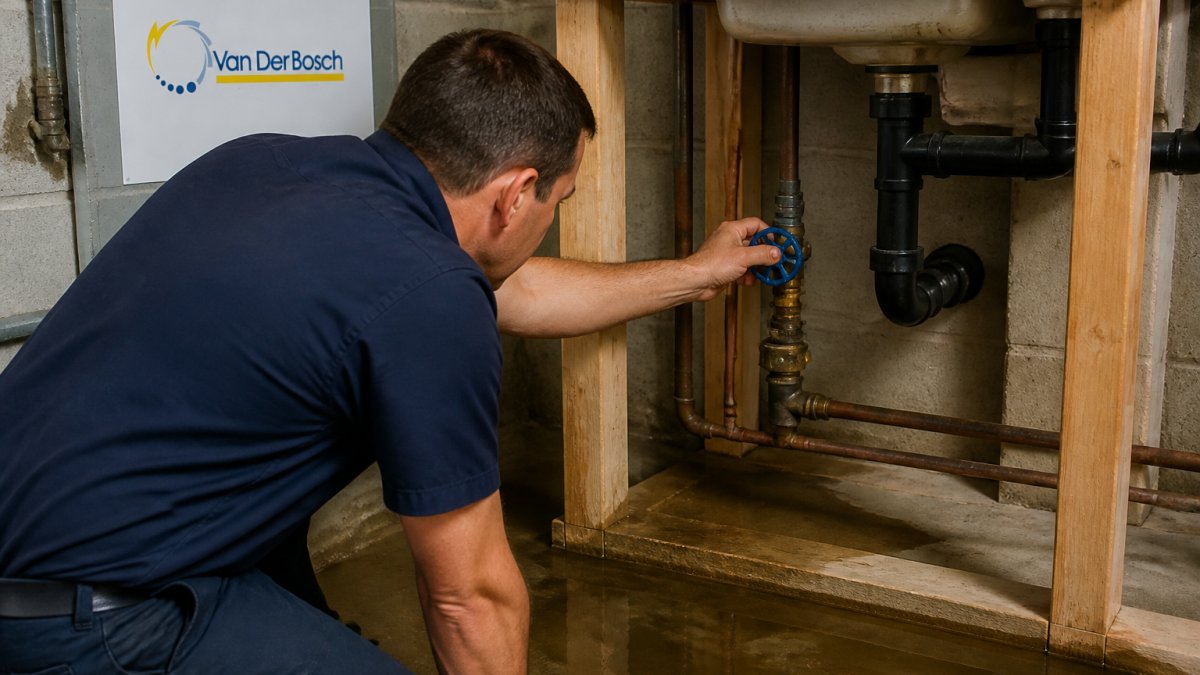
- Locate your main water shutoff valve (usually near the water meter or where the main line enters your home)
- Turn the valve clockwise to stop the flow of water
- Open faucets throughout your home to drain remaining water from the pipes
- Call a licensed plumber right away
Do not attempt to repair a burst pipe yourself. If you cannot locate your shutoff valve, call for emergency service and ask the technician to help you find it. Burst Pipe Repair requires immediate professional attention to stop the water and assess damage to your home’s structure and systems.
Sewer Backup Emergency: Health Risks and Safety First
A sewer backup emergency is one of the most serious plumbing situations. Sewage contains harmful bacteria and pathogens that pose direct health risks (the CDC).
Warning signs of a sewer backup include:
- Multiple drains backing up at the same time (toilets, showers, sinks, or floor drains)
- Raw sewage coming up through drains or toilets
- Gurgling sounds from drains or toilets
Immediate safety steps:
- Do not use any plumbing fixtures in your home
- Keep children and pets away from affected areas
- Avoid contact with any sewage or contaminated water
Sewage exposure can cause serious illness. According to CDC guidelines on wastewater and sewage hazards, untreated sewage contains disease-causing pathogens including bacteria, viruses, and parasites.
Call a licensed plumber for emergency service. They can perform a Sewer Line Camera Inspection to identify the blockage or damage, then recommend the appropriate repair or cleaning method, such as Hydro Jetting Services for stubborn clogs.
Water Leak Emergency: Active Flooding and Hidden Damage
Water leaks range from minor to catastrophic. The key is recognizing when a leak requires immediate intervention.
Active Leaks and Visible Water Damage
An active leak means water is flowing where it shouldn’t. This demands urgent attention.
Signs of active leaks:
- Water dripping or flowing from pipes, fixtures, or ceiling
- Water pooling on floors or in basements
- Active flooding from any source
What to do:
- Turn off the main water shutoff valve if the leak is large or spreading
- Place buckets or towels to catch water and protect belongings
- Turn off electricity to affected areas if water is near outlets or appliances
- Call for emergency plumbing service immediately
Do not ignore active leaks, even small ones. A minor drip can waste significant water and cause structural damage over time.
Hidden Leaks and Warning Signs
Hidden leaks are harder to spot but equally damaging, developing inside walls, under floors, or behind appliances.
Warning signs of hidden leaks:
- Soft, spongy, or warped flooring
- Discolored patches on walls or ceilings
- Mold or mildew growth (especially in basements or crawl spaces)
Hidden leaks develop slowly, and significant damage may have already occurred by the time they become visible. If you notice any of these signs, schedule a professional inspection so a licensed plumber can locate the leak before it causes major damage.
Gas Leaks and Carbon Monoxide Hazards
A gas leak emergency is a serious safety threat.
Signs of a gas leak:
- Rotten egg or sulfur-like smell near gas pipes or appliances
- Hissing sound coming from a gas line
- Dead plants or discolored grass in a line across your yard (may indicate an underground gas line)
If you suspect a gas leak:
- Do not use any electrical switches, appliances, or create sparks
- Do not use your phone inside the home
- Leave the house immediately
- Call your gas company’s emergency line from a safe location outside
- Do not re-enter the home until emergency responders have cleared it
Gas leaks can cause explosions, fires, and carbon monoxide poisoning. Only a licensed professional should handle Gas Line Repair & Installation.
According to OSHA guidelines on gas line safety, improper gas line work is a leading cause of home explosions and carbon monoxide incidents.
Other Critical Plumbing Emergencies
Overflowing or Backed-Up Toilets
An overflowing toilet can spread contaminated water throughout your bathroom and beyond.
What to do:
- Turn off the water supply to the toilet (valve is usually behind or beside the toilet)
- Do not flush again
- If water is overflowing, place towels around the toilet to contain it
- Call a plumber if the toilet continues to back up after one flush
A single backed-up toilet may be a fixture clog. If multiple toilets or drains back up at once, the problem is deeper in your plumbing system and requires professional diagnosis. Clogged Toilet Repair & Toilet Installation Services can address both the immediate blockage and any underlying system issues.
Major Drain Clogs and Backups
A major clog blocks water from draining properly. If water is backing up into your home, immediate action is needed.
Signs of a major clog:
- Water backing up into sinks, showers, or tubs
- Slow drainage in multiple fixtures
- Gurgling sounds from drains
Do not use drain cleaners or attempt to snake a major clog yourself; these methods often fail and can damage pipes. A licensed plumber can use professional techniques to clear the line safely.
Water Heater Leaks or Failures
A leaking water heater needs prompt attention. A failing tank can flood your basement or utility room.
Warning signs:
- Water pooling around the base of the tank
- Rust or corrosion on the tank
- No hot water or inconsistent temperature
If your water heater is leaking, turn off the gas or electrical supply (depending on your unit type) and call for emergency service. A professional can assess whether Water Heater Repair and Installation or replacement is necessary.
What to Do Before a Plumber Arrives
The minutes between your call and the plumber’s arrival are when most preventable damage happens, or gets stopped. The goal is not to fix anything, but to stop the water, remove safety hazards, and preserve what you will need for insurance and diagnosis.
Step 1: Stop the water at the right valve
Work from the smallest valve to the largest:
- Fixture valve first. For a sink, toilet, or water heater, close the supply valve serving that fixture. This isolates the problem without shutting down the whole house.
- Main shutoff if the fixture valve fails or you cannot find it. The main valve is usually near the water meter or where the service line enters the building. Turn it clockwise until it stops.
- Open a low faucet after shutting the main to relieve pressure and drain what is left in the lines.
If the main valve will not close fully, common with older gate valves that have not been exercised in years, note that for the plumber. It changes how they approach the repair.
Step 2: Decide whether the electricity is safe
This step matters most for personal safety.
- If water is near outlets, appliances, cords, or the electrical panel, do not enter the area. Water and electricity together are a shock hazard even when the circuit seems dead.
- If you can safely reach the breaker panel without walking through water, shut off the circuits serving the affected area. If the panel itself is wet or you must stand in water to reach it, leave it alone and tell the plumber and your utility.
- Never stand in standing water to flip a breaker or unplug an appliance.
If water has reached the electrical panel, a submerged outlet, or a hardwired appliance, treat it as an electrical emergency as well as a plumbing one. Keep everyone out of the space and call for help from a dry location.
Step 3: Contain what you can, safely
- Place towels, buckets, or a wet/dry vacuum (only with power confirmed off) to catch and redirect water
- Move furniture, rugs, and electronics away from the wet area if you can do so without entering standing water or touching wet electrical equipment
- Do not attempt to lift a sagging ceiling, a bulging ceiling can release suddenly; keep people out from under it
Step 4: Document for insurance and for the plumber
Good documentation makes both the repair and any claim easier.
- Photograph and video the scene before cleanup, wide shots of the room, close-ups of the source, and any damaged belongings
- Note the time you noticed the problem and the time you shut off the water
- Save receipts for anything you buy for containment (towels, buckets, fans)
Step 5: Know what not to touch
Some things are tempting to “just fix” and are exactly the wrong move before a professional arrives.
- Do not apply tape, epoxy, or clamps to a pressurized pipe as a permanent fix, a patch that fails under pressure can cause more damage than the original leak
- Do not open a gas valve, relight a pilot, or reset a boiler if you smell gas or are unsure of the procedure
- Do not pour chemical drain cleaner into a backed-up drain, it can damage pipes, is dangerous to the plumber who arrives later, and rarely clears a main-line blockage
Step 6: Make the plumber’s job easier
- Clear a path to the shutoff valve, the water heater, the boiler, or the cleanout
- If you have pets, secure them before the technician arrives
- Have your address, cross street, and a callback number ready, and note whether anyone in the home has mobility or medical needs
After the water is stopped
The emergency is not over when the water stops, it is over when the space is dry and the cause is fixed. Standing water, wet insulation, and damp drywall can lead to mold and structural problems within days. Ask the plumber what drying or cleanup is appropriate and whether the affected area needs inspection before it is closed back up.
The pre-arrival sequence is simple: stop the water at the smallest valve that works, keep people away from water near electricity, contain and document, and do not attempt repairs on pressurized, gas, or sewer systems. Everything else can wait for the professional.
When to Call Emergency Service vs. Regular Business Hours
Most plumbing problems fall somewhere between “ignore it” and “call right now.” A simple severity framework helps you decide faster than a gut feeling, especially at night or on a weekend.
A three-tier triage framework
Tier 1, Call immediately, any hour. These situations threaten safety, health, or the structure of the building, and waiting can turn a repair into a restoration project.
- Water is actively flowing and you cannot stop it with a fixture valve or the main shutoff
- A pipe is burst, split, or visibly spraying
- Sewage or wastewater is coming up through drains, toilets, or floor drains
Tier 2, Call today, during business hours if possible. These need professional attention soon but are not immediately dangerous if you take a safe step first.
- A single fixture is backed up but other drains run normally
- A slow leak under a sink that you can catch in a bucket after shutting the fixture valve
- No hot water, with no leak and no gas smell
Tier 3, Schedule routine service. These are annoyances, not emergencies, and can wait for a normal appointment.
- A single slow drain that still drains
- A dripping faucet
- A running toilet that flushes normally
The questions that decide the tier
When you are unsure, run through these four questions in order. The first “yes” moves you up a tier.
- Is anyone unsafe? Gas smell, water near electricity, or sewage in a living space means Tier 1 regardless of anything else.
- Is water still entering the space? If closing the fixture valve or the main shutoff does not stop it, treat it as Tier 1.
- Is the problem spreading? Water wicking up drywall, sewage backing into multiple fixtures, or a leak that has moved from one room to another signals a system-level problem, not a fixture problem.
- Can you isolate it? If a single fixture valve stops the problem, you have bought time. If not, you have not.
What “emergency service” actually means
Emergency plumbing is not a different trade, it is the same diagnosis and repair work performed outside normal scheduling, often with a narrower set of options because supply houses are closed and some parts may not be available until the next business day. That is why the goal before a plumber arrives is always the same: stop the water, remove the safety hazard, and preserve the evidence.
If you are on the fence, call and describe the situation. A short phone conversation can help you determine whether it can wait until morning.
What affects the cost of an emergency call
We do not quote prices here because the variables matter more than any number. What drives the cost of an emergency plumbing visit includes:
- Time of day, after-hours, weekend, and holiday dispatch typically carry different rates than weekday business hours
- Access, a shutoff valve in a finished basement or behind drywall takes longer to reach than one in an open utility room
- Diagnosis required, a visible burst pipe is faster to assess than a hidden leak or a sewer backup that needs a camera inspection
Ask any plumber you call what their after-hours policy is and whether a diagnostic visit is charged separately from the repair. Those are fair questions, and the answer tells you a lot about how the company operates.
A note on older housing stock
In older homes, the line between Tier 2 and Tier 1 is thinner than it looks.
When a plumbing emergency strikes, the first few minutes matter most. VanDerBosch Plumbing Inc. provides emergency plumbing service to help you stop the water, assess the damage, and get your home back to normal. Whether you are dealing with a burst pipe, sewer backup, major leak, or gas line concern, call for professional help right away.
Frequently Asked Questions
What should I do if a pipe bursts in my home?
Shut off the main water supply immediately to prevent further flooding and water damage. Locate your main shutoff valve, typically near the water meter or where the water line enters your home. Open faucets to drain remaining water from the system. Move valuables away from the affected area and document any damage with photos. Call a licensed plumber right away, a burst pipe emergency requires professional repair to assess the extent of damage and restore your water supply safely.
Is a sewer backup an emergency plumbing issue?
Yes, a sewer backup is a serious emergency. Sewage contains harmful bacteria and pathogens that pose significant health risks. If multiple drains back up simultaneously or you notice sewage entering your home, stop using all plumbing fixtures immediately and call a professional plumber. Do not attempt to clear the line yourself. The problem may require sewer video inspection or professional cleaning to identify and resolve the blockage safely.
How do I know if a water leak is an emergency?
An active leak causing visible flooding, wet spots on walls or ceilings, or water pooling in your basement requires immediate attention. These situations can lead to structural damage, mold growth, and electrical hazards. Turn off the main water supply if the leak is severe, and contact a plumber. Even small leaks that persist should be addressed quickly, what seems minor can waste significant water and cause hidden damage inside walls or under floors.
What are the warning signs of a gas leak?
A strong rotten-egg or sulfur smell near gas lines or appliances is the primary warning sign. You may also hear hissing sounds. If you suspect a gas leak, do not use electrical switches, create sparks, or attempt repairs yourself. Leave the building immediately, call emergency services from outside, and contact your gas provider. Gas leaks pose serious safety risks including carbon monoxide poisoning and explosion hazards. Professional inspection and repair are essential.