
Understanding the 20 Sediment Filter: Types and Materials
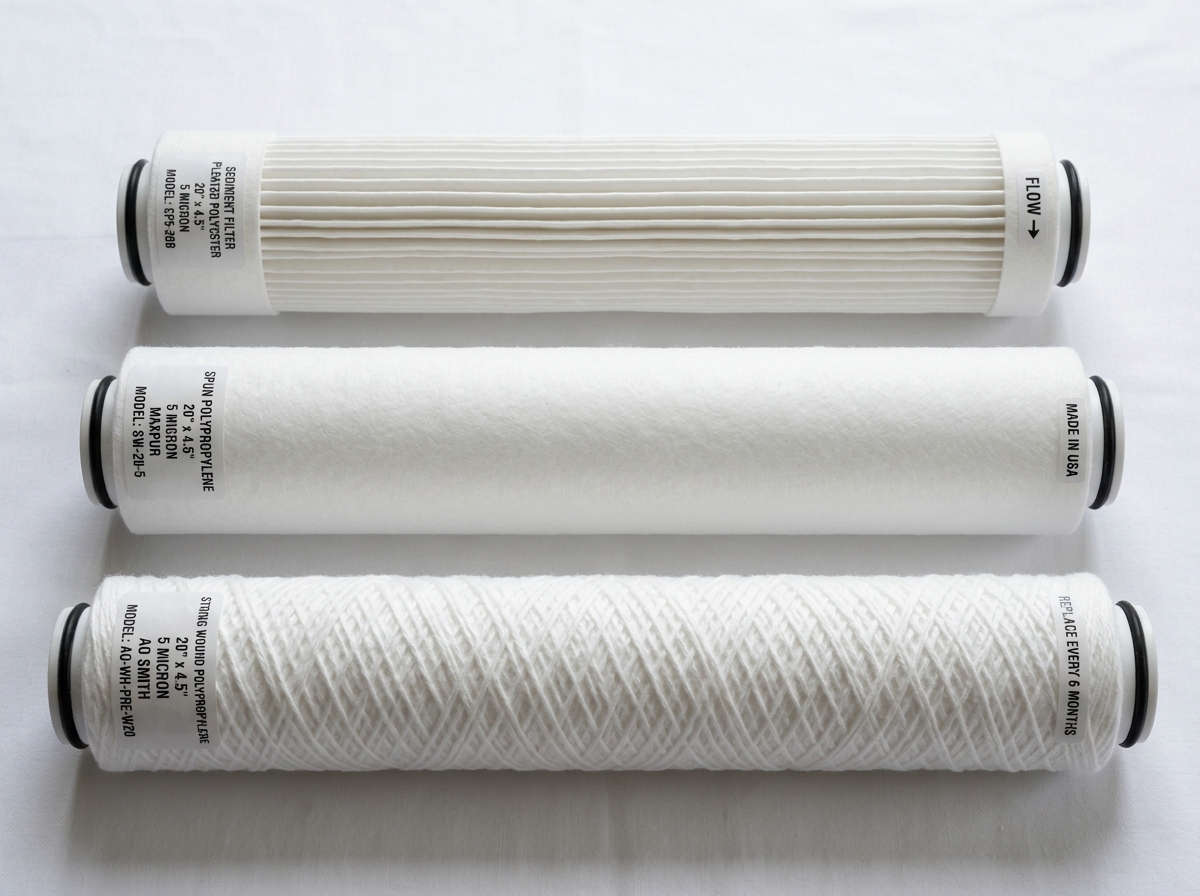
When we talk about a 20 sediment filter, we aren’t just talking about one specific product. The term refers to the physical length of the cartridge, but the “guts” of the filter—the media—can vary wildly depending on what you are trying to pull out of your water. Choosing the right material is the difference between crystal clear water and a system that clogs up every two weeks.
Melt-Blown Polypropylene (Spun Filters)
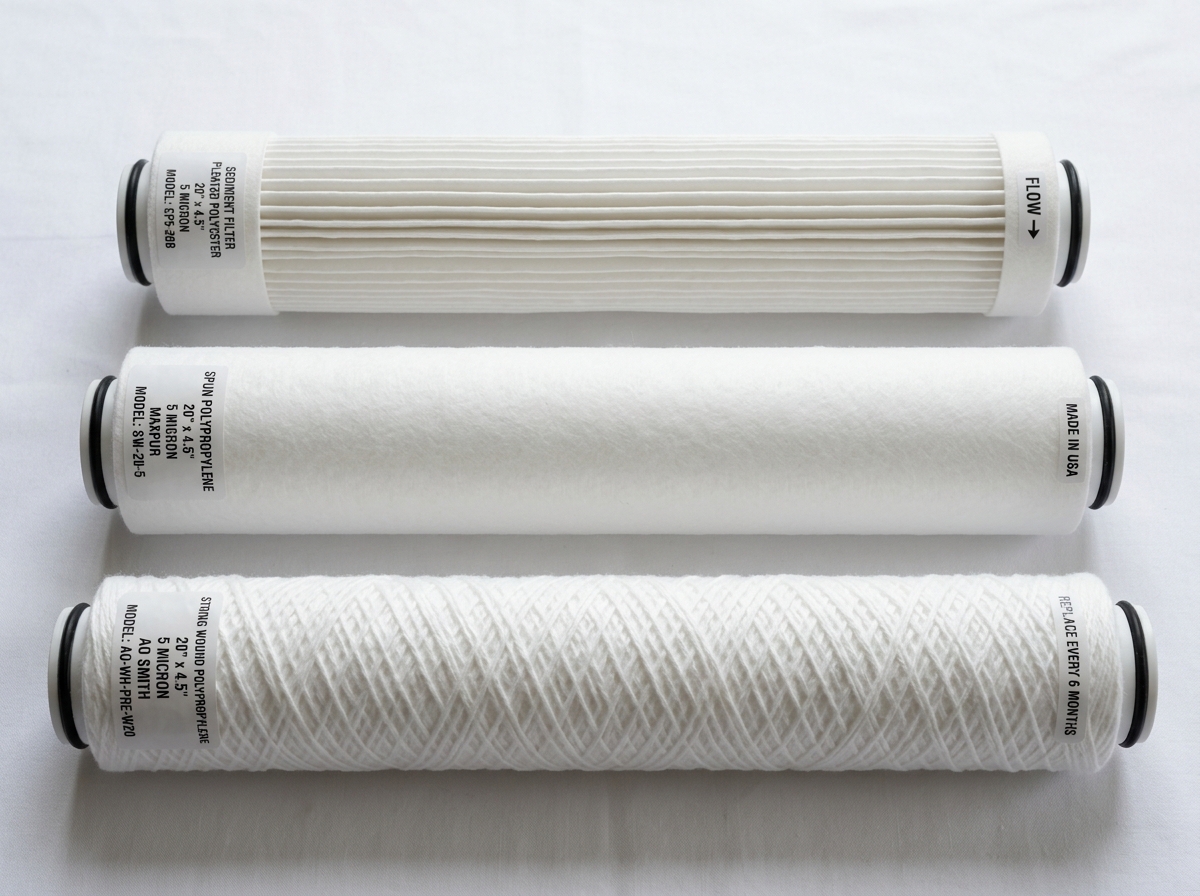
These are perhaps the most common filters we install in Chicagoland homes. Often called “depth filters,” they are made by blowing molten polymer fibers onto a rotating shaft. The result is a dense web of fibers. A high-quality 20″ Polypropylene Depth Filter is surfactant-free and binder-free, meaning it won’t leach chemicals into your water. These are excellent for general dirt, sand, and rust removal.
Pleated Polyester
If you have high flow requirements or want a filter you can potentially clean, pleated is the way to go. These filters have a much higher surface area because the media is folded like an accordion. This design allows for a very low initial pressure drop (often only 1 psi at 20 GPM). Many models, like the 20″ Washable Sediment Filter, are designed to be rinsed off and reused, making them a cost-effective choice for heavy sediment loads.
String-Wound Cartridges
These look like a spool of thick thread. They are traditional depth filters that excel at handling varying particle sizes. However, they can sometimes suffer from “unloading,” where high pressure pushes trapped dirt through the strings. We generally recommend these for specific industrial applications or older well systems.
Dual-Gradient Density
This is the “pro” version of the melt-blown filter. It features a transition in density—the outer layers catch large chunks like pebbles and scale, while the inner core traps the microscopic silt. This “filter within a filter” design significantly extends the life of the cartridge because the entire thickness of the wall is used to hold dirt, rather than just the outer surface.
| Filter Type | Best For | Reusable? | Flow Rate |
|---|---|---|---|
| Melt-Blown | Fine silt, sand, RO pretreatment | No | Moderate |
| Pleated | Large particles, high flow, city water | Yes (some models) | High |
| String-Wound | Sand and oxidized iron | No | Moderate |
| Dual-Gradient | Heavy sediment loads, long life | No | Moderate/High |
Performance Differences in 20 Inch Sediment Filter Micron Ratings
The “micron rating” is the most important spec on the label. A micron is one-millionth of a meter. To give you some perspective, a human hair is about 70 microns wide.
- 1 Micron: This is ultra-fine. We use these as a final stage or as a 5 Micron Melt-Blown Filter alternative when water clarity is the absolute priority. It can trap some bacteria and very fine cyst particles.
- 5 Micron: The “Gold Standard.” We find that a 5-micron 20 sediment filter works for about 80% of residential applications. It balances excellent filtration with a flow rate that won’t make your shower feel like a drizzle.
- 20 to 50 Micron: These are “coarse” filters. If you are on a well in an area like Winnetka or Roselle and struggle with heavy sand, you start here. Using a 5-micron filter on sandy water will result in a clogged system in days. You use a 20 or 50-micron filter to catch the big stuff first.
Standard vs. Big Blue Housing Capacities
In the 20 sediment filter, diameter matters as much as length.
- Standard (Slim Line): These are roughly 2.5 inches in diameter. They are great for under-sink applications or very small apartments. However, for a whole-house system in a typical Chicago home, they can be restrictive.
- Big Blue (High Capacity): These are 4.5 inches in diameter. Despite the name, they can also come in grey or black. These housings are designed for high-flow applications, capable of handling up to 25 GPM with 1-inch inlets.
A “Big Blue” style housing offers significantly more surface area. This means less frequent filter changes and better water pressure throughout the house. Modern high-quality housings also use “Posi-Seal” technology—a double O-ring design that ensures 100% of the water passes through the filter media with zero bypass. These housings are typically pressure-tested up to 125 psi to handle the occasional pressure spikes in municipal lines.
Key Benefits of a 20-Inch Whole House System
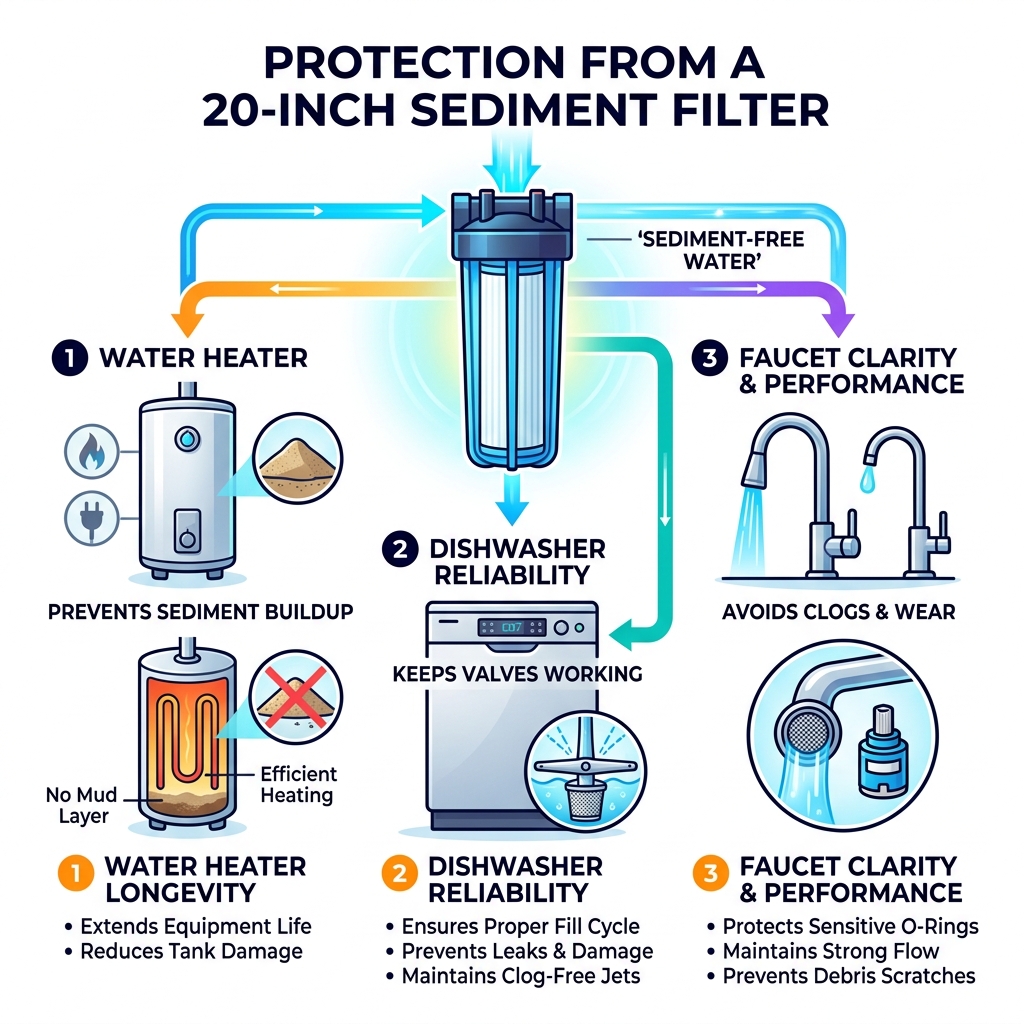
Installing a 20 sediment filter is like buying an insurance policy for your plumbing. Here is why we believe Why Water Filtration Systems Are Important for every homeowner:
- Appliance Protection: Modern dishwashers and high-efficiency washing machines have tiny solenoid valves. A single flake of rust or a grain of sand can jam these valves open (causing a flood) or closed (preventing the machine from filling).
- Water Heater Longevity: Sediment is the number one killer of water heaters. In gas units, sediment settles at the bottom, creating an insulating layer. The burner has to work harder to heat the water through that “mud,” which eventually cracks the glass lining of the tank. In electric units, sediment can bury the lower heating element, causing it to burn out.
- RO Pretreatment: If you have a Reverse Osmosis (RO) system for drinking water, a 20-inch sediment pre-filter is essential. It protects the expensive RO membrane from being shredded by large particles, saving you hundreds in maintenance costs.
- Well Water and City Silt: Even if you are on city water in places like Sauganash or Hyde Park, water main breaks or hydrant flushing can send a surge of brown, silty water into your home. A whole-house 20 sediment filter ensures that “surprise” never reaches your white laundry or your glass of water.
Installation and Maintenance for Peak Performance
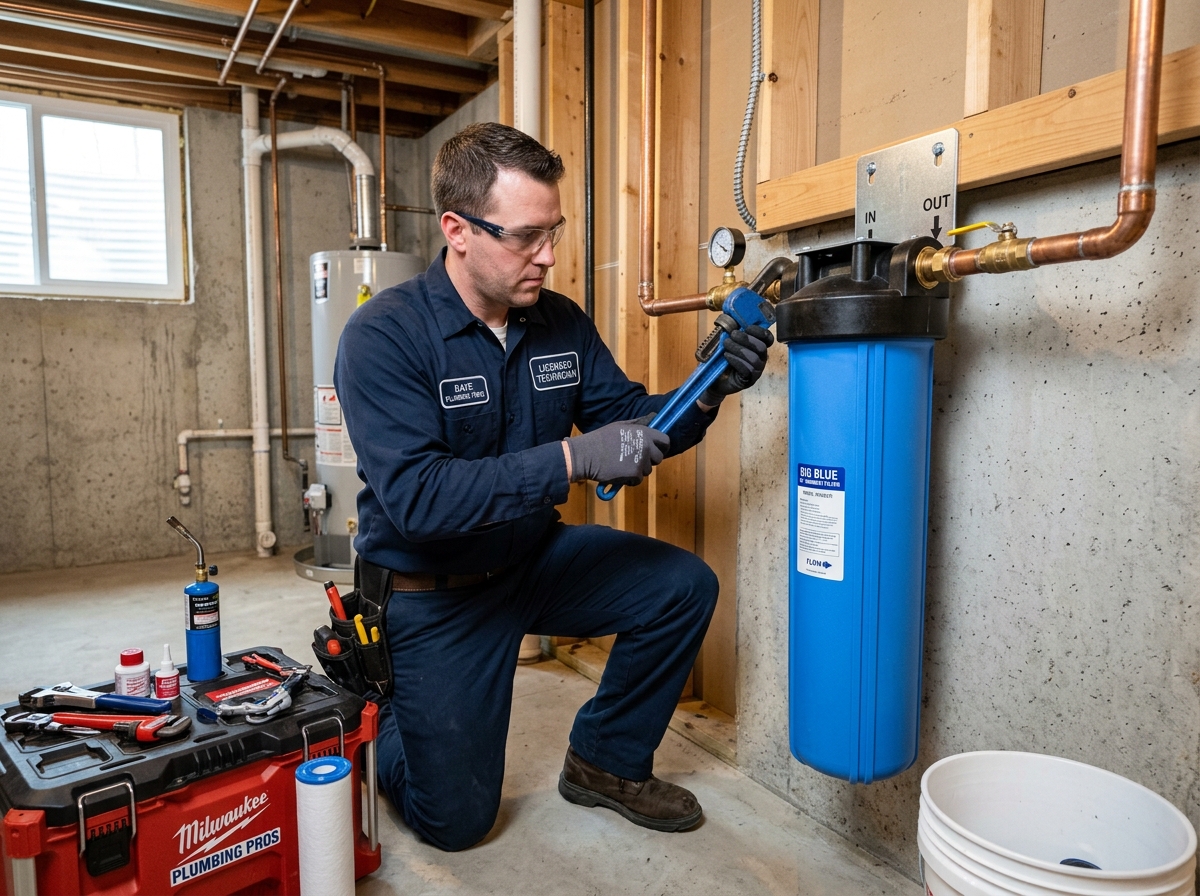
At VanDerBosch Plumbing Inc., we see many DIY installations that miss the mark on maintenance. To get the most out of our Services / Water Filtration System, you need to understand the “when” and “how” of filter care.
Replacement Intervals
Most 20 sediment filter cartridges should be replaced every 6 to 12 months. However, your water quality is the ultimate boss. If you notice a drop in water pressure, your filter is likely “blinded” (clogged). A good rule of thumb is to change the filter when you see a “differential pressure” of 35 psid—meaning the pressure coming out of the filter is significantly lower than the pressure going in.
Best Practices for 20 Inch Sediment Filter Replacement
- Shut-off and Pressure Relief: Always close the inlet and outlet valves. Use the red pressure relief button on top of the housing to bleed off the internal pressure before trying to unscrew the sump.
- The Wrench: Use a dedicated housing wrench. If it’s stuck, don’t hammer it; a steady, firm pull is better.
- O-Ring Care: Every time you open the housing, inspect the O-ring. Clean it and apply a thin layer of food-grade silicone grease. This prevents leaks and makes it much easier to open next time.
- Sanitization: It’s a good idea to drop a teaspoon of unscented bleach into the bottom of the housing before installing the new filter. This kills any bacteria that may have entered the system during the change.
- Flushing: After installing a new melt-blown or carbon-wrapped filter, run the water for 5-10 minutes to flush out any manufacturing “fines” or air pockets.
Frequently Asked Questions about 20-Inch Filters
Can I wash and reuse a 20-inch sediment filter?
Only if it is a pleated polyester model. Melt-blown and string-wound filters are “depth” filters, meaning the dirt is trapped deep inside the fibers where you can’t reach it. However, a 20″ Washable Sediment Filter with a 30-micron rating can often be sprayed down with a garden hose and returned to service. This is a great way to save money if you are dealing with large-particle sand or scale.
How do I know when my sediment filter is clogged?
The three biggest signs are:
- Pressure Drop: Your morning shower feels more like a light mist.
- Visible Dirt: If you have a clear housing, the filter will turn from white to dark brown or black.
- Rumbling Sounds: As mentioned earlier, if sediment gets past the filter and into the water heater, you’ll hear the “kettle effect” of water boiling underneath a layer of sediment.
Are 20-inch filters suitable for well water with high iron?
Yes, but with a caveat. A sediment filter will catch “red water” iron (oxidized iron flakes). It will not remove “clear water” iron (dissolved iron). For well water, we often recommend a 20-inch pleated filter as a “pre-filter” to catch sand and rust, followed by a specialized iron removal system or a water softener. This prevents the heavy solids from fouling the expensive resin in your softener.
Conclusion
A 20 sediment filter is one of the simplest and most effective upgrades you can make to your home’s plumbing system. Whether you are trying to protect a new tankless water heater or just want to stop seeing sand at the bottom of your tea, these high-capacity filters are the workhorses of water treatment.
At VanDerBosch Plumbing Inc., we’ve spent over 30 years serving the Chicagoland area, from Mount Prospect to Ukrainian Village. We know the local water conditions, and we know which filters actually stand up to the challenge. If you’re ready to “clear the way” for better water, our team of licensed, background-checked technicians is here to help with transparent pricing and a 100% satisfaction guarantee.
Don’t let sediment wear down your home. Contact us today for Professional Water Filtration System Services and let’s get your water running clear.