
Your Garbage Disposal Is Clogged — Here’s How to Fix It Fast
A clogged garbage disposal fix is something most Chicagoland homeowners can handle in under 30 minutes with basic tools. Here’s what to do:
- Turn off the power at the switch and circuit breaker
- Check for visible blockages using a flashlight — remove debris with tongs, never your hands
- Use an Allen wrench (1/4 inch) on the bottom of the unit to manually free a jammed grinding plate
- Press the reset button on the bottom of the disposal
- Plunge the drain with a sink plunger — seal the second drain if you have a double sink
- Try baking soda and vinegar — pour 1/4 cup baking soda, then 1/2 cup white vinegar, wait 5–10 minutes, flush with hot water
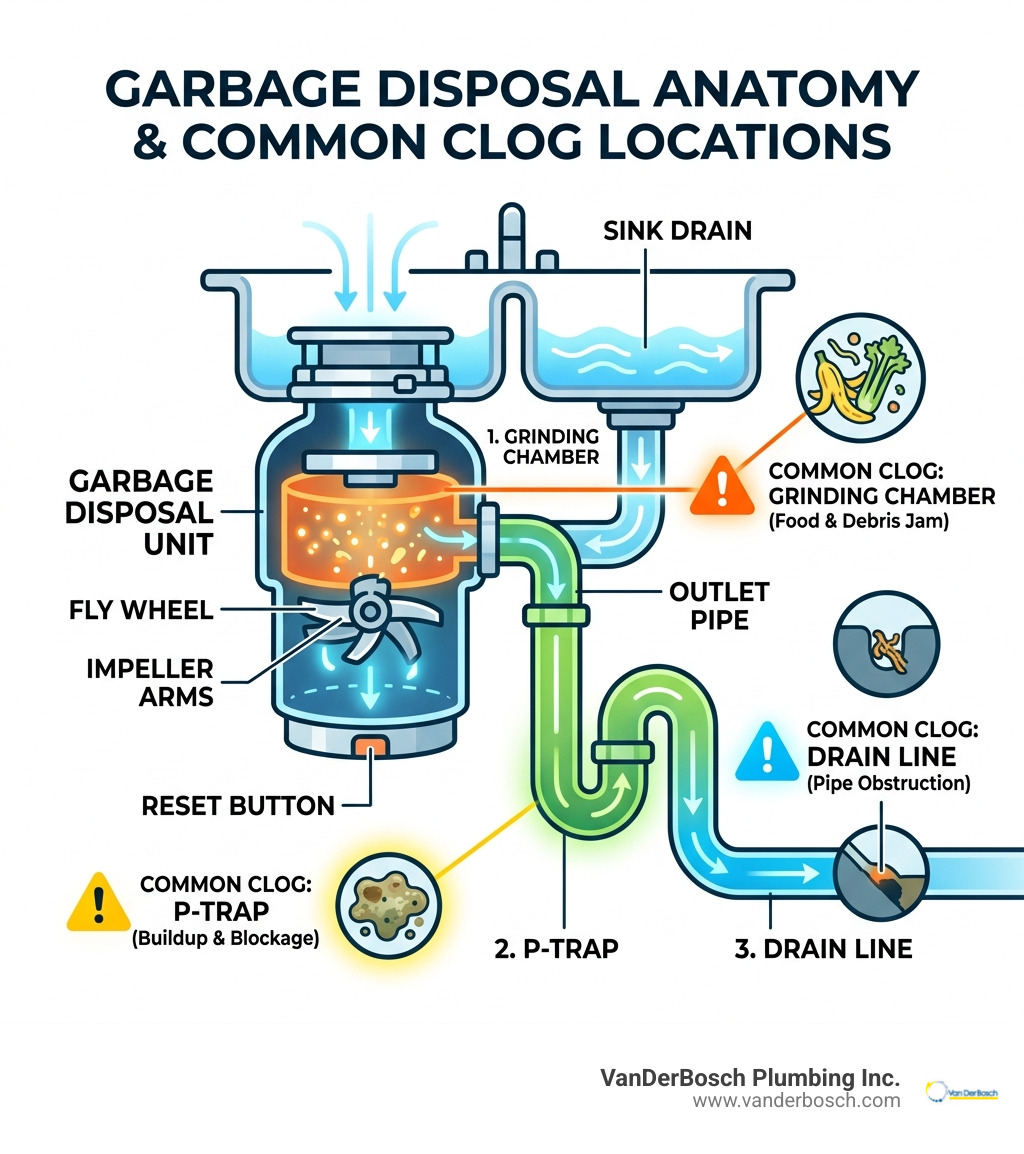
- Clean the P-trap if water still won’t drain — place a bucket underneath, loosen the slip nuts, and clear any buildup
- Call a plumber if none of the above works, or if you notice leaks, burning smells, or the reset button keeps tripping
Picture this: you’re cleaning up after dinner, you flip on the disposal — and nothing happens. Or worse, water just sits there, going nowhere, while something hums unhappily under your sink. It’s one of those small household problems that somehow manages to derail your entire evening.
The good news? Most garbage disposal clogs are minor. You don’t need a plumber, and you probably already own everything you need to fix it.
I’m Hugh Hodur, President of VanDerBosch Plumbing Inc., and after years of overseeing residential and commercial plumbing services across the Chicagoland area — including countless calls about a clogged garbage disposal fix — I’ve seen every variation of this problem. This guide walks you through exactly what I’d tell any homeowner facing a backed-up disposal today.
Common Signs and Causes of a Clogged Garbage Disposal
Before we dive into the clogged garbage disposal fix, let’s look at how you got here. Knowing the symptoms can help you diagnose whether the issue is a simple jam or a deeper plumbing problem.
The Tell-Tale Signs
- Standing Water: If your sink is masquerading as a mini-lake, you have a blockage.
- Slow Drainage: Water that circles the drain for an eternity usually indicates a partial clog or grease buildup.
- The Dreaded Hum: If you flip the switch and hear a low humming sound but the blades don’t turn, your disposal is jammed.
- Foul Odors: Rotting food trapped in the grinding chamber or the P-trap will eventually make its presence known to your nose.
The Usual Suspects: What Not to Put Down the Drain
Most garbage disposal failures result from improper use. We often treat these appliances like industrial shredders, but they are actually quite delicate. To avoid needing a clogged garbage disposal fix in the future, keep these items away from the flange:
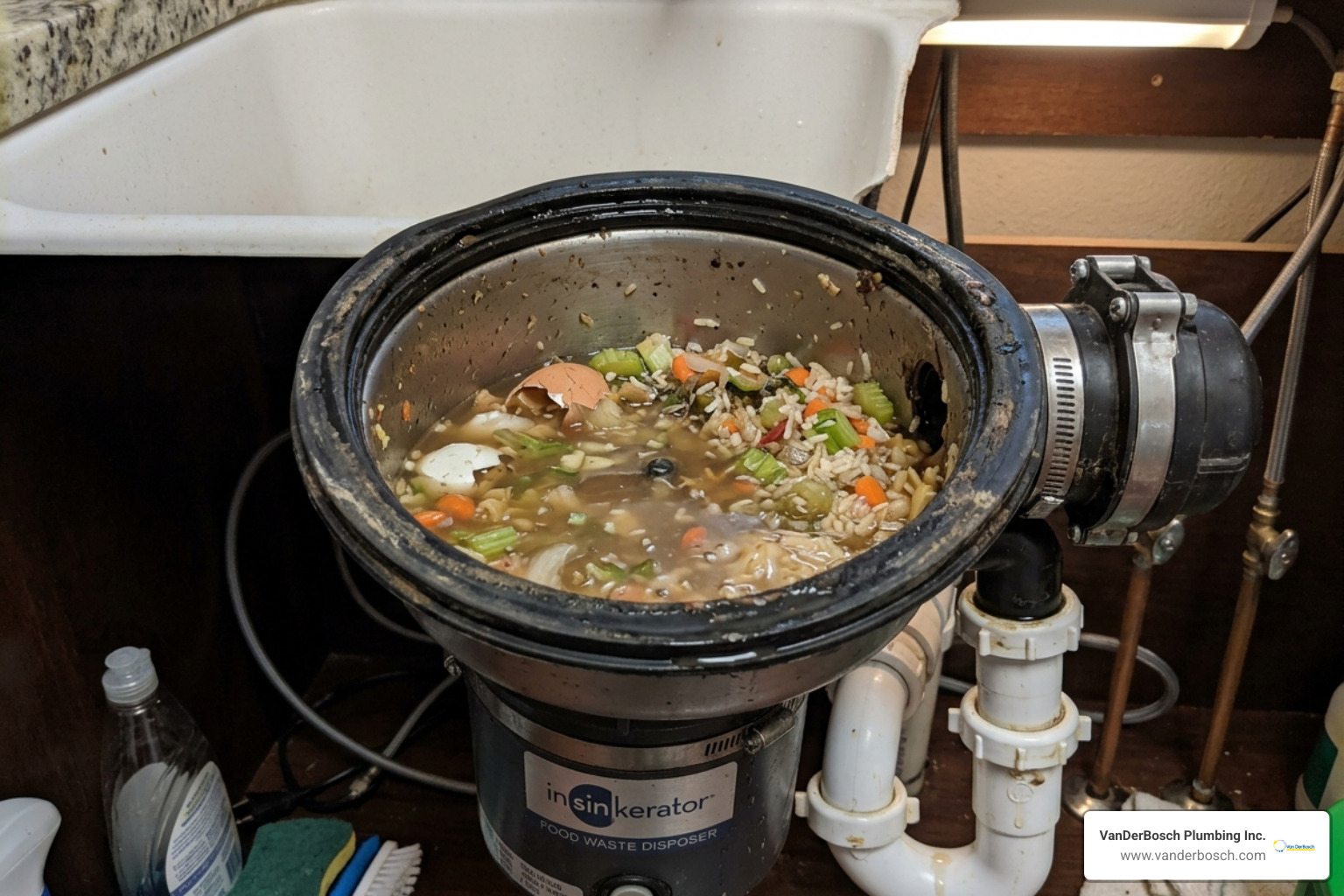
- Fibrous Vegetables: Celery, asparagus, and corn husks have “strings” that act like hair in a shower drain, tangling around the blades.
- Starchy Foods: Potato peels, rice, pasta, and bread expand when wet. They turn into a thick, glue-like paste that stops water in its tracks.
- Grease and Fats: This is the cardinal sin of plumbing. Grease may be liquid when hot, but it solidifies into a “fatberg” once it hits your cool pipes.
- Coffee Grounds and Eggshells: These items are deceptively small. Coffee grounds create a thick sludge, and eggshell membranes can wrap around the impellers.
- Non-Food Items: We’ve found everything from silver spoons to kids’ toys inside disposals. If it’s not biodegradable food waste, it doesn’t belong there.
If you’re curious about why your sink behaves the way it does, check out 5 Reasons Your Drain is Clogged and How to Fix It or learn more about the mechanics of How to Unclog a Garbage Disposal Drain.
Safety First: Preparing for Your Clogged Garbage Disposal Fix
We cannot stress this enough: Never put your hand inside a garbage disposal. Even if the unit is turned off at the wall switch, there is a risk of accidental activation or injury from the sharp impellers.
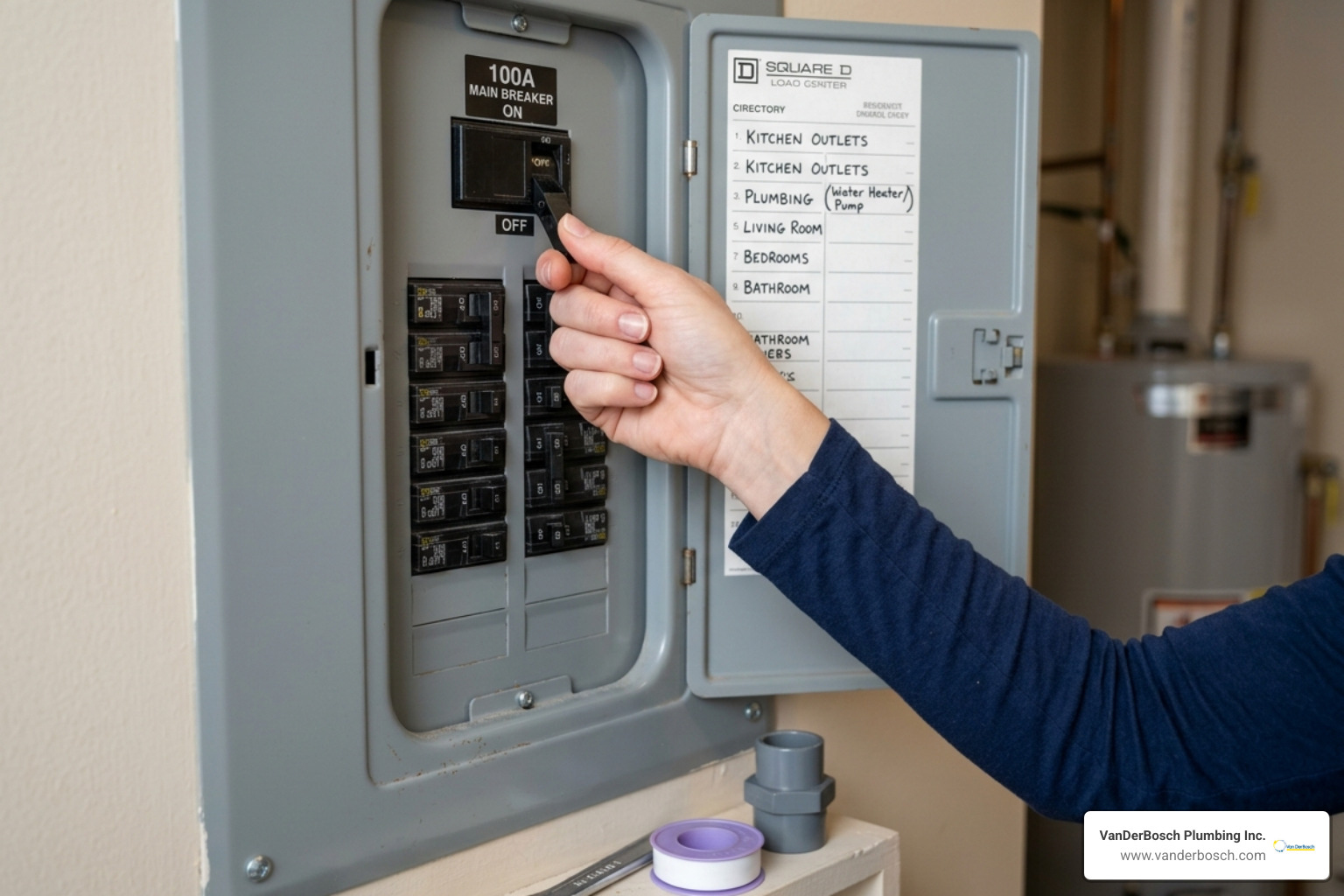
Step 1: Kill the Power
Before you touch a single tool, go to your circuit breaker panel and shut off the power to the kitchen or the specific disposal outlet. Unplugging the unit under the sink is even better if you have access.
Step 2: Gather Your Gear
A successful clogged garbage disposal fix requires the right tools. You likely have these in your garage or under the sink already:
- A powerful flashlight
- Long-handled tongs or needle-nose pliers
- Safety goggles (to protect against splashes)
- A 1/4-inch Allen wrench (hex key)
- A sink plunger
- A bucket and rags
For more safety tips on handling kitchen mishaps, see How to Fix a Clogged Sink and follow the detailed protocol in How to Unclog a Garbage Disposal in 5 Quick Steps.
Using the Allen Wrench for a Clogged Garbage Disposal Fix
If your disposal is humming but not spinning, it’s likely a “jam.” This happens when a hard object (like a fruit pit or a stray bone) gets wedged between the rotating impeller and the stationary grind ring.
Look at the very bottom of your disposal unit under the sink. In the center, you’ll see a small, hexagonal hole. This is the manual override.
- Insert your 1/4-inch Allen wrench into the hole.
- Firmly turn the wrench back and forth. You are manually rotating the motor’s flywheel.
- At first, it might be stuck. Keep applying steady pressure until you feel the jam “break” and the wrench spins freely.
- Once it’s loose, use your tongs to reach in from the top and pull out whatever was causing the jam.
The Baking Soda and Vinegar Clogged Garbage Disposal Fix
If the disposal isn’t jammed but is draining slowly or smelling like last week’s stir-fry, it’s time for some chemistry. This is a great clogged garbage disposal fix for organic buildup.
- Pour 1/4 cup of baking soda down the disposal.
- Add 1/2 cup of white vinegar.
- Let the mixture fizz and bubble for about 5 to 10 minutes. This reaction helps break down grease and dislodge food particles.
- Flush the unit with a large amount of hot water.
This method is gentle on your pipes and the environment. If you find yourself needing more intensive help with your pipes, you can find More info about drain cleaning services on our website.
Step-by-Step Guide to Unclogging Your Sink
Sometimes the clog isn’t a jam in the blades, but a blockage in the drain line itself. When this happens, you need to use pressure to move the obstruction.
| Method | Best For… | Tools Needed |
|---|---|---|
| Manual Rotation | Jammed blades / Humming motor | Allen wrench |
| Plunging | Standing water / Blocked pipes | Sink plunger |
| Reset Button | Motor won’t turn on at all | Your finger |
| Chemical-Free Flush | Slow drains and odors | Baking soda & Vinegar |
The Plunger Technique
If you have standing water, plunging is your best bet.
- Bypass the Dishwasher: If you have a dishwasher, clamp the flexible drain hose to prevent dirty water from being forced back into the machine.
- Seal the Other Side: In a double sink, you must seal the non-disposal drain with a stopper or a wet rag. If you don’t, the air pressure will just escape out the other side.
- Create a Seal: Fill the sink with enough water to cover the head of the plunger.
- Plunge Vigorously: Place the plunger over the disposal opening and give it 10–12 firm, fast pumps. The suction and pressure often dislodge food scraps stuck in the trap.
After plunging, restore power and run the disposal with plenty of cold water to see if it clears. For more detailed instructions, check out How to Clear a Clogged Garbage Disposal.
Advanced Troubleshooting: Cleaning the P-Trap
If the plunger didn’t work, the clog is likely sitting in the “P-trap”—the U-shaped pipe under your sink. This pipe is designed to hold water to block sewer gases, but it’s also a magnet for heavy debris.
- Prepare for a Mess: Place a bucket directly under the P-trap to catch the water that will inevitably spill out.
- Loosen the Nuts: Use channel-lock pliers to loosen the slip nuts on both ends of the U-shaped pipe.
- Inspect and Clean: Remove the pipe and look inside. You’ll likely find a collection of grease, hair, or food waste. Use a scrub brush or a wire coat hanger to clear it out.
- Check the Trap Arm: Look into the horizontal pipe that goes into the wall. If you see a blockage there, you may need a small plumbing snake or drain auger.
- Reassemble: Put the pipes back together, ensuring the washers are seated correctly. Hand-tighten the nuts, then give them a small extra turn with the pliers.
For stubborn clogs deep in the line that a DIY snake can’t reach, you might need professional Hydro Jetting solutions to blast the pipes clean.
Maintenance Tips to Prevent Future Blockages
Most garbage disposals last between 8 and 15 years. If yours is on the older side, it will jam more frequently as the blades dull. However, proper maintenance can extend its life and save you from a clogged garbage disposal fix next month.
- The 15-Second Rule: Always run cold water before you turn the disposal on and keep it running for at least 15 seconds after the grinding stops. This ensures the particles are flushed all the way to the main sewer line.
- Cold Water Only: Never use hot water when grinding food. Hot water melts fat, allowing it to coat your pipes. Cold water keeps fat solid so the blades can chop it up.
- Small Batches: Don’t dump a whole plate of scraps in at once. Feed the disposal gradually.
- The Ice and Lemon Trick: Once a month, grind a handful of ice cubes and some lemon or orange peels. The ice helps “scour” the blades, and the citrus oils deodorize the unit.
- Dish Soap: A squirt of grease-cutting liquid soap while the disposal is running helps keep the internal components clean.
For more long-term care tips, visit our Garbage Disposal Kitchen maintenance page.
Frequently Asked Questions about Garbage Disposals
Can I use chemical drain cleaners in my disposal?
We strongly advise against using products like Drano or Liquid-Plumr in a garbage disposal. These chemicals are highly caustic. They can corrode the metal grinding components, damage the rubber seals, and create splash-back hazards if you have to plunge the sink later. Furthermore, if the cleaner sits in the disposal because of a total blockage, it can generate heat that warps plastic parts. Stick to the baking soda and vinegar method or mechanical cleaning.
Does a garbage disposal affect my septic tank?
Yes. If you are on a septic system, a garbage disposal significantly increases the amount of solid waste entering the tank. This can lead to a bacterial imbalance and require you to pump your tank more frequently. If you must use one with a septic system, ensure it is a high-efficiency model designed for septic use and be extremely mindful of what you grind.
When is it time to call a professional or replace the unit?
While homeowners can tackle most clogs in under 30 minutes, there are times when DIY isn’t enough. Call VanDerBosch Plumbing Inc. if:
- The unit leaks from the bottom: This usually indicates a failed internal seal, and the unit likely needs replacement.
- The reset button keeps tripping: This could mean the motor is overheating or short-circuiting.
- There is a persistent burning smell: This is a sign of a dying motor.
- Water is backing up in other fixtures: If your shower or toilet is also acting up, you don’t have a disposal problem—you have a main line clog. In that case, you might need Clogged Toilet Repair or a full sewer inspection.
Conclusion
A clogged garbage disposal fix doesn’t have to be a nightmare. By following the steps above—starting with safety and moving through manual rotation, plunging, and P-trap cleaning—you can resolve 90% of disposal issues on your own.
However, we know that life in Chicagoland is busy, and sometimes you just want the pros to handle it. At VanDerBosch Plumbing Inc., we’ve been serving neighbors from Roselle to Melrose Park and across Cook County for decades. We offer licensed residential services with a 100% satisfaction guarantee.
Whether you’re in Winnetka, Oakbrook Terrace, or the heart of Ukrainian Village, our background-checked technicians are available 24/7 with transparent pricing and no hidden service charges. If your disposal is still giving you the silent treatment, don’t sweat it. Contact our expert team for professional plumbing services today, and we’ll get your kitchen back in flow.