
Table of Contents
- Why Commercial Plumbing Maintenance Contracts Pay Off
- Commercial Plumbing Maintenance Checklist: What Gets Inspected
- Building a Commercial Plumbing Maintenance Schedule That Works
- What a Commercial Plumbing Service Agreement Includes
- The Commercial Plumbing Inspection: What to Expect During a Visit
- How to Evaluate and Select a Commercial Plumbing Provider
- Conclusion
- Frequently Asked Questions
Last Updated: October 7, 2026
Why Commercial Plumbing Maintenance Contracts Pay Off
A commercial plumbing maintenance contract puts a property’s plumbing on a recurring inspection and service cycle instead of waiting for something to fail. For property managers and building owners, the appeal is simple: predictable service beats emergency calls. VanDerBosch Plumbing Inc. has over 30 years of experience working on commercial plumbing systems across the Chicagoland area.
The Real Cost of Reactive Repairs
Reactive plumbing is expensive in ways that don’t show up on a single invoice. A failed water heater in a multi-unit building can mean tenant complaints, water damage, and after-hours labor all at once.
There’s also the diagnostic scramble. When a problem appears suddenly, technicians spend time tracing the source rather than fixing a known issue. On a maintenance contract, that groundwork is already done.
How Preventive Maintenance Changes the Equation
Preventive maintenance shifts the work from emergency response to planned service calls. A technician inspects the system on a set schedule, catches worn components before they fail, and documents what’s aging. That turns a surprise emergency into a scheduled repair.
The benefits compound:
- Fewer emergency repairs and less downtime
- Longer equipment lifespan for water heaters, boilers, and pumps
- Lower energy use when equipment runs at spec
The core value of a commercial plumbing maintenance contract isn’t the discount on repairs. It’s the shift from unpredictable emergencies to scheduled, budgetable service.
Commercial Plumbing Maintenance Checklist: What Gets Inspected
A commercial plumbing maintenance checklist covers the systems most likely to fail and the ones most expensive to fix after a failure. Most plans include:
- Water supply lines: checking for leaks, corrosion, and pressure issues
- Drain lines and sewer lines: testing flow and looking for slow drains or recurring clogs
- Water heaters: inspecting the tank, anode rod, valves, and connections
The checklist matters less than the record it produces. A written history of each inspection shows which components are trending toward failure, which is what actually prevents emergencies.
Building a Commercial Plumbing Maintenance Schedule That Works
A commercial plumbing maintenance schedule sets how often each system gets inspected, and the right frequency depends on the building. High-traffic commercial kitchens and multi-unit residential buildings need more frequent visits than a low-occupancy office.
A common approach is quarterly inspections for the full system, with monthly checks on high-use equipment like grease-prone drain lines or commercial water heaters.
| System | Typical Inspection Frequency | Why It Matters |
|---|---|---|
| Drain and sewer lines | Quarterly | Catches clogs before backups |
| Water heaters | Quarterly to semi-annual | Prevents sudden failure and leaks |
| Boilers | Annual, before heating season | Avoids mid-winter breakdowns |
| Sump pumps and lift stations | Semi-annual | Confirms operation before storms |
| Valve and backflow testing | Annual | Keeps shutoffs and devices reliable |
| Full system walkthrough | Quarterly | Tracks overall condition over time |
Seasonal Adjustments for Cold-Climate Properties
Winter changes the schedule. In cold-climate buildings, exposed pipes in basements, crawl spaces, and unheated areas are at risk of freezing (Essential Tasks After it Warms Up).
Boilers deserve special attention before heating season. A steam or hot-water boiler that hasn’t been serviced since spring can fail on the first cold week, when every plumber in the area is booked.
What a Commercial Plumbing Service Agreement Includes
A commercial plumbing service agreement defines what the maintenance plan covers, how often technicians visit, and what happens when something breaks. It’s the part most buyers skim past, a mistake, because two agreements with the same headline frequency can cover very different amounts of work.
Most agreements spell out:
- The systems covered and the inspection frequency for each
- What is included in a routine visit versus billed separately
- Response commitments for emergencies, including after-hours terms
Scope: What Is Actually Covered
Scope is where agreements diverge. One contract may cover a full walkthrough of supply lines, drains, water heaters, boilers, pumps, and valves; another may cover only drain lines and call everything else a billable service call.
Read the scope with your building in mind. A restaurant with grease-prone kitchen drains has different priorities than an office building with a few restrooms.
Exclusions and Billable Work
Every maintenance agreement has exclusions, and they are usually reasonable. Common ones include:
- Major repairs and equipment replacement
- Work caused by tenant misuse, such as foreign objects flushed into drains
- Damage from freezing, storms, or other events outside normal wear
The question is not whether exclusions exist, but whether they are written clearly enough that you can predict what a given call will cost. Vague language like “major repairs excluded” leaves the boundary open to interpretation. A contract that names the categories of billable work is easier to budget against.
Service-Level Agreements and Response Commitments
The service-level agreement, or SLA, is the part property managers should read most carefully. It states how fast the provider responds, whether after-hours service is included, and what priority a contract client gets over a one-off caller. Response language should be measurable: “priority service” means little on its own, while terms like “respond within a set number of hours during business hours” or “after-hours calls routed to an on-call technician” tell you what actually happens when a pipe fails at 2 a.m.
Documentation and Reporting
A maintenance contract should produce a paper trail. Each visit should generate a written report listing what was inspected, what condition it was found in, and what needs attention.
Ask to see a sample report before you sign. If the provider cannot show you what a completed visit looks like, you have no way to judge the documentation until after the contract starts.
Do not sign a service agreement that lists covered systems vaguely. If the contract does not name the equipment, the inspection frequency, and the exclusions, you have no way to hold the provider to it later.
How to Compare Two Agreements Side by Side
When you have more than one proposal, compare them on the same points rather than the bottom line alone:
- Which systems are named, and which are left out
- Visit frequency per system, not just an overall number
- What counts as included work versus a billable service call
An agreement that looks cheaper on the summary page can cost more over a year if it excludes the systems your building relies on most. The comparison is about coverage and predictability, not just the recurring figure.
The Commercial Plumbing Inspection: What to Expect During a Visit
A commercial plumbing inspection is a scheduled walkthrough where a technician checks each covered system, documents its condition, and flags anything that needs attention.
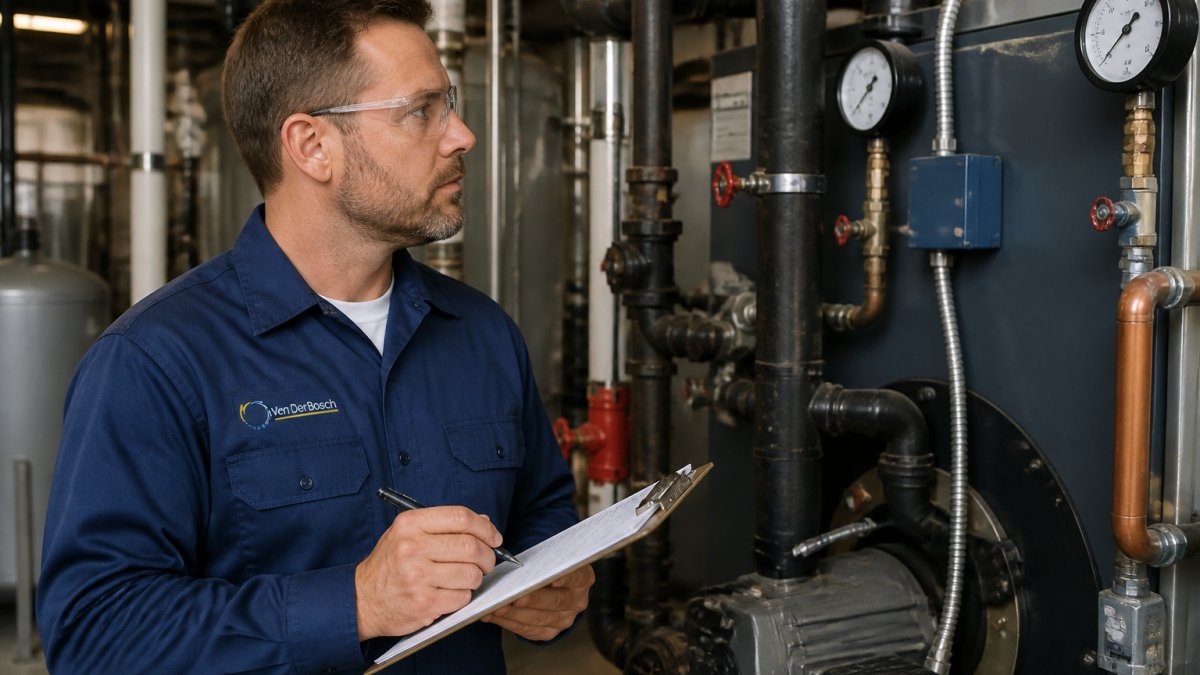
The report matters as much as the visit. A running record of each inspection shows how equipment is aging and gives you evidence when it’s time to plan a replacement rather than another repair.
How to Evaluate and Select a Commercial Plumbing Provider
Choosing a commercial plumbing provider comes down to response capability, coverage, and transparency, not just price. A provider who cannot reach your building quickly during a failure is not much help, no matter how competitive the routine rate looks. Evaluate before you sign, not after the first emergency call.
Start With Licensing and Insurance
Commercial plumbing work in most jurisdictions requires a licensed plumber, and certain tasks carry additional requirements. Gas line work, boiler service, and backflow testing are common examples where credentials matter as much as the work itself.
Ask for:
- The license number and the name it is issued to
- Proof of general liability insurance and workers’ compensation coverage
- Confirmation that the technicians who will work in your building are covered under those policies
Verify the license through the issuing authority rather than accepting a number on a business card.
Confirm Commercial Experience
Residential and commercial plumbing overlap, but they are not the same job. Commercial buildings have larger pipe sizes, different code requirements, higher-demand water heating and boiler systems, and often more complex drain layouts.
Ask what share of their work is commercial, what types of buildings they typically service, and whether they have experience with the specific systems in your property.
Check References and Service-Area Coverage
References are most useful when they come from buildings similar to yours. Ask for two or three commercial clients with comparable systems and call them.
Service-area coverage matters too. A provider who lists your area but has no technicians nearby may not meet the response terms in the agreement. Ask where the nearest technicians are based and how they route calls to your building.
Evaluate Response Capability
Response capability is more than a phone number. Ask:
- Who answers after hours, and how calls are routed
- Whether the same technicians handle routine visits and emergency calls
- How the provider communicates status while you wait
A provider with a clear after-hours process is easier to rely on than one who promises “24/7 service” without explaining how it works.
Review Pricing Structure and Transparency
Pricing for commercial maintenance agreements varies with the building, the systems covered, and the visit frequency. Rather than comparing a single figure, ask how the provider builds the number: what is included in the recurring fee, what is billed separately, and how out-of-scope work is quoted.
A transparent provider will explain the factors that affect the agreement cost: the number of systems covered, the size and age of the building, the visit frequency, and the response terms.
Questions to Ask Before Signing
- Can you service multiple properties under one agreement?
- What are your response commitments for emergencies, and are they in writing?
- How do you document each inspection, and can I see a sample report?
For gas lines, boilers, and other hazardous systems, confirm the provider’s technicians are properly licensed and insured for that work. Never attempt gas line or boiler repairs yourself; those require a licensed professional.
Ask for a sample inspection report and a copy of the proposed agreement before you sign. The quality of the documentation and the clarity of the scope tell you more about a provider’s process than any sales pitch.
Red Flags to Watch For
A few patterns suggest an agreement will be hard to manage:
- Scope language that names categories of work but not specific systems
- Response terms described only as “priority” or “prompt” without measurable commitments
- No sample report or documentation example available
None of these is automatically disqualifying, but each is worth a direct question before you commit.
Conclusion
A commercial plumbing maintenance contract only pays off if the provider shows up, documents the work, and responds when something fails. The right agreement turns plumbing from a recurring emergency into a managed expense.
VanDerBosch Plumbing Inc. offers commercial plumbing service with no service charges, same-day service, and availability seven days a week.
Frequently Asked Questions
What are the benefits of a commercial plumbing maintenance contract?
A commercial plumbing maintenance contract shifts your property from reactive repairs to planned care. Regular inspections catch small issues like slow drains, worn valves, or early leaks before they become emergencies. That reduces downtime, extends the life of water heaters, boilers, and pumps, and helps control repair costs over time. Scheduled visits also keep maintenance records organized, which matters for property managers who need documentation. Many contracts include priority response for urgent problems, so a burst pipe or sewer backup gets attention faster than a cold call to an unfamiliar plumber.
What should a commercial plumbing maintenance agreement include?
A solid commercial plumbing service agreement should spell out the scope of work, inspection frequency, and which systems are covered: water supply lines, drain lines, sewer lines, water heaters, boilers, sump pumps, and valves. Look for details on priority response times, how after-hours emergencies are handled, and whether repairs are billed separately or bundled. The agreement should also state what documentation you receive after each visit and how the provider handles findings that need follow-up work. Ask for the terms in writing before signing.
How often should commercial plumbing systems be inspected?
Most commercial properties benefit from at least annual inspections, but high-traffic buildings, restaurants, and multi-unit residential properties often need quarterly or semi-annual visits. A commercial plumbing maintenance schedule should account for your building’s age, water usage, and equipment. Older buildings with original pipework or steam boilers may need more frequent checks. In cold climates, adding a pre-winter inspection helps catch vulnerable pipes before freezing temperatures arrive. Your provider can recommend an inspection frequency based on your specific systems and usage patterns.
Can preventive plumbing maintenance reduce emergency repairs?
Yes. Preventive maintenance targets the conditions that lead to emergencies: corrosion, mineral buildup, worn seals, failing valves, and slow drains that signal a developing blockage. When these are addressed during a scheduled commercial plumbing inspection, the likelihood of a sudden failure drops. That means fewer after-hours calls, less water damage risk, and more predictable operating costs. It also gives property managers time to budget for planned repairs instead of absorbing unexpected emergency expenses.