
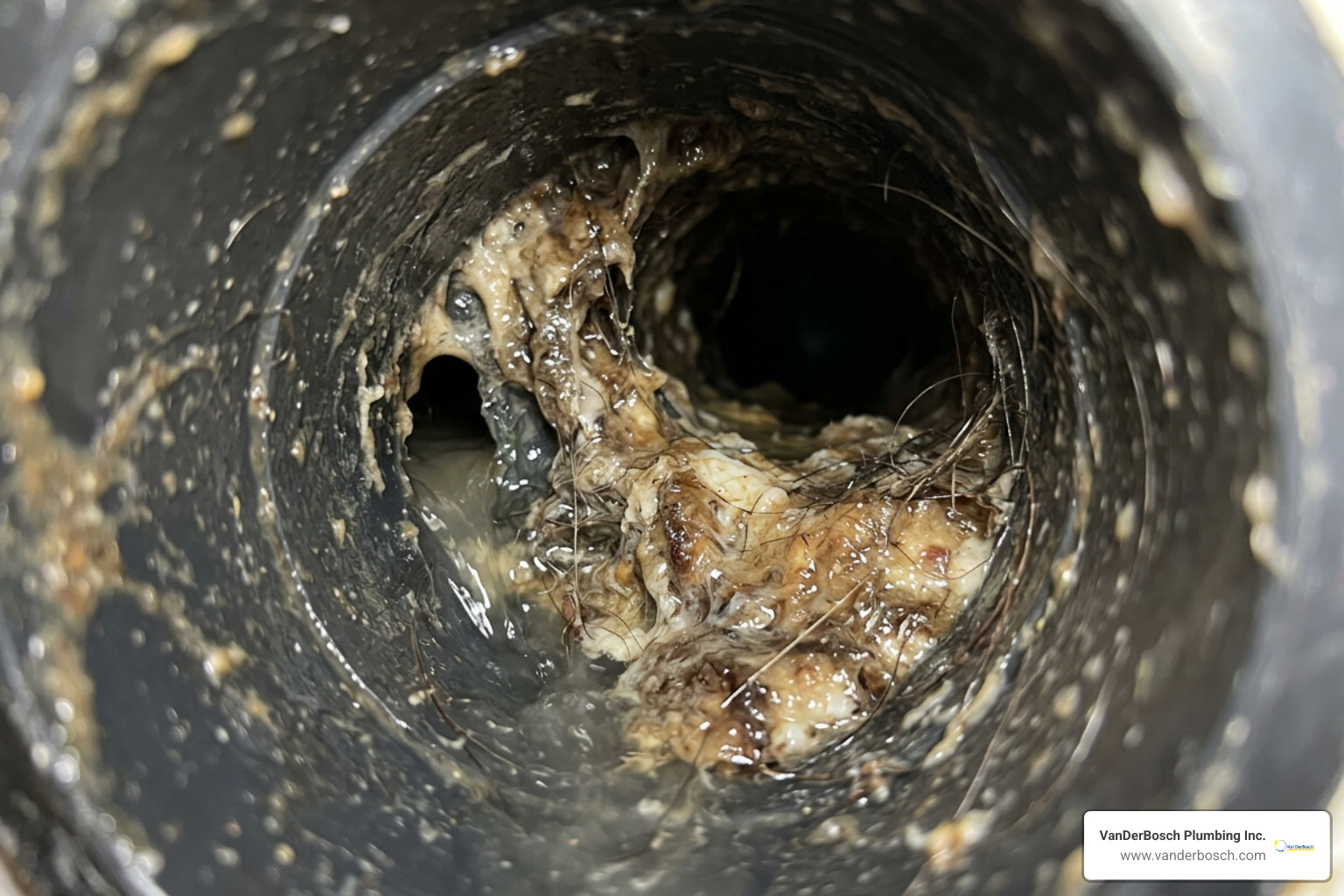
Common Causes of Household Plumbing Blockages
When wastewater slows down or stops altogether, it is usually because an obstruction has taken over the interior diameter of your pipe. Understanding what creates these blockages helps you choose the right fix and prevent repeat headaches. For a deeper breakdown of common plumbing culprits, explore our guide on 5 Reasons Your Drain Is Clogged and How to Fix It.
Here are the primary causes behind residential and commercial plumbing backups:
- Fats, Oils, and Grease (FOG): Warm liquid cooking fats poured down kitchen sinks cool rapidly down the line, coating pipe walls with sticky sludge that traps food scrap particles.
- Hair Tangles and Soap Scum: In bathroom sinks, showers, and tubs, shed hair binds with tallow-based soap scum and mineral deposits, forming tight, fibrous plugs.
- Non-Flushable Wipes and Hygiene Products: Even products labeled as “flushable” wipes fail to break down like toilet paper. They snag on minor pipe imperfections, catching toilet paper until a total blockage forms.
- Tree Root Intrusion: Underground sewer lines carry warmth, moisture, and nutrients that attract nearby tree roots. Roots penetrate tiny pipe joints or microscopic cracks, expanding inside to act as a dense wooden net that catches solid waste.
- Scale and Mineral Buildup: Hard water leaves rock-like calcium and mineral scale along pipe walls, continually narrowing the passage over time.
- Structural Pipe Code Defects: Bad original plumbing installations—such as undersized 4cm pipes serving multiple heavy appliances, pipes laying completely flat with zero pitch, or directional T-junctions installed backwards against the water flow—guarantee chronic blockages regardless of how often you clear them.
How to Get Your Blocked Drains Fixed Today: Step-by-Step DIY Solutions
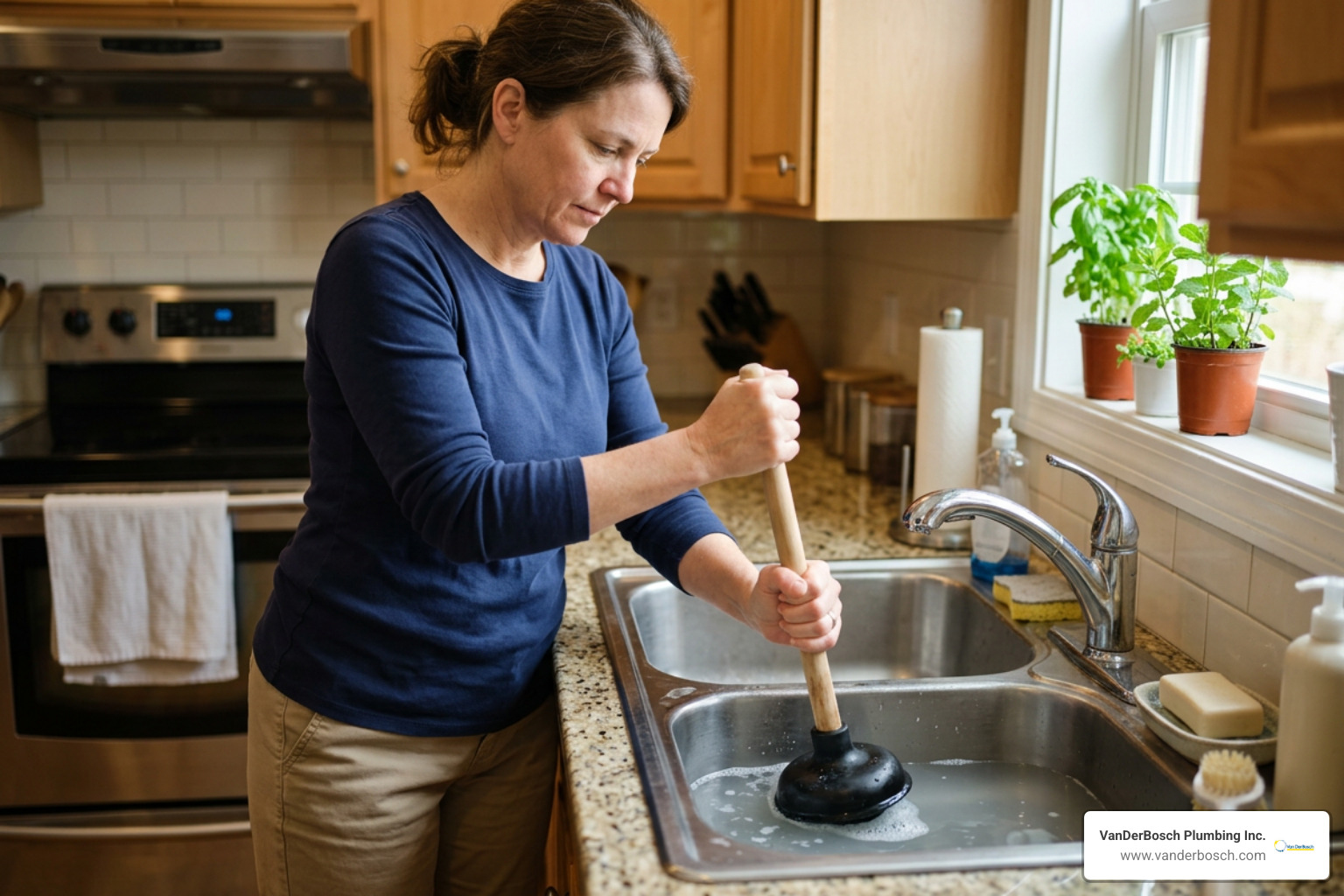
If you are dealing with a localized clog in a single sink or bathtub, you can often restore drainage yourself using basic household techniques. If you want a quick step-by-step walkthrough for sink issues, see How to Unblock Sink Drains Quickly. For commode trouble, check out How to Unclog a Toilet in 5 Easy Steps.
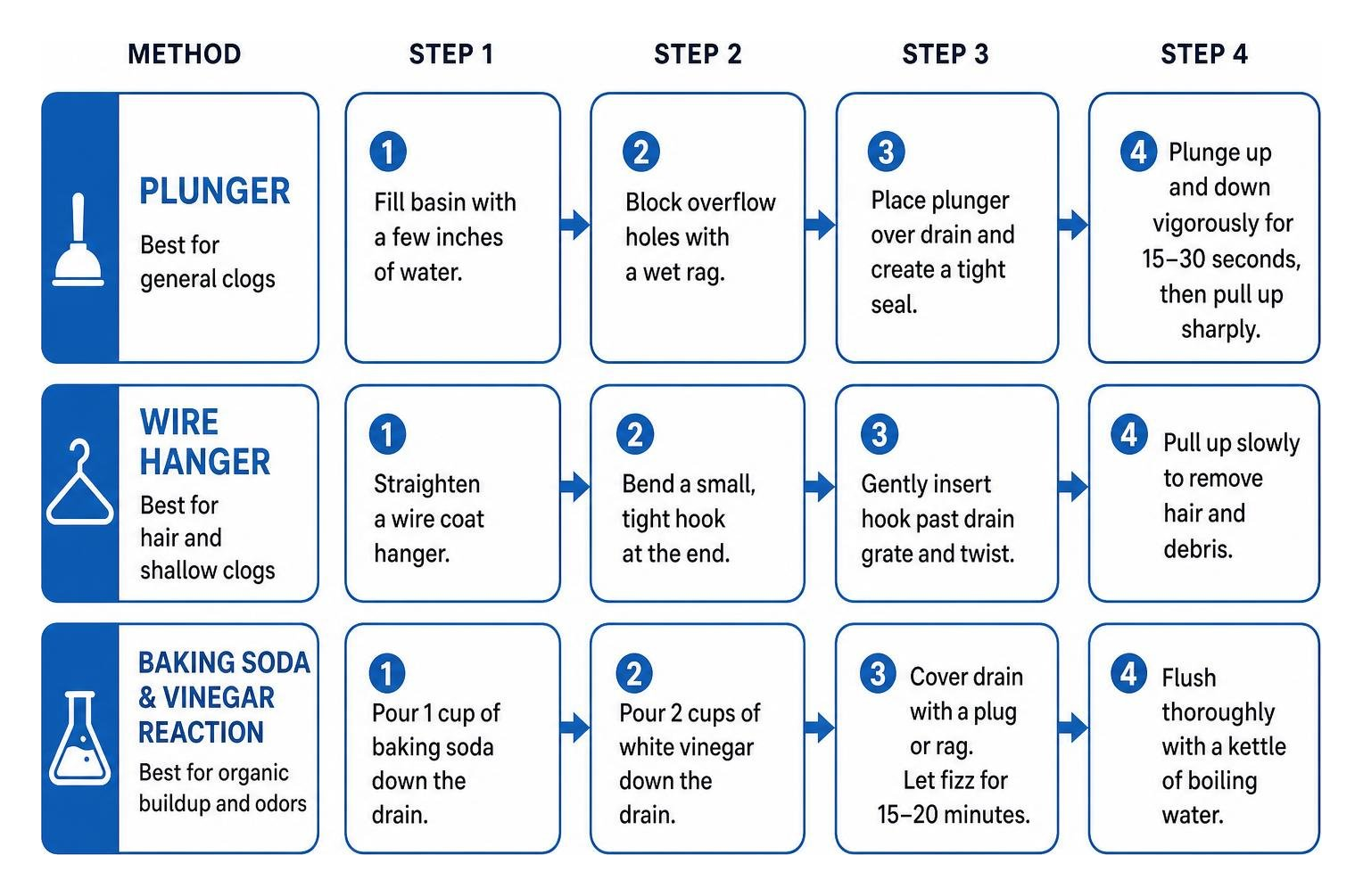
Before starting any hands-on DIY method, turn off the water supply to the fixture or pause high-volume appliances like washing machines to eliminate overflow risks.
- Master the Plunging Seal: Select a cup plunger for flat sink/tub drains or a flange plunger for toilets. Fill the basin with a couple of inches of water to submerge the plunger cup. Block any sink overflow holes using a wet rag to ensure suction isn’t lost. Place the plunger cup squarely over the drain opening, establish a firm seal, and plunge vigorously up and down for 15 to 30 seconds before pulling up sharply.
- Fish Out Shallow Clutter with a Wire Hanger: For shower or bathroom sink drains clogged near the surface with hair, straighten out a metal wire coat hanger and bend a small, tight hook at the end. Gently lower it past the drain grate, twist, and pull up to extract tangled hair masses.
- Use the Baking Soda and Vinegar Reaction: Pour 1 cup of baking soda directly down the drain, followed immediately by 2 cups of white vinegar. Cover the drain with a plug or rag to force the expanding carbon dioxide gas through the blockage. Let the fizzing reaction break down organic materials for 15 to 20 minutes, then flush thoroughly with a kettle of boiling water.
Safe Cleaning Alternatives vs Chemical Drain Cleaners
It is tempting to grab a bottle of harsh chemical drain cleaner from the grocery store shelf, but chemical products often cause far more harm than good. Heavy, caustic liquid formulas rely on harsh chemical reactions or aggressive acids like sulfuric acid. These chemicals generate intense heat inside pipes, which can melt PVC drains, corrode older metal plumbing, and leach toxic chemicals into local waterways.
Furthermore, chemicals usually only melt a tiny hole through a dense log of grease or gunk. Water may begin trickling through momentarily, but the remaining sticky sludge quickly catches fresh waste, causing the clog to return within days.
Instead of corrosive liquids, use safer alternatives:
- Commercial Degreasers & Hot Water Flushes: A generous pour of non-caustic liquid dish degreaser followed by boiling water dissolves stubborn kitchen grease coated along sink traps.
- Enzyme Drain Cleaners: Natural enzymatic cleaners introduce beneficial bacteria that slowly digest starches, fats, protein build-up, and hair without causing structural heat damage to your pipe walls.
Diagnosing Blockages: Internal Pipes vs Main Sewer Lines
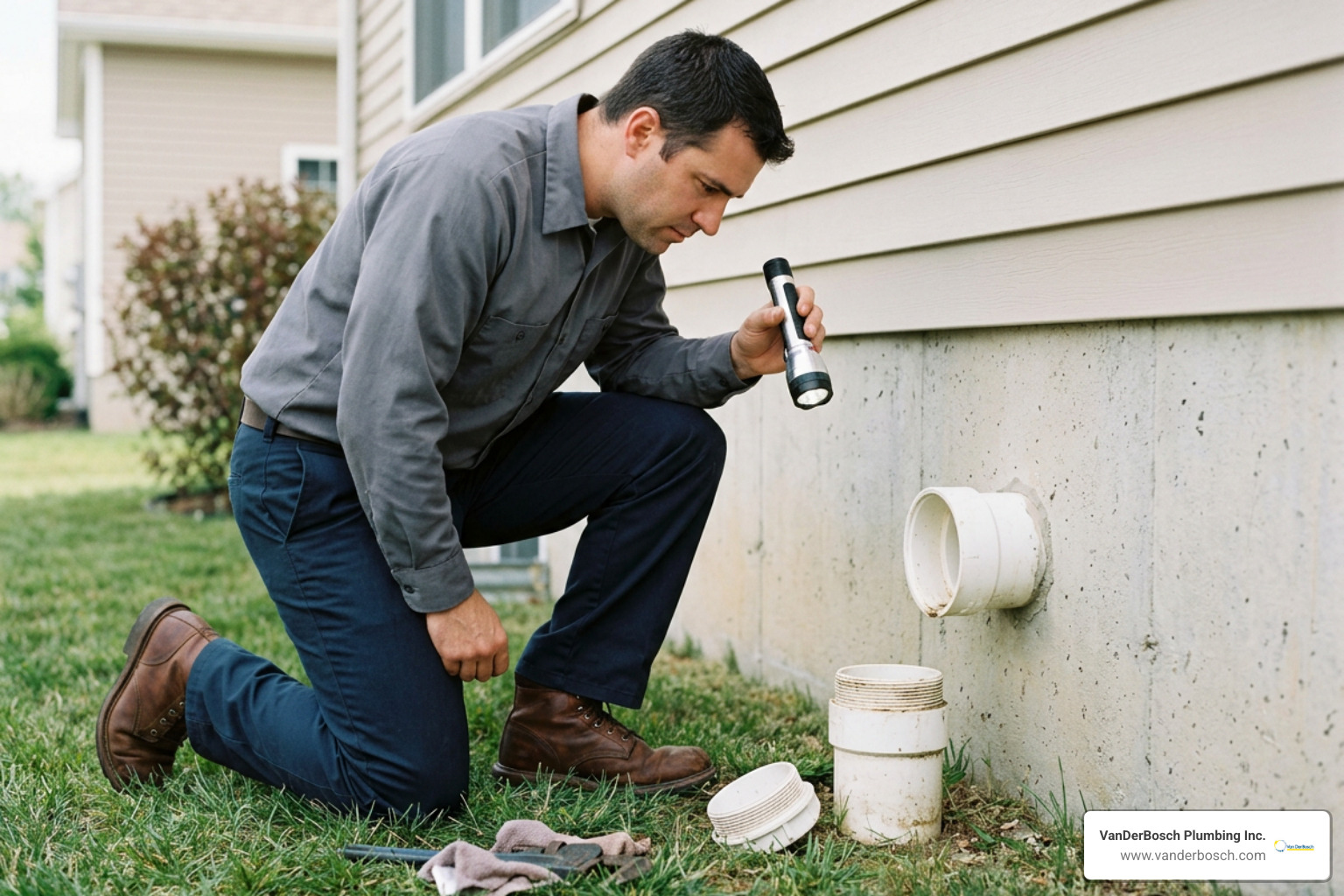
Knowing whether an obstruction is isolated inside a single branch line or buried deep within your main sewer line is vital for getting blocked drains fixed today safely and effectively.
To pinpoint the blockage location:
- Single Fixture Slowdown: If only your kitchen sink is backing up while the bathroom toilet and shower drain freely, the obstruction is located inside that specific sink’s localized branch waste pipe or P-trap.
- Foundation Cleanout Inspection: Check the cleanout access pipe located near your foundation. If you remove the cap and find no standing water inside, the clog lies inside your house plumbing above that point. If standing water is visibly resting inside the foundation cleanout, the obstruction is located further downstream in the sewer pipe leading out toward the municipal main.
- Air Vent Check: Gurgling noises coming from sinks when you flush a toilet often indicate a blocked roof vent stack rather than a pipe clog. Missing or clogged plumbing air vents create vacuum suction locks that stall natural wastewater flow.
If you are noticing simultaneous issues across multiple fixtures, read our troubleshooting guide on Why Both Your Shower and Sink Are Clogged and How to Fix It.
Getting Your Main Line Blocked Drains Fixed Today
When a main sewer line becomes choked off by grease build-up, root masses, or pipe structural failures, wastewater has nowhere to go except backwards into the lowest points of your home.
If wastewater or raw sewage begins bubbling up through basement floor drains, bathtubs, or ground-level showers, take immediate action:
- Stop using all faucets, dishwashers, and showers across the house immediately.
- Never start a laundry cycle; washing machines discharge 15 to 20 gallons of water in minutes, which will spill out of lower drains onto your floors.
- Turn off your home’s main water shutoff valve if toilets continue running to eliminate accidental overflow hazards. Learn more ways to safeguard your system by reading How to Prevent Clogged Toilets and Sewer Lines.
Signs You Need Blocked Drains Fixed Today by a Professional
While plungers handle occasional minor sink clogs, certain serious warning signs mean DIY attempts should be put aside in favor of a licensed plumbing expert:
- Chronic Recurring Clogs: A drain that blocks up every few weeks despite repeated snaking usually indicates tree root intrusion, lack of proper pipe slope, or broken lines underneath your property.
- Foul Sewer Gas Odors: Persistent hydrogen sulfide or rotten-egg smells coming from drains point to cracked main lines, dried-out P-traps, or stagnant sewage build-up inside your walls.
- Drain Fly Infestations: Tiny dark flies congregating around sink or floor drains feed on stagnant organic sludge and standing sewage inside obstructed pipes.
- Multiple Outlets Backing Up Simultaneously: Flushing a toilet causes water to surge up into the nearby bathtub or shower basin.
Professional Techniques and Tools for Severe Blockages
When household tools fail, licensed plumbers employ specialized industrial equipment to diagnose and permanently clear line obstructions. For an in-depth breakdown of standard industry practices, see A Short Guide to Professional Drain Cleaning.
| Clearing Method | Primary Tool Used | Best Applied For | Key Advantages |
|---|---|---|---|
| Mechanical Drain Snaking | Heavy-duty commercial motorized augers with steel cables | Solid object retrieval, hair plugs, minor tree root cutting | Quickly punches through tough obstructions to restore immediate water flow. |
| High-Pressure Hydro-Jetting | Specialized high-pressure water hose with multi-directional nozzles | Heavy grease logs, mineral scale, sludge, line maintenance | Scours internal pipe walls 360-degrees clean using up to 4,000 PSI of clear water pressure. |
| CCTV Video Camera Inspection | High-definition waterproof sewer cameras on flexible rods | Diagnosing cracked pipes, root intrusion, bellied lines, hidden defects | Provides visual proof of pipe condition without invasive digging. |
| Trenchless Pipe Relining | Epoxy-impregnated liner sleeves pulled into existing pipes | Structural line cracks, open clay pipe joints, root prevention | Restores damaged underground pipes without excavating driveways or lawns. |
Motorized augers break through stubborn clogs, but high-pressure water stream technology cleans pipe walls entirely. To understand how water scrubbing works, check out The Benefits of Hydro Jetting.
Furthermore, running a video feed through lines removes all guesswork. Plumbers insert fiber-optic cameras directly down sewer access points to locate root penetrations, backwards T-junctions, or collapsed clay pipes. Learn how video technology works by reviewing our Sewer Video Inspection service page.
Long-Term Drain Maintenance and Prevention Strategies
Preventing future plumbing blockages takes far less time and money than dealing with emergency drain overflows. By practicing simple daily habits, you can protect your drainage pipes year-round:
- Install Protective Drain Strainers: Place fine mesh strainers over all kitchen sink drains, shower floor outlets, and bathtub traps to catch hair, food scraps, and debris before they enter your plumbing.
- Dispose of Cooking Grease Properly: Never pour melted butter, bacon grease, or vegetable oil down kitchen drains. Collect cooking fats in a sealable tin or jar, let them solidify, and dispose of them in the household trash.
- Adopt Cold Water Garbage Disposal Habits: Always run steady cold water before, during, and for 15 seconds after running a garbage disposal. Cold water keeps leftover fats solid so the blades can chop them into small pieces rather than letting melted grease coat your drain lines.
- Maintain Clear Wipe Disposal Rules: Remind family members and guests that wet wipes, paper towels, facial tissues, and feminine products belong strictly in the garbage, never in the toilet bowl.
- Perform Monthly Flush Maintenance: Flush kitchen and bathroom branch drains once a month with a kettle of boiling water combined with a cup of liquid dish soap to melt fresh fat accumulations before they harden.
Frequently Asked Questions About Blocked Drains
How much does professional drain cleaning typically cost?
Simple minor sink or bathtub drain clearing typically ranges between $125 and $350, depending on accessibility and clog severity. Main sewer line clearing or heavy hydro-jetting services vary based on pipe length, severity of tree root intrusion, and cleanout access. We provide transparent, fixed-price quotes upfront with no hidden call-out fees or surprise charges.
Why does my drain clog again a few weeks after snaking?
Handheld or small DIY drain snakes frequently puncture a narrow hole straight through a massive log of grease, sludge, or root mass. While water temporarily drains through that tiny hole, sticky debris catches new waste, completely choking the line back off within a few weeks. Lasting fixes require scouring full pipe walls with hydro-jetting or repairing underlying structural defects like zero pipe pitch, broken fittings, or root intrusion.
How quickly can a plumber respond to clear a drain emergency?
At VanDerBosch Plumbing Inc., we offer 24/7 emergency service availability throughout Chicagoland, aiming to dispatch background-checked technicians as fast as possible for urgent backups. Most standard household drain services are diagnosed and fully completed within a single site visit.
Conclusion
Ignoring slow drains or recurring plumbing clogs leads directly to costly property water damage, unsanitary sewage backups, and structural pipe failures. By taking safe initial DIY steps or recognizing when main sewer lines demand expert attention, you can protect your home and keep wastewater flowing smoothly.
When DIY plungers fall short or you face severe multi-fixture backups, turn to our team at VanDerBosch Plumbing Inc. We bring licensed expertise, 24/7 emergency availability, background-checked technicians, transparent fixed pricing with no hidden service fees, and a 100% satisfaction guarantee to every job across Chicago and the surrounding suburbs.
Don’t let a stubborn blockage disrupt your day — Schedule Professional Plumbing Services with us today to get your blocked drains fixed today!