
What to Do When You Have a Plumber Clogged Toilet
Calling a plumber for a clogged toilet is sometimes the fastest fix — but most blockages can be cleared in minutes with the right technique before you even pick up the phone.
Here’s what to do first:
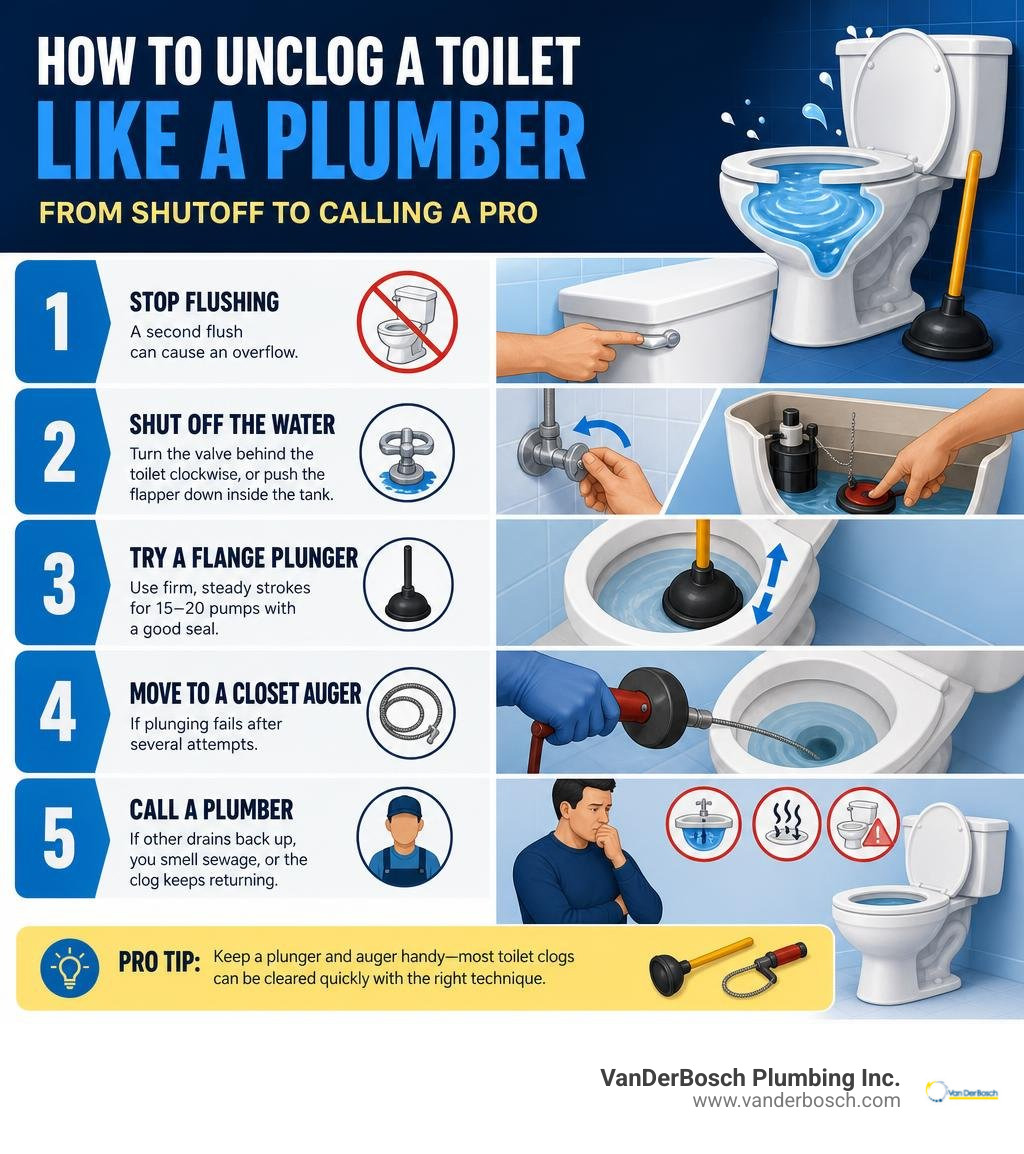
- Stop flushing. A second flush can cause an overflow.
- Shut off the water. Turn the valve behind the toilet clockwise, or push the flapper down inside the tank.
- Try a flange plunger. Use firm, steady strokes for 15–20 pumps with a good seal.
- Move to a closet auger if plunging fails after several attempts.
- Call a plumber if other drains back up, you smell sewage, or the clog keeps returning.
A clogged toilet is one of the most common — and most stressful — plumbing problems a homeowner faces. That sudden rise of water in the bowl creates instant panic. And in the Chicago area, where aging pipes and hard water are facts of life, a simple clog can sometimes signal something bigger going on deeper in your sewer line.
The good news? Most toilet clogs happen right at the trap — the curved section just below the bowl — and respond quickly to basic DIY methods. This guide walks you through exactly what a professional plumber would try, step by step, so you can handle it confidently and know when it’s time to call for backup.
I’m Hugh Hodur, President of VanDerBosch Plumbing Inc., and I’ve overseen hundreds of plumber clogged toilet service calls across the Chicagoland area. Let’s start with what’s actually blocking your drain.
Common Causes of a Blocked Commode
To keep your bathroom running smoothly, it helps to understand why toilets back up in the first place. Your toilet operates on a delicate gravity-and-siphon balance. When that balance is disrupted by materials that shouldn’t be in the pipes, a backup is inevitable.
Here are the most common culprits behind a stubborn clog:
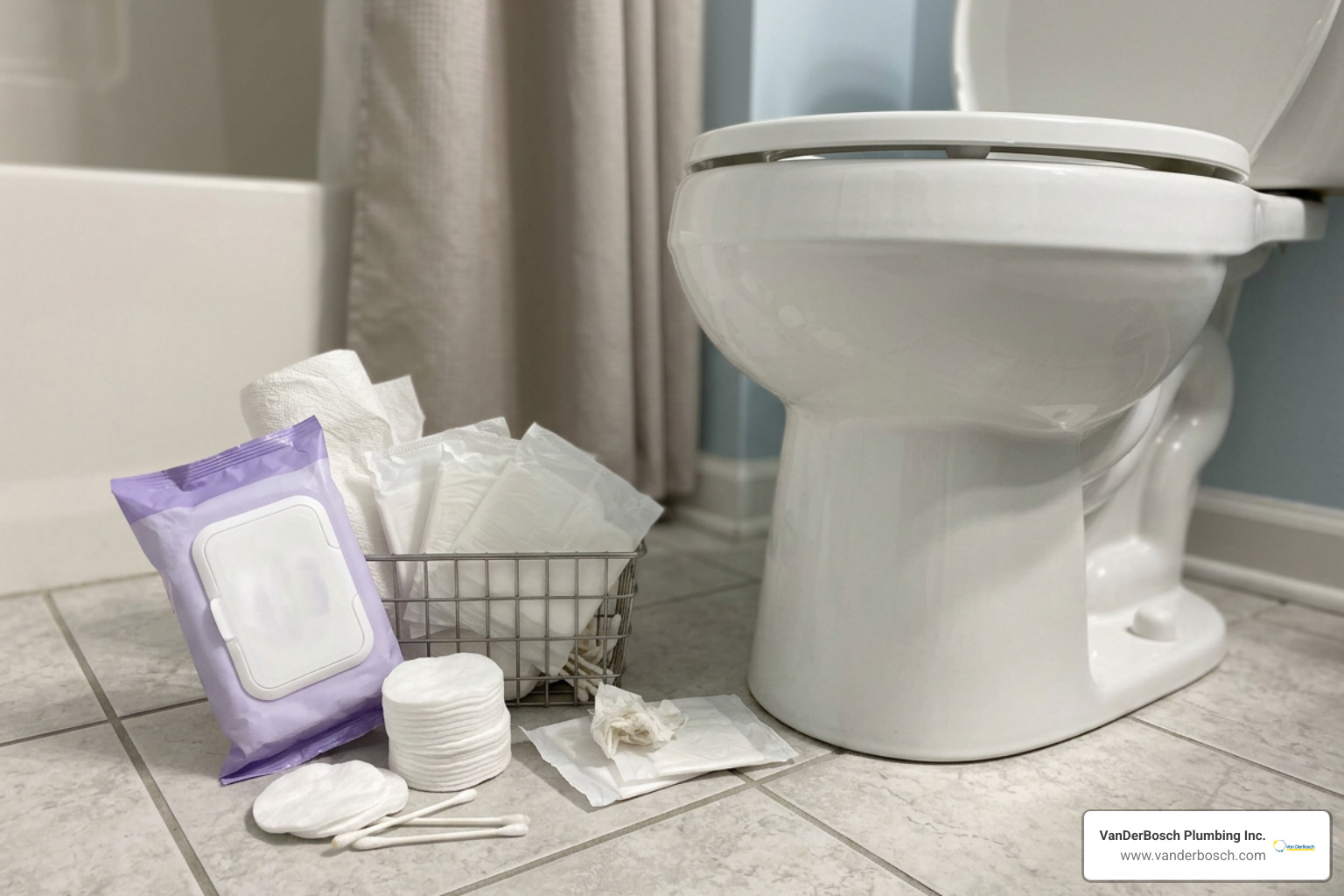
- Excessive Toilet Paper Buildup: While toilet paper is designed to dissolve in water, flushing large wads at once can create a dense, paper-mache-like plug in the trapway. This is especially true of ultra-soft, multi-ply brands, which expand significantly when wet and take much longer to break down than standard single-ply rolls.
- The “Flushable” Wipes Myth: Despite what the packaging claims, flushable wipes do not disintegrate like toilet paper. They remain intact as they travel through your pipes, snagging on minor imperfections and acting as a net that catches other waste. Over time, this creates severe blockages in both your home’s drains and the municipal sewer system.
- Foreign Objects: From children’s toys and plastic cosmetic caps to dental floss and cotton swabs, foreign objects are a primary cause of emergency service calls. Unlike organic waste, rigid plastic or fibrous materials will not dissolve and must be physically extracted.
- Low-Flow Toilet Limitations: Many early low-flow toilets manufactured in the 1990s use only about 1.6 gallons of water per flush (or less) but lack the modern bowl design needed to generate a strong siphon. These older models often struggle to push solid waste completely through the trapway, making them highly susceptible to recurring clogs.
- Hard Water and Mineral Deposits: Across Cook County, hard water is incredibly common. Over the years, calcium and magnesium deposits build up inside the small siphon jet holes under the toilet rim. When these jets are restricted, the toilet cannot release water quickly enough to create a strong, clean flush, leaving waste behind to settle and form a blockage.
If you are experiencing slow drainage throughout your home, the issue might not be isolated to your toilet. Read our guide on the 5 reasons your drain is clogged to help narrow down the source of the trouble.
How to Unclog a Toilet Like a Professional
Before you grab the nearest tool and start plunging wildly, take a moment to prepare. Proper preparation prevents messy overflows and protects your bathroom fixtures from costly damage.
Safety First: Gear Up and Prep the Bathroom
Always wear heavy-duty rubber gloves and eye protection before attempting to clear a toilet. Toilet water contains bacteria and pathogens, and vigorous plunging can cause dirty water to splash.
Next, lay down old towels or newspaper around the base of the toilet to catch any splashes. Keep a plastic bucket nearby so you have a safe place to deposit wet tools or retrieved debris immediately.
The Flange Plunger Method
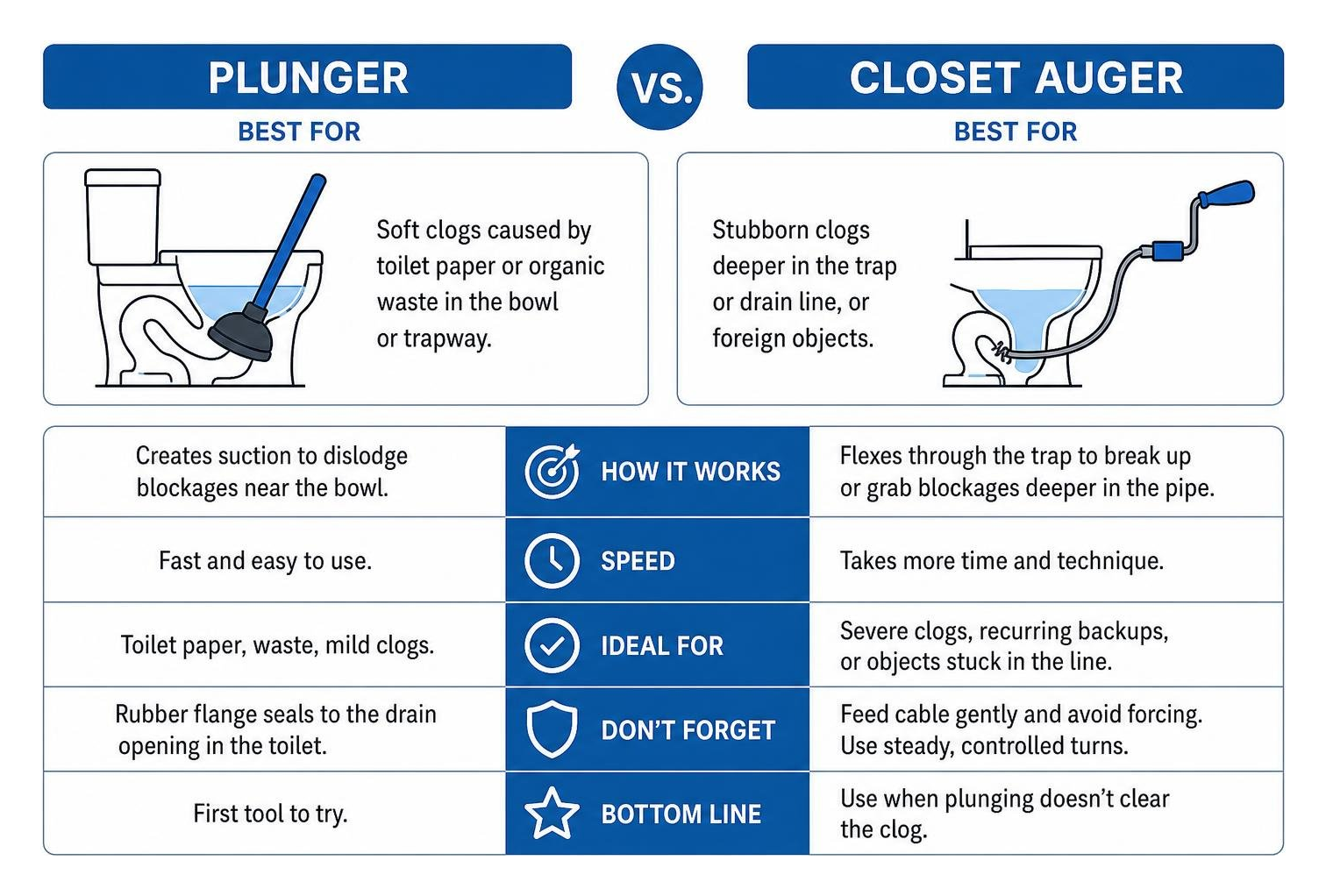
If you want to clear a plumber clogged toilet like a professional, you must use the right tool. Throw away the standard flat red cup plunger — that tool is designed for flat sink basins and cannot form a proper seal inside a curved toilet bowl.
Instead, you need a flange plunger (usually black with an extended rubber sleeve or “collar” at the bottom).
- Check the Water Level: The plunger head must be fully submerged in water to work. If the bowl is empty, add a pitcher of warm water. If it is full to the brim, scoop some water out into a bucket to prevent splashing.
- Insert at an Angle: Lower the plunger into the bowl at an angle so the dome fills with water rather than air. Trapped air compresses and reduces the force of your plunge, while water transfers the physical force directly to the clog.
- Establish a Tight Seal: Insert the extended rubber flange directly into the drain opening. Press down firmly until you feel a secure, airtight seal against the porcelain.
- Plunge with Intention: Begin with a gentle push downward to expel any remaining air without splashing. Then, perform 15 to 20 firm, rapid, up-and-down strokes. Remember: the upward pull is just as important as the downward push. The vacuum created by pulling back up helps loosen the clog and break it apart.
- Break the Seal: After a series of vigorous pumps, pull the plunger away quickly. If the water rushes down the drain, you have successfully cleared the blockage!
Using a Closet Auger for Tough Blockages
When a plunger cannot budge the obstruction — especially if a child has dropped a toy or a household member flushed paper towels — it is time to use a closet auger (also known as a toilet snake).
Unlike standard drain snakes, which have exposed metal coils that can permanently scratch and ruin vitreous china, a closet auger features a protective rubber or plastic sleeve at the bend to safeguard your toilet’s porcelain finish.
To use a closet auger safely, follow these steps:
- Retract the Cable: Pull the auger handle all the way up so the spring-like cable is retracted inside the metal tube, with only the rubber-coated elbow showing at the bottom.
- Position the Tool: Place the curved elbow directly into the bottom of the toilet bowl, pointing up toward the back of the drain.
- Extend and Rotate: Hold the outer tube firmly with one hand. With your other hand, slowly push the handle down while turning it in a steady, clockwise direction. This guides the flexible spring steel cable through the S-curve of the toilet trapway.
- Feel for Resistance: When you feel the cable hit a solid obstruction, do not force it. Keep cranking clockwise while applying moderate forward pressure. The auger tip is designed to either grind through organic waste or hook onto solid objects (like wipes or toys) so they can be pulled back out.
- Retrieve the Object: Once the cable penetrates or hooks the clog, slowly pull the auger back up while continuing to rotate it. Carefully lift the tool from the bowl and deposit any retrieved debris directly into your bucket.
Using these mechanical techniques properly will resolve the vast majority of standard blockages without damaging your bathroom fixtures.
Natural Remedies: Dish Soap and Hot Water
If you do not have a plunger or an auger handy, you can often break up organic clogs using common household items. This method works incredibly well for heavy paper blockages.
- The Slippery Slope (Dish Soap & Hot Water): Squirt about a half-cup of liquid dish soap directly into the toilet bowl. The heavy soap will sink to the bottom, lubricating the trapway and coating the clog. Let it sit for 15 minutes. Next, pour a bucket of hot tap water into the bowl from waist height. The weight of the water combined with the lubricating soap will often slide the clog right through the pipe. Crucial warning: Never use boiling water. Extremely hot water can cause thermal shock, instantly cracking the vitreous china bowl and turning a simple clog into an expensive replacement job.
- The Volcano Effect (Baking Soda & Vinegar): Pour one cup of baking soda into the clogged toilet, followed slowly by two cups of white distilled vinegar. The mixture will immediately begin to fizz and bubble. Allow this natural chemical reaction to work on the organic waste for 30 minutes, then flush with a bucket of hot tap water.
When to Call a Plumber Clogged Toilet Warning Signs
While DIY methods are highly effective for simple, localized clogs, some plumbing situations require professional intervention. Attempting to force your way through a severe blockage can result in cracked fixtures, ruptured pipes, and extensive water damage to your home.
Stop what you are doing and call a licensed plumber if you experience any of the following warning signs:
- The 15-Minute Rule: If you have spent 15 minutes plunging and augering with zero progress, the clog is likely too deep or too dense for standard household tools.
- Multiple Clogged Drains: If you flush the toilet and water bubbles up in your bathtub, or if your kitchen sink backs up when your washing machine drains, you are dealing with a systemic main sewer line blockage rather than an isolated toilet clog.
- Persistent Sewage Odors: Foul, sewer-gas smells rising from your drains or basement floor drains indicate that sewer gases are escaping past your plumbing traps, often due to a broken pipe or a main line blockage.
- Gurgling Sounds: If your toilet constantly gurgles, bubbles, or makes gasping noises when you run water elsewhere in the house, air is trapped in the drain system. This is a classic warning sign of restricted airflow in your sewer lateral or vent stack.
To protect your home from sudden flooding, review our helpful tips on how to prevent clogged toilets and sewer lines and read our localized guide on Why My Toilet Won’t Flush Clogged Toilet Fix in Roselle.
Localized Trap Clog vs. Main Sewer Line Blockage
It is critical to distinguish between a localized clog and a main sewer line issue. A localized clog occurs within the toilet’s built-in S-trap or the short branch line connecting the toilet to the main stack. In these cases, only that single toilet is affected; all other sinks, showers, and toilets in the home drain perfectly.
A main sewer line blockage, however, affects your entire home. All wastewater from your fixtures must travel through a single main sewer lateral to reach the municipal sewer main under the street. If this lateral is blocked — often by tree root intrusion in older Chicago neighborhoods with clay tile pipes — wastewater has nowhere to go. It will back up into the lowest drains in your home, which are usually basement floor drains, showers, or downstairs toilets.
When our licensed technicians arrive at a home in Niles, Winnetka, or Melrose Park, we do not guess where the clog is. We use professional diagnostic tools, such as high-resolution sewer camera inspections, to pinpoint the exact location and cause of the blockage.
If you are experiencing a severe backup, you can reach out to our local teams for fast assistance:
- For residents in Roselle: Roselle Services Clogged Toilet Repair
- For general service: Services Clogged Toilet Repair
Why Chemical Drain Cleaners Are a Bad Idea
When faced with a stubborn toilet clog, many homeowners run to the hardware store for a bottle of liquid chemical drain cleaner. We strongly advise against this.
Chemical drain cleaners rely on harsh, caustic acids or lye to eat through blockages. Here is why they are incredibly dangerous for toilets:
- Intense Heat Generation: Caustic chemicals create an exothermic reaction (they generate intense heat) to dissolve waste. Because standing water in a toilet bowl dilutes the chemical, it often settles in the trapway, generating concentrated heat that can crack the porcelain bowl or melt the wax ring seal underneath, causing hidden leaks.
- Corrosion of Pipes: If your home has older metal plumbing or PVC joints, these corrosive chemicals can eat away at the pipe walls, leading to pinhole leaks and structural failure over time.
- Safety Hazards for Plumbers: If the chemical fails to clear the clog, you are left with a toilet bowl filled with highly toxic, acidic water. When a professional plumber arrives to auger or lift the toilet, they risk severe chemical burns to their skin and eyes.
Professional Solutions and Cost Estimates
When DIY methods fall short, calling a professional plumbing company ensures the job is done safely and permanently. Below is a breakdown of what you can expect to pay for professional drain clearing compared to DIY tools in the Chicagoland area.
| Service / Tool | Average DIY Cost | Average Professional Cost | What It Covers / Benefits |
|---|---|---|---|
| Flange Plunger | $10 – $25 | N/A | Basic tool for minor paper clogs; reusable. |
| Closet Toilet Auger | $15 – $60 | N/A | Mechanical snake for reaching clogs up to 3 feet deep. |
| Simple Toilet Unclogging | N/A | $100 – $250 | Professional clearing using commercial-grade augers. |
| Sewer Camera Inspection | N/A | $150 – $350 | Real-time video inspection to locate deep blockages or pipe damage. |
| Main Drain Clearing / Snaking | N/A | $300 – $700 | Clearing main sewer lateral of roots or heavy scale buildup. |
| Hydro-Jetting Service | N/A | $350 – $600 | High-pressure water blasting to scrub pipes completely clean. |
Most full-service plumbing companies charge a flat or hourly rate to clear a clogged toilet. Service call fees typically range from $50 to $150, which may cover the initial diagnostic visit, with hourly rates running between $75 and $150 thereafter.
At VanDerBosch Plumbing Inc., we believe in transparent pricing with no hidden service charges, ensuring you know exactly what to expect before we begin work.
If you want to learn more about our professional methods, read A Short Guide to Professional Drain Cleaning or visit our Services Drain Cleaning page.
We also recommend checking out local resources across Cook County for specialized local needs:
Frequently Asked Questions About Toilet Blockages
How much does a plumber clogged toilet service cost?
On average, hiring a plumber to clear a clogged toilet in the Chicagoland area ranges from $100 to $400, depending on the complexity of the clog and whether the toilet must be physically lifted off the floor to extract a foreign object.
If the clog is deep in your main sewer lateral, clearing it can range from $300 to $700. Emergency services performed after hours, on weekends, or during holidays typically incur higher rates.
Can a blocked roof vent cause my toilet to gurgle?
Yes, absolutely. Your plumbing system relies on a roof vent stack to introduce fresh air into the drain pipes. This air pressure equalization allows wastewater to flow smoothly.
If your roof vent becomes blocked by bird nests, leaves, or winter ice, a vacuum is created inside the pipes. When you flush, the rushing water is forced to suck air through your toilet’s S-trap, resulting in a distinct, loud gurgling sound and slow drainage.
What is the fastest way to clear a plumber clogged toilet without a plunger?
The fastest non-plunger method is the dish soap and hot water method. Squirt a generous amount of dish soap into the bowl, wait 15 minutes for it to coat the clog, and then pour a bucket of hot tap water directly into the drain from waist height.
For solid, non-organic objects like toys or keys, you can also use a wet/dry shop vacuum to suck the object back out of the trapway, provided you empty the vacuum’s paper filter first. If you also have sink issues, you can learn How to Fix a Clogged Sink using similar home troubleshooting tricks.
Conclusion
A plumber clogged toilet doesn’t have to throw your entire household into a panic. By equipping yourself with a high-quality flange plunger, understanding the proper plunging and augering techniques, and avoiding destructive chemical drain cleaners, you can resolve the vast majority of bathroom blockages on your own.
However, when a clog refuses to budge, or when multiple drains across your home begin backing up, it is time to put down the tools and call in the professionals.
At VanDerBosch Plumbing Inc., we have proudly served Chicago and the surrounding suburbs — including Roselle, Niles, Winnetka, Melrose Park, Oakbrook Terrace, Elmhurst, and Mount Prospect — for decades.
We stand by our work with a 100% satisfaction guarantee, provide 24/7 emergency availability, offer transparent pricing with no hidden service charges, and only dispatch experienced, background-checked technicians to your home.
Don’t let a stubborn clog disrupt your day. If you need fast, reliable help, contact us to schedule our expert clogged toilet repair services today!