
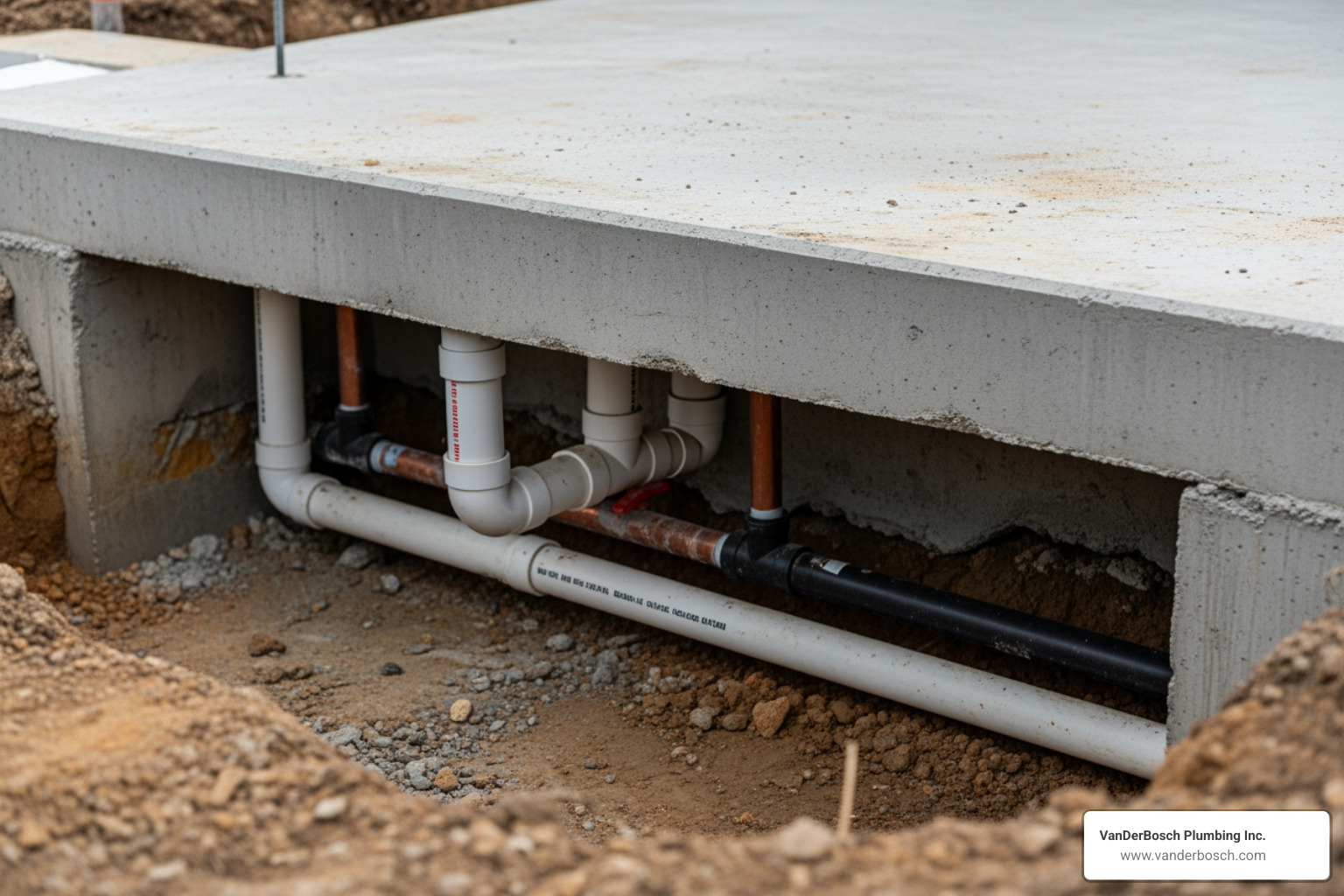
When Water Hides Beneath Your Home
Concrete slab leaks are plumbing leaks that occur in the water or sewer pipes running beneath your home’s concrete foundation. These hidden leaks can cause significant damage to your foundation, lead to costly repairs, and create health hazards if left unaddressed.
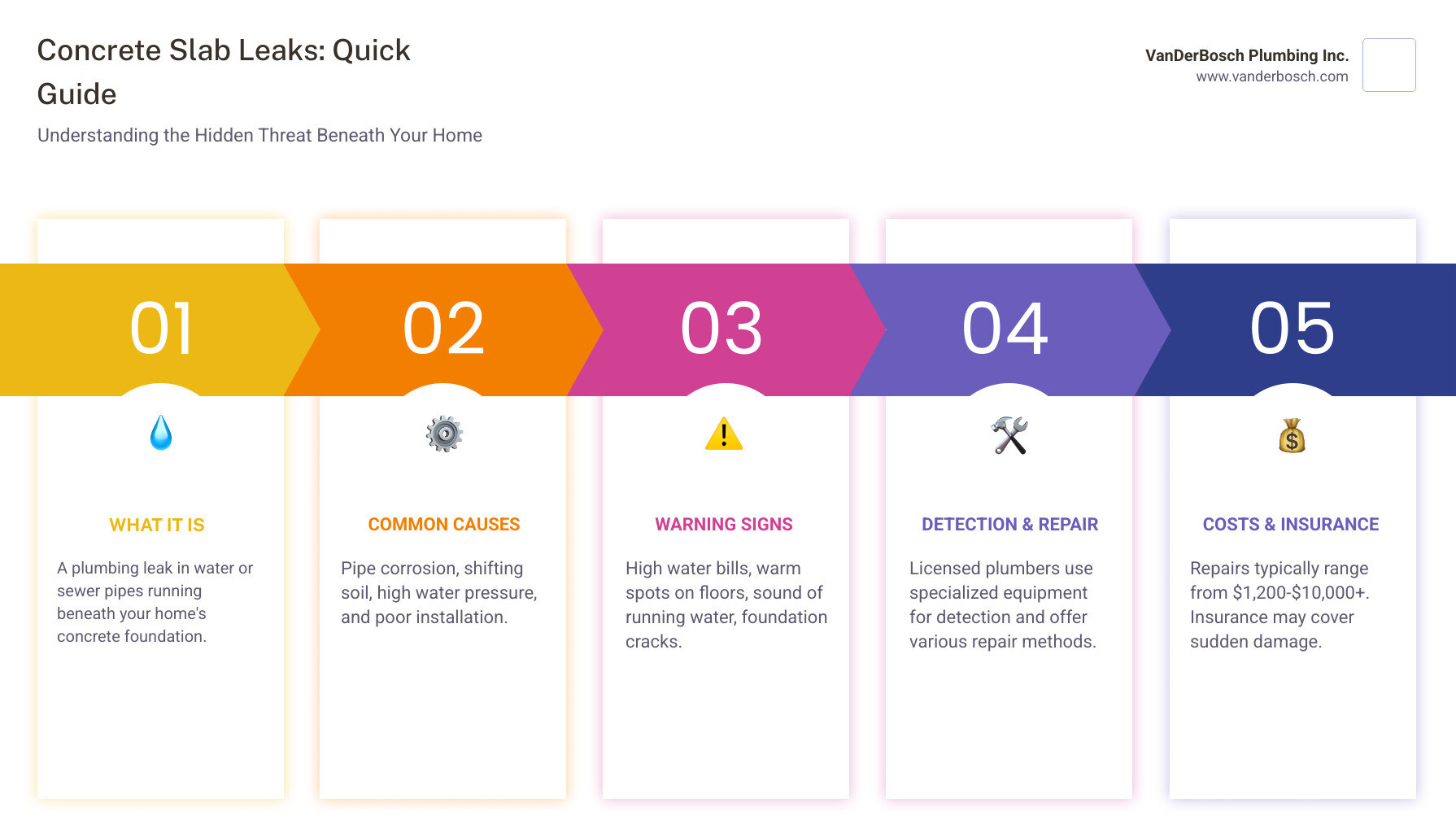
Quick Answer: What You Need to Know
- What it is: A leak in pipes buried under your home’s concrete slab foundation
- Common causes: Pipe corrosion, shifting soil, high water pressure, poor installation
- Warning signs: Unexplained high water bills, warm spots on floors, sound of running water when taps are off, foundation cracks
- Who fixes it: Licensed professional plumbers with specialized detection equipment
- Typical cost: $1,200 to $10,000+ depending on location and repair method
- Insurance: May cover sudden pipe bursts but often excludes gradual damage
Imagine waking up to damp floors, an unexplained spike in your water bill, or the sound of running water when no taps are on. For Chicagoland homeowners, these aren’t just minor inconveniences—they’re warning signs of a slab leak lurking beneath your foundation.
Unlike a dripping faucet you can see and fix, slab leaks hide in plain sight. Your home’s plumbing runs through or beneath the concrete foundation, and when these pipes fail, water seeps into places it shouldn’t be. The result? Structural damage, sky-high water bills, and potential mold growth that threatens both your home’s integrity and your family’s health.
The good news is that understanding the signs early can save you thousands of dollars and prevent serious foundation damage. In this guide, we’ll walk you through everything you need to know about concrete slab leaks—from what causes them to how professionals detect and repair them.
Understanding the “Why”: Causes and Foundation Types
Many homes in Chicagoland and across the country are built on concrete slab foundations. This construction method is often chosen for its practicality, cost-effectiveness, and durability. In fact, a significant percentage of newly constructed single-family homes, 63.2 percent in 2019, use slab foundations. You can learn more about these Characteristics of New Housing.
While slab foundations offer many benefits, they also present a unique challenge when plumbing issues arise. When pipes are embedded within or beneath the concrete, a leak can become a hidden menace, slowly eroding the soil, undermining the foundation’s stability, and causing damage that goes unnoticed until it’s severe.
Several factors contribute to the occurrence of a concrete slab leak, including the movement of the very ground your home rests on, the type of plumbing materials used, and even the chemistry of your water.
What is a Concrete Slab Leak and Why Does it Happen?
A concrete slab leak occurs when a water line or sewer pipe housed within or directly beneath your home’s concrete foundation becomes damaged and begins to leak. Because these pipes are out of sight, they often go undetected for extended periods, allowing significant damage to accumulate. But why do these leaks happen in the first place?
Here are the primary causes we commonly see in Chicagoland homes:
- Pipe Corrosion: Over time, plumbing pipes can corrode, especially older ones made of copper or galvanized steel. This corrosion can be exacerbated by the chemical composition of your water (whether it’s acidic or alkaline) or by the pipes reacting with minerals and other elements in the surrounding soil. This internal or external deterioration weakens the pipe walls, eventually leading to pinhole leaks or larger ruptures.
- High Water Pressure: While a certain amount of water pressure is necessary for your home’s plumbing to function, excessively high pressure can put undue stress on pipes. Most home plumbing systems are designed to operate efficiently between 40-60 PSI. When pressure consistently exceeds this, it can contribute to pipes bursting or developing leaks, as we’ve explored in our guide on Why pipes burst.
- Abrasion: Pipes are not always perfectly still. They can expand and contract with temperature changes, vibrate due to water flow, or shift slightly with ground movement. If a pipe is installed too close to a rough surface like gravel, rebar, or even another pipe, this constant rubbing or “abrasion” can wear down its exterior, creating weak spots where leaks can form.
- Poor Installation: Unfortunately, some slab leaks can be traced back to the initial construction of your home. Pipes that were bent, dented, or improperly connected during installation are inherently weaker and more prone to failure. Even newer homes can experience slab leaks due to improper installation practices or the use of inferior materials.
- Shifting Soil: The soil beneath your home is not static. In regions like Chicagoland, which can experience varied soil types and significant weather fluctuations (from freezing winters to hot, dry summers), the ground can expand and contract. This “expansive soil” movement can exert immense pressure on your foundation and the pipes embedded within it, causing them to crack, bend, or disconnect. It’s a significant concern, as approximately 25% of homes experience damage due to expansive soils, leading to an estimated $2.3 billion in annual costs. This is why addressing expansive soils damage is so crucial.
The Role of Plumbing Materials
The type of plumbing materials used in your home plays a significant role in the likelihood and nature of slab leaks. Different materials have varying lifespans and susceptibilities to the causes mentioned above.
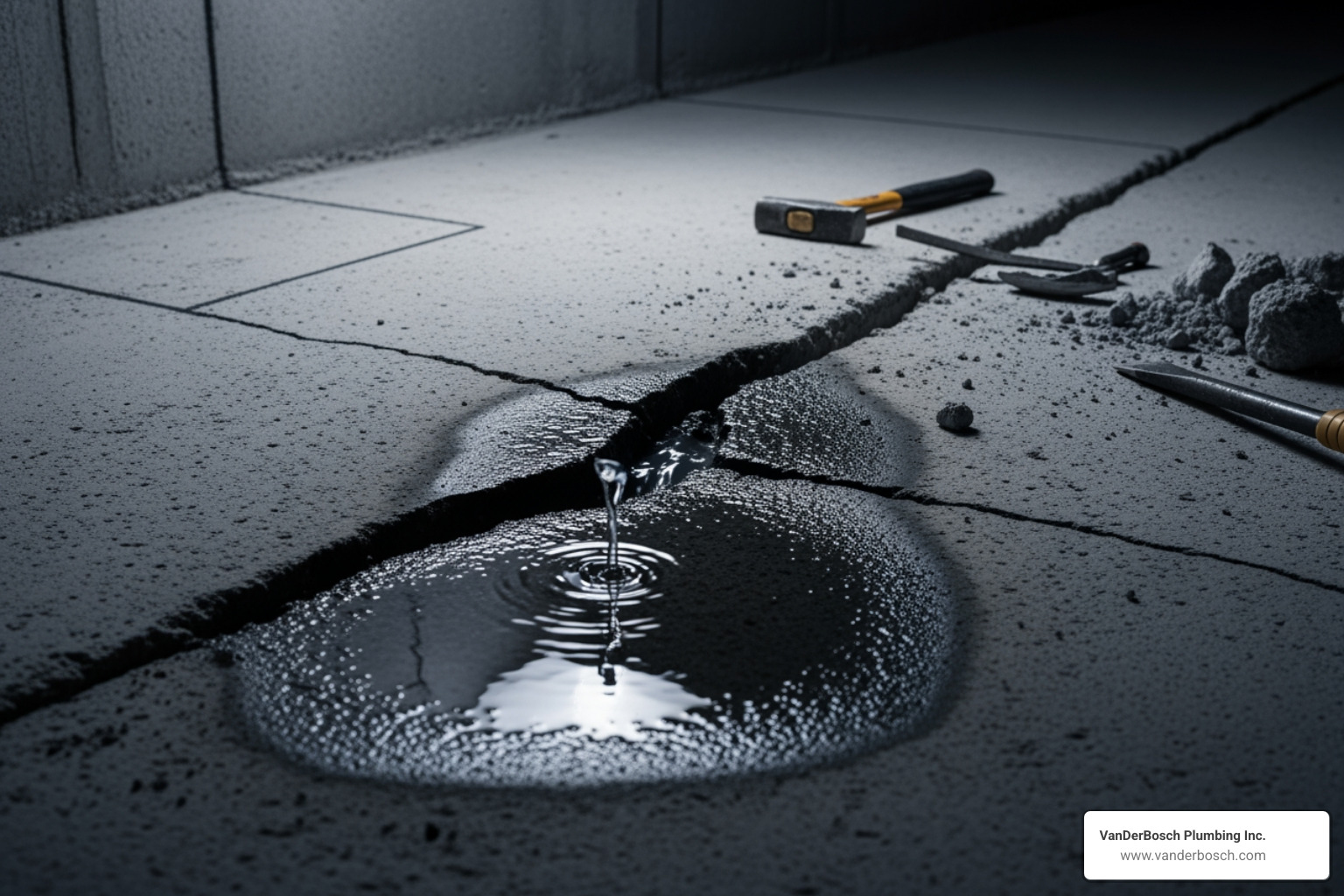
- Copper Pipes: Once a popular choice for its durability and corrosion resistance, copper can still be vulnerable to slab leaks. It’s particularly susceptible to corrosion when it comes into contact with certain minerals in the soil or if the water chemistry is overly aggressive (e.g., highly acidic). Constant vibration or abrasion can also wear down copper.
- Galvanized Steel: Commonly found in older homes, galvanized steel pipes are steel pipes coated with zinc. Over time, this zinc coating can wear away, exposing the steel to corrosion. This leads to rust buildup, reduced water flow, and eventually, leaks.
- Cast Iron Pipes: Homes built before the 1960s often feature cast iron pipes, especially for sewer lines. While robust, cast iron is prone to rust and can become brittle with age. It’s also highly susceptible to root intrusion, where tree roots seek out moisture and can crack or infiltrate the pipe, causing blockages and leaks.
- Plastic Pipes (ABS, PVC, CPVC, PEX): Modern homes frequently use plastic piping like PVC, CPVC, and PEX. These materials are generally corrosion-resistant and more flexible, making them less prone to issues caused by water chemistry or minor ground shifts. However, even plastic pipes can fail due to poor installation, excessive water pressure, or physical damage from external forces like heavy construction or tree roots. PEX, in particular, is known for its flexibility and ability to withstand freezing, making it an excellent choice for many modern plumbing systems.
Understanding your home’s plumbing materials can give you insights into its potential vulnerabilities and help us recommend the most effective preventative measures and repair strategies.
Telltale Signs: How to Spot a Potential Slab Leak
Because concrete slab leaks are hidden, they don’t announce themselves with a visible drip. Instead, they often present subtle, yet persistent, clues that savvy homeowners can learn to recognize. Ignoring these signs can lead to escalating damage and repair costs. Did you know that house leaks waste more than 1 trillion gallons of water nationwide each year? That’s the equivalent of the yearly household water use of over 11 million homes! Even a small leak can waste up to 90 gallons or more daily in 10% of houses.
Here’s what to watch out for:
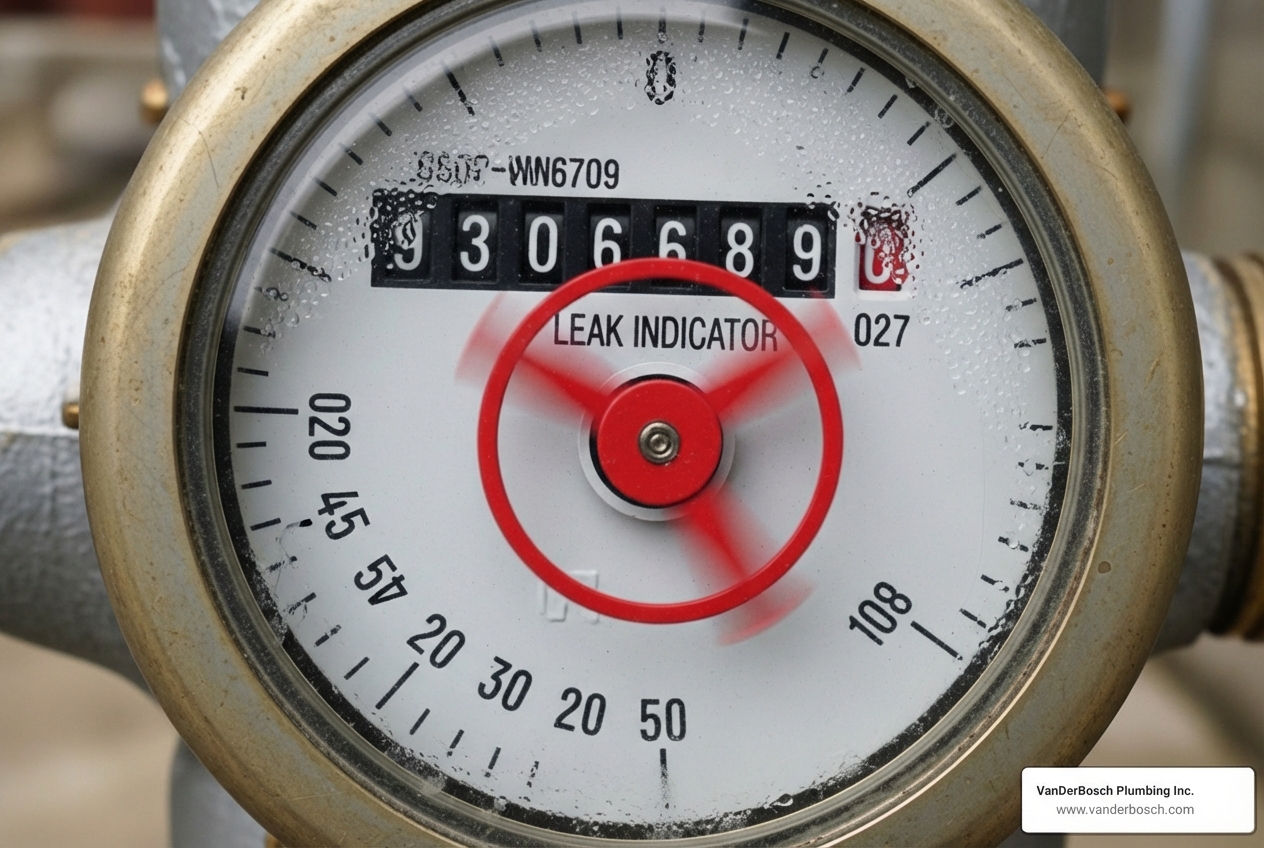
- Unexplained High Water Bills: This is often the first and most obvious sign. If your water bill suddenly spikes without any change in your water usage habits, a hidden leak is a strong suspect. We recommend checking your water meter for a leak indicator.
- Sound of Running Water: Do you hear the faint sound of water running, dripping, or hissing when all your faucets are off and appliances (like dishwashers or washing machines) are not in use? That mysterious sound could be water escaping from a pipe beneath your slab.
- Low Water Pressure: A sudden and unexplained drop in water pressure throughout your home can indicate that water is escaping from your plumbing system before it reaches your faucets and showers.
- Mold and Mildew: Persistent moisture from a slab leak creates the perfect breeding ground for mold and mildew. You might notice a musty odor, especially near the floor, or even visible mold growth on baseboards, carpets, or walls. Mold can begin to grow after just 24 to 48 hours of water exposure.
- Foundation Cracks: A long-term slab leak can erode the soil supporting your foundation, leading to uneven settling and cracks in the concrete slab itself, as well as in interior walls or flooring.
7 Key Symptoms to Watch For
Let’s dive a little deeper into the specific indicators that signal a potential concrete slab leak:
- Sudden Spike in Water Bill: This is often the canary in the coal mine. Keep an eye on your monthly statements. An unexpected increase, especially if it’s a significant jump (homeowners can experience a 25-percent jump from a constant drip), without any change in your daily routine, should prompt immediate investigation.
- Sound of Running Water: In the quiet moments of your home, listen closely. A persistent trickling, dripping, or rushing sound from beneath the floorboards or within the walls, even when all water sources are off, is a classic sign of a hidden leak.
- Hot Spots on the Floor: If you have a hot water line leak under your slab, the heat from the escaping water can transfer through the concrete. You might notice unusually warm areas on your floor, especially when walking barefoot. Some homeowners even report that their pets seem drawn to these warm spots!
- Damp Carpets or Warped Flooring: Water seeping up through the slab can cause carpets to feel damp, wood floors to warp or buckle, and even luxury vinyl planks to pop up. This moisture might be subtle at first, becoming more noticeable over time.
- Musty Odors: A persistent, earthy, or stale smell in certain areas of your home can indicate hidden moisture and the growth of mold or mildew. This odor often intensifies near the floor or in damp, poorly ventilated areas.
- Visible Mold Growth: If the leak has been active for a while, you might start to see visible mold or mildew growth on baseboards, lower walls, or even behind furniture. This is a serious health concern and a clear sign of excessive moisture.
- Water Pooling Around Foundation: While sometimes caused by rain or irrigation, if you notice puddles of water around the exterior of your home’s foundation during dry spells, it could be water escaping from an underground pipe and making its way to the surface. This continuous moisture can erode the soil, leading to significant structural issues.
From Detection to Repair: Your Action Plan for a Concrete Slab Leak
If you suspect a concrete slab leak based on any of the signs above, prompt action is crucial. Delaying can lead to exponentially higher costs and more extensive damage to your Chicagoland home.
Immediate Homeowner Steps:
- Confirm the Leak (If Possible): Turn off all water-using appliances and fixtures in your home. Locate your water meter (often near the street or in your basement). Check if the small red triangle on the meter is moving or if the numbers are increasing. If so, you have a leak somewhere in your system.
- Shut Off Main Water Supply: If you’ve confirmed a leak or have significant signs, locate your home’s main water shut-off valve and turn it off. This will prevent further water damage while you wait for professional help.
- Call a Professional: Concrete slab leaks are not DIY projects. They require specialized knowledge and equipment to accurately locate and repair. Contact licensed plumbing professionals immediately. Our team at VanDerBosch Plumbing Inc. is available 24/7 for emergencies in Chicagoland.
How Professionals Detect Hidden Leaks
Since these leaks are out of sight, we rely on advanced, non-invasive techniques to pinpoint their exact location without tearing up your home. Our goal is to minimize disruption while maximizing accuracy.
Here’s how we detect hidden leaks:
- Electronic Listening Devices: These highly sensitive microphones can detect the faint sound of water escaping from a pipe, even through concrete and soil. Our experienced technicians use these devices to listen along your foundation, zeroing in on the precise spot of the leak.
- Infrared Cameras: Leaks, especially hot water leaks, create temperature differentials. Infrared cameras can detect these subtle changes in surface temperature on your floors, helping us visualize where warmer (or sometimes cooler) water is pooling beneath the slab.
- Sewer Video Camera Inspection: For suspected sewer line leaks under the slab, we can perform a Sewer video camera inspection. A flexible camera is inserted into the pipe, allowing us to visually inspect its interior for cracks, blockages, or breaks.
- Pressure Testing: We can isolate sections of your plumbing system and apply controlled pressure to determine if there’s a drop, indicating a leak, and help narrow down the affected area.
- Non-Invasive Methods: The beauty of these techniques is that they allow us to locate the leak with minimal or no destruction to your property. This saves you time, money, and a lot of headaches.
Repair Options for a Concrete Slab Leak
Once the leak is precisely located, we’ll discuss the best repair strategy for your specific situation. The choice depends on the leak’s severity, location, the condition of your existing plumbing, and your budget.
- Spot Repair (Breaking the Slab): This involves carefully breaking through the concrete slab directly above the leak to access and repair the damaged section of pipe. While it sounds invasive, it’s often the most straightforward and cost-effective solution for a single, isolated leak. We ensure the area is properly restored after the repair.
- Pipe Rerouting: For pipes that are difficult to access, or if the existing pipe is old and prone to future leaks, we might recommend rerouting the line. This involves bypassing the damaged section entirely by installing a new pipe through the attic, walls, or along the exterior of your home, effectively running around the slab. This can often be the cheapest and least disruptive fix in the long run.
- Trenchless Pipe Repair: In some cases, we can use trenchless methods that minimize excavation. This includes techniques like pipe lining (inserting a new, epoxy-coated liner inside the existing pipe) or pipe bursting (pulling a new pipe through the old one, breaking it apart in the process). These methods are excellent for repairing sewer lines and can often be done with only one or two access points. Learn more about our Trenchless pipe repair services.
- Whole-Home Repiping: If your home’s plumbing system is old, made of problematic materials (like galvanized steel or old cast iron), and experiencing multiple leaks, a Whole-home repiping might be the most economical and long-lasting solution. This involves replacing all the old, deteriorated pipes with new, modern materials, giving you peace of mind for decades to come.
The Aftermath: Costs, Insurance, and Prevention
A concrete slab leak can have far-reaching consequences if not addressed quickly. Beyond the immediate water damage, the long-term impacts can be severe:
- Structural Damage: Continuous water seepage can erode the soil beneath your foundation, leading to uneven settling, cracks in the slab, and even instability that affects the entire structure of your home.
- Wasted Water: Even a small drip can waste thousands of gallons of water over time, leading to unnecessarily high water bills and environmental impact.
- Foundation Instability: As expansive soils in Chicagoland shift, the constant presence of water from a leak can accelerate soil erosion, further compromising your home’s foundation.
- Health Risks from Mold: Hidden moisture creates a breeding ground for mold and mildew, which can cause respiratory issues, allergic reactions, and a persistent musty odor, impacting your family’s health and comfort.
Understanding Costs and Insurance Coverage
The cost of addressing a concrete slab leak can vary widely based on the leak’s location, severity, the chosen repair method, and how long it went undetected.
- Homeowners’ Insurance Policies: Does homeowners’ insurance cover concrete slab leak repairs? The answer is often “it depends.” Most policies distinguish between sudden and accidental damage versus gradual damage.
- Coverage May Apply If: The leak was sudden and catastrophic, like a pipe bursting. Some policies might cover the cost of accessing the leak (e.g., breaking concrete) and repairing the pipe itself.
- Coverage May Be Excluded If: The leak developed gradually over time due to neglect or wear and tear, as this is often considered a maintenance issue. Damage caused by mold or foundation issues resulting from a slow leak might also be excluded or have sub-limits. It’s vital to contact your insurer early in the process to understand your specific policy and what is covered. Allstate recommends you Contact your insurance company to understand your coverage. We can provide documentation and work with your insurance adjuster to facilitate your claim.
Comparing Slab Leak Repair Methods
| Repair Method | Cost Range | Disruption Level (Inside Home) | Durability Considerations |
|---|---|---|---|
| Spot Repair (Breaking the Slab) | $1,500 – $3,500 | High (localized) | Repairs specific leak; rest of pipe remains |
| Pipe Rerouting | $1,200 – $5,000 | Moderate (new lines installed) | New, often more durable pipe material; bypasses old system |
| Tunneling (Repair from Under Slab) | $2,500 – $10,000 | Low (minimal inside) | Repairs specific leak; rest of pipe remains; less interior mess |
| Trenchless Pipe Repair (Lining/Bursting) | $2,000 – $8,000 | Low | New pipe/liner within old pipe; extends lifespan |
| Whole-Home Repiping | $7,000+ | High (extensive) | Complete overhaul; long-term solution with new materials |
Proactive Steps to Prevent Future Leaks
While we can’t completely eliminate the risk of a concrete slab leak, there are several preventative measures Chicagoland homeowners can take to minimize the chances and catch issues early:
- Annual Plumbing Inspections: Regular check-ups by licensed professionals can identify potential problems before they escalate. We can assess pipe condition, water pressure, and look for early signs of stress.
- Water Pressure Regulation: Ensure your home’s water pressure is within the optimal range (40-60 PSI). If it’s too high, a pressure regulator can be installed or adjusted to protect your pipes from excessive strain.
- Water Quality Testing: Understanding your water’s pH and mineral content can help determine if it’s contributing to pipe corrosion. Water softening systems can mitigate the effects of hard water on your plumbing.
- Maintaining Soil Moisture: For homes built on expansive clay soils, maintaining consistent moisture levels around your foundation can help prevent extreme soil expansion and contraction, which puts stress on underground pipes.
- Knowing Your Home’s Plumbing: Understand the age of your home and the materials used in its plumbing. Older homes with original cast iron or galvanized pipes are at higher risk.
Frequently Asked Questions about Slab Leaks
How long does it take to fix a slab leak?
The time it takes to fix a concrete slab leak can vary significantly, ranging from a few hours to several days. A simple spot repair directly beneath the slab might be completed in a day, especially if the leak is easily accessible. However, more complex repairs like extensive pipe rerouting or trenchless solutions could take two to three days, or even longer for a whole-home repiping project. The timeline largely depends on the chosen repair method, the severity of the damage, and the ease of access to the affected pipes.
Can I fix a slab leak myself?
We strongly advise against attempting to fix a concrete slab leak yourself. These are not typical plumbing fixes. Accurately locating the leak requires specialized equipment (like electronic listening devices or infrared cameras) and expertise that most homeowners don’t possess. Attempting a DIY repair without proper knowledge can lead to further damage to your plumbing system, your foundation, and potentially create more costly problems down the line. It’s truly a job best left to licensed professionals.
Are slab leaks more common in older or newer homes?
Concrete slab leaks can occur in both older and newer homes, though for different reasons:
- Older Homes: Slab leaks are often more common in older homes (especially those built before the 1970s) due to material degradation. Pipes made of galvanized steel or cast iron are prone to corrosion, rust, and brittleness over decades of use, making them highly susceptible to leaks.
- Newer Homes: While modern plumbing materials like PEX are more durable, newer homes can still experience slab leaks due to poor installation practices or construction defects. Pipes might be bent, crimped, or improperly connected during the building process, creating weak points that fail prematurely. Regardless of your home’s age, vigilance for the warning signs is key.
Conclusion: Protect Your Home’s Foundation
Concrete slab leaks are a serious threat to any Chicagoland homeowner, capable of turning a small drip into a costly disaster. But by understanding the causes, recognizing the telltale signs, and acting swiftly, you can protect your home’s foundation and your peace of mind.
Early detection is your best defense against extensive damage and expensive repairs. If you notice any of the symptoms we’ve discussed—from a mysteriously rising water bill to damp spots on your floor—don’t hesitate.
At VanDerBosch Plumbing Inc., we specialize in comprehensive concrete slab leak detection and repair. Our experienced, background-checked technicians are equipped with state-of-the-art tools to accurately locate leaks with minimal disruption to your home. We’re proud to offer a 100% satisfaction guarantee, transparent pricing with no service charges, and 24/7 availability for all your plumbing needs in Chicago, Roselle, Niles, Winnetka, Elmhurst, Mount Prospect, and across the Chicagoland area.
Don’t let a hidden leak undermine your home. Take action today. Schedule professional water leak detection with VanDerBosch Plumbing Inc. and let us help you keep your foundation solid and dry.