
What Does a Camera Drain Inspection Cost?
Understanding camera drain inspection cost is the first step toward protecting your home’s plumbing — and your wallet. Here’s a quick breakdown so you can budget before you call:
| Inspection Type | Typical Cost Range |
|---|---|
| Basic residential inspection | Low-to-mid hundreds |
| Standard inspection with report | Mid hundreds |
| Complex or long-line inspection | Upper hundreds |
| Commercial or specialty inspection | Can exceed a thousand |
| DIY camera rental (per day) | Under two hundred |
Quick answer: Most homeowners in the Chicagoland area pay somewhere in the low-to-mid hundreds for a standard drain camera inspection. Costs rise based on pipe length, access difficulty, camera quality, and any add-on services like hydro-jetting or video recording.
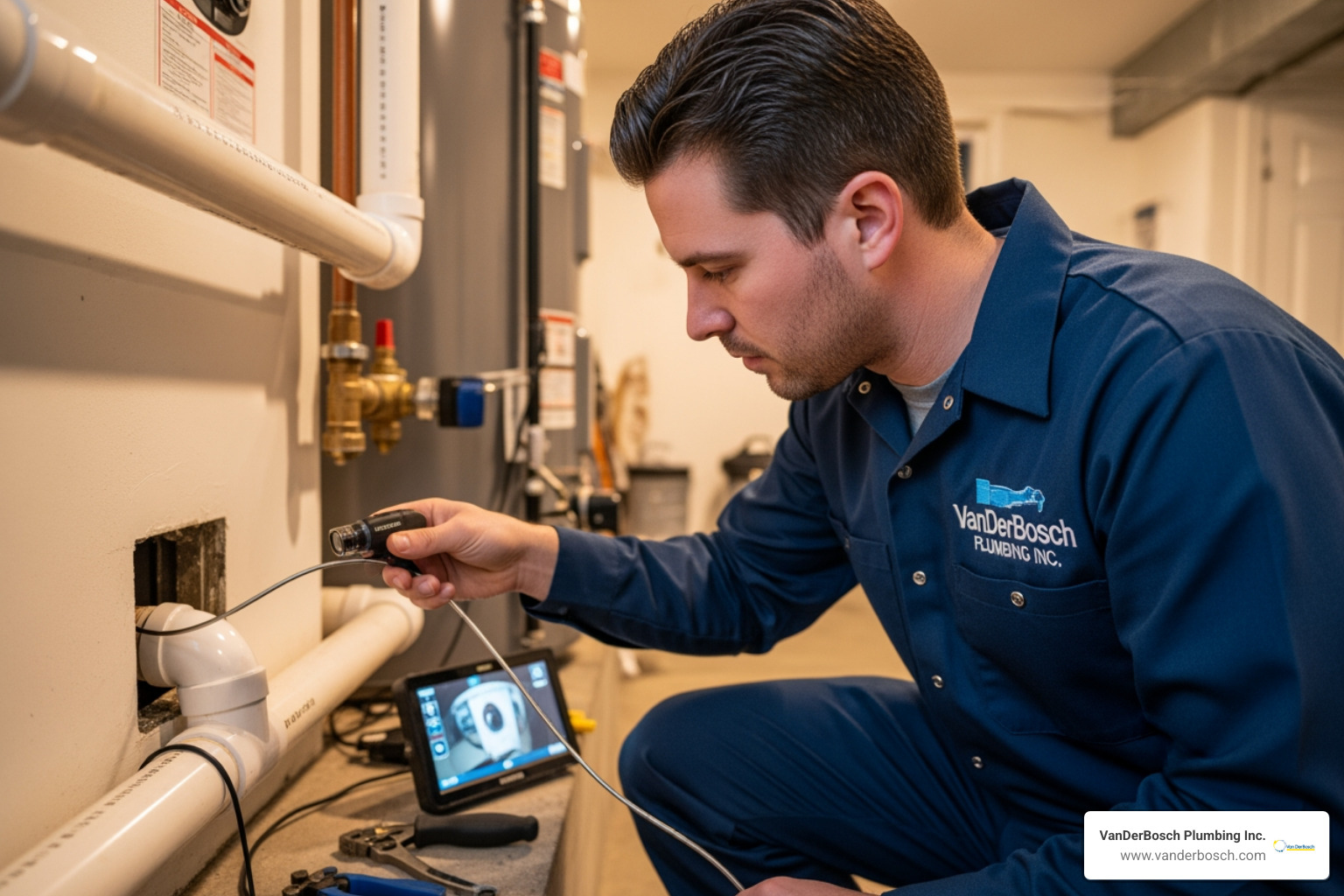
Plumbing problems never show up at a convenient time. A slow drain here, a gurgling toilet there — and suddenly you’re wondering what’s actually going on inside those pipes buried three to eight feet underground. A drain camera inspection takes the guesswork out of it entirely. A waterproof camera feeds live video straight from inside your sewer line, pinpointing exactly what’s wrong — whether that’s tree roots, a cracked pipe, a grease buildup, or a sagging section — before you commit to any repairs.
The smart move is getting a clear picture of costs upfront. That’s exactly what this guide covers.
I’m Hugh Hodur, owner of VanDerBosch Plumbing Inc., and after years of overseeing residential and commercial sewer and drain services across Chicagoland, camera drain inspection cost is one of the most common questions I hear from homeowners before they schedule service. My goal here is to give you a straight, no-fluff breakdown so you can make a confident, informed decision.
Factors Influencing Camera Drain Inspection Cost
When we talk about the camera drain inspection cost, it isn’t a “one size fits all” price. Every home in Chicago, from the historic bungalows in Hyde Park to the newer builds in Mount Prospect, has a unique plumbing footprint. Several physical variables determine how much time and equipment our technicians need to spend on-site.
Pipe Material and Condition
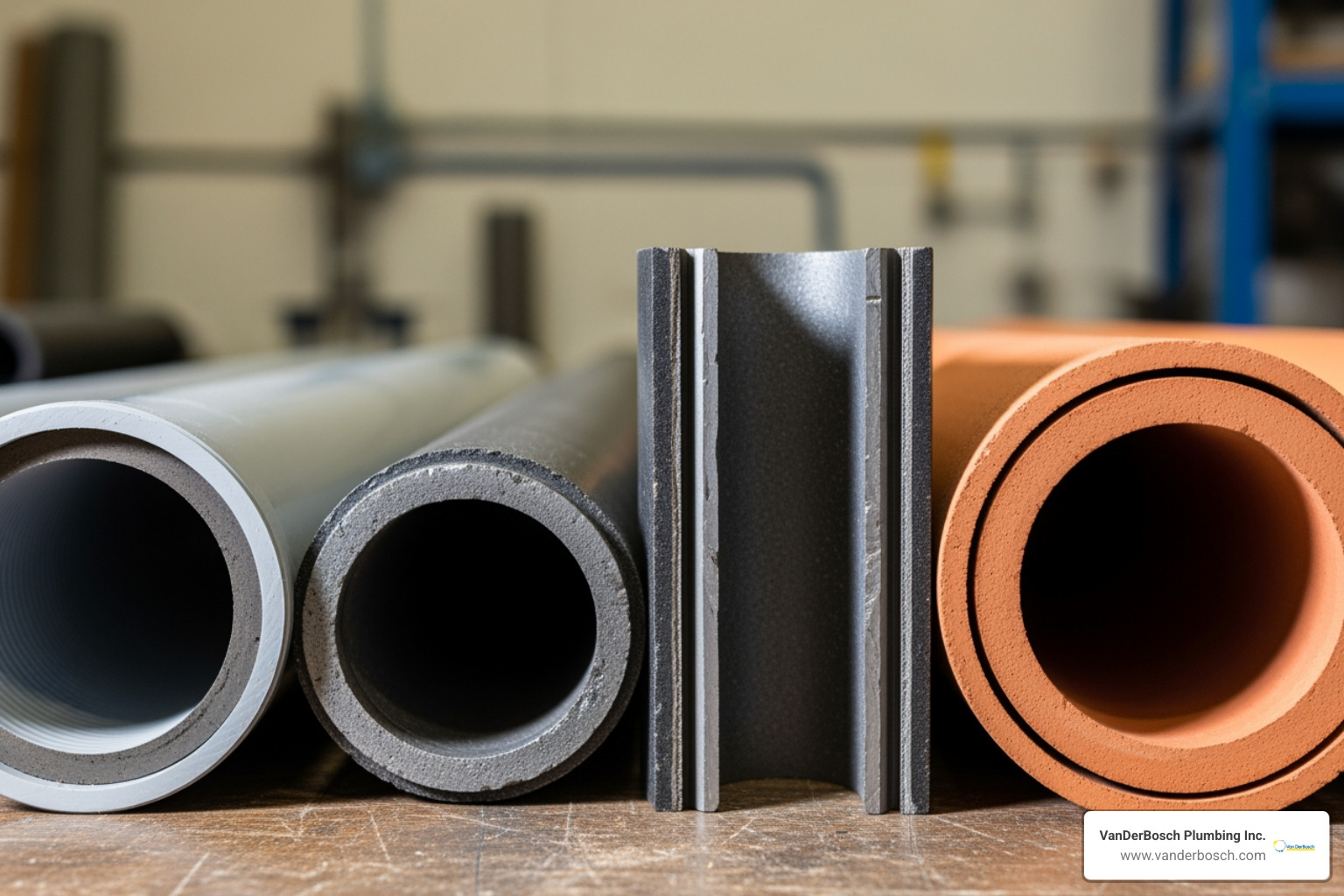
The material of your pipes plays a significant role in the complexity of the job. PVC pipes, common in newer homes, are smooth and easy for a camera to navigate. However, many older homes in the Cook County area still utilize cast iron, clay tile, or even Orangeburg pipes.
- Cast Iron: These can develop scale and corrosion, making it harder for the camera to provide a crystal-clear image without some initial cleaning.
- Clay Tile: Often found in homes built before the 1970s, these are prone to offset joints and root intrusion, which can snag a camera.
- Orangeburg: These “bituminous fiber” pipes are essentially tar-paper and are extremely delicate. Inspecting them requires a very steady hand to avoid causing a collapse.
Pipe Length and Diameter
Most residential sewer laterals — the pipe connecting your home to the city main — run between 40 and 100 feet. Standard professional cameras are designed for these distances. However, if your home sits far back from the street or has complex branch lines, the camera drain inspection cost may increase because specialized, longer-reach cables are required.
Accessibility and Cleanouts
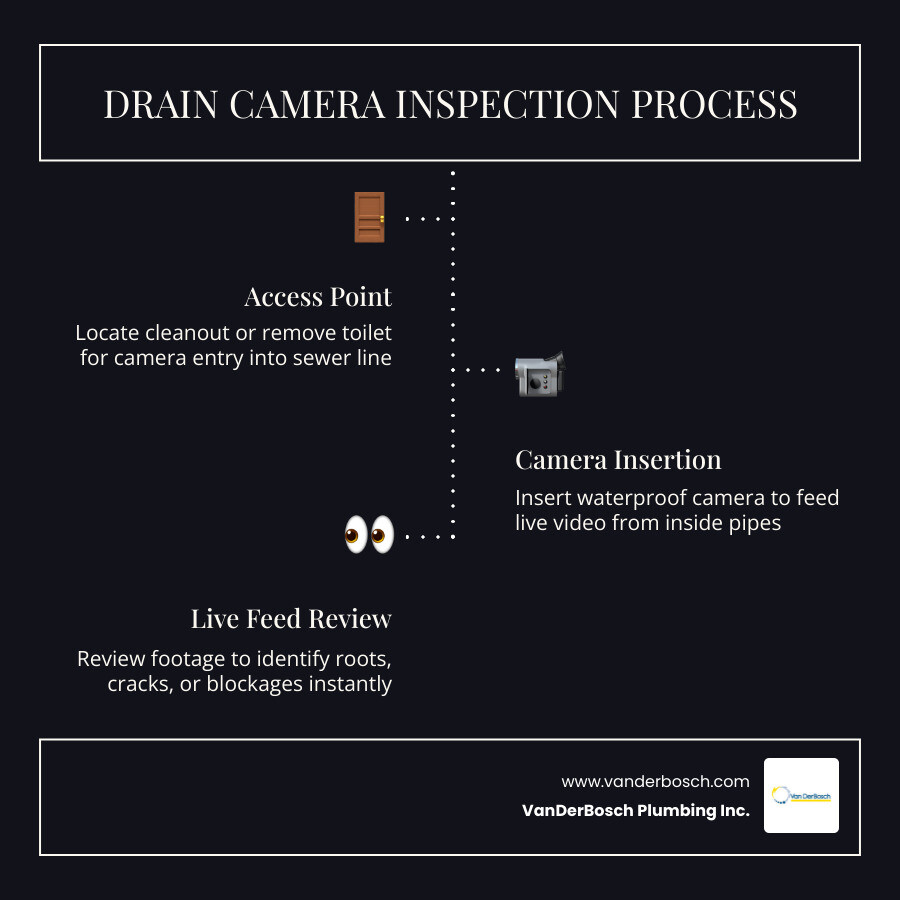
The easiest way to inspect a line is through an existing “cleanout” — an accessible pipe opening usually located in the basement or yard. If your home doesn’t have one, we may need to remove a toilet or access the system through a roof vent. These extra steps add labor time to the visit.
According to the Sewer Camera Inspection Cost (2026 Guide), here is how different variables typically stack up:
| Factor | Impact on Effort | Potential Cost Shift |
|---|---|---|
| Existing Cleanout | Low | Baseline Price |
| Toilet Removal Required | Moderate | Increase |
| Roof Vent Access | Moderate/High | Increase |
| Pipe Length >100ft | Moderate | Increase |
| Significant Root Blockage | High | May require cleaning first |
Understanding the Camera Drain Inspection Cost for Home Buyers
If you are currently in the process of buying a home in Elmhurst or Winnetka, a sewer scope is one of the most important pieces of due diligence you can perform. Standard home inspections rarely look inside the underground pipes.
Including a sewer camera inspection as a real estate contingency can save you from inheriting a repair bill that could reach into the tens of thousands. For a relatively small investment in the mid-hundreds, you get a digital record of the pipe’s health. If the camera reveals a collapsed line or heavy root intrusion, you can use that report to negotiate repairs or a price reduction before closing. You can learn more about why this is vital in The basics of sewer video inspection explained.
Impact of Access Points and Pipe Length
The “path of least resistance” is always the goal. When a cleanout is readily available, the job is straightforward. However, in many older Chicago neighborhoods, these access points might be buried under landscaping or simply weren’t installed when the house was built.
If we have to pull a toilet to get the camera into the main line, we have to account for the labor of removing and resetting that fixture with a new wax ring. Similarly, if the lateral line is buried particularly deep (more than eight feet), it may require higher-intensity lighting on the camera head to get a clear picture, which involves more advanced equipment.
Professional vs. DIY: Evaluating the Value
In the age of YouTube tutorials, it’s tempting to think about renting a camera and doing it yourself. While DIY might seem like a way to lower the camera drain inspection cost, there is a massive gap between consumer-grade equipment and the technology used by licensed professionals.
Equipment Quality
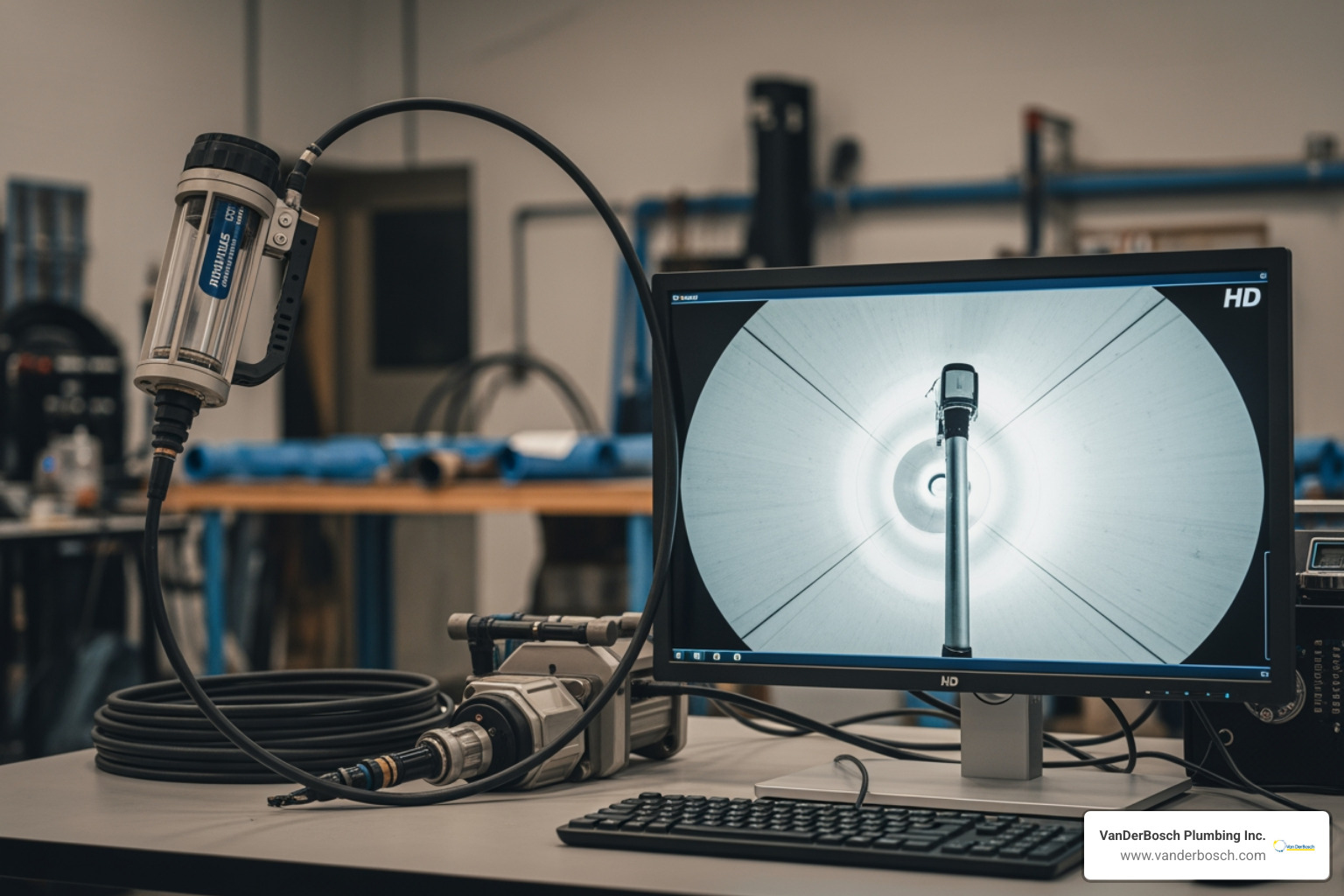
Professional-grade cameras are high-definition, waterproof, and feature “self-leveling” technology. This ensures the image stays upright even as the camera twists through elbows and turns, so you aren’t left looking at a disorienting, upside-down view of your sewer.
More importantly, professional cameras are equipped with sonde transmitters. These allow us to locate the camera from above ground using a locator wand. If we find a break 42 feet down the line, we can mark the exact spot on your lawn and tell you exactly how deep we need to dig. A DIY rental usually lacks this precision, meaning you might find the problem but have no idea where it actually is in your yard.
Comparing Professional and DIY Camera Drain Inspection Cost
Renting a sewer camera from a big-box store usually costs under two hundred dollars for a 24-hour period. However, there are hidden risks:
- Lower Resolution: Rental units are often beat-up and provide grainy footage that makes it easy to miss hairline cracks or early-stage root intrusion.
- Short Reach: Many rental cameras only extend 50 to 100 feet, which may not reach the city main.
- Liability: If you get a rental camera stuck in a jagged pipe or a root mass, you are responsible for the expensive equipment and the even more expensive “extraction” process.
As noted in the data from Angi, while a pro might cost more upfront than a rental, the diagnostic accuracy and expert interpretation of the footage often save homeowners thousands in the long run. We address many of these common concerns in our guide to Sewer video inspection answering customers frequently asked questions.
Additional Services and Add-on Costs
Sometimes, a camera inspection reveals that the pipe is too full of debris or standing water to see anything. In these cases, we may recommend additional services:
- Hydro-jetting: Using high-pressure water to clear out grease and roots so the camera can actually see the pipe walls. This is often bundled at a discount.
- Video Recording: Most professional services include a digital copy of the footage via email or a cloud link. Some companies charge a small fee for physical media or long-term storage.
- Emergency Surcharges: If your sewer is currently backing up into your basement at 2:00 AM on a Sunday, expect an emergency service fee.
For a deeper look at how we handle these situations, check out our short guide to professional drain cleaning.
When to Schedule a Sewer Line Camera Inspection
You shouldn’t wait for a total sewage backup to think about your pipes. Being proactive is the best way to keep your camera drain inspection cost low and avoid “emergency” pricing.
Signs You Need an Inspection Now
If you notice any of the following, your sewer line is trying to tell you something:
- Recurring Backups: If you have to call a plumber to snake your kitchen or basement drain more than once a year, there’s a structural issue the snake isn’t fixing.
- Sewer Odors: A healthy system is airtight. If you smell “rotten eggs” in your yard or basement, you likely have a crack or a vent issue.
- Lush Grass Patches: Is one part of your lawn suspiciously green and fast-growing? A leaking sewer pipe acts as a constant source of fertilizer for your grass.
- Slow Drains: If all the drains in your house are sluggish, the problem isn’t in one sink; it’s in the main line.
Recommended Maintenance Frequency
How often should you peek inside your pipes?
- Homes over 40 years old: We recommend a baseline inspection every 2 to 3 years. Clay and cast iron pipes have a finite lifespan, and catching a “belly” (a sagging section) early can prevent a total collapse.
- Homes near large trees: Oak, maple, and willow trees have roots that can travel over 100 feet to find water. If you have large trees near your sewer line, an annual check is a smart move.
- Newer homes: Every 5 to 7 years is usually sufficient for modern PVC systems, just to ensure no ground shifting has occurred.
- Post-Repair: Always insist on a “post-video” after any major repair or hydro-jetting service to verify the work was done correctly.
For more details on what to expect during the visit, we’ve outlined the drain camera inspection process explained in full.
Frequently Asked Questions about Camera Drain Inspection Cost
How long does a standard camera inspection take?
For most residential properties in the Chicagoland area, the process takes between 45 minutes and 90 minutes. This includes the time to set up the equipment, locate the access point, run the camera the full length of the lateral, and review the findings with you on the monitor. If we need to remove a toilet or if the line is heavily blocked, it may take a bit longer.
Does homeowners insurance cover the cost of the inspection?
Standard homeowners insurance policies typically do not cover preventive maintenance or diagnostic inspections. However, if you have a “Sewer Backup Endorsement” and you are experiencing an active claim, the cost of the inspection might be reimbursed as part of the damage assessment. It is always best to check with your agent in Cook County to see what your specific policy covers.
What specific issues can a drain camera detect?
A high-definition camera leaves nowhere for problems to hide. We commonly identify:
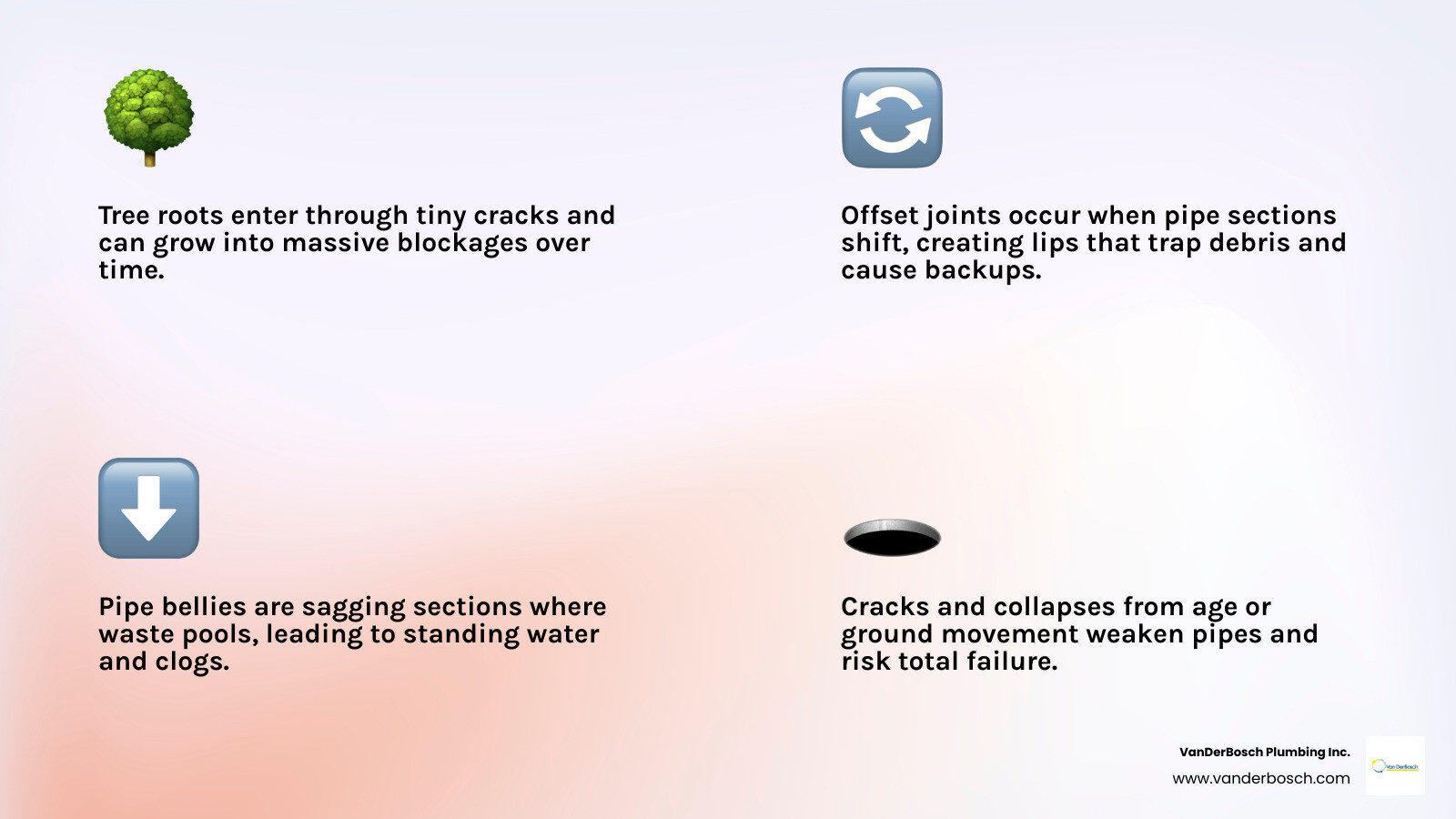
- Root Intrusion: Hair-like roots that enter through tiny cracks and grow into massive blockages.
- Offset Joints: Where two sections of pipe have shifted, creating a lip that catches debris.
- Pipe Bellies: Low spots where the pipe has sagged, causing water and waste to pool.
- Cracks and Collapses: Structural failures caused by age or ground movement.
- Grease Accumulation: Hardened fat and oils that narrow the diameter of the pipe.
- Foreign Objects: We’ve found everything from wedding rings to children’s toys!
Conclusion
Investing in a drain camera inspection is one of the most cost-effective ways to manage your home’s infrastructure. By spending a few hundred dollars today, you can avoid the multi-thousand-dollar nightmare of an emergency sewer replacement next winter.
At VanDerBosch Plumbing Inc., we pride ourselves on providing the Chicagoland area with transparent, honest diagnostics. Our licensed technicians serve Chicago, Roselle, Niles, and the surrounding suburbs with 24/7 availability and a 100% satisfaction guarantee. We don’t believe in hidden service charges; we believe in showing you exactly what’s happening underground so you can make the best choice for your home.
Whether you’re buying a new home in Ukrainian Village or dealing with a stubborn drain in Melrose Park, we are here to help. Schedule a professional sewer video inspection today and get the peace of mind you deserve.