
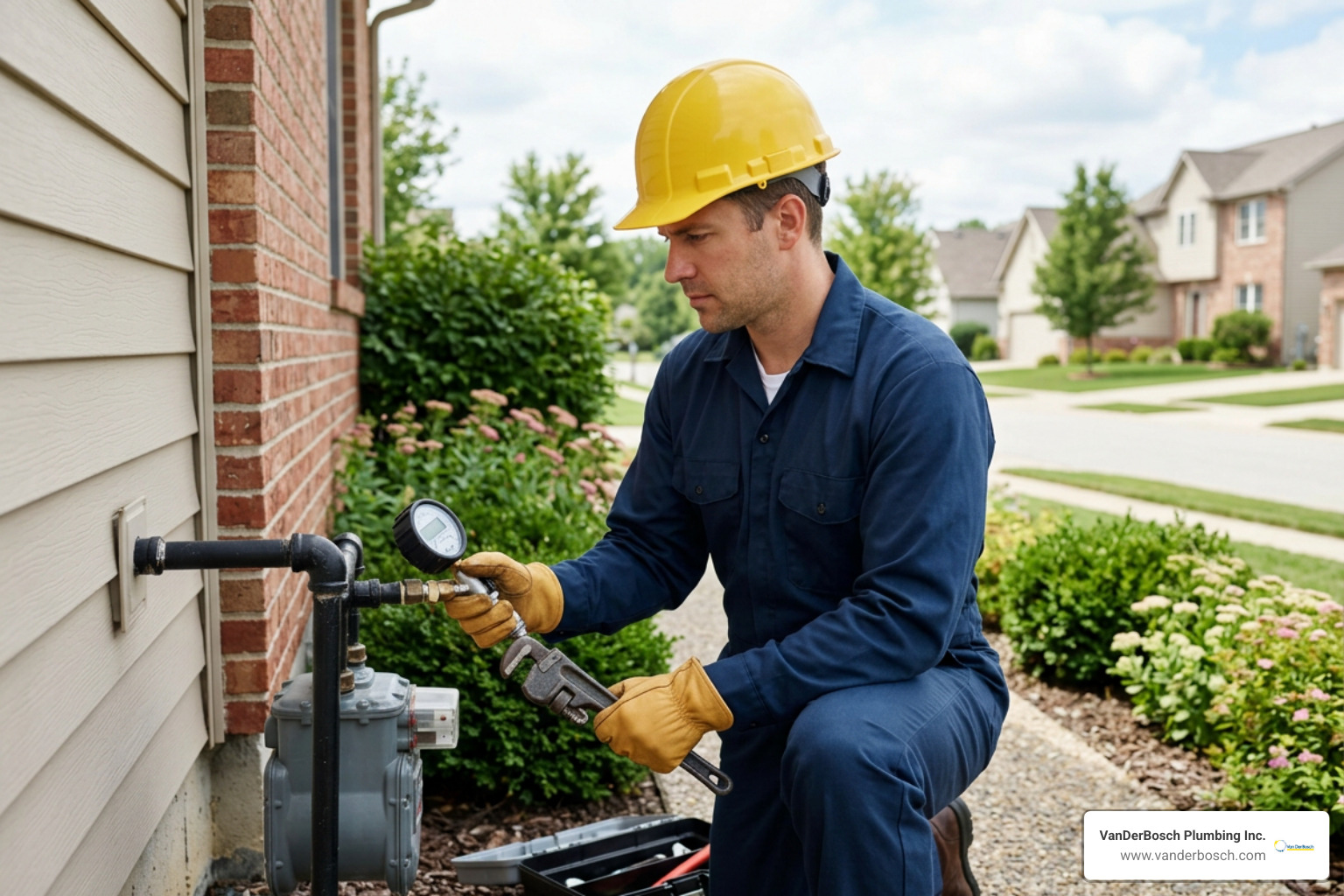
Find a Licensed Gas Plumber Near You Before a Small Problem Becomes a Dangerous One
When you search for a gas plumber near me, choose a contractor who can show an active plumbing or gas-fitting license, insurance, and experience with gas-line pressure testing. Ask whether they will pull required permits, provide clear pricing before work begins, and test the line for leaks before restoring gas service.
Gas plumbing includes more than connecting a stove or water heater. A qualified professional can find leaks, repair or replace damaged pipe, size new lines for the total BTU demand of your appliances, and safely install gas service for grills, fireplaces, generators, furnaces, and water heaters. This work involves combustible fuel, so it is not a safe DIY repair.
If you smell rotten eggs or sulfur, hear hissing near a pipe or appliance, or see unexplained mist, leave the building without touching switches or using flames. Call the gas utility or emergency services from a safe location, then arrange for a licensed gas professional to inspect the system.
I am Hugh Hodur, President of VanDerBosch Plumbing Inc., where I help lead residential and commercial plumbing teams serving Chicagoland. For anyone looking for a dependable gas plumber near me, my focus is on fast service, clear communication, and work that puts household safety first.
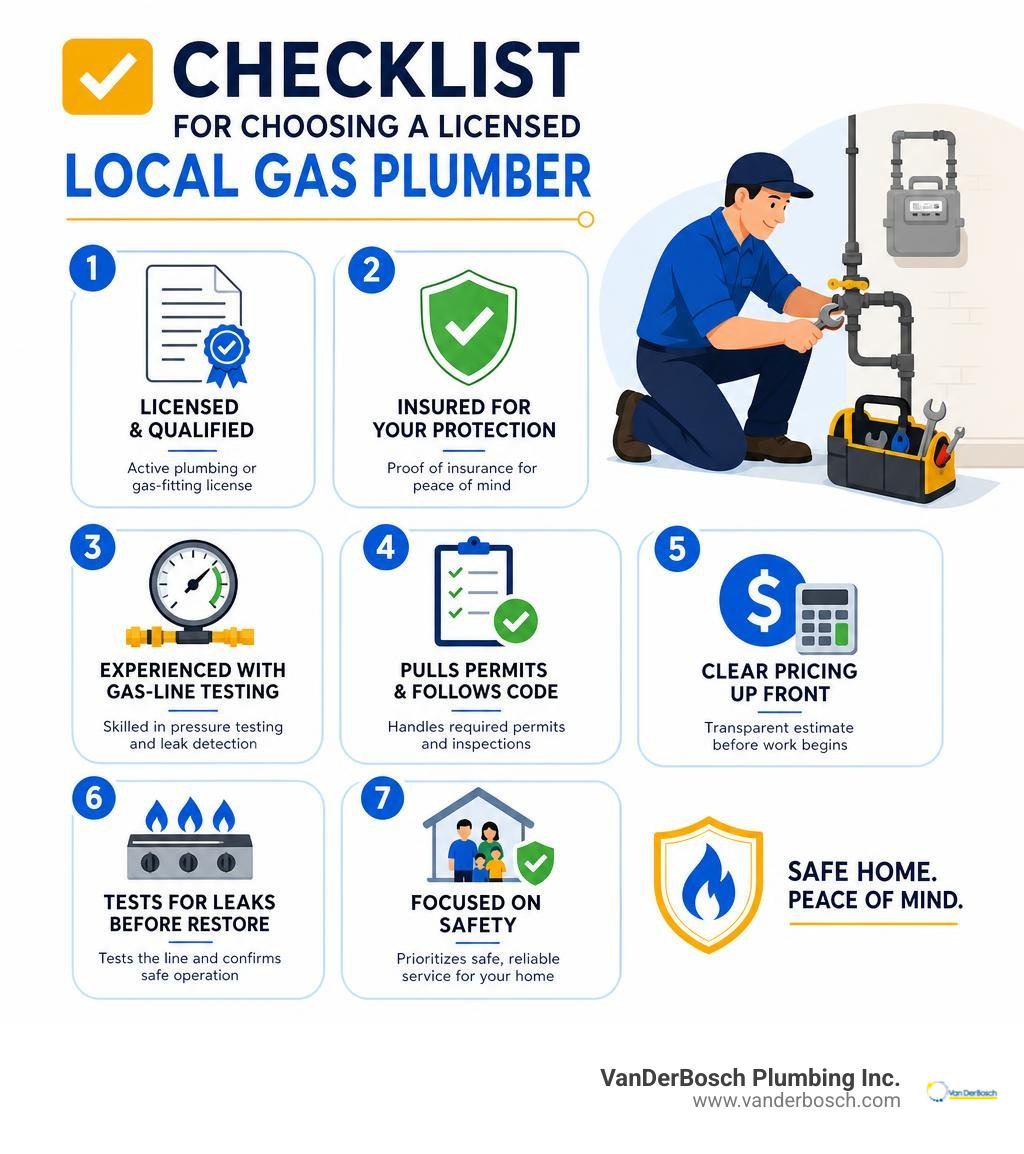
Read more about gas plumber services:
Understanding Gas Plumbing: Roles, Services, and Systems
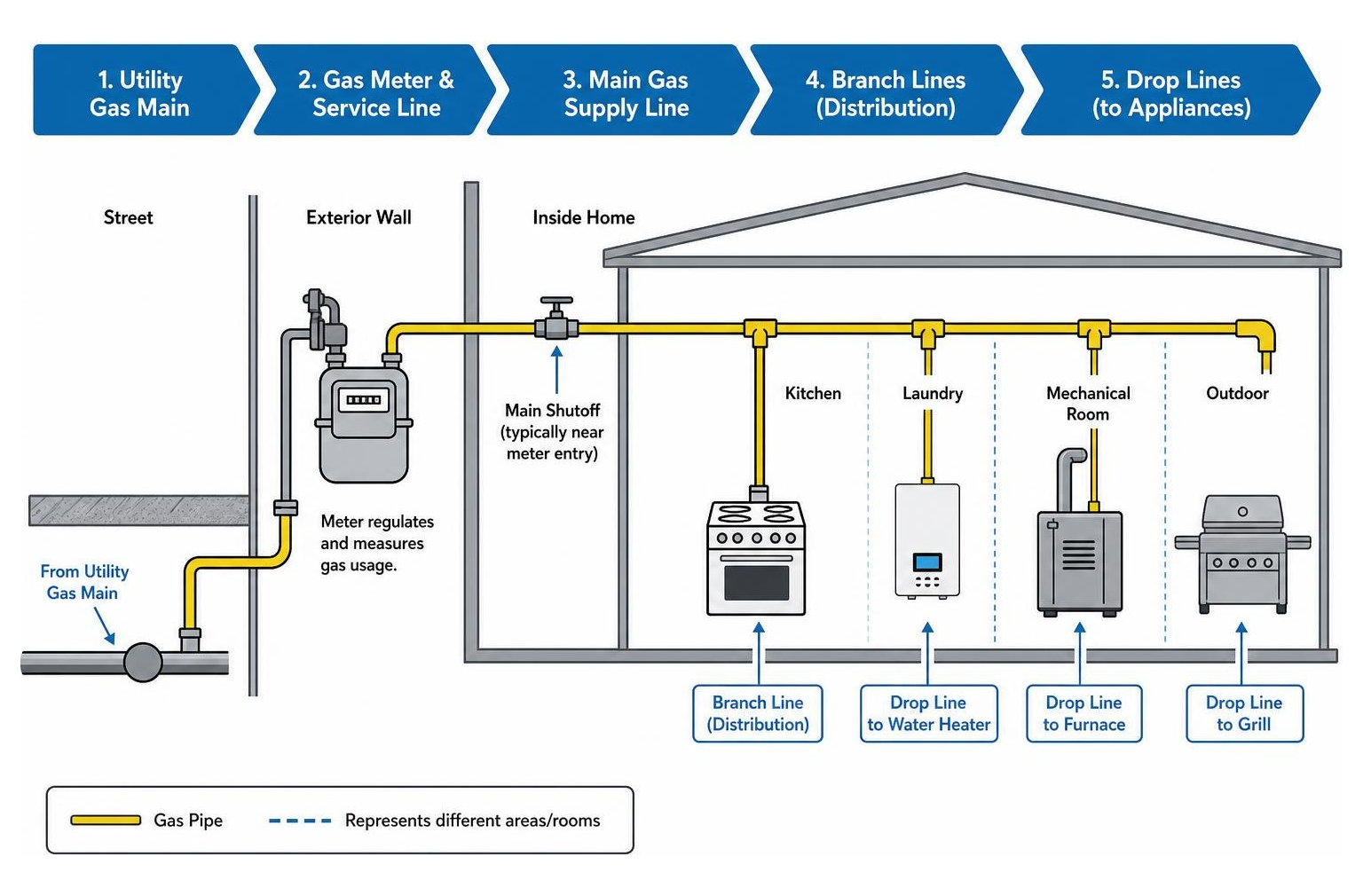
Natural gas is one of the most reliable and efficient energy sources available for heating your home, cooking meals, and providing on-demand hot water. However, managing combustible fuel demands specialized engineering, exacting craftsmanship, and a deep respect for mechanical safety. In residential infrastructure, the fuel delivery network relies on a strict hierarchy of lines.
The main gas supply line carries fuel from your utility meter into your home. From there, branch lines distribute the gas across different rooms, while drop lines run directly down or up into individual appliances. To keep these systems working properly, licensed technicians rely on detailed BTU (British Thermal Unit) calculations. Every appliance—from a standard kitchen range to a heavy-duty boiler—requires a specific volume of fuel delivered at stable system pressure. If pipes are undersized, appliances suffer from incomplete combustion, which lowers efficiency and can cause dangerous carbon monoxide buildup.
Whether you are running outdoor lines for patio heaters and barbecue grills, installing whole-home standby generators, or configuring high-capacity boiler piping, working with certified professionals ensures every joint, valve, and regulator meets stringent municipal safety standards.
What Does a Gas Plumber Do?
A qualified technician handles far more than simple wrench work. Their daily responsibilities span complex diagnostic and installation tasks:
- Comprehensive Leak Detection: Pinpointing micro-fissures using electronic sniffers and localized bubble solutions.
- Line Pressure Testing: Verifying that existing and newly installed pipes hold steady mechanical pressure with zero drops over required testing intervals.
- Precise Pipe Sizing and Load Calculation: Calculating aggregate BTU requirements to ensure your gas meter and pipe network can supply all connected appliances simultaneously.
- Safe Pipe Routing and Fuel Distribution: Planning and threading pipe layouts through walls, crawlspaces, and basements without compromising structural framing.
- Appliance Hookups and Conversions: Connecting water heaters, ranges, fireplaces, and furnaces, including switching equipment between natural gas and liquid propane configurations.
- Meter Capacity Assessments: Evaluating whether your utility meter needs an upgrade before you install high-draw equipment like tankless water heaters.
General Plumber vs. Master Gas Fitter
While all gas line specialists have a foundation in plumbing, not every general plumber is certified to handle combustible fuel lines. Water plumbing focuses on closed hydraulic fluid loops and gravity-fed drainage systems. If a potable water joint leaks, you get a wet floor; if a gas fitting fails, you face the risk of fire or catastrophic explosion.
Master Gas Fitters and certified gas plumbers undergo extensive training in combustion physics, fuel-specific pipe thread compounds, venting requirements, and fuel codes. They understand how pressure drops affect burner efficiency and know the exact clearance distances mandated for exhaust flues. When safety is on the line, always confirm your contractor holds specific gas-fitting credentials and local trade licensing rather than general drain-cleaning experience.
Recognizing Gas Leaks and Emergency Safety Protocols
Gas safety requires immediate action. Natural gas is naturally colorless, tasteless, and odorless. To make accidental leaks easy to detect, utility companies infuse the fuel with mercaptan, an odorant that produces a distinct sulfur or rotten egg scent.
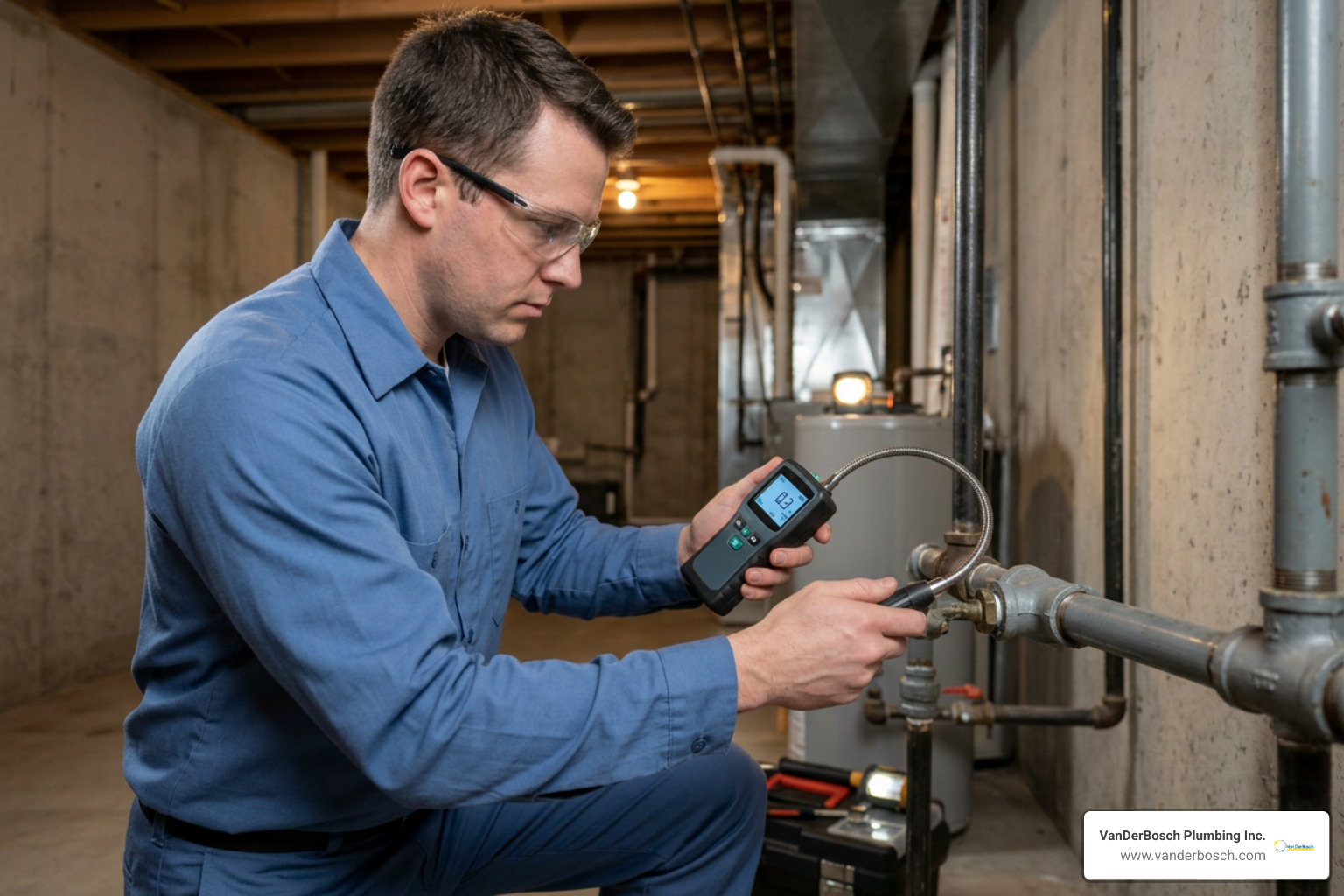
When you need immediate help, our team provides emergency gas leak detection services across Chicagoland, using high-sensitivity electronic sniffers that isolate escaping fuel in seconds.
Telltale Warning Signs of Gas Leaks
Understanding how to spot a leak early is the best way to safeguard your home and family. For in-depth safety habits, take time to review how to keep a household safe from gas leaks.
- Sulfur or Rotten Egg Odor: The unmistakable smell of mercaptan is the most common indicator of an active leak.
- Hissing or Whistling Sounds: A persistent hissing noise near an appliance connection, shut-off valve, or exposed pipe points to gas escaping under pressure.
- Visible White Mist or Dust Clouds: High-pressure line ruptures can create a visible fog or kick up dust and dirt in your yard or basement.
- Dying or Discolored Vegetation: Patches of dead grass or brown shrubs directly above buried outdoor supply lines often indicate underground pipe damage.
- Bubbling Joints: Applying a soap-and-water solution to a suspicious connection will produce expanding bubbles if gas is escaping.
- Physical Symptoms: Unexplained dizziness, nausea, headaches, fatigue, or eye irritation among household members can be an early sign of gas exposure or incomplete appliance combustion. If you want to monitor your home proactively, consider choosing the right digital gas leak detector for continuous monitoring.
Emergency Response and Evacuation Steps
If you suspect an active gas leak inside your home, follow these safety steps immediately:
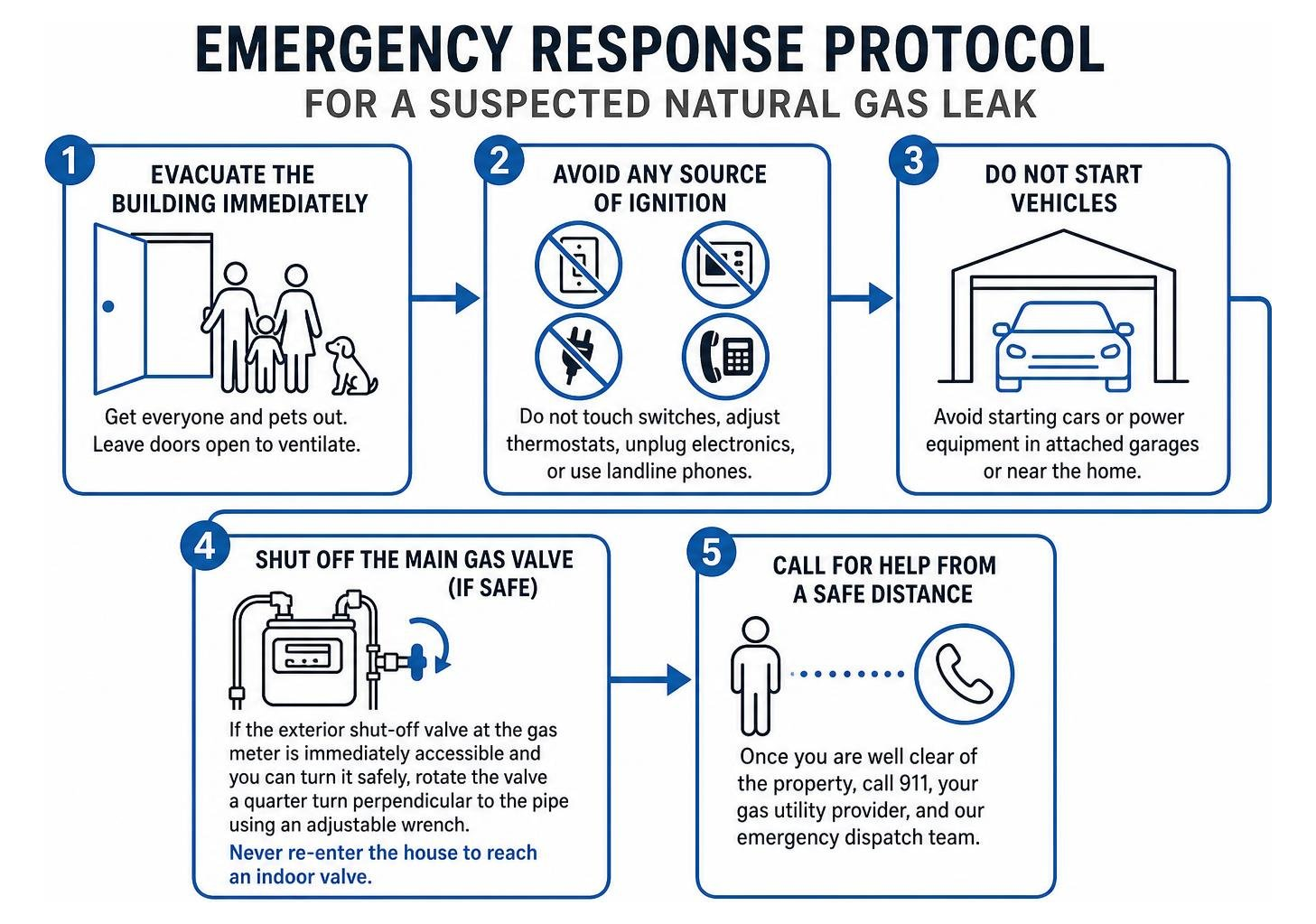
- Evacuate the Building Immediately: Get all family members and pets out of the home right away. Leave the entry doors open behind you to help ventilate the space.
- Avoid Any Source of Ignition: Do not touch light switches, adjust thermostats, unplug electronics, or use landline phones. Even the tiny electrical arc inside a light switch can ignite an air-gas mixture.
- Do Not Start Vehicles: Avoid starting cars or power equipment in attached garages or driveways near the home.
- Shut Off the Main Gas Valve (If Safe): If the exterior shut-off valve at the gas meter is immediately accessible and you can turn it safely, rotate the valve a quarter turn perpendicular to the pipe using an adjustable wrench. Never re-enter the house to reach an indoor valve.
- Call for Help from a Safe Distance: Once you are well clear of the property, call 911, your gas utility provider, and our emergency dispatch team.
- Wait for Professional Clearance: Do not re-enter the property under any circumstances until licensed technicians and first responders give the all-clear.
Gas Line Materials, Lifespans, and Code Requirements
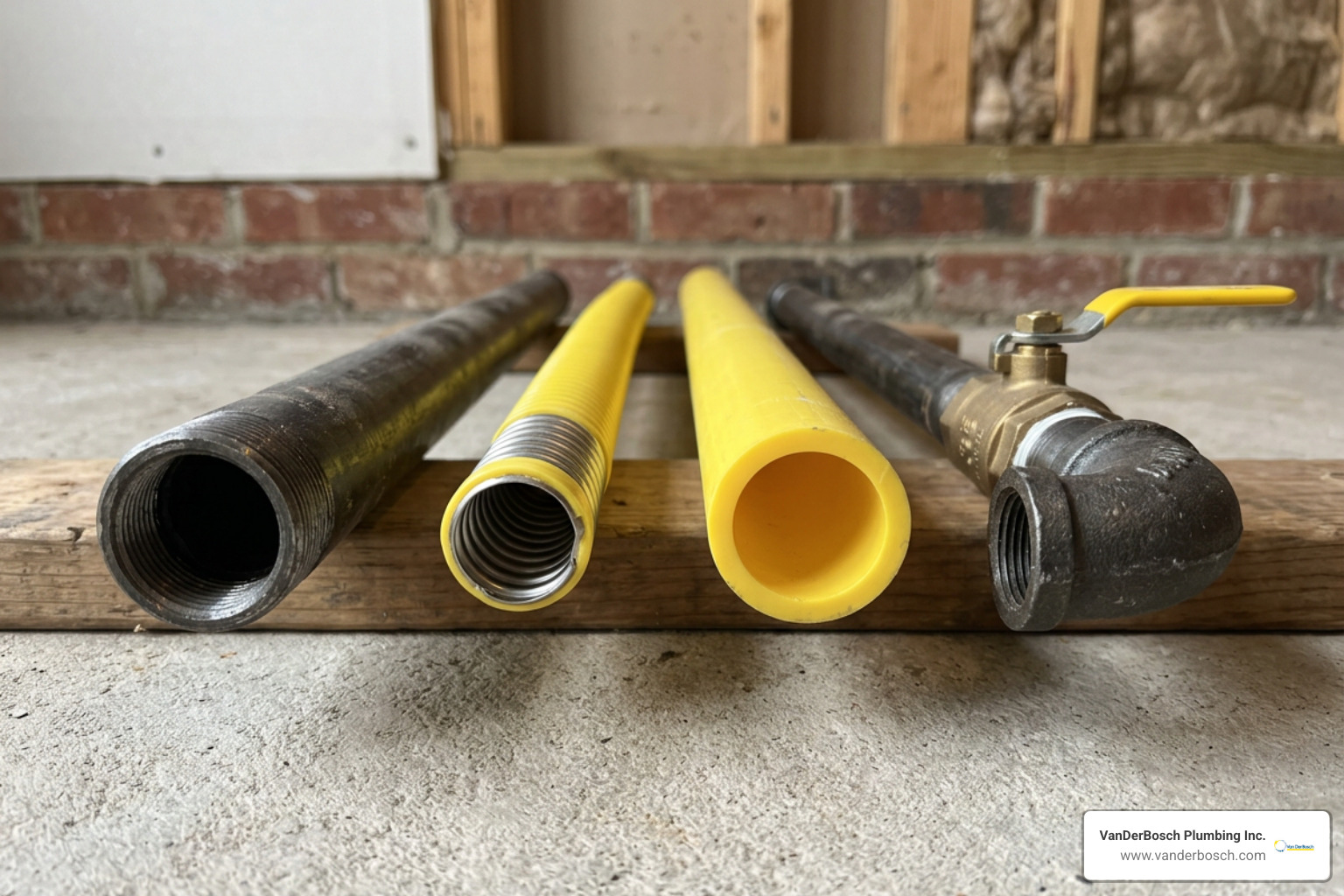
Choosing the right piping material is essential for building a safe, durable system. Local building codes strictly regulate where specific pipe types can be installed to prevent mechanical stress, corrosion, and accidental punctures.
Comparing Gas Piping Materials and Longevity
Different environments call for different materials. The table below outlines standard residential gas piping options, their typical lifespans, and where they are used:
| Material | Average Lifespan | Best Applications | Key Advantages | Potential Limitations |
|---|---|---|---|---|
| Black Iron Steel | 50 – 70+ Years | Main interior distribution, branch runs, boiler feeds | Extremely strong, heat resistant, cost-effective | Heavy, rigid, susceptible to exterior moisture corrosion |
| Galvanized Steel | 20 – 50 Years | Historic indoor runs, select outdoor above-ground lines | Protective zinc coating resists surface rust | Internal zinc coating can flake over decades, clogging valves |
| Brass Piping | 40 – 70 Years | Appliance drop connections, high-corrosion zones | Highly durable, superior corrosion resistance | Significantly higher material expense |
| Copper Tubing | 50+ Years | Specialized indoor supply runs (where code permits) | Flexible, easy to route through tight retrofits | Prohibited by some local codes if gas contains sulfur compounds |
| CSST (Corrugated Stainless Steel) | 30 – 50+ Years | Interior framing, finished walls, complex retrofits | Highly flexible, minimal joints, fast installation | Requires strict electrical bonding to protect against lightning |
| HDPE / Polyethylene (PEX-Gas) | 50 – 100 Years | Underground exterior runs (yard lines, pool heaters) | Completely impervious to soil rot and moisture | Strictly prohibited for indoor use; must remain buried |
Permitting, Inspections, and Legal Liability
Gas piping is not a trade where shortcuts are tolerated. In Cook County, Chicago, and surrounding municipalities like Elmhurst and Mount Prospect, any installation, extension, or major alteration of a gas line requires a municipal permit and an official inspection.
During an inspection, a city inspector confirms that pipe sizes match total appliance demand, checks that venting is installed properly, and monitors a mechanical pressure gauge to verify that the line holds pressure without leaks.
Skipping permits creates significant safety hazards and legal liabilities. Unpermitted work can void your homeowners insurance policy if an incident occurs. It can also stall real estate sales during buyer inspections and trigger substantial municipal code fines. Professional contractors take care of pulling permits and scheduling all required municipal reviews to ensure your project is safe and fully compliant.
How to Choose the Best Licensed Gas Plumber Near Me
Selecting the right contractor ensures your gas lines are installed safely and perform reliably for decades. Because gas line work involves life-safety considerations, vetting your technician thoroughly is essential.
When you need repairs or maintenance on your fuel supply lines, our technicians provide complete gas line repair services across the Chicago area.
Critical Questions to Ask When Searching for a Gas Plumber Near Me
Before signing a contract or authorizing work on your gas system, ask these essential questions:
- Are you licensed and insured for gas fitting in this municipality? Confirm that the company holds valid state and local licenses, along with comprehensive liability and worker’s compensation coverage.
- Will you pull the required municipal permits? Reputable contractors always handle the permit process directly. Be cautious of anyone who suggests skipping permits to save time or money.
- Are your estimates flat-rate or hourly? Upfront flat-rate pricing helps prevent unexpected charges if a project takes longer than anticipated.
- Who will perform the actual on-site work? Make sure that work is completed by certified journeymen or master plumbers rather than unsupervised apprentices.
- Do you conduct hold-pressure testing on every job? Every gas project must be verified with an airtight pressure gauge test before gas service is restored.
- What warranties cover your parts and labor? Trustworthy contractors stand behind their work with clear, written guarantees on all labor and materials.
What to Expect When Hiring an Emergency Gas Plumber Near Me
When an emergency happens, knowing what to expect from your service team helps keep stress levels manageable:
- Prompt Dispatch and Arrival: A dedicated technician arrives quickly with a fully stocked service vehicle, ready to address urgent issues.
- Safety Isolation and Electronic Diagnosis: The plumber isolates your gas supply at the meter, uses electronic detection tools to pinpoint the leak, and checks the safety of the surrounding area.
- Clear, Upfront Repair Plan: Before starting work, the technician explains the problem, presents clear pricing, and outlines the required repair steps.
- Precision Repair and Mechanical Assembly: The damaged pipe section, valve, or fitting is replaced using code-compliant materials and approved thread sealants.
- Pressure Hold Verification: Air is pumped into the isolated system, and a mechanical pressure gauge is monitored for 15 to 30 minutes to verify zero pressure loss. Technicians also perform a soap-bubble test on all newly installed fittings.
- Safe Recommissioning: Once the system passes testing and local inspections, gas service is restored, lines are purged of air, and appliance pilot lights are safely relit.
Gas Plumbing Costs: Installations, Repairs, and Insurance Coverage
Understanding the costs involved in gas plumbing helps you plan home improvement projects and manage unexpected repairs with confidence.
Key Cost Drivers and Average Project Pricing
Nationwide, standard plumbing repairs average around $325 per job, with typical ranges extending from $175 up to $4,000 or more for major line overhauls. Standard hourly plumbing rates average $100 per hour (typically falling between $45 and $200 per hour), while emergency calls average $150 per hour plus a flat trip fee ranging from $100 to $350.
For new gas line installations, basic single-appliance lines generally range from $350 to $1,500+, with an average investment of approximately $900.
Several factors influence the final cost of your gas line project:
- Linear Footage and Routing Path: Running a straight line across an open basement is far simpler and less expensive than navigating finished walls or trenching through outdoor soil.
- Pipe Material Selection: Rigid black iron and CSST carry different material and labor costs compared to specialized underground polyethylene piping.
- Appliance BTU Demand: High-capacity tankless water heaters and standby generators require larger pipe diameters, which can necessitate upgrades to your main supply line or utility meter.
- Accessibility and Structural Obstacles: Drilling through concrete foundation walls or navigating tight crawlspaces adds labor time to the installation.
- Permitting and Inspection Fees: Local municipal permit fees vary by jurisdiction and cover the cost of official city safety inspections.
Insurance Policies and Gas Line Protection Riders
Standard homeowners insurance policies typically cover sudden and accidental damage to gas lines—such as a line ruptured by a falling tree limb or an errant contractor. However, standard policies routinely exclude gradual wear and tear, rust, tree root intrusion, and age-related corrosion.
To protect against these common issues, many homeowners invest in optional utility line protection riders. Costing between $50 and $100 annually, these riders cover the repair or replacement of aging, corroded supply lines running between your utility connection and your home, saving you from unexpected out-of-pocket expenses.
Frequently Asked Questions About Gas Plumbing
How Long Does a Typical Gas Line Repair Take?
Most residential gas line repairs take between 2 and 4 hours to complete. This timeframe includes approximately 30 minutes for initial electronic leak detection, 1 to 2 hours for pipe and fitting replacement, and 30 to 60 minutes for hold-pressure gauge testing, system purging, and relighting appliance pilots. More complex repairs involving underground excavation or line rerouting through finished walls may take longer.
Can I Legally DIY Gas Line Repairs on My Property?
In almost all jurisdictions, DIY gas line repairs are strictly prohibited by law. Municipal building codes require that gas line alterations, repairs, and installations be performed exclusively by licensed Master Plumbers or certified Gas Fitters. Attempting DIY repairs creates severe fire, explosion, and carbon monoxide hazards, can void your homeowners insurance, and carries significant municipal fines.
What Is the Average Lifespan of a Residential Gas Line?
The lifespan of a gas line depends heavily on the material used and the surrounding environment. Traditional black iron steel lines typically last between 50 and 70+ years when kept dry indoors. Galvanized steel pipes generally last 20 to 50 years before internal flaking occurs. Modern brass and copper lines reliably deliver 40 to 70 years of service, while underground HDPE lines can last over 50 years without corroding.
Conclusion
Working with combustible gas lines requires precision, professional training, and strict adherence to local building codes. Cutting corners with unpermitted work or unlicensed handymen puts your home and loved ones at risk.
At VanDerBosch Plumbing Inc., we deliver licensed, code-compliant residential and light commercial gas plumbing across Chicagoland—including Cook County, Chicago, Roselle, Niles, Winnetka, Melrose Park, Oakbrook Terrace, Hyde Park, Sauganash, West Ridge, Ukrainian Village, Elmhurst, and Mount Prospect. Our background-checked technicians provide transparent pricing with no hidden service charges, 24/7 emergency response, and a 100% satisfaction guarantee on every project.
When you need dependable gas line repairs, appliance hookups, or comprehensive safety inspections, contact our team today to explore our full range of professional plumbing and gas line solutions.