
Table of Contents
- What Is Considered a Plumbing Emergency?
- How to Shut Off Your Main Water Valve in an Emergency
- Signs You Need 24 Hour Emergency Plumbing Services
- DIY Triage: What to Do While Waiting for an Emergency Plumber
- Emergency Plumbing Repair Costs: What Affects Your Bill
- Frequently Asked Questions
Last Updated: September 15, 2026
What Is Considered a Plumbing Emergency?
A plumbing emergency is any failure that threatens property damage, health, or safety if not stopped immediately. Burst pipes, sewer backups, and water heater failure top the list. A dripping faucet can wait until morning; water pouring through your ceiling cannot.
At VanDerBosch, we’ve handled these calls across the Chicagoland area for over 30 years, and the pattern is consistent: the homeowners who act fastest on a real emergency lose the least. The EPA’s guide to water damage and mold cleanup makes the stakes clear. Standing water and trapped moisture create conditions for mold growth within a day or two, which turns a pipe repair into a remediation project (the EPA).
So where’s the line? Use this test:
- Active flooding or water you can’t stop – emergency
- Sewage backing into tubs, showers, or floor drains – emergency
- No water anywhere in the house – emergency, especially in winter
- A water heater leaking from the tank itself – emergency
- One slow drain, one running toilet, a dripping fixture – schedule same-day service, not a 2 AM call
A true emergency needs an immediate water main shut-off, the next thing worth learning.
How to Shut Off Your Main Water Valve in an Emergency
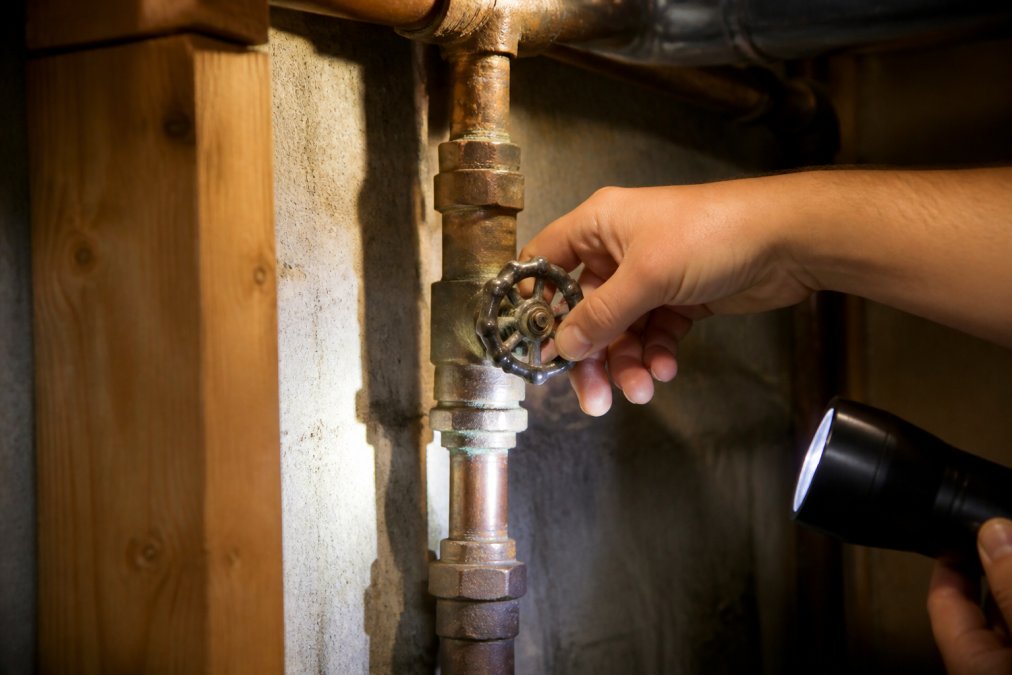
Find your main shut-off valve before you need it. It usually sits near the water meter or where the supply line enters the foundation, a basement, crawlspace, or utility closet. Turning it clockwise until it stops cuts water to the whole house.
Do this in order:
- Turn the valve clockwise until it stops. Don’t force it past the stop point.
- Open the lowest faucet in the house to drain remaining water from the lines.
- If the valve is seized or you can’t find it, call for emergency dispatch rather than guessing.
- For a single fixture failure, use the fixture’s own supply valve first, then the main if that fails.
A common mistake is waiting to shut the water off until after calling someone. Every minute the line stays pressurized adds water to your floors and walls. Shut it off first, then make the call. In older homes, gate valves often seize from disuse, one reason we recommend an annual plumbing inspection. Testing the valve takes two minutes and saves a flooded basement.
Signs You Need 24 Hour Emergency Plumbing Services
The clearest signs you need 24 hour emergency plumbing services are water you cannot stop, sewage where it doesn’t belong, or a complete loss of water or heat. Anything on that list justifies an after-hours call. Anything else can usually wait for a scheduled visit.
Watch for these specific signals:
- Burst pipes spraying or streaming water
- Sewer backups pushing waste into drains or tubs
- Water heater failure with a leaking tank or no hot water in freezing weather
- Overflowing toilets that keep running after the supply valve is closed
- Gas leak detection concerns, such as a sulfur smell near the water heater
- Sump pump failure during heavy rain, with water rising in the pit
If you smell gas, leave the building and call your gas utility first. That is not a plumbing call, it’s a safety call.
DIY Triage: What to Do While Waiting for an Emergency Plumber
What you do in the first ten minutes determines how much damage the water does. Shut off the supply, contain what’s loose, protect anything electrical, then wait for the technician.
Here’s the triage sequence we walk callers through:
- Shut off the main water valve or the fixture valve
- Kill power to any flooded area at the breaker
- Move furniture, rugs, and electronics off wet flooring
- Towel or bucket what you can and photograph the damage for insurance
- Don’t pour chemical drain cleaner into a backed-up drain
- Don’t run the water to “test” whether the problem cleared
That last point trips up a lot of people: if a drain is backing up, adding water makes it worse. If you’ve already poured chemicals in, tell the technician, mixing drain chemicals with the wrong compound can create fumes, and we handle those calls differently.
Emergency Plumbing Repair Costs: What Affects Your Bill
Emergency plumbing repair costs depend on four things: time of day, type of failure, accessibility, and repair duration. A burst pipe behind an open basement wall is a very different job than one inside a finished ceiling.
Because pricing varies by job, VanDerBosch confirms the number before work starts. No service charges means you aren’t paying a fee just for someone to look at the problem.
What moves the number most:
| Factor | Lower Cost | Higher Cost |
|---|---|---|
| Timing | Weekday business hours | Nights, weekends, holidays |
| Access | Exposed pipe or fixture | Behind finished walls or slab |
| Failure type | Single fixture repair | Water main or sewer line work |
| Duration | Under an hour | Multi-hour repair or excavation |
The Three Pricing Models You’ll Be Quoted
Most providers use one of three structures, and knowing which one you’re offered tells you a lot before anyone arrives:
- Flat-rate pricing. The provider publishes a price book and quotes a fixed number per job (e.g., “replace a kitchen shut-off valve” has one price regardless of time). Predictable for you, and it rewards efficiency.
- Time-and-materials (T&M). You pay an hourly labor rate plus marked-up parts. Licensed plumbing labor in most metro areas runs roughly $100-$250 during business hours, with after-hours calls often billed at 1.5x to 2x that rate (Plumbers, Pipefitters, and Steamfitters). The final bill is unknown until the work is done.
- Trip charge plus repair. A flat dispatch fee (often $75-$150) gets a technician to your door, then the repair is quoted on-site. The trip charge is usually waived if you approve the work.
Ask which model applies before you agree to dispatch. A flat-rate quote you can compare against a published price book beats a low hourly rate that balloons.
What Actually Drives an After-Hours Bill Up
Three things separate a $200 emergency call from a $1,200 one:
- The clock. Nights, weekends, and holidays carry premium labor rates. A 2 a.m. call on New Year’s Day sits at the top of that scale.
- Access and demolition. A shut-off valve behind an access panel takes minutes; the same valve behind tile and finished wall means cutting, patching, and drywall repair not covered by the plumbing bill.
- What’s already damaged. If water reached the subfloor, insulation, or electrical, you’re paying for mitigation and possibly restoration, separate trades, separate invoices.
How to Read an Estimate Before You Approve It
A written estimate should list scope of work, parts, labor, and exclusions (drywall repair, permit fees, restoration). No reputable provider quotes a firm price over the phone for a job they haven’t seen, a good estimate comes after an on-site look and should be in writing before work begins.
Never authorize work from a provider who won’t put the price in writing before starting. Verbal “estimates” that grow once the wall is open are the single most common complaint we hear from homeowners switching to us.
Documenting Damage for an Insurance Claim
If the failure caused water damage, your homeowner’s policy may cover part of the loss, but only if you document it correctly.
The fastest way to reduce emergency plumbing costs is to act on the first sign of trouble. Shut off the water, call for dispatch, get a written estimate before work begins, and photograph everything before cleanup starts.
Frequently Asked Questions
How much does it cost for an emergency plumber to come out?
Emergency plumbing repair costs depend on the type of problem, time of day, and parts needed. VanDerBosch charges no service fee, so you only pay for the work performed. For a burst pipe, expect higher costs than a clogged drain. VanDerBosch provides upfront pricing before any work begins, so you know the total before we start. Call for a free estimate.
What should I do while waiting for an emergency plumber?
Shut off your main water valve immediately to stop flooding. If the issue is a sewer backup, avoid using any water fixtures. For gas smells, leave the building and call from outside. Move valuables away from water and use towels or buckets to contain minor leaks. Do not attempt repairs on gas lines or electrical components near water. VanDerBosch dispatches technicians quickly, so help will arrive soon.
Are burst pipes covered by homeowners insurance?
Most homeowners insurance policies cover sudden and accidental burst pipe damage, including water damage mitigation and pipe repair. However, damage from neglected maintenance or freezing may not be covered. Review your policy and document the damage with photos before cleanup. VanDerBosch can provide detailed repair invoices to support your insurance claim.
How do I know you’ll actually show up at 2 AM when my pipe bursts?
VanDerBosch has been providing 24/7 emergency plumbing services in Chicagoland for over 30 years. We have technicians on call around the clock, including weekends and holidays. When you call, we dispatch the nearest available licensed plumber and give you an estimated arrival time. Our no service charge policy means you pay only for the repair, not for us to show up.
A plumbing emergency never picks a convenient time, and the difference between a quick fix and a ruined floor usually comes down to who you call. VanDerBosch has served the Chicagoland area for over 30 years with licensed and insured technicians, no service charges, same-day service, and a 100% satisfaction guarantee, seven days a week. When water is where it shouldn’t be, get started with VanDerBosch and get a licensed plumber dispatched to your door. Call today.