
Table of Contents
- Why Is My Boiler Leaking Water? Start Here
- Common Causes of a Boiler Leaking Water
- Boiler Pressure Relief Valve Leaking: What It Means
- What You Can Safely Check Before Calling a Pro
- When a Leaking Boiler Is an Emergency
- Boiler Repair Chicago: What to Expect From a Service Call
- Repair or Replace? Deciding Factors for an Older Boiler
- Preventing Future Boiler Leaks
- Frequently Asked Questions
Last Updated: September 23, 2026
Why Is My Boiler Leaking Water? Start Here
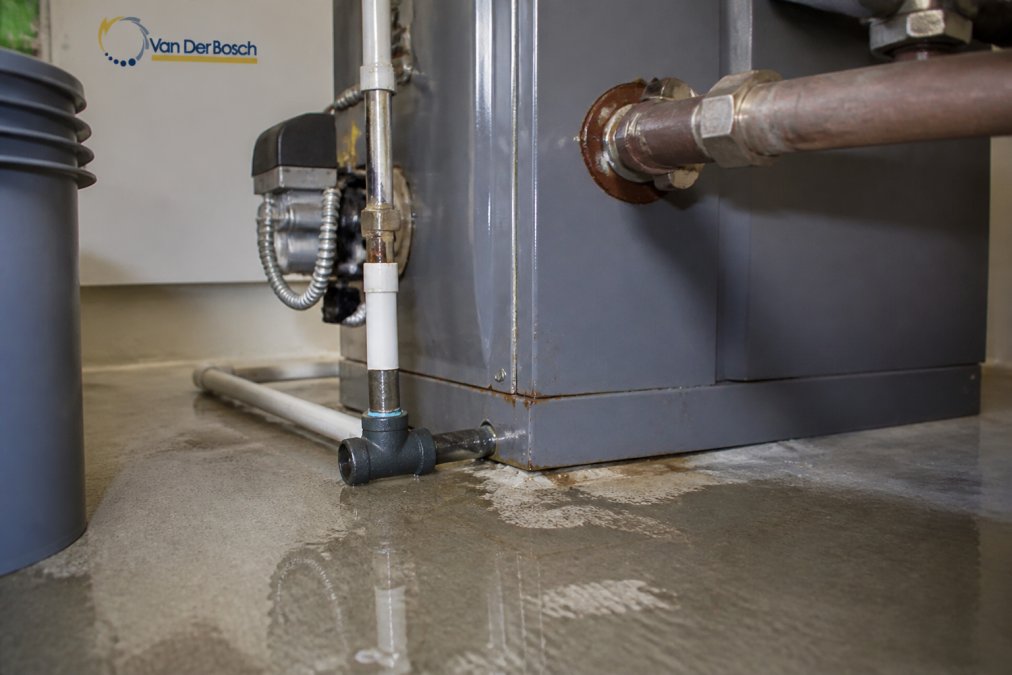
A boiler leaking water usually means one of three things: the pressure relief valve is releasing excess pressure, a seal or fitting has failed, or corrosion has opened a pinhole in the tank or pipes. None of these fix themselves, and a small drip can warp flooring and soak insulation before anyone notices.
Common Causes of a Boiler Leaking Water
Most boiler leaks trace back to pressure problems or worn parts. Two categories cover the majority of cases: the relief valve doing its job, and materials that have aged out.
High Pressure and the Boiler Pressure Relief Valve Leaking
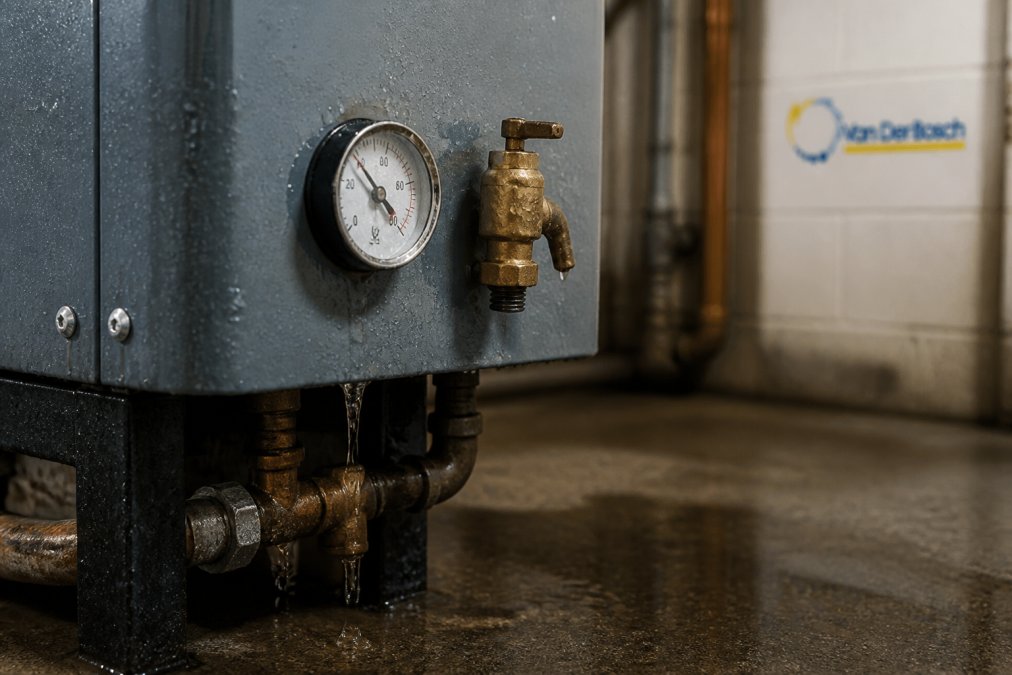
A boiler pressure relief valve leaking is often a safety feature working as designed. When internal pressure climbs too high, the valve opens to release water and steam before anything bursts.
Common reasons pressure rises:
- The expansion tank has failed or lost its air charge
- The fill valve is stuck open, adding water constantly
- The system was overfilled during a recent service
Corrosion, Loose Fittings, and Seals
Older boilers, especially the steam systems common in vintage homes, develop rust inside the tank and along pipe joints, eating through metal and loosening seals around fittings.
Watch for:
- Rust-colored water or stains near joints
- Mineral crust around pipe connections
- Damp spots on the boiler jacket itself
Boiler Pressure Relief Valve Leaking: What It Means
A leaking relief valve is a warning, not the problem itself. The valve opens because something else pushed pressure past its limit.
What You Can Safely Check Before Calling a Pro
Safe checks:
- Read the pressure gauge and note the number
- Look for the leak’s location (valve, pipe joint, tank, or floor drain nearby)
- Check whether the expansion tank feels full of water instead of air
- Confirm the system was recently serviced or refilled
Never open the boiler casing, drain the system, or attempt to adjust the relief valve yourself. Pressurized hot water and steam can cause severe burns, and improper handling can turn a small leak into a dangerous failure.
If the gauge reads high and stays high, or you can’t find the source, call a licensed plumber for a plumbing assessment to pinpoint the cause.
When a Leaking Boiler Is an Emergency
Treat a boiler leak as an emergency when water is near electrical parts, the leak is steady, or you smell gas.
Call for emergency service if you notice:
- Water pooling around the boiler’s electrical connections
- A strong gas odor (leave the building first, then call)
- Steam escaping anywhere other than the relief valve
- The boiler won’t shut off
Boiler Repair Chicago: What to Expect From a Service Call
A boiler repair visit should start with diagnosis, not guesswork. The technician inspects the leak, checks system pressure, and tests the expansion tank and relief valve before recommending anything, and documents the findings and proposed work clearly.
The Typical Service Call Flow
- Visual inspection of the boiler, jacket, and surrounding pipes
- Pressure gauge and expansion tank check
- Relief valve, fitting, and seal inspection
- A plain-language explanation of the cause and your repair options
- A written quote before any work begins
You should get a straight answer about what is wrong and what it takes to fix it. A good technician explains the cause in plain terms and tells you which findings are urgent versus which can wait.
How to Read a Boiler Repair Quote Before You Approve It
Most homeowners approve a quote in a hurry because the boiler is down and the house is cold, exactly when it pays to slow down and read the document.
A clear quote should separate:
- Diagnostic or trip charge, some companies fold this into the repair, others bill it separately. Ask about the company’s policy before the visit.
- Labor, whether it is billed hourly or as a flat rate for the job, and whether the estimate is a firm number or a range.
- Parts and materials, listed by name or part number, not lumped into a single line item.
- Permits, boiler work in many jurisdictions requires a permit, and the cost should be disclosed up front rather than added later.
- Disposal, removal of an old part or unit is sometimes a separate line.
Red flags to watch for:
- A single lump-sum figure with no breakdown
- Verbal estimates with nothing in writing
- Pressure to approve additional work on the spot before the original problem is confirmed
- A quote that changes after the technician has already started
What a Fair Invoice Should Show
After the work is done, the invoice should match the approved quote, itemizing labor, each part used, any permit fees, and any diagnostic charge. If a line item wasn’t in the quote, ask about it before paying.
Warranty and Guarantee Fine Print
Ask two questions before you sign off on a repair:
- What does the warranty cover, parts, labor, or both? A “lifetime” or “extended” warranty that covers parts only still leaves you paying labor if the same part fails again.
- How long is the labor warranty, and does it require annual maintenance to stay valid? Some warranties are voided if you skip a yearly service.
Questions Worth Asking Before You Book
- Is the diagnostic fee credited toward the repair if I approve the work?
- Will I get a written quote before work starts?
- Is the technician licensed and insured for boiler work?
- Does the repair carry a parts warranty, a labor warranty, or both?
- If the boiler needs replacement instead, will that be quoted separately?
VanDerBosch handles both modern and vintage boiler systems, including the steam boilers found in many older homes. You can schedule boiler service or review the boiler service page before booking.
A written, itemized quote and a written warranty are the two documents that protect you most on a boiler repair. Ask for both before you approve the work. VanDerBosch provides transparent pricing and a 90-day warranty on new equipment.
Repair or Replace? Deciding Factors for an Older Boiler
Repair usually makes sense when the leak is isolated and the boiler is otherwise sound; replacement is worth considering when problems keep stacking up. Because the two quotes cover different scopes, here is how to think through the decision.
The Factors That Actually Move the Decision
- Age: Older units near the end of their service life rarely justify major repairs. A boiler that has already outlived its expected service window is a poor candidate for an expensive fix.
- Repair history: Frequent fixes point to a system on its way out. One repair every few years is normal; three in two seasons is a pattern.
- Leak location: A failed fitting, seal, or relief valve is different from a corroded tank section or a pinhole in the heat exchanger. Fittings and valves are serviceable. A compromised tank or heat exchanger usually is not.
- Efficiency: An aging boiler can raise your heating and water costs. If the unit is running more to do the same job, that gap is part of the true cost of keeping it.
- Accessibility: Hard-to-reach components make repairs costlier. A repair that requires opening a wall or ceiling changes the math.
- Surrounding parts: If pipes, valves, and the expansion tank are also failing, one repair will not hold. You will be back in the same basement next season.
- Safety history: Any prior issue with the relief valve, flue, or combustion side should weigh heavily toward replacement.
Do not assume replacement is automatic, plenty of leaking boilers are repairable. The right call depends on the specific system, and a professional inspection settles it.
How to Compare a Repair Quote Against a Replacement Quote
A repair quote and a replacement quote are not directly comparable because they cover different scopes. To compare them fairly, line up the same categories on both sides:
| Category | Repair quote | Replacement quote |
|---|---|---|
| Equipment | Part or component only | Full boiler and any required controls |
| Labor | Hours or flat rate for the fix | Removal, install, startup, and testing |
| Permits | Usually none for a minor fix | Often required for a boiler swap |
| Disposal | Old part only | Old boiler and any removed piping |
| Warranty | Parts and/or labor on the repair | Parts and/or labor on the new unit |
| Expected service life | Remaining life of the existing unit | Service life of the new unit |
Cost Factors That Drive Either Path
No two boiler jobs price the same, but the same factors recur:
- The type and location of the problem
- Accessibility of the boiler and the failed component
- Materials and parts required
- Extent of damage, including any water damage to surrounding structure
- Diagnostic work required to confirm the cause
- Whether additional components (expansion tank, relief valve, piping, controls) are affected
A Simple Decision Rule
Ask the technician to write the expected remaining service life of the existing unit on the repair quote. That single number often makes the repair-versus-replace decision obvious.
If you are weighing repair against replacement on an older system, VanDerBosch can inspect the boiler and walk you through both options before you commit.
Preventing Future Boiler Leaks
Regular maintenance is the cheapest way to avoid a mid-winter emergency. Small checks catch the problems that turn into leaks.
A simple maintenance routine:
- Schedule an annual boiler inspection before heating season
- Watch the pressure gauge for changes
- Keep the area around the boiler dry and clear
- Fix small drips before they grow
- Ask about a service agreement for ongoing checks
Frequently Asked Questions
Is a leaking boiler an emergency?
It can be. A small drip from a fitting may not be urgent, but water pooling near electrical components, a steady stream, or a leak combined with a pressure spike or strange noise warrants immediate attention. Shut off the boiler and water supply if safe, and call a licensed plumber. Leaving a leaking boiler running can cause water damage, mold, and safety hazards.
Can I fix a leaking boiler myself?
Most boiler repairs should be left to a licensed professional. Boilers involve pressurized water, gas, and electrical connections. Attempting DIY repairs can lead to serious injury, property damage, or voided warranties. You can safely check the pressure gauge and look for obvious loose fittings, but any repair involving the pressure relief valve, internal components, or gas lines requires a qualified technician.
What causes a boiler pressure relief valve to leak?
A pressure relief valve leaking usually means system pressure has exceeded safe limits. Common causes include a failed expansion tank, a faulty fill valve, or thermal expansion. The valve may also leak if it is corroded or stuck open. Because the relief valve is a safety device, it should be inspected and replaced by a professional if it continues to discharge water.
How do I know if my boiler pressure is too high?
Check the pressure gauge on the boiler. For most residential systems, normal operating pressure is between 12 and 18 psi when hot. If the gauge reads above 30 psi, the pressure is too high and the relief valve may open. High pressure can be caused by a faulty fill valve or a waterlogged expansion tank. Turn off the boiler and call a plumber to diagnose the issue.