
Table of Contents
- What to Expect From Plumbers in Chicago
- Common Plumbing Problems Chicago Homeowners Face
- When You Need an Emergency Plumber
- Drain Cleaning: Methods and When to Call a Professional
- Questions to Ask Before Hiring a Plumber
- Residential and Commercial Plumbing Services
- Frequently Asked Questions
Last Updated: October 16, 2026
What to Expect From Plumbers in Chicago
When you call a plumber in Chicago, you want someone who can diagnose the problem quickly and fix it right the first time.
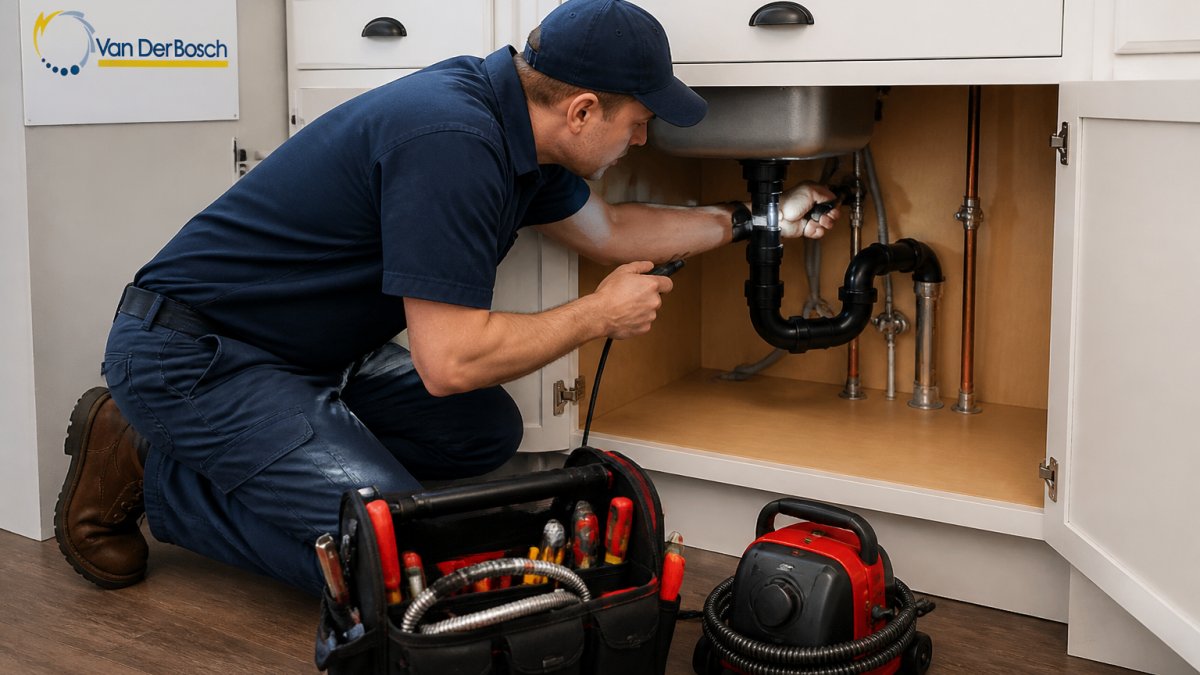
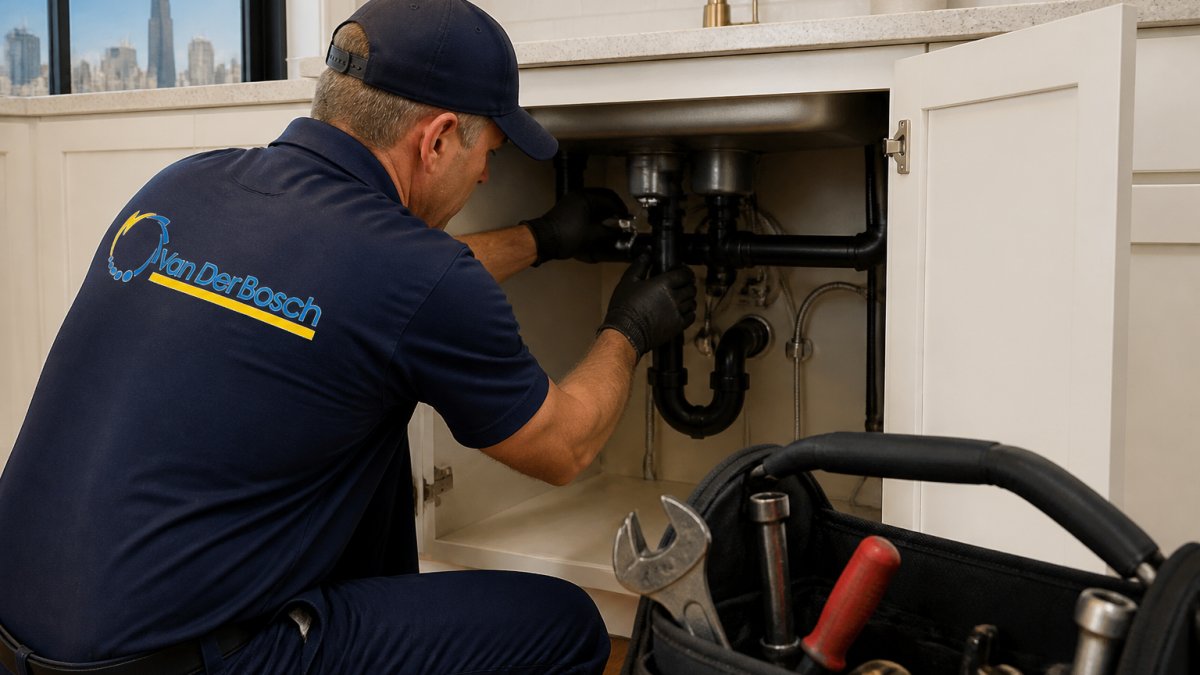
A professional plumber arrives with the right tools and asks specific questions about when the problem started, what you’ve noticed, and any previous repairs.
A licensed professional has passed state requirements and carries insurance to protect both you and themselves.
Common Plumbing Problems Chicago Homeowners Face
Chicago’s climate and aging housing stock create specific plumbing challenges. Understanding them helps you recognize when professional service is truly necessary.
Burst and Frozen Pipes in Winter
Winter temperatures in Chicago regularly drop below freezing for extended periods, and that’s when frozen pipes become a real threat. Water inside exposed pipes can freeze and expand, creating pressure that eventually ruptures the pipe.
The earliest warning sign is reduced water pressure in one or more fixtures during cold weather, which may indicate a frozen section rather than a burst. You might also hear banging or clanking as ice forms and pressure builds.
Burst pipes require immediate attention, since water flowing into walls, ceilings, or crawl spaces causes structural damage and mold growth. VanDerBosch Plumbing Inc. offers frozen pipe repair for both frozen sections and burst pipes.
Sewer Backups and Drain Clogs
Sewer backups are among the most unpleasant plumbing emergencies. Multiple drains backing up at once, toilets, showers, sinks, signal a problem in the main sewer line rather than a single fixture. That could be tree roots, grease accumulation, or structural collapse of an older pipe.
A single slow drain might just be soap and hair, but when water comes up through floor drains or backs up into the lowest fixtures, the blockage is downstream and requires professional diagnosis. Sewer video inspection lets a technician see exactly where the problem is and how serious it is.
Recurring clogs in the same drain often point to a bend in the pipe, partial blockage, or damaged section. Drain cleaning with hydro jetting removes buildup more thoroughly than a plunger or snake, and hydro jetting services can restore flow without damaging older pipes.
Water Heater Issues
Most water heaters last 8 to 12 years, depending on water quality and maintenance. You might notice water takes longer to heat, runs out faster, or turns rusty.
Leaks around the base of the tank mean the tank itself is failing and replacement is necessary. Inconsistent temperature can indicate a failing heating element or sediment accumulation. Water heater repair might restore function, but an aging tank may not be worth the repair cost.
Tankless water heater installation offers an alternative to traditional tanks. Tankless systems heat water on demand, providing continuous hot water, useful where multiple people shower back-to-back or space for a tank is limited.
When You Need an Emergency Plumber
An emergency is any plumbing problem where waiting causes active damage, a safety hazard, or loss of habitability. That distinction determines whether you call a plumber, the gas utility, or emergency services first.
What Qualifies as a Plumbing Emergency
- Active water where it shouldn’t be. A burst pipe, a supply line spraying, or water pooling in a basement or ceiling. Water damage compounds by the hour.
- Sewage backing up into the home. Beyond the mess, sewage carries health hazards. Keep people and pets away from the affected area.
- No water at all. A total loss of water to the property usually points to a failed main, a frozen service line, or a shutoff issue that needs professional diagnosis.
- A gas smell. This is not a plumbing call first, see the safety note below.
- A water heater leaking from the tank itself. A failed tank can flood a utility room quickly.
What Is Urgent but Not an Emergency
A frozen pipe that still has water flowing is urgent, you have time to call before it ruptures, but not days. A single slow drain, dripping faucet, or running toilet can typically wait for a standard appointment.
Safety First: What to Do Before the Plumber Arrives
For an active leak or burst pipe, the first move is to shut off the water. Know where your main shutoff valve is before you need it, usually near the water meter or where the service line enters the home. If you can’t operate it safely, call for help and stay clear of standing water near electrical outlets or panels.
If you smell gas, leave the building immediately and do not operate light switches, appliances, or your phone inside. Call your gas utility’s emergency line or 911 from outside. Gas line work is not a DIY repair and should only be handled by a licensed professional.
If a water heater or boiler is leaking and there’s any chance water has reached electrical components, shut off power to that equipment at the breaker only if you can do so safely from a dry location. Otherwise, keep away and call for service.
What to Tell the Dispatcher
Be ready to describe:
- Where the water, smell, or sound is coming from, room, floor, and whether it’s near a fixture, appliance, or the main line.
- Whether the water is clean supply water or sewage.
- Whether you’ve been able to shut off the water, and where the shutoff is.
- The age of the home or the plumbing, if you know it.
- Any sounds, banging, hissing, gurgling, and when they started.
That helps the technician arrive with the right equipment.
After-Hours and Weekend Service
VanDerBosch Plumbing Inc. provides service seven days a week, so a weekend or evening problem doesn’t have to wait for Monday. When you call, ask whether the visit is scheduled as standard or after-hours service. If the situation is a gas leak, fire risk, or sewage hazard, prioritize the safety steps above and call the appropriate emergency line.
Drain Cleaning: Methods and When to Call a Professional
A slow drain might seem like a DIY problem, but it often indicates something a plunger can’t reach. Hair, soap buildup, grease, and mineral deposits accumulate over time.
Plunging works for simple clogs near the drain opening.
Hydro jetting uses high-pressure water to blast through buildup and clear the entire interior of the pipe. It’s more thorough than a mechanical snake and works well on grease, mineral deposits, and partial blockages.
Sewer backups require different diagnosis. If multiple drains are slow or backing up, the problem is in the main line. A sewer camera inspection shows whether the issue is a clog, root intrusion, or pipe damage.
Questions to Ask Before Hiring a Plumber
Most homeowners ask about price first. The more useful questions come before that: who is actually doing the work, what happens if something goes wrong, and how the estimate is structured.
Licensing and Insurance: How to Verify, Not Just Ask
A plumber saying “we’re licensed and insured” is a claim, not proof. In Illinois, plumbing contractors are licensed through the state, and you can look up a contractor’s status yourself. Ask for:
- The license number, and the name it’s issued under, confirm it matches the company on the estimate, not just an individual technician.
- A certificate of insurance showing general liability coverage, with the insurer and policy dates visible.
- Whether workers are employees or subcontractors. If subs are used, ask who carries their insurance.
A legitimate contractor will not hesitate to provide these. If the response is vague or the paperwork “is in the truck,” that’s information too.
If a contractor asks you to pull the permit in your own name, treat that as a red flag. Permits should be pulled by the licensed contractor performing the work, and the permit record is one of the few paper trails you have if a problem surfaces later.
Reading an Estimate Line by Line
An estimate that says only “repair drain, $X” tells you almost nothing. A useful written estimate separates:
- Diagnosis or service-call charge, if any, and whether it’s credited toward the repair.
- Labor, and whether it’s billed hourly, flat-rate, or by the job.
- Materials, listed by type rather than lumped together.
- Permit fees, if the scope requires one.
- Disposal of old fixtures, pipe, or equipment.
- Exclusions, what the price does not cover, such as drywall repair after a leak, or code upgrades discovered mid-job.
Ask what happens if the scope changes once the wall is open or the camera goes down the line. A contractor who explains the change-order process up front is easier to work with than one who surprises you with a revised invoice.
Comparing Two Bids Fairly
A lower number is not automatically the better bid. Compare estimates on the same scope: pipe material, fixture grade, permit responsibility, and warranty terms. A bid that omits the permit or uses a lower-grade part isn’t cheaper, it’s a different job.
Ask each contractor the same three questions:
- What is included, and what is explicitly excluded?
- What is the warranty on labor, and separately on parts or equipment?
- Who do I call if something fails, and how is that handled?
VanDerBosch Plumbing Inc. provides written estimates before work begins and does not charge a service fee to come out and diagnose the problem. Ask for the same scope in writing from each contractor so the numbers are comparable.
Availability, Response, and After-Hours Terms
“24/7 service” means different things at different companies. Ask:
- Is after-hours service staffed by the company’s own technicians, or routed to an answering service that dispatches a third party?
- Are after-hours rates different from standard rates, and how is that disclosed before dispatch?
- What counts as an emergency for scheduling purposes, an active leak, no water, sewage backup, versus a next-business-day call?
Getting these answers before you have a flooded basement saves you from negotiating them at the worst possible moment.
Warranty and Workmanship Protection
Ask what the warranty covers and for how long, labor, parts, and equipment are often covered on different terms. A water heater warranty, for example, is typically the manufacturer’s, while installation labor may carry a separate workmanship guarantee. Know which is which before you sign.
VanDerBosch Plumbing Inc. provides a 90-day warranty on new equipment and a 100% satisfaction guarantee. Ask any contractor you’re considering to put their warranty terms in writing on the estimate, not just in conversation.
Residential and Commercial Plumbing Services
Residential plumbing in Chicago ranges from single-family homes to multi-unit apartment buildings.
Commercial plumbing serves light commercial properties, small office buildings, retail spaces, restaurants, and similar facilities. Commercial systems often handle higher water volume and have different code requirements than residential systems.
VanDerBosch Plumbing Inc. handles both residential and commercial plumbing, so you’re working with a team that understands your specific needs.
Finding the right plumber in Chicago means choosing someone licensed, insured, and transparent about pricing and service terms. VanDerBosch Plumbing Inc. brings over 30 years of experience to residential and commercial plumbing problems throughout the Chicagoland area.
Frequently Asked Questions
What are the most common plumbing problems in Chicago homes?
Burst and frozen pipes during winter, sewer backups, recurring drain clogs, water heater failures, and boiler issues are frequent problems Chicago homeowners encounter. A licensed plumber can diagnose the root cause and recommend whether repair or replacement is appropriate for your situation.
How do I know if I need an emergency plumber versus scheduling regular service?
Contact an emergency plumber immediately if you have a burst pipe, major water leak, sewer backup, gas smell, or no hot water in winter. These situations can cause property damage, create health hazards, or pose safety risks. For clogs, slow drains, or minor leaks that aren’t actively flooding your home, you can typically schedule service during regular business hours.
What questions should I ask before hiring a plumber?
Ask whether they are licensed and insured, what their service area covers, if they charge a service call fee, how they price their work, what warranty or guarantee they offer, and whether they’re available for emergency service. Request a clear estimate before work begins, and confirm what happens if additional problems are discovered. Understanding their pricing structure and guarantees upfront prevents surprises when the bill arrives.
What’s the difference between drain cleaning and hydro jetting?
Drain cleaning typically uses mechanical tools or chemical treatments to clear blockages. Hydro jetting uses high-pressure water to scour pipe walls and remove buildup, grease, and tree roots more thoroughly. Hydro jetting is often more effective for severe clogs or recurring problems but costs more. A professional plumber can assess whether your drain needs basic cleaning or the deeper cleaning hydro jetting provides.