
Last Updated: October 25, 2026
Quick Summary
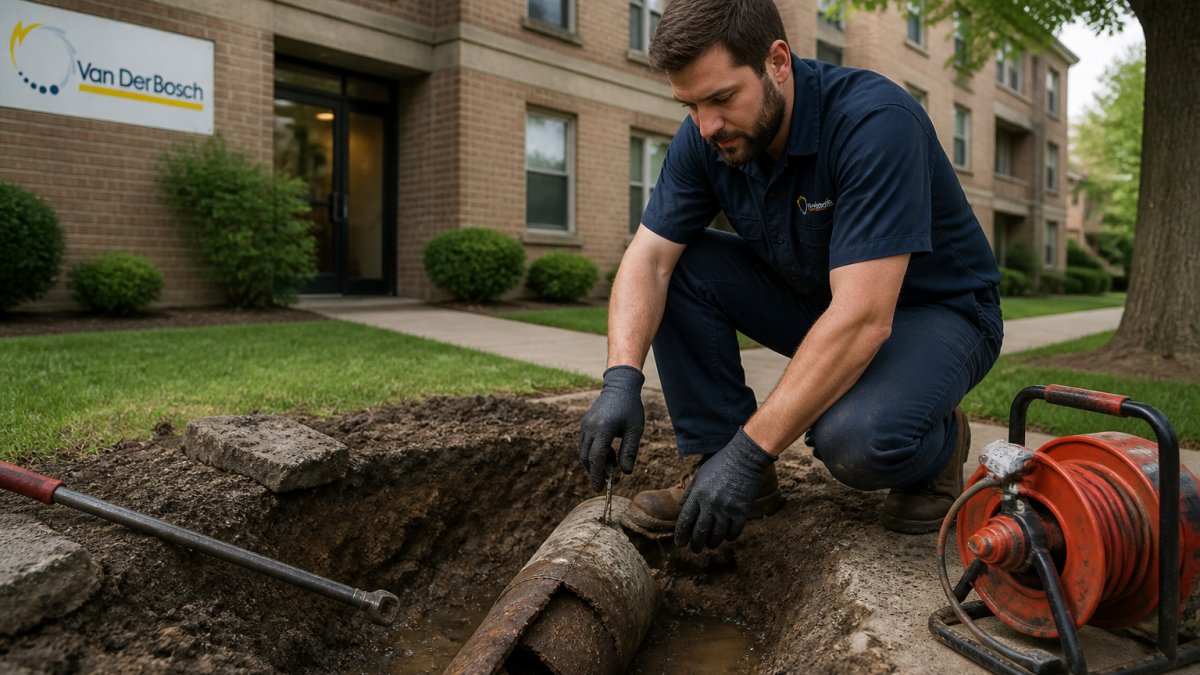
Main sewer line failure apartments occurs when a shared central line serving multiple units becomes blocked or damaged, disrupting wastewater flow for all residents at once. Common causes include tree root intrusion, grease and debris accumulation from multiple kitchens, pipe deterioration from age, and ground movement that cracks or misaligns pipes.
- Multiple drains backing up simultaneously across different units and floors is the clearest sign of a shared main line problem.
- Tree roots, grease buildup, flushed items like wipes and paper towels, and aged pipe materials are the primary causes of blockages.
- A sewer camera inspection can determine whether the problem is in one unit’s branch line or in the shared main line serving the building.
- Responsibility for repair typically falls to the building owner or association for the main line, though exact boundaries depend on lease terms and local law.
- Stop water use in affected fixtures and contact a licensed plumber immediately if sewage is actively backing up into occupied units or pooling near electrical or mechanical equipment.
Table of Contents
- Why Main Sewer Line Failure Happens in Apartments
- Common Causes of Apartment Sewer Line Blockage
- Recognizing Sewer Line Warning Signs
- Using Sewer Camera Inspection to Diagnose Problems
- Apartment-Specific Responsibility and Coordination
- When to Call for Professional Sewer Line Repair
- Schedule Your Sewer Inspection Today
- Frequently Asked Questions
Why Main Sewer Line Failure Happens in Apartments
Main sewer line failure apartments differs sharply from single-family homes: one failure disrupts multiple residents and creates shared responsibility issues that complicate diagnosis and repair. Recognizing warning signs early lets property managers and tenants act before a backup becomes an emergency.
Apartment sewer systems may have multiple units funneling wastewater through a shared main line.
Shared Plumbing Systems and Concentrated Stress
Apartment buildings use a centralized design where all units connect to one main sewer line that exits the building.
A single-family home and a multi-unit building can have different patterns of fixture use.
The main line may collect wastewater and debris from kitchen drains, bathrooms, and laundry.
Age and Material Deterioration
Sewer pipe materials can deteriorate over time:
- Clay pipes crack as soil shifts and ground freezes and thaws
- Cast iron pipes corrode from the inside out and become brittle
- Concrete sewer mains develop cracks and lose structural integrity
Age is one factor to consider when assessing a main sewer line.
Common Causes of Apartment Sewer Line Blockage
Knowing what causes blockages helps property managers prevent them and respond quickly when they occur.
Tree Root Intrusion
Tree roots seek moisture and nutrients and are drawn to wastewater flowing through underground pipes. Roots enter through cracks, joints, and small gaps in older pipe, then grow until they block the line. Watch for large trees on or near the building, including trees on adjacent properties whose roots extend under it.
Grease, Debris, and Foreign Objects
Grease from multiple kitchen drains cools and solidifies in the main line, coating pipes and trapping debris. Residents also flush items that shouldn’t go down: “flushable” wipes (which don’t break down), paper towels, feminine hygiene products, dental floss, food scraps, and coffee grounds. Across dozens of units, those habits compound quickly into major blockages.
Ground Movement and Pipe Misalignment
Ground movement can crack or misalign sewer pipes. Misaligned pipes may create low spots where wastewater and solids collect.
Recognizing Sewer Line Warning Signs
Early warning signs let property managers schedule an inspection before an emergency. A single sign may point to one unit’s drain, but several together suggest a building-wide problem.
Multiple Drains Backing Up
The clearest sign of main sewer line failure apartments is multiple drains backing up at once. Watch for:
- Multiple bathrooms backing up simultaneously
- Water pooling in lowest-level drains or fixtures
- Sewage appearing in basement or floor drains
When drains in different units fail together, the problem may be in a shared line. A branch-line clog may affect only the fixtures it serves.
Slow Drains and Recurring Clogs
Slow drains throughout the building, especially on lower floors, suggest a partial main-line blockage. Recurring clogs are another red flag. If a drain clogs again after being cleared, the cause may require further diagnosis. When this pattern appears across multiple units, a professional sewer camera inspection may help assess the line.
Sewage Odors and Gurgling Sounds
Foul odors around the building exterior, in the basement, or near the main cleanout can have several causes and warrant professional assessment. Gurgling can occur when air moves through plumbing fixtures as water drains. These signs may occur before a visible backup.
Using Sewer Camera Inspection to Diagnose Problems
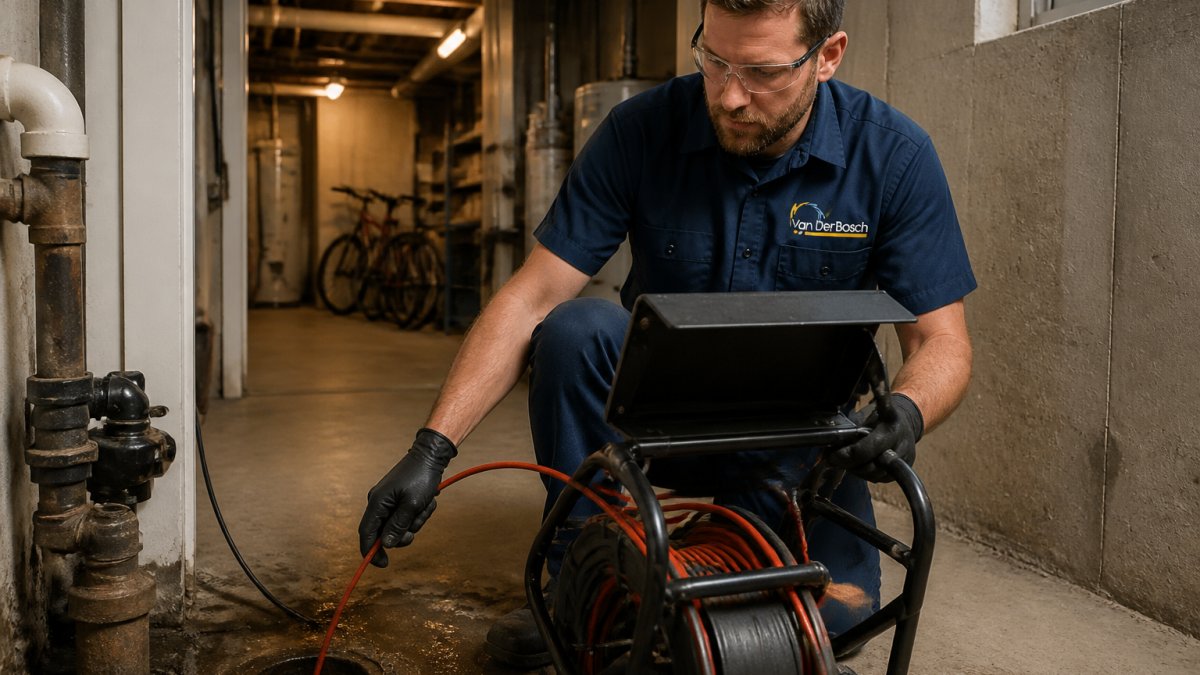
Warning signs can indicate a problem; a camera inspection can help assess the pipe’s condition and locate an issue. In an apartment building, determining whether the problem is in one unit’s branch line or a shared stack or main can help guide the response.
Building-Wide Main Failure vs. Unit-Level Clog
The pattern of symptoms across floors, fixtures, and units can help form a working hypothesis before anyone opens a cleanout.
| Pattern | More likely a unit-level clog | More likely a shared stack or main issue |
|---|---|---|
| Which fixtures | One toilet, sink, or shower | Multiple fixtures across several units |
| Which floors | One unit, any floor | Lowest floors first, then spreading upward |
| Timing | Isolated, one-time | Recurring, often at peak-use hours |
| Basement or floor drains | Unaffected | Backing up or gurgling |
| Cleanout | Dry | Overflowing or under pressure |
| Odor | Localized to one fixture | Building-wide or near the main cleanout |
A single slow sink may be a local clog. Toilets gurgling on upper floors while the basement floor drain backs up may point to a shared-line issue.
A Practical Troubleshooting Workflow
For property managers and building staff, a short, repeatable sequence keeps a bad situation from getting worse:
- Stop risky water use. Ask residents on affected floors to avoid flushing, dishwashers, and laundry until the line is assessed; continued use can push sewage into more units.
- Record the symptoms. Note which units, fixtures, floors, and times. A simple log is more useful to a plumber than a verbal summary.
- Check the main cleanout. If it’s accessible and safe to observe, note whether it is dry, slow, or overflowing. Do not open a cleanout under pressure or attempt to rod it.
- Isolate the affected zone. If the building has sectional valves or multiple stacks, identify which stack or zone is involved so the plumber can focus the inspection.
- Call for professional diagnosis. A camera inspection can help assess the cause and location of a problem, including whether a section may be collapsed or misaligned.
Photograph or video the symptoms, standing water, backed-up floor drains, gurgling fixtures, before cleanup begins. Those images help the plumber and support any later responsibility or insurance discussion.
What a Camera Inspection Reveals
A sewer camera inspection can help assess the pipe interior. For an apartment building, it may help determine:
- Whether the blockage is in a unit branch, a stack, or the main.
- Whether the cause is grease, roots, debris, a broken section, a sag, or misalignment.
- The approximate location and depth, so excavation or repair can be targeted.
Why the Distinction Changes the Response
If the problem is a unit-level clog, the response is usually a drain cleaning call for that unit. If the problem is in a shared stack or main, the response is a building-level service call that may involve hydro jetting services to clear grease and debris, root cutting, or a repair if the pipe itself has failed.
The Drain Camera Inspection Process Explained covers how the inspection is performed and what to expect during the visit.
When to Escalate Immediately
Some situations should not wait for a scheduled inspection:
- Sewage is actively backing up into occupied units.
- Water is pooling near electrical panels, boilers, or water heaters.
- The cleanout is overflowing and cannot be controlled.
In those cases, isolate the affected area, keep residents away from standing sewage, and contact a licensed plumbing professional right away. Sewage exposure carries health risks, and cleanup of an affected unit is a separate step from clearing the line.
Apartment-Specific Responsibility and Coordination
In a single-family home, one owner coordinates the repair. In a multi-unit building, a main sewer line failure usually involves the building owner, the property manager, individual unit owners in a condo or co-op, tenants, and sometimes an association board. Plumbing for Multi-Unit Buildings: A Complete Guide explains how plumbing systems work in multi-unit buildings and clarifies the responsibilities that apply to shared infrastructure.
How Responsibility Usually Breaks Down
Responsibility generally follows the physical location of the failed pipe, but the exact boundaries depend on the lease, the condo declaration or association bylaws, and applicable state and local law. A plumber can identify where the problem is; only the building’s documents and legal counsel can confirm who pays.
A common pattern:
- The building main, from the foundation or lowest cleanout to the municipal sewer connection, is typically common-area infrastructure and the owner’s or association’s responsibility.
- Vertical stacks and horizontal branch lines serving more than one unit are usually common elements, even inside a single unit’s wall or ceiling.
- Branch lines and fixtures serving only one unit are often the unit owner’s or tenant’s responsibility, but this varies widely.
Do not assume the split based on where water appears. Sewage backing up into a first-floor unit is frequently caused by a blockage in a shared line downstream, which means the visible mess is in one unit while the failure is in common infrastructure. Confirm the location with a camera inspection before assigning responsibility.
Coordinating Access, Notice, and Communication
A main line repair may require access to common areas, basements, mechanical rooms, or individual units, so access may need to be coordinated. A practical sequence:
- Confirm the scope first. Have the line inspected and the failure located before notifying residents, so the notice describes the actual work rather than a guess.
- Identify every affected unit. A camera inspection and a walkthrough of low-floor fixtures may help identify which units could be affected and where access may be needed.
- Give written notice. State the dates, hours, unavailable fixtures, and whether water will be shut off building-wide or only in sections.
- Designate a single point of contact. One coordinator fielding questions prevents conflicting instructions to residents and the plumbing crew.
- Document everything. Keep the inspection report, photos, invoices, and resident notices together. If responsibility is later disputed, that file is the record.
What Tenants and Unit Owners Should Do
If you rent or own a unit and sewage is backing up, the safe steps are limited:
- Stop using water in the affected fixtures, and avoid flushing until the line is cleared.
- Notify the building manager or landlord immediately, in writing, and note the time.
- Warn neighbors on lower floors, since a shared-line blockage often shows up there next.
Avoid attempting to snake or chemically treat a shared main line.
Where the Ambiguity Usually Sits
The genuinely contested cases tend to be:
- A branch line serving one unit but running through a common wall.
- A blockage caused by one tenant that backs up into several other units.
- A failed section under a slab or parking area serving multiple buildings on one parcel.
In each case, a plumbing assessment can help establish the condition and location. The building’s governing documents and legal counsel can help determine responsibility.
When to Call for Professional Sewer Line Repair
Main sewer line problems may require professional diagnosis and repair. Avoid attempting to clear a shared main line yourself.
Property managers should contact a licensed plumber when:
- Multiple units report slow drains or backups simultaneously
- Sewage odors appear around the building exterior or basement
- Water pools in basement floor drains
Professional plumbers use specialized equipment to clear blockages, repair cracks, or replace failed sections. Main Sewer Line Repair & Replacement Services in Chicago, Illinois covers repair and replacement options available for apartment buildings. Methods include hydro jetting services for blockage removal and trenchless repair techniques for cracks and breaks.
VanDerBosch Plumbing Inc. provides plumbing, sewer, and drain solutions in the Chicagoland area.
Schedule Your Sewer Inspection Today
When multiple drains in your apartment building show warning signs, professional diagnosis prevents small problems from becoming emergencies.
If you manage a property in the Chicagoland area and suspect a sewer or drain problem, contact VanDerBosch Plumbing Inc. to discuss plumbing service.
We’re available seven days a week. Call VanDerBosch Plumbing Inc. today to discuss your plumbing needs.
Frequently Asked Questions
What are the signs of a main sewer line blockage in an apartment?
Multiple drains backing up simultaneously can indicate a problem in a shared sewer line, though symptoms alone do not confirm the cause. Other signs may include slow drains throughout the building, gurgling sounds from toilets or drains, sewage odors near plumbing fixtures or in the basement, and standing water in lower-level units. If you see these signs, seek professional assessment, especially if sewage is backing up into living spaces.
Can a sewer camera inspection identify the cause of a sewer line failure?
A sewer camera inspection can help assess the pipe interior and may reveal issues such as root intrusion, cracks, debris, or misalignment. The findings may help inform whether further assessment or repair is needed. In apartment buildings, an inspection may help locate whether an issue is in a shared line or a branch line.
Who is responsible for a sewer line problem in an apartment building?
Responsibility depends on the building’s governing documents and the location of the problem. Leases, property agreements, and applicable rules may affect who is responsible. Property managers can review the relevant documents and arrange a plumbing assessment to help locate the issue. A camera inspection may help assess the pipe, but responsibility should be determined from the applicable documents and circumstances.
Why are multiple drains backing up in an apartment at the same time?
When multiple drains back up simultaneously in different units, a shared line may be involved, but symptoms alone cannot confirm the cause. A blockage or failure in a shared line can affect connected fixtures, while a single-unit clog may be limited to that unit. If sewage is backing up, keep people away from it and seek professional help promptly.
Main sewer line failure in apartments creates disruption across entire buildings, but early detection through professional inspection prevents emergencies and keeps residents’ plumbing functioning reliably. Understanding the causes and warning signs helps property managers respond quickly when problems emerge.
