
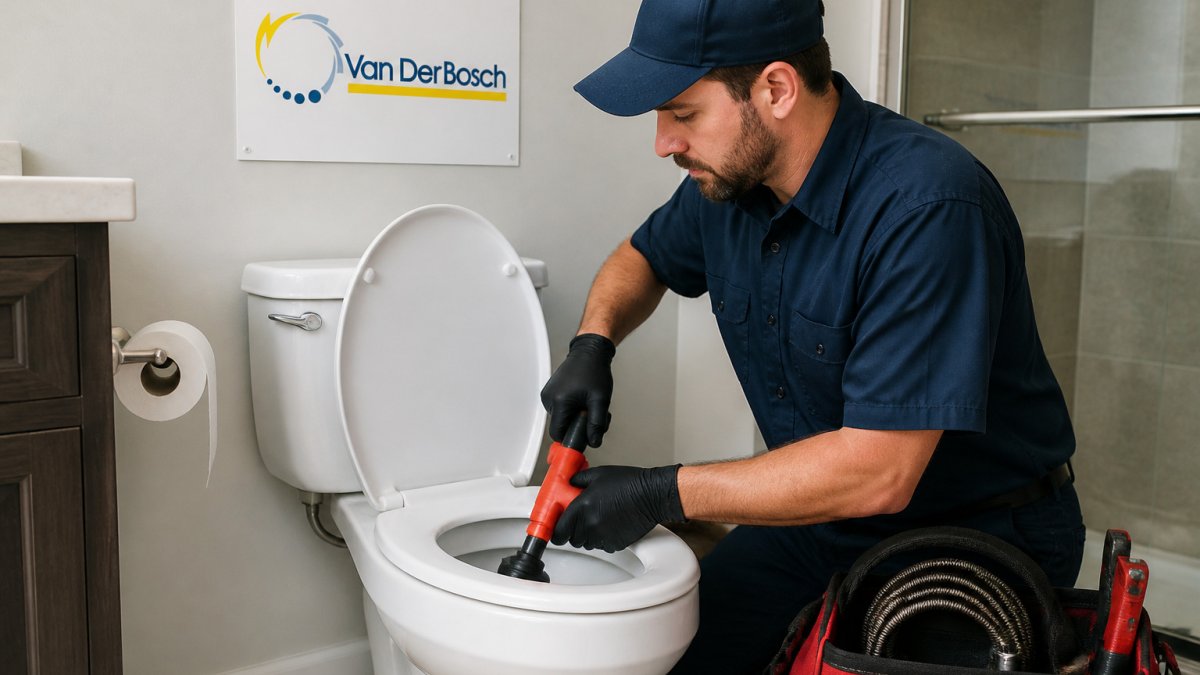
Last Updated: October 28, 2026
Quick Summary
A clogged toilet can often be cleared with a flange plunger used at a slight angle with firm, repeated strokes. A toilet auger can reach clogs past the trap. Avoid chemical drain cleaners, and call a plumber if the clog returns or other fixtures back up.
- Use a flange plunger designed for toilets, not a standard sink cup plunger.
- Plunge 15 to 20 times, then check whether the water drains freely.
- Never combine a chemical drain cleaner with a plunger or auger.
- Multiple fixtures backing up at once may signal a problem beyond the toilet.
- Call a plumber if the clog keeps returning or sewage appears at floor drains.
Table of Contents
- How to Unclog a Toilet With a Plunger, Step by Step
- Other Methods to Try Before Calling a Plumber
- Why a Clogged Toilet Keeps Coming Back
- A Troubleshooting Guide: Is the Clog in the Toilet or Beyond It?
- Mistakes to Avoid When Working on a Clogged Toilet
- When to Call a Plumber for a Clogged Toilet
- Get a Clogged Toilet Fixed Right With VanDerBosch Plumbing
- Frequently Asked Questions
A clogged toilet can often be addressed with a plunger, but recurring clogs or problems affecting other fixtures may need professional attention. This guide explains basic steps and signs that the issue may extend beyond the toilet.
How to Unclog a Toilet With a Plunger, Step by Step
A plunger is one tool people use for toilet clogs. The key is using the right plunger and technique.
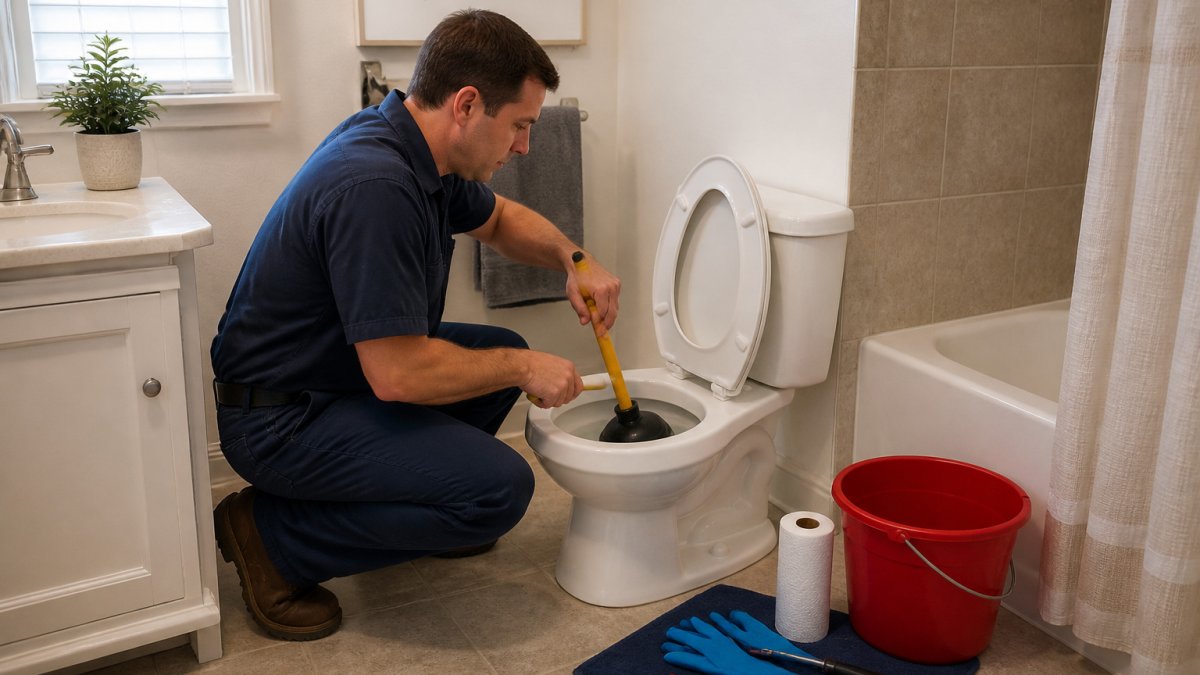
Start by looking at the water level. If the bowl is already overflowing, stop flushing and turn off the water supply if there is a shutoff valve behind the toilet. Then put on gloves and work carefully.
Watch out: Never mix a chemical drain cleaner with a plunger. Splashing and the heat from a chemical reaction can cause burns and damage the bowl.
Choosing the Right Plunger
Use a flange plunger, sometimes called a toilet plunger, not a standard sink cup plunger. The flange, the rubber extension at the bottom, fits into the drain opening and creates a better seal.
- Pick a plunger with a flange designed for toilets
- Make sure the rubber is in good shape with no cracks
- Keep a plunger used only for toilets, separate from sinks
Plunger Technique That Works
- Add enough water so the plunger cup is covered, but do not overfill the bowl.
- Place the plunger at a slight angle to get a good seal over the drain.
- Push down gently first to push air out, then press firmly.
- Pull up sharply, then push down again. Repeat 15 to 20 times.
- Lift the plunger and check whether the water drains freely.
If the water drains slowly or not at all after several rounds, stop and consider calling a plumber.
Other Methods to Try Before Calling a Plumber
Household methods vary in their suitability for a toilet clog. The table below summarizes some methods and potential risks.
| Method | Best for | Reliability | Main risk |
|---|---|---|---|
| Dish soap plus a few minutes of dwell time | Soft paper or waste clogs | Moderate, mainly a lubricant before plunging | Slippery bowl; little effect on solid blockages |
| Hot (not boiling) tap water | Soft buildup near the trap | Low to moderate | Boiling water can crack porcelain; too much water can overflow |
| Baking soda and vinegar | Odor and light film, not blockages | Low for actual clogs | Foaming can push water up; rarely clears a real plug |
| Toilet auger (closet auger) | Clogs past the trap that a plunger cannot reach | High when used correctly | Scratching the bowl or jamming if forced |
| Chemical drain cleaner | Almost never the right first move on a toilet | Low, and often makes things worse | Heat, splashing, burns, damaged pipes, hazardous for a plumber later |
Why the Popular Remedies Are Overrated
Baking soda and vinegar is the most repeated tip online and the least useful for a true clog. The fizzing is carbon dioxide, not a drain-clearing force, and it does nothing to a wad of paper or wipes wedged in the trapway. It is fine for freshening a bowl that already drains.
The Tool That Actually Reaches the Clog
A toilet auger, also called a closet auger, is another tool used for toilet clogs. It has a crank handle, a flexible cable inside a sleeve, and a curved end.
- Set the auger’s rubber sleeve against the drain opening so the cable does not scrape the bowl.
- Crank the handle clockwise while applying light downward pressure. Let the cable feed itself.
- When you feel resistance, keep cranking gently. Do not force it, the cable can kink or the trap can be damaged.
- Once the cable breaks through, retract it slowly and flush to confirm flow.
Never combine a chemical drain cleaner with a plunger or auger. The chemical can splash back when the clog releases, and the heat from the reaction can damage the bowl and the trap. If a chemical has already gone in, do not plunge, call a plumber and tell them what was used.
Let It Sit, Then Check Before Flushing
If you use a remedy, follow its directions before testing it. When you test, flush once and watch the water level. If it rises instead of draining, stop, do not flush again.
Why a Clogged Toilet Keeps Coming Back
Possible causes of repeat clogs include:
- Too much toilet paper flushed at once
- Baby wipes, “flushable” wipes, and paper towels
- Feminine hygiene products and other non-flushable items
- Small objects that fell in, such as toys or cotton swabs
Prevention is mostly a matter of habit. For drains beyond the toilet, see fast fixes for blocked drains. Keep the wastebasket next to the toilet, flush only toilet paper, and flush once per use when possible.
A Troubleshooting Guide: Is the Clog in the Toilet or Beyond It?
A clog may be in the bowl or trapway, or it may be farther along the drain system. The observations below can help you decide whether the problem may extend beyond the toilet.
Step 1: Check the Water Level
- Bowl is full but stable: The clog is likely in the trapway. A flange plunger is the right first tool.
- Bowl is overflowing or rising: Stop flushing. Turn off the supply valve behind the toilet if you can reach it, and wait for the bowl to settle before doing anything else.
- Bowl drains slowly but does not back up: A partial clog is likely. Plunge first, then auger if it returns.
Step 2: Check the Rest of the Fixtures
- Other fixtures flow normally: The issue may be limited to the toilet.
- Water rises in the tub or shower when the toilet flushes: The restriction may be downstream of the toilet.
- Several drains are slow at once: The issue may involve a shared drain or sewer line.
- Gurgling from other drains: This can be a sign of a drain or venting issue.
Step 3: Check for Main-Line Warning Signs
Stop plunging and call a plumber if you see any of these:
- Sewage backing up in a floor drain, laundry sink, or basement fixture
- A sewage smell that does not clear after the bowl drains
- Water pooling around the base of the toilet or at a floor drain
- The clog returns within a day or two of clearing
- Multiple fixtures back up at the same time
These signs may indicate a problem beyond the toilet. A sewer video inspection can help identify conditions inside the line before a repair method is recommended.
A plunger may help with a bowl clog, but it will not address a problem farther along the drain system. If more than one fixture is affected, consider professional diagnosis rather than continuing to plunge.
What the Plumber Will Likely Do
A plumber may assess where the blockage is and determine whether further inspection is needed. The appropriate service depends on the cause and condition of the plumbing.
Mistakes to Avoid When Working on a Clogged Toilet
- Do not keep flushing when the bowl is full. This can cause an overflow.
- Use caution with chemical drain cleaners. Follow product directions and avoid combining them with other methods.
- Do not use a plunger on a bowl that has a cracked or damaged base.
- Do not force an auger into the trap. Turn it gently and stop if you feel strong resistance.
- Pay attention to slow drains elsewhere in the home, as they may indicate an issue beyond the toilet.
When to Call a Plumber for a Clogged Toilet
Call a professional if:
- The plunger and auger have not cleared the clog after a few attempts
- The toilet overflows repeatedly
- Several fixtures back up at once
- Sewage smell or water appears around floor drains or outside
- The clog keeps returning after you clear it
A plumber can inspect the toilet and drain system. If the problem involves a clogged toilet, VanDerBosch Plumbing Inc. provides clogged toilet repair and toilet installation services.
Get a Clogged Toilet Fixed Right With VanDerBosch Plumbing
When a clogged toilet will not clear, or keeps coming back, VanDerBosch Plumbing Inc. can help identify the cause and handle the repair. Our licensed and insured technicians offer clogged toilet repair and toilet installation services, and we can also check the wider drain system if the problem goes beyond the bowl. If you are dealing with a clog right now, call today to schedule service.
Frequently Asked Questions
What should I do when my toilet is clogged up?
Stop flushing first so the bowl does not overflow. Then try a plunger with a flange, pushing gently and then firmly before pulling back. If the bowl is close to overflowing, shut off the water supply valve behind the toilet. Call a plumber if the water does not go down after several tries or if other drains start backing up.
How do I use a plunger to unclog a toilet?
Make sure the plunger’s rubber cup covers the drain hole fully and that there is enough water in the bowl to cover the cup. Press down slowly, then use controlled up-and-down strokes. Check whether the water drains. Stop if the bowl risks overflowing. Do not use a plunger on a toilet that has been treated with chemical drain cleaner.
What can cause a toilet to clog repeatedly?
Possible causes include excessive toilet paper, wipes, paper towels, feminine hygiene products, and other items not intended to be flushed. Repeated clogs can also be associated with a problem in the drain system. If the toilet clogs repeatedly, consider a professional inspection.
When should I call a plumber for a clogged toilet?
Call a plumber if the toilet clogs repeatedly or if more than one drain in the home is backing up. Water rising in a floor drain, gurgling sounds from other fixtures, or sewage odors may indicate a problem beyond the toilet. A professional can assess whether further inspection is needed.
