
Quick Summary
Signs your sewer line needs repair include several drains backing up at once, gurgling toilets, sewage odors, soggy patches in the yard, and recurring clogs in the same spot. A single symptom may be limited to one fixture, but several symptoms together point to a blockage or damage farther down the line. A professional camera inspection confirms the cause.
- If several drains slow at the same time, the blockage is likely in the shared main line.
- A toilet that bubbles when the shower runs is a strong sign of a main line restriction.
- Stop using affected fixtures if sewage backs up into a tub or shower, and call a plumber promptly.
- A sewer video inspection shows the defect and its location before any digging begins.
- Clogs that keep returning in the same place often point to a defect that snaking cannot fix.
Table of Contents
- Main Sewer Line Clog Symptoms to Watch For
- Outdoor Warning Signs: Wet Spots, Lush Grass and Foundation Cracks
- Sewage Odors and Pests as Indicators of a Broken Line
- How Plumbers Confirm the Problem With a Sewer Video Inspection
- Sewer Line Repair Versus Sewer Line Replacement
- Scheduling Your Sewer Line Evaluation With VanDerBosch
- Frequently Asked Questions
Why Sewer Line Problems Are Easy to Miss
A sewer line runs underground from your home to the municipal main, so most problems stay hidden until they become expensive, and knowing the signs your sewer line needs repair helps you catch them early.
Nine signs can tell you a sewer line needs attention. Some are easy to spot inside the house, others appear in the yard, and a few only a professional can confirm.
A single symptom does not prove a sewer problem; many issues are limited to one fixture.
Main Sewer Line Clog Symptoms to Watch For
A clog in the main sewer line affects the whole house, not just one fixture. Recognize the signs of a sewer line that may need repair or replacement to see how these symptoms fit together. The earliest signs usually appear in the drains farthest from the street connection.
Multiple Drains Backing Up at Once
If the sink, shower, and tub drain slowly at the same time, the problem is probably not a single clogged trap. The blockage is likely in the shared line carrying their wastewater out of the house.
Try running water in one sink while watching the tub drain. If the tub gurgles or water rises, the restriction sits downstream of both fixtures.
Gurgling Toilets and Tub Backups
Gurgling from a toilet or a bubbling tub drain often means air is being pushed through water trapped in the line.
Sewage backing up into a tub or shower is more serious. Stop using the affected fixtures and call a plumber promptly.
Clogs in the main sewer line show up in a few recognizable ways, and the table below summarizes the key symptoms and what each one points to.
| Symptom | What it suggests | Next step |
|---|---|---|
| Several drains slow at once | Blockage in the shared line | Check other fixtures, call a plumber |
| Toilet gurgles when shower runs | Main line restriction | Avoid using affected fixtures |
| Sewage backs up into tub | Serious main line blockage | Stop using fixtures, call promptly |
| Plunger fails on one drain | Restriction downstream | Do not rely on plunging alone |
Outdoor Warning Signs: Wet Spots, Lush Grass and Foundation Cracks
Some sewer damage shows up outside before it appears in the house. A leaking pipe underground can saturate the soil above it, and that moisture can change how the yard looks.
Watch for soggy patches that stay wet after dry weather, or a strip of grass that is noticeably greener and faster-growing. Learn how to tell whether a broken sewer pipe is causing these outdoor changes.
Water escaping from a broken line can wash away soil beneath the slab and foundation, causing new cracks.
Sewage Odors and Pests as Indicators of a Broken Line
A sewer smell inside the house usually means sewer gas is escaping from a cracked pipe, a dry trap, or a separated joint.
Rodents and insects are drawn to moisture and organic waste, and a broken line can give them an entry route.
Sewer gas can be hazardous. If the smell is strong or you notice symptoms such as headaches or nausea, leave the area and contact a professional right away.
How Plumbers Confirm the Problem With a Sewer Video Inspection
Symptoms tell you something is wrong. A camera tells you what is wrong and where. That distinction matters, because the repair method, and the amount of digging involved, depends on what the pipe actually looks like inside.
What Happens During the Inspection
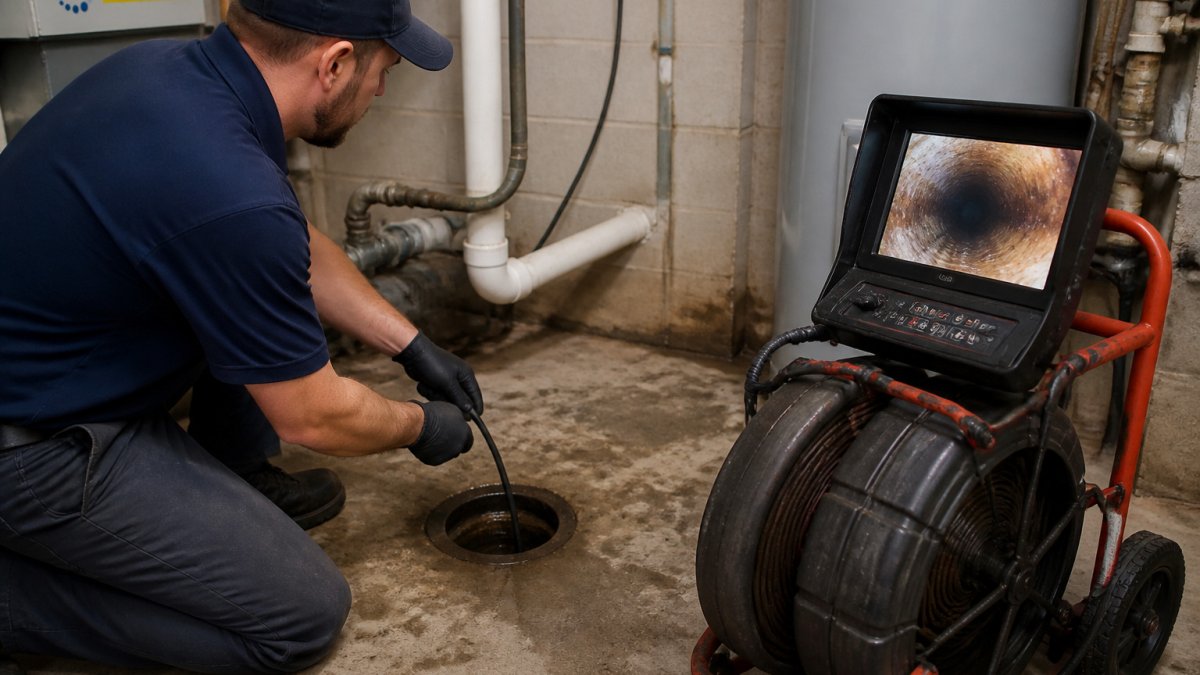
A sewer video inspection uses a small waterproof camera on a flexible push rod, fed into the line through a cleanout, a floor drain, or a toilet that has been pulled and reset. The technician watches a monitor as the camera advances, and the footage is typically recorded so it can be reviewed and shared.
Most inspections follow a similar sequence:
- Locate the access point. The cleanout near the foundation or at the property line is the usual starting point. If a cleanout is missing or buried, the technician may need to find another entry.
- Clear standing water or heavy debris first. A camera cannot see through a full pipe. If the line is backed up, it may need to be cleared, often with drain cleaning or hydro jetting, before the camera can travel.
- Push the camera to the municipal connection. The goal is to inspect the full run, not just the first few feet, so the technician can see the entire line and the point where it meets the city main.
- Mark and measure defects. Most cameras include a locating sonde, which lets the technician pinpoint the depth and position of a defect from above ground. That mark is what tells a crew where to dig if excavation is needed.
What the Technician Is Looking For
Camera footage reveals specific conditions, and each one points toward a different repair approach:
- Root intrusion, roots entering through joints or cracks. Small intrusions may be cleared and the pipe relined; heavy root masses often mean the joint has failed.
- Cracks and fractures, hairline cracks versus full breaks. A localized crack may be a candidate for spot repair or a trenchless pipe repair liner.
- Bellies and sagging sections, low spots where water pools and debris collects. These often explain recurring clogs that keep coming back in the same place.
Why the Footage Matters for Your Decision
A camera inspection turns a guess into evidence. Without it, a plumber works from symptoms alone and may recommend more than the problem requires.
Ask to watch the screen as the camera passes the problem area, and ask the technician to explain how the defect lines up with the symptoms you noticed. Read the basics of sewer video inspection to know what the footage should show.
If you have had the same drain cleared more than once in a year or two, ask for a camera inspection on the next visit. Recurring clogs in the same spot usually mean a defect the snake cannot fix.
VanDerBosch Plumbing Inc. offers sewer line camera inspection services that identify the problem before any digging or major work begins.
Sewer Line Repair Versus Sewer Line Replacement
Once the camera confirms damage, the next question is whether to repair the affected section or replace the line. The right answer depends on what failed, how much of the pipe is affected, and what the pipe is made of.
Repair Options and When They Fit
Not every defect requires digging up the yard. Several repair approaches exist, and the camera findings determine which one applies:
- Spot repair, excavating and replacing a single damaged section, such as one cracked joint or a short root-damaged stretch. Best when the rest of the line is sound.
- Trenchless relining, pulling or pushing a resin-saturated liner through the existing pipe to form a new interior wall. This avoids full excavation and is often used for cracks, offset joints, and root intrusion along a longer run. See trenchless pipe repair for how the method works.
- Pipe bursting, pulling a new pipe through the old one while fracturing the old pipe outward. Used when the existing line is too deteriorated to reline but the path can be preserved.
When Replacement Makes More Sense
Replacement is usually the better long-term call when:
- The pipe is collapsed or crushed in more than one location.
- The line is made of a material that has reached the end of its service life and keeps failing in new spots.
- Repairs have already been done on the same line more than once.
Repeated spot repairs on a failing line add up over time, and each one means another disruption. When the camera shows widespread deterioration, a single replacement can be the more economical path even though the upfront scope is larger.
What Drives the Cost
Exact pricing depends on the specific job, but the factors that move the number are consistent:
- Depth and accessibility of the line, a shallow line in an open yard is simpler than one under a driveway, slab, or mature landscaping.
- Length of pipe affected, a short spot repair versus a full run.
- Repair method, trenchless methods avoid excavation but require specialized equipment; traditional excavation involves more labor and restoration.
Ask for a written estimate that breaks down the method, the scope, and what restoration is included, so you can compare bids on the same basis.
Does Homeowners Insurance Cover Sewer Line Repair?
Insurance coverage for sewer lines varies by policy and insurer, so check your own policy or call your insurer before authorizing major work. Ask specifically about service line coverage and what documentation they require. Keeping camera footage and a written estimate can help if you file a claim.
Older Homes and Pipe Material
Homes built before roughly 1970 often have clay tile or cast iron sewer lines. Clay is brittle and prone to root intrusion at the joints; cast iron corrodes and can scale or crack over decades.
If your home is older and the line has never been inspected, the camera findings will tell you whether the pipe is a candidate for relining or whether the material itself is the reason to plan for replacement.
If sewage is backing up into the home or you smell strong sewer gas, stop using the affected fixtures and call a plumber promptly. Do not attempt to open or repair a sewer line yourself, the work involves confined spaces, potential contamination, and equipment most homeowners do not have.
Be wary of any recommendation that skips the inspection. A reliable plumber should base the repair-or-replace decision on evidence from the camera and the condition of the surrounding plumbing.
Scheduling Your Sewer Line Evaluation With VanDerBosch
If you recognize two or more of these signs, the most useful next step is a professional evaluation. VanDerBosch Plumbing Inc. offers sewer line camera inspection services that identify the problem before any digging or major work begins.
For clogs that keep coming back, the team also handles drain cleaning and hydro jetting. When damage is confirmed, a plumber can discuss the repair options that fit your situation.
Call VanDerBosch Plumbing Inc. today to schedule your sewer line evaluation. Early inspection often means a simpler repair and fewer surprises once work begins.
Frequently Asked Questions
What are the first signs of a sewer line problem?
The earliest signs are usually slow drains that clog again soon after clearing, gurgling in toilets or floor drains, and sewage backing up in a tub or shower when another fixture is used. When several drains slow or back up at the same time, the problem is more likely in the main sewer line than in a single fixture. A plumber can confirm the cause with a sewer camera inspection, which shows cracks, root intrusion, or offsets in the pipe.
Can a sewer line problem cause a sewage smell in the house?
Yes. A cracked or broken sewer line can let sewer gas escape, and a partial blockage can cause wastewater to sit in drains and vents, producing a persistent rotten-egg or sewage odor. Odors near floor drains or in a basement are a common clue. Because sewer gas can be hazardous, a persistent smell should be checked by a licensed plumber rather than ignored.
Can a damaged sewer line cause wet spots in the yard?
It can. A leak in a sewer line can saturate the soil above it, leaving soft, soggy patches that may stay wet even when it has not rained. Lawn growth that is noticeably lusher or greener along one line of the yard is another sign to watch for. Wet spots alone do not confirm a sewer leak, since groundwater and downspouts cause similar patterns, so a camera inspection is the reliable way to check.
When should I call a plumber about a sewer backup?
Call a plumber promptly if sewage is backing up into tubs, showers, or floor drains, if several fixtures are affected at once, or if the problem returns shortly after clearing. Avoid running water into the affected drains while you wait, since this can push more wastewater into the home. A sewer backup can involve contaminated water, so a professional should evaluate it as soon as possible.
