
Last Updated: November 4, 2026
Quick Summary
Maintaining a vintage steam boiler means checking the water level in the sight glass and pressure gauge every month during the heating season, and keeping a written log of each check. Owners should leave pressurized parts, gas connections, controls and blowdown to a licensed professional, and schedule a professional inspection before the heating season begins.
- Check the sight glass for a clear water line in the middle; shut off and call a professional if it is low or empty.
- Never cap, plug or adjust the pressure relief valve; only a licensed technician should service it.
- Never add water to a steam boiler while it is hot and under pressure, because cold water can crack it.
- Keep the boiler room clear of stored items, paint cans and combustibles.
- Test carbon monoxide detectors installed near the boiler regularly.
Table of Contents
- Why Vintage Steam Boilers Need Different Care
- Safety Rules: What Owners Should Never Do Themselves
- Steam Boiler Maintenance Checklist for Owners
- Water Quality, Chemical Treatment and Scale Control
- Inspecting Burners, Flame Scanners and Venting
- Signs of Steam Boiler Failure to Watch For
- Sourcing Parts for Obsolete Vintage Systems and When to Call a Professional
- Scheduling Your Next Boiler Inspection With VanDerBosch
- Frequently Asked Questions
Why Vintage Steam Boilers Need Different Care
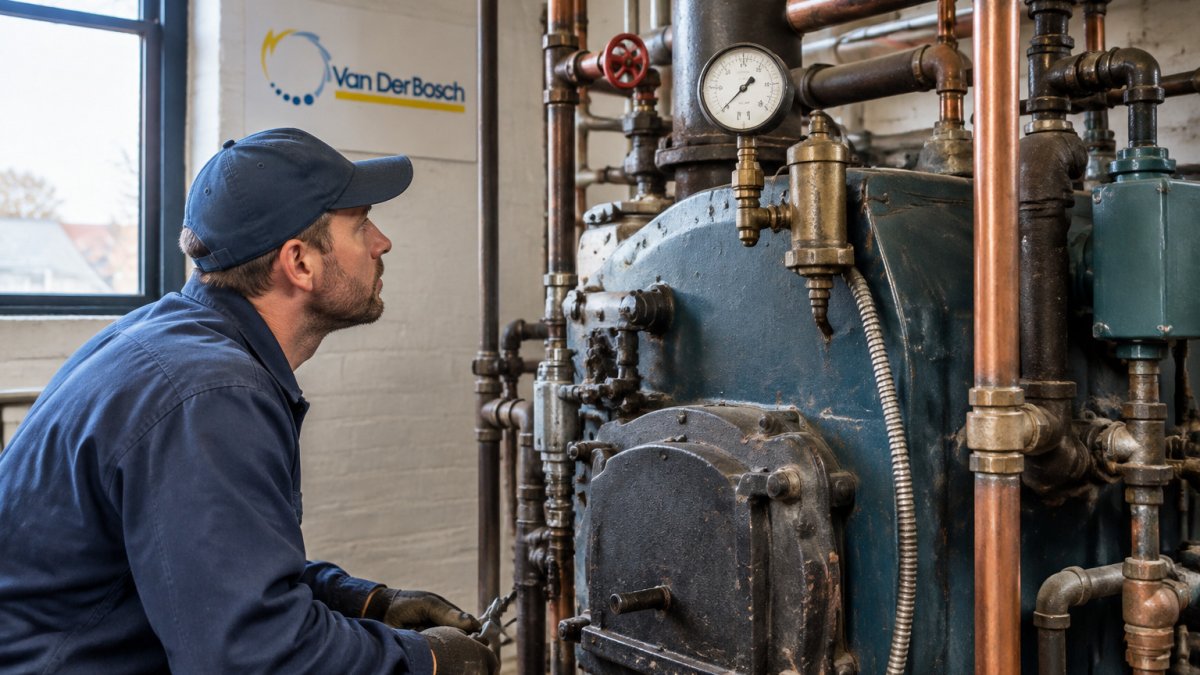
Steam boilers in older Chicago homes often run for decades on the same cast iron body. For more specific guidance on keeping older steam systems running safely, see our vintage steam boiler maintenance tips.
A vintage steam boiler works by heating water until it turns to steam, which then travels through the pipes to radiators.
Older systems also tend to have fewer modern safety controls, so the owner’s routine checks matter more. A regular maintenance habit helps catch small problems before they become costly failures.
- Steam boilers rely on proper water levels to avoid overheating.
- Mineral buildup reduces heat transfer and shortens equipment life.
- Older components wear out and may need parts that are no longer common.
Safety Rules: What Owners Should Never Do Themselves
Most maintenance guides blur the line between what an owner can check and what belongs to a technician. That blur is where injuries happen. A vintage steam boiler combines three hazards in one piece of equipment: pressurized hot water and steam, a gas or oil burner, and electrical controls. To find the right specialists for this work, learn how to choose licensed plumbers for steam boilers.
The pressure side
A steam boiler runs under pressure, and the pressure relief valve is the component that keeps that pressure from finding a weaker path out. Never cap, plug, block, or adjust a relief valve, and never paint over it or let mineral deposits seal it shut.
Watch out: never add water to a steam boiler while it is hot and under pressure. Cold water hitting hot cast iron can crack the boiler and release a scalding steam cloud.
The fuel side
Gas connections, burner assemblies, pilot and ignition components, and flame scanners are technician territory. Owners should never disconnect a gas line, relight a burner that has gone out repeatedly, or attempt to clean a burner assembly. Once the area is safe, a licensed team such as the one offering Gas Line Repair & Installation is the right kind of help to call.
The electrical side
Older boilers often carry low-water cutoffs, aquastats, pressuretrols, and circulator controls that were added or retrofitted over the decades. Wiring in these systems is frequently spliced, unlabeled, or run through aging insulation. Owners should not open control panels, replace fuses with higher-rated ones, or troubleshoot wiring. If a breaker trips repeatedly or a control box feels hot, stop resetting it and call for service.
What an owner can safely do
- Look at the gauge glass and pressure gauge without touching fittings.
- Keep the boiler room clear of stored items, paint cans, and combustibles.
- Confirm carbon monoxide detectors are installed and test them.
Everything else, draining, skimming, blowdown, burner work, control testing, and any repair involving the boiler body or its connections, should be handled by a licensed professional who works on steam systems. If you are unsure whether a task is safe, it is not a task for you.
Steam Boiler Maintenance Checklist for Owners
A simple monthly routine catches most early warning signs. Keep a written log of each check so you can spot patterns over time and give your plumber a clear history.
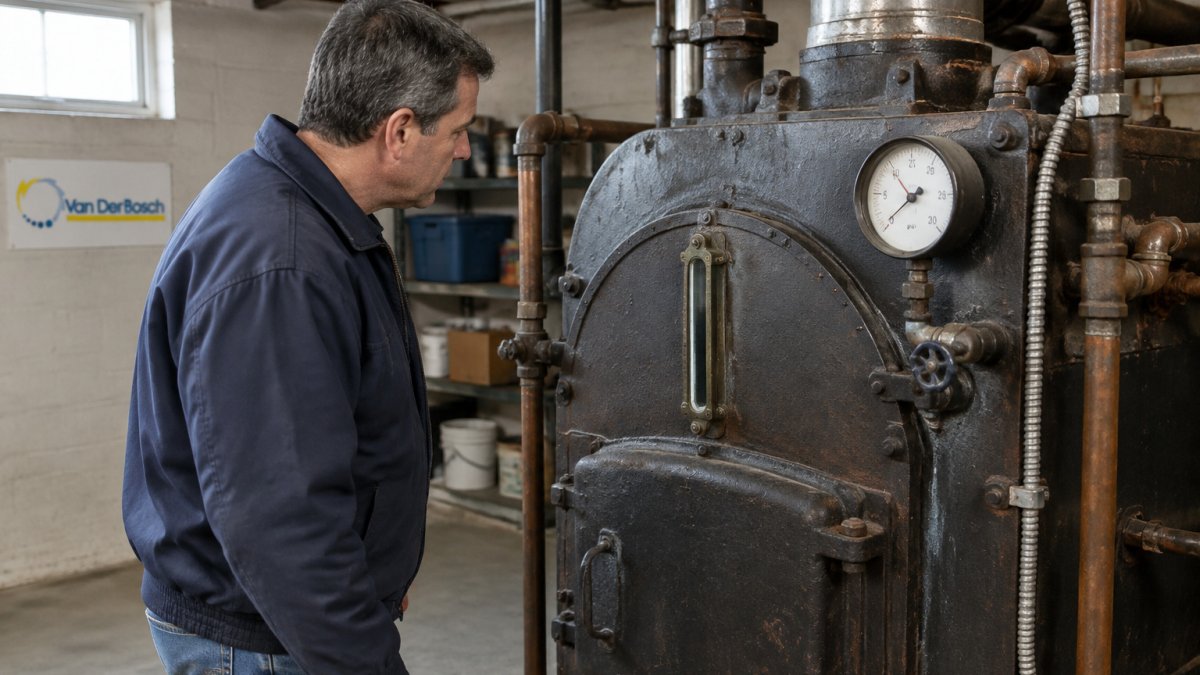
Use this checklist during the heating season:
- Confirm the boiler is level and sitting on a dry, stable base.
- Check the water level in the sight glass.
- Look at the pressure gauge while the boiler is running.
- Listen for knocking, gurgling, or hissing sounds.
Checking the Water Level and Sight Glass
The sight glass shows the water level inside the boiler. Look for a clear water line in the middle of the glass.
Never refill the boiler yourself unless a licensed technician has shown you the correct procedure for your specific unit. Many vintage systems have a low water cutoff that protects the boiler, and that device should be tested by a professional.
Skimming and Blowdown Basics
Skimming removes oils and debris that float on the water surface. Blowdown removes sediment that settles at the bottom. Both steps help keep the system clean and efficient. Because they involve hot water and pressure, blowdown should be performed or directed by a licensed plumber.
The table below summarises the monthly checks covered in the checklist so you can scan them quickly.
| Check | What to look for | Action |
|---|---|---|
| Water level | Clear water line in the middle of the sight glass | Shut off and call a professional if low or empty |
| Pressure gauge | Reading while the boiler runs | Note any reading outside normal range |
| Sounds | Knocking, gurgling, or hissing | Record when it occurs |
| Surroundings | Water stains or drips near the boiler | Report to a professional |
| Odors and radiators | Unusual smells or uneven radiator heat | Write down the date and details |
| Frequency | Monthly during the heating season | Keep a written log of each check |
Water Quality, Chemical Treatment and Scale Control
Water quality affects a steam boiler more than most owners expect. Hard water leaves scale on heating surfaces, and that scale acts like insulation.
Many professionals recommend testing your water before deciding on a treatment plan. A common approach uses boiler-specific chemicals to control scale and corrosion.
Corrosion control matters just as much. Dissolved oxygen in the water causes rust inside the boiler and piping.
Inspecting Burners, Flame Scanners and Venting
The burner, flame scanner, and vent system all depend on each other.
Owners can look for obvious signs. A flame that burns yellow or flickers unevenly, soot around the burner, or a vent that looks loose or damaged all call for a professional inspection.
Check that the vent is clear of debris and that connections look secure. Carbon monoxide detectors should be installed near the boiler and tested regularly.
Signs of Steam Boiler Failure to Watch For
Some warning signs point to a problem that needs prompt attention. Call a licensed plumber if you notice any of the following:
- Water leaking from the boiler or pipes
- Radiators heating unevenly or not at all
- Loud banging or knocking in the pipes
- A pressure gauge reading outside its normal range
Early help prevents larger repairs. A quick call after the first sign often costs less than waiting for a full breakdown. If the pipes themselves are the problem, Burst Pipe Repair is the kind of service to ask about for leaks that have already started.
Sourcing Parts for Obsolete Vintage Systems and When to Call a Professional
Vintage steam boilers fail in ways that newer equipment does not. If you have an older property and are weighing professional help, read this guide to hiring plumbers for vintage homes. Knowing those failure points helps an owner recognize when a symptom is routine and when it points to a decision about repair versus replacement.
Failure points specific to old steam systems
- Cast iron sections. Many older boilers are built from bolted cast iron sections with push nipples or gaskets between them. Age, thermal cycling, and poor water chemistry can open a seam or crack a section. A seam leak usually shows up as rust staining or a slow drip at the base, and it is not a homeowner repair.
- Asbestos-containing insulation. Boilers and pipe runs installed before the 1980s may be wrapped in insulation that contains asbestos. Do not disturb, sand, cut, or vacuum it. A licensed professional should identify it and follow proper abatement procedures before any repair begins.
- Obsolete controls. Low-water cutoffs, pressuretrols, aquastats, and mercury-switch thermostats from earlier decades may no longer be manufactured. A technician may be able to substitute a modern equivalent, but the substitution has to match the boiler’s operating pressure and safety requirements.
- Aging piping and fittings. Black steel steam mains, radiator valves, air vents, and returns corrode from the inside. A pinhole leak in a return line can look like a boiler problem when the boiler itself is fine.
How parts get sourced
When a component is discontinued, a technician typically works through a few options: matching the original specification against a current replacement, adapting a compatible universal part, or in some cases having a part machined or rebuilt. The right path depends on the boiler’s pressure rating, the function of the part, and whether a substitute preserves the safety margin. This is why parts sourcing for vintage equipment is rarely a do-it-yourself project, the wrong substitute can defeat a safety control.
Repair versus replacement
A repair usually makes sense when the problem is isolated, the boiler body is sound, and the surrounding piping and venting are in reasonable condition. Replacement becomes the more practical conversation when several of these are true:
- The boiler has a cracked section or an unrepaired seam leak.
- Repairs are recurring and each one addresses a different component.
- Parts are unavailable or only available as improvised substitutes.
- The venting or chimney needs work that would be simpler to pair with a new installation.
Age alone is not a reason to replace a boiler. Many cast iron steam boilers outlast the homes’ other mechanical systems when they are maintained and kept on a water treatment schedule.
Call a licensed plumber whenever a repair involves the boiler body, gas or oil connections, pressure controls, the relief valve, or the vent system. Those jobs carry real risk and require specialized knowledge.
Scheduling Your Next Boiler Inspection With VanDerBosch
Regular professional inspections are the best way to keep a vintage steam boiler running safely.
Before the heating season starts, schedule an inspection so any issues are found while the system is still easy to address.
Frequently Asked Questions
Can I maintain a steam boiler myself?
You can handle simple visual checks, such as watching the gauges and keeping the area clear.
What is the most important part of steam boiler maintenance?
Keeping the proper water level is one of the most important tasks.
Frequently Asked Questions
How often should a vintage steam boiler be serviced?
Many owners schedule a professional inspection once a year, ideally in late summer or early fall before the heating season starts. Between professional visits, owners can keep a simple maintenance log that records water level checks, any blowdown performed, and any unusual noises or pressure readings. Older systems with a history of sediment buildup or recurring leaks may need closer attention. Your service provider can recommend an interval based on the boiler’s age, condition and how hard it runs.
What are the signs that a steam boiler needs professional repair?
Common warning signs include loud banging or knocking, water hammer, frequent low-water shutdowns, visible leaks at joints or the boiler base, a pressure gauge that does not return to normal, uneven heat across radiators, and a burner that short cycles. Any gas odor, soot around the burner, or a boiler that will not hold water should be treated as urgent. These symptoms do not confirm a specific cause, so a licensed technician should diagnose the problem before any repair is attempted.
Can I perform maintenance on my own steam boiler?
Owners can usually do light monitoring safely, such as checking the water level in the sight glass when the boiler is cold and recording readings in a log. Tasks that involve gas burners, pressurized components, the low-water cutoff, or electrical controls should be left to a licensed professional. Blowdown and skimming can be hazardous if done incorrectly because the water is hot and under pressure. When in doubt, contact a qualified plumbing or boiler service company before touching the system.
Why is my steam boiler making loud banging noises?
Banging in a steam system is often linked to water hammer, which happens when condensate collects in the pipes and is pushed by steam, or to uneven pipe pitch that traps water. Scale or sediment buildup in the boiler can also contribute to noise. Because the causes overlap and some involve pressurized equipment, the noise should be inspected by a professional rather than diagnosed by guesswork. Persistent banging can stress joints and fittings over time.
