
Table of Contents
- Why Steam Boilers Require Specialized Licensed Plumbers
- Signs of Steam Boiler Failure and When to Call a Professional
- Boiler Repair vs. Replacement: Making the Right Decision
- What to Expect During a Professional Boiler Service Call
- Licensing, Insurance, and Certification Standards for Steam Boiler Technicians
- Preventative Maintenance and System Longevity
- How to Choose a Licensed Boiler Technician You Can Trust
- Conclusion
- Frequently Asked Questions
Last Updated: September 19, 2026
Why Steam Boilers Require Specialized Licensed Plumbers
Steam boilers operate under pressure and involve complex mechanical and safety systems that differ fundamentally from standard plumbing repair. Only licensed plumbers for steam boilers have the specialized knowledge to diagnose problems, perform repairs safely, and ensure the system meets building codes.
Steam heating involves pressurized vessels, condensate return lines, venting systems, and safety controls like the pressuretrol and low water cutoff. These components interact in ways that demand specific training. A general plumber may lack the expertise to troubleshoot a steam boiler’s unique failures.
Older homes in the region often rely on cast iron steam boilers that have operated for decades. These systems require technicians who understand vintage equipment behavior, common failure patterns, and how to maintain them without unnecessary replacement.
The stakes are higher with boiler work. A misdiagnosed problem or improper repair can lead to system failure during winter, safety hazards, or inefficient operation that wastes fuel. This is why hiring someone with proper licensing and steam heating experience matters.
Signs of Steam Boiler Failure and When to Call a Professional
Common Warning Signs
Uneven heating across radiators is one of the earliest indicators. If some rooms stay warm while others remain cold, the problem may be air trapped in the system, a blocked vent on a radiator, or insufficient steam reaching certain lines.
Banging or hammering sounds in the pipes, called water hammer, suggest condensate isn’t draining properly from the steam lines back to the boiler. This happens when the condensate return system fails or when the boiler’s water level drops too low. Water hammer can damage piping and accelerate wear on the system.
A sight glass that shows water level fluctuating wildly or staying too high or too low indicates a problem with the low water cutoff, the float mechanism, or the water feed system.
Rust staining around the boiler or on nearby walls suggests a slow leak. Small leaks allow air into the system and water out, both of which degrade performance.
A boiler that cycles on and off frequently, or one that won’t maintain pressure, points to multiple possible causes: a faulty pressuretrol, a leaking relief valve, a cracked heat exchanger, or low water level.
Safety Concerns That Demand Immediate Attention
If you smell gas near the boiler, stop using it immediately and call for emergency service. Gas leaks are dangerous and need a licensed technician to locate and repair the source.
A boiler that leaks water actively or shows signs of a major crack should not operate. Continuing to run a damaged boiler risks flooding, electrical hazards, and potential steam or hot water release.
If the relief valve is continuously dripping or venting steam, the boiler may be building excess pressure. Have this inspected promptly.
Signs of carbon monoxide, such as soot buildup around the boiler, a yellow flame instead of blue, or water dripping from the flue pipe, mean the boiler is not combusting fuel cleanly. This requires immediate professional diagnosis.
Boiler Repair vs. Replacement: Making the Right Decision
Deciding whether to repair or replace a steam boiler depends on several practical factors, not just the immediate problem.
Age of the system is the first consideration. A boiler that is 15 years old or newer and has been maintained reasonably well is usually worth repairing. An older unit, especially one over 25 or 30 years, may be nearing the end of its useful life.
Severity and cost of the repair matter significantly. A faulty pressuretrol or a leaking valve may cost a moderate amount to fix and restore full function. A cracked heat exchanger or a major leak in the boiler shell is far more expensive and may approach or exceed the cost of a new unit.
Repair history is telling. If the boiler has needed multiple repairs in the past few years, it may be entering a phase of accelerating failures. At some point, the cost of ongoing repairs exceeds the cost of replacement.
Efficiency and fuel consumption should factor into long-term economics. If your heating bills are climbing and the boiler is aging, replacement with a modern unit could reduce fuel costs over time.
Availability of replacement parts can influence the decision. For very old or obscure boiler models, replacement parts may be hard to source, making repair difficult or expensive. Newer boilers have readily available components.
Condition of surrounding components matters too. If the piping, radiators, and condensate return system are in good shape, a boiler repair makes sense. If you discover that major repiping or radiator work is also needed, replacement with a modern system becomes more attractive.
The key is that repair is often the right choice for a mid-life boiler with a single significant problem. Replacement makes sense for an aging unit with declining reliability, high repair costs, or poor efficiency.
What to Expect During a Professional Boiler Service Call
The technician will ask about symptoms: when the problem started, what you’ve noticed, and whether the boiler has had previous repairs.
They’ll perform a visual inspection of the boiler, checking the sight glass for proper water level, examining the exterior for leaks or corrosion, and inspecting piping and connections.
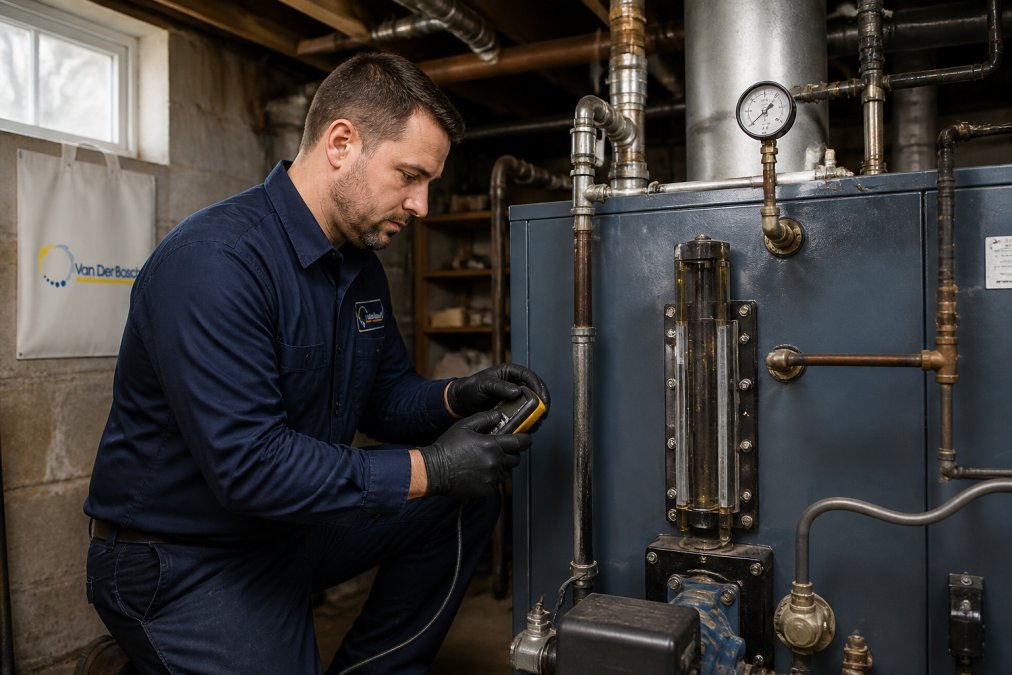
They’ll test the pressuretrol, low water cutoff, and relief valve to confirm they’re functioning correctly and may use a combustion analyzer to check fuel combustion efficiency and safety.
If the problem is straightforward, the technician may repair it during the visit. If the issue is more complex, they’ll explain your options: repair, replacement, or a temporary fix while you decide.
Licensing, Insurance, and Certification Standards for Steam Boiler Technicians
Not every plumber is qualified to work on steam boilers. Licensing requirements exist to protect homeowners and ensure work is done safely.
A licensed plumber for steam boilers must hold a valid plumbing license issued by the state or local jurisdiction. The licensing process requires documented training, apprenticeship hours, and passing an examination covering plumbing codes, safety, and technical knowledge.
Many steam boiler specialists pursue additional certifications in heating systems, boiler operation, or steam heating, demonstrating deeper expertise in boiler-specific work.
General liability insurance is essential. This protects you if the technician accidentally damages your property during the service call. A reputable company carries this coverage as standard practice.
Some jurisdictions require a separate license or endorsement specifically for boiler work. Ask whether your technician holds any boiler-specific certifications or endorsements.
Verification matters. Before hiring, confirm that the technician’s license is current and in good standing by checking with your state or local licensing board. This takes a few minutes and gives you assurance that you’re working with someone who has met professional standards.
Preventative Maintenance and System Longevity
Regular maintenance extends the life of a steam boiler and prevents many common failures. A well-maintained system operates more efficiently, costs less to run, and is less likely to fail unexpectedly.
Annual inspection before the heating season begins is the foundation of good maintenance. A technician checks water level controls, tests the relief valve, inspects piping for corrosion or leaks, and confirms that the combustion process is clean and efficient.
Keeping the boiler and surrounding area clean matters. Dust and debris can interfere with controls and air intake. Regular cleaning prevents buildup that reduces efficiency.
Monitoring the water level and ensuring the automatic feed system is working properly prevents low-water conditions that can damage the boiler. If you notice the water level dropping frequently, have the feed system inspected.
Flushing the condensate return line periodically removes sediment and mineral buildup that can block the return of condensate to the boiler. This is especially important in areas with hard water.
Addressing small problems quickly prevents them from becoming large ones. A small leak, a slow response from a control valve, or a radiator that’s not heating properly should be investigated rather than ignored.
Systems that receive this level of attention often operate reliably for 30 years or more. Neglected boilers tend to fail sooner and require more frequent repairs.
How to Choose a Licensed Boiler Technician You Can Trust
Finding the right technician starts with verifying credentials and understanding what you’re paying for.
Check licensing and insurance. Confirm that the company holds a valid plumbing license and carries general liability insurance.
Conclusion
Hiring licensed plumbers for steam boilers ensures that your heating system receives expert care from someone trained to diagnose and repair these specialized systems safely. Steam boilers operate under pressure and involve controls and piping that demand specific knowledge. A general plumber may not have this expertise.
Frequently Asked Questions
Is a plumber the right professional to fix a steam boiler?
Yes, but only if the plumber is licensed and has specific training in steam heating systems. Not all plumbers work on boilers, many focus only on water supply and drainage. Steam boilers operate under pressure and require knowledge of pressuretrol controls, low water cutoffs, and condensate return systems. A licensed plumber with steam boiler experience can diagnose and repair these systems safely. If a plumber tells you they don’t service steam boilers, ask for a referral to someone who does.
What are the signs that a steam boiler needs professional service?
Watch for uneven heating across radiators, clanking or banging sounds in the pipes (water hammer), leaking water around the boiler base, a sight glass that’s empty or unclear, rust or corrosion on the exterior, or a boiler that won’t fire up. Some of these issues can be addressed by a licensed plumber; others may require a heating specialist. When in doubt, call a professional for inspection rather than attempting repairs yourself, steam systems operate under pressure and pose safety risks.
How often should a steam boiler be inspected by a professional?
Annual inspection before the heating season is standard practice for residential steam boilers. Older systems in particular benefit from regular preventative maintenance to catch wear early and keep the system running efficiently. A professional inspection includes checking the pressuretrol, low water cutoff, sight glass, and overall system condition. Regular maintenance can extend boiler life, improve heating performance, and prevent emergency breakdowns during cold weather.
What factors should I consider when deciding between boiler repair and replacement?
Consider the boiler’s age, the cost of the repair, frequency of recent problems, and overall system efficiency. A boiler that’s 20+ years old and requires frequent repairs may be a candidate for replacement, especially if repair costs are high. Conversely, a newer system with an isolated problem may be worth repairing. A licensed plumber can assess the damage and help you understand whether repair or replacement makes sense for your situation and budget.