
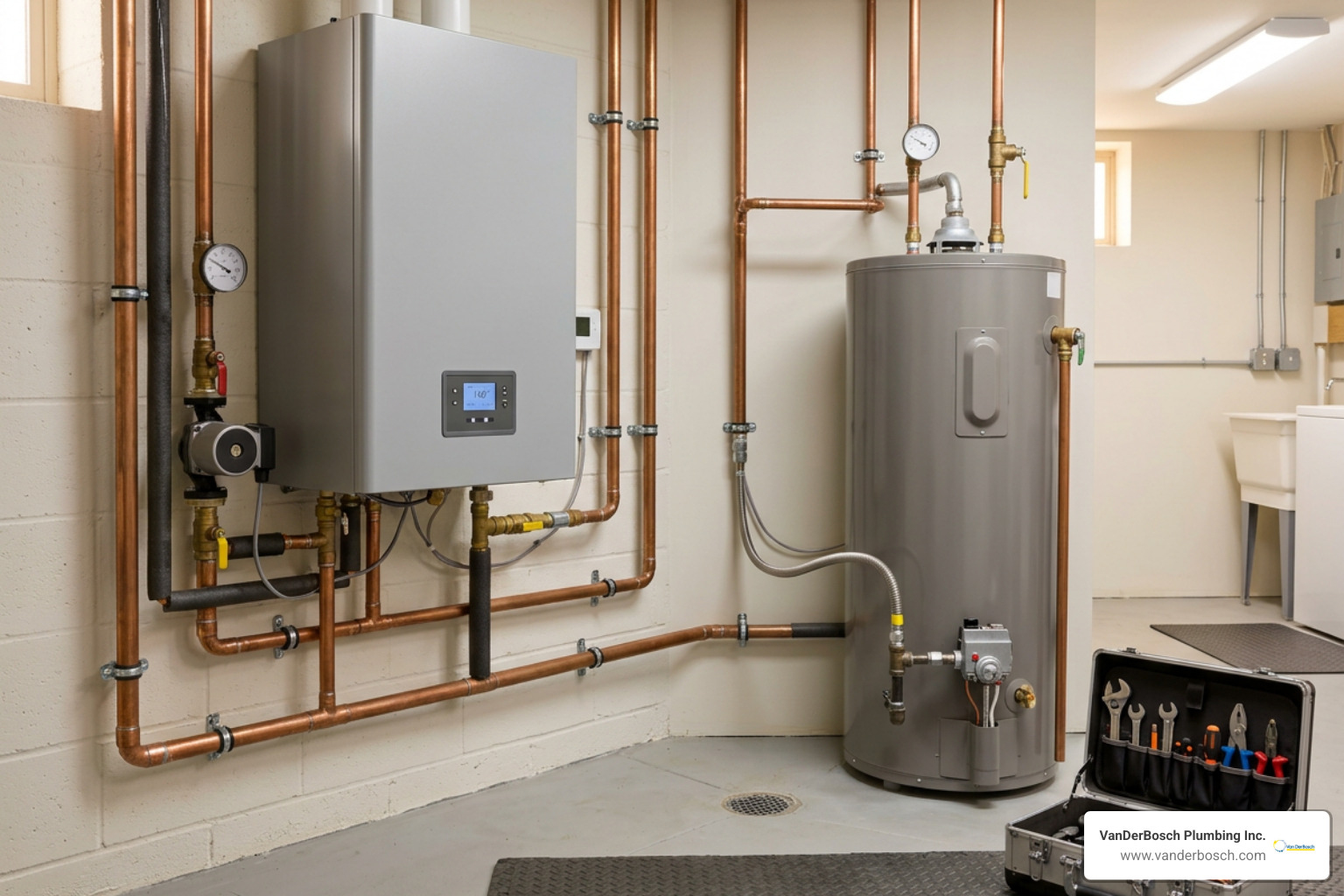
Boiler vs. Hot Water Heater: What Every Homeowner Should Know
A boiler and hot water heater are two of the most important systems in your home — but they do completely different jobs, and confusing them can lead to costly mistakes.
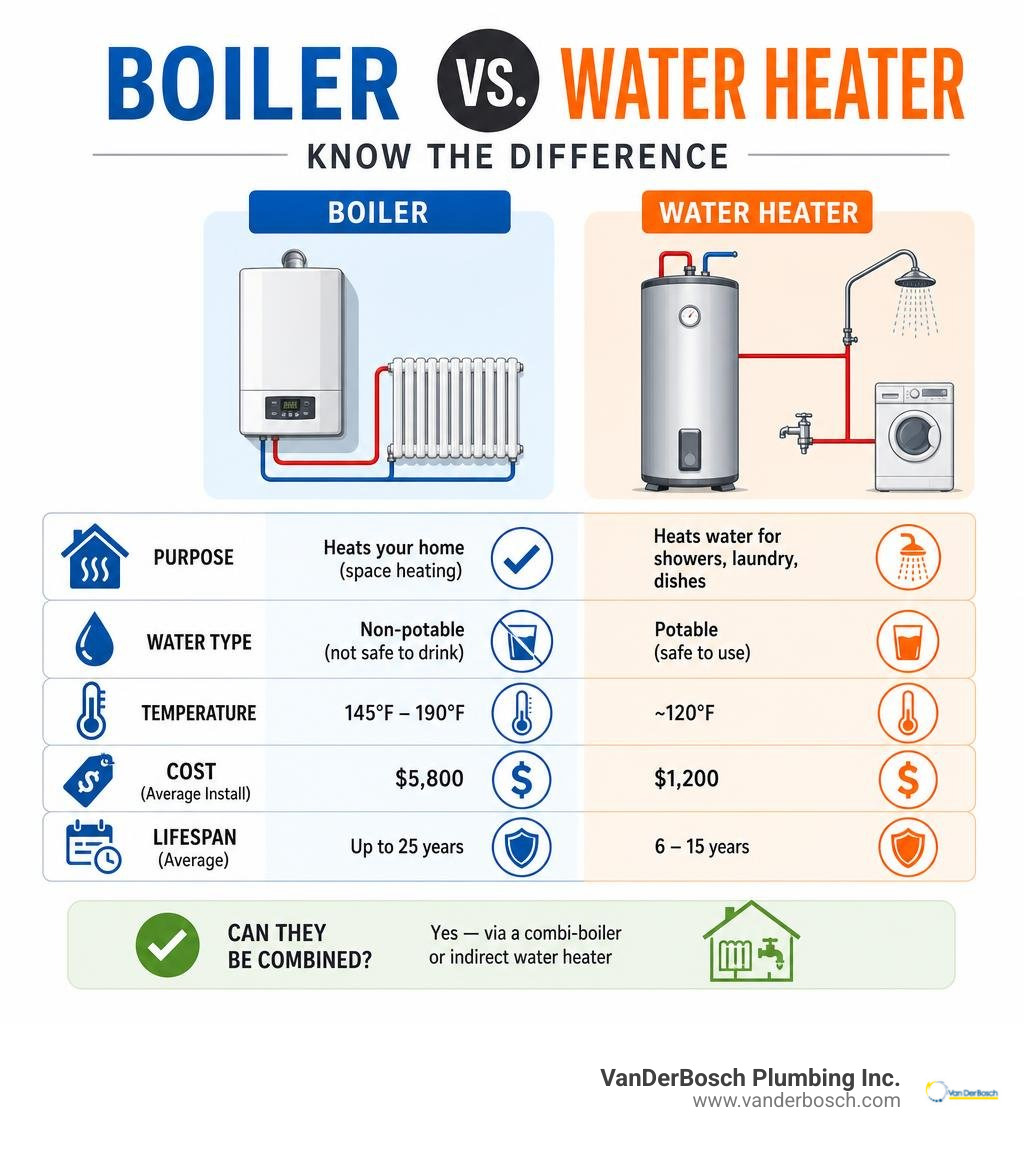
Here’s the quick answer:
| Boiler | Water Heater | |
|---|---|---|
| Primary job | Heats your home (space heating) | Heats water for showers, laundry, dishes |
| Water type | Non-potable (not safe to drink) | Potable (safe to use) |
| Water loop | Closed, circulating loop | Open, non-circulating |
| Operating temp | 145°F – 190°F | ~120°F |
| Average lifespan | Up to 25 years | 6 – 15 years |
| Average install cost | $5,800 | $1,200 |
| Can they be combined? | Yes — via a combi-boiler or indirect water heater |
They are not interchangeable. A standard water heater cannot heat your home, and a standard boiler cannot supply safe drinking or bathing water — at least not without a purpose-built combination system.
Both systems heat water in a sealed tank, which is why homeowners often mix them up. But the water inside a boiler circulates endlessly through pipes and radiators to warm your living spaces. It never reaches your tap. Your water heater, on the other hand, heats fresh water from the municipal supply and sends it directly to your fixtures.
I’m Hugh Hodur, President of VanDerBosch Plumbing Inc., and I’ve overseen hundreds of boiler and hot water heater installations, repairs, and replacements across Chicagoland. In this guide, I’ll break down exactly how these systems differ, what they cost, and how to choose the right one for your home.
Key Differences Between a Boiler and Hot Water Heater
To understand why these two appliances are so fundamentally different, we have to look under the hood at how they handle water, pressure, and temperature.
1. Space Heating vs. Domestic Water
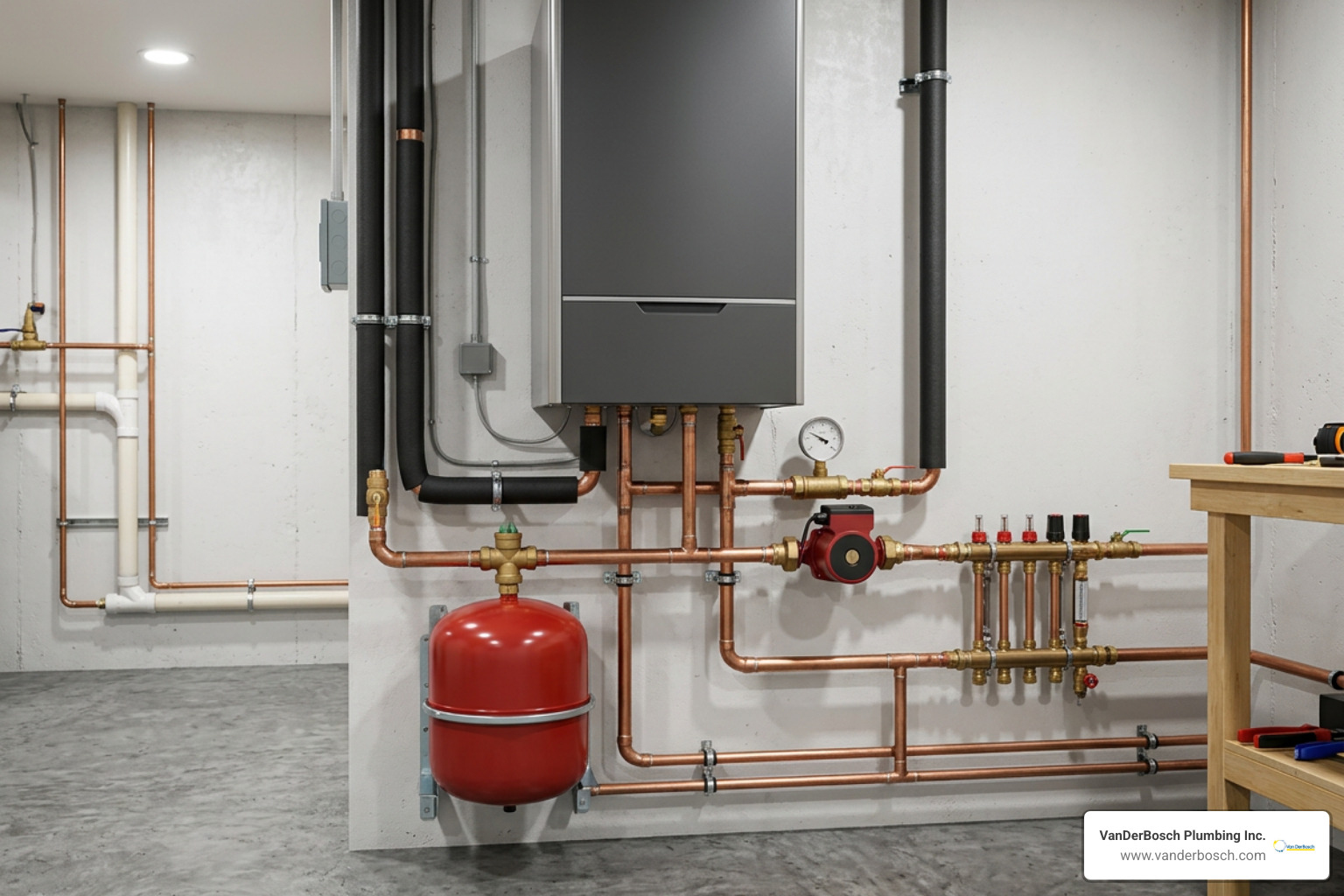
The most basic distinction is what the heated water is used for. A boiler is designed for space heating. It warms up water to near-boiling temperatures (typically between 145°F and 190°F) and uses a circulation pump to push that hot water or steam through a network of pipes to radiators, baseboard heaters, or in-floor radiant tubing.
A water heater is designed strictly for domestic water. This is the potable (drinking-safe) water you use to shower, wash your hands, run your dishwasher, and clean your clothes. It targets a much safer temperature of around 120°F to prevent scalding.
2. Potable vs. Non-Potable Water
The water running through your boiler system is non-potable. Because it continuously circulates through cast-iron radiators and copper pipes, it picks up rust, black iron oxide, sediment, and chemical treatment inhibitors. You would never want to drink or bathe in this water.
Conversely, the water inside your hot water heater is completely potable. It enters the tank directly from your municipal water main or private well, gets heated, and exits through your faucets completely clean and safe for consumption.
3. Closed Loop vs. Open Loop
Boilers operate on a closed-loop system. The water is sealed inside the pipes. Once the boiler heats the water and pumps it through your home, the water cools down and returns directly back to the boiler to be reheated. Very little fresh water is ever introduced to a boiler unless there is a leak.
Water heaters operate on an open-loop (non-circulating) system. Fresh cold water enters the tank, gets heated, and is pushed out of the system forever when you turn on a tap.
Detailed Technical Specifications Comparison
To make things even clearer, let’s look at the mechanical differences side-by-side:
| Specification | Residential Boiler | Standard Water Heater |
|---|---|---|
| Operating Pressure | Low (typically 12 to 30 psi) | High (typically 40 to 80 psi line pressure) |
| Relief Valve Rating | 30 psi | 150 psi and 210°F |
| Primary Energy Sources | Natural gas, propane, heating oil, electricity | Natural gas, propane, electricity, solar, heat pump |
| Venting Requirements | Dedicated flue or PVC/polypropylene direct vent | Standard atmospheric draft, power vent, or direct vent |
| Water Chemistry Sensitivity | High (demands specific pH, hardness, and TDS) | Moderate (susceptible to scale buildup in hard water areas) |
If you suspect your home heating loop is losing pressure or you hear strange noises coming from your radiators, you can Learn more about boiler services to see how we help keep these complex closed-loop systems running smoothly.
Types of Heating Systems: Boilers, Water Heaters, and Combi-Units
Residential heating and plumbing systems have evolved dramatically. Homeowners in historic neighborhoods like Sauganash and Hyde Park often have very different setups than those in newer developments in Elmhurst or Mount Prospect. Let’s look at the options available today.
Types of Boilers
- Conventional Boilers (Regular/Open Vent): These traditional systems use a boiler, a separate hot water storage cylinder, and a cold-water feed tank in the attic. They are common in older, larger homes because they can supply high volumes of hot water to multiple bathrooms simultaneously.
- System Boilers: These are a modern evolution of the conventional boiler. Most of the major individual heating components—like the expansion tank and circulation pump—are built directly into the boiler cabinet itself. They still require a separate cylinder to store hot water but take up far less space.
- Combination (Combi) Boilers: Combi-boilers are highly compact, wall-mounted units that provide both space heating and domestic hot water on demand without needing any external storage tanks.
Types of Water Heaters
- Conventional Storage Tank Water Heaters: The classic cylinder tank found in most basements. They store 30 to 80 gallons of water and keep it constantly heated to your set temperature.
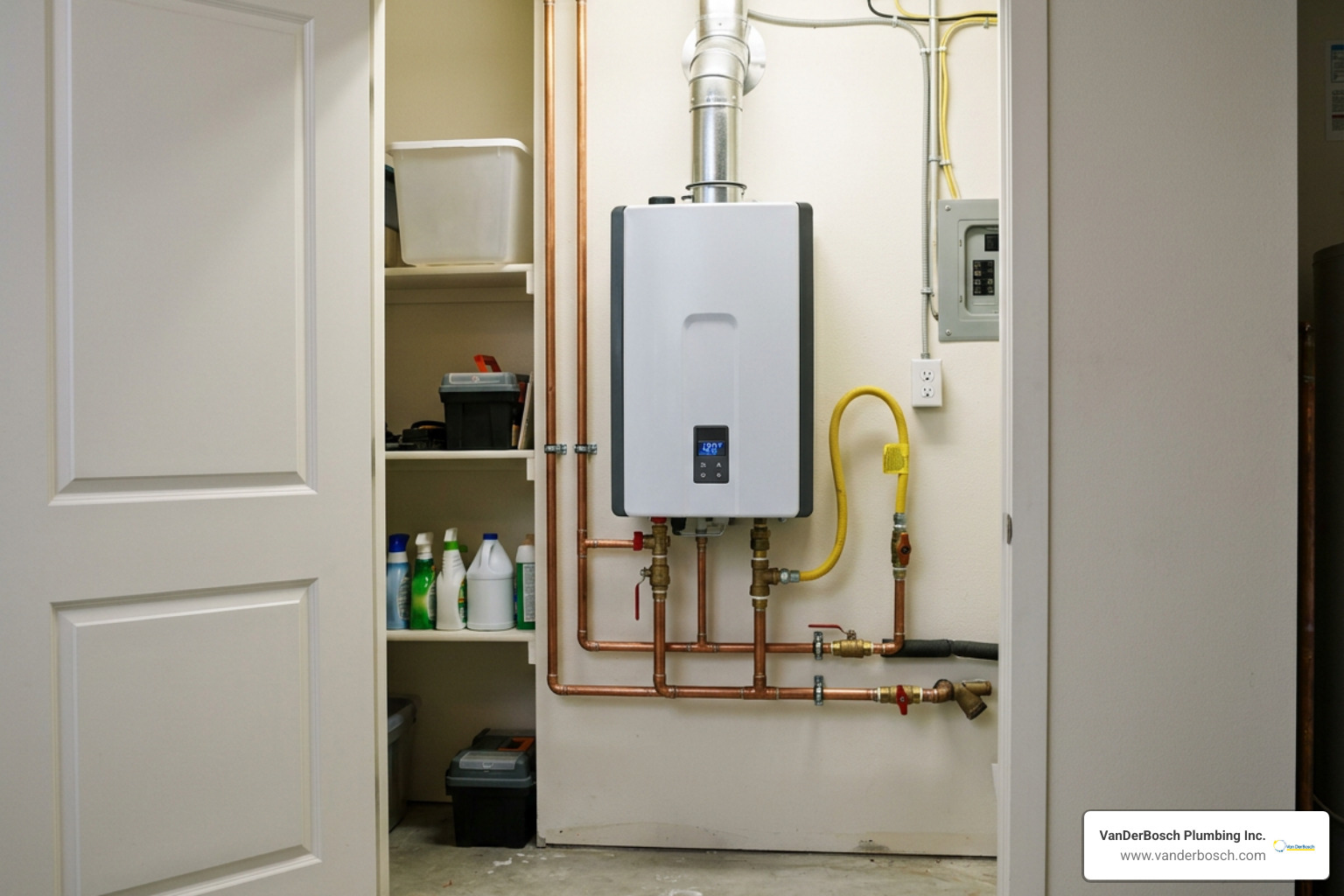
- Tankless Water Heaters: These wall-mounted units heat water instantly using high-powered gas burners or electric elements only when you turn on a hot water tap. They occupy up to 80% less space than traditional tanks and eliminate standby energy loss.
- Heat Pump (Hybrid) Water Heaters: These units pull heat from the surrounding air and transfer it to the water. They are incredibly efficient—often two to three times more energy-efficient than standard electric tank models.
- Solar Water Heaters: These systems use rooftop solar collectors to preheat water, utilizing a backup gas or electric element for cloudy days.
If you are trying to decide which style fits your household’s daily routines, you can Discover how to choose the right water heater to weigh the pros and cons of tank vs. tankless systems.
How a Combi Boiler and Hot Water Heater System Works
If you want the best of both worlds, a combination (combi) boiler is an elegant engineering solution. Instead of maintaining a separate boiler and hot water heater, a combi-boiler merges both functions into a single, wall-mounted footprint.
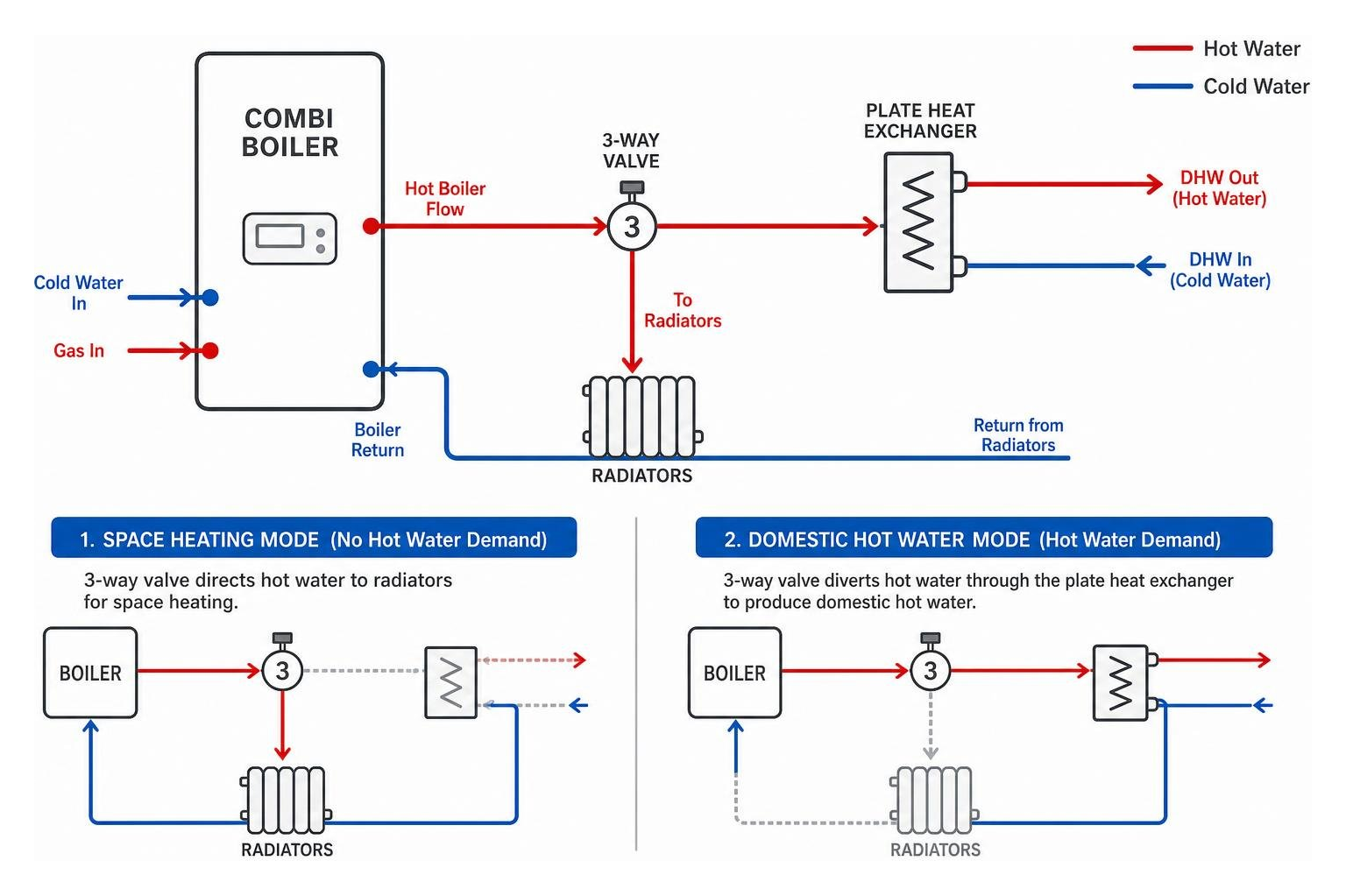
The Magic of Domestic Hot Water (DHW) Priority
Inside a combi-boiler, there is a specialized component called a plate heat exchanger and a motorized three-way diverting valve.
Under normal winter operation, the boiler focuses on space heating, pumping hot water through your home’s radiators. However, the moment someone turns on a hot shower, the boiler’s internal sensors detect the water flow. The three-way valve instantly shifts positions, temporarily diverting the hot boiler water away from your radiators and routing it through the plate heat exchanger instead.
Cold municipal water flows through the other side of this heat exchanger, absorbing the heat instantly without ever mixing with the dirty boiler water. Once you turn off the shower, the valve flips back, and the system resumes heating your home. Because residential buildings hold heat well, you won’t even notice the brief pause in your home’s central heating.
High-Performance Combi Options
Modern combi-boilers are incredibly efficient. For example, the State ProLine XE Combi Boiler specifications show that the SCB-199H-N model delivers a 95% AFUE (Annual Fuel Utilization Efficiency) rating and can provide up to 4.8 gallons per minute (GPM) of domestic hot water at a 77°F rise. This is more than enough to supply a typical 2.5-bath home.
Similarly, advanced options like the Versa-Hydro Combination Appliance combine space heating and domestic hot water storage in a single tank, achieving thermal efficiencies up to 96% and combustion efficiencies up to 93%. These units use cupronickel and stainless steel heat exchangers to resist scale buildup, eliminating the common “cold water sandwich” effect (temporary drops in water temperature during continuous use) that can occur with lesser designs.
If your primary goal is maximizing basement floor space while slashing your utility bills, you can Explore tankless water heater options to see how on-demand heating technologies compare.
Installation Costs, Lifespan, and Maintenance Compared
Investing in a new heating or plumbing appliance is a major decision. Understanding the long-term financial and physical commitments of each system will help you plan your budget.
Upfront Installation Costs
There is a significant price gap between installing a boiler and a water heater:
- Boilers: On average, a new boiler installation costs $5,800. You can expect to pay between $3,000 and $6,000 for a standard mid-efficiency model, while high-efficiency condensing boilers typically range from $6,000 to $11,000 depending on the complexity of the venting and piping.
- Water Heaters: A standard storage tank water heater replacement costs $1,200 on average, including professional installation. If you choose to upgrade to a high-efficiency tankless model, the equipment costs range from $1,000 to $3,000, with installation labor ranging from $150 to $1,500 depending on whether your gas lines or venting need to be resized.
Lifespan and Durability
Boilers are heavy-duty, commercial-grade machines built to last. A properly maintained boiler can easily last up to 25 years or more.
Standard tank water heaters have a much shorter lifespan, typically lasting only 6 to 10 years (though high-quality, professionally maintained units can sometimes stretch to 15 years). This is because they constantly hold fresh, oxygen-rich municipal water, which gradually corrodes the tank from the inside out.
Maintenance Requirements
Both systems require regular attention to prevent premature failure:
- Boiler Maintenance: We recommend checking your boiler every 6 to 12 months. This includes testing the safety relief valves, cleaning the burner assembly, checking flue clearances, and lubricating circulating pumps. High-efficiency condensing boilers also require their condensate traps to be cleaned and neutralizers checked annually to handle acidic combustion byproducts. If you want to keep your system running safely through the winter, you can Read our guide on hot water boiler repair to learn how to spot minor issues before they turn into heating emergencies.
- Water Heater Flushing: To maximize the lifespan of a tank water heater, it must be flushed at least once a year. Flushing involves attaching a hose to the drain valve at the bottom of the tank to clear out lime and calcium sediment. If left unserviced, this sediment acts as an insulating barrier, trapping heat at the bottom of the tank and causing the metal to fatigue and crack.
Code Requirements and Safety Considerations
Because boilers and water heaters deal with extreme heat, high pressures, and flammable gases, they are heavily regulated by municipal codes. In Illinois, building inspectors pay close attention to safety compliance during rough-in and final inspections.
Backflow Prevention
In any home with a boiler, the non-potable water in the heating loop must never mix with your clean drinking water. Municipal codes require a specialized backflow preventer (such as a double-check valve assembly or a reduced pressure zone [RPZ] valve) installed on the cold-water fill line that feeds the boiler. This prevents toxic boiler water from siphoning back into your kitchen or bathroom faucets if municipal water pressure drops.
Thermal Expansion
When water is heated, it expands. In a closed plumbing system, this thermal expansion can cause rapid pressure spikes that stress your pipes. Water heaters require a dedicated thermal expansion tank installed on the cold-water inlet line to absorb this extra volume safely.
Scalding and Legionella Prevention
- The Legionella Dilemma: Legionella pneumophila bacteria thrive in stagnant water kept between 77°F and 108°F. To prevent bacterial growth, health standards recommend storing domestic hot water at 140°F.
- The Scalding Risk: Water stored at 140°F can cause third-degree burns in less than five seconds. To keep your family safe, code requires the installation of a thermostatic mixing valve (or tempering valve) at the outlet of the water heater. This valve blends cold water back into the hot stream, lowering the delivery temperature to a safe 120°F before it reaches your showers and sinks.
For a deeper dive into statewide safety regulations, you can review the official Illinois Boiler and Pressure Vessel Codes to see how local jurisdictions enforce safety standards.
IRC 2024 Rules for Your Boiler and Hot Water Heater
The International Residential Code (IRC) 2024 updates have brought clear, strict guidelines regarding how boilers, water heaters, and dual-use systems are classified and inspected.
Legally, When Does a Water Heater Become a Boiler?
Under IRC 2024, a standard domestic water heater is legally reclassified as a boiler if it meets any of the following criteria:
- It has a water storage capacity exceeding 120 gallons.
- Its operating temperature exceeds 210°F.
- Its heat input exceeds 200,000 BTU/hr.
If your system crosses any of these thresholds, it must comply with the much stricter engineering, licensing, and inspection rules of IRC Chapter 20 (Boilers) rather than Chapter 28 (Water Heaters).
Relief Valve Rules
A combination system or combi-boiler requires two separate, independently piped relief valves because the two sides operate at completely different pressures:
- The Heating Side: Requires a pressure relief valve rated at 30 psi (to match the typical 12 to 30 psi operating range of hydronic loops).
- The Domestic Side: Requires a combination Temperature and Pressure (T&P) relief valve rated at 150 psi and 210°F (to handle high municipal water line pressures).
Installing the wrong relief valve on either side is a major code violation that can lead to catastrophic system failure or constant, dangerous water discharge.
To read the exact legal definitions and compliance checklists used by municipal inspectors, you can consult the IRC 2024 Water Heater vs. Boiler Code Classifications.
Frequently Asked Questions About Home Heating
Can a boiler be used to heat domestic hot water?
Yes, absolutely. The most common way to do this without a combi-boiler is by pairing your standard boiler with an indirect water heater.
An indirect water heater looks like a standard storage tank, but it does not have its own gas burner or electric heating element. Instead, a loop of hot water from the boiler is piped directly through a closed heat exchanger coil inside the tank. The heat from the boiler water transfers through the metal coil to warm your domestic water without ever mixing the two water supplies. This is an incredibly efficient setup because it utilizes your high-efficiency boiler to heat your shower water.
What is the lifespan of a boiler vs. a water heater?
As a rule of thumb, boilers are built for the long haul while water heaters are designed for periodic replacement:
- Boiler Lifespan: Up to 25 years (or more with consistent professional maintenance).
- Water Heater Lifespan: 6 to 10 years for standard tank models, and up to 20 years for high-quality tankless systems.
The main factor in system durability is water exposure. Because boilers reuse the same oxygen-depleted water in a closed loop, they experience very little internal corrosion. Water heaters constantly process fresh, oxygenated municipal water, which naturally accelerates rust and scale buildup.
What are the signs that my water heater needs repair?
If your water heater is struggling, it will usually warn you before it fails completely. Watch out for these common warning signs:
- A Loud Rumbling Noise: This is a classic sign of heavy sediment buildup at the bottom of the tank. Water becomes trapped beneath the scale layer and boils, creating steam bubbles that pop violently.
- Rusty or Discolored Water: This indicates that the internal anode rod has fully degraded and the steel tank itself is beginning to rust.
- Water Pooling Around the Base: If you see water leaking from the tank body, it means the inner shell has fractured. This is a critical issue that requires immediate replacement.
If you notice any of these red flags in your utility room, you can Identify signs your water heater needs repair to determine if a quick fix will solve the problem or if it’s time to shop for a replacement.
Conclusion
Whether you are preparing your home for freezing Chicagoland winters in Ukrainian Village or updating a mechanical room in Oakbrook Terrace, understanding the difference between a boiler and hot water heater is the key to maintaining a comfortable, code-compliant home.
At VanDerBosch Plumbing Inc., we have spent decades helping homeowners across Cook County navigate their heating and plumbing needs. We pride ourselves on delivering top-tier service with:
- A 100% satisfaction guarantee on all our work.
- 24/7 emergency availability because heating failures don’t wait for business hours.
- Transparent pricing with absolutely no hidden service charges.
- Experienced, background-checked, and licensed technicians who treat your home with respect.
Don’t wait for the first winter cold snap to check on your heating system. Schedule professional boiler services today and let our local experts ensure your home stays warm and your showers stay hot all year long.