
What Are the Costs of Water Heaters? Here’s What Chicagoland Homeowners Need to Know
Understanding the costs of water heaters is the first step toward making a smart replacement decision — whether your unit just failed or you’re planning ahead.
Quick answer — typical water heater replacement costs:
| Type | Typical Installed Cost Range |
|---|---|
| Traditional tank (gas or electric) | Most budget-friendly upfront option |
| Tankless (gas or electric) | Mid-range initial investment |
| Hybrid heat pump | Higher upfront investment |
| Solar | Highest initial investment |
Note: Costs vary based on unit size, fuel type, labor complexity, and local permit requirements.
Water heating accounts for roughly 12% of your home’s total energy use — making it one of the biggest ongoing utility expenses you have. Yet most homeowners don’t think about their water heater until that first icy shock in the morning shower.
When that moment comes, the pressure to decide fast is real. And rushing that decision can cost you significantly more than necessary.
The good news: once you understand what drives replacement costs, the decision gets a lot clearer.
I’m Hugh Hodur, President of VanDerBosch Plumbing, and I’ve overseen hundreds of water heater installations across the Chicagoland area — giving me a front-row seat to what actually determines the costs of water heaters for local homeowners. In the sections below, I’ll walk you through everything you need to budget confidently.
Understanding the Primary Costs of Water Heaters
When we talk about the Average Cost of a New Water Heater: Comprehensive Breakdown and Factors 2026 – LatestCost, we have to look at two main components: the unit itself and the labor required to put it in. In May 2026, the market offers more variety than ever, which is great for your utility bill but can be a bit overwhelming for your brain.
Storage Tanks: The Traditional Choice
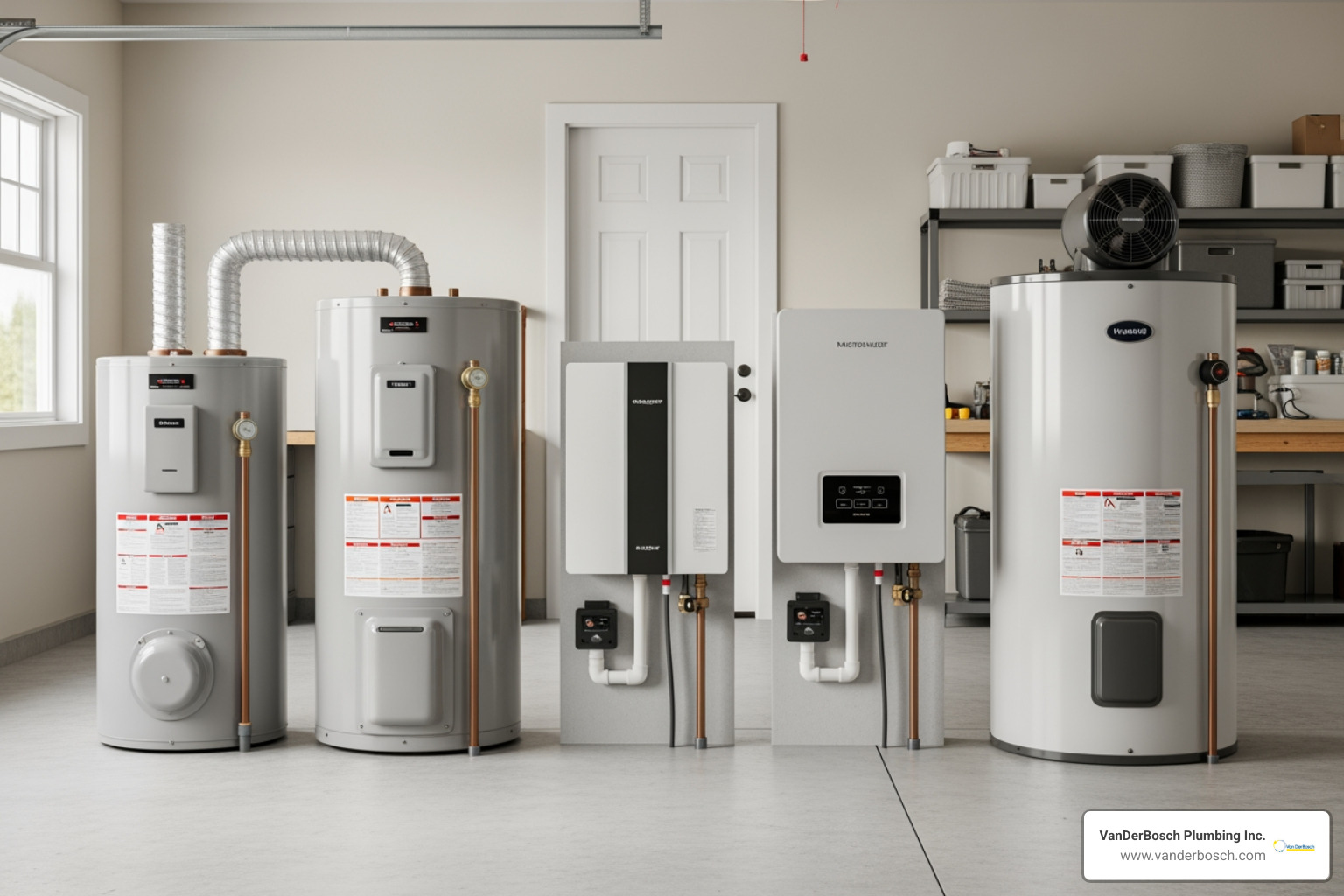
The conventional storage tank remains the most common choice in Chicago homes. These units keep a large volume of water hot and ready at all times. They are generally the most affordable upfront option. However, because they are constantly heating water even when you aren’t using it (standby heat loss), they can be less efficient over time.
Tankless Technology: On-Demand Efficiency
Tankless systems, often called “on-demand” heaters, don’t use a storage tank. Instead, they use high-powered burners or electric coils to heat water instantly as it flows through the unit. While the initial costs of water heaters in this category are higher, they offer a virtually endless supply of hot water and can be significantly more energy-efficient.
Hybrid Heat Pumps: The Efficiency Kings
Hybrid heat pump water heaters are a newer technology that works like a refrigerator in reverse. They pull heat from the surrounding air and transfer it into the water tank. These units have some of the highest upfront costs but offer the lowest annual operating expenses. They are particularly effective in areas with enough clearance for air circulation, like a typical Midwestern basement.
Solar Thermal Systems
Solar water heaters use rooftop collectors to harness the sun’s energy. While these have the highest installation price tag, they can reduce your water heating bills by 50% to 80%. In our region, they are usually paired with a backup gas or electric system for those cloudy winter weeks.
Fuel Sources and Their Impact
The fuel source you choose significantly impacts both the purchase price and the installation complexity:
- Natural Gas: Very common in Chicago and Roselle. These units often cost slightly more than electric models upfront but are generally cheaper to operate monthly. They require proper venting and a gas line.
- Electricity: These units are often the least expensive to purchase and don’t require venting. However, in many parts of Cook County, electricity can be a more expensive fuel source than natural gas.
- Liquid Propane (LP): Used primarily in areas without natural gas lines. LP units are similar to gas models but require a storage tank on your property.
Installation Variables and Professional Labor
One of the biggest misconceptions about the costs of water heaters is that the price tag on the box at the hardware store is the final number. In reality, professional labor and site-specific modifications often account for 50% or more of the total project cost.
When we arrive at a home in Winnetka or Hyde Park, we evaluate several factors that influence the final quote:
Labor Complexity and Licensed Plumbers
A simple “like-for-like” replacement (replacing an old 40-gallon gas tank with a new 40-gallon gas tank in the same spot) is the most straightforward. However, if we are Choosing the Right Type of Water Heater for Installation that differs from your current setup, the labor hours increase. Licensed plumbers ensure the job is done to code, which is vital for your safety and your home’s insurance compliance.
Electrical and Gas Line Upgrades
Switching from a tank to a tankless unit often requires a larger gas line (moving from 1/2-inch to 3/4-inch) to handle the higher BTU demand. Similarly, electric tankless units might require a significant upgrade to your electrical panel, sometimes needing multiple 40-amp breakers. These infrastructure changes can add hundreds or even thousands to the total project.
Venting Requirements
Modern high-efficiency gas water heaters cannot always use your old chimney or vent. They often require PVC venting that exits through a side wall. If your basement is finished or the unit is in the center of the house, routing this new venting can be a complex task.
Permit Fees and Accessibility
In Cook County and Chicago, permits are required for water heater replacements. These fees vary by municipality but are essential for ensuring a third-party inspector verifies the safety of the installation. Furthermore, if your water heater is tucked away in a tight crawl space or an attic, the “difficulty tax” on labor will naturally increase due to the extra time and equipment needed to navigate the space.
Long-Term Value: Efficiency and Maintenance
We always encourage homeowners to look past the initial sticker shock and consider the “Total Cost of Ownership.” A unit that costs more today but lasts twice as long and uses half the energy is often the better financial move.

Energy Star and UEF Ratings
When shopping, look for the Uniform Energy Factor (UEF). The higher the number, the more efficient the unit. Energy Star-certified models often qualify for local rebates, which can help offset the higher initial costs of water heaters. For example, Tankless Water Heaters 101 explains how these units eliminate standby energy loss, potentially saving you 24% to 34% compared to a conventional tank.
Maintenance and Lifespan Considerations for Costs of Water Heaters
The lifespan of your unit is a direct factor in its long-term cost.
- Traditional Tanks: Usually last 8 to 12 years.
- Tankless Units: Can last 20 years or more with proper care.
To reach these milestones, maintenance is non-negotiable. Chicago’s hard water is notorious for creating sediment buildup. This sediment acts as an insulator, forcing your heater to work harder and eventually causing the tank to overheat and fail. We recommend an annual flush to remove this buildup.
Another critical component is the anode rod. This magnesium or aluminum rod hangs inside the tank and “sacrifices” itself to corrosion so the steel tank doesn’t have to. Replacing a worn anode rod every 3 to 5 years can practically double the life of a tank-style heater. If you ignore it, you’ll likely start seeing the Signs Your Water Heater May Need Repair or Replacement much sooner than expected.
How Household Size Impacts the Costs of Water Heaters
Size matters — both for your comfort and your wallet. An undersized unit will leave you with cold showers, while an oversized unit wastes energy and money.
| Household Size | Recommended Tank Capacity | Tankless Flow Rate (GPM) |
|---|---|---|
| 1–2 People | 30–40 Gallons | 3–5 GPM |
| 3–4 People | 40–50 Gallons | 5–7 GPM |
| 5+ People | 50–80 Gallons | 7–9+ GPM |
When choosing, we also look at the First Hour Rating (FHR). This tells you how much hot water the unit can deliver during a busy hour (like when everyone is getting ready for school and work). For tankless units, we measure by Gallons Per Minute (GPM), accounting for the fact that Chicago’s incoming groundwater is much colder in the winter, requiring more power to reach a comfortable temperature.
Regional Considerations and Hidden Expenses
Living in the Chicagoland area brings unique challenges to water heating. Our groundwater temperatures can drop significantly in the winter, meaning your heater has to raise the water temperature by over 70 degrees just to get it to a lukewarm state. This extra work can lead to faster wear and tear compared to units in warmer climates.
Cook County Plumbing Codes
Local codes in places like Melrose Park or Oakbrook Terrace often require specific safety features that might not have been present when your old unit was installed.
- Expansion Tanks: In a closed plumbing system, water expands as it heats up. An expansion tank provides a “cushion” for this extra volume, preventing high pressure from damaging your pipes or the heater itself.
- Thermal Expansion: If you’ve ever wondered Why Is My Water Heater Leaking, it’s often due to the stress of thermal expansion or a failing T&P (Temperature and Pressure) relief valve.
Disposal and Extras
Don’t forget about the “hidden” end of the project. Most professional quotes should include the removal and eco-friendly disposal of your old unit. A full 50-gallon tank can weigh over 400 pounds due to sediment buildup, so this isn’t a task you want to handle alone.
According to How Much Does Water Heater Replacement Cost? [2026 Data] | Angi, homeowners should also budget for potential “surprises” like repairing water-damaged drywall or upgrading old, corroded shut-off valves that no longer turn.
Frequently Asked Questions about Water Heater Replacement
What is the expected lifespan of a new water heater?
In our experience across Chicago and suburbs like Elmhurst, a traditional gas or electric tank typically lasts 8 to 12 years. If you invest in a tankless system and keep up with annual descaling, you can expect 20 years or more. Hybrid heat pumps usually fall in the 10-to-15-year range.
Are there rebates or tax credits available for high-efficiency models?
Yes! In 2026, there are still significant federal tax credits available for Energy Star-certified heat pump water heaters and high-efficiency tankless units. Many local utility companies in Illinois also offer instant rebates or bill credits for upgrading to more efficient models. We always recommend checking the current incentives before you buy.
Is DIY installation a safe way to save on costs?
While it might be tempting to save on labor, we strongly advise against DIY water heater installation. Dealing with natural gas lines, high-voltage electricity, and carbon monoxide venting carries significant risks. Furthermore, many manufacturers will void your warranty if the unit isn’t installed by a licensed professional, and unpermitted work can create massive headaches when you try to sell your home in the future.
Conclusion
Navigating the costs of water heaters doesn’t have to be a stressful experience. By understanding the variables — from the type of unit to the specific requirements of the Chicagoland climate — you can make a choice that provides reliable comfort for your family for years to come.
At VanDerBosch Plumbing Inc., we’ve built our reputation on being the local experts you can trust. Whether you’re in Sauganash, West Ridge, or Ukrainian Village, our team of experienced, background-checked technicians is ready to help. We offer transparent pricing with no hidden service charges, 24/7 emergency availability for those middle-of-the-night leaks, and a 100% satisfaction guarantee.
Don’t wait for your old unit to flood your basement. Schedule your water heater service today and let us help you find the most cost-effective, efficient solution for your home.