
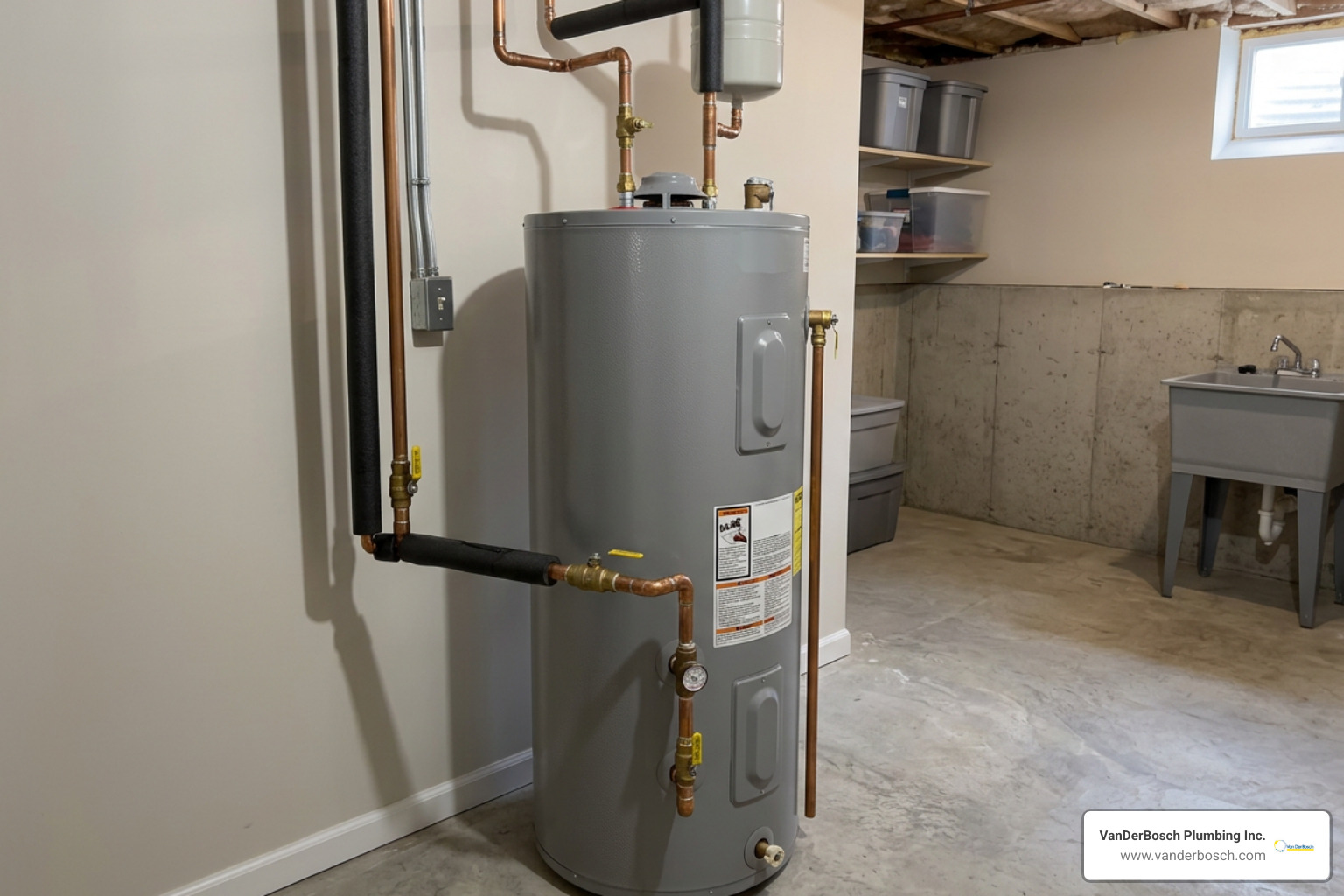
What Does It Cost to Install an 80-Gallon Water Heater in 2026?
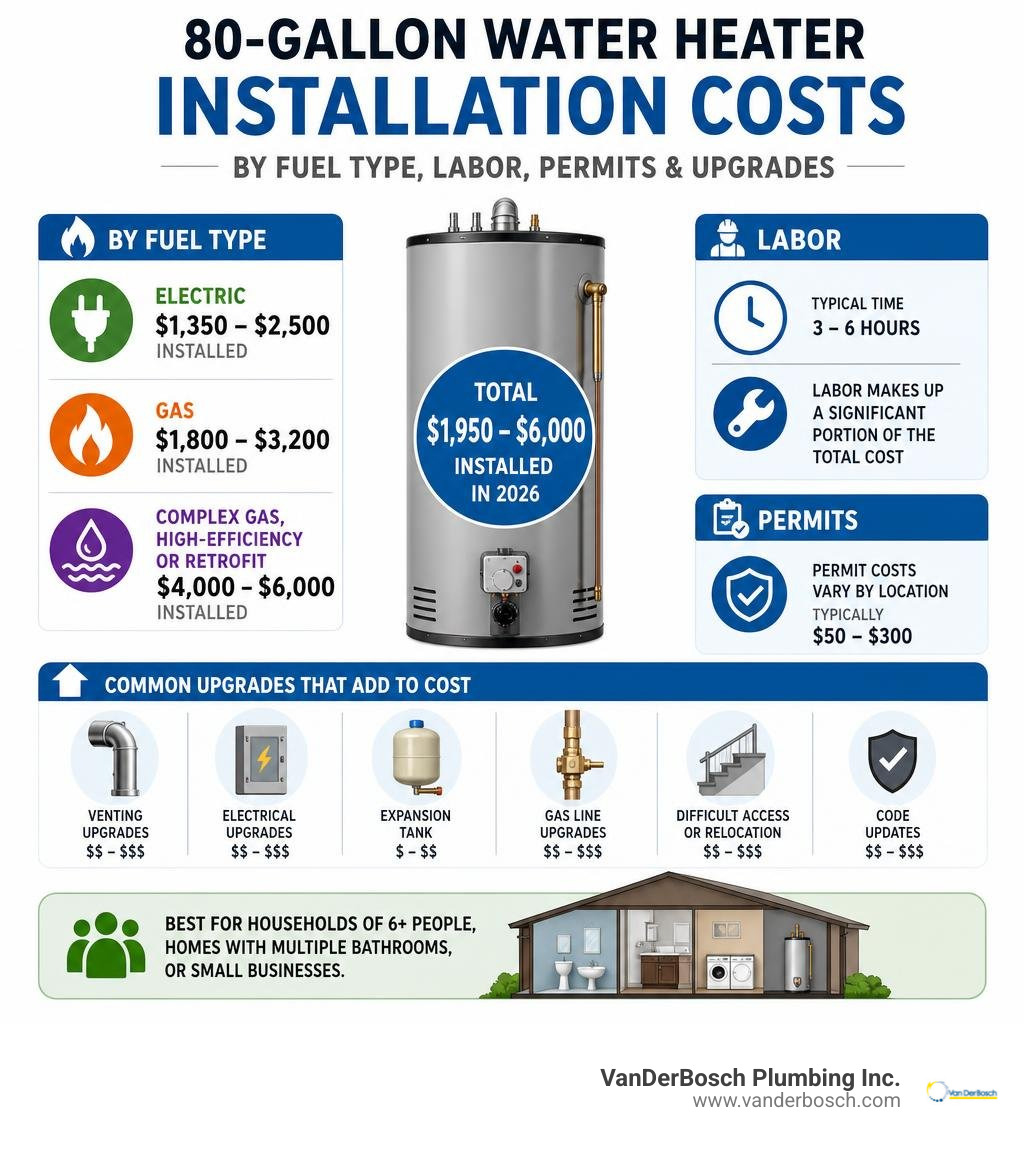
The cost to install an 80 gallon water heater is usually $1,950 to $6,000 in 2026. Most straightforward projects land around $3,000 to $4,800, depending on the fuel type, local labor rates, access to the installation area, and required code updates.
- 80-gallon electric tank: about $1,350 to $2,500 installed
- 80-gallon gas tank: about $1,800 to $3,200 installed
- Complex gas, high-efficiency, or retrofit project: often $4,000 to $6,000
An 80-gallon tank can make sense for a household of six or more people, homes with several bathrooms, or small businesses with steady hot-water demand. But these tanks are large and heavy, so costs can rise when a plumber must modify venting, add an expansion tank, upgrade electrical service, resize a gas line, or move the unit through a tight basement or stairway.
I am Hugh Hodur, President of VanDerBosch Plumbing Inc., and I work with Chicagoland homeowners and businesses facing urgent water-heater replacements. In this guide, I will break down the real cost to install 80 gallon water heater systems so you can compare quotes and plan for the costs that are often left off an initial estimate.
Gallon water heater glossary:
Comprehensive Breakdown: Cost to Install 80 Gallon Water Heater Units in 2026
When evaluating an 80-gallon storage unit, look beyond the price tag on the retail box. A full project estimate combines equipment procurement, specialized delivery, trade labor, permits, safety fittings, and code compliance work.
Nationally, the average installation cost for an 80-gallon model runs between $2,650 and $3,910, but total project costs routinely span from $1,950 to $6,000. Equipment alone commands $700 to $2,400 depending on fuel type and efficiency, while licensed labor typically ranges from $500 to $2,500.
Regional labor rates significantly influence this pricing. Across the Midwest and particularly in Cook County communities—including Chicago, Niles, Elmhurst, and Winnetka—professional plumbing labor carries a 15% to 25% premium above national averages due to rigorous licensing standards and local municipal code requirements. Reviewing how much a new water heater actually costs provides clear insight into how basic residential replacements compare to high-capacity overhauls.
Electric vs. Gas: What Is the Cost to Install 80 Gallon Water Heater Models?
The fuel powering your storage tank impacts both upfront installation logistics and recurring utility bills:
- Electric 80-Gallon Units: Equipment retails between $700 and $1,500. With installation labor running $500 to $1,000 for straightforward hookups, total installed pricing generally stays between $1,350 and $2,500. Electric units operate via internal resistance elements (typically 4,500 to 4,800 watts) requiring a dedicated 240-volt circuit. Because they do not burn combustible fuel, they do not require exhaust flues or chimneys.
- Natural Gas 80-Gallon Units: Gas equipment retails higher, between $1,000 and $2,400. Total installed costs range from $1,800 to $3,200 for basic atmospheric setups, reaching $3,700 to $5,000+ for power-vented or high-recovery models. Gas tanks require specialized combustion air supplies, exhaust venting, and strict mechanical inspections.
- Hybrid Heat Pump 80-Gallon Units: Hybrid heat pumps move heat from surrounding ambient air into the water rather than generating it directly. Equipment ranges from $1,500 to $2,800, leading to a total installed project cost of $2,200 to $4,600 (or $3,600 to $6,500 for complex gas-to-electric retrofits). Federal tax credits under the Inflation Reduction Act can offset these costs by 30% (up to $2,000).
Independent industry data from 2026 water heater replacement cost research confirms that gas storage models consistently carry higher labor variables due to flue fabrication and gas pipe compliance.
Equipment Unit Costs vs. Plumbing Labor Rates
Water heater replacements are quoted as flat-bid projects rather than open-ended hourly billing, but labor represents 18% to 50% of the invoice.

- Equipment Costs ($700 – $2,400): Reflects tank manufacturing quality, heavy-gauge steel shells, specialized glass linings, dual commercial-grade anode rods, and warranty durations.
- Basic Installation Labor ($500 – $1,200): Covers 4 to 8 hours for two technicians to drain and disconnect the old tank, transport the new unit, secure water fittings within 5 feet, and complete testing.
- Delivery and Disposal Fees ($50 – $400): Hauling an empty 80-gallon tank—or removing a sediment-laden old tank weighing up to 200 pounds empty and over 800 pounds full—requires specialized equipment and commercial scrap disposal.
Attempting to cut corners on labor carries high risks. Knowing why you need a licensed plumber for water heater installation helps protect your home from unpermitted work that can void homeowner’s insurance or manufacturer warranties.
Hidden Expenses and Mandatory Code Upgrades for High-Capacity Tanks
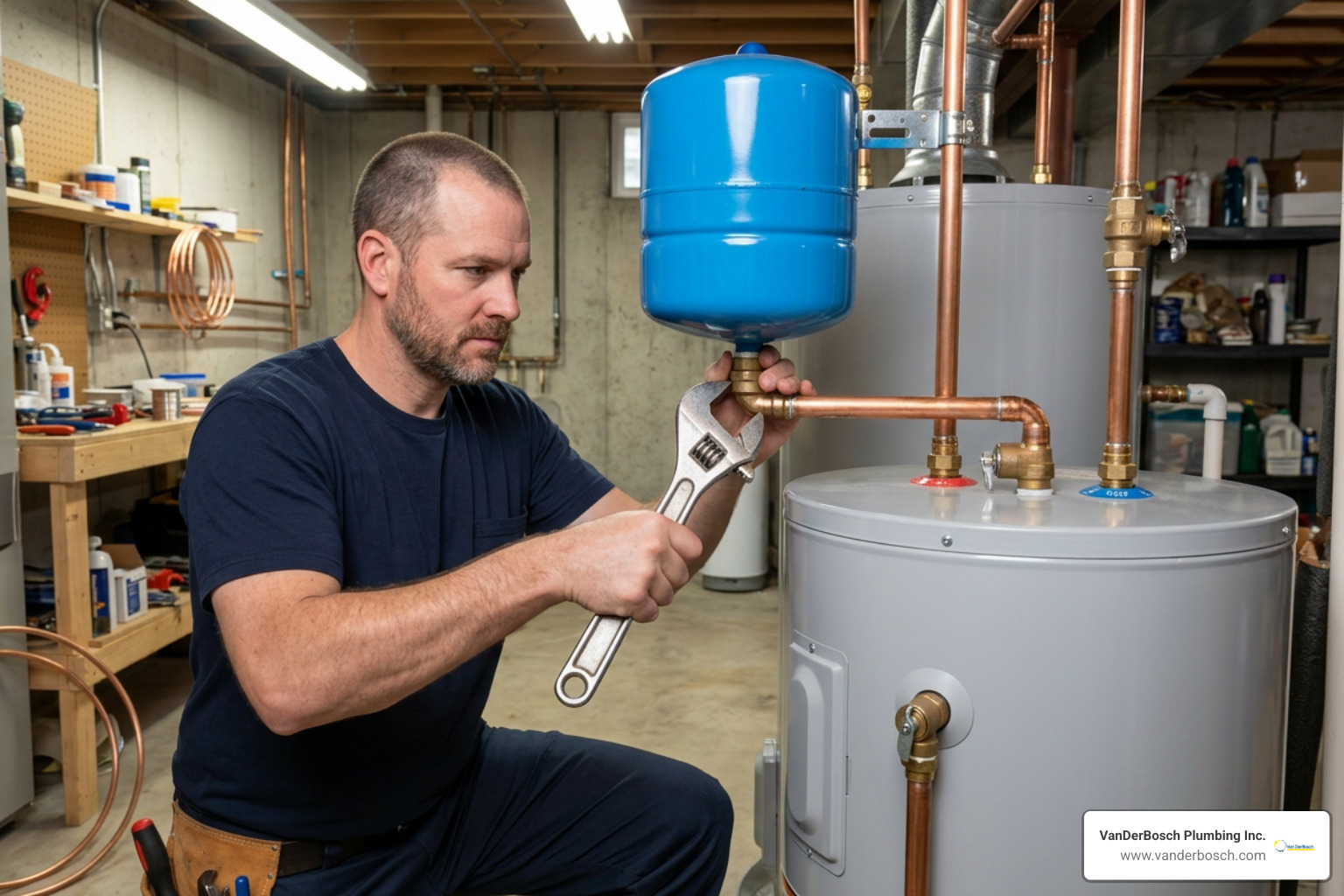
When an installer disconnects an old water heater, existing plumbing deficiencies often surface. Municipal codes evolve, and an older home in Melrose Park, Ukrainian Village, or Sauganash may require code upgrades before a new installation passes inspection:
- Plumbing & Mechanical Permits ($100 – $900): Municipalities mandate safety permits to verify venting, combustion air, and pressure relief compliance.
- Drip Pan and Drain Line ($200 – $500): Modern plumbing code (IRC P2801.6) requires an approved corrosion-resistant drain pan with dedicated discharge piping routed to an approved drain.
- Gas Shutoff and Flexible Connector ($100 – $250): Replacing outdated, stiff, or corroded gas valves with modern full-port brass shutoffs and stainless steel lines.
Crucial Factors Driving Up the Cost to Install 80 Gallon Water Heater Units
High-capacity tanks introduce distinct structural and spatial challenges. According to the current cost guide for 80 gallon water heater installations, structural constraints are a primary reason quotes increase:
- Physical Dimensions and Stairwell Clearance: An 80-gallon tank measures up to 65–70 inches tall and 24–28 inches in diameter. Maneuvering an 80-gallon unit into tight basement stairways or historic Chicago bungalows often requires two to three technicians and specialized hand trucks, adding $150 to $350 in labor surcharges.
- Operating Weight: When filled with 80 gallons of water (at 8.34 lbs per gallon), the operational tank weighs over 850 pounds. In older homes, setting this unit requires a stable, level concrete pad or reinforced framing.
- Water Pipe Rerouting ($200 – $600): If transitioning from a 40- or 50-gallon tank, the inlet and outlet ports will not align with existing copper drops. Technicians must sweat new copper lines and dielectric unions to prevent galvanic corrosion.
Venting Modifications, Expansion Tanks, and Electrical Circuits
High-capacity tanks demand dedicated infrastructure to operate safely:
- Thermal Expansion Tanks ($80 – $350): When 80 gallons of cold water heats up, thermal expansion creates hydraulic pressure. In closed plumbing systems with backflow preventers or pressure-reducing valves (PRVs), this expanded volume has nowhere to go. Installing a properly sized expansion tank cushions this pressure spike. You can learn more about installing a hot water expansion tank to prevent ruptured lines, premature tank failure, and dripping temperature-and-pressure (T&P) relief valves.
- Venting Modifications ($200 – $1,400): Gas 80-gallon models consume more BTUs than smaller tanks. If your existing chimney flue is unlined or shared improperly with a furnace, technicians must install a dedicated chimney liner, upgrade to Type-B double-wall metal venting, or convert to a side-wall power vent with PVC piping.
- Gas Line Upsizing ($400 – $1,500): High-BTU gas heaters require adequate gas supply volume. If your basement is fed by a 1/2-inch gas pipe over a long run, upgrading to a 3/4-inch or 1-inch black iron gas supply line is mandatory to prevent appliance starvation.
- Electrical Circuit Additions ($1,500 – $4,500): Standard 80-gallon electric and hybrid heat pump units require a dedicated 240V/30A electrical circuit. If your main panel lacks open breaker slots or sufficient amperage, a panel upgrade may be required.
Is an 80-Gallon Tank Worth It vs. Smaller Tanks or Tankless Units?
An 80-gallon tank represents a major investment, making it critical to evaluate whether your household requires this volume. Understanding the process of choosing the right type of water heater for installation begins with calculating your First-Hour Rating (FHR)—the total gallons of hot water the unit can deliver during peak morning demand.
Capacity Comparison: 40-Gallon and 50-Gallon vs. 80-Gallon Tanks
If your home has 2 to 4 occupants, an 80-gallon tank is often oversized, resulting in unnecessary standby heat loss. However, for homes with 6 or more residents, multiple walk-in spa showers, oversized soaking tubs, or back-to-back morning routines, an 80-gallon tank provides reliable hot water volume without sudden drops in water temperature.
Evaluating Hybrid Heat Pumps and Tankless Alternatives
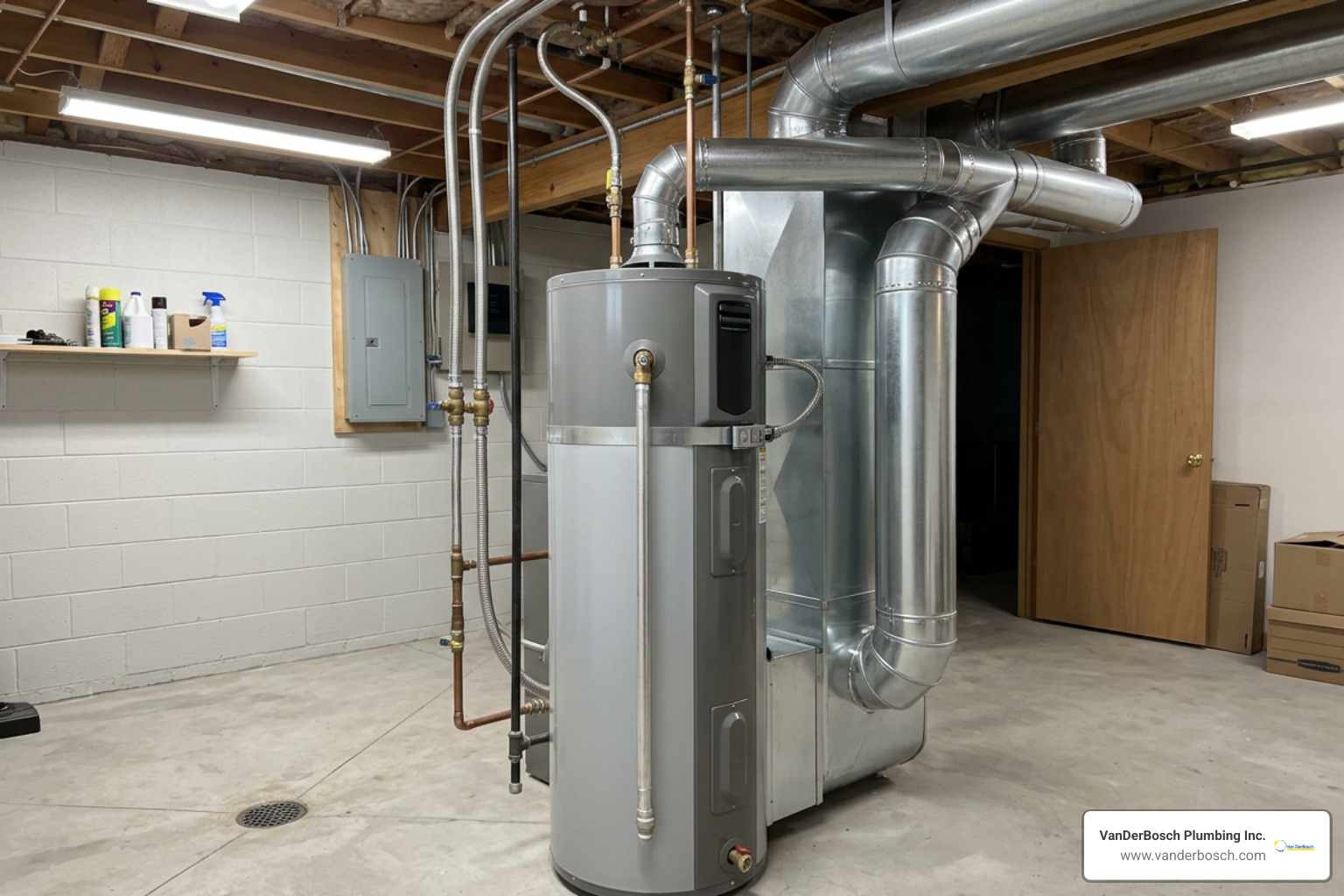
Before purchasing an 80-gallon storage tank, evaluate alternative technologies:
- Hybrid Heat Pump Tanks: If you have an unvented utility room with at least 450 to 1,000 square feet of surrounding space, a hybrid heat pump achieves a Uniform Energy Factor (UEF) above 3.50. This cuts annual electricity usage by up to 60%, delivering $80 to $230 in annual energy savings compared to standard electric resistance tanks.
- High-Output Tankless Systems: A condensing gas tankless water heater delivers continuous hot water without standby heat loss. However, tankless installations in Chicagoland typically cost $3,500 to $6,500 due to Category III stainless steel or twin PVC venting and required gas line upgrades. Explore our tankless water heater services to compare whole-home continuous flow rates against high-volume storage tanks.
Real-World Cost Tiers and Practical Ways to Save
To set realistic project expectations, review how common installation configurations break down:
Basic, Mid-Range, and Premium Project Scenarios
- Scenario 1: Basic Electric Swap ($1,950 – $2,700)
- Direct like-for-like replacement of an existing 80-gallon electric tank in an accessible basement.
- Utilizes existing 240V/30A wiring and undamaged copper connections.
- Includes new shutoff valves, standard thermal expansion tank, haul-away of old tank, and local municipal permit ($150).
- Scenario 2: Mid-Range High-Efficiency Gas Replacement ($2,900 – $4,600)
- Replacing a failing 75- or 80-gallon atmospheric gas unit in a single-family home.
- Includes a new high-recovery gas tank, expansion tank, drip pan with dedicated drain line, minor copper re-piping, B-vent chimney connector modifications, and municipal inspections ($300).
- Scenario 3: Premium High-Efficiency Overhaul / Relocation ($4,800 – $6,000+)
- Installing an 80-gallon hybrid heat pump or heavy-duty power-vented gas system in a finished basement.
- Includes electrical panel additions, 3/4-inch gas line extensions, new side-wall PVC power venting runs, structural floor pad leveling, complete drain pan plumbing, and extended parts-and-labor warranties.
Maximizing Incentives, Rebates, and Off-Peak Scheduling
- Leverage Federal IRA Incentives: Qualified ENERGY STAR-certified hybrid heat pump water heaters are eligible for a 30% federal tax credit (up to $2,000).
- Claim Local Utility Rebates: Northern Illinois utility providers often offer instant equipment rebates ranging from $100 to $500 for qualifying high-efficiency gas and electric heat pump installations.
- Schedule Proactive Replacement: Replacing an aging unit during mild weather avoids emergency holiday surcharges. If your water heater is over 10 years old, scheduling a planned replacement gives you time to compare itemized bids and select the right unit.
- Bundle Plumbing Improvements: Combine your water heater replacement with other necessary plumbing work—such as installing a whole-home pressure-reducing valve, whole-home water filtration, or updated main shutoff valves—to save on travel fees and diagnostic charges.
Frequently Asked Questions About 80-Gallon Water Heater Costs
How many labor hours does it take to install an 80-gallon water heater?
A straightforward, like-for-like 80-gallon replacement typically takes between 4 and 8 labor hours for a two-person plumbing crew. If the installation requires running dedicated electrical lines, upsizing gas pipes, modifying venting, or maneuvering through tight stairwells, labor requirements can expand to 8 to 14 hours.
Why are 80-gallon gas units more expensive to install than electric models?
Gas installations require stricter safety infrastructure, including metal exhaust venting, continuous combustion air intake, dedicated gas supply lines, and mechanical safety inspections. These additional requirements add $500 to $1,500+ in labor and materials compared to standard electric tank replacements.
How many people does an 80-gallon water heater support?
An 80-gallon water heater is engineered to support 6 or more people in a high-demand household. It can easily supply back-to-back showers, multiple simultaneous bathroom fixtures, high-capacity washing machines, and large soaking tubs without exhausting its stored hot water reserve.
Conclusion
An 80-gallon water heater represents a substantial investment, but for large families and high-demand properties, it provides reliable hot water volume. Ensuring your installation is handled safely requires accurate system sizing, proper code compliance, and correct safety fittings like thermal expansion tanks and adequate venting runs.
At VanDerBosch Plumbing Inc., our licensed, background-checked technicians provide 24/7 service, a 100% satisfaction guarantee, and upfront flat-rate pricing with zero hidden fees across Chicago, Niles, Winnetka, Melrose Park, Elmhurst, and surrounding Cook County communities.
When you are ready to upgrade your home’s water heating capacity, contact our team for professional water heater installation and replacement to ensure your investment operates safely and efficiently for years to come.