
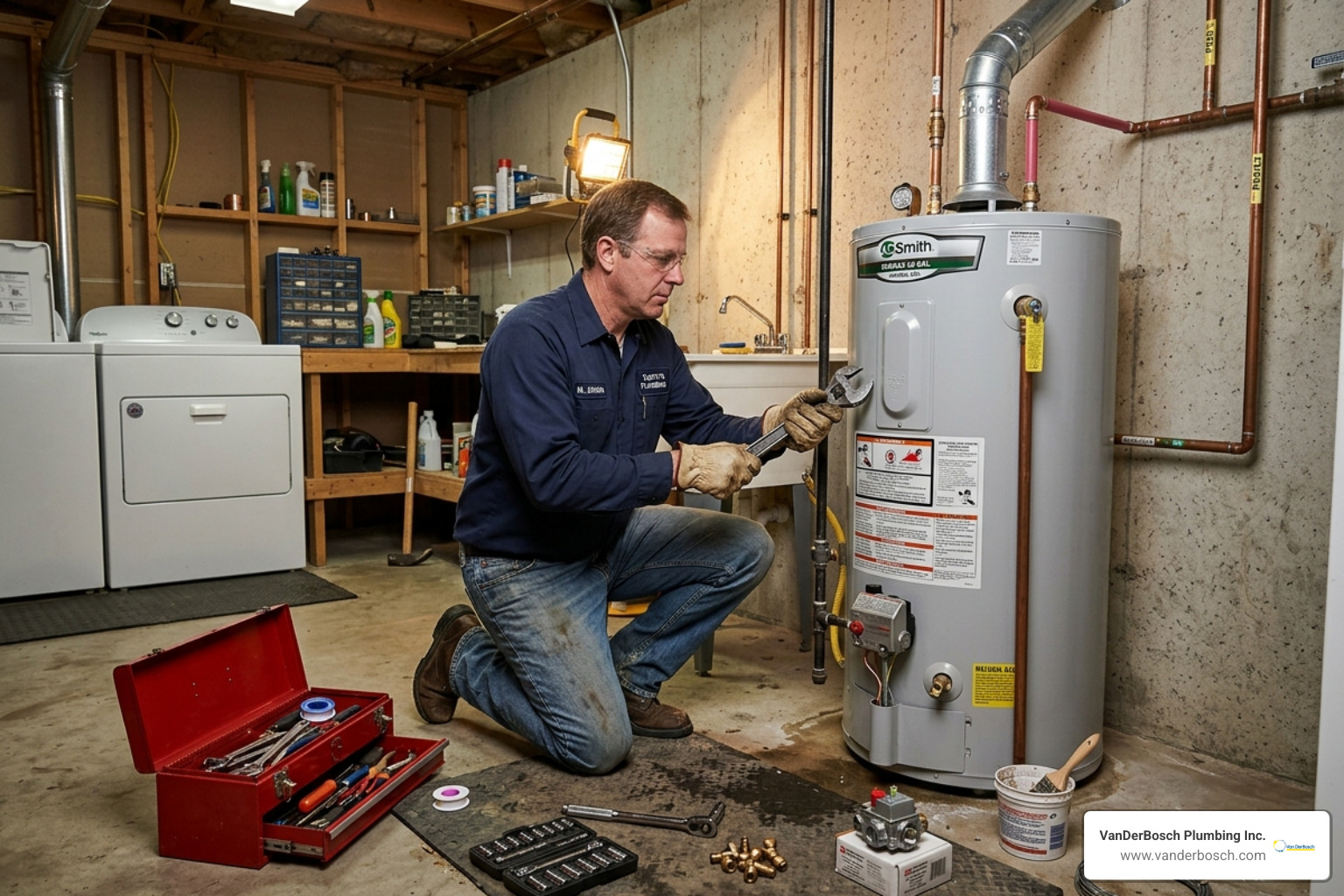
Why Water Heater Repair Can’t Wait (And What to Do First)
Water heater repair is something most Chicagoland homeowners will face at least once — and usually at the worst possible time.
Before diving in, here are the most common fixes at a glance:
| Problem | Likely Cause | Quick Action |
|---|---|---|
| No hot water | Tripped breaker or unlit pilot | Reset breaker or relight pilot |
| Not enough hot water | Sediment buildup or bad thermostat | Flush tank or adjust thermostat |
| Water too hot | Thermostat set too high or stuck | Lower setting to 120°F |
| Strange noises | Sediment in tank | Flush the tank |
| Leaking | Faulty valve, gasket, or tank corrosion | Turn off water supply, call a pro |
| Rusty water | Failed anode rod or corroded tank | Replace anode rod or replace unit |
Most water heater problems fall into one of these categories. Many can be fixed with basic tools and a little know-how. Some — especially anything involving gas lines or a corroded tank — need a licensed professional.
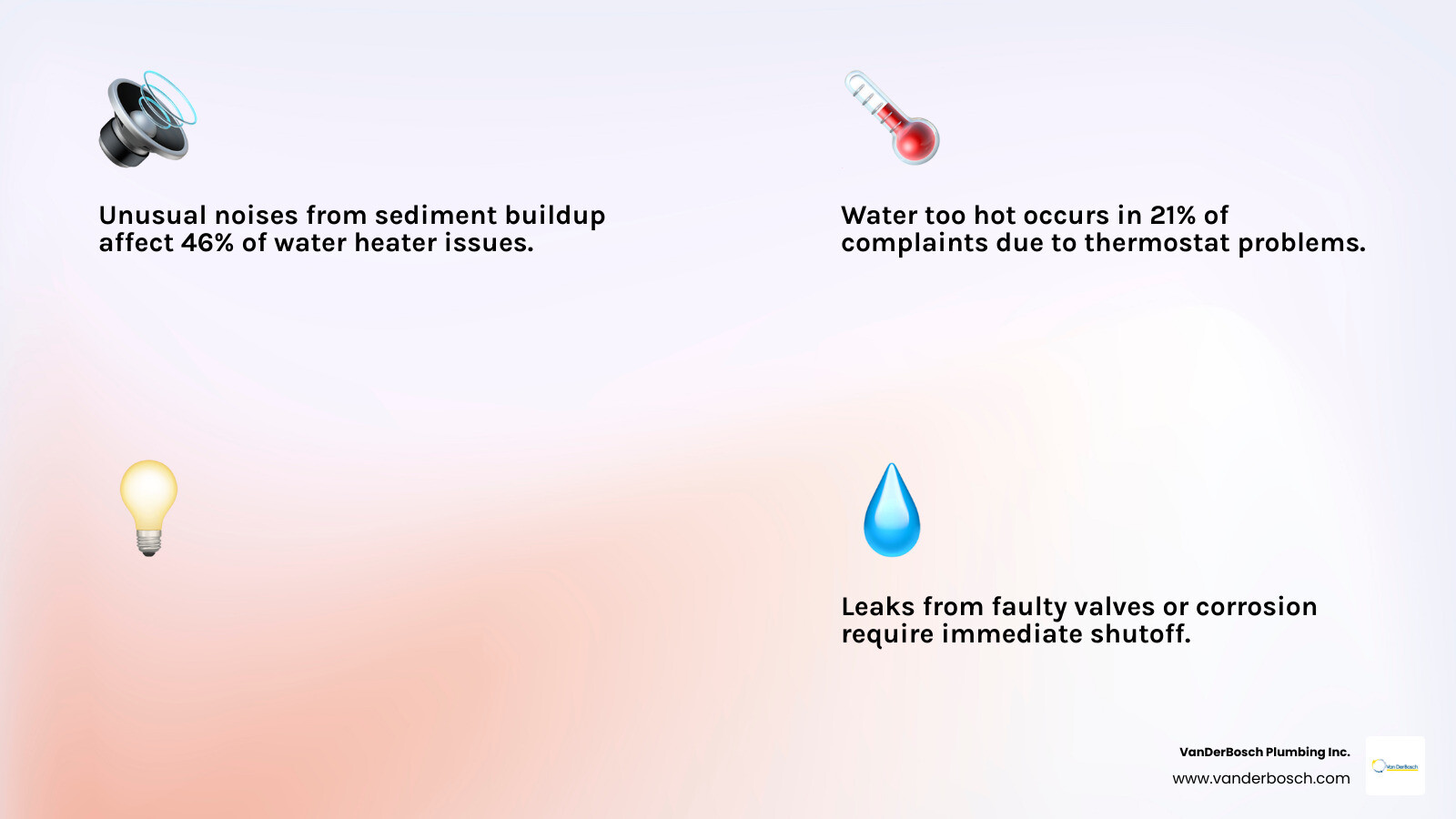
According to industry data, the most reported water heater complaints are unusual noises (46% of cases), water that’s too hot (21%), and a unit that won’t stay lit (21%). If you’re dealing with any of these right now, you’re in the right place.
I’m Hugh Hodur, President of VanDerBosch Plumbing, and I’ve overseen hundreds of water heater repair and installation jobs across the Chicagoland area. In this guide, I’ll walk you through exactly how to diagnose and fix the most common issues — step by step.
Identifying Common Symptoms and Water Heater Repair Needs
In our years serving communities from Roselle to Hyde Park, we’ve seen it all. But before you grab your wrench, you need to play detective. Identifying the symptoms correctly is half the battle when it comes to water heater repair.
The Tell-Tale Signs
One of the most frequent calls we get involves signs your water heater may need repair or replacement. If your morning shower feels more like a polar plunge, or if you hear what sounds like a popcorn machine in your basement, your unit is trying to tell you something.
- Unusual Noises: That “popping” or “knocking” sound is usually caused by sediment buildup at the bottom of the tank. As the water trapped under the sediment boils, it bubbles up, creating those strange sounds.
- Temperature Fluctuations: If the water goes from scalding to freezing in seconds, you likely have a failing heating element (in electric models) or a broken dip tube.
- Rusty or Discolored Water: This is a red flag. It often means the internal “sacrificial” anode rod has been depleted, and the tank itself is starting to rust.
- Pilot Light Issues: For our neighbors in Sauganash or Ukrainian Village with gas units, a pilot light that won’t stay lit (reported by 21% of customers) is a major headache, often linked to a faulty thermocouple.
The Dreaded Leak
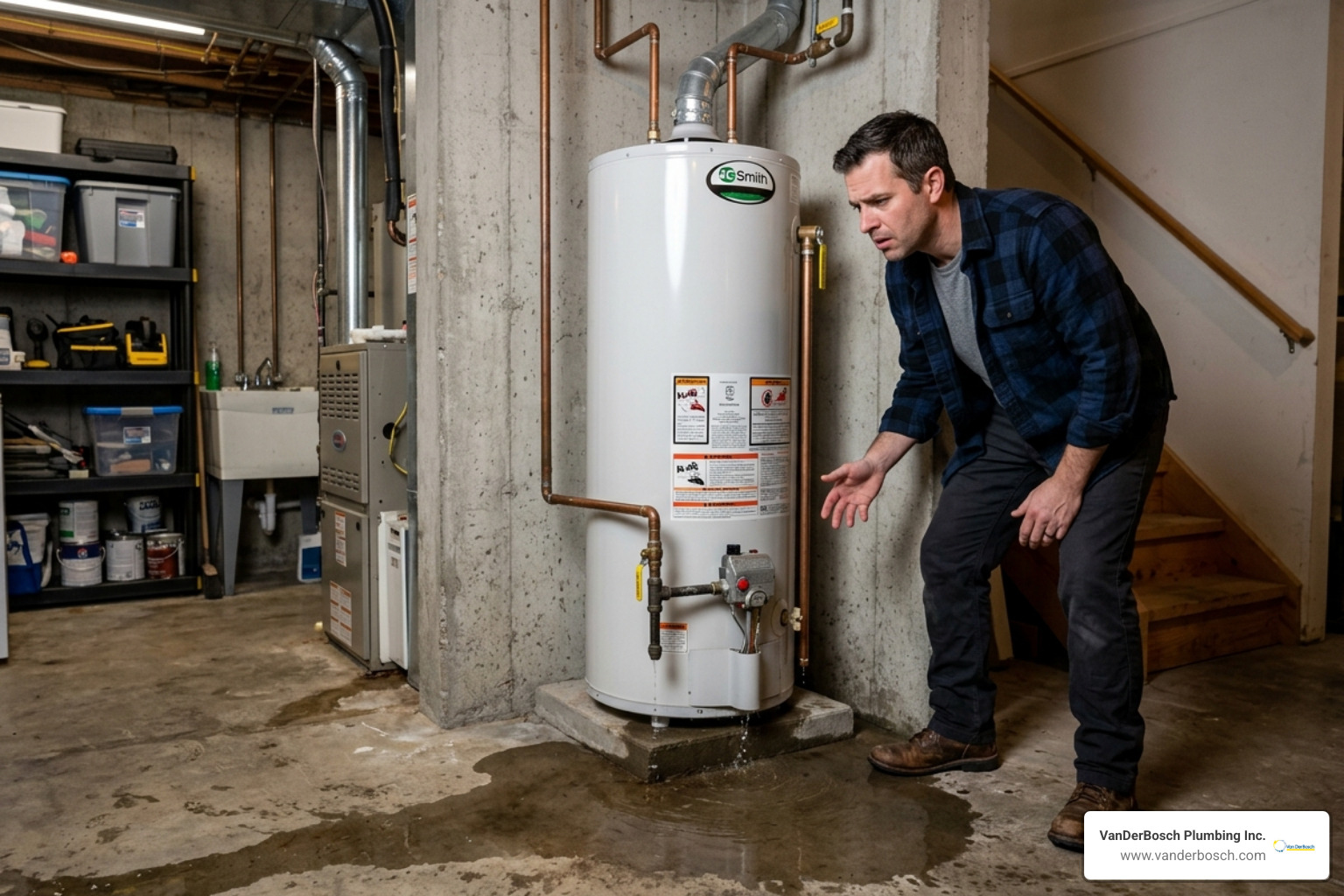
If you see a puddle, don’t panic, but don’t wait. You need to ask yourself, why is my water heater leaking? The source of the leak determines the severity. A leak from the top might just be a loose connection or a failing cold water inlet valve. However, a leak from the bottom of the tank often signals internal corrosion.
According to research on why water heater is leaking, bottom-tank leaks are generally considered non-repairable. Because the tank is a pressurized vessel, once the inner lining cracks, the unit must be replaced to prevent a catastrophic flood.
5 Guaranteed Methods for Water Heater Repair and Troubleshooting
If you’re handy with a few tools, you can tackle some of these issues yourself. Here are five methods we recommend for common water heater repair scenarios.
Method 1: Resetting Tripped Circuit Breakers (Electric Models)
Sometimes the “repair” is as simple as flipping a switch. Electric water heaters draw a lot of power. If there was a surge or the unit overheated, the high-limit switch (the red button on the thermostat) or the main breaker in your electrical panel might have tripped.
- Turn off the breaker in the main panel.
- Remove the access panel on the side of the heater.
- Push the red reset button.
- Flip the breaker back on.
Method 2: Relighting the Gas Pilot Light
If you have no hot water and a gas unit, check the pilot light first. Drafts or a temporary interruption in gas service can blow it out. Most modern units have a piezo igniter (a button you click). Follow the instructions on the unit’s tank carefully. If it won’t stay lit after several attempts, you likely need Method 3.
Method 3: Replacing a Faulty Thermocouple
The thermocouple is a safety device that senses the heat from the pilot light and tells the gas valve it’s safe to stay open. If it’s covered in soot or bent, the gas will shut off. Replacing one is a common DIY task that costs about $15-$30 in parts but requires careful handling of gas components.
Method 4: Testing and Replacing Heating Elements
In electric units, there are typically two elements: upper and lower. If the upper fails, you get no hot water. If the lower fails, you get some hot water, but it runs out quickly. You can learn how to repair a water heater by using a multimeter to check for continuity. If the element is “open,” it’s time for a replacement.
Method 5: Flushing the Tank to Remove Sediment
This is the single best thing you can do for your heater’s health.
- Turn off the power/gas.
- Connect a garden hose to the drain valve.
- Open a hot water faucet elsewhere in the house to break the vacuum.
- Open the drain valve and let the water run until it’s clear of “white flakes” (calcium deposits).
Essential DIY Tool Kit
Before starting any water heater repair, ensure you have these basics:
- Adjustable Wrench: For tightening supply lines.
- Pipe Wrench: For the anode rod or larger pipes.
- Screwdrivers: To remove access panels.
- Multimeter: To test electrical components safely.
- Plumber’s Tape (Teflon): To ensure leak-free threaded connections.
- Garden Hose: For flushing the tank.
Troubleshooting Electric Water Heater Repair
Electric units are generally simpler than gas, but they deal with high voltage, so safety is paramount. The core components are the upper and lower thermostats and the corresponding heating elements.
When we perform water heater repair in Melrose Park or Oakbrook Terrace, we often find that the lower element has burned out because it sits in a bed of sediment. This sediment acts as an insulator, causing the element to overheat and snap. If you’re experiencing a “lukewarm” shower, the lower element is the prime suspect.
If you have no hot water at all, check the upper thermostat first. It’s the “brain” of the operation. If it fails, power never reaches the lower element. For complex electrical issues, it’s often best to consult Chicago boiler repair top local experts for water heater repair to ensure your home’s wiring is up to code. You can also explore our general water heater repair page for more specific electric troubleshooting tips.
Gas Water Heater Repair and Safety
Gas units require a bit more caution. You’re dealing with fire, gas, and carbon monoxide exhaust. Beyond the pilot light and thermocouple, you need to keep an eye on the burner assembly. Over time, dust and debris (especially in unfinished basements in places like Niles or Winnetka) can clog the air intake, leading to inefficient burning and even “back-drafting” of dangerous fumes.
Regularly cleaning the burner and ensuring the venting (the “chimney” on top) is clear is vital. According to researches, a draft test is a great way to ensure your unit is venting correctly. Simply hold a match near the draft hood; the flame should be sucked toward the vent. If it blows away, you have a dangerous blockage.
For our neighbors in the suburbs, our water heater repair in Roselle experts specialize in gas valve diagnostics and safety inspections to keep your family safe.
When to Repair vs. Replace Your Unit
This is the $1,000 question. Do you keep patching up the old tank, or is it time for a fresh start? Generally, the average lifespan of a water heater is 8 to 12 years. If your unit is in that window and starts acting up, replacement is often the smarter financial move.
The Repair vs. Replace Decision Matrix
| Factor | Repair It | Replace It |
|---|---|---|
| Age | Under 8 years old | Over 10-12 years old |
| Cost of Fix | Less than $300 | Over $500 |
| Symptoms | No hot water, minor leak at valve | Leaking tank, heavy rust, frequent breakdowns |
| Efficiency | Unit is already efficient | You want to lower bills with a newer model |
We often tell homeowners to consider break up with their water heaters. If you’ve already paid for two repairs in the last year, you’re just throwing “good money after bad.”
Furthermore, modern units are significantly more energy-efficient. Upgrading can save you 10-20% on your monthly utility bills. When choosing the right type of water heater for installation, you might even consider going tankless. Our tankless water heaters 101 info page explains how these units provide endless hot water while lasting up to 20 years.
For more guidance, check out the expert advice on when to replace a water heater and when to repair it.
Essential Maintenance to Prevent Future Breakdowns
Prevention is the best water heater repair. By spending 30 minutes once a year on maintenance, you can literally double the life of your unit.
- Check the Anode Rod: Think of this as a lightning rod for rust. It’s a magnesium or aluminum rod that hangs inside the tank. Corrosive elements in the water attack the rod instead of the steel tank. Once the rod is gone, the tank is next. Check it every 3 years.
- Test the T&P Valve: The Temperature and Pressure relief valve is your “anti-explosion” device. Lift the lever briefly to make sure water flows out and then stops completely. If it leaks afterward, it needs replacement.
- Annual Flush: As mentioned earlier, removing sediment prevents the tank from overheating and keeps your energy bills low.
- Thermal Expansion Tanks: In many Chicagoland areas like Elmhurst or Mount Prospect, “closed-loop” plumbing systems are common. This means when water heats up and expands, it has nowhere to go, putting massive pressure on your tank. Installing a small expansion tank can prevent premature tank failure.
For those with high-efficiency systems, our Tankless Water Heater Repair and maintenance plans include professional descaling to remove mineral buildup that DIY flushing might miss.
Frequently Asked Questions about Water Heater Repair
How much does the average water heater repair cost?
On average, homeowners pay between $170 and $450 for a professional water heater repair. A simple thermocouple replacement might be on the lower end, while replacing a gas control valve or multiple heating elements can push the price higher. At VanDerBosch Plumbing, we believe in transparent pricing, meaning we’ll give you the total cost before we even pick up a tool.
Can I safely perform DIY water heater repair?
You can safely perform basic tasks like resetting a breaker, relighting a pilot, or flushing the tank. However, we urge caution when it comes to replacing internal components. Dealing with 240-volt electricity or gas lines carries significant risks of shock, fire, or gas leaks. Additionally, DIY repairs on a unit that is still under warranty can sometimes void that warranty. If you’re ever unsure, it’s safer to call a licensed professional.
How long do tankless water heaters last compared to tank models?
Standard tank water heaters usually last 8 to 12 years. Tankless water heaters, however, can last 15 to 20 years or more with proper maintenance. Because they don’t store water, they aren’t as prone to the same corrosion issues as traditional tanks. To learn more about the benefits and maintenance needs of these units, read our tankless water heaters 101 guide.
Conclusion
Whether you live in a historic home in Sauganash or a modern condo in West Ridge, a functioning water heater is non-negotiable for home comfort. While many water heater repair tasks can be handled with a little DIY spirit, some situations require the steady hand of an expert.
At VanDerBosch Plumbing Inc., we’ve built our reputation on being the most reliable plumbers in Chicagoland. We offer:
- 24/7 Availability: Because water heaters never break on a Tuesday at 2:00 PM.
- 100% Satisfaction Guarantee: We aren’t happy until you’re back in a hot shower.
- Licensed & Background-Checked Technicians: Professionalism you can trust in your home.
- Transparent Pricing: No hidden service charges or “gotcha” fees.
Don’t let a small drip turn into a basement flood. Schedule your professional water heater repair today and let us take the stress out of your plumbing problems. We’re proud to serve Chicago and the surrounding suburbs, ensuring every neighbor has the hot water they need to start their day right!