
Why a Boiler Leaking Water Demands Immediate Attention
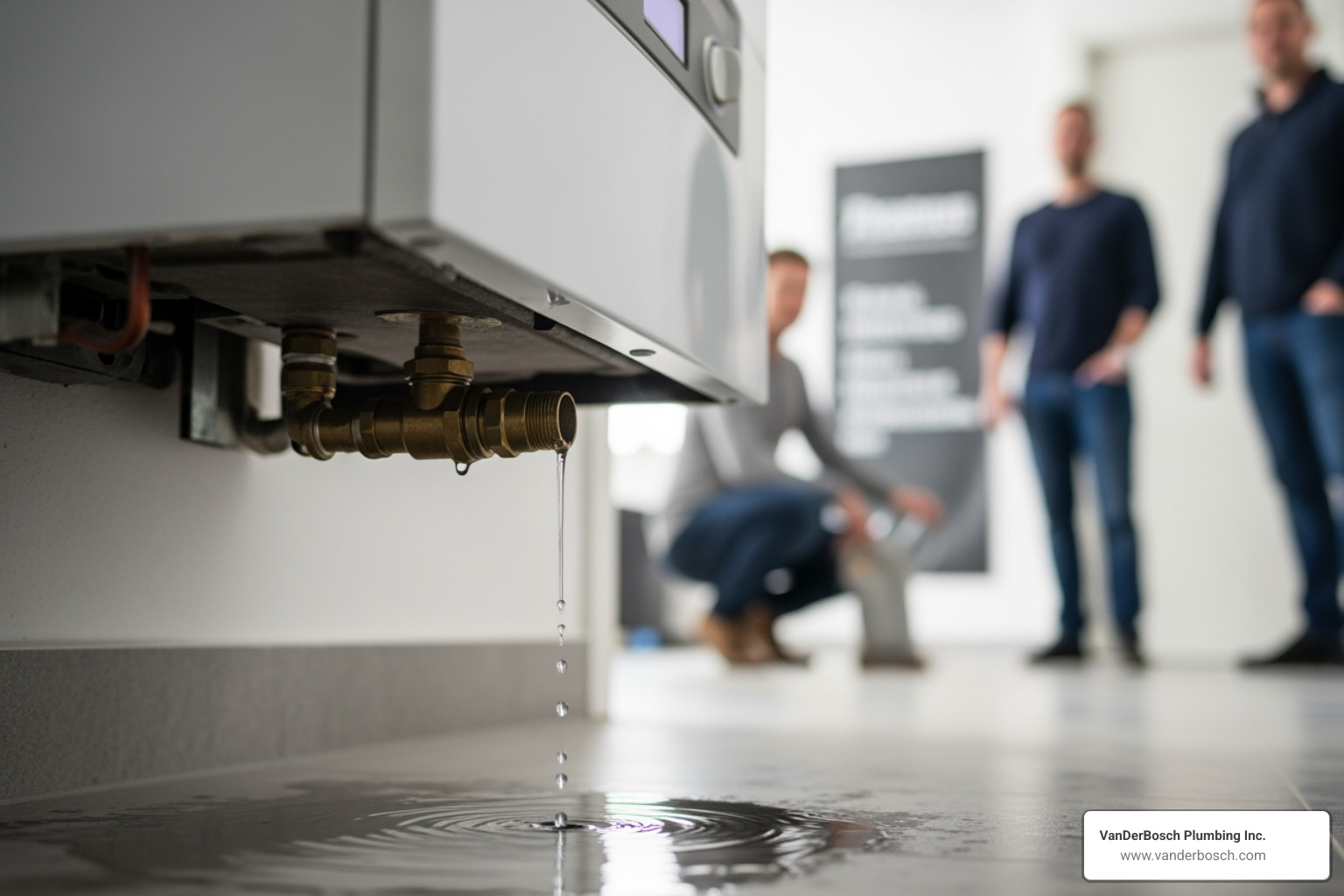
Boiler leaking water is one of the most common heating emergencies homeowners face, and it’s never something you should ignore. Whether you’ve finded a small puddle beneath your unit or noticed water dripping from pipes, that leak signals an underlying problem that can quickly escalate from a minor inconvenience to serious property damage.
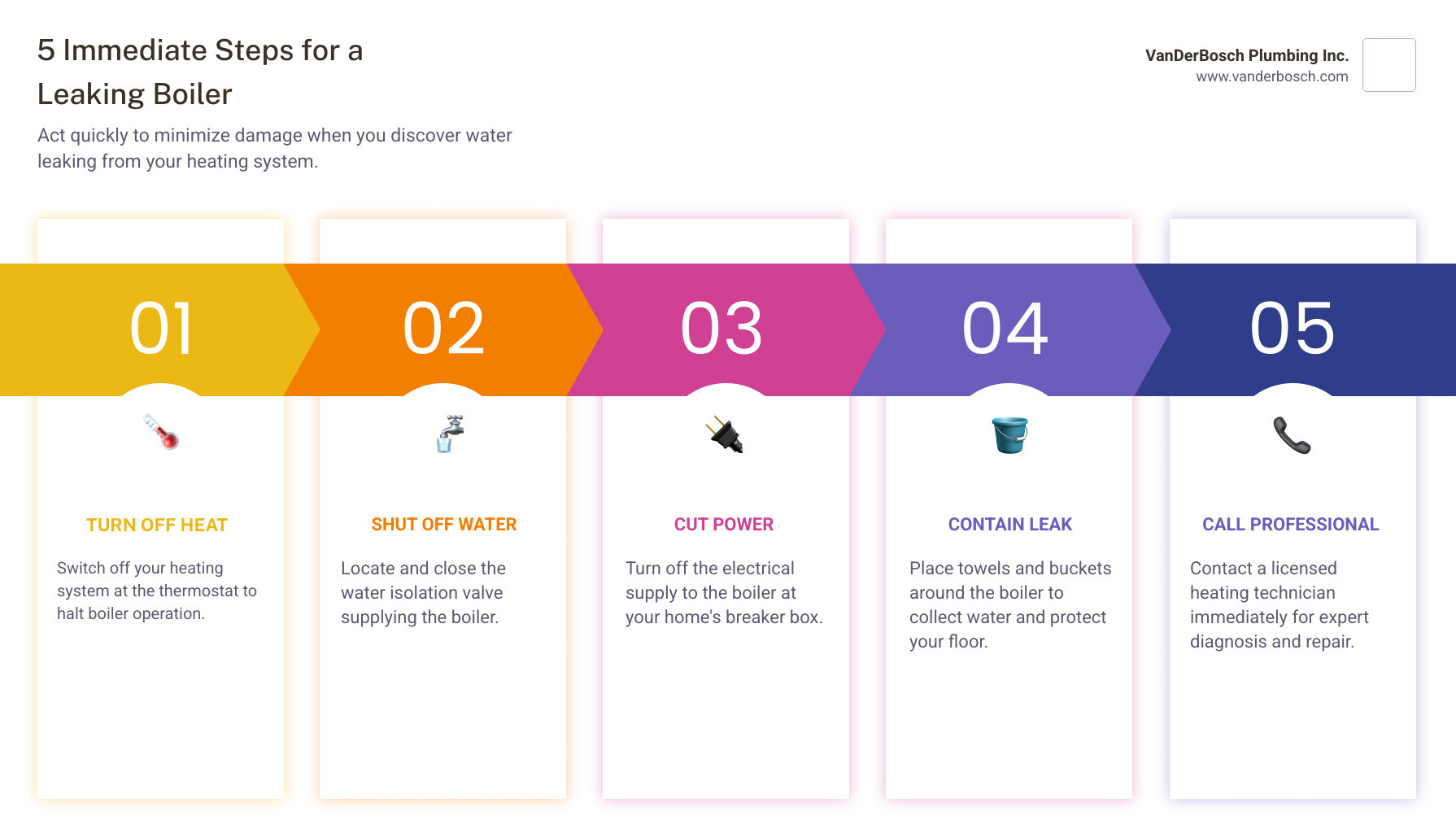
If your boiler is currently leaking, here’s what you need to do right now:
- Turn off the heating system at the thermostat
- Shut off the water supply to the boiler using the isolation valve
- Switch off electrical power at the breaker to prevent shorts
- Place towels and buckets to contain the water and protect flooring
- Call a licensed professional immediately for diagnosis and repair
Few things cause more concern than walking into your utility room and finding water where it shouldn’t be. The good news? Most boiler leaks stem from fixable issues like high pressure, loose joints, or worn seals rather than catastrophic failures requiring full replacement. The bad news? Even small drips can waste thousands of gallons, promote dangerous mold growth, and corrode electrical components if left unaddressed.
Understanding what’s causing your leak matters. Common culprits include pressure exceeding the safe 1.5 bar range, corrosion in aging pipes, faulty heat exchangers, or frozen condensate lines during Chicago’s brutal winters. The leak’s location—whether from the boiler body itself, internal seals, or external pipework—provides crucial diagnostic clues about the underlying problem and repair costs.
This guide will walk you through identifying leak sources, understanding what each type of leak means, and knowing when DIY checks are safe versus when you absolutely need a Gas Safe registered professional. We’ll also cover prevention strategies to keep your system running efficiently for years to come.
Immediate Steps: What to Do When Your Boiler is Leaking Water
When you first spot a Boiler leaking water, your heart might skip a beat. Don’t panic! The first few minutes are critical for preventing structural damage to your home in Chicago or the surrounding suburbs.
Water Supply and Power Shutoff
The very first thing we recommend is stopping the source of the problem. Find the main water shutoff valve or the specific isolation valve for your boiler and turn it clockwise until it stops. This prevents more water from entering the system and feeding the leak.
Next, head to your electrical breaker panel. Water and electricity are famously bad neighbors. Switch off the power to the boiler to eliminate the risk of short circuits or electrical shocks. If the leak is near a power outlet or the unit’s internal circuit board, this step could save you from a very expensive repair—or worse.
Containment and Cleanup
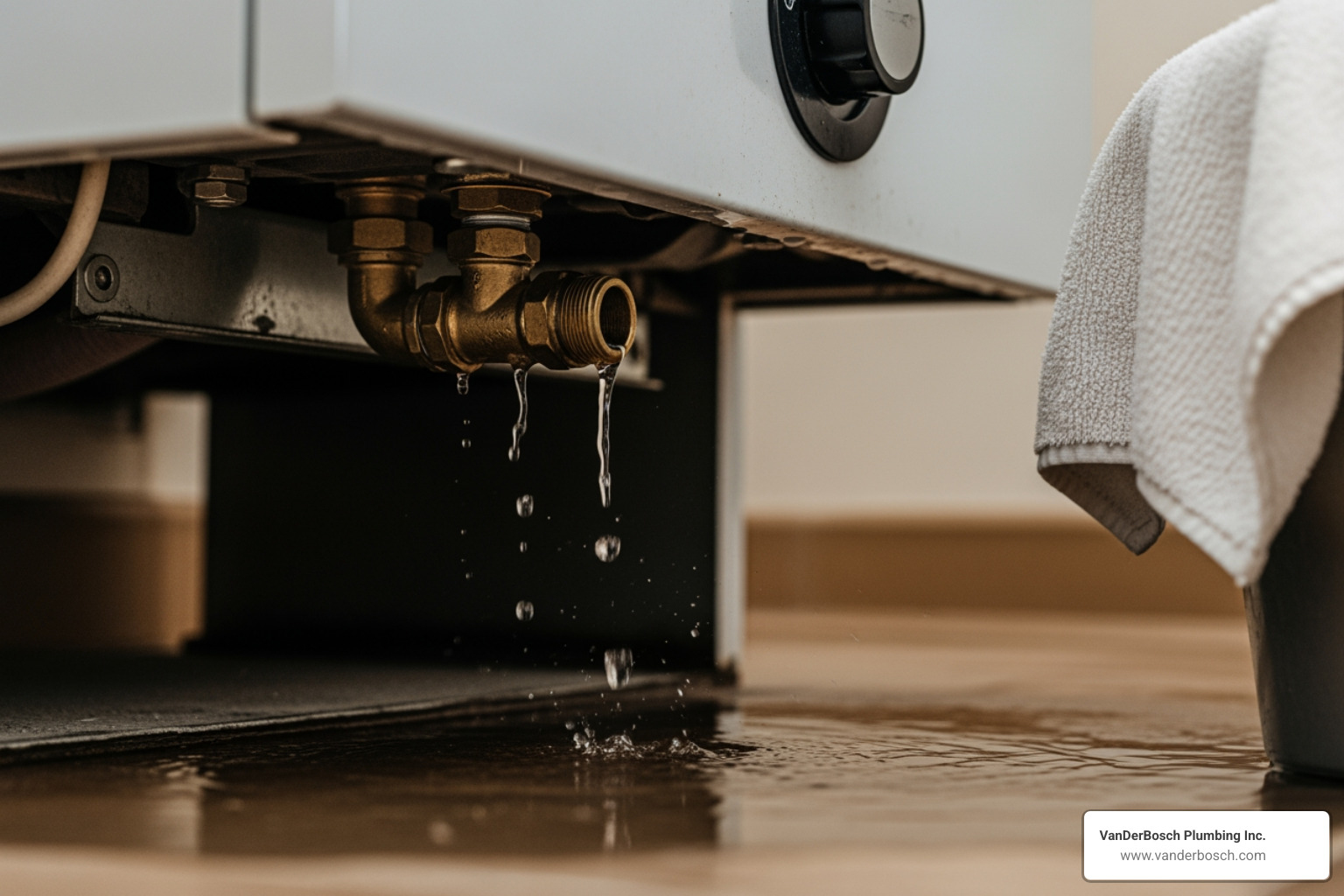
Grab those old beach towels and a few sturdy buckets. Place a bucket directly under the drip to catch water before it reaches your floorboards. If you have a basement in a place like Hyde Park or Ukrainian Village, you know how quickly moisture can seep into foundation cracks or under tiles. Use towels to create a “dam” around the unit to prevent water from spreading to other rooms.
System Drainage
If the leak is significant, you may need to drain the remaining water from the system. For many homeowners, this involves bleeding the radiators. By opening the radiator valves, you can release some of the internal pressure and water volume, which often slows the leak at the boiler.
For residents in the city who may be struggling with heating costs or emergency repairs, the Chicago emergency heating assistance program offers resources for low-income homeowners to ensure they stay warm during our legendary winters.
Common Causes of System Leaks and Failures
Why is your boiler suddenly acting like a leaky faucet? Boilers are complex machines that handle high temperatures and fluctuating pressures. Over time, several factors can cause the system to fail.
- Corrosion: This is the “silent destroyer.” As boilers age, the metal pipes and the tank itself can begin to rust. This is especially common in older homes in Sauganash or West Ridge where the original pipework might be decades old.
- Thermal Expansion: Metal expands when it’s hot and contracts when it’s cold. This constant “breathing” can eventually loosen joints and fittings.
- Loose Joints: Sometimes, the fix is as simple as a connection that has vibrated loose over time or was improperly installed by a previous contractor.
Average Repair Costs for Boiler Components
Understanding the potential financial impact is important. Based on industry data, here is what you might expect for common repairs:
| Component | Estimated Repair Cost |
|---|---|
| Loose Joints / Pipe Fittings | $130 – $260 (£100 – £200) |
| Worn Internal Seals | $200 – $330 (£150 – £250) |
| Expansion Vessel Replacement | $390 – $650 (£300 – £500) |
| Faulty Heat Exchanger | $520 – $1,000+ (£400 – £800) |
According to scientific research on heating equipment costs and lifespans, the average lifespan of a boiler is roughly 20 years. However, putting off small repairs can lead to a full system replacement, which can cost upwards of $5,000 for commercial-grade units or high-efficiency residential models.
How High Pressure Causes a Boiler Leaking Water
Think of your boiler’s pressure like human stress—if it gets too high, it has to be released somehow! Most modern boilers have a pressure gauge on the front.
- The Green Zone: Ideally, your needle should sit around 1.5 bar.
- The Red Zone: If the needle climbs toward 3.0 bar, you’re in the danger zone.
When pressure is too high, the Pressure Relief Valve (PRV) will often start “weeping” or dripping water. This is actually a safety feature designed to prevent the boiler from exploding, but if it happens constantly, it means your expansion vessel has likely failed or the filling loop (the pipe used to add water) has been left slightly open. If you notice your pressure gauge constantly fluctuating, it’s one of the top signs you need boiler repair in Chicago before winter hits.
Diagnosing a Boiler Leaking Water from Internal Seals
Inside your boiler, there are dozens of rubber seals and gaskets. Over time, the high heat causes these seals to harden and crack. If you see water dripping from the inside of the boiler casing, it’s often a sign that a pump seal or a hydraulic block gasket has perished. Because these parts are tucked away inside the unit, they require a professional to open the casing and replace the specific component.
Identifying the Source: Boiler Body vs. Pipework
Locating exactly where the water is coming from is half the battle. We often ask our customers to perform a “dry test”: wipe down all visible pipes with a dry cloth, then watch closely to see where the first bead of water reappears.
Pipework and External Fittings
If the leak is coming from the copper pipes leading into or out of the boiler, you’re likely dealing with a loose joint or a pinhole leak caused by corrosion. In areas like Roselle or Melrose Park, where water hardness can vary, mineral buildup inside the pipes can accelerate this corrosion. If you’re in the western suburbs, you can find more specific info about Roselle boiler services here.
The Condensate Pipe
Modern high-efficiency boilers produce a small amount of wastewater called condensate. This drains out through a plastic pipe. During a Chicago deep freeze, this pipe can actually freeze solid if it isn’t properly insulated. When the water has nowhere to go, it backs up into the boiler and leaks out of the bottom.
Faulty Heat Exchangers and Internal Components
The heat exchanger is the heart of your boiler. It’s where the gas flame heats the water. Unfortunately, it’s also one of the most expensive parts to fix.
- Limescale Buildup: In hard water areas, “kettling” (limescale deposits) can cause the heat exchanger to overheat and crack.
- Metal Fatigue: Years of rapid heating and cooling can cause the metal to develop hairline fractures.
- Bi-thermal Leaks: In some models, the heat exchanger handles both central heating and domestic hot water. A leak here can cause the two systems to mix, which is a serious issue.
The Dangers of Ignoring a Leaking Boiler
It might be tempting to just put a bucket under the leak and forget about it until spring. We strongly advise against this. A Boiler leaking water is a ticking time bomb for your home’s health and safety.
- Electrical Shorts: Most modern boilers are full of sensitive electronics. A single drip onto the circuit board can fry the entire system instantly.
- Structural Rot and Mold: Persistent moisture is an invitation for mold. Mold can begin to grow within 24–48 hours in damp conditions, leading to respiratory issues for your family.
- Carbon Monoxide Risks: If a leak is caused by a cracked heat exchanger, there is a risk that combustion gases—including deadly Carbon Monoxide (CO)—could leak into your living space.
- Gas Leaks: Severe corrosion that affects the boiler body can eventually compromise the gas seals, creating a fire hazard.
Prevention and Long-Term Maintenance Strategies
The best way to handle a leak is to make sure it never happens in the first place. We’ve seen that proactive homeowners save thousands over the life of their heating system.
- Annual Servicing: This is the gold standard. A professional technician can spot a weeping seal or a slightly corroded pipe long before it becomes a flood.
- Magnetic Filters: These are brilliant devices that catch metallic “sludge” (rust) before it can settle in your boiler and cause damage.
- Corrosion Inhibitors: Adding a chemical inhibitor to your system’s water helps protect the internal metal surfaces from rusting.
- Pipe Insulation: Especially for those condensate pipes! Proper insulation prevents the winter freeze-ups that lead to backups and leaks.
- Pressure Monitoring: Get into the habit of checking your pressure gauge once a month. If it’s consistently dropping or rising, give us a call before it starts leaking.
Frequently Asked Questions about Boiler Leaks
Can I fix a leaking boiler myself?
While we love a good DIY project, boilers are the exception. Because they involve high-pressure water, electricity, and natural gas, the risks are simply too high. You can certainly tighten a visible external nut on a pipe joint by a quarter-turn, but you should never open the boiler casing yourself. In Illinois, specific repairs must be done by licensed technicians to ensure the unit remains safe and your home insurance remains valid.
When should I replace my boiler instead of repairing it?
If your boiler is over 15–20 years old and develops a major leak (like a cracked heat exchanger or a corroded tank), replacement is usually the smarter financial move. Older boilers often operate at only 60–70% efficiency, whereas modern high-efficiency models reach 90% or more. The energy savings alone can often “pay back” the cost of the new unit within a few years.
Why is the water leaking from my boiler brown?
Brown or “rusty” water is a clear sign of internal corrosion. It means that the iron components inside your radiators or pipes are breaking down and turning into “sludge.” This sludge is abrasive and can quickly destroy your boiler’s pump and heat exchanger. If you see brown water, your system likely needs a professional power flush and the addition of a magnetic filter.
Conclusion
A Boiler leaking water doesn’t have to be the end of the world, but it does require expert attention. From the historic homes of Oakbrook Terrace to the modern apartments in Niles and Elmhurst, we’ve seen it all. Whether it’s a simple pressure adjustment or a complex heat exchanger replacement, the team at VanDerBosch Plumbing Inc. is here to help.
We pride ourselves on our 100% satisfaction guarantee and our 24/7 availability for those 4:00 AM emergencies. Our background-checked technicians provide transparent pricing with no hidden service charges, ensuring your home stays warm and dry all winter long.
Don’t let a small drip turn into a big disaster. If your boiler is weeping, we have the tools and the expertise to make it right.
Schedule your professional boiler service today with the Chicagoland experts at VanDerBosch Plumbing Inc. and experience the peace of mind that comes with a perfectly maintained heating system.