
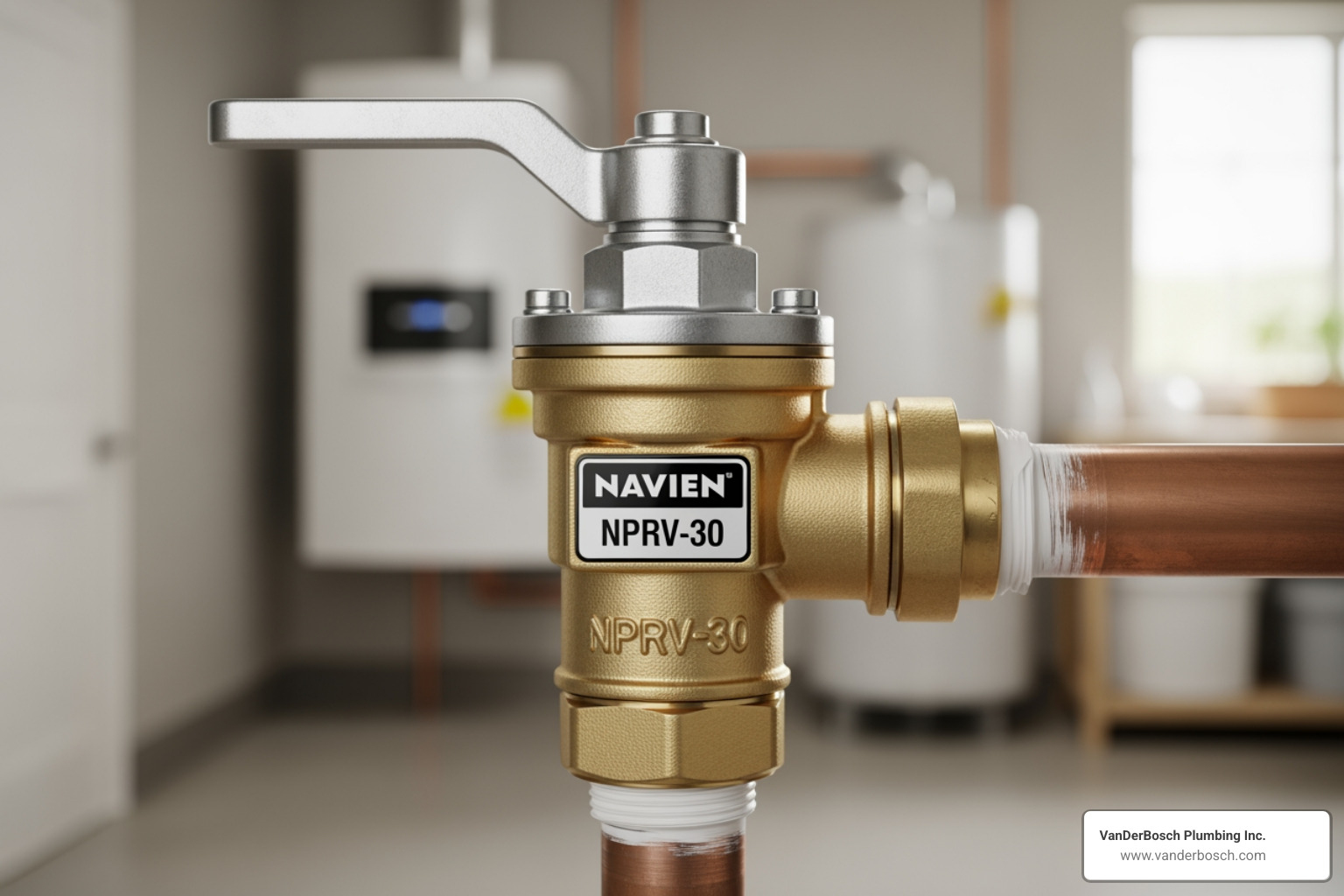
Why Your Navien Pressure Relief Valve Matters
If you own a Navien tankless water heater or combi-boiler, understanding your Navien pressure relief valve is crucial for safety. This small but vital component prevents dangerous over-pressurization that could damage your unit or cause flooding.
Quick Answer: Navien Pressure Relief Valve Basics
- What it is: A safety device that automatically releases water when pressure gets too high.
- Where it is: Navien combi-boilers have two valves—30 PSI for space heating and 150 PSI for domestic hot water.
- Common problem: Dripping or leaking, especially after testing.
- Normal behavior: A brief spray from the stem during manual testing is often normal.
- When to worry: Constant dripping, failure to reseal, or visible corrosion.
- Action needed: Annual testing is recommended; replacement requires a licensed plumber.
Many Navien owners find their pressure relief valve leaking and worry something is seriously wrong. While it can be a simple valve replacement, a leaking valve can also signal deeper problems like excessive water pressure or a failed expansion tank. This guide will help you identify the right valve, recognize warning signs, and know when to call a professional. A malfunctioning valve can lead to property damage or system failure, but with the right knowledge, you can catch problems early.
Understanding Your Navien’s Pressure Relief Valves
This section explains the fundamental role and types of pressure relief valves in Navien systems, helping homeowners identify the correct components and understand their importance.
What is a Pressure Relief Valve and Why is it Important?
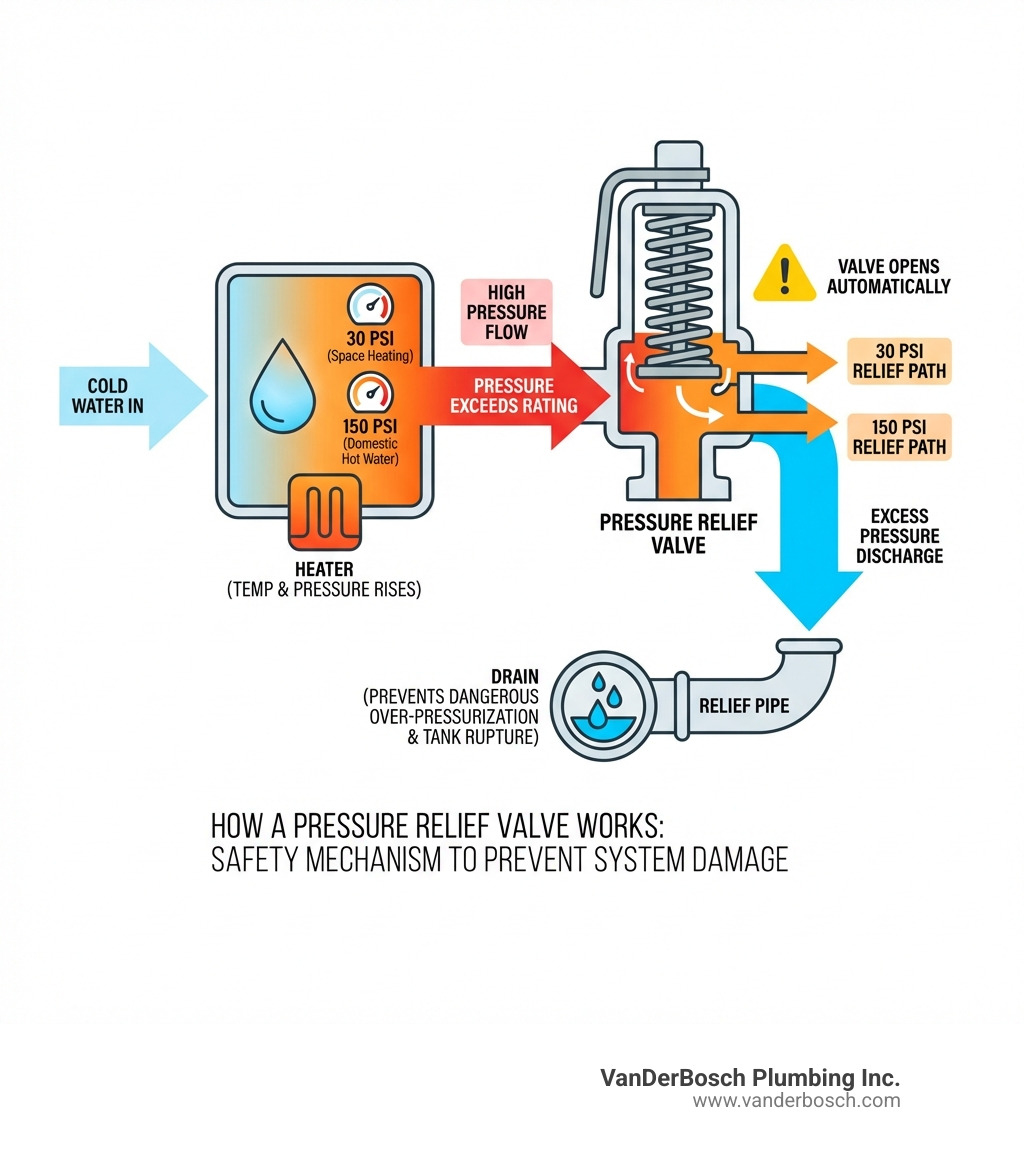
A Navien pressure relief valve (PRV) is a critical safety component that protects your water heater or boiler from excessive pressure. When internal pressure exceeds a safe limit, the PRV automatically opens to discharge water, reducing the pressure to a safe level. This prevents damage to the unit, pipes, and your home.
Without a functioning PRV, over-pressurization could rupture the heat exchanger or pipes, leading to major water damage. In extreme cases, it can cause the unit to fail catastrophically. It is a mandatory safety device required by plumbing codes. For more about leaks, visit our page on Why Is My Water Heater Leaking?. Always use caution with hot water systems, as temperatures over 125°F can cause severe burns.
Types of Valves in Navien Units: 30 PSI vs. 150 PSI
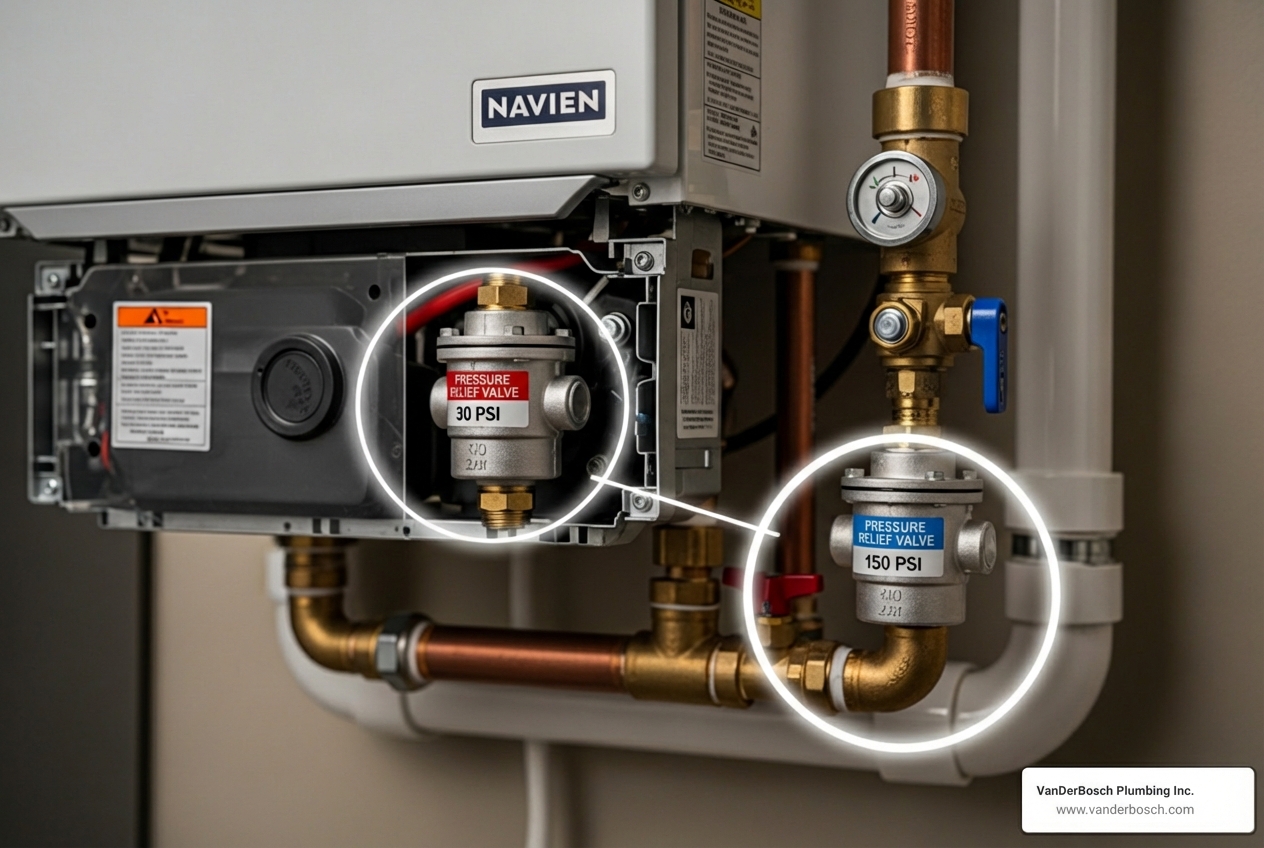
Navien combi-boilers, which handle both domestic hot water (DHW) and space heating, use two distinct pressure relief valves:
30 PSI Valve (Space Heating Side): This valve is found on the space heating (hydronic) loop. It protects the closed-loop system that circulates water through radiators or radiant flooring. The 30 PSI rating is appropriate for these lower-pressure heating systems.
150 PSI Valve (Domestic Hot Water Side): The DHW side, which supplies your taps and showers, has a valve rated at 125 PSI or 150 PSI. This higher setting accommodates municipal water pressure and the thermal expansion that occurs when water is heated. A standard tank water heater would have a similar 150 PSI T&P relief valve.
Knowing which valve is which is key to correct troubleshooting and replacement.
Is it a Relief Valve or an Air Vent?
It’s common to confuse a pressure relief valve with an air vent. A true Navien pressure relief valve has a small test lever and a discharge pipe leading to a drain. Its pressure rating (e.g., “30 PSI” or “150 PSI”) is stamped on the body.
An air vent, in contrast, is designed to purge air from the system. It typically has a small cap but no large test lever or dedicated discharge pipe for water. If you’re unsure, look for the pressure rating and test lever to confirm it’s a PRV.
Diagnosing a Faulty Navien Pressure Relief Valve
Learn the common signs of a malfunctioning valve and what causes it to fail, distinguishing between normal operation and a true problem.
Common Signs of a Problem
Identifying a problem with your Navien pressure relief valve usually starts with noticing water where it shouldn’t be. Key signs include:
- Dripping or Leaking: A persistent drip or stream from the discharge pipe is the most obvious sign. Constant dripping means the valve isn’t sealing properly.
- Weeping: A slow seep of moisture around the valve body or its connections.
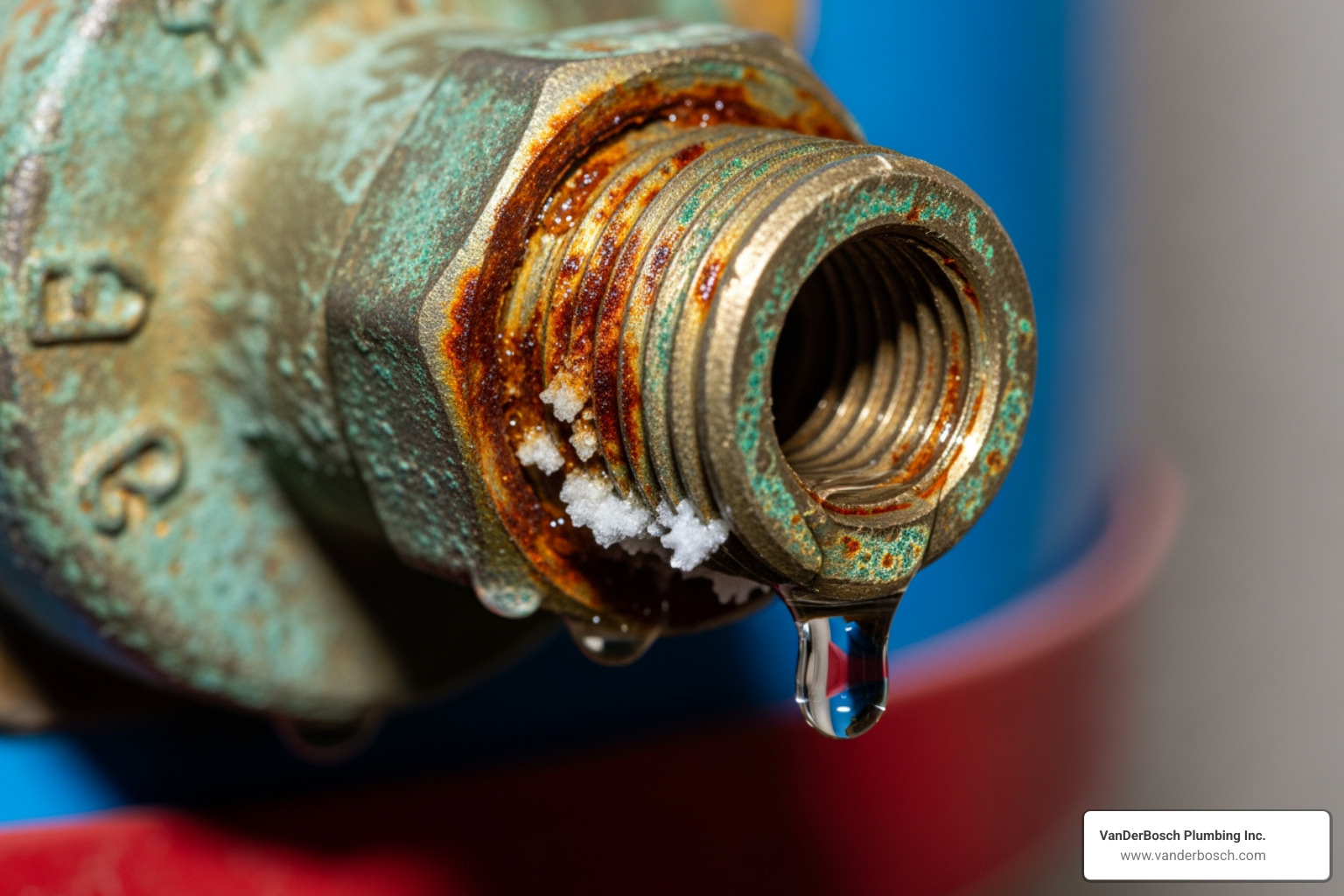
- Corrosion or Mineral Buildup: Rust or mineral deposits (scale) around the valve suggest a long-term leak and can interfere with the valve’s seal.
- Frequent Discharge: If the valve opens often, it indicates your system pressure is consistently too high. The valve is working, but the root cause needs to be addressed.
- Failure to Reseal: If the valve continues to leak after a manual test, it has failed.
Ignoring a leaking PRV can lead to water waste and property damage. For other warning signs, see our guide on Signs Your Water Heater May Need Repair or Replacement.
What Causes a Navien Pressure Relief Valve to Leak?
A leaking Navien pressure relief valve is often a symptom of another issue:
- High System Pressure: Incoming municipal water pressure above 80 PSI can cause the PRV to open. This is common in some older Chicago homes.
- Thermal Expansion: In a closed plumbing system, water expands when heated. Without an expansion tank, this pressure build-up forces the PRV to open.
- Failed Expansion Tank: An expansion tank absorbs pressure from thermal expansion. If its internal air bladder fails, it becomes waterlogged and can’t do its job, causing pressure spikes.
- Debris or Sediment: Small particles of rust or scale can get lodged in the valve’s seat, preventing it from closing completely.
- Worn-Out Seal: The valve’s internal seals can degrade over time from wear and tear, causing leaks.
- Water Quality: Hard water, common in Chicagoland, leads to scale buildup that can cause the valve to stick or fail to seal.
Pinpointing the cause often requires a professional assessment.
Normal vs. Abnormal Leaking
Not every drop of water means a crisis.
Normal Behavior:
- Spray from Stem During Test: A small spray of water from the test lever’s stem is often normal, as many valves are not designed to be perfectly sealed there. Most water should exit through the discharge pipe.
- Brief, Intermittent Discharge: The valve may briefly open to release pressure from thermal expansion during a heating cycle and then reseal. This is the valve doing its job.
Abnormal Leaking (When to Worry):
- Constant Drip or Stream: If water is always flowing from the discharge pipe, the valve is not sealing.
- Failure to Reseal After Testing: If the valve leaks after you test it, it’s worn or obstructed.
- Leaking at Threads or Valve Body: Water seeping from the valve’s connections or a crack in its body requires immediate attention.
- Frequent or Prolonged Discharge: If the PRV opens often or for long periods, it points to a persistent high-pressure problem in your system.
Maintenance, Testing, and Replacement
This section provides actionable guidance on how to maintain, test, and know when to replace your Navien’s pressure relief valve.
How to Safely Test Your Valve
Regularly testing your Navien pressure relief valve is a critical annual maintenance step. It ensures the valve isn’t seized and can operate when needed.
Safety Precautions:
- Be aware that discharged water will be hot and can cause severe burns.
- Ensure the discharge pipe is properly routed to a floor drain.
- Wear heavy gloves and eye protection.
Recommended Testing Procedure:
- Locate the PRV: Identify the correct valve on your Navien unit.
- Prepare the Area: Place a bucket under the discharge pipe to catch water.
- Lift the Lever: Firmly lift the test lever for a few seconds. Water should discharge from the pipe.
- Release the Lever: Allow the lever to snap back into its closed position. This helps clear debris from the valve seat.
- Observe for Reseal: The valve should stop discharging water completely. A continuous drip means it failed to reseal.
Important: It is not unusual for older relief valves to leak after being tested. If this happens, the valve needs replacement. If you’re uncomfortable performing this test, contact a qualified plumber.
The Process for Replacing a Navien Pressure Relief Valve
Replacing a Navien pressure relief valve is a job for a licensed professional, not a DIY task. Working with high-pressure, hot water systems and gas appliances is dangerous and requires specialized training and tools. An improper installation can lead to injury, property damage, and may void your Navien warranty.
Safety Warning: For your safety, always have a licensed plumber from VanDerBosch Plumbing Inc. perform this replacement.
A professional plumber will follow a strict safety protocol, which includes shutting off the power, gas, and water to the unit; safely relieving all system pressure; draining the unit as needed; and correctly installing the new valve with proper sealant. After installation, they will restore power and water, test the new valve, and ensure the entire system is operating safely.
For reliable and professional Navien pressure relief valve replacement, including Navien Tankless Water Heater Services in Roselle, contact our expert technicians.
When Should the Valve Be Replaced?
It’s time to replace your Navien pressure relief valve if you notice any of the following:
- Constant Leaking: If the valve drips or leaks continuously, its internal seal is worn out.
- Fails to Open: If you lift the test lever and no water comes out, the valve is seized and must be replaced immediately.
- Fails to Reseal After Testing: If a test results in a new, persistent leak, the valve is faulty.
- Visible Corrosion or Damage: Significant rust or physical damage compromises the valve’s integrity.
- Age: As a preventative measure, many plumbers recommend replacing PRVs every 3-5 years, especially in areas with hard water.
When in doubt, it’s safer to replace a questionable valve proactively.
Is the PRV a Symptom of a Bigger Problem?
A leaking PRV isn’t always a faulty valve. Explore deeper system issues that could be causing your pressure relief valve to activate.
High Water Pressure and Thermal Expansion
When your Navien pressure relief valve is consistently discharging, it’s often a symptom of a pressure issue, rather than a defect in the valve itself.
- High Municipal Water Pressure: Incoming water pressure above 80 PSI puts a strain on your entire plumbing system, causing the PRV to activate. A plumber can test your pressure and install a pressure reducing valve (PRV) on your main water line to protect all your fixtures.
- Thermal Expansion: When your Navien heats water, the water expands. In a “closed” system (one with a backflow preventer), this creates a rapid pressure increase that the PRV must release. This indicates the need for an expansion tank.
- Failed Thermal Expansion Tank: If you have an expansion tank, it may have failed. An expansion tank has an air bladder to absorb expanded water volume. If the bladder ruptures or loses its air charge, it becomes waterlogged and can no longer absorb pressure, causing the PRV to activate.
If your Navien pressure relief valve is frequently discharging, a professional should check your system pressure and expansion tank. This is a key part of Tankless Water Heaters 101.
The Impact of Water Quality and Softeners
Water quality significantly affects your Navien unit and its Navien pressure relief valve.
- Hard Water and Scale Buildup: Chicagoland’s hard water contains minerals that form scale when heated. This scale can build up on the PRV’s seat, preventing it from sealing properly and causing a leak. Scale also reduces your unit’s efficiency and lifespan.
- Water Softener Impact: A water softener removes these minerals. However, if it’s not functioning correctly, hard water can still cause scale buildup. Regular flushing and descaling of your Navien unit are essential preventive measures. For detailed maintenance steps, you can refer to the official Navien Service Manual here.
Other Navien System Faults
Sometimes, a leaking Navien pressure relief valve can be a temporary “fix” or an indicator of other, more complex issues within the unit itself.
- Error Codes: Check your Navien’s display for any error codes, which can help diagnose problems related to water flow or pressure.
- Faulty Sensors or Switches: A faulty pressure switch or a scaled-up flow sensor can cause the unit to malfunction, leading to symptoms that might seem related to the PRV. For example, if the unit fails to heat, the issue could be a sensor not detecting water flow, rather than the PRV itself.
- Temporary Fix for Heating: If manually activating your PRV temporarily “fixes” a heating problem, it’s a strong sign that the PRV is not the root cause. The pressure release might be clearing a blockage or resetting a sensor. This requires a professional to perform comprehensive diagnostics to find the real issue, which could be a faulty sensor, switch, or even a motherboard problem.
These scenarios emphasize that while the Navien pressure relief valve is a safety device, its activation can often be a warning sign, urging us to look deeper into the overall health of your Navien system.
Frequently Asked Questions about the Navien Pressure Relief Valve
How often should I test my Navien pressure relief valve?
It is recommended to test the valve at least once a year to ensure it can function properly. Be aware that older valves may develop a leak after being tested due to worn seals. If this happens, the valve must be replaced.
Why does my PRV spray water from the handle when I test it?
A small spray of water from the handle or stem when you lift the test lever is often normal. Many of these valves are not designed with a perfect seal at the stem for manual operation. As long as most of the water exits through the discharge pipe and the valve reseals without dripping afterward, this is not a cause for concern.
Can I replace a Navien pressure relief valve myself?
We strongly recommend against replacing a Navien pressure relief valve yourself. The risks from high-pressure systems, scalding water, and gas appliances are significant. Improper installation can lead to leaks, property damage, injury, and may void your warranty. This job should always be performed by a qualified, licensed plumber.
Conclusion
The Navien pressure relief valve is a small but mighty component of your Navien water heater, essential for your home’s safety. While annual testing is a simple homeowner task, any signs of persistent leaking or malfunction warrant a closer look. A dripping valve can be a simple fix or a red flag for a more significant issue like high system pressure. For expert diagnosis and repair of your Navien water heater issues in the Chicagoland area, the experienced technicians at VanDerBosch Plumbing Inc. are available 24/7 to ensure your system operates safely and efficiently. For all your water heater service needs, contact us today!