
Your Sewer Line Is Broken — But You Don’t Have to Dig Up Your Yard
Sewer pipe lining is a trenchless repair method that fixes damaged pipes from the inside — no digging, no destroyed landscaping, no weeks of disruption.
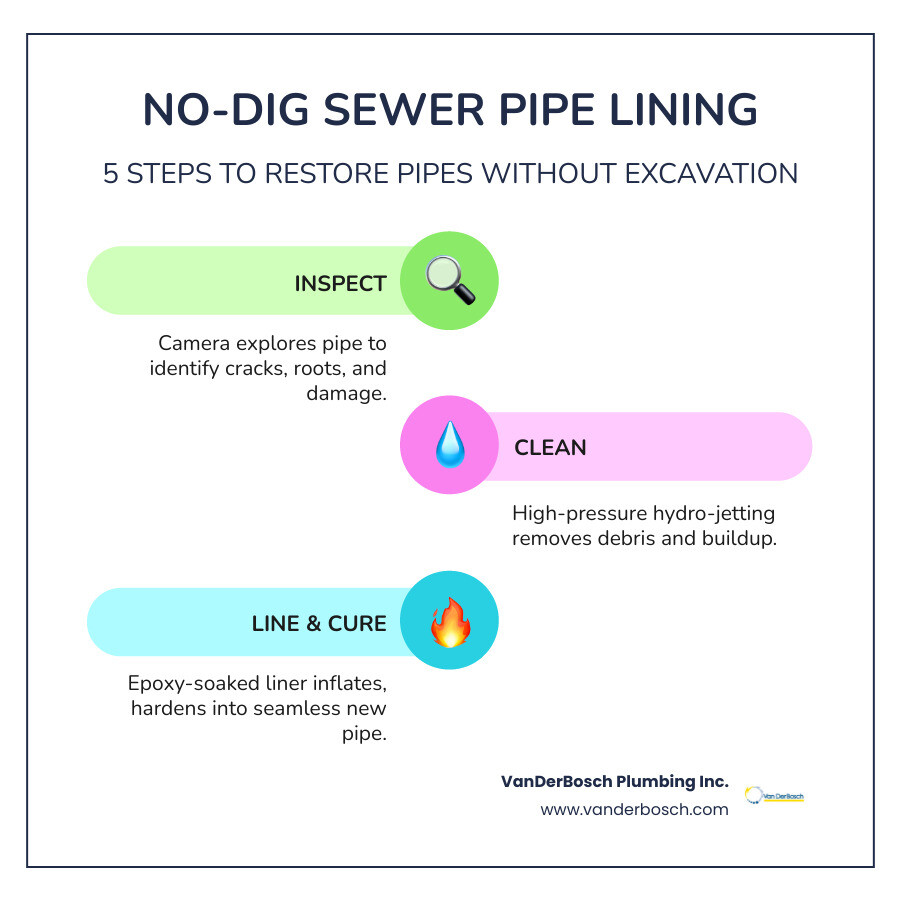
Here’s the quick version of how it works:
- A technician inspects your pipe with a camera
- The pipe is cleaned with high-pressure water jetting
- A flexible liner soaked in epoxy resin is inserted into the damaged pipe
- The liner is inflated and cured with heat or UV light
- It hardens into a brand-new “pipe within a pipe” — ready to last 50 to 100 years
For Chicagoland homeowners dealing with backups, slow drains, or cracked sewer lines, this is often the fastest and least disruptive fix available. Most jobs are done in a single day.
Traditional pipe repair means heavy equipment, torn-up driveways, and dead landscaping. For older Chicago-area homes — many built with clay or cast iron pipes — that kind of damage adds up fast.
Sewer pipe lining changes that equation entirely. It works through existing access points and leaves your yard, driveway, and foundation intact.
I’m Hugh Hodur, President of VanDerBosch Plumbing Inc., and I’ve overseen countless sewer and drain rehabilitation projects across the Chicagoland area — including many where sewer pipe lining saved homeowners from a full excavation nightmare. In this guide, I’ll walk you through everything you need to know to make a confident decision about your pipes.
What is Sewer Pipe Lining and How Does It Work?
At its core, Sewer pipe lining is the creation of a “pipe-within-a-pipe.” Instead of digging up the old, cracked, or root-infested line, we use the existing pipe as a host or a mold. We insert a flexible felt tube that has been saturated (or “wet-out”) with a high-strength epoxy resin. Once this tube is in place, we inflate it so it presses firmly against the inner walls of the old pipe.
Through a chemical reaction—often accelerated by heat, steam, or UV light—the resin hardens into a solid, structural sleeve. This new pipe is jointless, seamless, and incredibly durable. It effectively seals off cracks, prevents future root intrusion, and smooths out the interior of the line to improve flow.
When we perform this service, we adhere to strict ASTM F1216 standards, which ensure the finished product is a structural repair capable of handling the same loads as a brand-new PVC pipe. This technology allows us to rehabilitate pipelines ranging from small 2-inch drains to massive 120-inch municipal mains. For most residential applications in Chicago or Roselle, we are typically working with 4-inch to 6-inch lines.
You can find a detailed Cured-in-Place-Pipe Lining (CIPP) Overview from municipal sources, or check out our own more info about trenchless pipe repair services to see how we apply this technology locally.
Common Types of Sewer Pipe Lining Methods
While CIPP is the most popular residential choice, “trenchless” is actually a broad category. Depending on the specific issue in your Chicago or Oak Brook home, we might recommend different approaches:
- Cured-in-Place Pipe (CIPP): The gold standard for residential repair. It involves the resin-saturated liner mentioned above. It can negotiate 45- and 90-degree bends, making it perfect for complex residential layouts.
- Sliplining: One of the oldest methods. We slide a smaller, rigid carrier pipe into the larger host pipe and grout the space between them. While effective, it does reduce the pipe’s diameter more significantly than CIPP.
- Pipe Bursting: This is used when a pipe is too damaged to line or if you need to increase the pipe’s size. A “bursting head” is pulled through the old line, shattering it and pushing the fragments into the soil while simultaneously pulling a new HDPE pipe behind it.
- Point Repair (Sectional Lining): If only a small section of your pipe is damaged (like a single crack or one localized root intrusion), we can apply a “spot repair.” This uses the same CIPP technology but only covers a few feet rather than the whole line.
- Internal Pipe Coating: Often used for smaller diameter pipes or vertical stacks, this involves spraying or brushing a specialized epoxy onto the pipe walls.
For a deeper technical dive into these methods, the EPA’s Collection Systems O&M Fact Sheet: Trenchless Sewer Rehabilitation provides an excellent overview of how these systems manage infrastructure.
Limitations of Sewer Pipe Lining
As much as we love trenchless technology, it isn’t a magic wand for every situation. There are times when Sewer pipe lining simply won’t work:
- Collapsed Pipes: The liner needs a “host” to travel through. If the pipe has completely collapsed or “pancaked,” we can’t get the liner through it.
- Severe Back-Grade (Bellies): If your pipe has a deep “belly” where water pools due to soil shifting, a liner will follow that same dip. It fixes the leak, but it won’t fix the standing water issue.
- Significant Offsets: If the pipe joints have shifted so far that they no longer align, the liner might not be able to navigate the “step” between the two sections.
- Size Restrictions: While we can line very small and very large pipes, some specialized transitions or extreme diameter changes may require traditional methods.
If you are noticing signs a sewer line may need repair or replacement, such as frequent backups or lush green patches in your yard, a professional inspection is the only way to determine if lining is a viable candidate for your property.
The Step-by-Step Installation Process
We pride ourselves on a “measure twice, cut once” philosophy. The success of Sewer pipe lining depends entirely on the preparation.
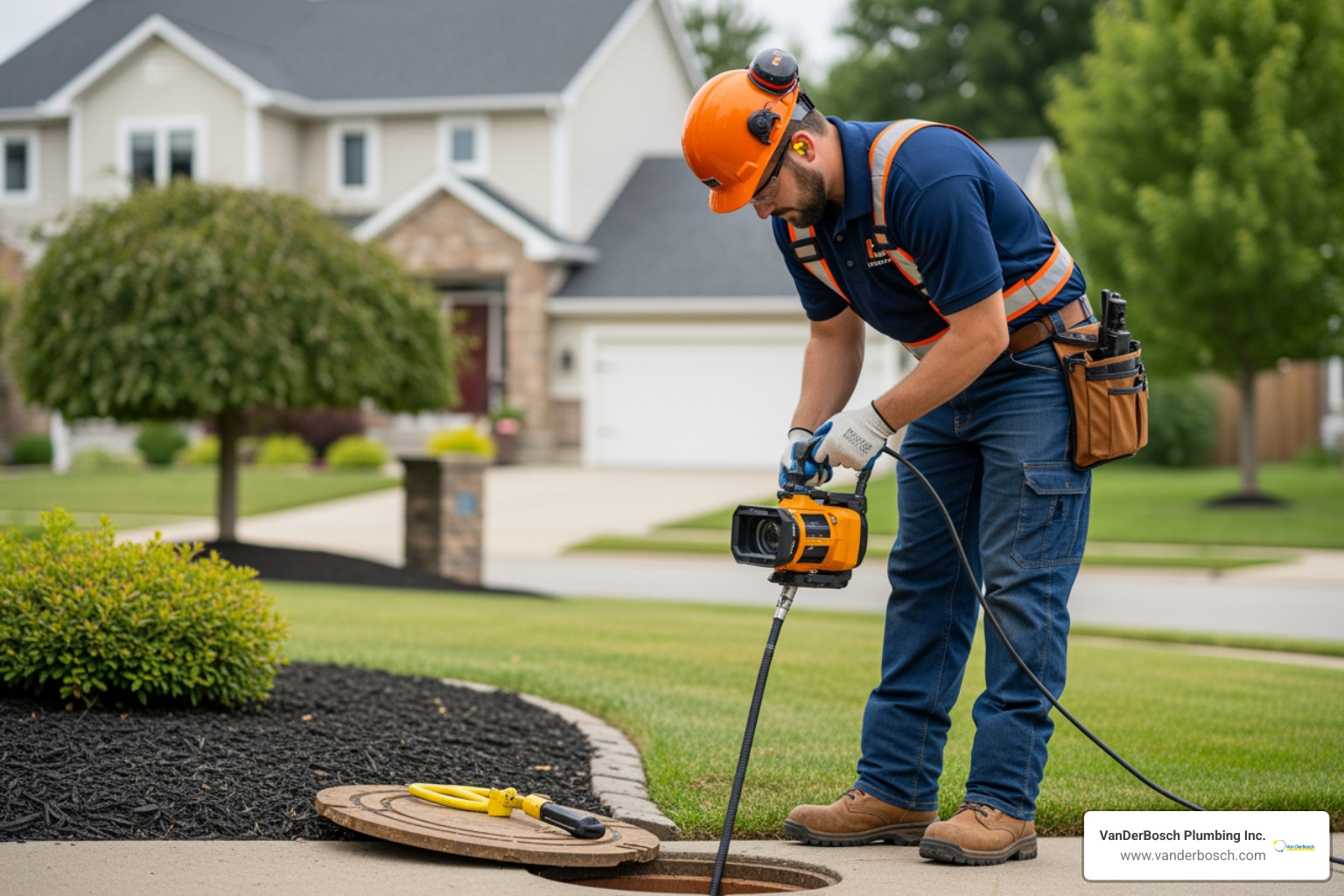
- Video Diagnosis: We start by sending a high-definition waterproof camera down the line. This allows us to see the exact location of cracks, roots, or blockages. You can learn more about this in the basics of sewer video inspection explained.
- Mechanical Cleaning & Hydro-Jetting: For the resin to bond properly, the pipe must be “white-metal clean.” We use high-pressure water (hydro-jetting) and specialized cutting tools to remove every trace of grease, scale, and tree roots.
- Liner Preparation (Wet-Out): We measure the exact length of the pipe and prepare the felt liner. The epoxy resin is mixed and vacuum-sealed into the liner at our mobile workstation.
- Insertion & Inversion: The liner is launched into the pipe. In many cases, we use air pressure to “invert” the liner, literally turning it inside out as it travels down the pipe. This ensures the resin-heavy side is pressed directly against the old pipe walls.
- Curing: Once in place, the liner is inflated. We then circulate hot water, steam, or use UV light to “cook” the resin. This process can take anywhere from one to four hours depending on the method used.
- Reinstatement: If the main sewer line has branch lines (laterals) connecting to it, the liner will cover them. We use a robotic cutting tool to precisely reopen those connections from the inside.
- Final Quality Check: We finish with a final camera inspection to ensure the liner is smooth, seamless, and perfectly installed.
Our Sewer Video Inspection Services are the first step in this journey, ensuring we have a clear roadmap before we ever start the lining process.
Key Benefits: Why Choose Trenchless Over Excavation?
The most obvious benefit is that we don’t have to dig a 10-foot-deep trench through your living room or your prize-winning rose bushes. But the advantages go much deeper than just aesthetics.
| Feature | Sewer Pipe Lining (Trenchless) | Traditional Excavation |
|---|---|---|
| Property Damage | Minimal (uses existing access) | Significant (trenching required) |
| Project Duration | Usually 1 day | 3 to 7 days |
| Design Life | 50 to 100 years | 50 to 100 years |
| Cost | 50% to 75% savings on restoration | High (due to landscape/paving repair) |
| Flow Capacity | Improved (smoother surface) | Standard |
Beyond the table, there is the “hidden” cost of excavation. When you dig up a sewer line, you aren’t just paying for the pipe; you’re paying to replace the driveway you cut through, the sidewalk you cracked, and the porch you had to shore up. With Sewer pipe lining, those costs disappear.
Furthermore, the materials used are environmentally friendly and safe. Once the resin is cured, it is inert. It also prevents “Inflow and Infiltration” (I/I)—which is when groundwater leaks into the sewer system, overtaxing municipal treatment plants.
For many homeowners, the big question is: Is trenchless sewer repair worth the cost? When you factor in the speed and the lack of property restoration, the answer is almost always a resounding yes.
When is Lining the Right Solution for Your Home?
In the Chicagoland area, we see a lot of clay pipes in places like Niles and Melrose Park, and cast iron in the city. These materials are prone to specific types of failure that lining handles beautifully.
- Root Infiltration: Tree roots love the moisture inside sewer pipes. They find a tiny crack at a joint, move in, and eventually expand until they break the pipe. Lining creates a jointless seal that roots simply cannot penetrate. We discuss this further in our guide on dealing with intrusive tree roots.
- Corrosion: Cast iron pipes eventually “scale” and corrode, leading to a rough interior that catches debris and causes clogs. Lining smooths this out and stops the corrosion in its tracks.
- Leaking Joints: Over time, the ground shifts (especially with Chicago’s freeze-thaw cycles), causing pipe joints to pull apart. Lining bridges these gaps with a single, continuous sleeve.
By learning how to avoid and catch sewer line issues early, you can often catch a problem while the pipe is still structurally sound enough to be lined, saving you thousands in the long run.
Maintaining Your Sewer Pipe Lining for Longevity
Once your new liner is installed, it’s remarkably low-maintenance. A properly installed liner has a 50-year design life, but many industry experts believe they can last up to 100 years. To ensure yours reaches that century mark:
- Avoid Harsh Chemicals: You don’t need “liquid plumber” anymore. In fact, harsh caustic chemicals can be hard on both old pipes and new liners.
- Annual Inspections: We recommend a quick camera “look-see” every year or two, especially if you have large trees on your property.
- Mind What You Flush: The liner improves flow, but it’s not a trash can. Avoid flushing wipes (even “flushable” ones), grease, or feminine hygiene products. Check out our tips on how to prevent clogged toilets and sewer lines for more advice.
Frequently Asked Questions about Sewer Pipe Lining
How long does a sewer pipe liner last?
As mentioned, the design life is typically 50 years. However, because the epoxy resin is resistant to the corrosive gases found in sewers and doesn’t have joints for roots to enter, the practical lifespan is often much longer—potentially up to 100 years.
Is the resin used in pipe lining safe for the environment?
Yes. We use high-quality resins that meet EPA and local standards. During the installation, there may be a slight odor—similar to plastic or glue—but this is non-toxic and dissipates quickly. We recommend keeping water in your P-traps (sinks and floor drains) to keep any odors from entering the living space during the few hours of curing.
Will the liner reduce the flow capacity of my pipes?
This is a common concern because the liner does technically reduce the diameter of the pipe by a few millimeters. However, because the new interior is so much smoother than old clay or corroded cast iron, the “Manning’s Coefficient” (a measure of friction) is significantly improved. This means water and waste actually move faster through a lined pipe than they did through the original pipe.
Conclusion
At VanDerBosch Plumbing Inc., we’ve been serving the Chicagoland community for decades. We understand the unique challenges of Chicago’s infrastructure—from the historic homes of Hyde Park to the suburban landscapes of Roselle and Elmhurst.
Our licensed technicians are background-checked, experienced, and committed to our 100% satisfaction guarantee. We offer transparent pricing with no hidden service charges and are available 24/7 for those plumbing emergencies that just can’t wait.
If you’re tired of recurring backups or have been told you need to dig up your yard, give us a call. We’ll provide a professional assessment and show you how modern technology can solve your sewer problems without the mess.
Schedule your trenchless pipe repair services today and let us help you stop the digging.