
Protecting Your Chicago Home from Basement Flooding
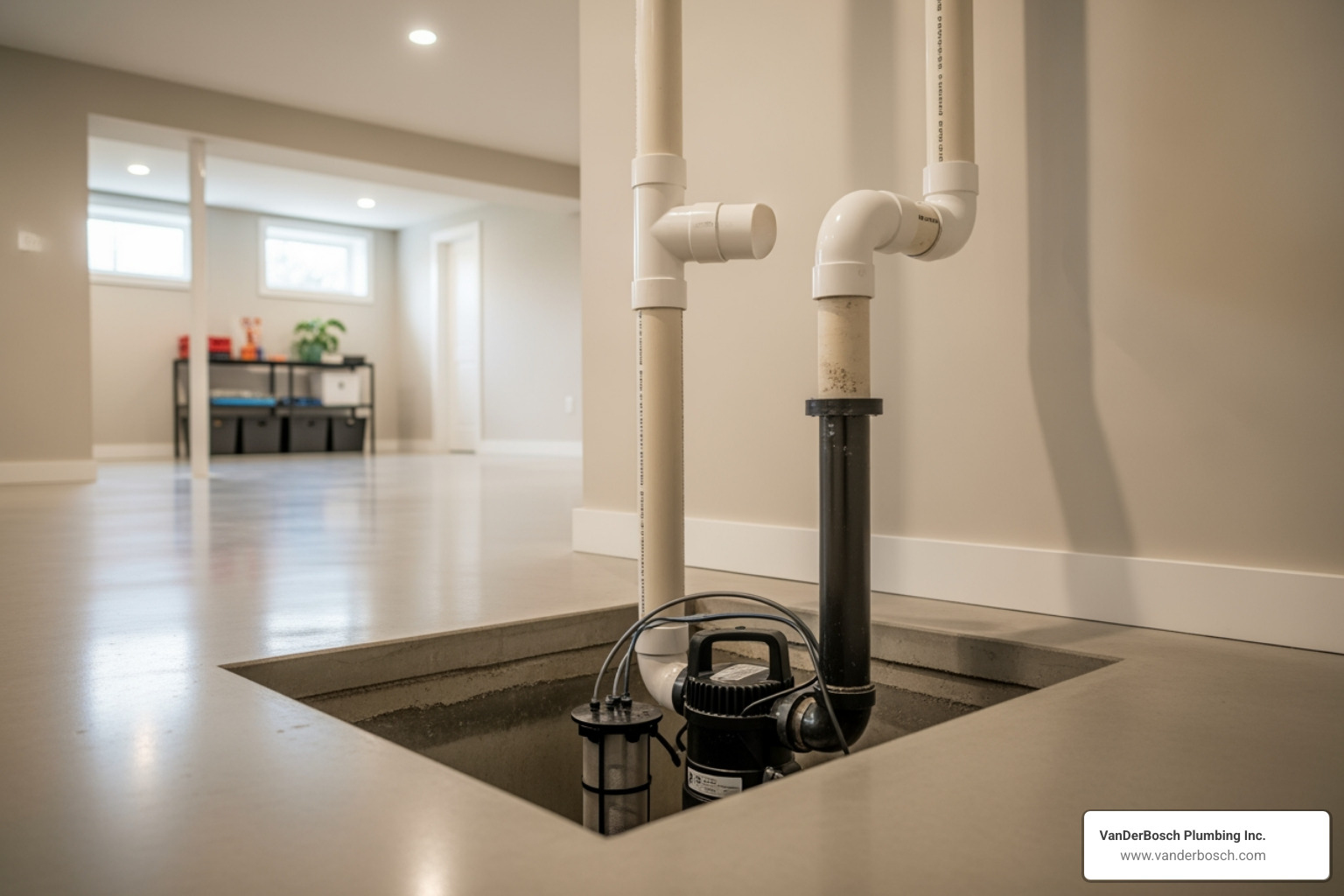
Sump pump Chicago services are essential for protecting homes from water damage caused by heavy rainfall, melting snow, and the area’s high water table. Whether you need installation, repair, or maintenance, professional help ensures your basement stays dry and your foundation remains protected.
Quick Answer for Chicago Homeowners:
- What is a sump pump? A device that collects groundwater in a pit and pumps it away from your foundation
- Why Chicago needs them: Heavy rain, snowmelt, high water table, and aging infrastructure create flooding risks
- Average cost: $800-$1,500 for installation
- Lifespan: 5-10 years on average
- When to call a pro: Strange noises, constant running, visible rust, or water pooling in your basement
Most Chicago homes have basements, which means they’re vulnerable to flooding. Heavy rain, rising groundwater, and aging plumbing systems can all put your basement at risk. A sump pump acts as your first line of defense, automatically removing water before it accumulates and causes damage.
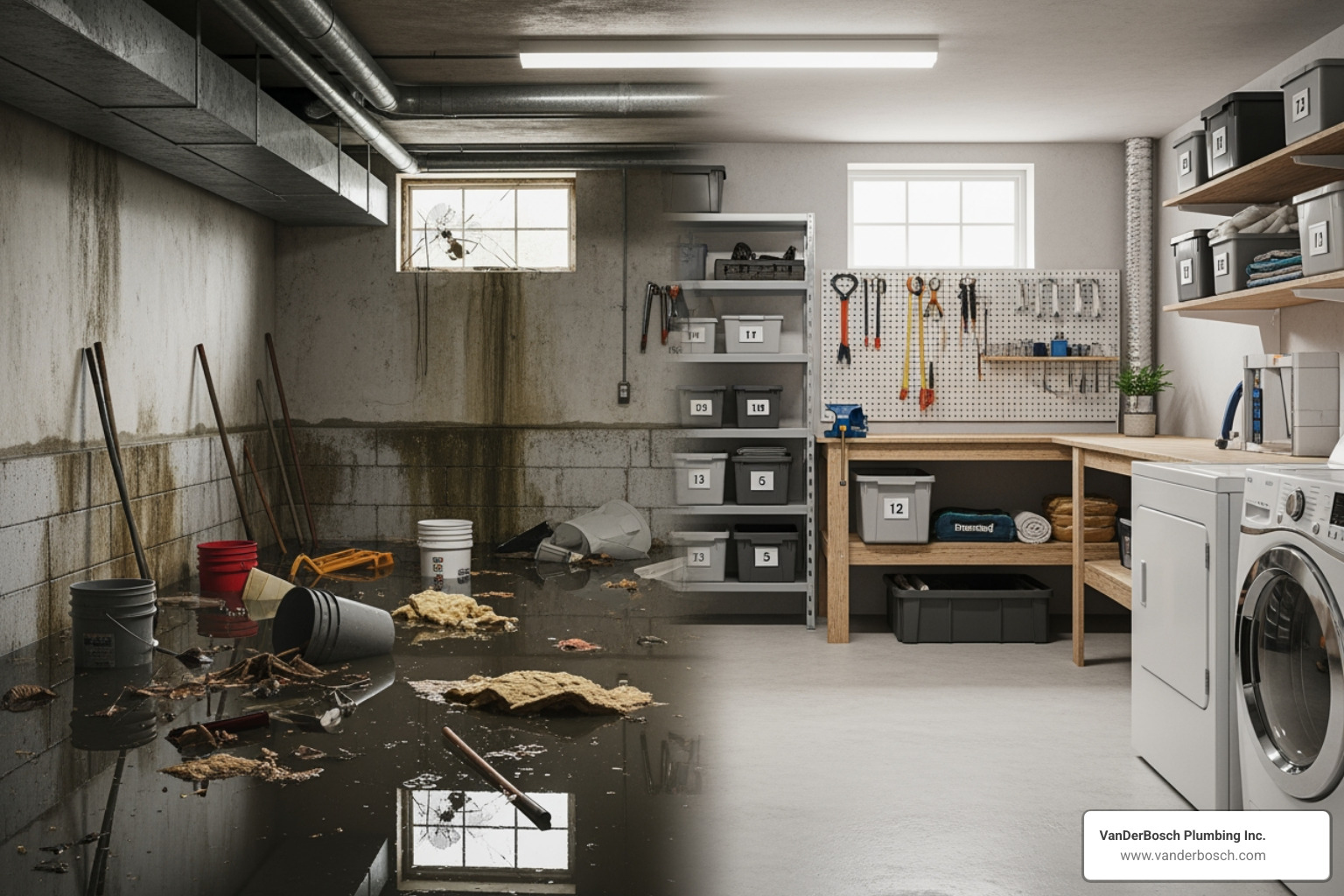
The stakes are high. Basement flooding doesn’t just mean ruined belongings—it can lead to mold growth, structural damage, and costly repairs. In some cases, it can even create electrical hazards and decrease your property value.
The good news? A properly installed and maintained sump pump system provides reliable protection. Regular maintenance keeps your pump working when you need it most, and knowing the warning signs of failure helps you avoid emergency situations during Chicago’s wettest seasons.
Why Sump Pumps Are a Necessity for Chicago Homeowners
Living in Chicago, we understand the unique challenges homeowners face when it comes to keeping basements dry. Our city’s climate, characterized by heavy rainfalls and significant snowmelt, combined with a naturally high water table and sometimes aging infrastructure, creates a perfect storm for potential basement flooding. A reliable sump pump system isn’t just a convenience; it’s a critical component for safeguarding your home. It protects your foundation from structural damage, prevents insidious mold growth, and ultimately preserves your property’s value. Without one, you risk costly repairs and the loss of cherished belongings.
Why are sump pumps essential for Chicago homes?
Chicago’s geography and weather patterns make sump pumps indispensable. We experience intense thunderstorms, especially during spring and summer, which can quickly overwhelm drainage systems. Couple this with harsh winters and rapid snowmelt, and you have a consistent threat of water intrusion. Many homes in Chicago, Cook County, and surrounding areas like Roselle, Niles, Winnetka, and Elmhurst, feature basements, making them particularly susceptible to water accumulation.
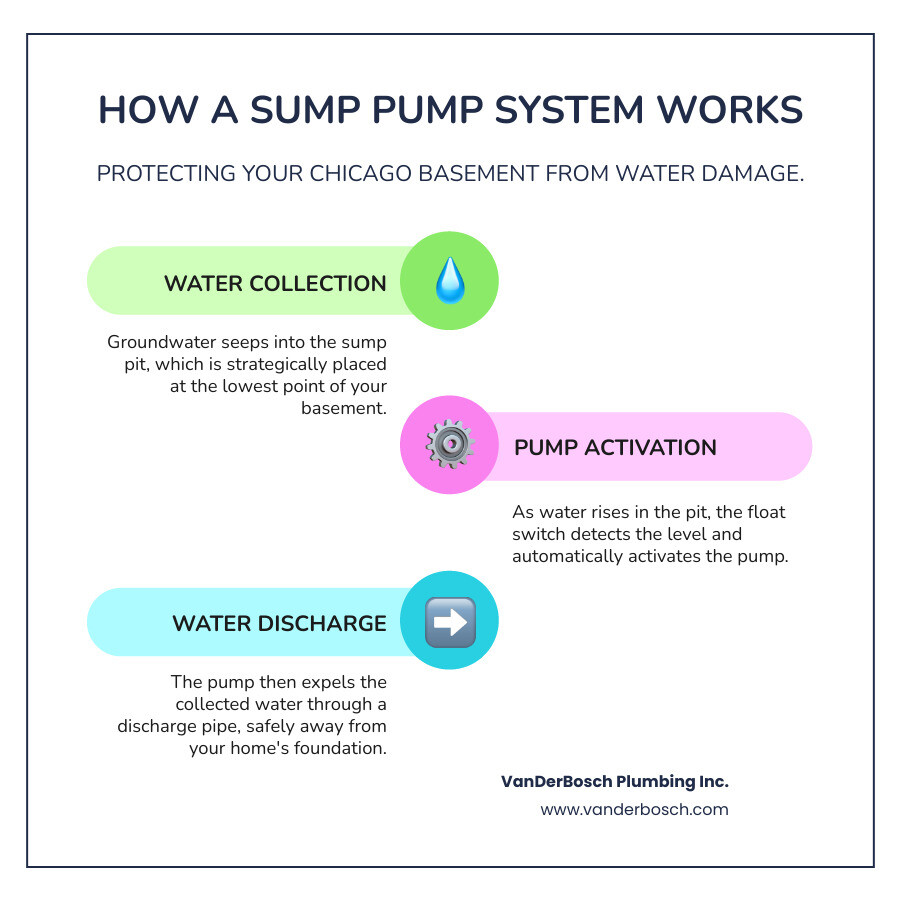
Our local groundwater levels can rise significantly, pushing water against and even through your foundation. Sump pumps are designed to collect this groundwater from beneath your foundation and direct it safely away from your home. This continuous removal process is vital for keeping basements dry and functional, protecting against the extensive damage and mold that flooding can cause. It’s a proactive measure against urban flooding, ensuring your home remains a safe and healthy environment.
What are the signs that my home might need a sump pump installed?
You might not realize you need a sump pump until you see the tell-tale signs of water intrusion. If you’ve noticed any of the following, it’s a strong indicator that your home might benefit from a sump pump installation in Chicago:
- Water stains on walls: Even faint discoloration can point to past water issues.
- Musty odors: A damp, earthy smell in your basement or crawl space often signals mold or mildew growth, which thrives in moist environments.
- Dampness in basement: If the air feels heavy or surfaces feel clammy, moisture is present.
- Warped floorboards: This is a clear sign that water is seeping into the wood, potentially from beneath your home.
- Visible mold or mildew: Beyond the smell, actual patches of mold or mildew are a definite red flag.
- Water pooling after rain: If you see standing water in your basement or crawl space after heavy rainfall, your home’s natural drainage isn’t enough.
Ignoring these signs can lead to escalating problems. We encourage you to address these issues promptly. For more information on assessing your needs, visit our guide: Do I Need a Sump Pump?
What are the benefits of installing a sump pump?
Investing in a sump pump system in Chicago offers numerous benefits that extend far beyond simply keeping your basement dry:
- Flood Prevention: This is the primary role. A sump pump acts as your home’s guardian, actively pumping out water before it can accumulate and cause significant damage during heavy rains or snowmelt.
- Structural Damage Protection: Constant moisture can weaken your home’s foundation, leading to cracks, shifting, and costly structural repairs. Sump pumps help maintain a dry environment, protecting your home’s integrity.
- Healthier Air Quality: By preventing dampness and mold growth, sump pumps contribute to better indoor air quality. Mold and mildew can trigger allergies and respiratory issues, making a dry basement beneficial for your family’s health.
- Increased Usable Living Space: A dry, protected basement can be transformed into valuable living space—a home office, extra bedroom, or recreation area—without the constant worry of water damage.
- Insurance Cost Reduction: Some homeowners insurance providers offer discounts for homes with proper flood prevention measures, including sump pump installations. It’s always worth checking with your provider.
- Protection of Valuables: Keep your stored items, appliances, and finished basement safe from water damage.
A sump pump is truly a cost-effective investment with a proven record of effectiveness. To dig deeper into how these systems can benefit your home, explore our resources: Reasons to Add a Sump Pump to the Home and How Sump Pumps Protect Against Flooding.
Choosing the Right Sump Pump: Types, Costs, and Key Considerations
Selecting the right sump pump in Chicago for your home involves more than just picking one off the shelf. We consider several key factors to ensure optimal performance and lasting protection. These include the pump’s horsepower (HP), whether it operates automatically or manually, the type of water level sensors it uses, and the crucial addition of backup systems. Understanding these elements helps us recommend the best solution custom to your specific needs and the unique conditions of your Chicago property.
What are the different types of sump pumps available?
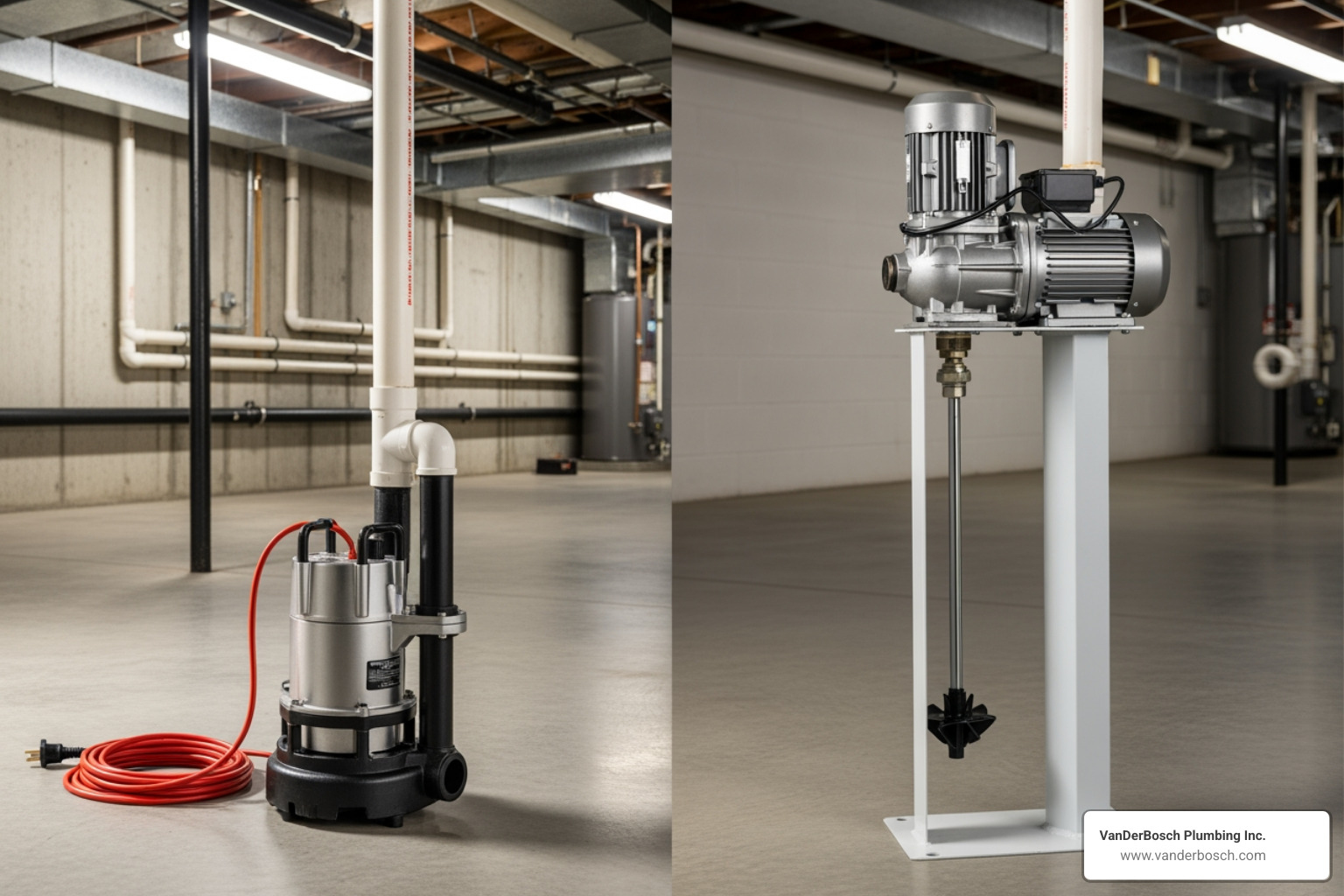
When it comes to sump pump systems in Chicago, there are two main types, each with distinct advantages, plus essential backup options:
-
Submersible Pumps:
- How they work: These pumps are fully submerged in the sump pit, meaning the motor and pump are sealed in a waterproof casing.
- Pros: They are generally quieter because the water dampens the motor’s sound. They tend to be more powerful, last longer (typically 5-15 years), and require less maintenance due to being out of sight.
- Cons: They are usually more expensive to purchase and replace. Accessing them for maintenance or repair can be more challenging since they are submerged.
-
Pedestal Pumps:
- How they work: With a pedestal pump, the motor is mounted on a shaft above the sump pit, while the pump impeller is at the bottom.
- Pros: They are typically less expensive upfront and easier to access for maintenance or repair since the motor is exposed. They are also suitable for smaller sump pits. Pedestal pumps can have a significantly longer lifespan, often lasting 25-30 years.
- Cons: They are generally noisier than submersible pumps and are more visible in your basement.
Backup Systems:
No matter which primary pump you choose, a backup system is a wise investment, especially in Chicago where power outages can coincide with heavy rainfall.
- Battery Backup Pumps: These systems use a marine-grade battery to power a secondary pump when your primary AC-powered pump loses electricity. They can provide several hours of continuous pumping or days of intermittent operation.
- Water-Powered Backups: These ingenious systems use your home’s municipal water pressure to create suction and remove water, requiring no electricity. They’re a great option if you have reliable municipal water pressure.
Here’s a quick comparison of the main types:
| Feature | Submersible Pumps | Pedestal Pumps |
|---|---|---|
| Lifespan | 5-15 years | 25-30 years |
| Cost | Higher initial cost, more costly to replace | Lower initial cost, less expensive to replace |
| Noise | Quieter (water dampens sound) | Noisier (motor exposed) |
| Space | Requires less vertical space in pit | Requires less pit diameter, motor above pit |
| Access | Harder to access for maintenance/repair | Easier to access for maintenance/repair |
How much does a sump pump installation cost in Chicago?
For homeowners in Chicago, including areas like Hyde Park, Sauganash, and West Ridge, a new sump pump installation can typically cost anywhere between $800 and $1,500. This range can fluctuate based on several factors:
- Pump Size (Horsepower): More powerful pumps (e.g., 1/2 HP or 3/4 HP) generally cost more than standard 1/3 HP units, though a 1/3 HP or 1/2 HP pump is often acceptable for an average single-family home in a normal water table.
- Existing Setup: If you’re replacing an existing pump, the cost might be lower than a brand-new installation requiring excavation for a sump pit and new plumbing.
- Type of Check Valve: The quality and type of check valve (which prevents water from flowing back into the pit) can influence the overall cost.
- Accessibility: If the installation area is difficult to access (e.g., a tight crawl space), labor costs may increase.
- Optional Basin Lids: Features like sealed or radon-sealed basin lids can add to the expense.
- Electrical Work: Ensuring the pump is plugged into a dedicated electric outlet, rather than an extension cord, might require additional electrical work, impacting the total cost.
Given these variables, we always recommend a professional evaluation of your specific home setup to provide an accurate and transparent quote.
What is the difference between a sump pump and an ejector pump?
While both sump pumps and ejector pumps are crucial for managing water in basements, they serve entirely different purposes:
-
Sump Pump: This is what we’ve primarily been discussing. A sump pump is designed to remove groundwater that accumulates beneath your foundation. It collects water in a sump pit and pumps it away from your home, preventing basement flooding. Sump pumps handle clean or relatively clean water.
-
Ejector Pump (or Sewage Ejector Pump): An ejector pump handles wastewater from basement fixtures, such as basement bathrooms, laundry rooms, or utility sinks. Since these fixtures are often below the main sewer line, the ejector pump is needed to “eject” this wastewater (which may contain solids) up to the main sewer line so it can drain out of your home.
In short, a sump pump protects your basement from groundwater, while an ejector pump handles your basement’s sewage and gray water. Both are vital for a functional and dry basement, but they tackle different types of water. Our team provides expert installation and service for both sump pumps and ejector pumps throughout the Chicago area, including in areas like Niles, Winnetka, and Melrose Park.
Your Guide to Sump Pump Chicago Services: Maintenance, Repair, and Replacement
A sump pump Chicago system is a workhorse, tirelessly defending your home against water intrusion. Like any hard-working appliance, it requires attention to ensure it’s always ready for action. Proactive maintenance, timely repairs, and knowing when to replace an aging unit are key to extending its longevity and preventing unexpected failures. On average, a sump pump will work for seven to ten years before needing replacement, though some sources suggest an average life of 5-7 years depending on activity, soil, and water conditions. Regular care can help it reach the higher end of that spectrum.
How often should a sump pump be maintained, and what does maintenance involve?
Regular maintenance is the secret to a long-lasting and reliable sump pump Chicago system. We recommend an annual professional inspection, but there are also simple DIY steps you can take:
Annual Professional Inspection:
A licensed plumber can:
- Inspect the pump and all its components.
- Clean the pump and the sump basin to remove debris and sediment.
- Test the pump’s activation and discharge.
- Adjust the float switch as needed.
- Lubricate any moving parts.
- Check all electrical connections for safety and integrity.
- Inspect and clear the discharge pipe for obstructions.
- Confirm the check valve is functioning correctly.
DIY Maintenance Steps (Quarterly or Semi-Annually):
- Cleaning the pit: Remove any debris, dirt, or gravel that might interfere with the float switch or clog the pump.
- Testing the float switch: Pour a bucket of water into the sump pit to raise the water level. The pump should activate, pump out the water, and then shut off automatically.
- Clearing the discharge line: Ensure the exterior discharge line is free of leaves, ice, or other blockages, and that it directs water away from your foundation.
- Checking electrical connections: Ensure the pump is securely plugged into a dedicated outlet and that there are no frayed wires. Never use an extension cord, as this can lead to issues.
- Battery backup check: If you have a battery backup, test it regularly (as per manufacturer instructions) and ensure the battery is charged. Replace the battery backup every 2-3 years to ensure it’s reliable when needed.
Regular maintenance is crucial for preventing basement flooding and extending the life of your pump. For more insights on protecting your basement, read our article: Basement Water Problems: A Reliable Sump Pump is Your First Line of Defense.
What are the signs that a sump pump needs repair or replacement?
Your Chicago sump pump often gives you subtle hints before it completely fails. Knowing these warning signs can help you address issues proactively and avoid a flooded basement:
- Strange noises (rattling, grinding, humming): Unusual sounds can indicate motor problems, worn-out bearings, or debris caught in the impeller.
- Excessive vibration: If the pump vibrates excessively when running, it might be improperly installed or have a bent shaft.
- Runs continuously: A pump that runs non-stop, even when there’s no water, could have a stuck float switch or a faulty check valve, allowing water to flow back into the pit.
- Fails to turn on: The most obvious sign – if water is in the pit and the pump doesn’t activate, it’s not doing its job.
- Visible rust or corrosion: Rust on the pump or basin can indicate a problem with the unit’s integrity or an issue with the water quality.
- Water rising in the pit even when the pump is on: This suggests the pump is no longer effectively removing water, possibly due to being overworked or undersized.
- Unusual cycling: If the pump turns on and off too frequently (short cycling), it could be a float switch issue or an undersized pit.
- Musty/damp smell near the pump or basin: This can be an early indicator of moisture issues or mold.
If you notice any of these signs, it’s time to call in the professionals. Often, repairing an old pump can become almost as costly as replacing it with a new, more efficient model. We can help you assess whether repair or replacement is the best option for your home. Learn more about our services: Sump Pumps.
What causes sump pump failure?
Several factors can lead to your sump pump failing when you need it most. Understanding these common causes can help you prevent future issues:
- Improper Installation: If the pump isn’t installed correctly, it can lead to problems like vapor lock (where air gets trapped and prevents pumping), or the pump not sitting level, which impacts float switch operation.
- Switch Problems: The float switch, which activates the pump, is often the first component to fail. It can get stuck, clogged with debris, or simply wear out, causing the pump to run continuously or not at all.
- Clogged Lines: The discharge pipe can become blocked by debris, sediment, or even freeze in winter. A frozen discharge pipe can cause water to back up into your basement. A temporary solution for a frozen pipe can be to cut the PVC next to the foundation, allowing ice to push out, but this is not a permanent fix.
- Power Failure: Most sump pumps rely on electricity. During a power outage (common in Chicago storms), your pump won’t work unless you have a backup system.
- Lack of Maintenance: Neglecting regular cleaning and testing allows debris to build up, leading to clogs and premature wear.
- Old Age: Even with perfect maintenance, sump pumps have a lifespan. The average life of a sump pump is 5-7 years, depending on pump activity, soil, and water conditions. Once a pump reaches this age, its components wear out, and failure becomes more likely.
- Overworked or Undersized Pump: If your pump isn’t powerful enough for the amount of water it needs to handle, it will wear out quickly.
When should I consider a battery backup system for my sump pump?
For any homeowner, a battery backup system for your sump pump in Chicago is not just a good idea—it’s essential. Here’s why you should strongly consider one:
- Chicago Power Outages: Our city experiences its fair share of power outages, often during severe storms when your sump pump is needed most. Without power, your electric sump pump cannot operate, leaving your basement vulnerable.
- Severe Storms: The same heavy rains and winds that cause power outages are precisely what cause water to accumulate in your sump pit. A backup system ensures your home remains protected during these critical times.
- Primary Pump Failure: Even if the power stays on, your primary pump can still fail due to mechanical issues or old age. A battery backup acts as a secondary line of defense, taking over when the main pump falters.
- Uninterrupted Protection: Battery backup systems can provide continuous pumping for several hours or intermittent pumping for one to three days, giving you ample time to restore power or address the primary pump issue.
- Peace of Mind: Knowing your basement is protected even when you’re away from home or during a severe weather event offers invaluable peace of mind.
We believe that all sump pumps will fail at some point, whether due to age or power loss. A battery backup system is a vital investment to ensure your home remains dry and safe.
The Advantages of Professional Sump Pump Services
When it comes to your home’s defense against water, entrusting your Chicago sump pump needs to professionals is a decision that pays dividends. Our team of licensed experts provides not just a service, but a commitment to effective results with professional, courteous service. As an accredited business, we prioritize proper sizing, adherence to local codes, and ensuring the safety of your installation. With our 100% satisfaction guarantee, transparent pricing with no service charges, and experienced, background-checked technicians, you can rest assured that your home is in capable hands.
How can I test my sump pump to ensure it’s working correctly?
Regular testing is a simple yet crucial step to ensure your sump pump system is always ready. We recommend testing your sump pump quarterly, or at least every few months, especially before the rainy seasons. Here’s how:
- Locate your sump pit: This is typically a basin in your basement or crawl space.
- Ensure power: Make sure the sump pump is plugged into a dedicated electrical outlet.
- Pour water: Slowly pour 3-5 gallons of water into the sump pit. You can use a bucket or a garden hose for this.
- Activate the float switch: As the water level rises, it should lift the float switch (a ball or cylinder attached to the pump).
- Observe the discharge: Once the float switch activates, the pump should turn on, and you should hear and see water being discharged through the pipe outside your home.
- Check for proper shut-off: After the water is pumped out, the float switch should drop, and the pump should turn off automatically.
If the pump doesn’t activate, doesn’t pump water efficiently, or fails to shut off, it’s a sign that something is amiss, and it’s time to call us for an inspection.
What are the local regulations for a sump pump chicago installation?
Proper sump pump installation in Chicago goes beyond just functionality; it also involves adherence to local building codes and regulations to ensure safety and prevent issues for your property and neighbors. In Chicago and Cook County, specific codes govern how sump pumps must be installed.
For instance, the City of Chicago’s municipal code, specifically section 18-29-712.3.1 Sump pump., outlines requirements for sump pump installations. Key considerations include:
- Proper Discharge Location: Water must be discharged safely away from your foundation and property, typically into a storm sewer or a designated area that won’t cause erosion or flood neighboring properties. It’s crucial to avoid discharging directly onto sidewalks or public ways, especially in winter when it can create ice hazards.
- Preventing Backflow: Installations must include a check valve to prevent water that has been pumped out from flowing back into the sump pit.
- Lowest Area Placement: The sump pump should always be installed in the lowest area of the basement floor to effectively collect water.
- Electrical Requirements: Sump pumps must be connected to appropriate electrical circuits, often dedicated ones, to ensure safe and reliable operation.
We are well-versed in all local Cook County building codes and regulations. Our licensed plumbers ensure that every installation we perform meets these standards, protecting your home and complying with municipal requirements. For optimal sump pump placement, factors like soil type and water table levels are also carefully considered.
Conclusion: Secure Your Basement with Expert Sump Pump Services
Protecting your Chicago home from the unpredictable forces of nature, especially water, is a proactive step every homeowner should take. A reliable sump pump system is not just an appliance; it’s a long-term investment in the safety, health, and value of your property. From preventing devastating floods to safeguarding your foundation and improving indoor air quality, the benefits are clear.
We hope this extensive guide has provided you with a comprehensive understanding of why sump pumps are essential, the types available, what to expect regarding costs, and the critical importance of regular maintenance and professional service. Don’t wait for the next heavy rainfall or spring thaw to realize your home is vulnerable.
At VanDerBosch Plumbing Inc., we pride ourselves on our expertise and commitment to your satisfaction. With licensed residential and light commercial plumbing services across Chicagoland, including Roselle, Niles, Winnetka, Elmhurst, and Mount Prospect, we offer 24/7 availability, transparent pricing with no service charges, and a 100% satisfaction guarantee. Our experienced, background-checked technicians are ready to provide the highest quality service.
For reliable and professional sump pump services, trust our team of licensed experts. Contact us today to schedule your Sump Pumps service!