
Why Your Sump Pump Won’t Stop Running
A sump pump constantly running is not normal and signals a problem that needs immediate attention. When your pump runs non-stop, even during dry weather, it’s working overtime and heading toward premature failure.
Quick Diagnosis Guide:
| Symptom | Most Likely Cause | Urgency |
|---|---|---|
| Running 24+ hours, no rain | Stuck float switch or faulty check valve | High – risk of burnout |
| Water spraying back into pit | Broken check valve or cracked casing | High – replace immediately |
| Runs every few minutes | Undersized pump or short cycling | Medium – shortens lifespan |
| Constant low-level running | High water table or underground leak | Medium – assess water source |
The most common culprits include a jammed float switch that can’t signal the pump to turn off, a broken check valve that lets water flow back into the pit, or a discharge pipe clog that prevents proper drainage. Less obvious issues like high groundwater levels, leaking pipes near your foundation, or an incorrectly sized pump can also cause this frustrating problem.
Why this matters: A pump running constantly will overheat and fail—often during the next big storm when you need it most. Most sump pumps last 7-10 years with proper maintenance, but continuous operation can cut that lifespan in half. Plus, you’re wasting electricity and risking a basement flood if the motor burns out.
I’m Hugh Hodur, President of VanDerBosch Plumbing, and I’ve helped countless Chicagoland homeowners diagnose and fix issues with a sump pump constantly running before they turned into basement flooding disasters. Whether it’s a quick float switch adjustment or a full system replacement, identifying the root cause early saves you money and protects your home.
Is It Normal for a Sump Pump to Run Constantly?
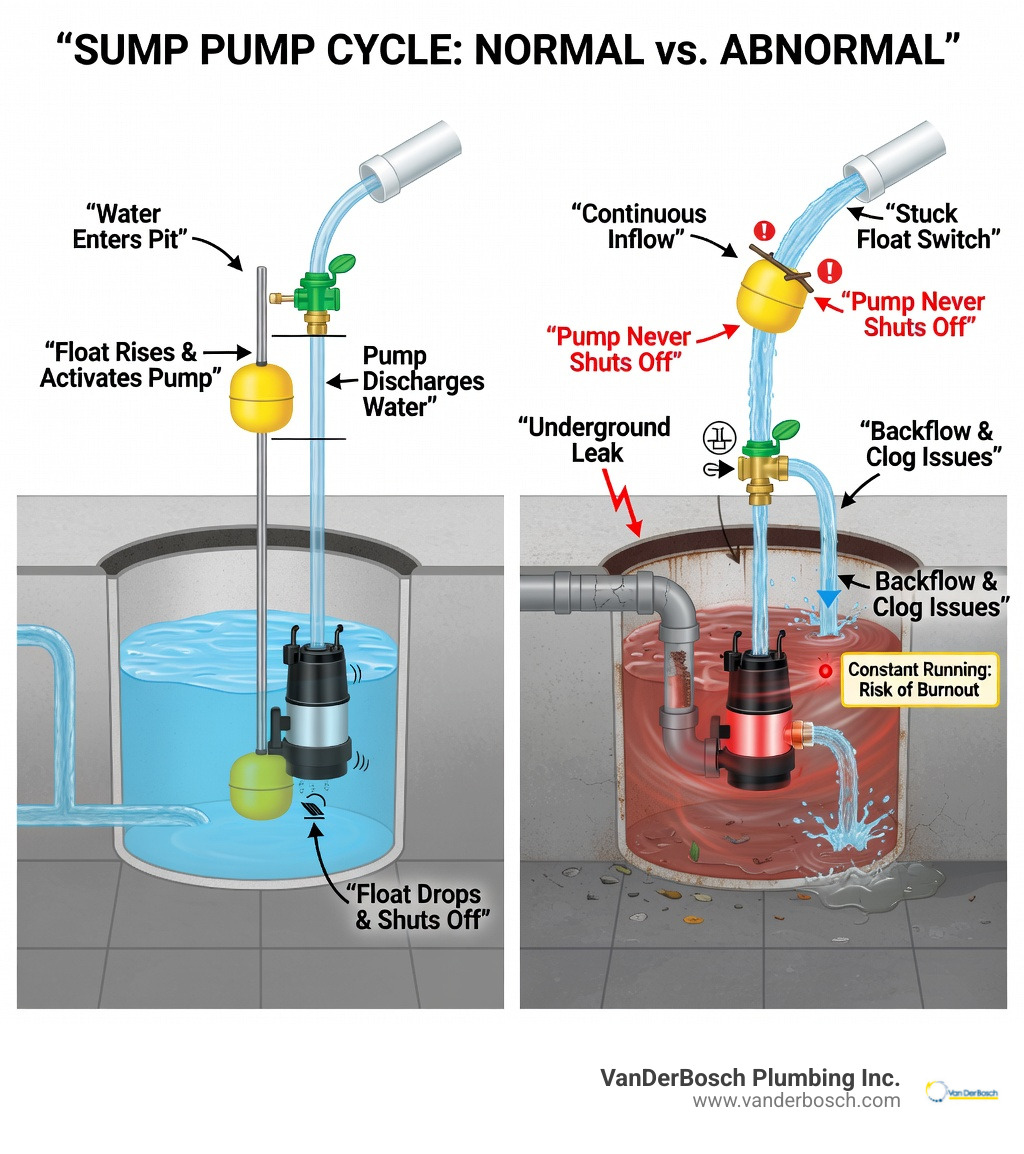
In short: no. While it might seem like your pump is just being “extra prepared,” a sump pump constantly running is a cry for help. Under normal conditions, a sump pump is a reactive device. It waits for water to reach a certain level in the basin (the “crock”), kicks on to discharge that water, and then shuts off once the level drops.
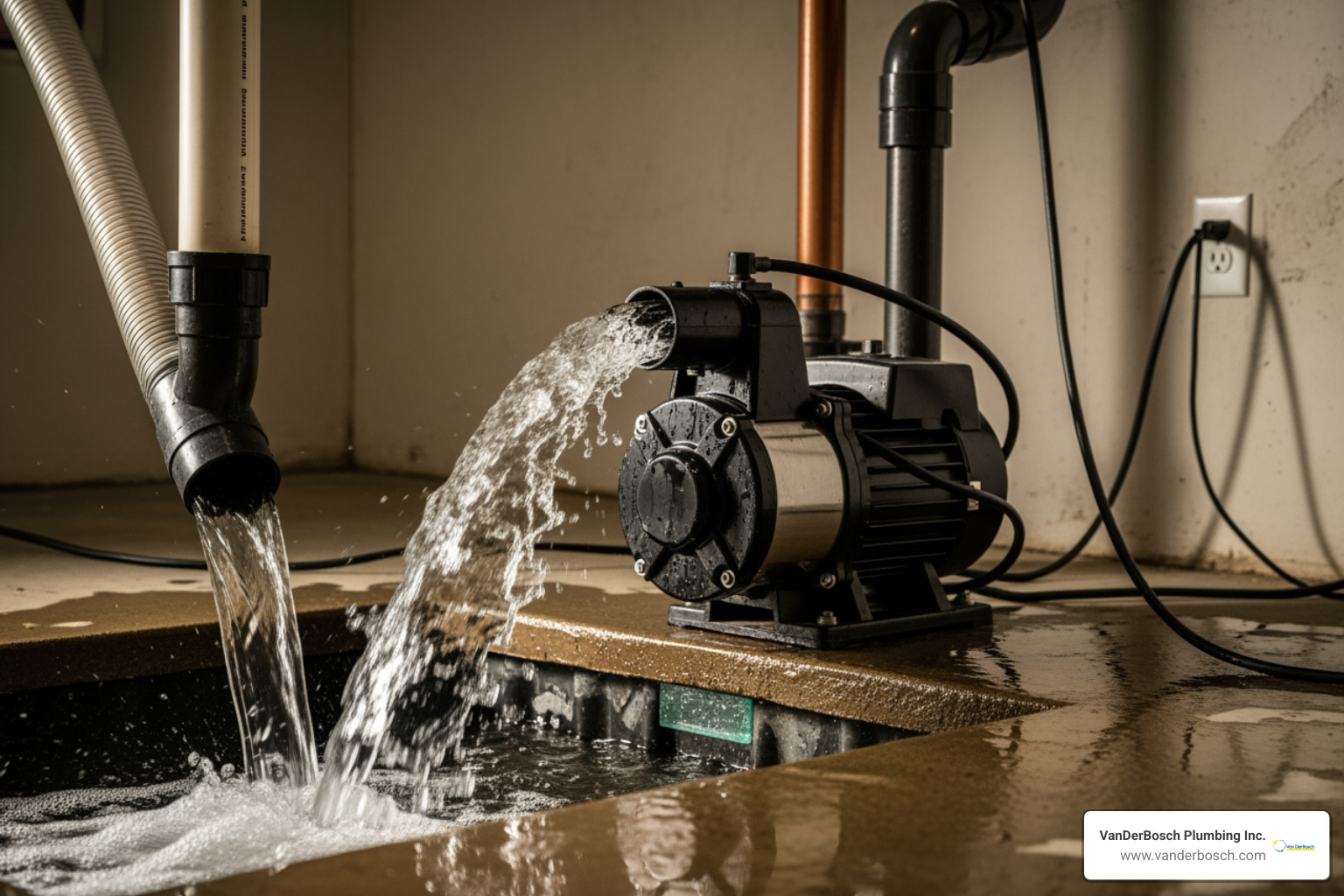
If your pump is humming along for 24 hours straight—especially if it hasn’t rained in days—you are looking at a mechanical or environmental anomaly. According to basement protection guidelines, a healthy system should only operate when necessary. Constant operation leads to motor burnout, which is the last thing you want during a Chicago spring thaw. Furthermore, the energy efficiency of your home takes a hit; those motors draw significant power, and running one 24/7 will reflect unpleasantly on your next ComEd bill.
Understanding how sump pumps protect against flooding is key to realizing why the “off” cycle is just as important as the “on” cycle. The “off” period allows the motor to cool down. Without it, the internal seals can fail, and the lubricant can break down, leading to a seized motor.
Common Reasons Your Sump Pump Constantly Running
When we visit homes in Roselle or Elmhurst to investigate a runaway pump, we usually find the cause falls into one of two categories: mechanical failure or environmental stress.
| Cause Category | Specific Issues | Solution Complexity |
|---|---|---|
| Mechanical | Stuck float, broken check valve, clogged impeller | Low to Medium (DIY possible) |
| Environmental | High water table, underground leaks, poor grading | Medium to High (Professional) |
| Installation | Incorrect pump size, shallow pit, poor pipe routing | High (Requires Re-installation) |
If you are asking yourself, “Do I need a sump pump?” because yours won’t stop making noise, the alternative is a swimming pool in your basement. However, the lifespan of these units is finite. On average, a well-maintained pump lasts 7-10 years. If your pump is in the 5-7 year range and starts running non-stop, it may be nearing the end of its reliable service life.
Stuck Float Switch and Sump Pump Constantly Running
The float switch is the “brain” of the pump. It’s essentially a buoyant ball or cylinder that floats on top of the water. When the water rises, the float rises, flipping a switch to start the motor.
The most common reason for a sump pump constantly running is that this float has become stuck in the “up” position. This often happens because:
- Vibrations: As the pump runs, it can “wander” or shift in the pit until the float presses against the side of the basin.
- Debris: Small rocks, dirt, or even trash can get wedged between the float arm and the pump body.
- Tangle: In some models, the tethered float (which looks like a black balloon on a cord) can get tangled around the discharge pipe or the pump’s power cord.
If you want to see this in action, check out this video of common float issues. We often recommend a vertical float design over a tethered one for our Chicagoland clients, as they are less likely to get snagged on the basin walls.
Faulty Check Valves, Clogged Pipes, and Incorrect Sizing
The check valve is a small but mighty component installed in the discharge pipe. Its job is to act as a one-way valve. When the pump turns off, the check valve prevents the several gallons of water remaining in the vertical pipe from falling back into the pit.
If this valve fails, you get “water recycling.” The pump empties the pit, shuts off, the water in the pipe falls back down, the float rises again, and the pump restarts. This cycle repeats indefinitely, mimicking a sump pump constantly running.
Other mechanical hurdles include:
- Clogged Discharge Pipes: If the pipe is blocked by debris or ice, the pump will run but the water has nowhere to go. The water level never drops, so the pump never shuts off.
- Incorrect Sizing: If your pump is too small (low horsepower), it may struggle to keep up with the rate of water entering the pit during a heavy storm, leading to constant operation. Conversely, a pump that is too powerful for a small pit can cause “short cycling,” which is equally damaging. There are many reasons to add a sump pump to the home, but getting the right size is paramount.
High Water Tables and External Water Sources
Sometimes the pump is working perfectly, but the water just keeps coming. This is common in areas like Niles or Mount Prospect where the water table can be high.
Environmental factors include:
- The Spring Thaw: In Illinois, when the snow melts and the ground is still partially frozen, water can’t soak into the deep soil. It stays near the surface and floods into sump pits.
- Underground Leaks: A broken water main or a leaking sprinkler system near your foundation can provide a never-ending supply of water to your pit.
- Landscaping Changes: If a neighbor changes their yard’s grading or you install new flower beds, water might be redirected toward your foundation.
In these cases, basement water problems: a reliable sump pump is your first line of defense, but you might need a higher-capacity system or a secondary “buddy” pump to handle the load.
Troubleshooting, DIY Fixes, and Signs for Replacement
Before you panic and assume you need a brand-new system, there are several troubleshooting steps you can take. While some issues require the “big guns,” many can be solved with a pair of gloves and 20 minutes of your time.
Regular maintenance can actually extend your pump’s life to 8-10 years. This includes cleaning out the pit, as “rusty debris” and small rocks can damage the impeller (the fan that pushes the water). If you find yourself wondering, “Do you need a plumber for sump pump installation?” the answer is usually yes if the discharge lines need to be re-run or if you are dealing with electrical issues. For those who prefer professional help right away, you can find local plumbing pros to take the weight off your shoulders.
Step-by-Step Troubleshooting for a Sump Pump Constantly Running
If your pump is having its own personal marathon, follow these steps:
- Check the Power: Ensure the pump is plugged into a dedicated GFI outlet. Sometimes voltage fluctuations (falling below 100V) can cause a motor to hum and run without actually having enough torque to move water.
- The Float Test: Reach into the pit and gently wiggle the float. If the pump stops when you move the float down, you’ve found your culprit. Clean away any debris and ensure the pump is centered in the pit so the float doesn’t touch the walls.
- Inspect the Check Valve: Look at the arrow on the check valve; it should point away from the pump. If you hear a loud “thud” followed by the sound of rushing water every time the pump stops, the valve is likely failing and needs replacement.
- Clear the Discharge Line: Go outside and find where the water exits. Ensure it isn’t blocked by leaves, mulch, or ice. If the line is frozen, you may need to install an anti-freeze attachment.
- Clean the Inlet Screen: Unplug the pump, pull it out of the pit, and check the bottom. If the screen is clogged with muck, the pump can’t pull water in, causing it to run dry and overheat.
For residents in our service area, we offer specific Roselle services: sump pumps to handle these diagnostics for you.
Frequently Asked Questions
Can a sump pump burn out from running too much?
Absolutely. Sump pump motors are cooled by the water surrounding them (in submersible models) or by air. If a pump runs constantly, especially if the pit is dry because of a stuck float, the motor will overheat. This leads to internal seal failure and total motor seizure. Replacing a burnt-out pump is much more expensive than a simple maintenance call.
How often should I test my sump pump?
We recommend a “bucket test” at least quarterly. Pour enough water into the pit to raise the float and trigger the pump. This ensures the float isn’t stuck and the check valve is holding. This is a core part of our seasonal services: sump pumps packages.
Why does my pump run when there is no rain?
This is usually due to a high water table or an underground water source. In many parts of Chicagoland, the soil stays saturated long after the rain stops. Other reasons include leaking underground pipes, heavy condensation from HVAC systems draining into the pit, or poor yard drainage that directs groundwater toward your basement.
Conclusion
A sump pump constantly running is more than just a noisy nuisance; it’s a threat to your home’s dry basement and your wallet. Whether it’s a simple fix like untangling a float switch or a more complex issue like a high water table, addressing it now is far better than dealing with a flood later.
At VanDerBosch Plumbing Inc., we’ve been the trusted Chicagoland experts for decades. From Chicago to Roselle and out to Winnetka, we provide licensed, professional service with a 100% satisfaction guarantee. We offer transparent pricing with no hidden service charges and are available 24/7 for those middle-of-the-night emergencies.
Don’t let your sump pump run itself into an early grave. If you’re in Cook County or the surrounding areas and need a professional eye on your system, contact us today for more info about sump pump services. We’ll make sure your basement stays dry and your pump gets the rest it deserves.