
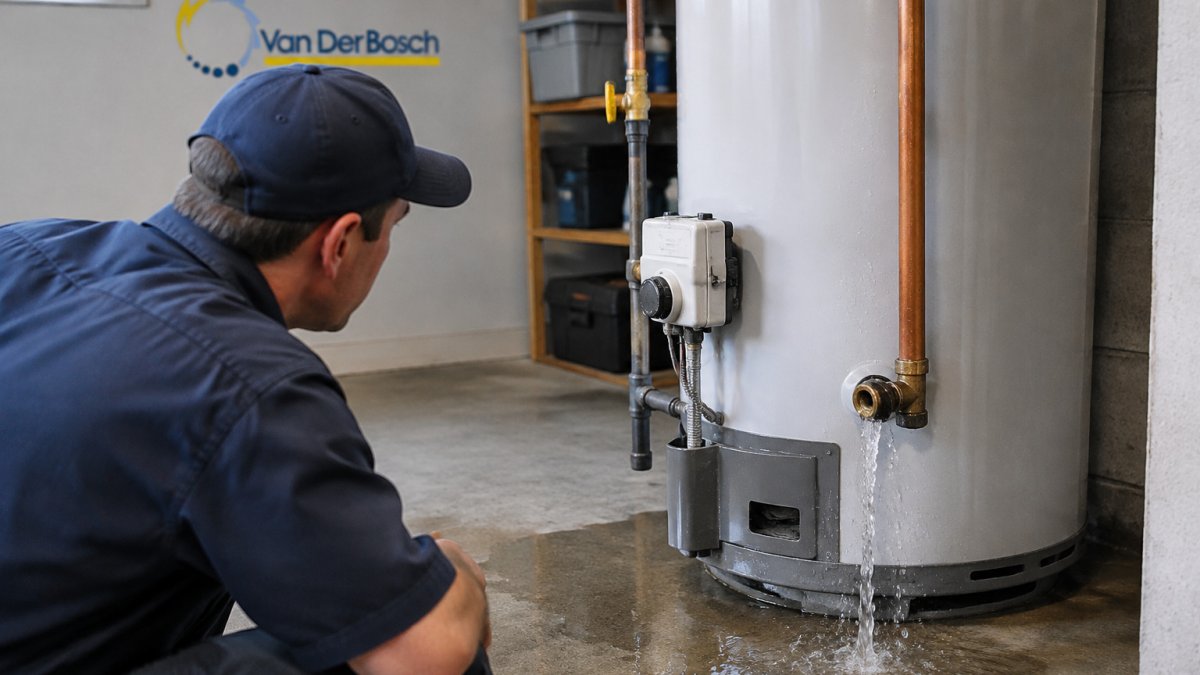
Last Updated: November 6, 2026
Quick Summary
If a water heater bursts, first get people and pets away from the water and keep clear of any standing water near outlets or the electrical panel. Then shut off the cold water supply, cut power or gas to the heater, and call a licensed plumber or emergency service.
- Move everyone away from the flooded area before doing anything else.
- Do not wade into water near the heater, outlets, or the electrical panel.
- If you smell gas, leave the building and call your gas utility or 911 from outside.
- Shut off the cold water supply first, then the circuit breaker or gas control valve.
- Photograph the damage before cleanup and document items for your insurer.
Table of Contents
- Your First Five Minutes: Immediate Safety When a Water Heater Bursts
- Water Heater Emergency Shut Off: Water First, Then Power or Gas
- Why a Water Heater Leaks From the Bottom and What It Usually Means
- Limiting Water Damage in the First Hours
- Water Heater Repair or Replacement After a Burst
- Documenting the Damage and Insurance Steps
- Booking Your Water Heater Replacement With VanDerBosch
- Frequently Asked Questions
Your First Five Minutes: Immediate Safety When a Water Heater Bursts
A water heater bursts with little warning, and it can release hot water and steam into a basement or utility room faster than most people expect. The first few minutes are about protecting people, not saving the tank. Work through the steps below in order, and stop at any point where conditions look unsafe.
Step 1: Get people and pets clear of the water
Move everyone away from the flooded area before you do anything else. Hot water from a failed tank can scald, and standing water near an energized heater or outlet is a shock hazard. Keep children and pets out of the room and close the door behind you if you can do so safely.
Step 2: Assess the hazards before you approach
From a dry spot, look and listen for the things that change what you should do next:
- Standing water touching the heater, outlets, or the electrical panel. Do not wade in. Water plus electricity is the most dangerous combination in this situation.
- A hissing or roaring sound, or visible steam. The tank may still be under pressure. Stay back.
- The smell of gas. If you notice a rotten-egg odor, do not flip switches, use a phone inside, or touch the heater. Leave the building and call your gas utility or 911 from outside.
If any of those conditions are present, skip the shutoff steps below and call a licensed plumber or emergency service from a safe location. Describe the leak, the heater type (electric or gas), and what you can see.
Step 3: Shut off the water, then the power or gas
If the area is dry enough to approach safely, close the cold-water supply valve on the heater first, then cut power or gas. The next section walks through both shutoffs in detail.
Step 4: Document before you clean up
Once the water is off and the area is safe, take photos and video of the water line, the damaged area, and the heater itself. Insurers and plumbers both rely on that record, and it is much harder to reconstruct after cleanup begins.
Step 5: Call for professional help
A burst tank is not a wait-and-see problem. Call a licensed plumber or emergency service to inspect the unit, confirm the cause, and advise on repair versus replacement. If the water has reached drywall, flooring, or stored belongings, ask about water-damage restoration as well.
Watch out: Never stand in water to reach a shutoff valve, breaker, or gas control. If you cannot reach the shutoff without stepping into water, leave it and call a professional.
Water Heater Emergency Shut Off: Water First, Then Power or Gas
Shutting off the water comes first. Once the supply is closed, the tank stops refilling, and the flooding slows down. Only after that should you cut power or gas to the heater.
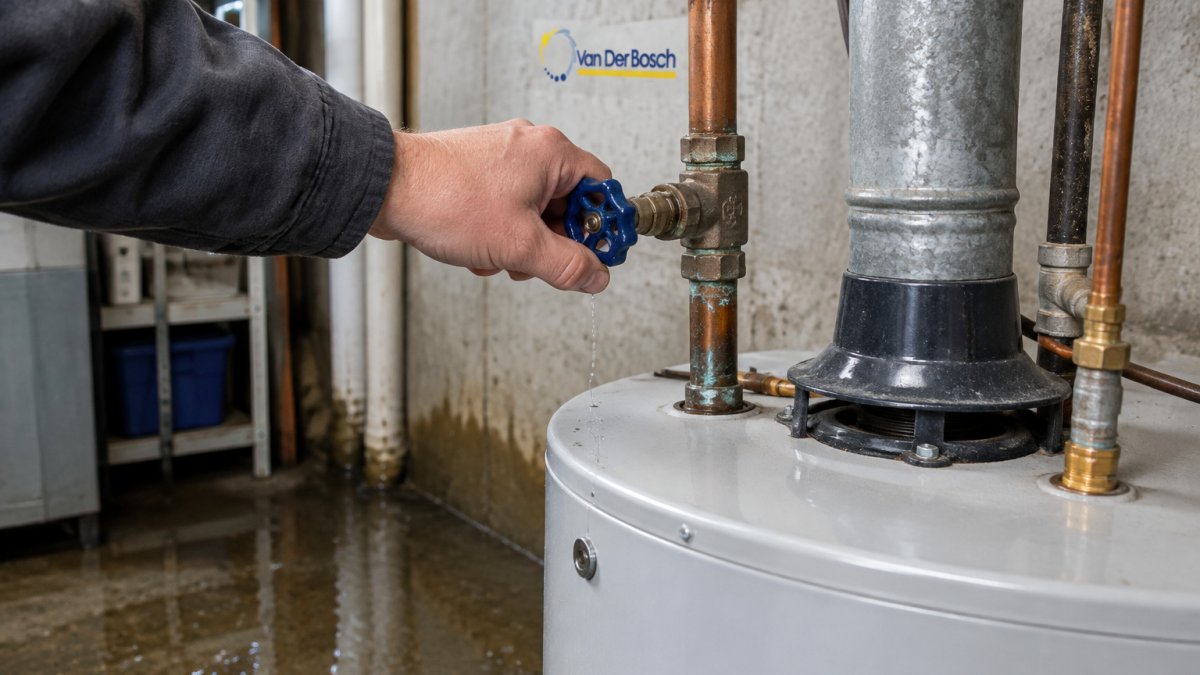
Shutting Off the Cold Water Supply
The cold water supply valve is usually on the pipe that feeds the top of the heater. Turn it clockwise until it stops. If you cannot find the valve or it will not turn, shut off the main water supply to the whole house.
Know where your main shutoff is before an emergency happens. Many homeowners find it only after a leak has already started. Label it now so you can find it fast later.
Cutting Power to an Electric Heater or Gas to a Gas Heater
For an electric heater, turn off the circuit breaker that powers the unit.
For a gas heater, turn the gas control valve to the “off” position. The valve is usually on the front of the unit or on the gas line.
Never work near a gas leak or a flooded electrical panel. These situations call for a professional.
The order of the shutoffs matters, and the table below sets out each step.
| Step | What to do | Note |
|---|---|---|
| 1. Cold water supply | Turn the valve on the heater’s top pipe clockwise until it stops | Stops the tank refilling |
| 2. Electric heater | Turn off the circuit breaker for the unit | Use the main panel if the floor is wet |
| 3. Gas heater | Turn the gas control valve to “off” | Leave and call the gas utility if you smell gas |
| If the valve will not turn | Shut off the main water supply to the house | Know where the main shutoff is before an emergency |
Why a Water Heater Leaks From the Bottom and What It Usually Means
A leak at the base of the tank is one of the more serious warning signs. Water pooling underneath often means the inside of the tank has started to fail.
Common causes include:
- Internal tank corrosion. Over time, the steel tank wears thin and develops small cracks.
- Sediment buildup. Minerals settle at the bottom and can stress the tank.
- A failed drain valve. The drain valve near the bottom can crack or start to drip.
- Pressure problems. Excess pressure can strain the tank and fittings.
Water coming from under the tank usually means the leak is inside the unit. A tank with this problem typically cannot be fixed with a simple seal. If you see this, plan for repair or replacement and have a plumber inspect it soon.
Limiting Water Damage in the First Hours
Once the water is off and the power or gas is secured, the goal shifts from stopping the leak to protecting the structure and your belongings. Water spreads through flooring, baseboards, and wall cavities faster than most people realize, so the first few hours matter.
Triage: what to protect first
Work in this order so you do not waste time on low-value items while water keeps spreading:
- People and safety. Confirm the area is dry enough to enter and that power is off to any wet circuits.
- Irreplaceable items. Medications, documents, photos, electronics, and anything with sentimental or financial value come first.
- Anything that will wick water upward. Cardboard boxes, paper, fabric, and wood furniture soak up water and hold it against flooring. Move them out or lift them onto blocks.
- Rugs and loose flooring. Roll up wet rugs and remove them if you can do so safely. Standing water trapped under a rug keeps the subfloor wet.
- Structural materials. Only address drywall, baseboards, or insulation after the items above are handled, and only if it is safe.
Removing standing water safely
A wet/dry vacuum can pull up shallow water, but only use it on a circuit that is dry and confirmed off. If the water is deep, near outlets, or has reached the electrical panel, do not use any plug-in equipment.
Open windows and run fans only if the outdoor air is dry and the area is safe. In humid weather, fans without dehumidification can spread moisture rather than remove it.
What not to do
- Do not use a household shop vac near standing water if any part of the circuit is wet.
- Do not tear out drywall or flooring yourself if you are unsure whether water has reached wiring or gas lines.
- Do not throw away damaged materials before your insurer has seen them, unless they pose a health or safety risk.
Document as you go
Take photos and video before, during, and after cleanup. Photograph the water line on walls, the damaged items, the heater, and any receipts for emergency supplies or rentals. Keep a written list of damaged items with approximate values. That record is what your insurer will ask for, and it is far easier to build now than to reconstruct later.
When to call a restoration professional
If water has soaked into carpet, drywall, or insulation, or if the flooded area is larger than you can dry with fans and a wet/dry vacuum, a professional water-removal and drying service is usually the right call.
Watch out: If the flooded area includes the electrical panel, outlets, or gas appliances, do not attempt cleanup yourself. Leave the area and call a licensed plumber or emergency service.
Water Heater Repair or Replacement After a Burst
Once the emergency is under control, you need to decide whether to repair or replace the unit. The answer depends on several factors:
- Age. Tank water heater lifespans vary, and age is one factor to weigh. An older unit that has burst is usually not worth repairing.
- Type of damage. A failed valve or fitting may be repairable. A cracked or leaking tank usually is not.
- Repair history. Frequent repairs suggest the unit is wearing out.
- Long-term reliability. Replacement can cost less than repeated repairs over time.
A licensed plumber can inspect the unit and explain your options clearly. VanDerBosch can help you compare repair and replacement options for your water heater before you commit to a decision.
If your current unit is leaking, the cause may be easier to pinpoint with help. Learn about common reasons a water heater leaks or get an expert look at the source of the leak with a licensed technician.
Documenting the Damage and Insurance Steps
Insurance claims go more smoothly when you document everything early. Insurers often ask for proof of the damage and the cause of the failure.
Keep these records:
- Photos and video of the damaged area, the unit, and the water
- A written list of damaged items, with approximate values
- Receipts for emergency repairs and water cleanup
- The plumber’s report and any invoices for the work
Call your insurance company as soon as you can. Ask what they need from you before you throw away damaged materials, unless the materials are a health or safety risk.
Booking Your Water Heater Replacement With VanDerBosch
If the unit cannot be repaired, a replacement is the next step. A licensed plumber can help you choose a unit that fits your home and your hot water needs.
VanDerBosch Plumbing Inc. offers water heater repair and installation for homes in the Chicago area. For a more efficient option, you can also review tankless water heater installation.
If you are in Roselle, you can also review local water heater service options for emergency repair and installation.
Frequently Asked Questions
What should I do first if my water heater bursts?
Shut off the cold water supply to the heater first, then cut power to an electric unit or the gas supply to a gas unit. Keep people and pets away from standing water near the heater, and avoid touching the unit if water is near any electrical outlets or equipment. Once the immediate hazards are controlled, call a licensed plumber to assess the tank and the damage.
Should I turn off the water if my water heater is leaking?
Yes. Closing the cold water supply valve that feeds the heater stops new water from entering the tank, which slows or stops the leak. This is usually the quickest way to limit flooding. If you cannot find or operate the valve, shut off the main water supply to the home. Do not wait for a plumber to arrive before doing this.
Can a burst water heater be repaired, or does it need replacement?
A tank that has ruptured or cracked generally cannot be repaired safely, because the tank wall itself has failed. A leak at a fitting, valve, or drain connection may sometimes be fixed. The decision depends on the age of the unit, where the failure occurred, and the condition of the tank. A licensed plumber can inspect the heater and explain whether repair or replacement makes more sense.
Can a burst water heater cause serious water damage?
Yes. A full tank can release dozens of gallons of hot water in a short period, which can soak flooring, drywall, insulation, and stored belongings. Water can also spread to adjoining rooms or a level below. Moving valuables, photographing the damage, and removing standing water as soon as it is safe to do so can reduce the long-term harm.
