
When Your Pipes Freeze: Who to Call and What to Do First
If you need a frozen pipe plumber near me right now, here’s what to do:
- Turn off your main water supply immediately
- Open faucets connected to the frozen pipe to relieve pressure
- Do not use open flames or blowtorches to thaw pipes yourself
- Call a licensed emergency plumber — especially if you have no water flow, visible cracks, or suspect a burst
Bottom line: If your pipes are frozen and you’ve lost water completely, or you suspect a burst, call a professional plumber now. Don’t wait.
Every winter across Chicagoland, homeowners flip on the faucet and nothing comes out. That silence is the first warning sign of a frozen pipe — and what happens next can mean the difference between a quick fix and thousands of dollars in water damage.
Frozen pipes are more dangerous than most people realize. When water turns to ice inside a pipe, it expands with enormous force. That pressure can split a pipe wide open. And even a tiny crack — less than an eighth of an inch — can release more than 250 gallons of water in a single day, according to the American Red Cross.
The good news? Fast action saves homes.
I’m Hugh Hodur, President of VanDerBosch Plumbing Inc., and I’ve spent years overseeing emergency frozen pipe repairs and burst pipe response across the Chicagoland area — exactly the situations where finding a reliable frozen pipe plumber makes all the difference. In this guide, I’ll walk you through what to watch for, when to call, and how to protect your home before the next cold snap hits.
Why Frozen Pipes Are a Ticking Time Bomb
When we talk about frozen pipes in Chicago or suburbs like Roselle and Oakbrook Terrace, we aren’t just talking about a lack of running water. We are talking about a physical battle happening inside your walls.
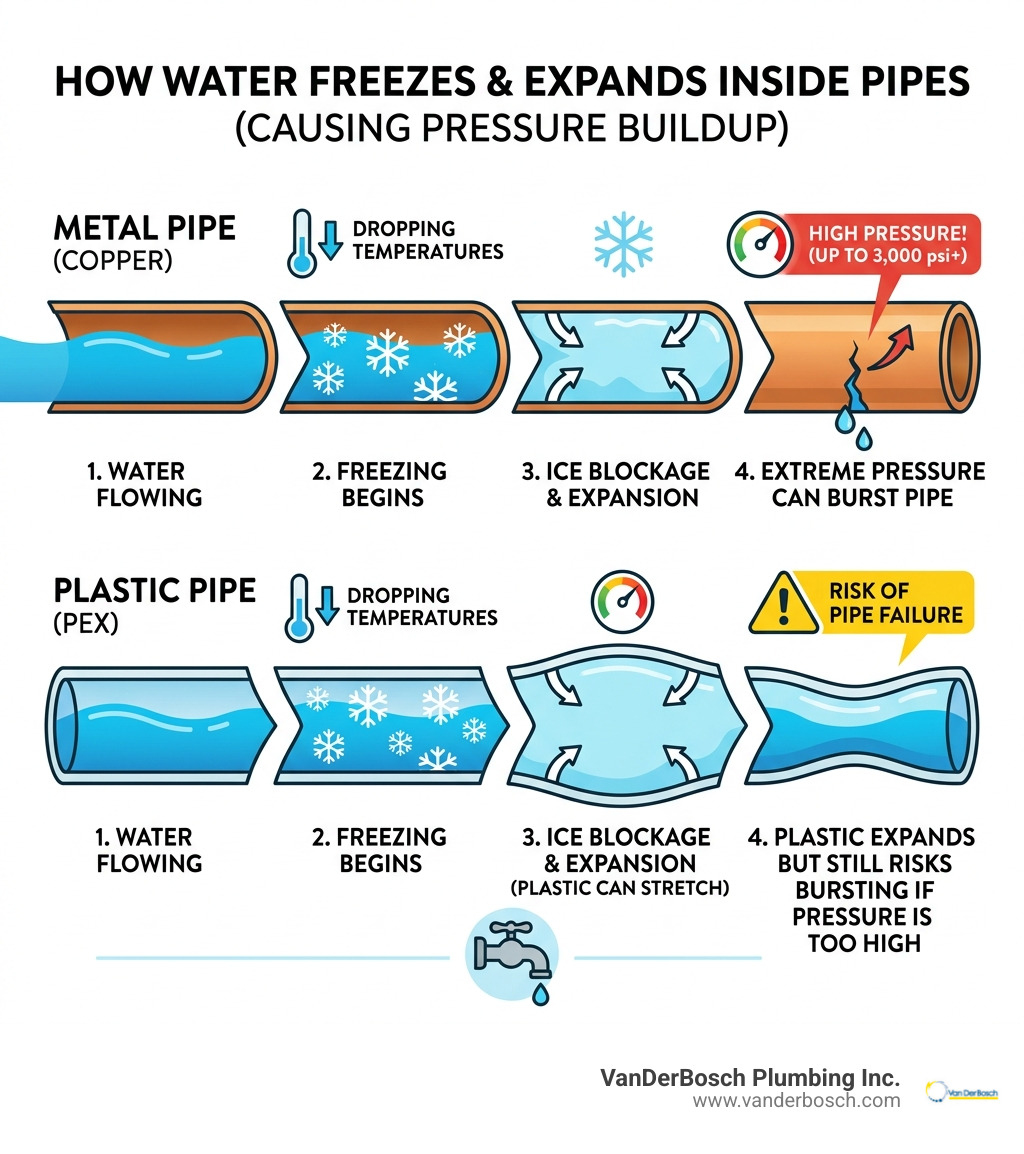
Water is one of the few substances that expands when it freezes. As ice forms, it doesn’t just sit there; it grows. This expansion creates a massive spike in internal pressure. In fact, ice formation can generate pressure exceeding 3,000 psi. To put that in perspective, most residential plumbing is designed to handle about 60 to 80 psi. When that 3,000 psi threshold is hit, the pipe wall simply fails.
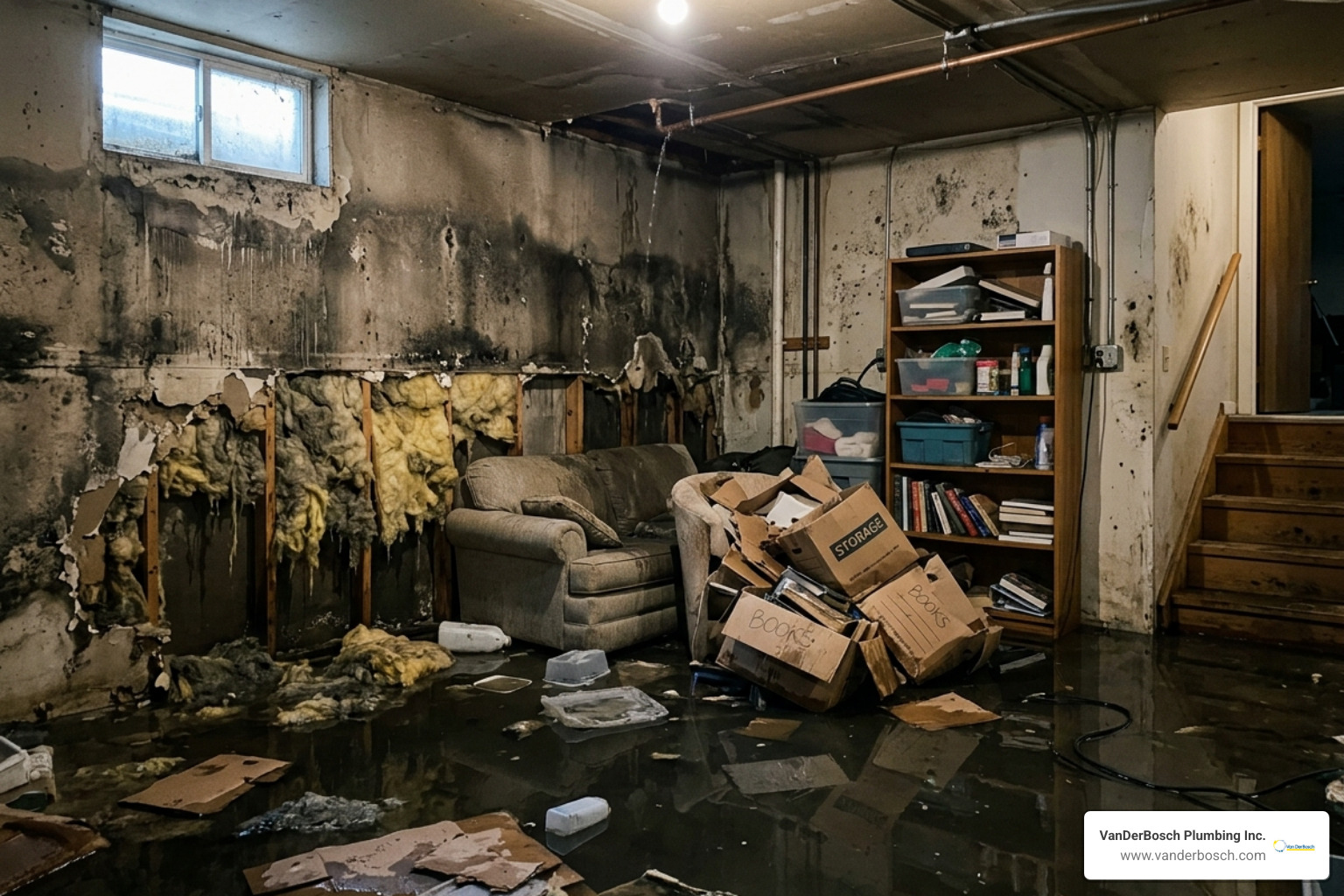
This is the moment a “frozen pipe” becomes a “burst pipe.” We often see homeowners who think the danger is over once the weather warms up, but that is actually when the disaster reveals itself. The ice acts as a temporary plug; once it thaws, the water rushes out of the newly created split at a rate of four to eight gallons per minute.
According to industry statistics, a single burst pipe can cause tens of thousands of dollars in structural damage. If you are wondering Why Do Pipes Burst?, it’s rarely the ice itself breaking the pipe at the point of the freeze—it’s the extreme water pressure trapped between the ice blockage and the closed faucet that causes the rupture.
Identifying the Signs You Need a Frozen Pipe Plumber Near Me
In the middle of a Chicago “polar vortex,” it can be hard to tell if your plumbing is just acting up or if you are facing a total meltdown. Knowing the symptoms can help you decide whether to grab a flashlight or grab the phone to search for a frozen pipe plumber near me.
| Symptom | Frozen Pipe (Intact) | Burst Pipe (Ruptured) |
|---|---|---|
| Water Flow | None, or a tiny trickle | None, or visible flooding |
| Pipe Appearance | Frosty, bulging, or ice-coated | Visible cracks or spraying water |
| Sounds | Whistling, clanking, or banging | Rushing water or “hissing” |
| Water Pressure | Zero pressure at specific taps | Sudden drop across the whole house |
| Odors | Possible sewage smells (if vent is blocked) | Damp, musty smells or “wet dog” scent |
If you notice frost on your copper lines or bulging sections of pipe in your basement or crawl space, the pipe is currently under extreme stress. In our experience with Frozen Pipes in Chicago, IL: What Homeowners Need to Know, these physical distortions are a final warning before the metal or plastic gives way.
When to Search for a Frozen Pipe Plumber Near Me Immediately
While some minor freezes can be handled with patience, certain scenarios require an emergency professional:
- Complete Water Loss: If no water is coming out of any faucet, the main line may be frozen.
- Visible Cracks: If you see a split in the pipe, even if it isn’t leaking yet (because it’s still frozen), it will flood the moment it warms up.
- Inaccessible Pipes: If the freeze is located inside a wall, under a floor, or in a tight crawl space, do not attempt to cut into your own drywall.
- Sewage Odors: If your drains are frozen, sewer gases can back up into the home, creating a health hazard.
DIY Thawing vs. Hiring a Frozen Pipe Plumber Near Me
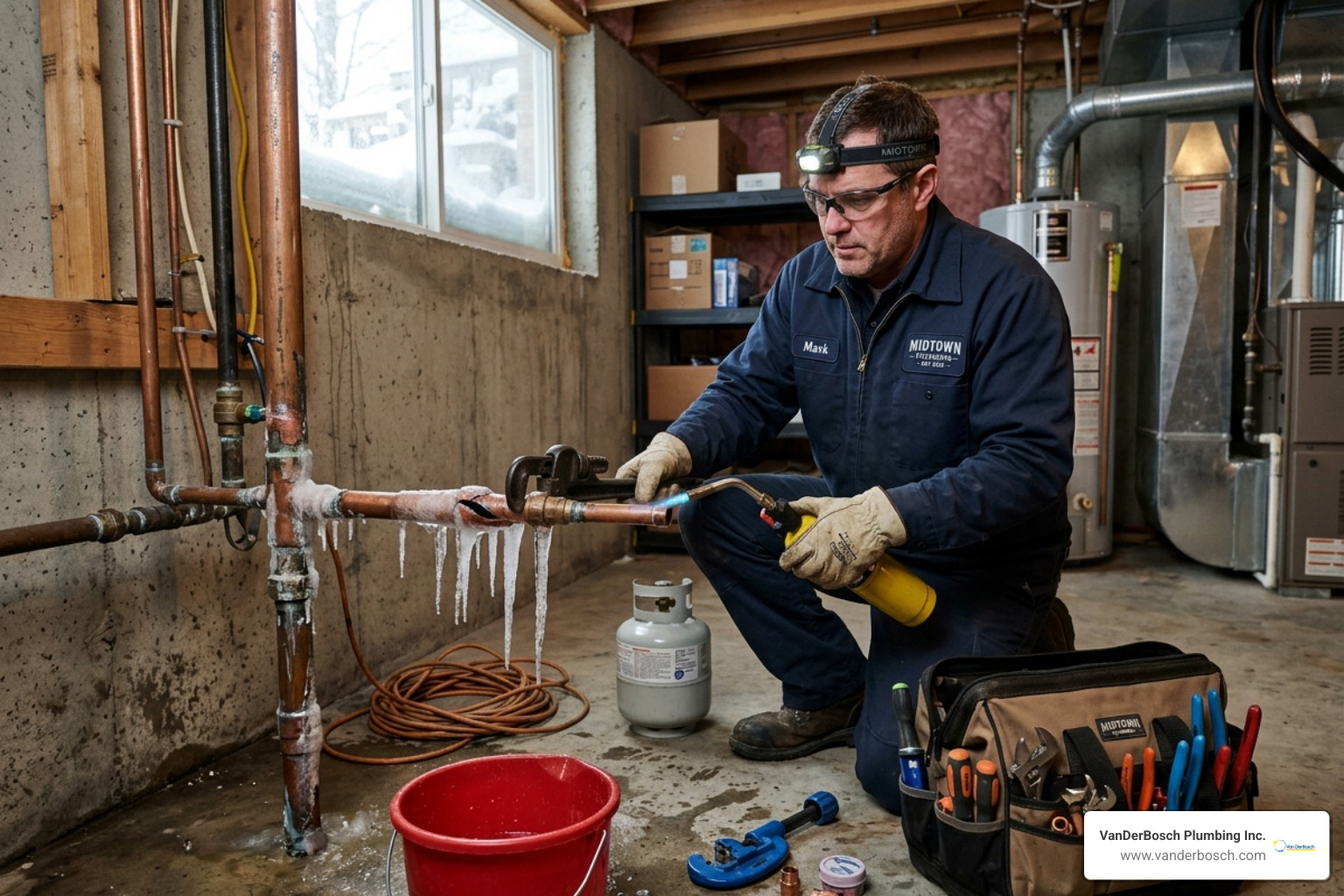
We understand the temptation to DIY. However, the “hair dryer method” has limits, and other methods are downright dangerous. We have seen well-meaning homeowners use blowtorches or open flames to thaw pipes, leading to house fires and melted joints. Even space heaters, if left unattended near insulation or wooden joists, pose a significant fire risk.
A professional frozen pipe plumber in Chicago uses specialized equipment, such as electric pipe thawers or high-output steam machines, to apply controlled heat. We monitor the pipe’s integrity throughout the process. If a crack begins to leak as the ice melts, we are already on-site with the tools to repair it instantly, preventing a flooded basement.
Immediate Steps to Take Before the Plumber Arrives
If you’ve discovered a frozen line and called us for help, there are a few things you should do while our technician is en route to your home in Niles or Hyde Park.
- Shut Off the Main Water Valve: This is the most important step. If the pipe bursts while it’s thawing, having the water off prevents thousands of gallons from entering your home.
- Open the Faucets: Turn on both the hot and cold handles. This relieves the pressure buildup we mentioned earlier and gives the melting ice a place to go.
- Clear the Area: If the pipe is behind a vanity or in a cluttered basement, clear a path. If there is insulation wrapping the frozen section, carefully remove it so warm air (and our tools) can reach the pipe.
- Document Everything: If you see signs of water damage, take photos. This is vital for insurance claims later on.
Following these Tips on Keeping Your Plumbing Safe in Colder Temperatures can mitigate the damage while you wait for professional assistance.
Long-Term Prevention and Winterization Strategies
Once we get your water flowing again, we want to make sure you never have to search for a frozen pipe plumber near me for the same issue twice. Prevention is significantly cheaper than emergency repair.
- Insulate Vulnerable Areas: Use foam pipe sleeves on any lines running through unheated basements, attics, or crawl spaces.
- Heat Tape: For pipes that are notoriously stubborn, we can install UL-listed heat tape that automatically kicks on when temperatures drop.
- Thermostat Settings: Never set your heat lower than 55 degrees Fahrenheit, even if you are going on vacation. In Chicagoland, it only takes a few hours of a dead furnace for pipes to freeze solid.
- Seal the Gaps: Check your rim joists and exterior walls for cracks. Cold air whistling through a tiny gap can freeze a nearby pipe in minutes.
- Outdoor Maintenance: Always disconnect garden hoses and drain your sprinkler lines before the first frost.
Our team provides comprehensive winterization as part of Our Plumbing Services, ensuring your home is a fortress against the Illinois winter.
Frequently Asked Questions about Frozen Pipes
How long does it take for pipes to freeze or burst?
It doesn’t take as long as you might think. While water technically freezes at 32°F, the “danger zone” for household plumbing typically starts when outside temperatures hit 20°F or below. In a poorly insulated Chicago home, pipes can freeze in as little as 6 to 8 hours. If the pressure buildup is intense enough, a pipe can burst within minutes of freezing solid.
What is the typical cost associated with frozen pipe repair?
The cost varies based on the severity. A straightforward thawing service using professional equipment typically ranges from $150 to $400. However, if the pipe has already burst, you are looking at additional costs for pipe section replacement and potential water remediation. This is why we advocate for calling a frozen pipe plumber near me at the first sign of a trickle—thawing a pipe is always cheaper than replacing a flooded floor.
Do plumbers offer emergency services for frozen pipes?
Yes, at VanDerBosch Plumbing Inc., we provide 24/7 emergency availability because we know pipes don’t wait for business hours to freeze. During extreme winter peaks, demand is high, so we prioritize homes with active flooding or total water loss. We serve a wide range of Our Service Areas, from Elmhurst to Ukrainian Village, ensuring a licensed, background-checked technician is never far away.
Conclusion
A frozen pipe is a high-pressure emergency that requires a calm head and professional tools. At VanDerBosch Plumbing Inc., we’ve seen everything the Chicagoland winter can throw at a house. Whether you are in Melrose Park, Sauganash, or West Ridge, our goal is to get your water flowing safely and ensure your home stays dry.
We take pride in our transparent pricing, 100% satisfaction guarantee, and our team of highly trained, background-checked technicians. Don’t let a frozen pipe turn into a basement swimming pool. If you suspect your lines are reaching their breaking point, Schedule a Frozen Pipe Repair Service with us today and let the experts handle the heat.