
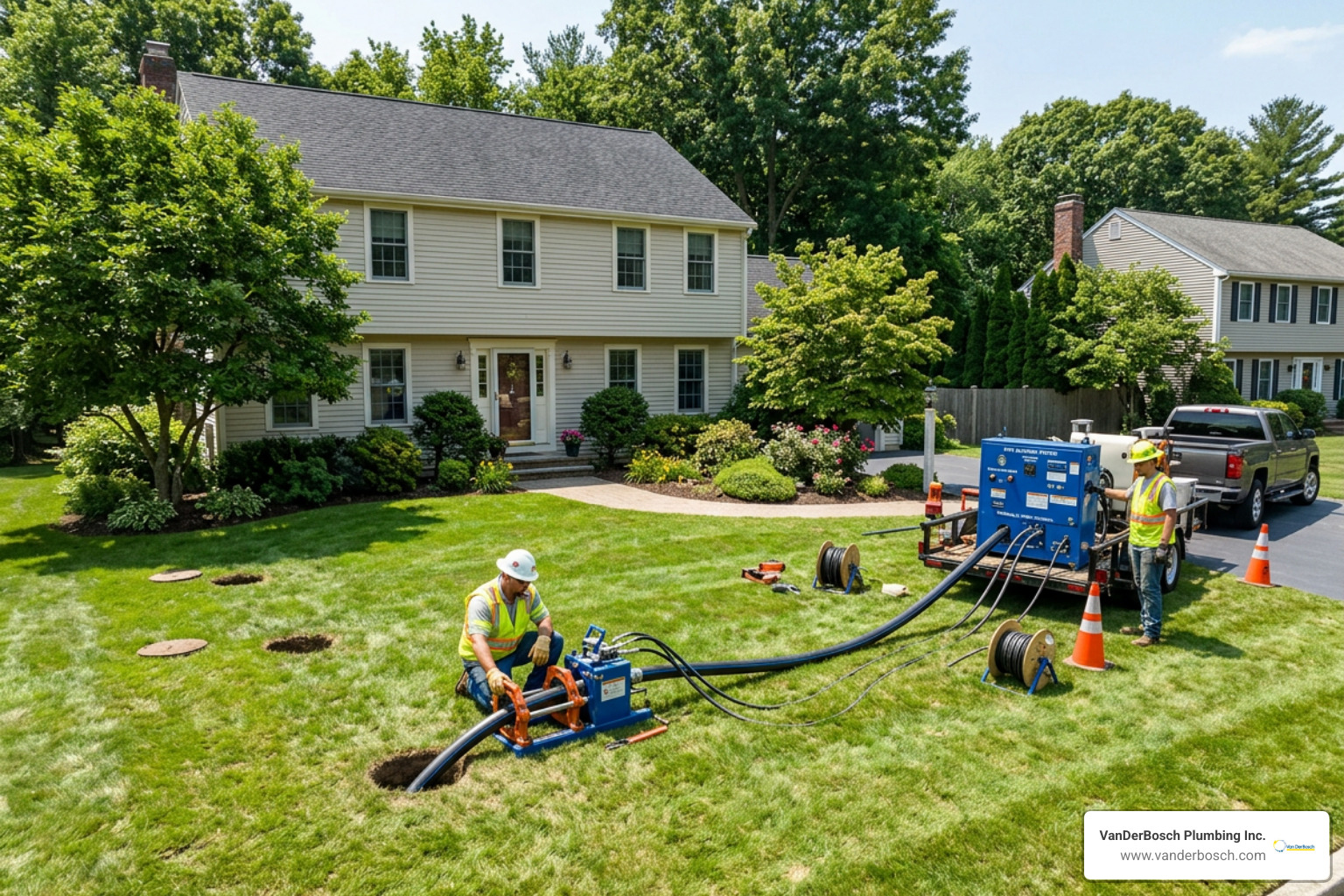
When a Sewer Problem Hits, You Don’t Have to Tear Up Your Yard
No-dig sewer line repair in Roselle, IL is a modern method of fixing damaged underground sewer pipes without excavating your yard, driveway, or landscaping. Here’s a quick summary:
- What it is: Trenchless technology that repairs or replaces sewer pipes through small access points
- Main methods: CIPP lining, pipe bursting, slip lining, and spray lining
- Cost: $60 to $250 per foot on average
- How long it takes: Usually completed in one day
- Lifespan: Up to 50 to 100 years depending on the method
- Best for: Cracked pipes, root intrusion, corrosion, and aging sewer lines in Chicagoland homes and businesses
Picture this: you notice sewage backing up into your basement or soggy patches forming across your lawn. Your first thought might be heavy machinery, torn-up gardens, and weeks of disruption. For homeowners across Chicagoland — from Roselle, IL to the heart of Chicago — that fear is completely understandable.
The good news? It doesn’t have to work that way anymore. Modern trenchless technology has changed sewer repair completely. Most damaged lines can now be fixed with little more than a small access point and specialized equipment — no massive trench required.
I’m Hugh Hodur, President of VanDerBosch Plumbing Inc., and I’ve overseen hundreds of no-dig sewer line repair projects across the Chicagoland area, helping homeowners and small business owners solve urgent sewer problems without turning their properties into construction zones. In this guide, I’ll walk you through everything you need to know to make a confident, informed decision.
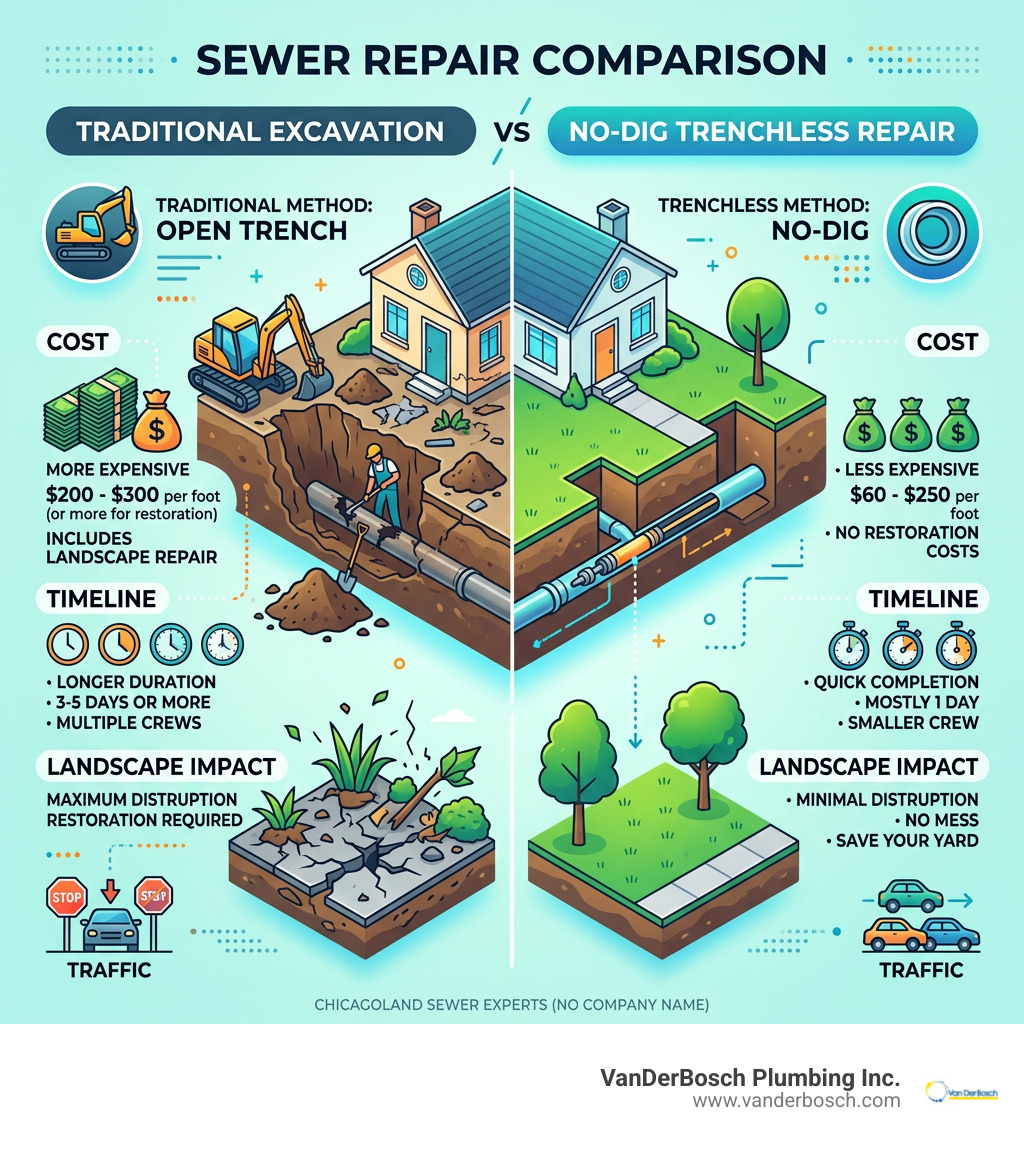
What is No-Dig Sewer Line Repair?
At its core, no-dig sewer line repair (often called trenchless technology) is the “keyhole surgery” of the plumbing world. Instead of using a backhoe to dig a long, deep trench through your lawn, sidewalk, or driveway to reach a buried pipe, we use advanced tools to fix the pipe from the inside out.
Think of it this way: traditional repair is like open-heart surgery, while trenchless repair is like a minimally invasive stent. We access the sewer line through existing openings called “cleanouts” or by creating one or two very small, strategic access points. According to experts at Nodig.com, this technology is revolutionizing how we handle infrastructure by making unexpected sewer issues feel less like a catastrophe and more like a manageable home maintenance task.
By choosing a trenchless pipe repair, you aren’t just saving your prize-winning roses or your expensive paver driveway. You are also:
- Preserving Property Value: Avoiding the “construction zone” look that can linger for months after traditional digging.
- Reducing Environmental Impact: Less digging means less disruption to local ecosystems and a smaller carbon footprint from heavy machinery.
- Ensuring Structural Integrity: Modern liners often result in a pipe that is stronger and more root-resistant than the original clay or cast iron.
To learn more, check out our guide on what to know about trenchless pipe repairs.
How No-Dig Sewer Line Repair Works
The process is high-tech but straightforward. It generally follows these key steps:
- CCTV Inspection: We don’t guess; we look. We send a high-definition waterproof camera down the line to pinpoint the exact location and nature of the damage. You can read more about the basics of sewer video inspection to see how this works.
- Cleaning and Prep: Before we can repair a pipe, it has to be clean. We often use professional hydro-jetting services to blast away tree roots, grease, and scale with high-pressure water.
- The Repair: Depending on the method chosen, we either pull a resin-saturated liner into the pipe or use a “bursting head” to pull a brand-new pipe through the old one.
- Resin Curing: For lining methods, the resin is cured using heat, steam, or UV light, turning a flexible tube into a rock-hard, seamless new pipe within the old one.
Main Methods of Trenchless Sewer Repair
Not every sewer problem is the same, which is why we utilize several different methods to get the job done right.
| Feature | Cured-in-Place Pipe (CIPP) | Pipe Bursting |
|---|---|---|
| Best For | Cracks, leaks, and root intrusion | Fully collapsed or undersized pipes |
| Material | Epoxy-saturated felt/fiberglass | High-Density Polyethylene (HDPE) |
| Access Needed | One small access point or cleanout | Two small access points (entry/exit) |
| Lifespan | 50+ years | Up to 100 years |
| Key Advantage | No diameter loss; seamless finish | Can increase pipe size; replaces pipe |
Beyond these, there is slip lining, where a smaller pipe is slid inside a larger one, and spray lining (or brush coating), which uses a rotating head to spray a thin protective epoxy coating inside the pipe. For localized damage, we may use sectional liners to patch a specific two-foot or four-foot area rather than lining the entire run.
Cured-in-Place Pipe (CIPP) Lining
CIPP is the most popular form of no-dig sewer line repair. We take a flexible felt or fiberglass tube, saturate it with high-grade epoxy resin, and “invert” it into the old pipe using air or water pressure. Once in place, the liner is expanded to press against the old pipe walls and cured using steam or UV light.
The result is a jointless, root-resistant, and corrosion-proof pipe within a pipe. This method is incredibly durable, with a 50-year lifespan being the industry standard. It’s perfect for residential lines that have suffered from age-related wear or minor shifting.
Pipe Bursting for No-Dig Sewer Line Repair
If your pipe has completely collapsed or if you need to increase the capacity of your line, CIPP might not be an option. In these cases, we recommend sewer line replacement services in Chicago, IL using the pipe bursting method.
We launch a cone-shaped “bursting head” through the old pipe. As it moves, it shatters the old clay or cast iron pipe and pushes the fragments into the surrounding soil. Simultaneously, it pulls a brand-new, high-density polyethylene (HDPE) pipe behind it. This allows for a full replacement with minimal digging.
The Advantages of No-Dig Sewer Line Repair
The benefits of going trenchless extend far beyond just saving your grass.
- Speed: While traditional excavation can take a week or more, trenchless repairs are often completed in just one day.
- Cost Efficiency: While the upfront technology cost is slightly higher, you save thousands by avoiding the need to rebuild porches, repave driveways, or replant expensive landscaping.
- Longevity: HDPE and epoxy-resin pipes are incredibly durable. New replacement pipes can last up to 100 years, making it a “one and done” solution for most homeowners.
- Improved Flow: The smooth interior of epoxy liners and HDPE pipes often improves the flow capacity of the sewer line compared to old, rough-walled clay or cast iron.
Is it the right choice for you? We take a deep dive into this in our article: is trenchless sewer repair worth the cost?.

Why Choose No-Dig Sewer Line Repair in Roselle, IL?
In areas like Roselle, IL, and the surrounding Cook County suburbs, the soil and infrastructure present unique challenges. Many homes in our service area still rely on aging clay pipes that are highly susceptible to tree root intrusion from mature oak and maple trees.
The freezing and thawing cycles of Chicago winters cause the ground to shift, which can lead to “bellies” or offsets in old pipes. By choosing trenchless pipe repair in Roselle, we can seal those joints and prevent roots from ever finding their way back in. Plus, in high-density areas like Hyde Park or Ukrainian Village, there often isn’t even room for a backhoe, making no-dig methods the only practical solution.
Signs You Need Sewer Line Repair in Chicago, IL
How do you know it’s time to call in the pros? Sewer issues rarely stay quiet for long. Keep an eye out for these warning signs:
- Frequent Backups: If your toilets or floor drains are backing up regularly, there is a blockage or break in the main line.
- Foul Odors: The smell of “rotten eggs” or sewer gas in or around your home is a major red flag.
- Soggy Patches: If one part of your yard is always wet or the grass is suspiciously greener and faster-growing than the rest, you likely have a leak.
- Gurgling Drains: When you flush the toilet, do you hear a “glug-glug” sound from the shower drain? That’s trapped air caused by a sewer line issue.
- Foundation Cracks: In extreme cases, a leaking sewer line can wash away the soil under your home, leading to structural cracks.
If you notice any of these, check out our list of signs a sewer line may need repair for more details.
Frequently Asked Questions
How long does a trenchless sewer repair last?
The materials we use are designed for the long haul. CIPP liners typically have a lifespan of 50 years, while pipe bursting with HDPE can last up to 100 years. Because these materials are seamless and resistant to corrosion and chemicals, they often outlast the original pipes they replaced. If you’re ready to start, you can find local pros for expert consultations to see which lifespan fits your budget.
Can trenchless methods fix a completely collapsed pipe?
If a pipe is completely “pancaked” or collapsed, CIPP lining usually isn’t possible because the liner needs a structure to follow. However, pipe bursting can often still be used because the bursting head can force its way through the debris. If the line is too far gone even for bursting, a small-scale traditional excavation might be necessary for that specific section. We answer more of these technical queries in our sewer video inspection FAQ.
Is no-dig repair more expensive than traditional digging?
Per linear foot, the labor and equipment for trenchless repair are more expensive ($60–$250 per foot vs. $50–$250 for traditional). However, when you factor in the “collateral damage” of traditional digging—such as $10,000 to replace a driveway or $5,000 for new landscaping—trenchless almost always ends up being the more cost-effective choice. It’s all about the total project value.
Conclusion
Sewer problems are stressful, but the solution doesn’t have to be. At VanDerBosch Plumbing Inc., we pride ourselves on bringing the latest technology to our neighbors in Chicago, Roselle, Elmhurst, and across the suburbs. Whether you are dealing with a stubborn root intrusion in Sauganash or a cracked line in Oakbrook Terrace, our team is ready to help.
We offer:
- 100% Satisfaction Guarantee: We aren’t happy until the job is done right.
- 24/7 Availability: Sewer emergencies don’t wait for business hours, and neither do we.
- Transparent Pricing: No hidden service charges or “gotcha” fees.
- Expert Technicians: Our team is licensed, background-checked, and highly experienced in trenchless technology.
Don’t let a sewer issue ruin your property or your week. Schedule your no-dig sewer line repair today and let us fix your pipes from the inside out.