
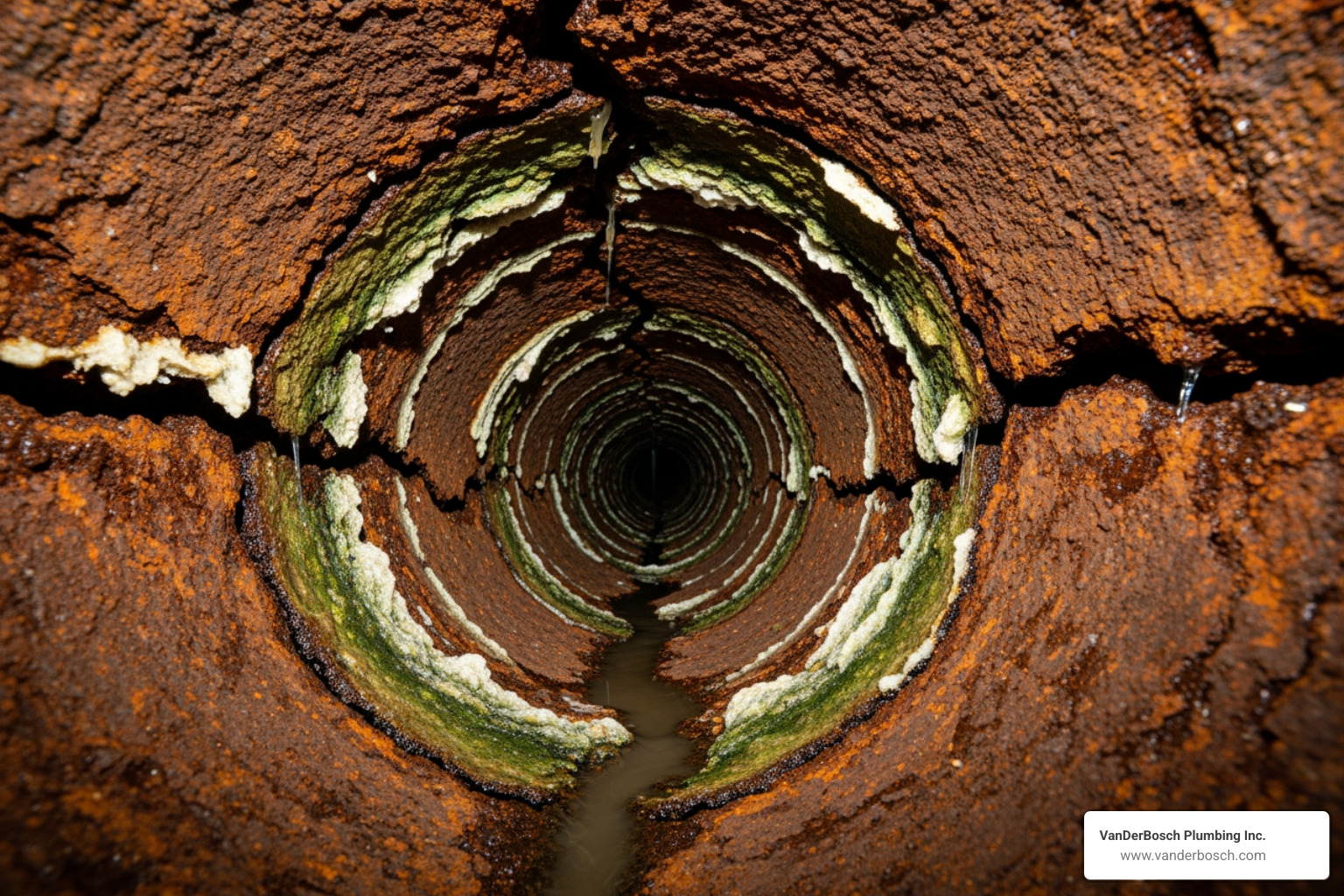
The Hidden Problem with Aging Cast Iron Pipes
A cast iron pipe repair liner is a trenchless solution that creates a new, structural pipe inside your existing damaged cast iron pipe using a resin-saturated felt liner that hardens in place. This process, called Cured-In-Place Pipe (CIPP) lining, repairs corrosion, cracks, and leaks without excavation.
Quick Overview of Cast Iron Pipe Repair Liners:
- What it is: A resin-impregnated tube installed inside your damaged pipe that cures to form a seamless, structural liner
- How it works: The liner is inserted, inflated, and cured using heat or UV light to create a “pipe within a pipe”
- Best for: Pipes with corrosion, cracks, leaks, and root intrusion that still have structural integrity
- Not suitable for: Completely collapsed pipes or severely deteriorated sections
- Lifespan: 50+ years with proper installation
- Cost: Typically 60-70% less than traditional excavation and replacement
If you live in a home built before 1972, there’s a good chance your sewer system includes cast iron pipes. These pipes were the industry standard for decades, but they weren’t built to last forever. Over time, cast iron pipes develop serious problems that can turn into plumbing nightmares.
Common signs your cast iron pipes are failing:
- Corrosion and rust eating away at the pipe walls from the inside out
- Scale buildup that narrows the pipe opening and restricts flow
- Cracks and leaks allowing sewage to seep into your property
- Tree root intrusion where roots exploit weak spots and grow into the pipe
- Frequent backups that keep happening no matter how often you clear them
Traditional repair methods meant tearing up your yard, driveway, or basement floor—a messy, expensive, and time-consuming process. But modern technology offers a better way. Cast iron pipe repair liners provide a trenchless solution that fixes these problems from the inside, preserving your property and your peace of mind.
Want to know if your sewer line needs attention? Check out our guide on signs a sewer line may need repair or replacement.
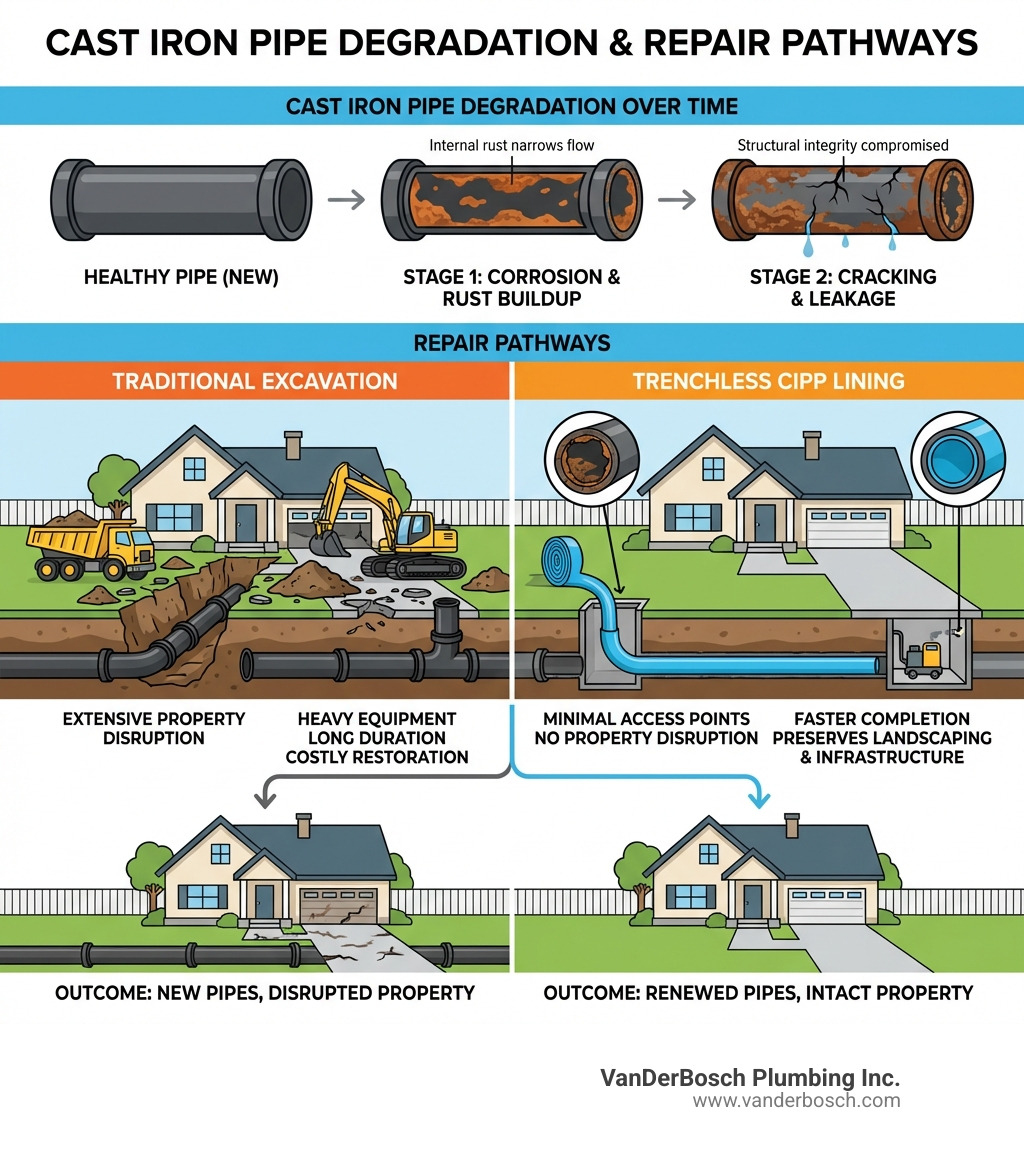
What is a Cast Iron Pipe Repair Liner? The CIPP Solution Explained
When we talk about a cast iron pipe repair liner, we’re primarily referring to Cured-In-Place Pipe (CIPP) lining. This innovative trenchless technology creates a brand-new pipe right inside your old, failing one. Imagine a seamless, jointless, and structurally sound pipe forming within the existing conduit—that’s the magic of CIPP.
The CIPP process involves using a flexible, felt liner saturated with a special epoxy resin. This isn’t just any resin; it’s engineered to be incredibly durable and to bond perfectly with the existing pipe. Once installed and cured, this resin-saturated liner hardens to form a rigid, impermeable “pipe within a pipe.” It’s a structural material, meaning it effectively takes over the function of the old, deteriorating cast iron pipe. This new inner pipe is completely sealed from end to end, eliminating all the common issues associated with aging cast iron.
The beauty of this “pipe-within-a-pipe” concept is how it directly addresses the problems of corrosion, cracks, and root intrusion. The new liner acts as a barrier, preventing further corrosion of the old cast iron. It seals off all cracks and holes, stopping leaks and restoring the pipe’s integrity. And because it’s a smooth, seamless surface, tree roots can no longer penetrate or exploit weak joints, which is a common culprit for blockages in Chicagoland. For more detailed information on how these trenchless methods work, you can explore our page on Trenchless Pipe Repairs.
This method isn’t just a quick fix; it’s a long-term solution backed by industry standards. The installation and material quality often adhere to rigorous guidelines, such as those outlined in the Standard Practice for CIPP, ensuring a high-quality and reliable repair.
The Benefits of a Cast Iron Pipe Repair Liner
Choosing a cast iron pipe repair liner for your plumbing woes offers a host of compelling advantages, especially when compared to the disruptive nature of traditional excavation.
- Durability and Lifespan: One of the most significant benefits is the incredible longevity of a CIPP liner. These liners are designed to last, with an expected lifespan of 50 years or more. Many systems even come with a 50-year materials and labor warranty, giving you peace of mind for decades to come. This means you’re not just patching a problem; you’re investing in a permanent solution.
- Prevents Root Intrusion: Tree roots are notorious for finding their way into tiny cracks and loose joints in cast iron pipes, leading to recurring blockages. Since the CIPP liner creates a seamless, jointless interior surface, there are no entry points for roots to penetrate. This effectively puts an end to root intrusion problems in the lined section.
- Stops Leaks and Improves Flow: The new, smooth interior surface of the liner seals all existing cracks and holes, stopping leaks dead in their tracks. Furthermore, this smooth surface reduces friction, which can actually improve the flow capacity of your pipe, even with a slight reduction in diameter. It prevents debris from snagging on rough, corroded surfaces, reducing the likelihood of future clogs and backups.
- Minimal Disruption: This is often the most appreciated benefit by our clients in Chicagoland. CIPP lining is a trenchless technology, meaning it typically requires little to no excavation. Instead of tearing up your yard, driveway, or interior floors, our technicians can usually access the pipe through existing access points. This saves your landscaping, concrete, and sanity, making it a much cleaner and less intrusive repair method.
- Cost-Effective: While the initial cost can vary, CIPP lining is frequently more cost-effective than traditional pipe replacement. By avoiding extensive excavation, property restoration (like re-landscaping or repairing foundations), and lengthy labor, you can often save significantly. Some sources suggest CIPP can be 60-70% less expensive than conventional excavation and replacement, especially in complex situations like pipes under buildings or mature landscapes.
Limitations and Considerations
While a cast iron pipe repair liner is a phenomenal solution for many pipe problems, it’s not a one-size-fits-all miracle. There are specific situations where CIPP may not be the best, or even a viable, option.
- Pipe Must Be Structurally Sound (to a degree): CIPP lining works by creating a new pipe within the old one. This means the existing cast iron pipe needs to have enough structural integrity to support the lining process and provide a host for the new liner. If the pipe is severely compromised, collapsed, or has large missing sections, CIPP may not be suitable.
- Not for Collapsed Pipes: If a section of your cast iron pipe has completely collapsed, a liner cannot be installed. The pathway is simply too obstructed. In such cases, traditional excavation or pipe bursting (another trenchless method that replaces the pipe entirely) would be necessary.
- Diameter Reduction: A CIPP liner does create a “pipe within a pipe,” which inherently means a slight reduction in the internal diameter of the pipe. Typically, this reduction is minimal, often around 1/4 inch. For most residential and light commercial applications, this slight reduction is negligible and often offset by the improved flow characteristics of the new, smooth, seamless surface. However, it’s a factor to consider, particularly in pipes that are already borderline in capacity.
- Access Points Required: While CIPP avoids extensive trenching, it does require access points to insert and cure the liner. These could be existing cleanouts, an exposed pipe section, or a small, strategically excavated access pit. Our experienced technicians will assess your specific situation to determine the best approach.
- Residential vs. Commercial Applications: CIPP lining is highly versatile and effective for both residential and light commercial properties in areas like Chicago, Roselle, and Elmhurst. However, the complexity and scale can differ. Commercial applications, especially for larger diameter pipes or those with more intricate branching systems, may require specialized equipment or techniques. Our team is equipped to handle both.
The CIPP Installation Process: A Step-by-Step Guide
The installation of a cast iron pipe repair liner in Chicago is a precise process that our skilled technicians perform with meticulous care. It’s a testament to modern plumbing technology, changing a damaged pipe into a robust, new system without the chaos of traditional digging.
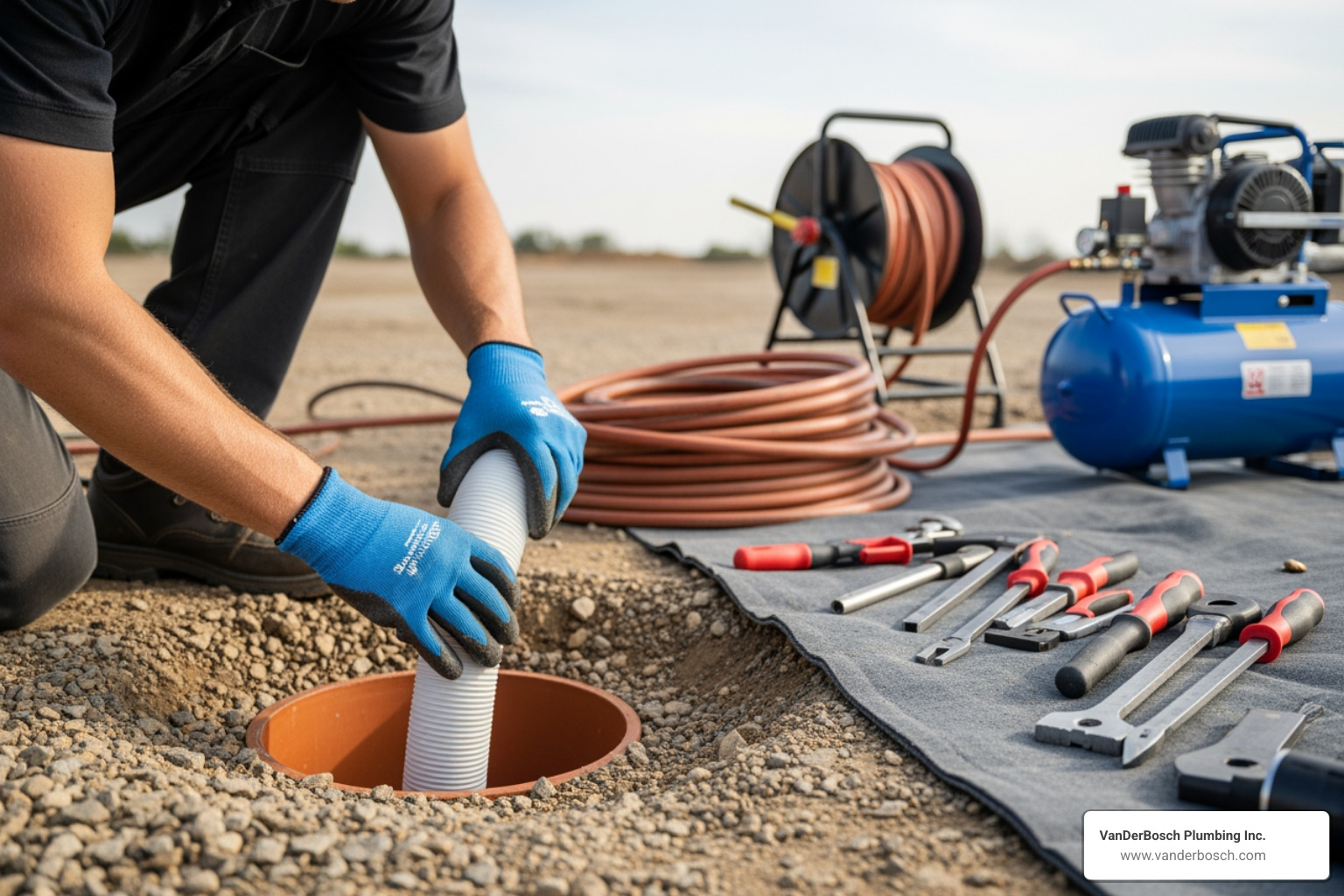
Here are the five key steps involved in our CIPP lining process:
- Initial Sewer Camera Inspection
- Thorough Pipe Cleaning
- Liner Insertion and Curing
- Reinstating Branch Lines
- Final Video Inspection
Let’s explore each step to understand how we bring your pipes back to life.
Step 1: Initial Sewer Camera Inspection
Before any repair work begins, the first and most critical step is a comprehensive sewer camera inspection. Think of it as a plumbing endoscopy! We insert a high-resolution camera into your cast iron pipe to get a real-time, up-close view of its interior condition. This allows us to:
- Diagnose the problem: We pinpoint the exact nature and extent of the damage—be it corrosion, cracks, root intrusion, scale buildup, or misaligned joints.
- Locate damage: The camera helps us precisely identify where the issues are, which is crucial for planning the repair.
- Measure pipe length: We accurately measure the length of the section that needs lining, ensuring the liner is custom-cut to fit perfectly.
- Assess suitability: This inspection also helps us determine if CIPP lining is indeed the best solution for your specific situation. If the pipe is completely collapsed or has other severe structural issues, we’ll discuss alternative options.
Our detailed Sewer Video Inspection service is an invaluable tool, allowing us to see what’s happening beneath your property without any guesswork. For more insights into this process, check out The Basics of Sewer Video Inspection Explained.
Step 2: Thorough Pipe Cleaning
Once we’ve fully assessed the pipe, the next step is to prepare it for the liner. This is where the “clean slate” really happens! The success of a cast iron pipe repair liner depends heavily on a thoroughly cleaned host pipe. We use advanced techniques to:
- Remove scale and debris: Aging cast iron pipes often accumulate significant rust, scale, and other debris. We use specialized tools, such as patented carbide chains that rotate at high speeds (up to 600 RPM), to mechanically scrape away stubborn buildup without damaging the pipe wall.
- Clear out roots: If tree roots have invaded your pipe, we’ll use powerful cutting tools to grind them away, ensuring a clear pathway.
- Wash out contaminants: After mechanical cleaning, we employ high-pressure water jetting, also known as Hydro Jetting Services, to thoroughly wash out all loose debris, grease, and sludge. This leaves the pipe interior pristine.
- Prepare the host pipe surface: A clean, smooth surface is essential for the epoxy resin to properly adhere to the existing pipe, creating a strong, long-lasting bond. This ensures the liner performs optimally for decades.
Step 3: Liner Insertion and Curing
This is the core of the CIPP process, where the new pipe is formed. It’s a fascinating display of trenchless technology!
- Resin saturation: A flexible, felt liner (often made of polyester fabric) is custom-cut to the exact length of the damaged pipe section. This liner is then saturated with a specially formulated, two-part epoxy resin. This “wet-out” process ensures the liner is completely impregnated with the resin, which will eventually harden.
- Inversion method: One common method involves using air pressure or a hydrostatic head (water pressure) to “invert” or turn the resin-saturated liner inside out as it’s pushed into the existing cast iron pipe. As it inverts, the resin-coated side is pressed firmly against the interior walls of the old pipe. Another technique is the “pull-in-place” method, where the liner is pulled through the pipe and then inflated.
- Curing with heat or UV light: Once the liner is perfectly positioned and pressed against the host pipe walls, the curing process begins. This typically involves introducing heat (either hot water or steam) or using UV light to activate the epoxy resin. The resin undergoes an exothermic chemical reaction, causing it to harden and solidify. For example, some resins heat up to around 180 degrees Fahrenheit during this phase. This hardening process usually takes a few hours, typically 1-4 hours depending on the resin and conditions.
- Hardening process: As the resin cures, it forms a rigid, seamless, and jointless new pipe that is incredibly strong and durable. This new liner effectively becomes a structural pipe within your old one, capable of withstanding external pressures and providing an excellent pathway for wastewater.
Step 4: Reinstating Branch Lines
Most sewer systems have branch lines that connect to the main sewer line (e.g., from sinks, toilets, or floor drains). When we install a continuous CIPP liner, these branch connections are temporarily covered by the new liner. But don’t worry, we don’t leave your plumbing disconnected!
- Precision location: During the initial inspection (Step 1), we carefully map out the exact locations of all branch lines.
- Robotic cutting tools: After the liner has fully cured and hardened, our technicians use specialized robotic cutting tools, guided by a live camera feed, to precisely cut open the new liner at each branch connection. This re-establishes the flow from your fixtures into the newly lined main pipe. This intricate process ensures that all your plumbing fixtures are fully functional and properly connected to the restored sewer system.
Step 5: Final Video Inspection
The final step is our quality assurance check, ensuring everything is perfect.
- Verifying successful installation: We conduct another comprehensive video inspection of the newly lined pipe. This allows us to visually confirm that the liner is smooth, seamless, fully cured, and free of any defects. We also verify that all branch lines have been correctly reinstated.
- Quality assurance: This final inspection is our way of guaranteeing that the repair meets our high standards and will provide you with decades of reliable service.
- Providing peace of mind: We often provide our customers with a copy of this final video inspection. It’s not just proof of our work; it’s tangible evidence of your newly rehabilitated, high-performing sewer system.
For answers to more common questions about our inspection process, visit Sewer Video Inspection: Answering Customers’ Frequently Asked Questions.
CIPP Lining vs. Traditional Replacement: A Head-to-Head Comparison
When facing issues with aging cast iron pipes, property owners in Chicagoland typically have two main options: traditional pipe replacement or the modern solution of cast iron pipe repair liner (CIPP). The choice between these methods involves weighing several factors, from cost and time to disruption and long-term durability.
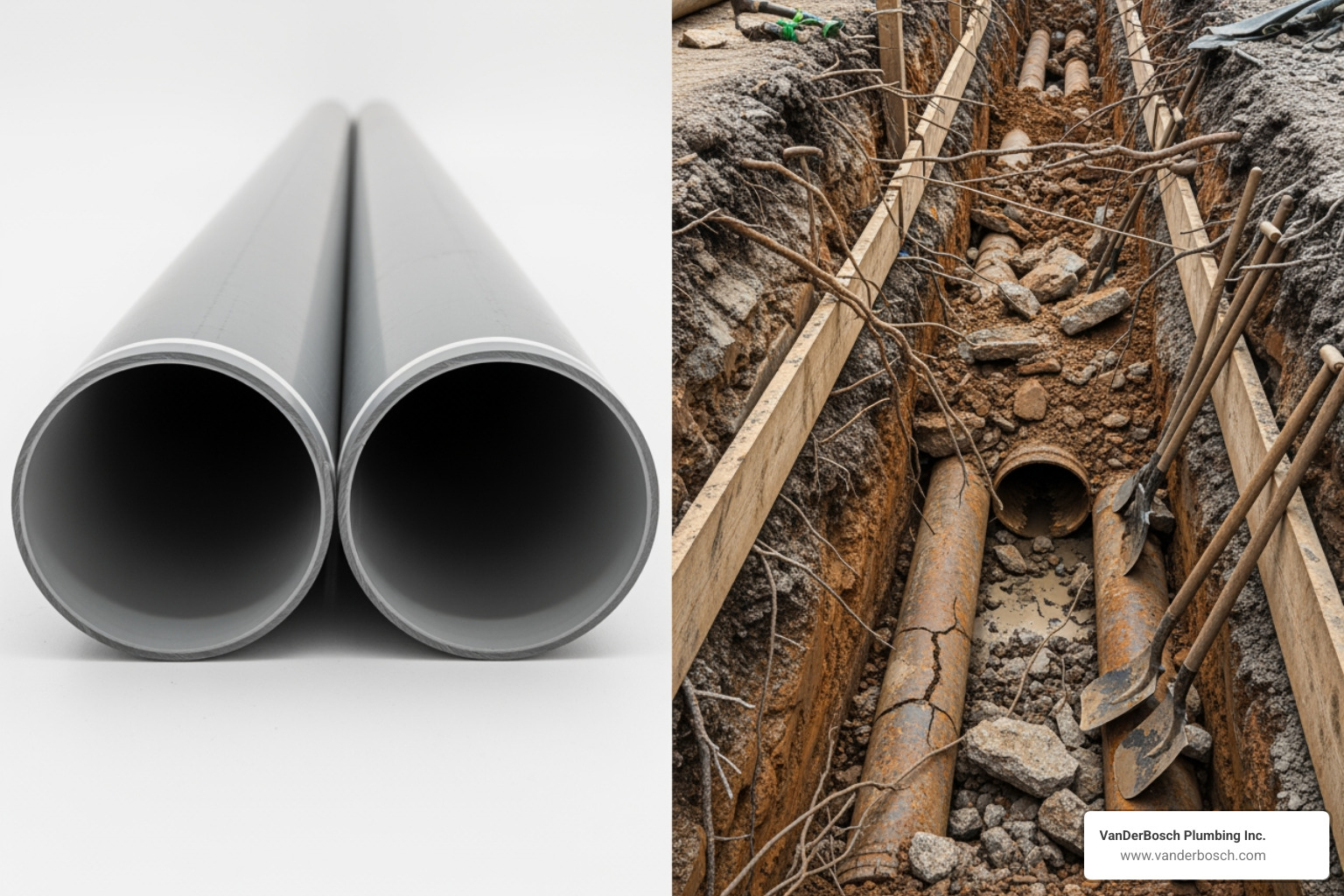
Let’s break down how these two approaches compare:
| Feature | CIPP Lining (Trenchless) | Traditional Replacement (Excavation) |
|---|---|---|
| Cost | Generally 60-70% less than excavation. Residential: $150-$200/linear foot. Commercial: $175-$225/linear foot. Avoids restoration costs. | Significantly higher due to extensive labor, excavation, and property restoration. Residential: $15,000-$25,000 (for 50ft). |
| Installation Time | Hours to a few days. Often completed within a day or two. Minimal operational downtime. | Days to weeks (2-4 weeks for complex projects). Includes excavation, pipe laying, and restoration. |
| Property Disruption | Minimal. Access through existing points or small pits. Preserves landscaping, driveways, floors. | Extensive. Requires digging trenches, destroying landscaping, concrete, and potentially interior structures. |
| Lifespan | 50+ years for the new liner. | New pipes can last up to 100 years, depending on material (e.g., PVC). |
| Environmental Impact | Lower. Less waste to landfills, reduced carbon footprint from heavy machinery. | Higher. Generates significant waste (soil, old pipe, concrete) and requires more fuel for heavy equipment. |
When is a Cast Iron Pipe Repair Liner Not an Option?
While CIPP lining is an incredibly versatile and effective solution, there are specific scenarios where traditional replacement becomes the only viable option for your cast iron pipes. Understanding these limitations is crucial for making an informed decision.
- Completely Collapsed Pipes: If a section of your cast iron pipe has fully collapsed, creating a complete obstruction, a liner cannot be installed. There’s simply no pathway for the liner to pass through or to form against.
- Severely Deteriorated Pipes with Large Voids: CIPP relies on the existing pipe structure to provide a host for the new liner. If the original pipe is so severely deteriorated that it has large missing sections or significant portions of its wall are gone, the liner may not have enough support to form properly or achieve the necessary structural integrity.
- Offset Joints: While CIPP can handle minor bends and some imperfections, severely offset joints (where one pipe section has shifted significantly out of alignment with the next) can prevent the liner from being properly inserted or from forming a smooth, continuous seal.
- Significant Structural Issues Beyond the Pipe: Sometimes, the problem isn’t just the pipe itself, but also the surrounding ground or foundation that has shifted, causing severe deformation of the pipe. In such cases, addressing the external structural issue might necessitate excavation and replacement of the pipe.
- When a Whole Home Repipe is Necessary: In some older homes in areas like Winnetka or Oak Park, the entire plumbing system—not just the sewer line—might be at the end of its life. If multiple sections of both drain and supply lines are failing, a comprehensive whole-home repipe might be a more holistic and cost-effective long-term solution than spot repairs.
- Code Mandates or Material Upgrades: Occasionally, local plumbing codes might require a complete replacement with a specific new material (like PVC) in certain situations, especially if the existing cast iron is deemed beyond repair or if a full system upgrade is desired.
In these situations, our experienced technicians will conduct a thorough assessment and camera inspection to determine the best course of action, ensuring you receive the most effective and lasting repair for your home or business.
Frequently Asked Questions about Cast Iron Pipe Lining
We understand you might have questions about this advanced plumbing solution. Here are some of the most common inquiries we receive from our Chicagoland clients about cast iron pipe repair liner technology.
How much does a CIPP liner reduce the pipe’s diameter?
This is a common and excellent question! A CIPP liner does create a “pipe within a pipe,” so there is a slight reduction in the internal diameter. However, this reduction is typically minimal—often around 1/4 inch. For example, a 4-inch pipe might become 3.75 inches.
What’s important to remember is that this slight diameter reduction is almost always offset, or even improved upon, by the new liner’s incredibly smooth, seamless, and jointless interior surface. Unlike old cast iron pipes that are rough, corroded, and prone to snagging debris, the new liner allows wastewater to flow much more efficiently. This often results in improved flow characteristics and reduced chances of future clogs, even with the minor change in diameter. It’s a bit like comparing a bumpy dirt road to a freshly paved highway—the highway, even if slightly narrower, allows for much smoother and faster travel!
What maintenance is required for a lined pipe?
One of the great advantages of a CIPP-lined pipe is its low maintenance requirements. Once installed, the new liner is incredibly durable and resistant to the common problems that plagued your old cast iron pipes.
- Resistant to scale and root intrusion: The smooth, non-porous surface of the liner prevents mineral scale from building up and drastically reduces the chances of tree roots penetrating the pipe.
- No special care needed: You can continue to use your plumbing system as normal. The liner is built to withstand typical wastewater and household chemicals.
- Routine Drain Cleaning Services recommended: While the liner itself is robust, it’s always a good practice to maintain healthy drains throughout your home. We still recommend periodic professional drain cleaning for your entire plumbing system to prevent blockages from occurring in other non-lined sections or fixtures. This ensures the longevity and efficiency of your entire system.
Essentially, a lined pipe is designed to be a “set it and forget it” solution for decades!
How long does a cast iron pipe repair liner last?
When properly installed by experienced professionals like us, a cast iron pipe repair liner is a long-term solution designed to stand the test of time. These liners are engineered for exceptional durability and longevity.
- Expected lifespan of 50 years or more: Most reputable CIPP systems boast an expected lifespan of 50 years or even longer. This is often backed by comprehensive warranties from manufacturers and installers.
- Meets or exceeds ASTM standards: The materials and installation processes for CIPP lining adhere to stringent industry standards set by organizations like ASTM International. These standards ensure the liners are rigorously tested for strength, chemical resistance, and long-term performance, providing confidence in their durability.
- Durable epoxy material: The epoxy resin used to saturate the felt liner is a thermoset plastic that, once cured, becomes incredibly hard and resilient. It’s resistant to corrosion, abrasion, and chemicals commonly found in wastewater, ensuring it won’t degrade like the old cast iron.
Investing in a CIPP liner means you’re investing in a solution that will likely outlast your stay in your current home, providing reliable service for generations.
Your Modern Solution for Cast Iron Pipe Problems
Dealing with failing cast iron pipes can be a source of immense stress and financial burden. The thought of tearing up your home or yard for repairs is enough to make anyone cringe. Thankfully, with the advent of cast iron pipe repair liner technology, those days are largely behind us.
The CIPP lining process offers a superior, trenchless solution that effectively addresses the common issues of corrosion, cracks, leaks, and root intrusion in aging cast iron pipes. It’s a method that prioritizes efficiency, minimal disruption, and long-term durability, making it an incredibly smart investment for property owners across Chicagoland, from Roselle to Niles, and Elmhurst to Winnetka.
At VanDerBosch Plumbing Inc., we pride ourselves on providing cutting-edge plumbing solutions that save you time, money, and hassle. Our experienced, background-checked technicians are experts in trenchless technology, dedicated to delivering a 100% satisfaction guarantee on every job. We offer transparent pricing with no hidden service charges, and we’re available 24/7 for your emergencies because we know plumbing problems don’t keep business hours.
Don’t let deteriorating cast iron pipes compromise your property or your peace of mind. Choose the modern, no-dig solution that preserves your landscaping, your budget, and your sanity.
For a professional assessment of your cast iron pipes and guaranteed service, trust the experts at VanDerBosch Plumbing Inc. Schedule an appointment for Trenchless Pipe Repair Services in Chicago today, and let us bring your plumbing system into the 21st century.