
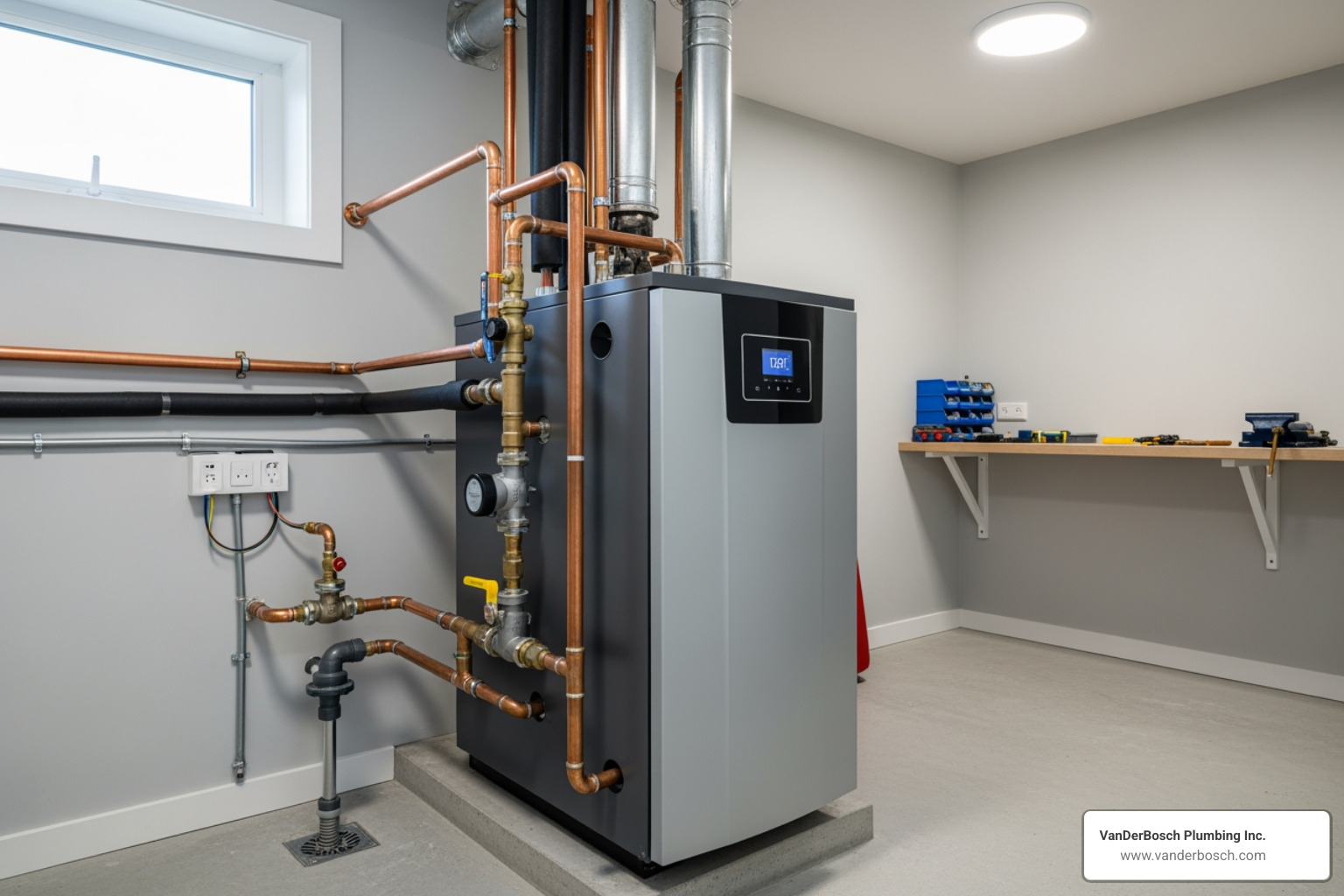
Why Boiler Health is Key to Home Comfort
Hot water boiler repair becomes a critical concern when the cold season arrives and your heating system suddenly fails. Coming home to a chilly house or finding water pooling beneath your boiler can quickly turn from a minor inconvenience into a homeowner’s nightmare.
Quick Answer: What You Need to Know About Hot Water Boiler Repair
- Common warning signs: Unusual noises (banging, whistling, gurgling), leaking water, inconsistent heating, foul odors, and rising energy bills
- Most frequent problems: Pressure relief valve failures, thermostat malfunctions, pump issues, heat exchanger limescale buildup, and pilot light problems
- DIY maintenance tasks: Checking pressure (ideal: 1-1.5 bars), bleeding radiators, visual leak inspections, and monitoring the pilot light
- When to call a professional: Gas leaks, carbon monoxide concerns, persistent leaks, complex component failures, or when repairs exceed the cost-effectiveness of your aging system
- Replacement consideration: Boilers over 10-15 years old requiring frequent repairs often warrant replacement instead of continued fixes
Boilers are reliable pieces of equipment that can last a long time, but it’s normal for them to need repairs from time to time. Hot water heating systems have few mechanical parts and usually perform reliably for many years—though the most common problems arise with the expansion tank or circulator rather than the boiler itself.
Often, boilers tend to malfunction as soon as the cold season arrives, the moment when you need heat the most. That’s why understanding the warning signs and knowing when to act can save you from costly emergency repairs and uncomfortable nights.
This guide will help you identify when your boiler needs attention, understand what might be going wrong, and make informed decisions about repair versus replacement.
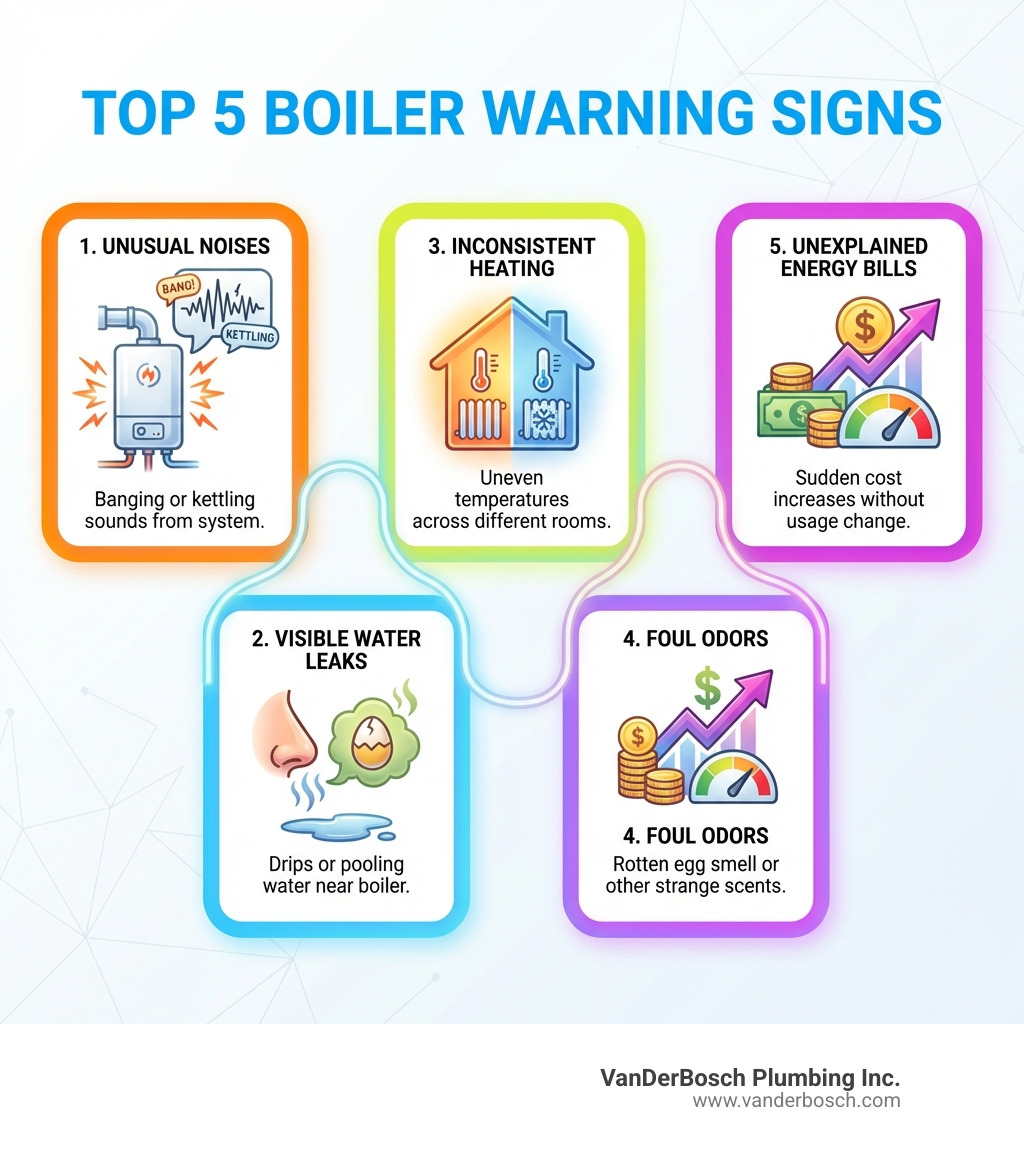
Decoding the Distress Signals: 7 Signs Your Boiler Needs Repair
No one wants to wake up to a cold home, especially in the depths of a Chicagoland winter. Your hot water boiler usually gives off a few subtle hints before it decides to throw in the towel completely. Learning to recognize these common signs can help you address issues promptly and avoid more significant, more expensive hot water boiler repair down the line.
Here are the most common signs that your hot water boiler needs attention:
Unusual Noises: Is your boiler suddenly sounding like a symphony of bangs, gurgles, or whistles? These aren’t new sound effects for your home entertainment system; they’re distress signals from your boiler.
- Banging (Kettling): This often sounds like a kettle boiling and is usually caused by limescale or mineral deposits building up around the heat exchanger. These deposits restrict water flow and cause water to overheat, leading to those alarming banging sounds.
- Gurgling: This noise often indicates trapped air in the system or low water pressure.
- Whistling: Similar to gurgling, whistling can also point to air in the system or sometimes a faulty pump.
- While some noises can be fixed by bleeding radiators or adjusting the pressure, persistent or loud noises should be checked by a technician to avoid more serious problems.
Inconsistent Heating or Cold Radiators: If some of your radiators are toasty warm while others remain stubbornly cold, or if your home isn’t heating evenly, your boiler might be struggling. This could be due to trapped air in the radiators, which prevents hot water from circulating effectively, or a problem with the circulator pump or thermostat. If your boiler isn’t generating heat at all, first check if the thermostat is set correctly and if the circuit breaker for the boiler is tripped. If these aren’t the issues, there might be a problem with the pilot light or the gas supply.
Leaking or Dripping Water: Any visible leaks or drips around your boiler should be addressed immediately. Even a small leak can lead to significant damage over time and reduced efficiency. Common causes include a faulty pressure relief valve, a corroded pipe, or a damaged seal. A leaking boiler is a serious issue requiring immediate attention. It’s crucial to shut off the boiler and contact a professional technician to inspect and fix the leak.

Low Boiler Pressure: Your boiler relies on the right amount of pressure to work efficiently. Most boilers have a pressure gauge on the front panel, and the ideal pressure level is typically between 1 and 1.5 bars. If the pressure is too low or too high, it can cause the system to underperform or even shut down. If the pressure keeps dropping, it might indicate a leak, which requires professional attention.
Pilot Light Problems: For older gas boilers, a flickering, yellow, or extinguished pilot light is a clear sign of trouble. The flame should burn a bright, consistent blue. If it’s not, it may indicate an issue with the gas supply, a faulty thermocouple, or dirty burners. A pilot light that keeps going out can also be due to drafts.
Foul Odors: This is a sign that demands immediate professional attention.
- Sulfur or Rotten Egg Smell: This almost certainly indicates a gas leak, which is extremely dangerous. Evacuate your home and call the gas company and emergency services immediately.
- Burning Odor: A burning smell might suggest overheating or electrical issues, both of which are serious hazards.
Unexplained Increase in Energy Bills: If your utility bills are suddenly skyrocketing, and you haven’t changed your heating habits, your boiler might be working harder than it should. An inefficient boiler struggles to heat your home or water, using more energy to compensate. This could be due to a lack of maintenance, limescale buildup, or a component malfunction.
Any of these signs could mean your boiler is “on the fritz.” Addressing them quickly can prevent a minor issue from becoming a costly emergency. For more detailed information on what to do in case of a leak, you can refer to resources like What to do if your boiler is leaking water | Boiler help and advice | Domestic & General.
Understanding Your Boiler: Key Components and Common Failures
To truly understand hot water boiler repair, it helps to know a little about how these systems work and what makes them tick (or, sometimes, bang!). While they might seem complex, the basic principle is quite straightforward.
How Your Boiler System Works
A hot water heating system, often simply called a boiler system, is designed to efficiently heat your home and provide hot water. It consists of several key components that work in harmony:
- Boiler Unit: This is the heart of the system, where water is heated. It can be powered by natural gas or oil.
- Heat Exchanger: Located within the boiler, this component transfers heat from the burning fuel to the water circulating through the system.
- Circulator Pump: This pump is responsible for moving the hot water from the boiler, through the network of pipes, and to your radiators or radiant floor heating system.
- Expansion Tank: As water heats up, it expands. The expansion tank provides a space for this excess water, preventing pressure from building up to dangerous levels. Newer systems often have the expansion tank on the basement ceiling near the boiler, while older systems might have it in the attic. This tank is charged with air to prevent the water from boiling.
- Pressure Relief Valve: A crucial safety device, this valve automatically releases excess pressure from the system if it becomes too high, preventing damage to the boiler and pipes.
- Thermostat: Your home’s thermostat acts as the brain, regulating the temperature by signaling the boiler when to turn on and off.
- Aquastat: This control sets the maximum water temperature for the boiler.
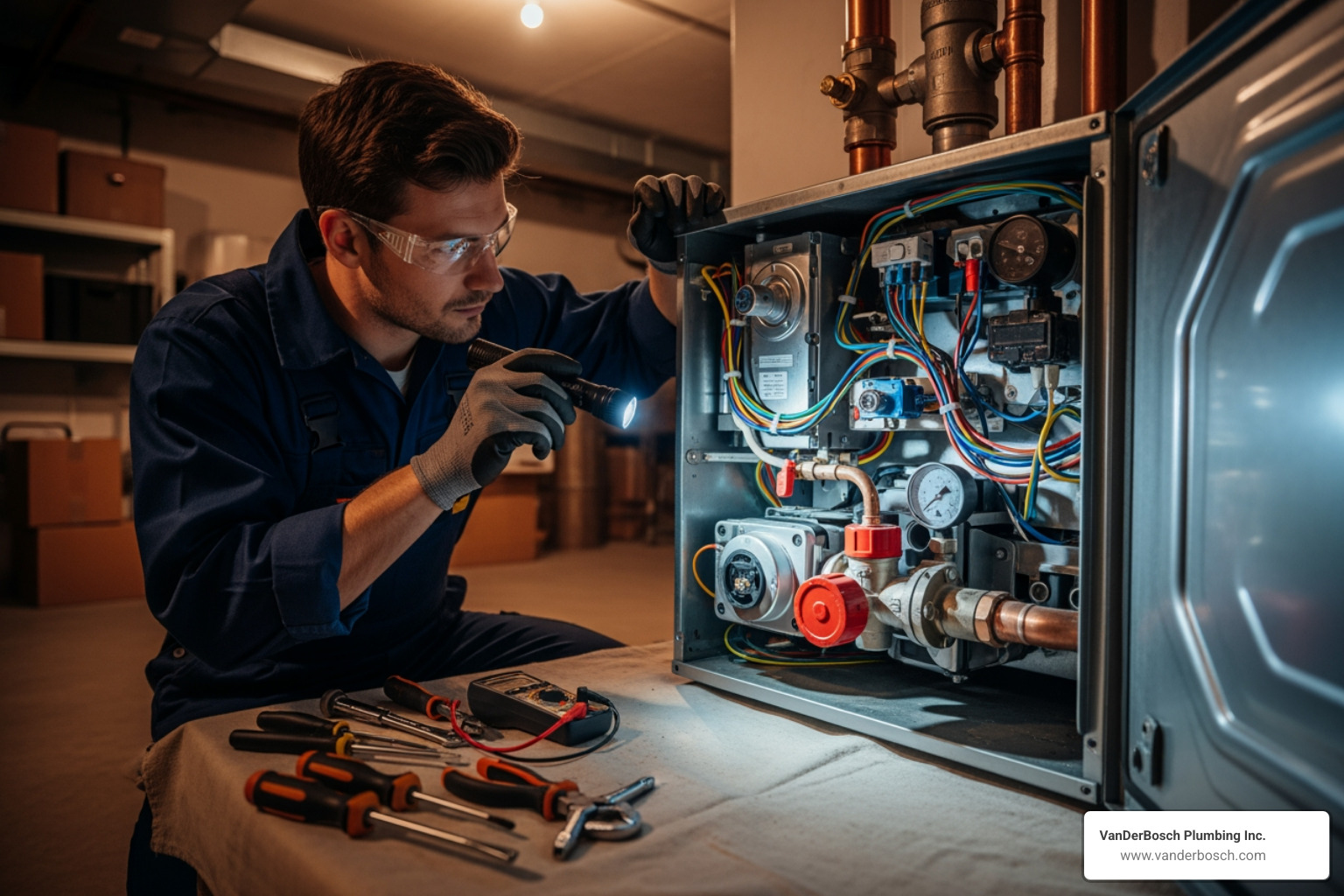
The process is simple: the boiler heats water, the circulator pump moves it through pipes to radiators (or other heat emitters), and the heat radiates into your rooms. The cooler water then returns to the boiler to be reheated, completing the cycle. Because they have few mechanical parts, hot-water heating systems usually perform reliably for many years.
Common Causes of Hot Water Boiler Leaks and Other Failures
Even with their inherent reliability, hot water boilers can develop problems. Understanding the typical culprits behind breakdowns can shed light on why your system might be acting up, and why professional hot water boiler repair is often necessary.
Beyond general malfunctions, here are some of the most frequent problems and causes of leaks:
- Corroded Tank or Pipes: This is a major cause of leaks, especially if you see water pooling at the bottom of the boiler. Over time, rust can develop inside the boiler tank or in the connecting pipes, leading to pinholes or larger breaches. Rusty water in a leak is a strong indicator of corrosion.
- Faulty Pressure Relief Valve: If water is spurting from this valve, it indicates too much water and not enough air in the expansion tank, or the valve itself might be faulty or damaged. A malfunctioning valve can either cause leaks or fail to relieve pressure, leading to system malfunctions. Replacing it is a relatively straightforward repair.
- Worn-Out Pump Seals: The circulator pump, which moves hot water throughout your home, contains seals that can deteriorate over time. If these seals fail, they can cause leaks. Pump repairs typically involve cleaning, lubricating, or replacing the pump entirely.
- Cracked Heat Exchanger: A cracked heat exchanger is a serious issue, more common in older or overworked systems. This can lead to leaks and is often a sign that a new boiler might be needed, as repairs can be costly or ineffective.
- Limescale Buildup: This is a common issue in areas with hard water, like parts of Chicagoland. Mineral deposits can accumulate on the heat exchanger, reducing the boiler’s ability to heat water efficiently and causing that tell-tale “kettling” noise. This often requires a system flush to remove the buildup.
- Thermostat Malfunction: If your boiler’s thermostat is acting up, it can cause inconsistent heating, prevent the system from turning on, or lead to “short cycling” (the boiler turning on and off too frequently).
- Pilot Light Issues: For gas boilers, a pilot light that frequently goes out can be due to a faulty thermocouple, dirty burners, or even drafts.
- Expansion Tank Problems: Often, the most common problems are with the expansion tank or a circulator rather than the boiler itself. If the expansion tank isn’t properly charged with air or is filled with water, it can lead to pressure issues and inefficient operation.
When these issues arise, it’s crucial to call a professional. For more details on warning signs, you can check resources like Signs Your Boiler Needs Repair.
The Homeowner’s Toolkit: DIY Maintenance vs. Professional Hot Water Boiler Repair
Just like your car, your boiler needs tuning and maintenance. Regular boiler maintenance is essential to avoid costly repairs and ensure your system operates efficiently. It helps catch problems early, reduces the risk of system failure, prolongs the lifespan of your boiler, and increases energy efficiency, saving you money on energy costs. A well-maintained boiler can last for many years, while neglecting it may lead to costly repairs or even early replacement.
Essential DIY Maintenance to Prevent Problems
While complex hot water boiler repair should always be left to the professionals, there are several simple, essential DIY maintenance tasks you, as a homeowner in Chicagoland, can perform to keep your boiler purring and prevent minor issues from escalating. These tasks are often quick and can be done without specialized tools.
Here’s what you can do:
- Check the Pressure Gauge: Most boilers have a pressure gauge on the front panel. The ideal pressure level is typically between 1 and 1.5 bars. If the pressure is too low, you may need to top up the water using the filling loop, following your manufacturer’s instructions. If the pressure keeps dropping after topping up, it might indicate a leak, which requires professional attention.
- Bleed Your Radiators: If you notice cold spots on some radiators or that they aren’t heating up as they should, it’s time to bleed them. Trapped air in the system can cause uneven heating. Turn off your boiler, use a radiator key to open the vent on each cool radiator (starting with the lowest ones), and let the air escape until water starts to come out. Be sure to check the boiler pressure afterward, as bleeding radiators can sometimes cause the pressure to drop.
- Inspect for Leaks: Take a moment to visually inspect your boiler and the surrounding area for any signs of leaks or drips. Early detection can prevent significant water damage and corrosion.
- Monitor the Pilot Light: For older gas boilers, keeping an eye on the pilot light is important. The flame should burn a bright, consistent blue. If it’s flickering, yellow, or has gone out completely, it may indicate an issue with the gas supply or the boiler itself.
- Listen for Unusual Noises: As we mentioned, boilers can sometimes make strange noises like banging, whistling, or gurgling. While some can be fixed by bleeding radiators or adjusting pressure, persistent or loud noises should be checked by a technician to avoid more serious problems.
Performing these simple checks can go a long way in maintaining your boiler’s health. For more on how to identify boiler issues, you can visit resources like Boiler Repair in Chicago.
When to Call the Pros: The Risks of DIY Hot Water Boiler Repair
While basic maintenance is helpful, there’s a clear line where DIY ends and professional hot water boiler repair begins. Attempting complex repairs yourself, especially with a system as critical and potentially dangerous as a boiler, comes with significant risks. We strongly advise against tackling anything beyond the most basic troubleshooting.
Here’s why you should always call in the experts for anything serious:
- Safety Risks are Paramount: Your boiler system contains gallons of scalding hot water, and if it’s a gas-fired unit, it’s connected to natural gas lines. There’s also electrical wiring, pressure-controlled tanks, and the potential for carbon monoxide leaks. Making a mistake with any of these components can lead to:
- Serious Injury: Burns from scalding water, electric shock, or even explosions from gas leaks.
- Carbon Monoxide Poisoning: Gas and oil boilers can produce carbon monoxide during combustion. Improper repairs can lead to dangerous, odorless, and colorless carbon monoxide leaks, which can be fatal.
- Property Damage: Incorrect repairs can cause water damage, fires, or further damage to your expensive heating system.
- Complex Repairs Require Expertise and Tools: Boiler systems are intricate. Diagnosing problems like a faulty heat exchanger, a malfunctioning circulator, or internal component failure requires specialized knowledge, diagnostic tools, and experience. It’s not a simple “fix-it” job.
- Building Codes and Permits: In Chicagoland, like many areas, boiler installations and significant repairs must adhere to specific building and plumbing codes. DIY repairs might miss these crucial safety guidelines, and you might even fail to obtain necessary permits, leading to legal and safety issues down the road.
- Warranty Issues: Many boiler manufacturers and professional installers offer warranties on their equipment and work. Attempting DIY repairs can void these warranties, leaving you on the hook for future costs.
- Professional Maintenance Benefits: When you call us for professional boiler maintenance, you can expect a comprehensive visit that goes far beyond what a homeowner can safely do:
- Thorough Cleaning: Technicians will clean internal components like the heat exchanger and burner components, removing dust, debris, and limescale buildup to improve efficiency and ensure safe operation.
- Component Inspection and Testing: We’ll inspect and test all key system components, including the thermostat, pressure valves, seals, and safety controls. Electrical connections are checked for loose or damaged wires.
- Flue and Ventilation Checks: Proper ventilation is essential for safe operation. We inspect the flue to ensure it’s clear of blockages and vents harmful combustion gases safely outside, also checking for corrosion.
- Carbon Monoxide Testing: We test for carbon monoxide emissions to ensure your system is burning fuel safely and efficiently, pinpointing leaks if present.
- Lubrication of Moving Parts: Fan bearings and pump components need lubrication to move smoothly and prevent excessive wear.
- Efficiency Testing: We’ll test the overall efficiency of your boiler system, checking the burner and combustion processes to ensure optimal fuel-to-heat conversion and making adjustments as needed.
When it comes to your boiler, it’s always better to be safe than sorry. Leave the heavy lifting and complex diagnostics to our experienced, licensed professionals.
The Big Decision: Repair or Replace Your Boiler?
At some point, every homeowner with a boiler faces the inevitable question: Is it time for a hot water boiler repair or a complete replacement? It’s a significant decision, balancing immediate costs against long-term savings and comfort.
Here’s how to weigh your options:
- Boiler Age: This is often the first and most critical factor. Boilers are reliable, but they don’t last forever. If your boiler is over 10-15 years old, replacement may be the smarter long-term solution. While a newer boiler might be a candidate for a lower-cost routine maintenance service, an older boiler with a serious problem might warrant a complete replacement.
- Frequency of Repairs: Are you calling us every year for a new repair? If your boiler requires frequent repairs, the cumulative cost can quickly add up, making replacement more economical in the long run. Constant breakdowns also mean more inconvenience and cold spells.
- System Efficiency and Rising Utility Costs: Older boilers are simply not as energy-efficient as modern units. If you’ve noticed your energy bills steadily climbing without a change in usage, your boiler might be struggling to keep up. A new, energy-efficient boiler can significantly lower your utility bills, offsetting the initial replacement cost over time.
- Cost of Repair vs. Replacement: A good rule of thumb is to consider the “50% rule.” If the cost of the repair is 50% or more of the cost of a new boiler, replacement is usually the more sensible option. For severe issues like a corroded tank or a cracked heat exchanger, repairs can be so extensive and costly that replacement becomes the only practical solution.
- Long-Term Solution and Peace of Mind: Investing in a new boiler provides peace of mind, knowing you have a reliable, efficient heating system that won’t leave you in the cold. Modern boilers come with improved technology, better safety features, and often, new warranties.
While a repair might fix the immediate problem, it doesn’t address the underlying inefficiency or aging components that will likely lead to more issues down the road. If your boiler is showing its age and demanding frequent attention, a replacement often proves to be the more cost-effective and comfortable solution in the long term.
Your Trusted Partner for Chicagoland Boiler Services
When your hot water boiler needs attention, whether it’s routine maintenance or an emergency hot water boiler repair, choosing the right professionals is paramount. You need a team that understands the unique heating needs of Chicagoland homes and businesses, offering reliable, timely service you can count on.
At VanDerBosch Plumbing Inc., we pride ourselves on being your trusted partner for all boiler services across Illinois, including Cook County, Chicago, Roselle, Niles, Winnetka, Melrose Park, Oakbrook Terrace, Hyde Park, Sauganash, West Ridge, Ukrainian Village, Elmhurst, and Mount Prospect. We know that homeowners need options, and we’re here to provide them.
We understand that a boiler emergency can happen at any time, especially when you need heat the most. That’s why we offer 24/7 availability for emergency boiler repair services. You won’t be left in the cold when you call us.
What sets us apart?
- Experienced, Background-Checked Technicians: Our team consists of licensed, highly trained, and experienced experts in all things heating equipment. We are committed to ongoing education to ensure we stay up to date with our skills, working on any make or model of boiler or heating system.
- Transparent Pricing: We believe in honest, upfront pricing with no hidden fees or service charges. You’ll know what to expect before we start any work.
- 100% Satisfaction Guarantee: Your comfort and peace of mind are our top priorities. We guarantee 100% satisfaction on all our boiler repair and installation services.
- Comprehensive Services: From inspection and tune-ups to complex repairs and new installations, we offer a full range of boiler services. Regular maintenance with us can help catch problems early, reduce the risk of system failure, prolong your boiler’s lifespan, and increase energy efficiency.
Don’t let a “fritzing” boiler disrupt your comfort. We have the knowledge and tools to diagnose and repair issues promptly, delivering reliable, efficient services to restore comfort to your home. For any of your boiler needs, reach out to us. We’re ready to provide you with expert service. Learn more about our comprehensive boiler solutions on our Boiler Services page.