Understanding Your Home’s Wastewater Highway
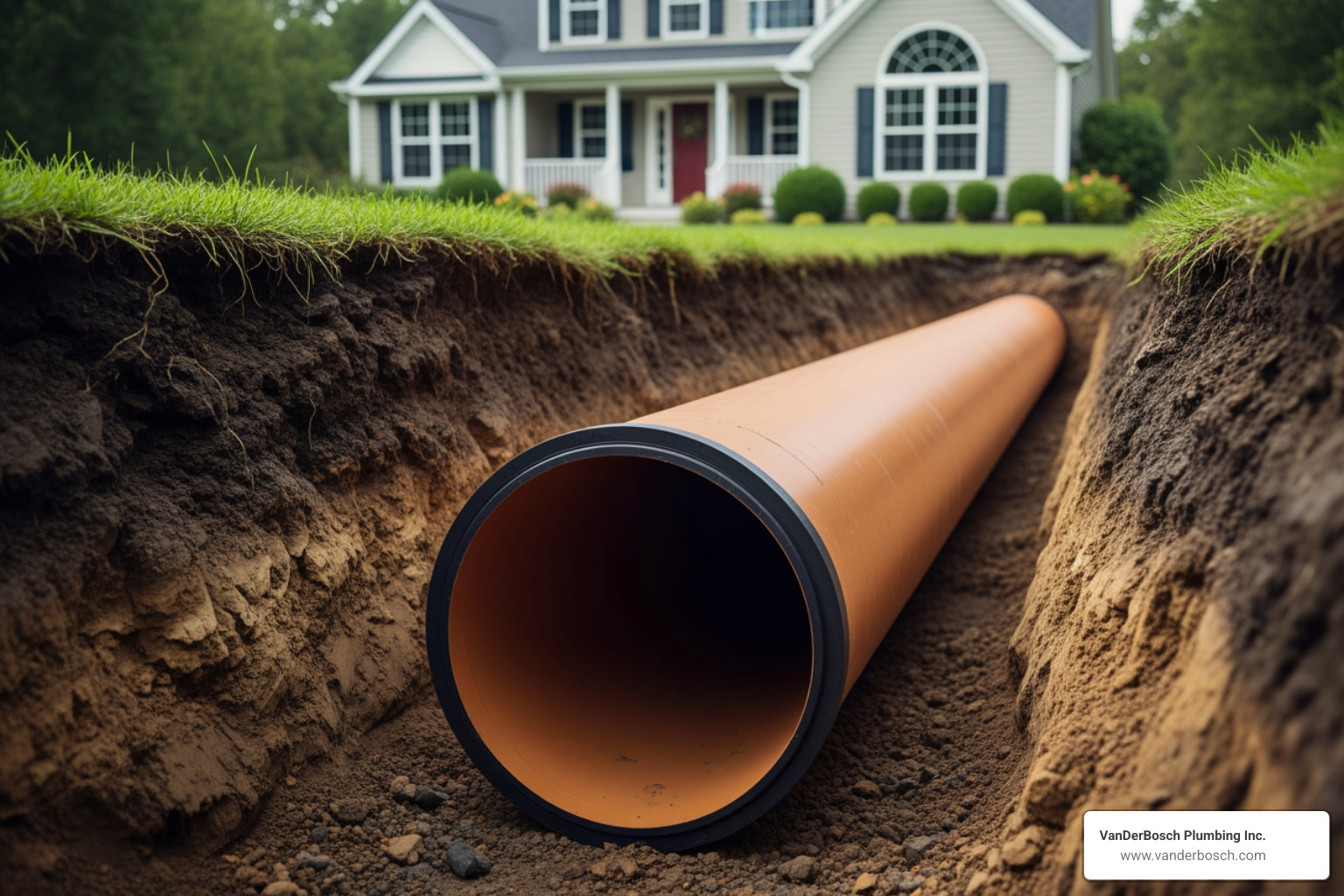
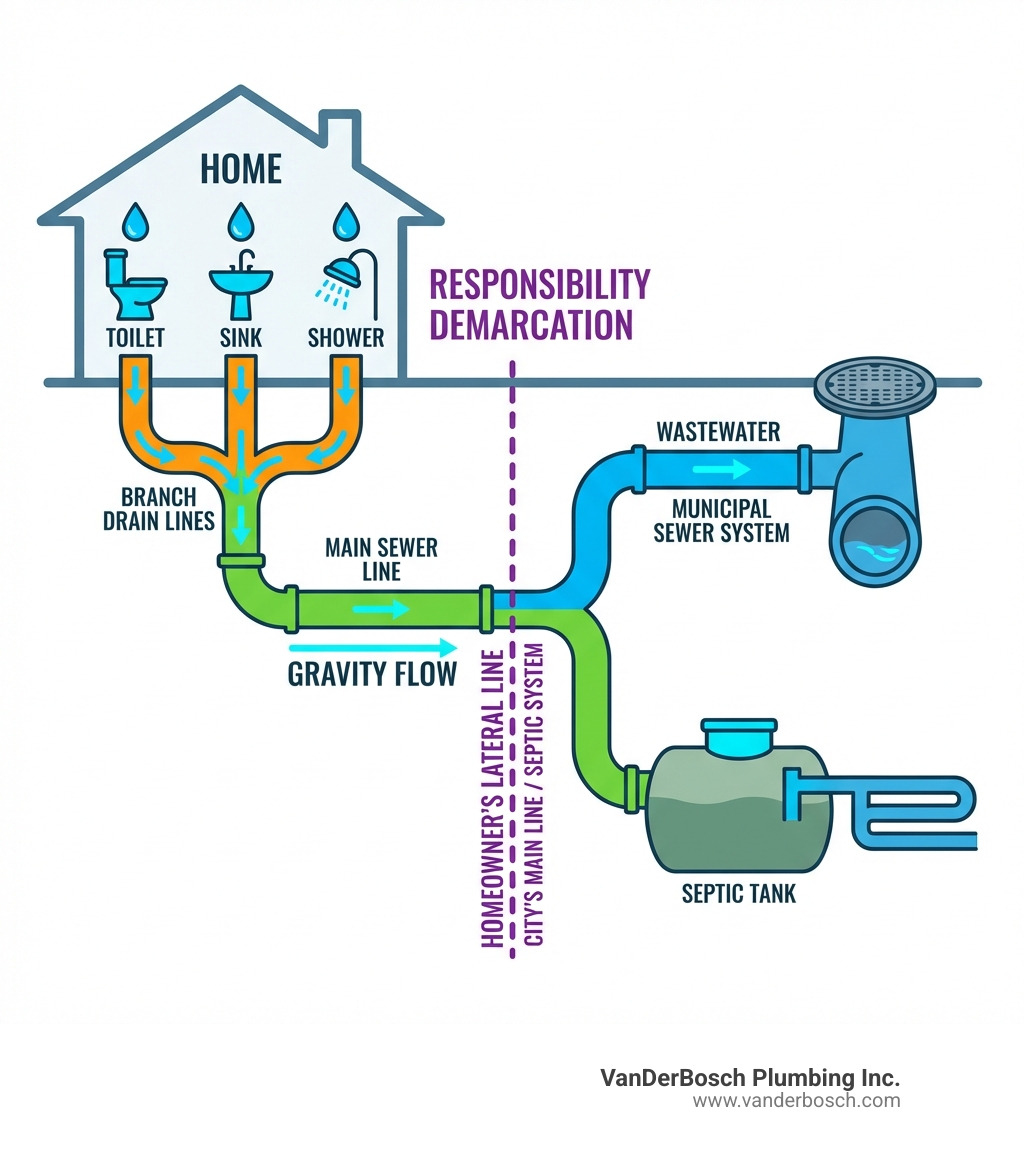
Your Main sewer line is the primary pipe that carries all wastewater from your home to either the municipal sewer system or your septic tank. Think of it as the wastewater highway for your entire plumbing system—every toilet flush, shower, and sink drain ultimately flows through this critical pipe.
Quick Answer: What is a Main Sewer Line?
- Definition: The main underground pipe (typically 4-6 inches in diameter) that connects all your home’s drain lines to the city sewer or septic system
- Function: Transports wastewater away from your property using gravity flow at a slight downward angle
- Location: Runs from your home’s foundation, through your yard, to the street or septic tank (usually buried 4-6 feet underground)
- Responsibility: Homeowners typically own and maintain the lateral line from the house to the property line; municipalities maintain the main in the street
- Average Lifespan: Approximately 50 years, though materials like cast iron or clay may fail sooner
Your home’s plumbing system is more complex than most Chicagoland homeowners realize. Each drain pipe in your house—from the bathroom sink to the basement floor drain—connects to this single main line. When this vital artery becomes clogged, cracked, or damaged, the consequences can range from slow drains and foul odors to catastrophic sewage backups that threaten your property and health.
The good news? Understanding how your main sewer line works and recognizing early warning signs can save you thousands in emergency repairs. Regular maintenance and knowing when to call a professional can prevent small issues from becoming major disasters.
Telltale Signs of a Main Sewer Line Problem
A healthy main sewer line works silently, but when trouble brews, it leaves unmistakable clues. Ignoring these signs can lead to costly repairs, so it’s crucial for Chicagoland homeowners to recognize them early.
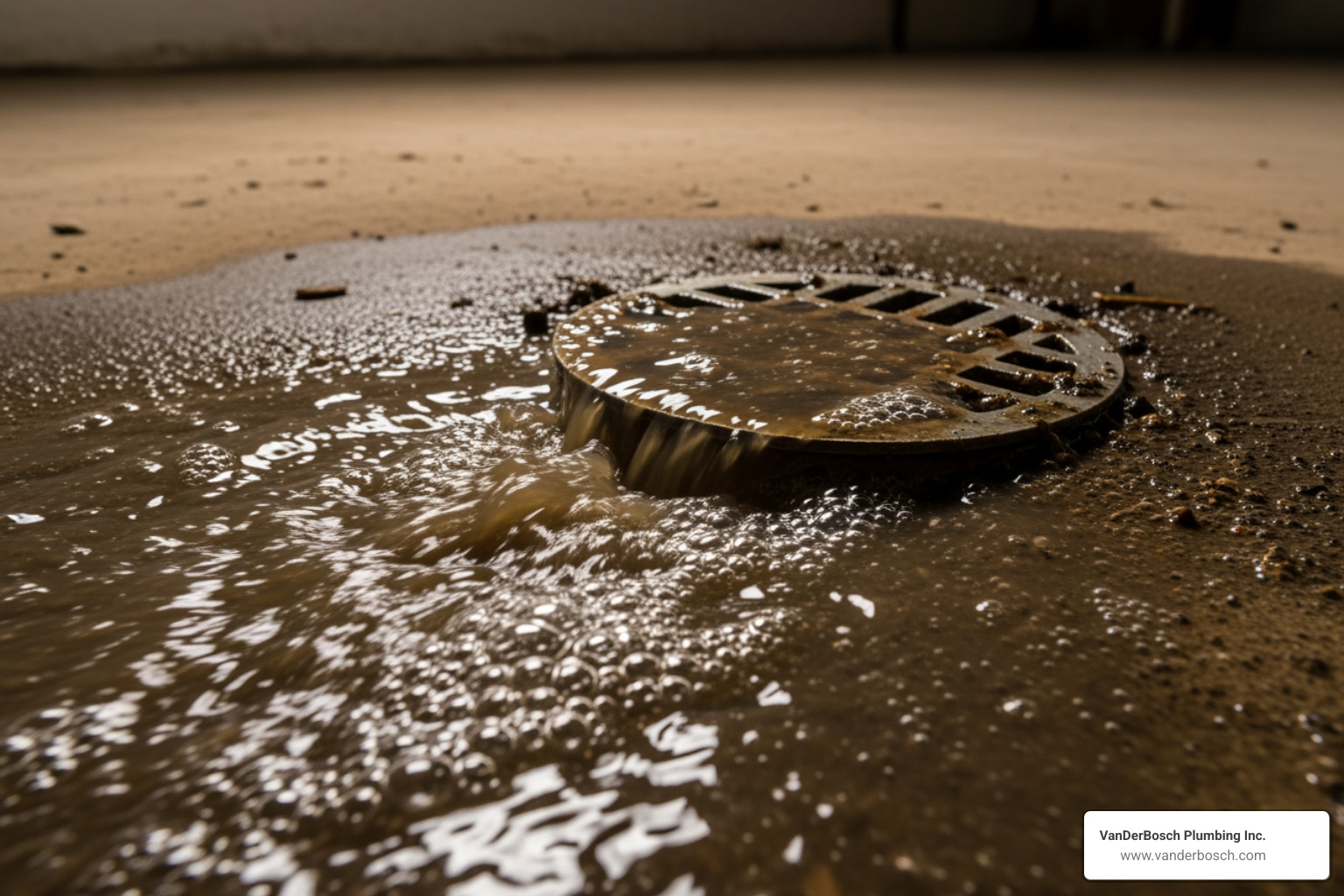
Here are the common warning signs that your main sewer line might have an issue:
- Slow Drains: Water draining slowly in multiple sinks, tubs, or showers is a strong indicator of a main line blockage.
- Gurgling Noises: Hearing gurgling from toilets or drains after using other fixtures suggests trapped air from an obstruction.
- Multiple Fixture Clogs: When several fixtures, especially on lower levels, back up or drain slowly at once, the problem likely points to the main line. For instance, flushing a toilet might cause a shower backup.
- Sewage Backups: The most obvious sign is a sewage backup. If sewage comes up through a basement floor drain, toilet, or tub, your main sewer line is severely clogged or damaged.
- Foul Odors: A persistent sewage smell in or around your home indicates a leak or blockage is allowing sewer gases to escape.
- Soggy Yard: Unexplained soggy patches of grass, especially above the sewer line, can signal a leak or break. These areas might also be unusually green.
- Foundation Cracks or Sinkholes: A leaking sewer line can erode soil around your foundation, leading to cracks or even sinkholes in your yard.
- Pest Issues: Moisture and organic matter from a leaking sewer line can attract rodents and other pests.
If you’re noticing any of these symptoms, don’t delay. Early detection can prevent extensive damage and save you money. You can find more information on specific symptoms and what they mean by visiting our guide on Signs a Sewer Line May Need Repair or Replacement.
Main Drain Clog vs. Main Sewer Line Clog
Understanding the difference between a local drain clog and a more serious main sewer line clog is crucial for diagnosis.
- Main Drain Clog (Local Clog): This affects a single fixture. For example, if only your kitchen sink is draining slowly, it’s likely a clog in that specific drain line, often caused by hair, soap scum, or food particles.
- Main Sewer Line Clog (System-Wide Clog): This impacts multiple fixtures throughout your house, especially on the lowest level. If flushing a toilet causes a shower backup, or all drains are slow, you’re likely dealing with a main sewer line clog in the primary pipe.
The key to isolating the problem is observation. If the problem is widespread, affecting multiple drains at once, it’s time to suspect the main sewer line.
Signs of a Leaky or Broken Sewer Line
A broken main sewer line is a homeowner’s nightmare. Unlike a clog, a break allows wastewater to escape into the soil, causing environmental and structural issues.
Here’s what to look for:
- Soggy Patches of Grass: Unexplained wet spots in your lawn along the sewer line’s path are a classic sign of a leak.
- Unpleasant Yard Smells: Foul, sewage-like odors outdoors near the sewer line could mean a break is allowing wastewater and gases to escape.
- Sinkholes or Ground Indentations: A persistent leak can wash away soil around the pipe, leading to depressions or sinkholes in your yard.
- Foundation Issues: A leak can saturate the ground under your foundation, causing instability. This may appear as cracks in the foundation, walls, or floors.
- Mold Growth: A leak near your foundation or in the basement can cause mold growth on walls or floors, often with a musty smell.
A broken sewer pipe is a serious issue that requires immediate attention to prevent further damage and health risks. To learn more about identifying and addressing these problems, refer to our comprehensive guide on Signs of a Broken Sewer Pipe and How to Fix It.
Common Causes of Sewer Line Damage and Consequences
Understanding what causes main sewer line problems is the first step toward prevention. In Chicagoland, our homes and landscapes present unique challenges that can lead to clogs and damage.
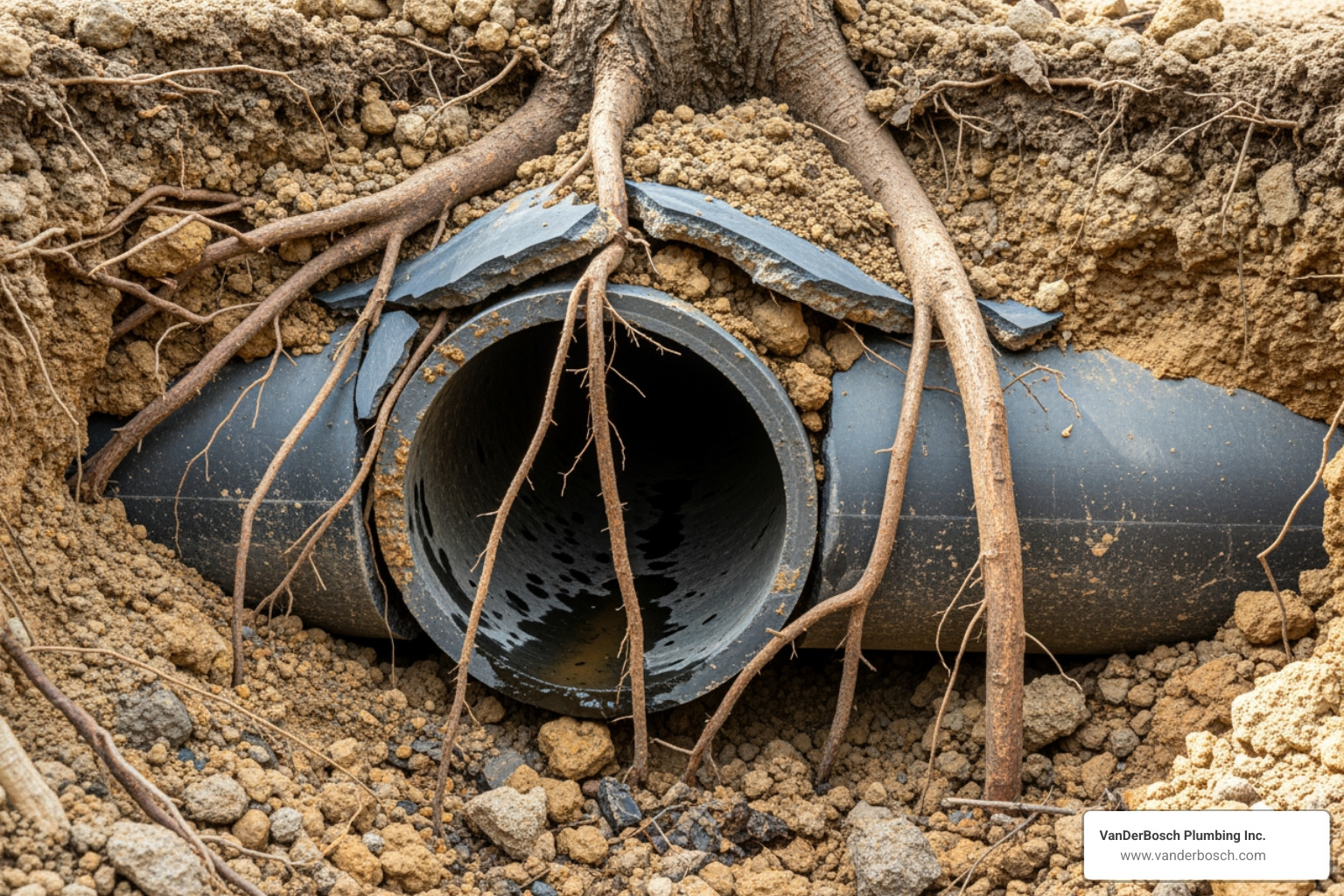
Here are the most common culprits we encounter:
- Tree Root Intrusion: This is the number one cause of sewer line issues in our area. Tree roots seek water and can penetrate tiny cracks or loose joints in pipes. Once inside, they grow into a dense net that traps debris and can eventually crush or break the pipe. For more on this, see our article on Dealing With Intrusive Tree Roots and Their Impact on the Plumbing.
- Grease and Oil Buildup: Pouring cooking grease, oils, and fats down the drain is a common mistake. These substances cool and solidify in pipes, sticking to the walls. Over time, this buildup restricts flow and traps other debris, leading to stubborn clogs.
- Flushing Non-Flushable Items: Toilets are only for human waste and toilet paper. Items like “flushable” wipes, feminine hygiene products, and paper towels don’t dissolve and can quickly form significant blockages in your main sewer line.
- Aging Pipes: Many older Chicagoland homes have cast iron or clay pipes with a finite lifespan. Cast iron can corrode, creating rough surfaces that snag debris. Clay pipes can become brittle, crack, and are susceptible to root intrusion. The average lifespan is around 50 years, but cast iron can fail sooner.
- Pipe Corrosion: Pipe corrosion can also be caused by chemical reactions, often from harsh drain cleaners (which we advise against) or certain types of wastewater. This weakens the pipe, making it prone to cracks.
- Shifting Soil: Chicagoland’s freeze-thaw cycles and ground movement put pressure on underground pipes. This can cause pipes to become misaligned, crack, or collapse, disrupting wastewater flow.
- Poor Installation: Improper installation, such as incorrect sloping or weak joints, can lead to recurring clogs, bellies (sags in the pipe that collect water and debris), or premature failure.
The consequences of ignoring these issues are severe:
- Health Hazards: Raw sewage contains harmful bacteria, viruses, and pathogens, posing serious health risks during backups.
- Property Damage: Sewage backups cause extensive water damage to basements, flooring, and personal belongings, and can lead to mold growth.
- Environmental Contamination: Leaking sewer lines release untreated wastewater into the soil, potentially contaminating groundwater and local waterways.
Your Guide to Diagnosing and Fixing a Main Sewer Line
When you suspect a main sewer line problem, acting swiftly is key. While it can be a daunting experience, the right diagnostic tools and repair options can restore your peace of mind.
Professional Diagnostic Methods
Identifying the precise location and nature of a sewer line issue requires specialized tools and expertise. Here’s our approach:
- Plumbing Cleanout Access: The first step is locating your plumbing cleanout, a capped pipe providing direct access to your main sewer line. It’s often in the basement or outside near the foundation. An accessible cleanout is vital for diagnosis and clearing.
- Sewer Camera Inspection: Our go-to method is a sewer camera inspection. We insert a high-resolution camera into the sewer line via the cleanout. Live video allows us to see blockages, cracks, corrosion, or other damage, pinpointing the problem’s exact location and severity. To understand more about this process, check out The Basics of Sewer Video Inspection Explained.
- Smoke Testing: To detect leaks, we may use smoke testing. Non-toxic smoke is blown into the sewer line; if it escapes through your yard or foundation, it indicates a leak.
- Hydrostatic Testing: For suspected leaks, we might perform a hydrostatic test. We plug the sewer line, fill it with water, and monitor for a pressure drop, which indicates a leak.
Clearing and Repairing Your Main Sewer Line
After diagnosis, we recommend the most effective solution. Our goal is a lasting repair with minimal disruption.
- Hydro Jetting: For stubborn clogs from grease, sludge, or roots, hydro jetting is a powerful solution. It uses high-pressure water jets to scour the inside of the pipe, breaking apart blockages and cleaning the walls. It’s often more effective than snaking for a thorough clean. We also provide comprehensive Drain Cleaning services.
- Mechanical Augers (Sewer Snakes): For many blockages, a professional-grade mechanical auger (sewer snake) can be used. Its rotating head breaks through roots, retrieves objects, or clears debris.
- Traditional Excavation: For severely damaged or collapsed pipes, traditional excavation may be needed. This involves digging a trench to expose and replace the damaged pipe section. It is effective but invasive and disruptive to landscaping.
- Trenchless Pipe Repair: We specialize in trenchless technologies that minimize excavation, ideal for preserving lawns, driveways, and landscaping.
- Pipe Lining (Cured-In-Place Pipe – CIPP): This involves inserting a resin-coated liner into the damaged pipe. The liner is inflated and cured, creating a new, seamless pipe within the old one. It seals cracks and strengthens the pipe without digging.
- Pipe Bursting: For collapsed pipes, pipe bursting is an excellent trenchless option. A new pipe is pulled through the old one, breaking it apart while installing the new pipe. This requires only small access points, eliminating extensive trenching.
You can learn more about these innovative solutions in our guide What to Know About Trenchless Pipe Repairs.
Understanding Repair Costs and Timelines
The cost and timeline for main sewer line repairs vary based on several factors:
- Average Cost Range: National averages for main sewer line replacement can range from $1,500 to $10,000. Minor repairs might be under $1,000, but major repairs requiring excavation or trenchless methods are more substantial.
- Factors Influencing Cost:
- Severity and Type of Damage: Simple clog removal is much cheaper than replacing a collapsed pipe.
- Length and Depth of Repair: Longer or deeper repairs incur higher costs.
- Pipe Material: The replacement material (e.g., PVC, ductile iron) impacts the price.
- Accessibility: Difficult-to-reach areas (under concrete, landscaping) increase labor and equipment costs.
- Repair Method: Trenchless methods can be more expensive upfront but save on landscaping restoration.
- Permit Fees: Local permit fees in Chicagoland (e.g., Chicago, Roselle, Elmhurst) are added to the overall cost.
- Repair Duration: Simple clogs can be cleared in hours. Trenchless repairs might take a day. Full replacement with excavation can take up to two days, depending on the work.
We always provide transparent pricing and detailed estimates before we begin any work. For more information on our services, visit our dedicated page for Sewer Line Repair.
Prevention, Maintenance, and Homeowner Responsibilities
An ounce of prevention is worth a pound of cure, especially when it comes to your main sewer line. Proactive maintenance and understanding your responsibilities can help you avoid costly and messy emergencies.
How to Prevent Future Sewer Line Clogs
Here are our top tips for keeping your main sewer line flowing freely:
- Proper Disposal Habits: This is perhaps the most crucial step.
- Avoid Grease: Never pour cooking grease, fats, or oils down any drain. Wipe greasy pans with a paper towel and dispose of it in the trash.
- Flush Only Toilet Paper: The only things that should go down your toilet are human waste and toilet paper. “Flushable” wipes, feminine hygiene products, paper towels, cotton balls, dental floss, and similar items do not break down in water and are major contributors to clogs.
- Use Drain Screens: Install screens over all your drains (sinks, showers, tubs) to catch hair, food particles, and other debris before they enter your pipes.
- Regular Drain Cleaning: Even with the best habits, some buildup is inevitable. Consider professional drain cleaning every few years, especially if you have an older home or notice consistently slow drains. This proactive measure can clear minor blockages before they escalate.
- Strategic Tree Planting: When planting new trees or shrubs, be mindful of their proximity to your main sewer line. Research the root systems of different species and plant them a safe distance away from underground pipes. If you have mature trees, consider annual inspections. For more guidance, see How to Prevent Clogged Toilets and Sewer Lines.
- Annual Inspections: For older homes or properties with known issues (like frequent root intrusion), an annual sewer camera inspection can catch problems early, allowing for targeted cleaning or repair before a major backup occurs.
- Consider a Backwater Valve: In areas prone to municipal sewer backups, installing a backwater valve can provide an extra layer of protection, preventing sewage from flowing back into your home.
Here’s a quick reference for your daily habits:
- DO’S:
- Flush only human waste and toilet paper.
- Scrape food scraps into the trash before washing dishes.
- Wipe grease from pans and dispose of it in the garbage.
- Use drain screens in sinks and showers.
- Pour water into basement floor drains periodically to keep P-traps from drying out.
- DON’TS:
- Flush “flushable” wipes, paper towels, feminine hygiene products, or cotton balls.
- Pour grease, oils, or fats down the drain.
- Dispose of coffee grounds in the sink.
- Use harsh chemical drain cleaners.
- Plant trees with aggressive root systems near your sewer line.
Homeowner vs. Municipality: Who is Responsible?
Understanding who is responsible for which part of the sewer system is a common point of confusion for Chicagoland homeowners. While specific regulations can vary slightly between municipalities like Chicago, Roselle, or Elmhurst, the general division of responsibility typically follows this pattern:
- Homeowner Responsibility (Sewer Lateral): As a homeowner, you are generally responsible for the “sewer lateral.” This is the pipe that carries wastewater from your house, across your property, all the way to its connection with the city sewer main, which is often located in the street or an easement. This includes any cleanouts on your property. If a clog or damage occurs anywhere along this lateral line, it’s typically your responsibility to diagnose, clear, and repair it.
- Municipality Responsibility (City Sewer Main): The city (or the Metropolitan Water Reclamation District of Greater Chicago, MWRD, in our region) is responsible for the main sewer line in the street. This large pipe collects wastewater from multiple properties and transports it to the treatment plant. If the blockage or damage is within the city’s main line, they are responsible for its repair.
Key Points on Responsibility:
- Property Line Boundary: The exact point where homeowner responsibility ends and municipal responsibility begins can sometimes be debated or depend on local ordinances. It’s often at the property line, but can sometimes extend to the connection point in the street.
- Easements: If your main sewer line runs through an easement on your property, you are still generally responsible for its maintenance and repair.
- Permit Requirements: Any significant work on your main sewer line, especially excavation or replacement, will almost certainly require a permit from your local city or village. This ensures the work is done to code and inspected properly.
When in doubt, we can help you understand the specifics for your property and municipality. For a broader understanding of your sewer system, we recommend resources like Understanding Your Sewer System (MWRD).
Frequently Asked Questions about the Main Sewer Line
We often hear similar questions from Chicagoland homeowners about their main sewer lines. Here are some of the most common ones, with our expert answers.
How often should my main sewer line be inspected?
The frequency of main sewer line inspections depends on several factors:
- General Recommendation: For most homes, a professional sewer camera inspection every 2-5 years is a good proactive measure.
- Older Homes: If your home was built before 1970 and still has original cast iron or clay pipes, we recommend annual inspections due to their susceptibility to corrosion and root intrusion.
- Properties with Mature Trees: If you have large, mature trees near your sewer line, annual inspections are highly advisable to catch root intrusion early.
- After Recurring Clogs: If you’ve experienced frequent clogs or backups, an inspection can identify the underlying cause and prevent future issues.
- Before Purchasing a Home: A pre-purchase sewer camera inspection is a wise investment for any home buyer, revealing the condition of the main sewer line before you commit.
Regular inspections can save you from unexpected and costly emergencies. Learn more about our inspection process at Sewer Video Inspection.
Are chemical drain cleaners safe for my main sewer line?
In short: No, we do not recommend using chemical drain cleaners for your main sewer line.
- Harsh Chemicals: These products contain corrosive chemicals that can damage your pipes, especially older ones made of cast iron or PVC. They can eat away at pipe material, leading to leaks, cracks, and premature failure.
- Environmental Concerns: The chemicals are harmful to the environment and can pose health risks if mishandled.
- Ineffectiveness on Major Clogs: While they might temporarily clear a minor surface clog, chemical cleaners are rarely effective against deep, stubborn main sewer line clogs caused by roots, grease, or foreign objects. They often just sit on top of the blockage, creating a caustic pool that makes professional clearing more hazardous.
- Professional Alternatives: For serious clogs, professional methods like hydro jetting or mechanical augers are far safer, more effective, and provide a longer-lasting solution without risking your plumbing system.
For safe and effective clog removal, always opt for professional solutions. Our A Short Guide to Professional Drain Cleaning offers more insights.
What’s the difference between a force main and a gravity sewer?
While most residential main sewer lines in Chicagoland operate on gravity, it’s helpful to understand the difference, especially when discussing municipal systems:
- Gravity Sewer: This is the most common type of sewer system. It relies on gravity to move wastewater. Pipes are laid with a continuous downward slope, allowing wastewater to flow naturally from your home to the municipal sewer main and then to a treatment plant. Your home’s main sewer line is typically a gravity sewer.
- Force Main: A force main is a pressurized pipeline that conveys wastewater from a lower elevation to a higher elevation, or across flat terrain where gravity flow isn’t feasible. It requires a pump station (or lift station) to push the wastewater through the pipe. Force mains are typically used in municipal systems to overcome geographical challenges or to connect remote areas to the main sewer network. They are less common for individual residential connections unless a property is significantly below the municipal sewer main and requires a private pump system.
The EPA’s Wastewater Technology Fact Sheet: Sewers, Force Main provides a comprehensive technical overview of force mains.
Protect Your Home with Professional Sewer Line Care
Your main sewer line is an unsung hero of your home, silently working day in and day out. But when it falters, it can quickly turn into a major headache. We’ve explored the telltale signs, common causes, and effective solutions for main sewer line problems. The key takeaway is this: early detection and prompt action are your best defenses against costly and unsanitary plumbing emergencies.
Whether you’re noticing slow drains, gurgling noises, foul odors, or a soggy spot in your yard, these are not issues to ignore. They are your home’s way of telling you something is wrong with its vital wastewater highway.
At VanDerBosch Plumbing Inc., we’re committed to keeping Chicagoland homes safe and functional. Our experienced, background-checked technicians are experts in diagnosing and repairing all types of main sewer line issues. We offer a 100% satisfaction guarantee, transparent pricing with no service charges, and are available 24/7 for emergencies because we know plumbing problems don’t keep business hours.
Don’t let a main sewer line issue disrupt your life. If you suspect a problem, trust the professionals who serve your local communities like Chicago, Roselle, Niles, Winnetka, Melrose Park, Oakbrook Terrace, Elmhurst, and Mount Prospect.
Explore advanced trenchless pipe repair solutions or contact us today for an inspection and peace of mind. We’re here to help you protect your home.