
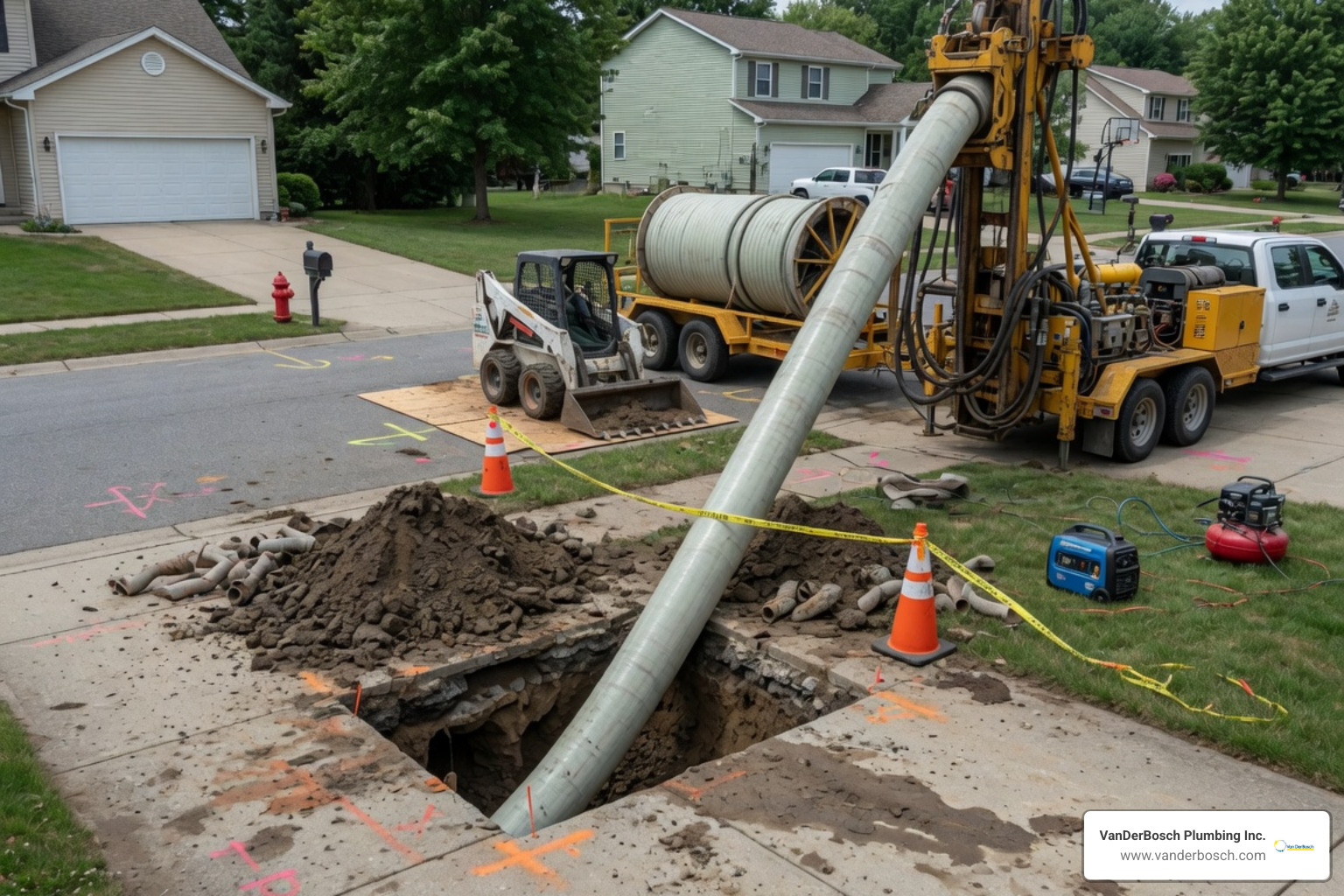
When Your Sewer Line Fails, Your Yard Doesn’t Have to Pay the Price
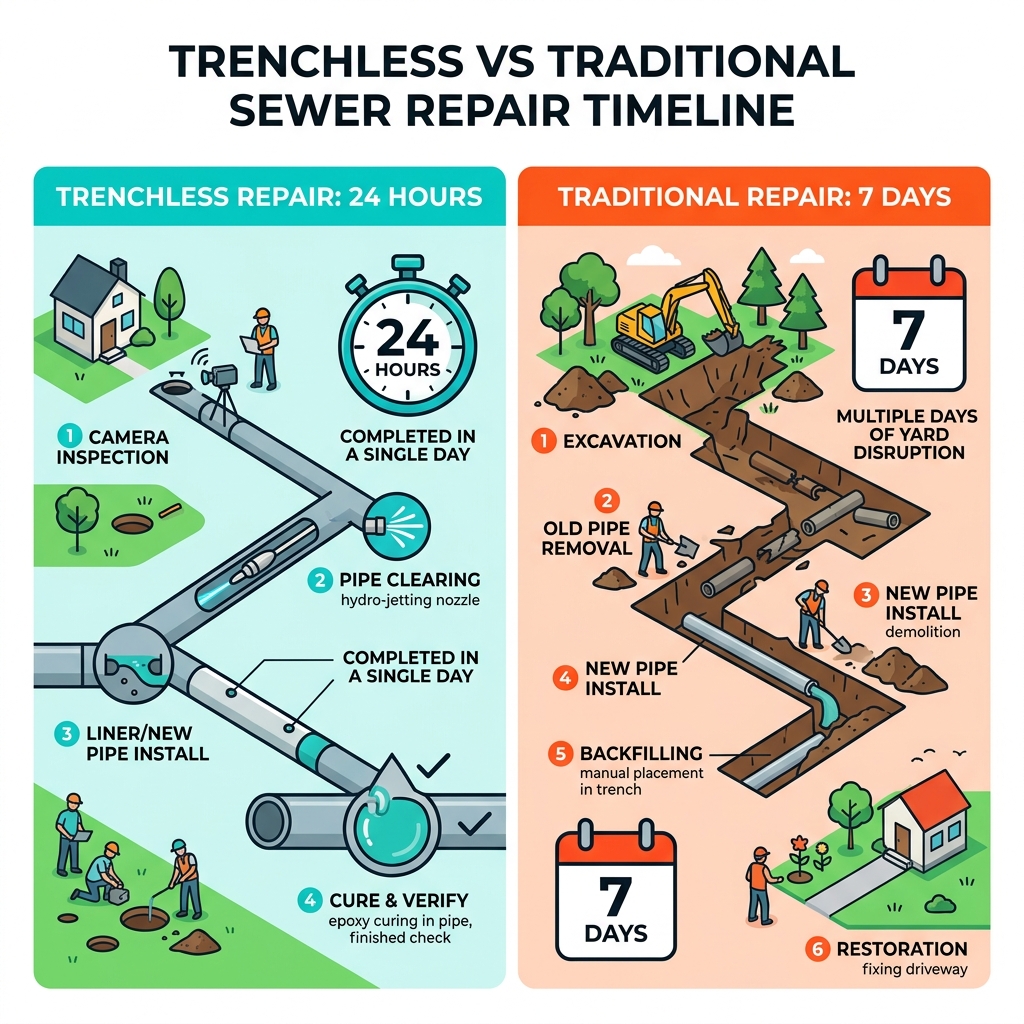
How trenchless sewer line replacement works is simpler than most homeowners expect:
- Inspect – A camera is run through your sewer line to find the damage
- Clean – The pipe is cleared with hydro-jetting or cabling
- Repair – A new pipe or resin liner is installed through small access holes
- Cure – The new pipe sets and hardens in place
- Verify – A final camera check confirms everything is working
No long trenches. No torn-up lawn. Often done in a single day.
Picture this: your drains start backing up, and a plumber tells you the sewer line needs replacing. Your first thought might be heavy equipment, a yard full of dirt piles, and a week of chaos. But trenchless technology changes that picture completely. Instead of digging a trench from your foundation to the street, crews use just two small access points to repair or replace the pipe underground – leaving your landscaping, driveway, and daily routine largely intact.
I’m Hugh Hodur, President of VanDerBosch Plumbing, and I’ve overseen hundreds of sewer and drain solutions across Chicagoland – including trenchless repairs that saved homeowners thousands in yard restoration costs compared to traditional excavation. Understanding how trenchless sewer line replacement works is the first step to making a confident, informed decision for your home.
Understanding How Trenchless Sewer Line Replacement Works
In the past, if your sewer line was cracked by invasive tree roots or corroded by decades of use, we had only one real option: “the big dig.” This involved bringing in an excavator to tear a five-foot-deep trench through your prize-winning hydrangeas or your paved driveway.
Today, we use “no-dig” technology. But how does trenchless sewer line replacement work without that massive trench? It relies on modern infrastructure techniques that allow us to access your pipes through tiny, strategic entry points. By using the existing path of your old pipe, we can either pull a brand-new pipe through it or create a new “pipe within a pipe” using advanced resins.
This approach isn’t just about saving your grass; it’s about protecting your property value. A traditional excavation can leave scars on your landscape for years and may even require you to repave sections of the street or sidewalk. With trenchless methods, the footprint is so small that your neighbors might not even realize you had a major sewer overhaul.
| Feature | Trenchless Repair | Traditional Excavation |
|---|---|---|
| Average Cost | $3,000 – $12,000 | $4,000 – $20,000+ |
| Time to Complete | 1 – 2 Days | 5 – 7 Days |
| Property Damage | Minimal (2 small holes) | Extensive (full trench) |
| Restoration Costs | Low to None | High (Landscaping/Paving) |
| Lifespan | 50 – 100 Years | 50+ Years |
As you can see, What is trenchless sewer repair? It is a high-tech alternative that prioritizes efficiency and property preservation.
The Two Primary Methods: Pipe Bursting and Pipe Lining
When we talk about trenchless pipe repair, we are usually referring to one of two industry-standard methods. Both are incredibly effective, but they solve different problems. Whether we are dealing with a total collapse or just a few pesky cracks, we choose the method that best fits your home’s specific needs.
How does trenchless sewer line replacement work via Pipe Bursting?
If your old sewer pipe is completely worn out or you want to increase the size of your line to handle more waste, pipe bursting is the “heavy lifter” of the trenchless world.
Here is the process: We launch a cone-shaped “bursting head” through your old pipe using powerful hydraulic equipment. As the head moves through, it physically fragments the old pipe—whether it’s clay, cast iron, or PVC—and pushes the pieces into the surrounding soil.
Attached to the back of that bursting head is a brand-new, seamless High-Density Polyethylene (HDPE) pipe. As the old pipe breaks, the new one is pulled right into the void. This allows for a full replacement and even “upsizing,” which means we can install a larger diameter pipe than the one you had before. It’s a bit like a snake shedding its skin, only much louder and involving more hydraulics.
How does trenchless sewer line replacement work via CIPP Lining?
Cured-in-Place Pipe (CIPP) lining is often called “the pipe within a pipe.” This method is perfect for pipes that are still structurally sound but have cracks, leaks, or root intrusions. You can say goodbye to digging with this ingenious fix.
We take a flexible, felt-like liner saturated with high-strength epoxy resin and “invert” it into your existing sewer line. Once the liner is in place, we inflate it so it presses firmly against the walls of the old pipe. Then comes the science: we use heat, steam, or UV light to “cure” the resin.
In just a few hours, the resin hardens into a solid, jointless, and smooth pipe. This new inner shell is impervious to corrosion and incredibly difficult for tree roots to penetrate. According to CIPP Lining Lifespan Estimates, these resin pipes can easily last 50 years or more, often outperforming the original pipe material.
Step-by-Step: The Trenchless Replacement Process
We believe in transparency, so we want you to know exactly what happens when our team arrives at your Chicago or Cook County home. We don’t just start pulling pipes; we follow a meticulous process to ensure a permanent fix.
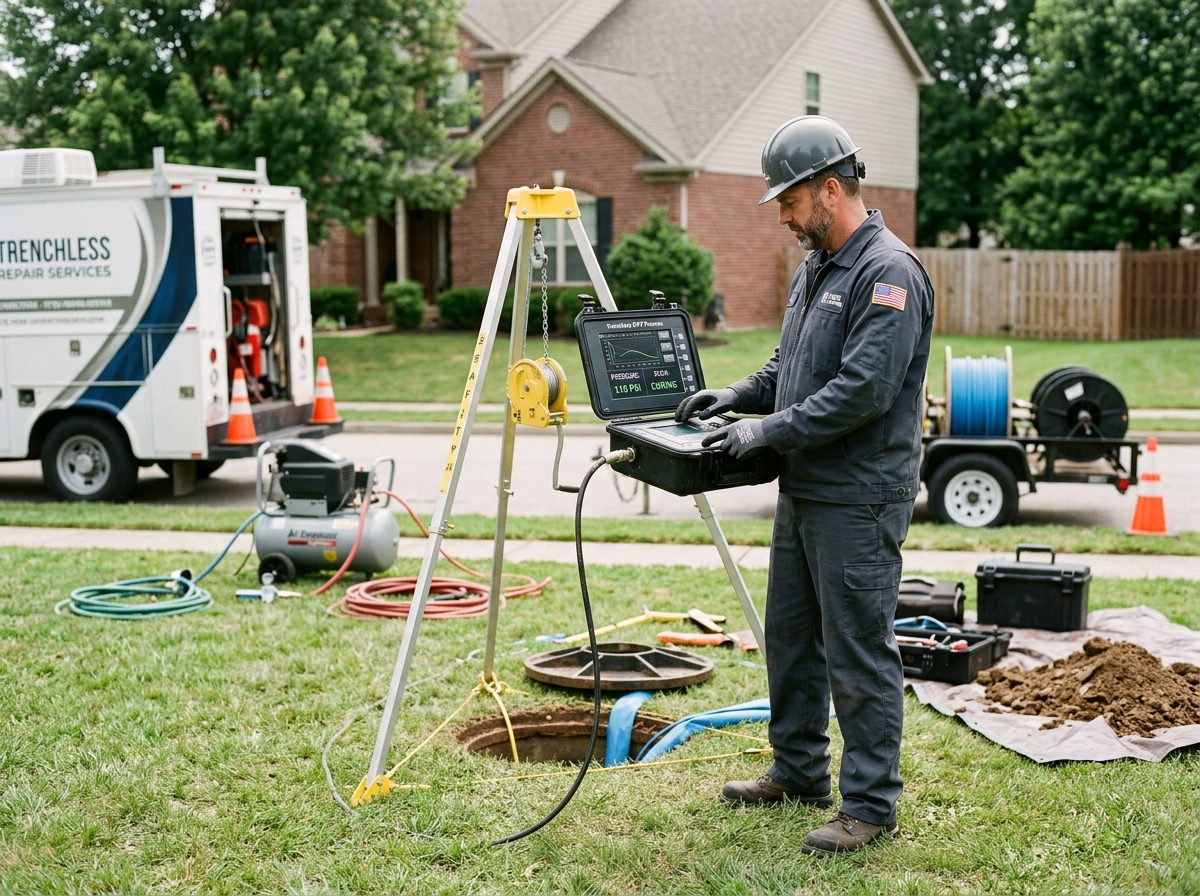
1. Initial Camera Inspection Every job starts with a sewer video inspection. We send a high-definition fiber-optic camera down the line to see exactly what’s going on. Is it a clog? A root mass? A total collapse? This step is vital because it tells us if your line is a candidate for trenchless technology.
2. Cleaning the Line For a liner to stick or a bursting head to pass, the old pipe needs to be as clean as possible. We often use hydro-jetting—blasting the pipe with high-pressure water—to clear out grease, scale, and roots.
3. Creating Access Points Instead of a 50-foot trench, we typically only need two small holes: an entry point and an exit point. These are often located near the foundation of the house and near the street connection.
4. The Installation Depending on the method chosen, we either pull the HDPE pipe through (bursting) or inflate the resin liner (CIPP). This is where the magic happens, and how trenchless sewer line replacement works to save your yard.
5. Curing and Testing If we are lining, we wait for the resin to harden. Once the new pipe is “set,” we perform pressure testing to ensure there are no leaks.
6. Final Verification We finish exactly how we started: with a camera. We run the camera through the brand-new line to show you the smooth, clear path your waste will now take. It’s our way of proving the job was done right. You should always look for signs a sewer line may need repair early to make this process even smoother.
For more details, check out our guide on what to know about trenchless pipe repairs.
Benefits and Suitability of No-Dig Solutions
Why are so many Chicagoland homeowners choosing trenchless? The benefits go far beyond just keeping your grass green.
- Cost-Effectiveness: While the equipment and materials for trenchless can be more expensive than a shovel and some PVC, you save a fortune on the back end. You won’t have to hire a landscaper to replant your garden, a mason to fix your walkway, or a paving company to repair your driveway.
- Speed: A traditional job can take a week. Trenchless is usually done in 24 hours. That means your water is back on and your life is back to normal much faster.
- Durability: The materials used—HDPE and epoxy resin—are designed to last between 50 and 100 years. They are jointless, which means there are no weak spots for roots to exploit.
- Environmental Impact: Less digging means less disruption to the local ecosystem and less heavy machinery emissions.
But is it right for everyone? Is trenchless sewer repair worth the cost? Usually, yes. However, suitability depends on your soil type and current pipe condition. For example, if your pipe has “bellied” (sagged deeply into the mud) or has completely collapsed and shifted, we might need to perform a traditional repair to restore the proper slope.
For a deeper dive into the numbers, read our trenchless vs. traditional cost breakdown.
Frequently Asked Questions about Trenchless Sewer Repair
How long does a trenchless sewer repair job typically take?
Most residential trenchless projects in the Chicago area are completed within a single day. Pipe lining requires a few hours for the resin to cure, while pipe bursting can often be finished in 8 to 10 hours. Compared to the 5 to 7 days required for traditional trenching, the efficiency is unmatched. You’ll have your toilets flushing and your showers running again by dinner time!
How much does trenchless sewer repair cost compared to traditional methods?
Trenchless sewer repair typically ranges from $3,000 to $12,000. While the “plumbing” portion of the bill might be slightly higher than traditional digging due to the specialized technology, the total cost is often much lower. Traditional sewer line repair can cost up to $20,000 once you factor in the thousands of dollars spent on restoring your yard, driveway, and sidewalks. Trenchless offers incredible long-term value by eliminating those “hidden” restoration fees.
When is trenchless repair not suitable or possible?
Trenchless technology is amazing, but it isn’t magic. There are a few scenarios where we have to break out the backhoe:
- Collapsed Pipes: If the pipe has completely pancaked, there is no “path” for a liner or bursting head to follow.
- Improper Slope: If your house has settled and the pipe now runs “uphill,” trenchless won’t fix the physics. We need to dig to re-grade the line.
- Utility Interference: If other utility lines (gas, water, electric) are too close to the sewer line, the “bursting” process could potentially damage them.
- Severe Misalignment: If the pipe sections have shifted so far apart that they no longer connect, we usually need to excavate to realign them.
Conclusion
At VanDerBosch Plumbing Inc., we’ve been serving Chicagoland since 1995. We know that a sewer problem is one of the most stressful things a homeowner can face. That’s why we specialize in “no-dig” solutions that respect your time, your property, and your budget.
Whether you are in Chicago, Roselle, Winnetka, or Elmhurst, our team of background-checked technicians is ready to help. We offer 24/7 availability because sewer disasters don’t wait for business hours. Plus, with our 100% satisfaction guarantee and transparent pricing (no service charges!), you can rest easy knowing you’re getting the best service in Cook County.
Don’t let a broken pipe ruin your beautiful yard. Schedule your professional trenchless pipe repair today and let us show you how the future of plumbing can save your property.