
What a Broken Sewer Pipe Can Do to Your Home (And How to Spot It)
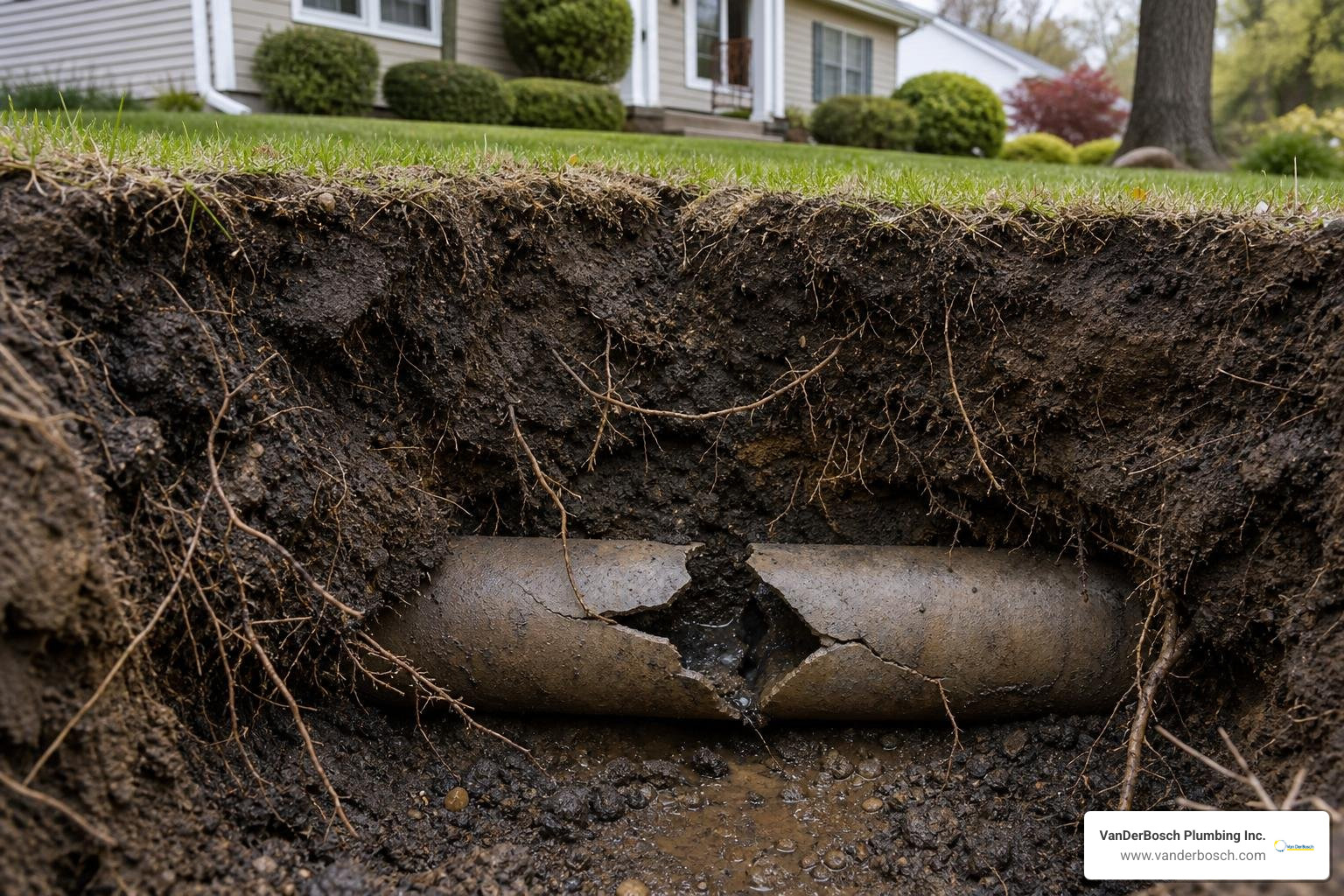
A broken sewer pipe is one of the most damaging — and most overlooked — problems a Chicagoland homeowner can face. Because the pipe is buried underground, the damage builds silently for weeks or months before you notice anything wrong.
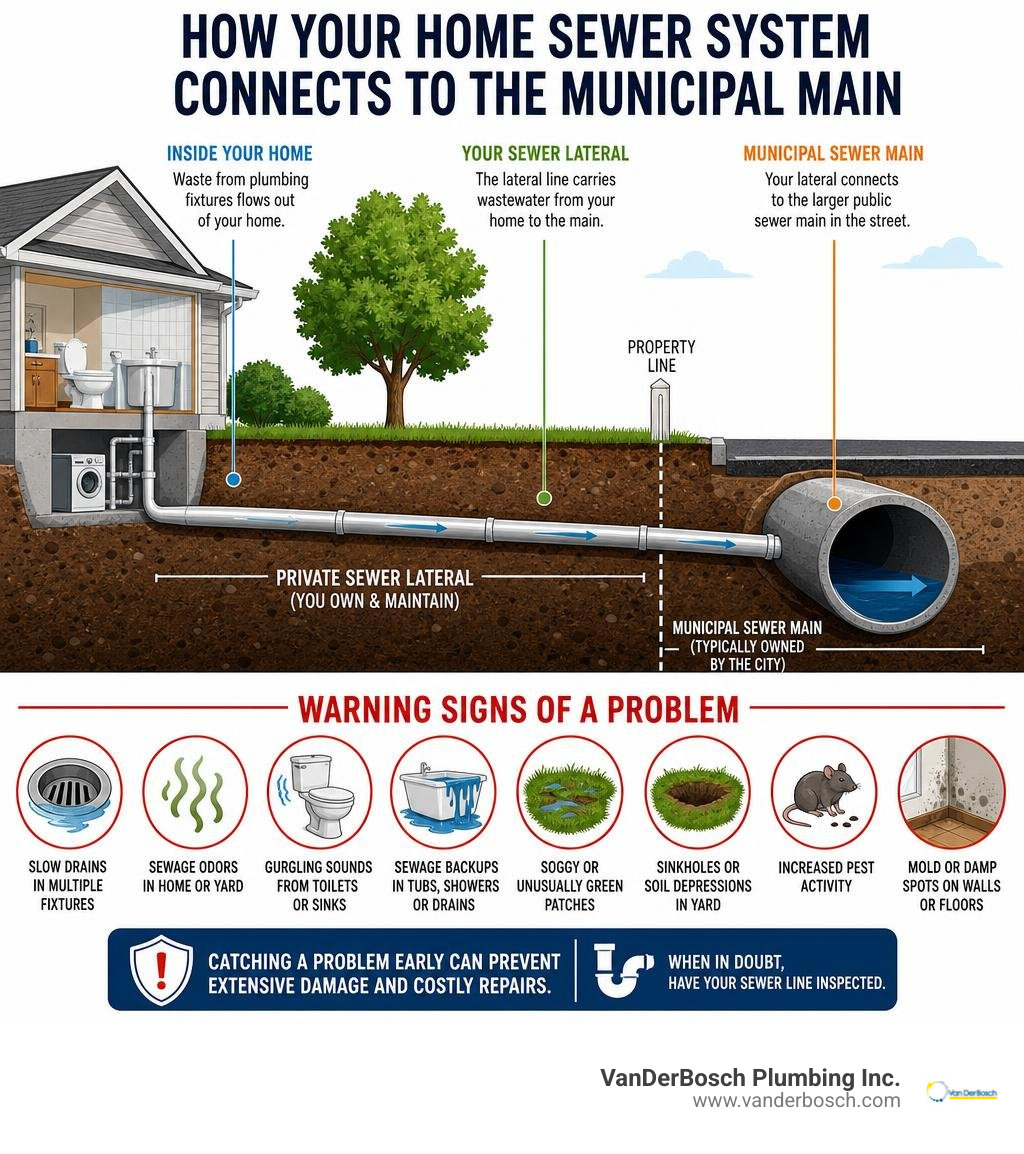
Here are the most common signs you may have a broken sewer line:
- Slow drains across multiple fixtures at the same time
- Sewage odors coming from drains, the basement, or your yard
- Gurgling sounds from toilets or sinks
- Sewage backing up into tubs, showers, or floor drains
- Unusually green or soggy patches of grass in your yard
- Sinkholes or soil depressions along your yard’s sewer path
- Increased pest activity — rats, cockroaches, or sewer flies
- Mold or damp spots on walls or floors near drains
If you’re seeing two or more of these at the same time, treat it as an emergency.
The consequences of ignoring a broken line are serious. A sewer collapse in Montgomery County, Maryland released 243 million gallons of raw wastewater into the Potomac River — water testing nine days later showed fecal bacteria levels more than 2,700 times the safe limit. That’s an extreme municipal example, but the same principle applies at the residential level: a broken pipe that goes unaddressed gets dramatically worse over time.
I’m Hugh Hodur, President of VanDerBosch Plumbing, and I’ve overseen hundreds of broken sewer pipe diagnoses and repairs across the Chicagoland area. In this guide, I’ll walk you through exactly how to identify a failing sewer line, what your repair options look like, and how to protect your property before a small crack becomes a full collapse.
More about broken sewer pipe:
What Causes a Broken Sewer Pipe to Fail?
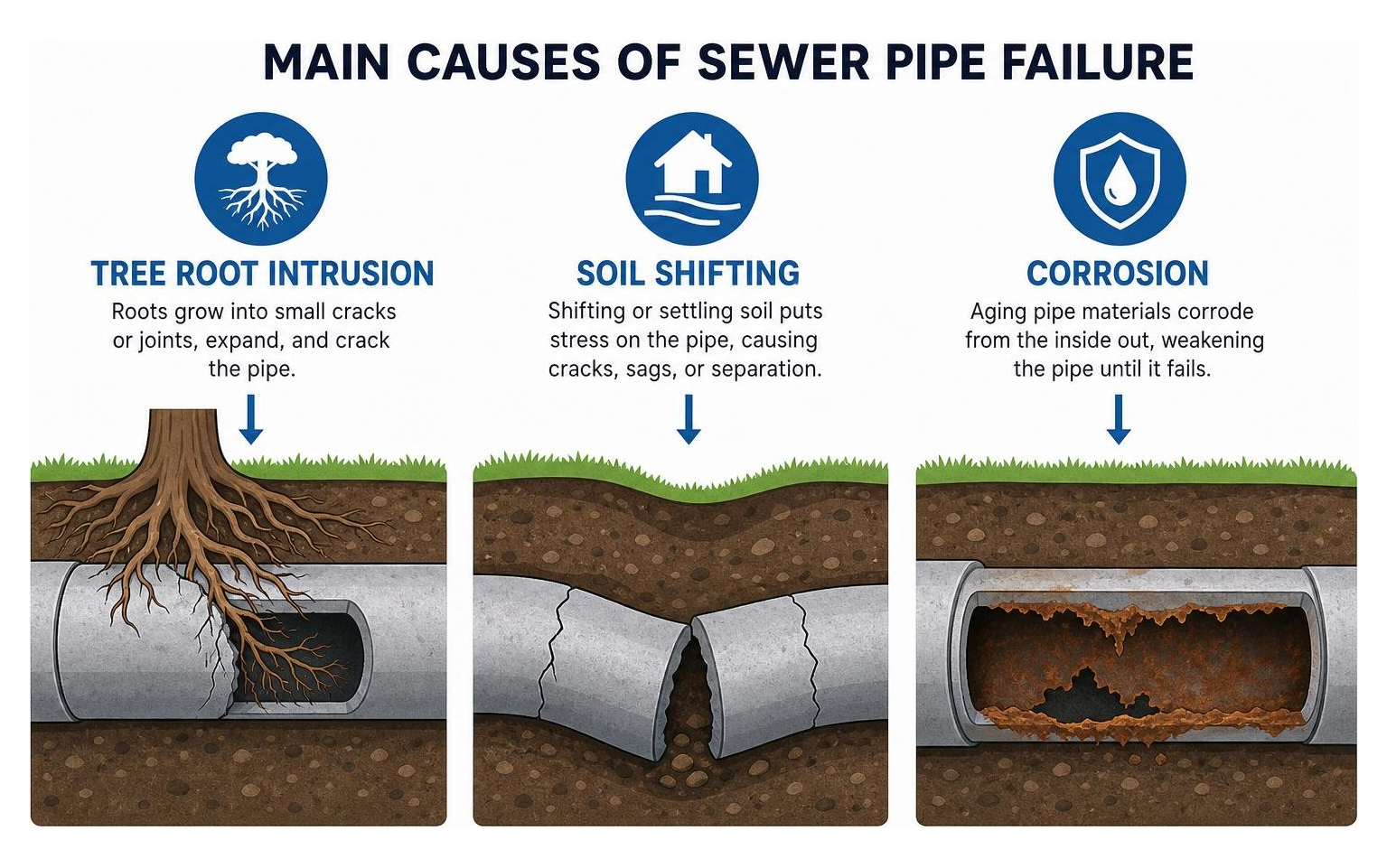
To fix a problem permanently, we have to understand what caused it in the first place. Underground sewer pipes exist in a harsh environment, subjected to constant moisture, shifting earth, and external pressure. Over time, several factors can compromise the structural integrity of your line, leading to a cracked or completely collapsed sewer pipe.
- Tree Root Intrusion: This is the single most common cause of sewer line failure we see in older Chicagoland neighborhoods like Winnetka, Sauganash, and West Ridge. Trees love moisture and nutrients, and raw sewage is essentially a high-grade fertilizer. Hairline cracks or loose joints in older pipes release tiny amounts of moisture. Tree roots seek this out, slip into the joints, and expand. As they grow, they act like a slow-motion wedge, cracking the pipe open and creating massive blockages.
- Aging Pipe Materials: If your home was built before the 1980s, your sewer line likely consists of clay, cast iron, or Orangeburg pipe. Clay is highly susceptible to cracking under pressure, cast iron eventually corrodes from the inside out, and Orangeburg (made of wood pulp and coal tar) deforms and flattens over time.
- Soil Shifting and Settling: Heavy rainfall, local construction, or natural ground settling can cause the soil surrounding your pipe to shift. When the ground moves, it puts uneven stress on the pipeline. This can result in a “belly” (a sag where waste pools) or a complete offset joint where sections of the pipe separate entirely.
- Chicagoland’s Extreme Ground Temperatures: Our brutal winters cause the ground to freeze and expand, followed by a spring thaw that makes the soil contract. This constant freeze-thaw cycle puts immense physical stress on buried pipes, making them highly vulnerable to snapping.
The catastrophic potential of aging infrastructure is well-documented. For instance, the infamous Potomac pipe collapse news highlighted how a 72-inch concrete interceptor pipe installed in the 1960s collapsed under the weight of decades of service. When it broke, the repair crews encountered a massive 30-foot “rock dam” of old construction boulders that had fallen into the line, as detailed by Maryland Matters.
Similarly, the Winooski River Sewer Break Incident Response showed that severe weather and shifting riverbeds can compromise underwater siphons, costing upwards of $1.7 million in emergency hauling, bypass construction, and permanent repairs. Whether it is a massive municipal pipeline or the lateral line running under your front yard, underground pipes have a finite lifespan.
Understanding Your Main Sewer Line
Your home’s waste system relies on a critical pipe known as the sewer lateral. This is the private drain line that carries wastewater from your household plumbing (toilets, sinks, showers) out to the municipal sewer main, which is typically located under the street or alleyway.
Historically, different eras utilized different pipe materials:
- Clay Pipes: Common in homes built before the 1980s. They have a typical lifespan of 50 to 60 years. While they resist chemical corrosion, they are highly brittle and vulnerable to root intrusion at the joints.
- Cast Iron: Popular for mid-century homes. Highly durable but prone to internal rusting and scaling over 75 to 100 years, which eventually narrows the pipe and causes structural failure.
- PVC/ABS Plastic: The modern standard. These pipes are flexible, completely impervious to rust, and have seamless joints that block out tree roots. They are designed to last 100 years or more.
If you want to dive deeper into how this entire network functions, read our comprehensive guide on Main Sewer Line Explained.
Warning Signs: How to Identify a Damaged Sewer Line
Because your sewer line is buried several feet underground, you can’t simply walk down and inspect it. Instead, you have to look for the physical, sensory, and biological “clues” that wastewater is escaping its designated pathway.
If your sewer lateral is cracked or broken, you will likely experience several of these warning signs:
- Foul Sewage Odors: A properly functioning sewer system is completely airtight. If you start smelling rotten eggs or raw sewage in your basement, near your floor drains, or out in your yard, it means sewer gas is escaping through a crack in your line.
- Frequent, Multi-Fixture Backups: If a single sink is clogged, it’s a localized plumbing issue. But if flushing your toilet causes water to bubble up into your bathtub, or if your basement floor drain overflows every time your washing machine drains, the blockage or break is in your shared main sewer line.
- Gurgling Noises: When a sewer pipe is cracked or collapsed, air becomes trapped in the line. As wastewater tries to flow past these air pockets, you will hear a distinct gurgling or bubbling sound coming from your toilets or drains.
- Pest Infestations: Rodents, cockroaches, and sewer flies live in municipal sewer systems. A cracked sewer pipe acts as an open-door invitation. Pests can enter the crack, travel up the pipe, and find their way into your home. If you notice a sudden spike in pests — or find smooth-looking “rat holes” in your yard that keep reappearing when you fill them with dirt — a broken pipe is often the culprit.
- Indoor Mold and Damp Spots: When a sewer line leaks beneath your home’s foundation, the moisture can wick up through concrete slab floors and drywall, leading to mysterious mold growth and damp patches along your basement floor or lower walls.
For a detailed breakdown of these symptoms, check out our guide on Signs a Sewer Line May Need Repair.
Hidden Indicators of a Broken Sewer Pipe in Your Yard
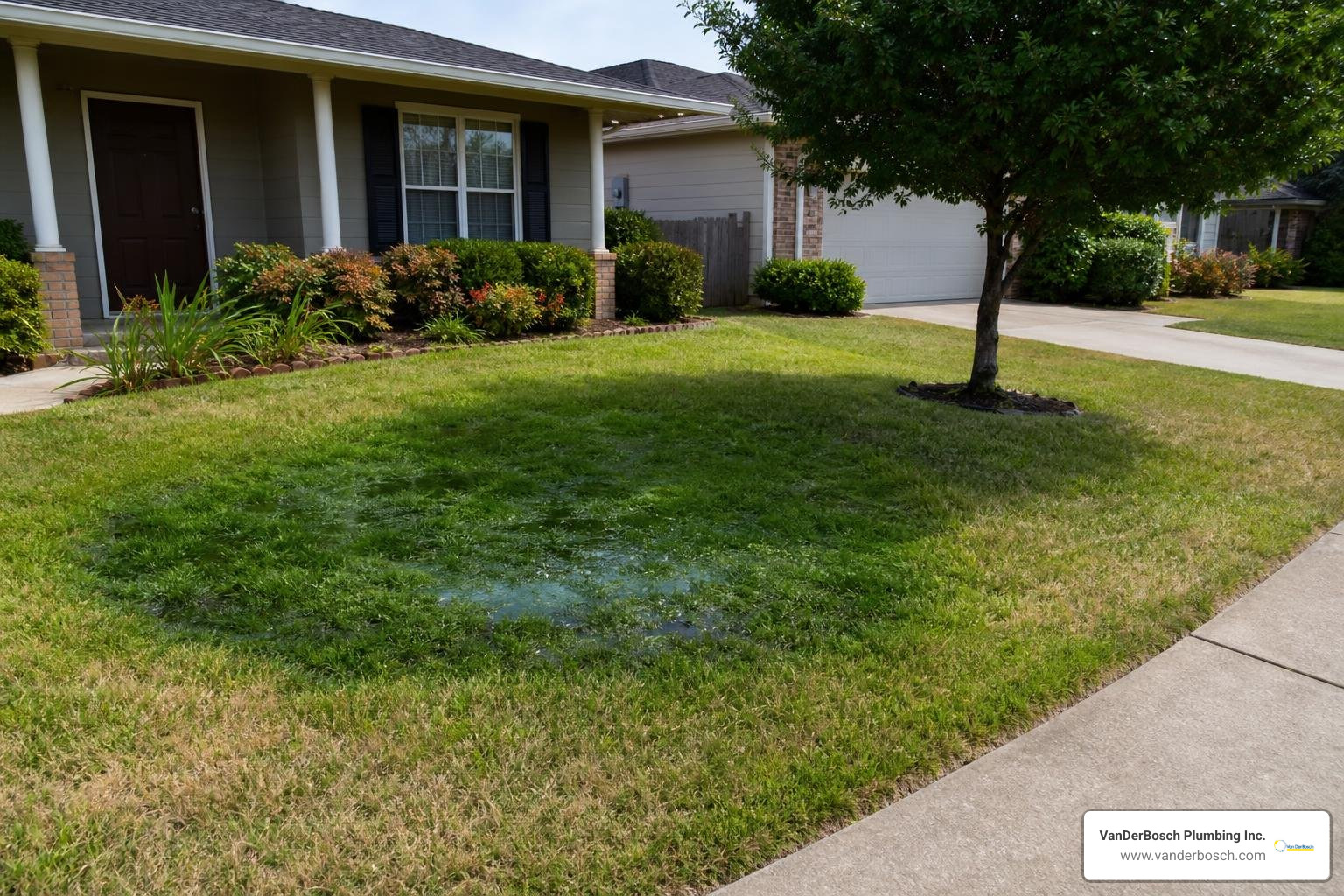
Sometimes, the most telling signs of a broken sewer pipe appear outdoors. Wastewater is packed with nitrogen and organic nutrients. When a sewer pipe leaks into your lawn, it acts as a constant source of fertilizer.
Keep an eye out for these yard-specific warning signs:
- Unusually Lush, Dark Green Grass: If you notice a strip of grass that is significantly greener, taller, and faster-growing than the rest of your lawn, it is likely tracing the exact path of your leaking sewer lateral.
- Soggy, Sunken Patches: As wastewater saturates the surrounding soil, the ground will become soft, spongy, and waterlogged, even during dry spells.
- Sinkholes and Soil Erosion: If the crack in the pipe is large enough, dirt will actually wash into the sewer line every time it rains. This hollows out the ground around the pipe, eventually causing the surface soil to collapse into a sinkhole.
In extreme cases, municipal main ruptures can cause devastating neighborhood flooding, as seen in the Sewer line rupture floods Spokane County basements report, where a 36-inch crack in a ductile iron sewer line flooded local homes and endangered hundreds of thousands of dollars in personal property. While your residential lateral line is smaller, a localized yard collapse can still threaten your home’s foundation.
How Confirm a Break: Professional Sewer Diagnostics
If you suspect your sewer line is damaged, do not start digging up your yard based on guesswork. Modern plumbing technology allows us to pinpoint the exact location, depth, and nature of the damage without disturbing a single blade of grass.
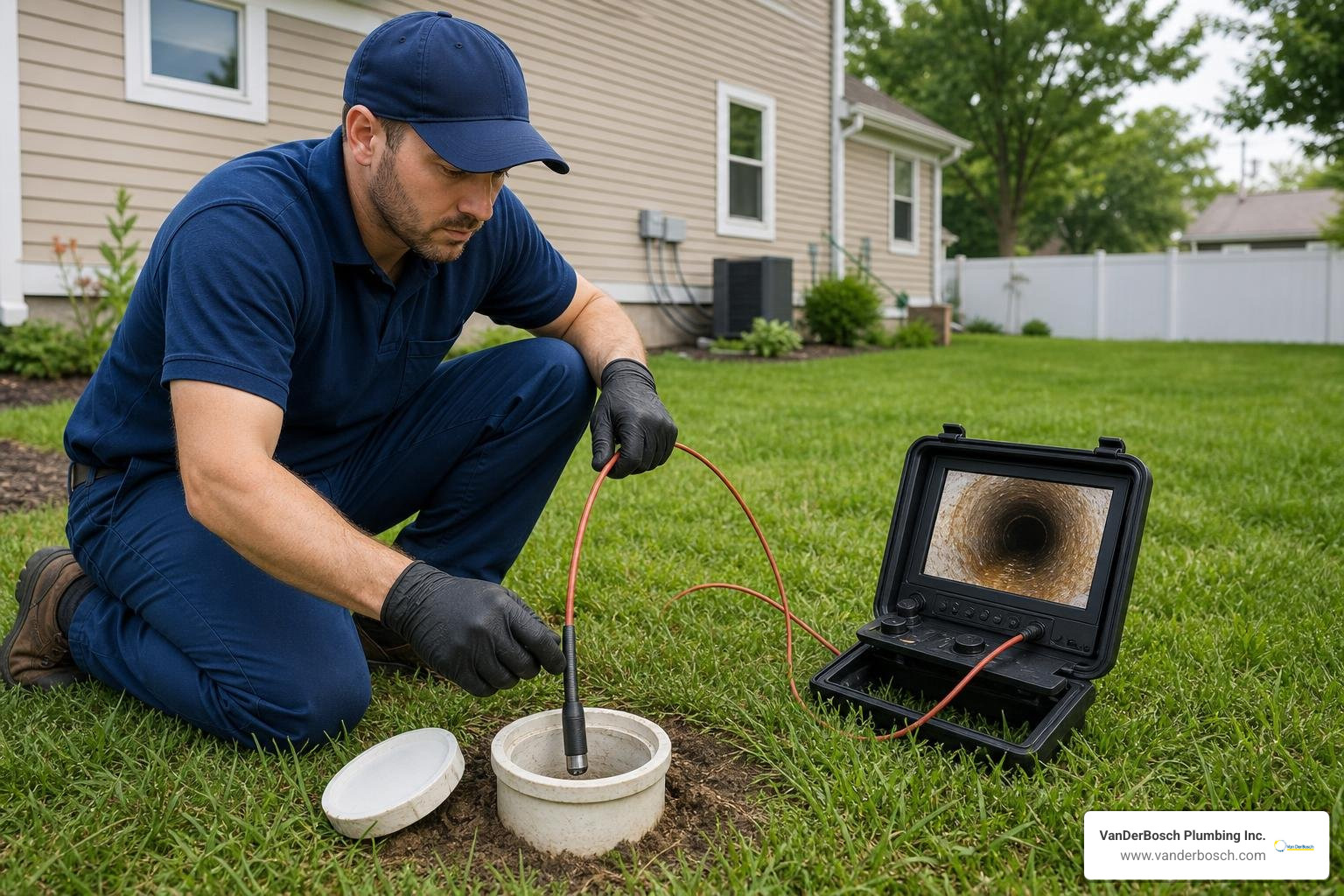
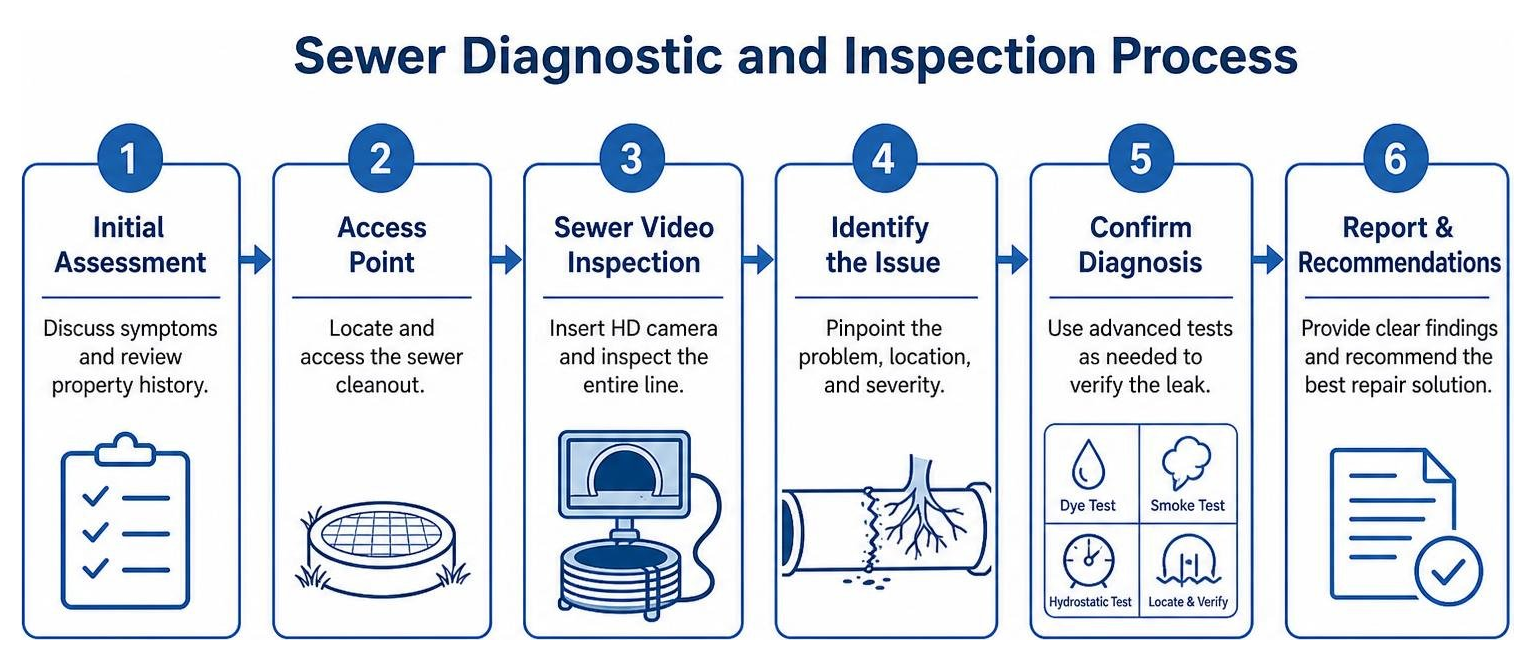
At VanDerBosch Plumbing, we utilize several advanced diagnostic methods:
- Sewer Video Inspections: This is the gold standard of sewer diagnostics. We insert a high-definition, waterproof camera attached to a flexible fiber-optic cable directly into your sewer cleanout. As we push the camera through the pipe, it transmits real-time video footage to a monitor. This allows us to see exactly what is causing the issue — whether it is root intrusion, a belly, a cracked joint, or a total collapse. We can also use a built-in signal transmitter to pinpoint the exact location and depth of the camera from above ground. You can learn more about this process on our Sewer Video Inspection Services page.
- Dye Testing: If we suspect a leak but the pipe is submerged or water is highly turbid, we can flush a non-toxic, fluorescent dye down your drains. We then monitor surrounding soil, storm drains, or basement walls to see where the dyed water escapes.
- Smoke Testing: We pump non-toxic, highly visible artificial smoke into your sewer line under slight pressure. If there is a crack or break in the buried pipe, the smoke will escape and rise through the soil, showing us exactly where the leak is located.
- Hydrostatic Testing: We temporarily plug the sewer line at the property boundary and fill the system with water to a specific level. If the water level drops, it confirms the system is not holding pressure and has an active leak.
Modern Repair Solutions: Trenchless vs. Traditional Excavation
Once we have confirmed a broken sewer pipe, the next step is choosing the right repair method. Historically, the only way to fix a buried sewer line was traditional excavation: bringing in heavy backhoes, digging a massive trench across your beautiful lawn, ripping up sidewalks, and leaving you with a costly landscaping bill.
Fortunately, modern plumbing technology offers trenchless alternatives that allow us to repair or replace your pipes with minimal disruption.
| Feature | Trenchless Pipe Lining (No-Dig) | Traditional Excavation (Digging) |
|---|---|---|
| Yard Damage | Minimal (requires 1 or 2 small access pits) | Extensive (digs a continuous trench across your lawn) |
| Project Timeline | Typically completed in 1 day | Often takes 3 to 5 days |
| Lifespan | 50+ years (epoxy resin is incredibly durable) | 50 to 100 years (depending on pipe material used) |
| Landscape Restoration Cost | $0 (your lawn, driveway, and garden stay intact) | High (can cost thousands to repair grass, patios, and asphalt) |
| Best Suited For | Cracked, leaking, or root-damaged pipes that are still structurally sound | Completely collapsed, crushed, or severely sagged pipes |
If your pipe has completely collapsed or has a severe “belly” (sag), traditional excavation may still be required to physically replace the damaged section. However, for the majority of cracks, leaks, and root intrusions, trenchless methods are highly effective and far less stressful. You can explore our full suite of options on our Sewer Line Repair Services page.
Trenchless Solutions for a Broken Sewer Pipe
Trenchless sewer repair has revolutionized the plumbing industry. Instead of destroying your landscaping, we use the existing pipe as a host to install a brand-new, structurally sound pipeline inside it.
The two primary trenchless methods are:
- Sewer Pipe Lining (Cured-in-Place Pipe or CIPP): We insert a flexible, felt tube coated with a heavy-duty epoxy resin into the damaged pipe. Once in place, we inflate the tube with air or water, pressing the resin-soaked liner against the inner walls of your old pipe. We then let the resin cure (harden). Within a few hours, the resin creates a seamless, joint-free, rock-hard “pipe within a pipe” that is completely impervious to tree roots and cracks. Read our ultimate guide on Sewer Pipe Lining Guide for a step-by-step breakdown.
- Pipe Bursting: If your old pipe is too damaged for lining but hasn’t completely collapsed, we can use pipe bursting. We pull a heavy, cone-shaped bursting head through your old pipe using a hydraulic winch. As the head moves forward, it shatters the old clay or cast iron pipe and pushes the fragments into the surrounding soil. At the same time, it pulls a brand-new, seamless HDPE (high-density polyethylene) pipe directly into place behind it.
To see if your property is a candidate for these no-dig methods, visit our Trenchless Pipe Repair Services page.
Frequently Asked Questions About Sewer Pipe Damage
Is a broken sewer line covered by homeowners insurance?
In most cases, standard homeowners insurance policies do not cover sewer line repairs if the damage was caused by general wear and tear, age, corrosion, or tree root intrusion. Insurance companies view these issues as preventable maintenance items.
However, your policy may cover the repairs if the break was caused by a sudden, accidental “covered peril,” such as:
- A tree falling on your property and physical tearing up the line.
- An out-of-control vehicle driving onto your lawn and crushing the pipe.
- Vandals damaging your plumbing system.
Additionally, standard policies do not automatically cover the cost of cleaning up water damage if sewage backs up into your basement. To protect yourself, we highly recommend adding a Water Backup and Sump Pump Discharge Endorsement to your policy.
Many Chicagoland municipalities also offer specialized protection programs. For example, the Service Line Warranty Program | Roselle, IL – Official Website provides Roselle residents with optional, low-cost warranty protection for their private sewer laterals, helping offset expensive repair bills when a break occurs.
Who is responsible for repairing a sewer line break?
As a general rule, the property owner is responsible for the entire length of the sewer lateral running from the house all the way to the connection point at the municipal sewer main. This is true even if a portion of your private lateral pipe runs beneath public property, such as the sidewalk, parkway, or street right-of-way.
- Private Property (Homeowner Responsibility): You are responsible for maintaining, repairing, and replacing the pipe that runs from your home’s foundation to the property line.
- Public Right-of-Way (Varies by City): In some municipalities, the homeowner is still responsible for the pipe all the way to the street main. In others, the city may assist with repairs if the break occurs under a public street or sidewalk.
- Municipal Main (City Responsibility): The local utility department is responsible for the large collector mains that run down the center of the street.
If you live within the city limits, the Private Drain Program outlines specific rules regarding when the city will assist with repairs on the public portion of your drain line. For residents in surrounding suburban areas, the Cook County Leak Repair guidelines provide administrative resources to help identify ownership boundaries and coordinate right-of-way permits.
How much does it cost to repair or replace a sewer line?
Sewer repair costs in the Chicagoland area can vary widely based on several local factors:
- Depth of the Pipe: In Chicago, our local frost line sits between 5 to 6 feet underground. This means our sewer pipes are buried deep to prevent freezing. Deeper pipes require more extensive excavation and safety equipment, which increases labor costs.
- Permit Fees: Depending on your location, municipal sewer permits can range from $300 to $900, especially if we have to cut into a public street or sidewalk.
- Local Taxes: Material costs in Cook County are subject to a 10.25% sales tax, which must be factored into your project budget.
- Scope of the Damage: A localized “spot repair” (fixing a single 5-foot section of cracked pipe) typically costs between $1,200 and $2,800. If the entire lateral line needs to be replaced, a full replacement averages $3,500 to $7,500, but can reach $15,000 or more for complex projects involving deep excavation under paved surfaces.
Conclusion
A broken sewer pipe is a stressful emergency, but you don’t have to face it alone. Acting quickly at the first sign of a backup, foul odor, or soggy yard patch can save you thousands of dollars in structural property damage and extensive landscape restoration.
At VanDerBosch Plumbing Inc., we have been serving Chicagoland homeowners across Cook County, Chicago, Roselle, Niles, Winnetka, Melrose Park, Oakbrook Terrace, and surrounding areas for decades. We combine state-of-the-art diagnostic technology with modern, minimally invasive repair solutions to get your plumbing system back up and running with minimal disruption to your daily life.
When you work with us, you benefit from:
- Our 100% satisfaction guarantee on every job.
- 24/7 emergency availability because plumbing disasters don’t wait for business hours.
- Transparent pricing with absolutely no hidden service charges.
- Highly trained, licensed, and background-checked technicians who treat your home with respect.
If you suspect your sewer line is failing, don’t wait for your lawn to be ruined or your basement to flood. Contact the trusted team at VanDerBosch Plumbing today to schedule a professional sewer camera inspection or explore our Trenchless Pipe Repair Services. We are here to keep your home safe, clean, and dry.