
Why Hiring a Licensed Plumber for Your Water Heater Matters
When your water heater fails, the decision to hire a licensed plumber for your water heater — or attempt a DIY fix — can have serious consequences for your safety, your wallet, and your home.
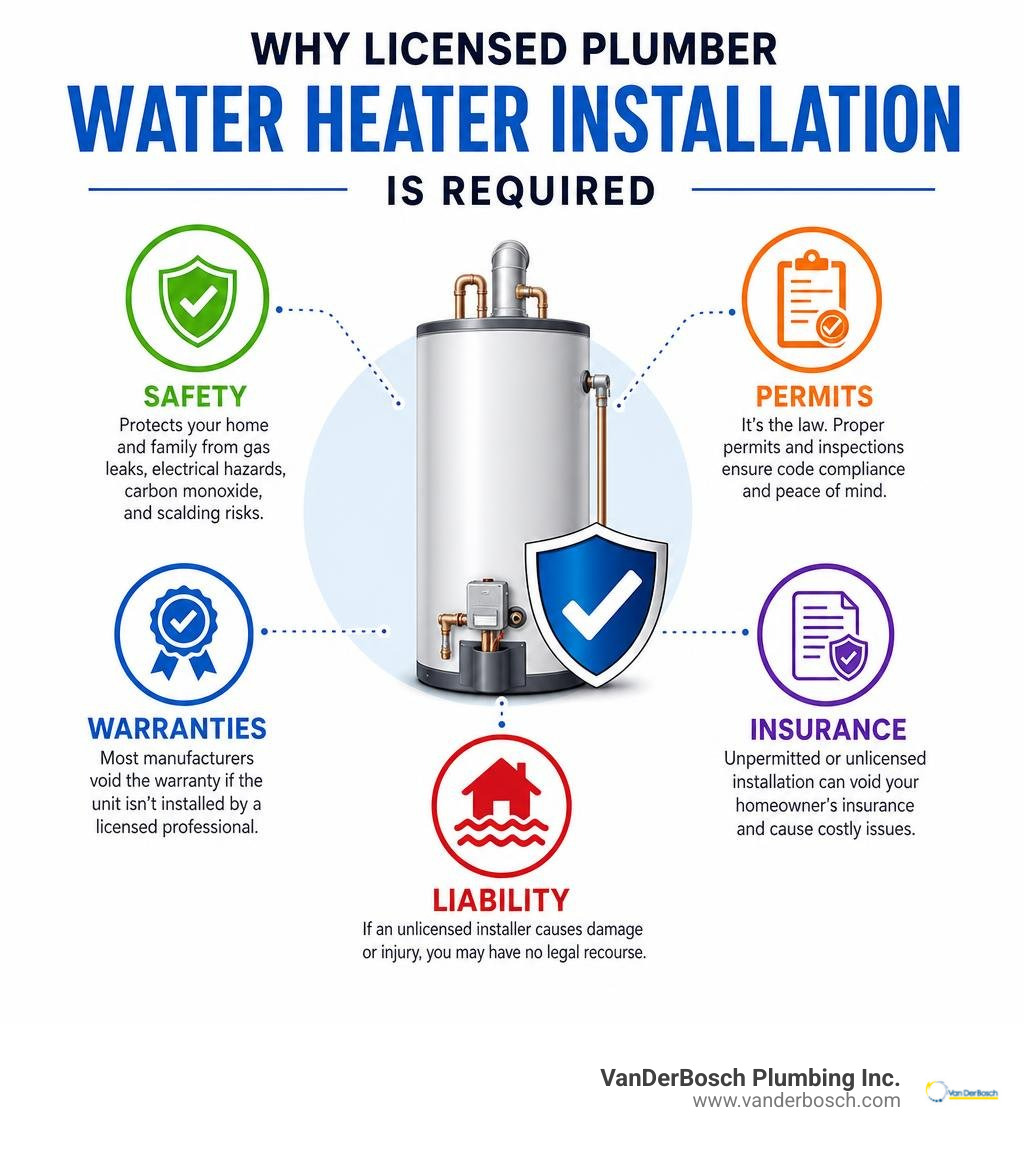
Here’s the short answer on why a licensed plumber is required for water heater installation:
- Safety: Water heaters connect to gas lines, high-voltage electricity, carbon monoxide venting, and pressurized water — all at once. One mistake can be deadly.
- It’s the law: In most jurisdictions, water heater installation requires a permit, a licensed plumber, and a post-installation inspection.
- Warranties: Most manufacturers void the warranty if the unit is not installed by a licensed professional.
- Insurance: An unpermitted or unlicensed installation can void your homeowner’s insurance and create problems when selling your home.
- Liability: If an unlicensed installer floods or damages your home, you may have no legal recourse.
A water heater isn’t just an appliance you plug in. It’s an inline interruption of your home’s potable water supply — and the law treats it that way. The Colorado State Plumbing Board has stated that faulty plumbing is “potentially lethal and can cause widespread disease and epidemics of disastrous consequences.” That’s not an exaggeration.
Water heaters fail quietly. A slow gas leak, a cracked vent pipe, or an improperly installed pressure relief valve can go unnoticed for months — until something goes very wrong.
I’m Hugh Hodur, President of VanDerBosch Plumbing Inc., and I’ve overseen thousands of licensed plumber water heater installations, repairs, and replacements across the Chicagoland area. In this guide, I’ll walk you through exactly what’s at stake — and what professional installation actually includes.
Quick licensed plumber water heater terms:
How a Licensed Plumber Water Heater Installation Protects Your Home
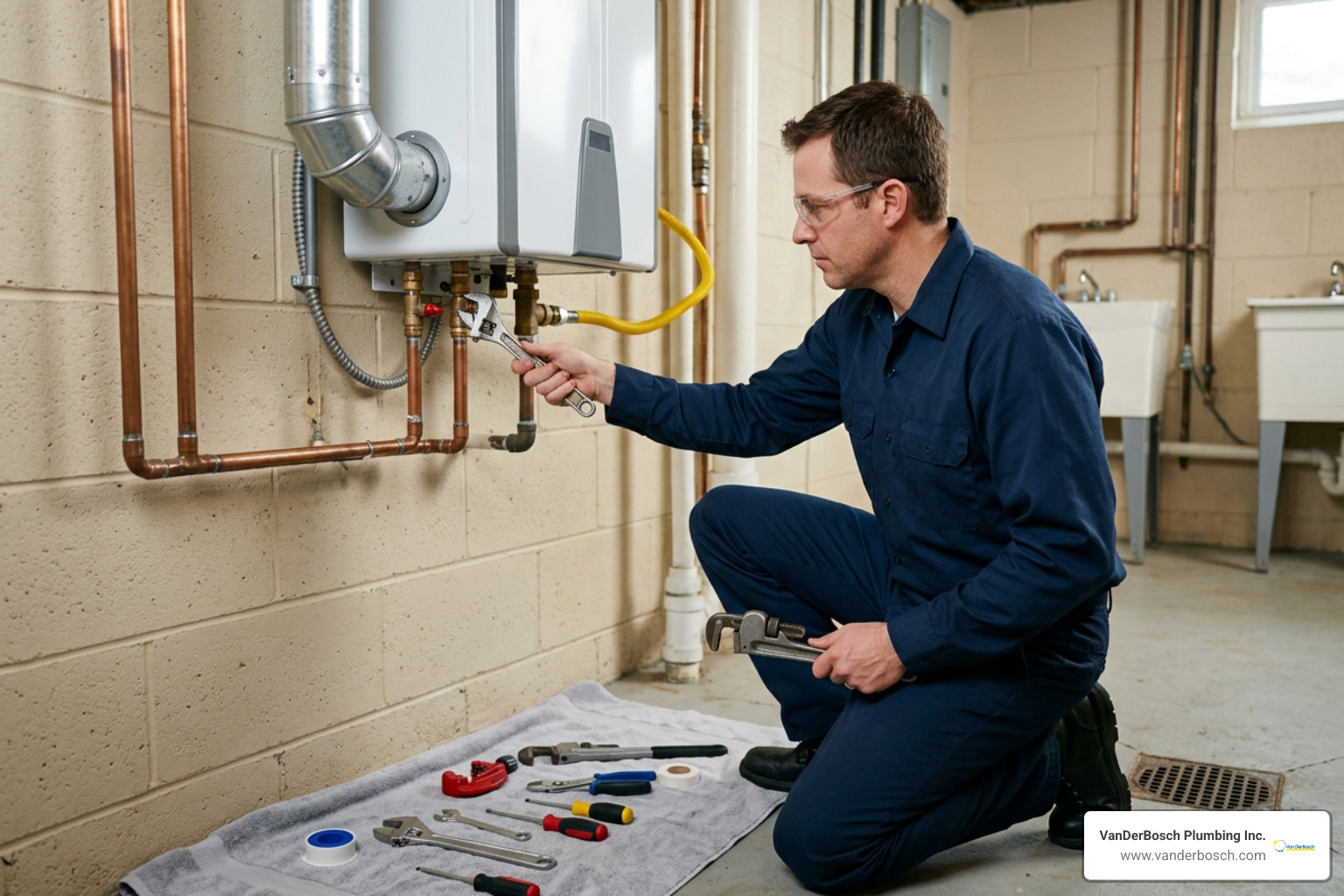
When you look at a water heater, it might look like a simple metal tank with a couple of pipes attached to the top. But underneath that simple exterior lies a complex thermodynamic system operating under intense pressure. Professional plumbing is built around the strict scientific laws of pneumatics and hydraulics.
Hiring an expert to manage your Water Heater Services ensures that these physical forces are safely controlled. When an untrained person attempts to install a water heater, they often bypass critical safety standards. This can lead to catastrophic failures, ranging from slow, hidden water leaks to sudden structural fires.
To put the risks in perspective, let’s compare a professional installation to a typical DIY or unlicensed handyman attempt:
| Feature / Risk | Professional Licensed Plumber | DIY / Unlicensed Handyman |
|---|---|---|
| Code Compliance | 100% compliant with local and state plumbing codes | High risk of code violations |
| Venting & Gas Safety | Rigorously tested for carbon monoxide and gas leaks | Risk of backdrafting and lethal gas leaks |
| Manufacturer Warranty | Fully preserved and documented | Often immediately voided |
| Homeowners Insurance | Validated; covered in case of future issues | Can be completely voided due to unpermitted work |
| Water Damage Risk | Minimized with proper thermal expansion tanks and pans | High risk of slow leaks or sudden tank rupture |
Why a Licensed Plumber Water Heater Service Prevents Catastrophic Gas Leaks
If you have a gas-powered water heater, you are dealing with natural gas or propane alongside combustion exhaust. Connecting a gas line requires specialized tools, pipe sealants, and pressure-testing equipment. An improper connection can cause a slow gas leak that builds up in your utility closet, waiting for a single spark to trigger an explosion.
Even more common—and equally deadly—is the risk of carbon monoxide (CO) poisoning. Gas water heaters must vent their exhaust gases safely out of your home. If the venting system is improperly sized, misaligned, or poorly sealed, it can cause “backdrafting.” This is when odorless, tasteless, and lethal carbon monoxide drafts back into your living spaces instead of escaping outside.
A licensed plumber is trained to design and verify proper venting configurations, ensuring your family is safe from silent CO hazards. If you notice any warning signs of failure, you should immediately read up on Signs Your Water Heater Needs Repair or Replacement to protect your household.
Protecting Your Property from Flooding and Water Damage
Water expands when it is heated. In a closed plumbing system, this thermal expansion creates immense pressure inside your water heater tank. If your plumbing system does not have a properly installed thermal expansion tank or a fully functioning Temperature and Pressure (T&P) relief valve, that pressure has nowhere to go. Over time, the constant stress will weaken the tank welds, leading to a catastrophic rupture.
Imagine 50 gallons of scalding hot water rushing into your basement or utility room at 4:00 AM, followed by an uninterrupted flow of pressurized city water. Without a dedicated drain pan and properly routed T&P discharge piping, a ruptured tank can cause tens of thousands of dollars in structural rot, ruined drywall, and toxic mold growth.
When you factor in the Plumber Water Heater Repair Costs, paying for professional installation upfront is a fraction of the cost of repairing major water damage.
Legal Requirements, Permits, and State Licensing Laws
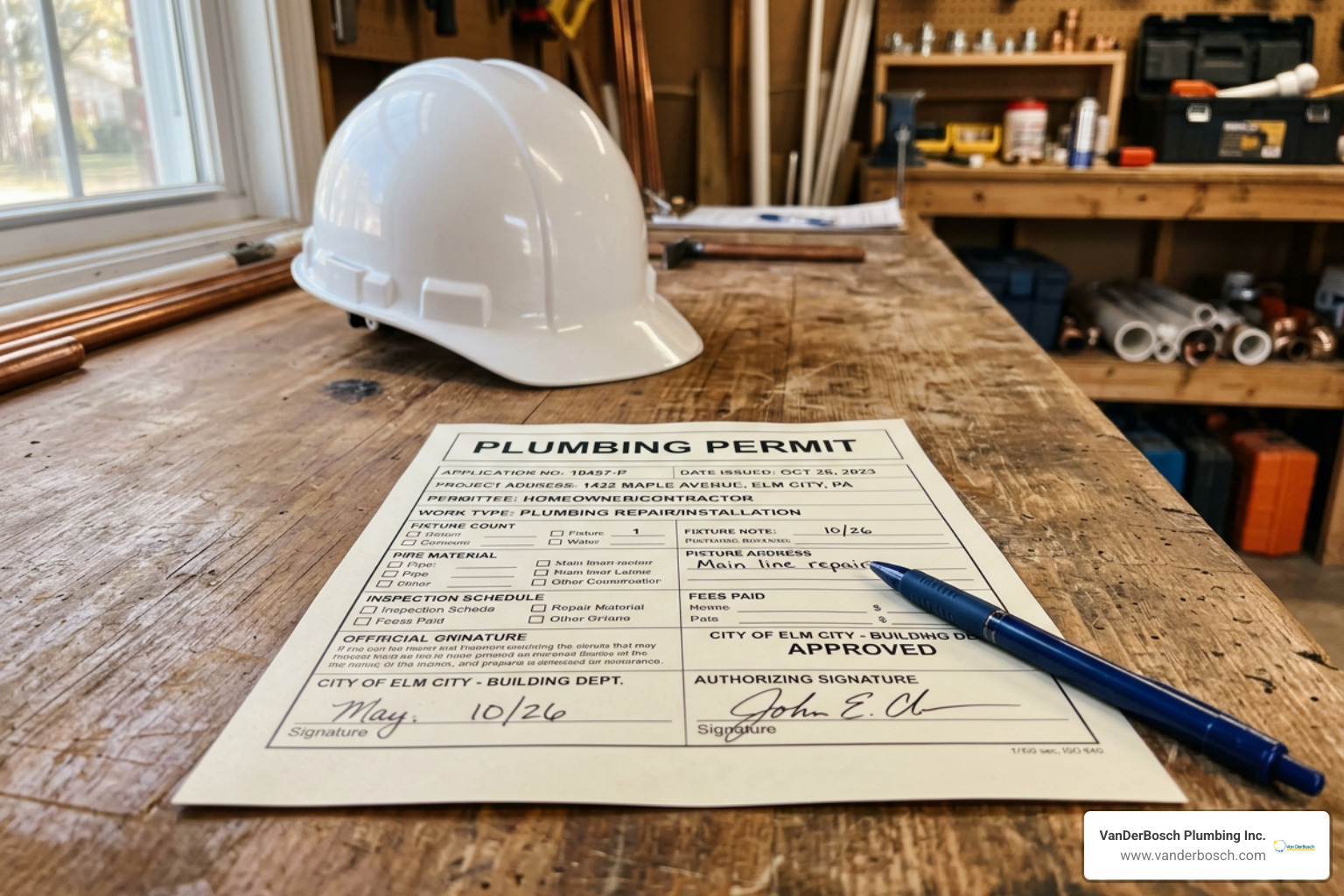
Many homeowners ask: Is it actually illegal to install my own water heater?
In most municipal jurisdictions across the United States, the answer is yes—unless you are a licensed professional or obtain a highly regulated homeowner permit that requires passing a physical municipal inspection. These laws are not designed to create red tape; they exist to protect the public water supply.
Because a water heater connects directly to your home’s clean drinking water, an improper installation can cause “backflow.” This is a hydraulic emergency where contaminated water from your heating system siphons backward into the municipal water main, potentially poisoning your entire neighborhood’s drinking supply. This is why the Illinois Department of Public Health Plumbing Regulations strictly regulate who can perform plumbing work.
Do Water Heater Installations Require a Permit and Inspection?
Yes. In almost every city and village across Chicagoland, replacing a water heater legally requires pulling a permit and scheduling a post-installation safety inspection.
If you live in Chicago or Cook County, local building inspectors must sign off on the installation to verify that the venting, gas connections, and electrical wiring meet local safety standards. You can learn more about how these rules are enforced by reviewing local municipal codes or consulting a licensed plumbing specialist.
Skipping the permit process might seem like a shortcut to save money, but it will catch up with you. If you attempt to sell your home in the future, a municipal home inspector will look at your water heater. An unpermitted unit can stall your home sale, force you to pay hefty fines, and require you to pay a licensed plumber to reinstall the unit anyway.
Furthermore, if your unpermitted water heater leaks and causes property damage, your homeowner’s insurance provider has the legal right to deny your claim entirely.
State-Specific Laws: Colorado, Indiana, and Oregon
To understand how seriously plumbing safety is taken nationwide, we can look at regulatory frameworks in other states:
- Indiana: Under Indiana Code (IC 25-28.5-1-36), consumers are actually legally relieved from the obligation to pay for plumbing work if it is performed by an unlicensed individual. The state enacted this law to aggressively deter unlicensed handymen from performing hazardous plumbing work.
- Colorado: The Colorado State Plumbing Board strictly enforces the rule that water heaters are not exempt under standard “domestic appliance” installation rules. Because standard water heaters lack built-in backflow preventers, they are legally classified as complex plumbing system integrations.
- Oregon: Oregon has incredibly strict licensing standards. To even touch a residential water heater, an installer must hold specialized credentials that require passing rigorous examinations.
Across all these states, the path to becoming a licensed plumber is highly demanding. An apprentice plumber must complete 7,600 hours of on-the-job training alongside four years of intensive school-related technical training before they can even sit for their licensing exam. This ensures they master the complex sciences of hydraulics, pneumatics, and fuel gas venting.
Licensed Plumber vs. Specialized Water Heater Installer
Some states, like Oregon, offer a highly specific Residential Water-Heater Installer (WHI) license. This is a unique, multi-disciplinary specialty license. To obtain it, an applicant must:
- Complete an approved 8-hour training class.
- Pass a 3-hour, 52-question open-book state examination.
- Hold dual credentials, including an Electrical Limited Specialty (LMS) license and a registered plumbing contractor association.
While a specialized water heater installer is trained specifically to swap out tanks, a full-service licensed plumber offers a much broader scope of expertise. A licensed plumber understands how your water heater interacts with your home’s entire plumbing system—including water pressure-reducing valves, whole-house water softeners, sewer lines, and recirculation loops.
Whether you need service in Roselle, Winnetka, or require a plumber in Melrose Park, hiring a fully licensed plumbing contractor ensures your entire system is evaluated holistically.
What a Professional Water Heater Installation Typically Includes
When we install a water heater, we don’t just drop a new tank in place and call it a day. A professional, code-compliant installation is a detailed, multi-step engineering process.
Every home is different, and a professional installer must adapt to your home’s specific physical constraints, spatial layouts, and local municipal codes. For a deeper look at this process, check out our comprehensive Water Heater Installation Guide.
Here is the sequential process our team follows during a standard installation:
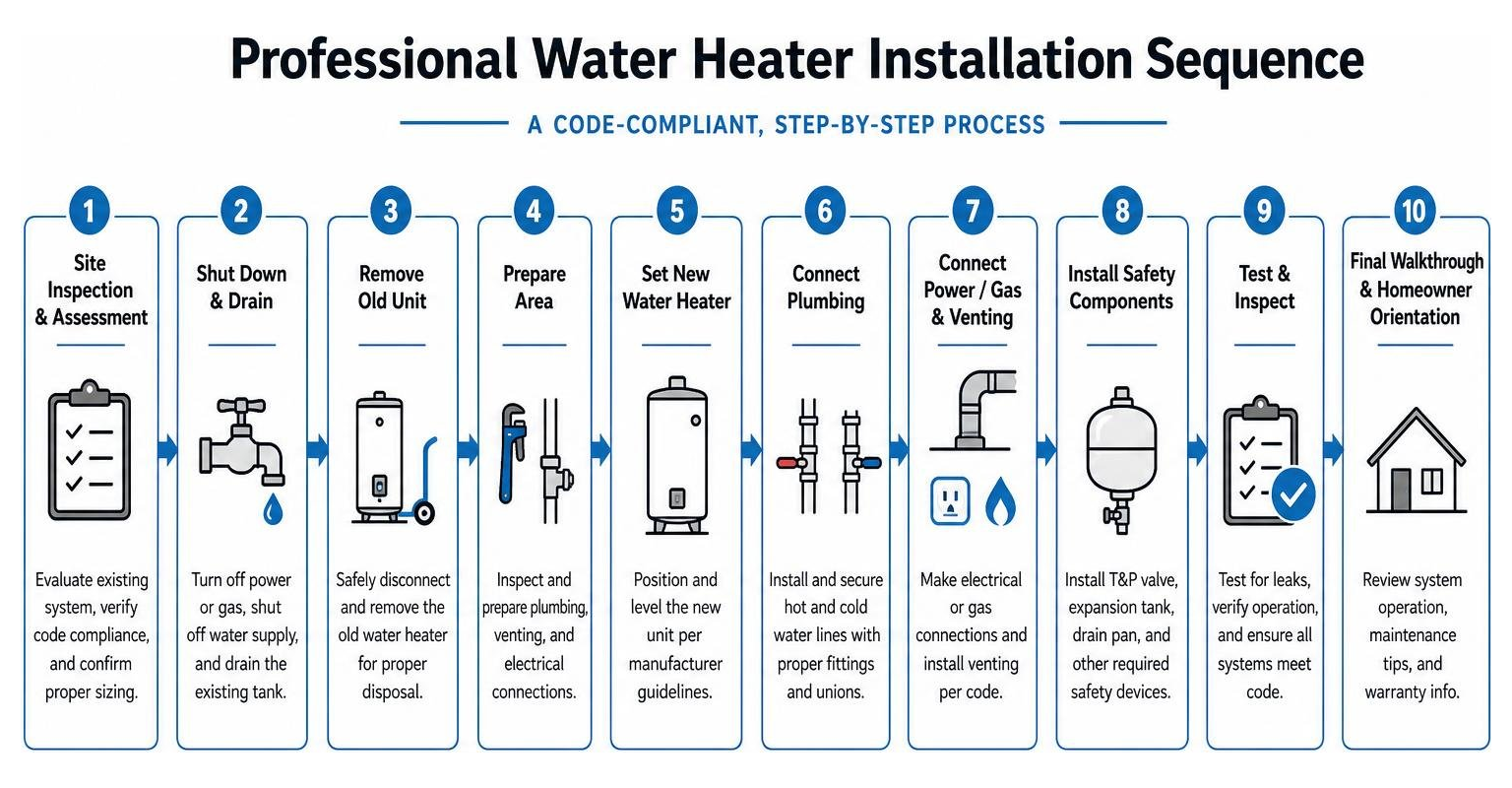
How a Licensed Plumber Water Heater Expert Sizes Your System Correctly
One of the biggest mistakes DIYers make is buying the wrong size water heater. They often choose a tank based solely on the physical space available or the size of their old unit. However, proper sizing requires calculating your home’s peak demand—the maximum amount of hot water your household uses during its busiest hour of the day.
If you have a growing family, multiple bathrooms, or high-flow appliances, a standard 40-gallon tank might leave you shivering in the shower. We calculate your peak hour demand to recommend the perfect system:
- Traditional Tanks: Sized in gallons (typically 40, 50, or 75 gallons) to match your household’s peak water usage.
- Tankless Systems: Sized by flow rate (gallons per minute, or GPM) and the temperature rise required to heat cold incoming groundwater to your desired temperature. Upgrading to Tankless Water Heaters can provide 20% to 30% energy savings and deliver an endless supply of hot water.
- Hybrid Heat Pump Systems: These highly efficient units extract heat from the surrounding air. According to ENERGY STAR, a hybrid heat pump water heater can use up to 70% less energy than a standard electric tank, saving you thousands of dollars in utility bills over its lifespan.
Essential Safety Components Installed by Professionals
A professional installation includes several non-negotiable safety and structural components:
- Temperature & Pressure (T&P) Relief Valve: This valve is your water heater’s primary safety mechanism. If the temperature or pressure inside the tank exceeds safe limits, the T&P valve opens automatically to discharge steam and hot water, preventing a catastrophic explosion.
- Thermal Expansion Tank: Required by modern building codes on all closed plumbing loops, this small tank absorbs the excess water volume created by thermal expansion, protecting your pipes and water heater from high-pressure spikes.
- Sediment Traps (Drip Legs): Installed on gas lines directly before the gas control valve, these traps catch moisture, debris, and pipe scale before they can clog your water heater’s sensitive gas burner.
- Seismic Strapping: While seismic straps are a strict regional code requirement in earthquake-prone areas like the West Coast, they are also utilized in commercial and specific residential applications to prevent the heavy tank from tipping over and rupturing gas or water lines.
If you are located in Cook County or Oakbrook Terrace, working with a professional plumbing service ensures your system is installed with all of these mandatory safety components.
Frequently Asked Questions About Water Heater Installation
Can a homeowner install their own water heater?
Technically, some municipalities allow homeowners to pull a “property owner permit” to install their own water heater, provided they pass a physical inspection. However, we highly discourage it.
The consequences of a single DIY mistake can be severe. If you make an error on the gas line or venting, you risk carbon monoxide poisoning or a gas explosion. If you make a mistake on the water connections, you can flood your home.
Furthermore, almost all major water heater manufacturers will immediately void your equipment warranty if the unit is not installed by a licensed professional. If the tank cracks two years from now, you will have to pay for a brand-new unit out of pocket.
What are the common signs that a water heater needs professional repair or replacement?
Traditional tank water heaters have an average lifespan of 10 to 12 years, while high-quality tankless units can last 15 to 20 years with regular maintenance. You should call a professional if you notice any of these common warning signs:
- Rusty or Discolored Water: This indicates that the sacrificial anode rod has failed, and the interior steel lining of your tank is actively corroding.
- Popping or Rumbling Noises: Hard water minerals settle at the bottom of the tank over time, forming a thick layer of sediment. When the burner heats the water, steam pockets bubble up through this sediment, causing popping sounds. This sediment layer insulates the water from the burner, drastically reducing heating efficiency and causing the tank to overheat and crack.
- Fluctuating Water Temperatures: If your water goes from hot to cold in minutes, your heating elements or gas burner assembly are likely failing.
- Pooling Water: Any visible water pooling around the base of your tank is a major warning sign. This usually means the internal tank has fractured, and a complete rupture is imminent.
How does hiring a licensed plumber protect the homeowner from liability?
When you hire an unlicensed handyman or try to do it yourself, you assume 100% of the financial and physical risk. If a worker gets injured on your property, or if an installation error causes a massive flood or fire, you could be held personally liable for the damages.
A licensed plumbing contractor carries general liability insurance and worker’s compensation insurance. This means that in the rare event that something goes wrong during the installation, the plumbing company’s insurance covers the damages and medical costs—not your personal homeowner’s policy.
Conclusion
Your home’s water heater is a vital part of your daily comfort, hygiene, and safety. While trying to install it yourself or hiring an unlicensed handyman might seem like a way to save a few dollars upfront, the long-term risks—including gas leaks, water damage, voided warranties, and code violations—far outweigh the initial savings.
At VanDerBosch Plumbing Inc., we have been serving the Chicagoland area with pride and integrity. Whether you are in Chicago, Roselle, Niles, Winnetka, Melrose Park, Oakbrook Terrace, Elmhurst, or Mount Prospect, our team of licensed, background-checked plumbers is ready to assist you.
We stand behind our work with a 100% satisfaction guarantee, transparent pricing with no hidden service charges, and 24/7 emergency availability to keep your hot water flowing safely.
Don’t take risks with your home’s safety. Schedule your professional water heater service today and let our licensed experts handle your installation the right way, to code, the first time.