
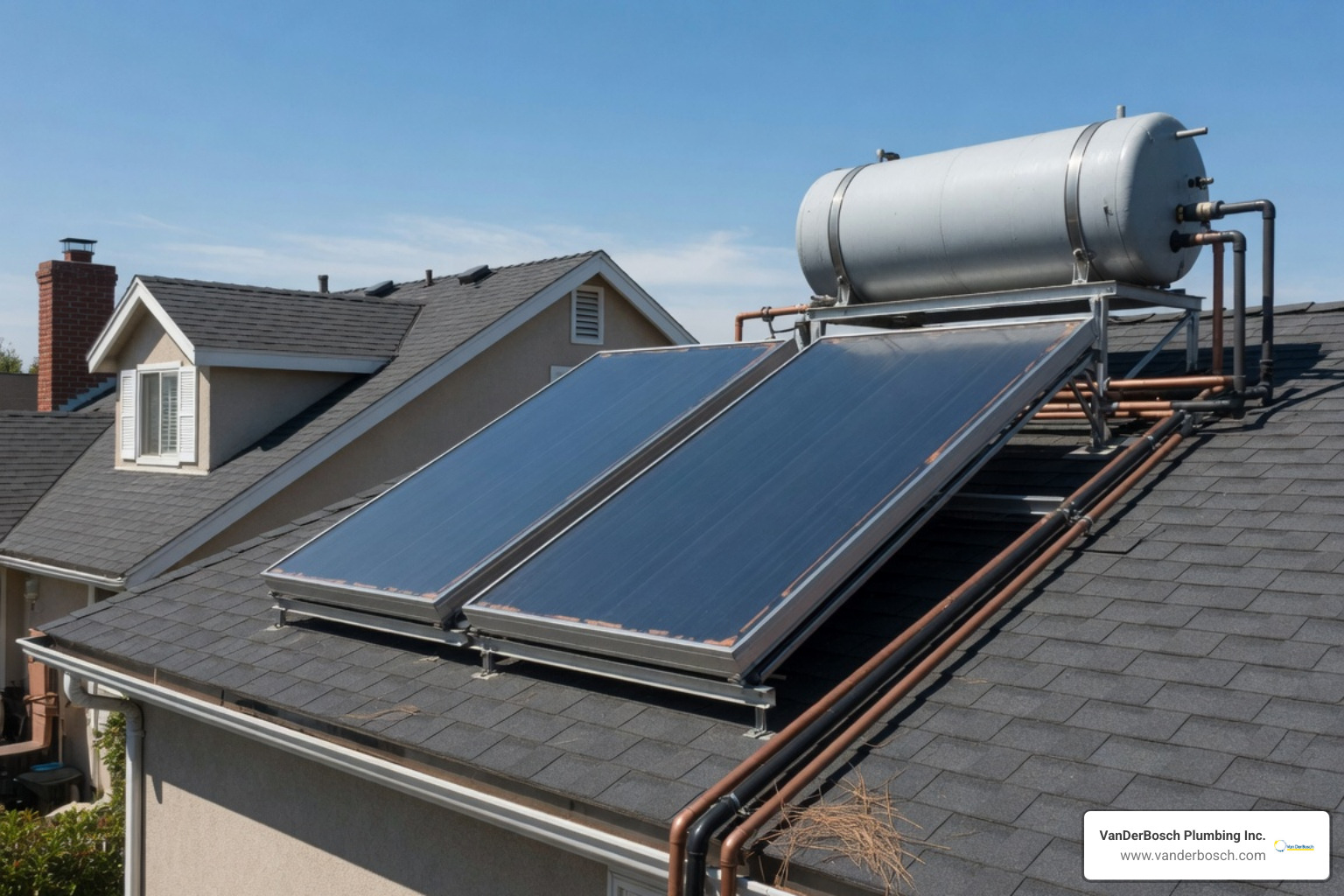
Solar Hot Water Heater Maintenance Keeps Your System Efficient
Solar hot water heater maintenance means checking the collectors, pipes, tank, pump, controls, and safety parts on a regular schedule. Homeowners can look for leaks, damaged insulation, new shade, and dirty collector glass, but a qualified technician should handle pressurized fluid, electrical testing, glycol service, and internal tank work.
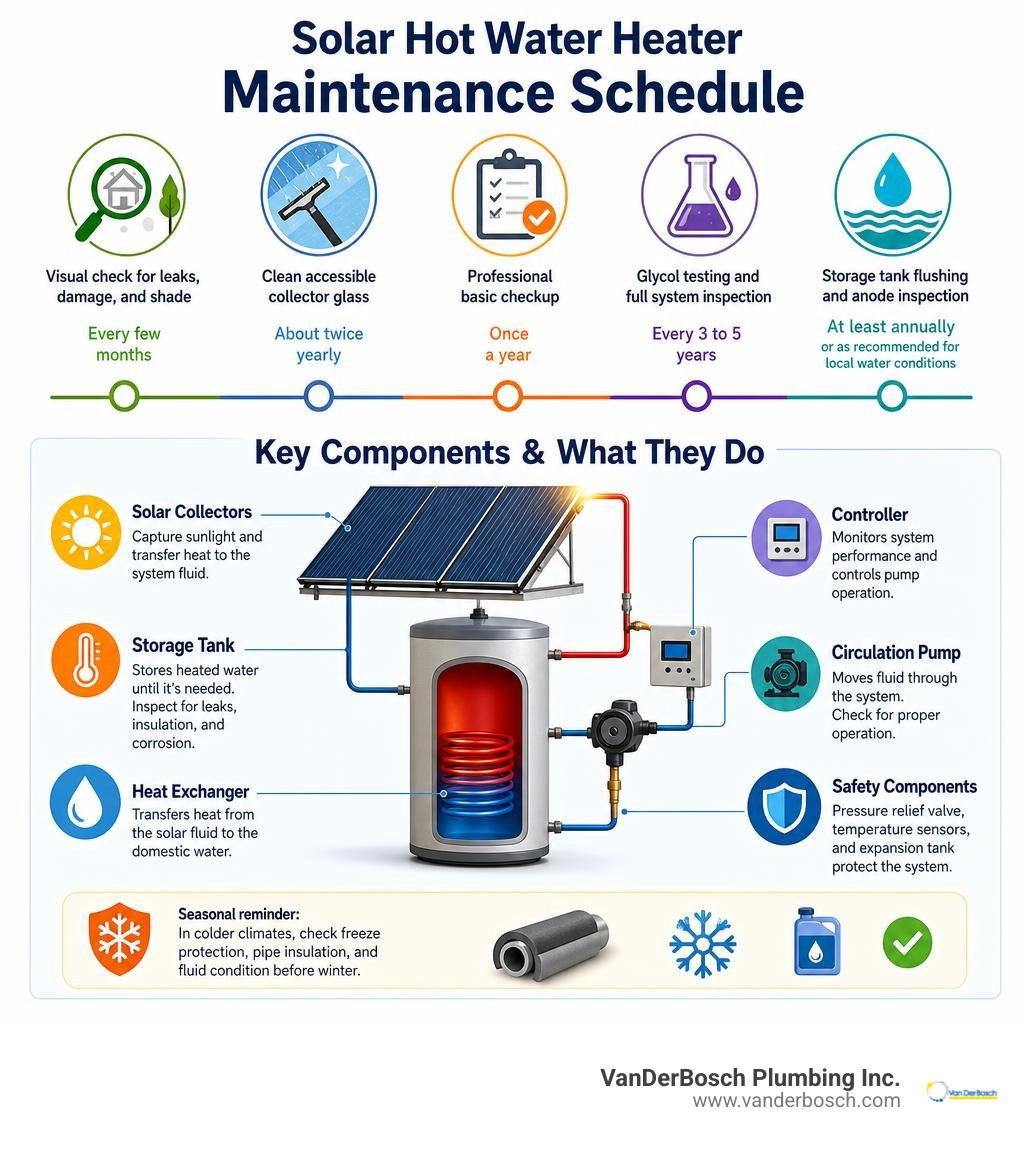
| Maintenance need | Typical timing |
|---|---|
| Visual check for leaks, damage, and shade | Every few months |
| Clean accessible collector glass | About twice yearly, or more in dusty areas |
| Professional basic checkup | Once a year |
| Glycol testing and full system inspection | Every 3 to 5 years |
| Storage tank flushing and anode inspection | At least annually or as recommended for local water conditions |
Regular care protects both comfort and cost. Scale can reduce heat-transfer efficiency by 5% to 20% each year, while ignored pumps, sensors, and fluid problems can turn a reliable solar system into a backup-heater-dependent one. In Chicagoland, freeze protection, pipe insulation, and closed-loop fluid condition deserve extra attention before winter.
I am Hugh Hodur, President of VanDerBosch Plumbing Inc., where I lead residential and commercial water-heater and plumbing service across Chicagoland. My work with water-heating equipment and preventive plumbing care informs this guide to practical solar hot water heater maintenance and the issues that should not wait for a DIY fix.
Solar hot water heater maintenance terms to know:
Key Components That Require Routine Care
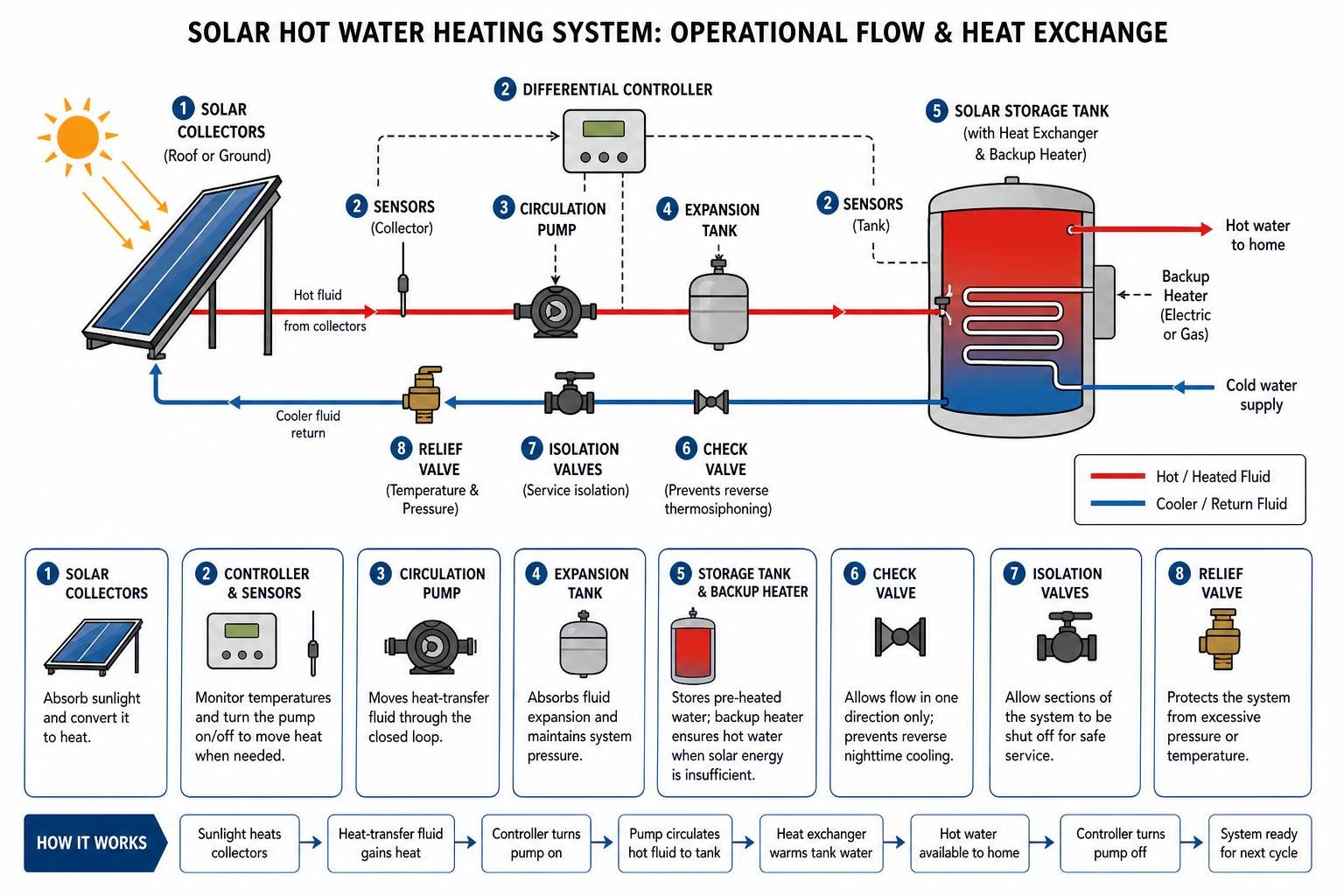
To keep your solar thermal system running at peak performance, it helps to understand how the main components work together. A solar water heater isn’t just a standard tank with panel accessories; it is an integrated thermal appliance engineered to capture free solar radiation and safely transfer that energy into your domestic hot water supply.
Here are the critical components that need regular evaluation:
- Solar Collectors (Panels or Evacuated Tubes): Installed on your roof or an unshaded ground frame, solar collectors absorb sunlight. Glazed flat-plate panels use copper absorber plates housed under tempered glass, while evacuated tube collectors use double-walled glass cylinders under a vacuum. Both types require clean glass and intact seals to capture heat efficiently.
- Differential Controller and Sensors: The brain of an active system. The controller monitors temperature sensors attached to the solar collectors and the bottom of the storage tank. When the collectors are hotter than the tank water, the controller activates the circulation pump. If sensors drift out of calibration or wiring fails, the pump won’t run when it should—or worse, it runs at night and cools your water down!
- Circulation Pumps: Active solar thermal systems rely on small electromechanical pumps to circulate heat-transfer fluid through the loop. Unchecked pumps can develop worn bearings, starting capacitor failures, or airlocks. Without maintenance, pumps and temperature sensors tend to fail within 5 to 7 years.
- Expansion Tank: Closed-loop pressurized solar loops expand as fluid heats up. The expansion tank features an internal rubber diaphragm and an air valve (Schrader valve) to absorb this extra pressure. If the bladder fails or loses air charge, normal heating can cause excessive system pressure, forcing fluid out through the relief valve.
- Solar Storage Tank and Backup Heater: Solar pre-heated water rests in an insulated storage tank (often holding 50 to 80 gallons or more). Because solar energy varies with weather and nightfall, most systems include a secondary electric element or gas burner to ensure hot showers on cloudy winter days in places like Chicago, Winnetka, or Niles.
- Valves and Safety Controls: Temperature and Pressure Relief (T&P) valves, isolation ball valves, check valves (which stop reverse thermosiphoning at night), and tempering (anti-scald) mixing valves protect your plumbing and household.
As highlighted by the Solar Water Heating System Maintenance and Repair | Department of Energy guidelines, ignoring periodic checks on these mechanical and electrical elements drastically shortens system longevity. While well-maintained solar water heaters routinely last 20 to 30 years or more, neglected setups rarely make it past the 10-year mark.
Essential Checklist for Solar Hot Water Heater Maintenance
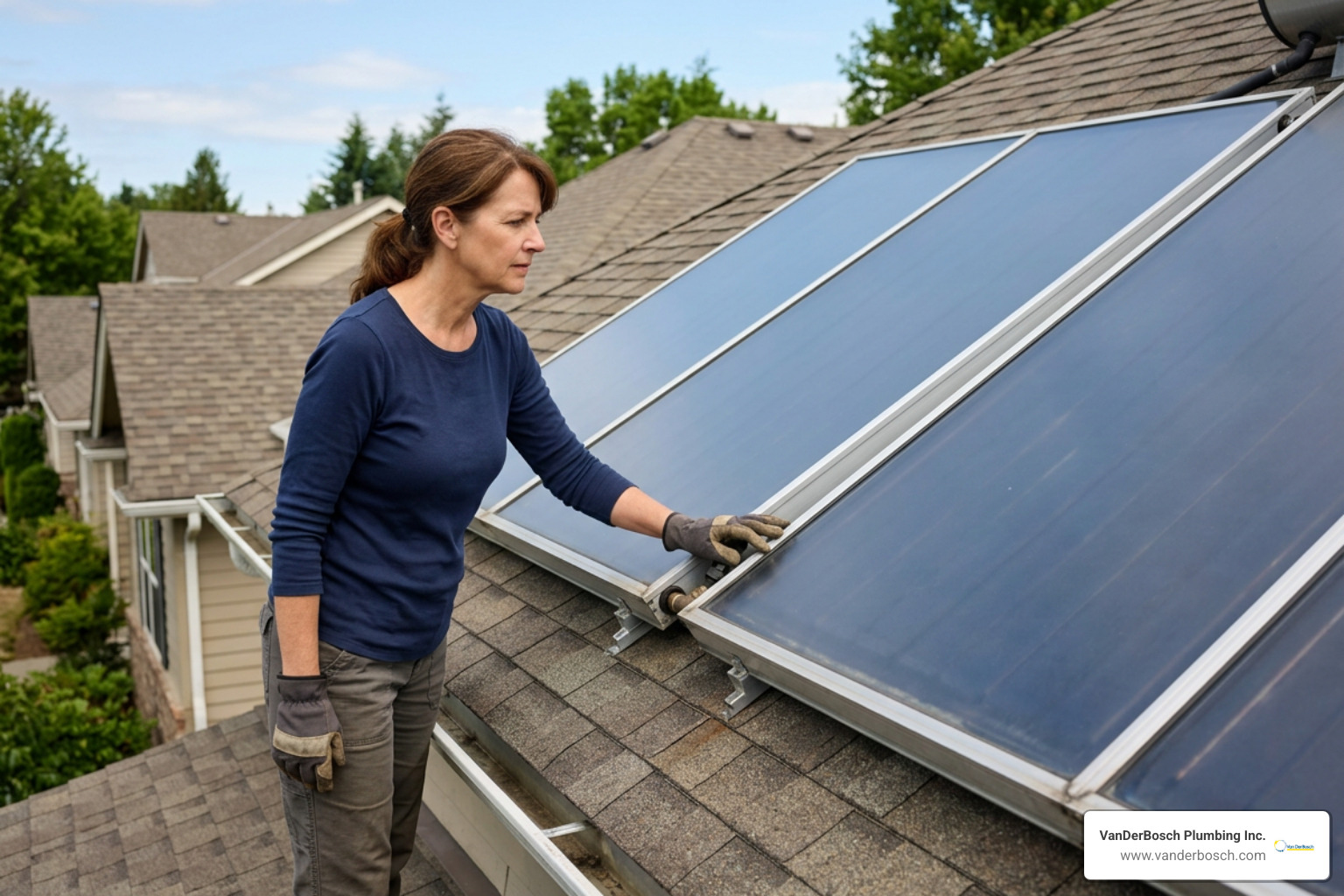
Preventive care is always far more affordable than emergency plumbing repairs. A structured maintenance schedule prevents minor issues—like a weeping valve or degrading fluid—from turning into catastrophic system failures or freeze bursts during a sub-zero Cook County winter.
When you practice proactive care alongside our comprehensive guide on Home Water Heater Maintenance, your entire domestic water heating infrastructure runs reliably.
Seasonal DIY Solar Hot Water Heater Maintenance Tasks
Homeowners can easily perform several safe, ground-level and basement checks every spring and autumn:
- Perform a Visual Ground Inspection: Use a pair of binoculars to examine roof-mounted collector panels. Look for cracked glass, broken evacuated tubes, loose mounting hardware, or dark fluid staining along lower roof flashing.
- Check for New Tree Shading: Over a few years, surrounding oak or maple branches can grow enough to shade your solar panels during peak midday hours (10 a.m. to 3 p.m.), cutting heat output. Trim back branches whenever necessary.
- Inspect Exposed Pipe Insulation: Solar fluid lines running outdoors endure intense UV radiation and weather extremes. Check that exterior foam pipe insulation hasn’t cracked, unraveled, or been chewed by squirrels. Replace damaged jacketing promptly to prevent heat loss.
- Monitor System Pressure and Temperature Gauges: Check the pressure gauge on your solar loop monthly. A sudden pressure drop indicates a slow fluid leak in the loop or a compromised expansion tank.
- Test the Expansion Tank Air Bladder: Lightly tap the top and bottom of your expansion tank. The air side should sound hollow, while the fluid side sounds solid. If the entire tank gives a dull, solid thud, the internal rubber diaphragm may be waterlogged and require professional replacement.
- Clean Collector Glass Carefully: Clean dirty panels using a soft cloth or non-abrasive sponge with mild soapy water. Always wash collectors early in the morning when glass is cool to avoid thermal shock.
What Included in Professional Solar Hot Water Heater Maintenance
While visual checks are great for homeowners, complete mechanical and fluid diagnostics require specialized equipment. Energy organizations and manufacturers recommend a thorough professional inspection and tune-up every 3 to 5 years (with basic annual system checks).
As detailed in technical standards like the SOLAR WATER HEATING SYSTEMS handbook, a licensed plumbing and solar technician conducts a rigorous multi-point service:
- Loop Pressure and Leak Diagnostics: Pressurizing the closed loop to verify zero pressure decay across fittings, roof penetrations, and heat exchangers.
- Thermal Fluid Concentration and pH Testing: Testing propylene glycol with a refractometer (for freeze point accuracy) and pH test strips to verify acidity levels.
- Differential Controller Calibration: Testing thermistor sensor resistance values with a multimeter against factory temperature curves to ensure exact pump timing.
- Safety Valve Operational Checks: Manually opening and testing safety relief valves and tempering valves to verify smooth shut-off without sticking or dripping.
- Flushing Heavy Sediment and Scale: Draining storage tanks to remove calcified mineral scale buildup and flushing heat exchanger loops with mild descaling agents.
- Electrical Diagnostic Checks: Checking pump motor amperage draw, capacitor health, heating element resistance, and wiring connections.
Managing Glycol Fluid, Sacrificial Anodes, and Limescale
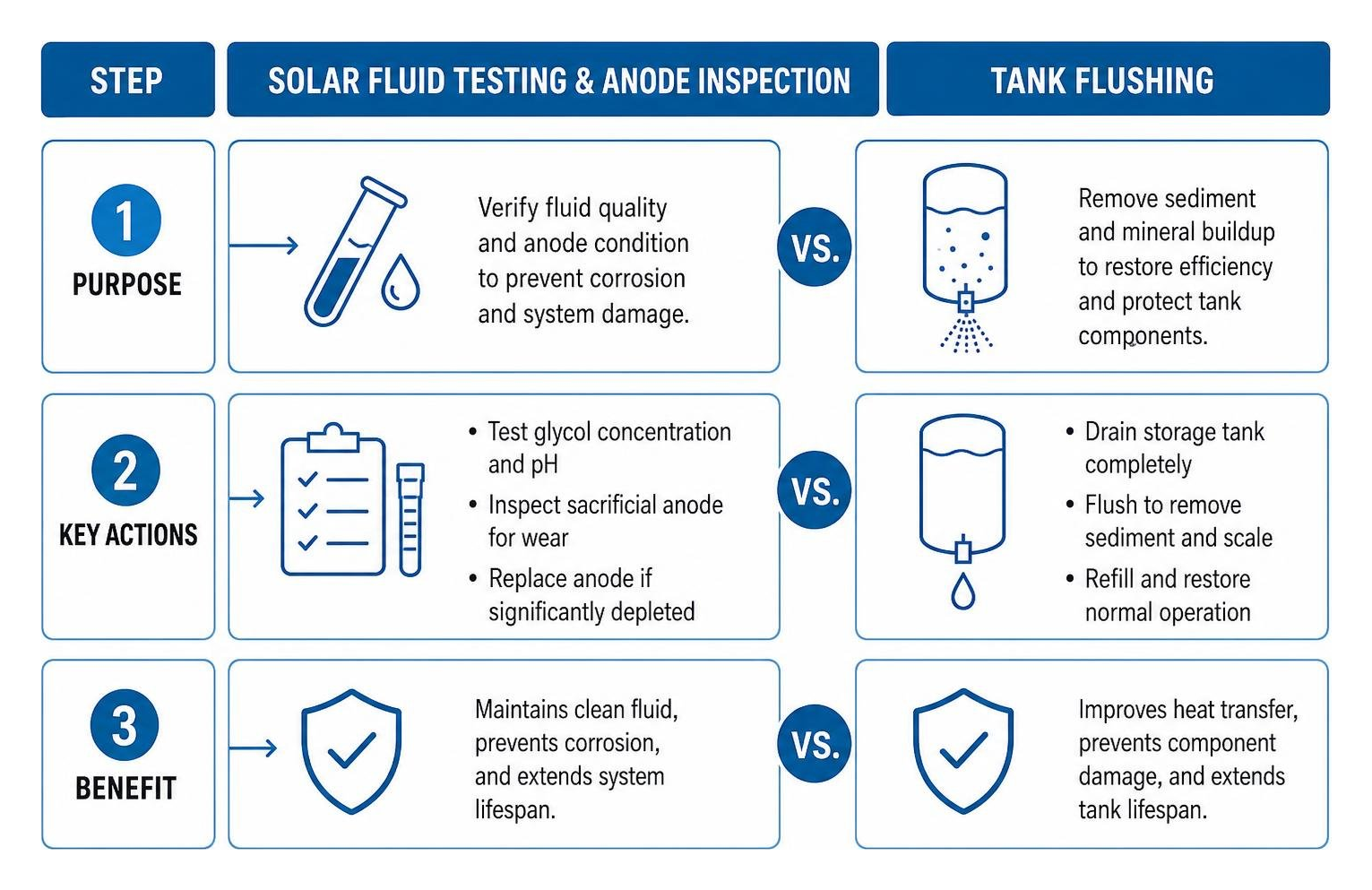
To help you keep track of core service intervals, we have summarized the primary maintenance routines for closed-loop active solar water heaters:
| Maintenance Routine | Primary Component Involved | Recommended Frequency | Key Objective & Risk Managed |
|---|---|---|---|
| Glycol Fluid Evaluation & Change | Closed Solar Loop & Heat Exchanger | Tested every 1–2 yrs; replaced every 3–5 yrs | Prevents acidic fluid corrosion and catastrophic freeze bursts |
| Sacrificial Anode Rod Replacement | Solar Storage Tank Interior | Inspected annually; replaced every 3–5 yrs | Protects steel tank walls from rust via cathodic protection |
| Storage Tank & Loop Descaling | Water Tank & Heat Transfer Coils | Flushed annually; descaled every 3–5 yrs | Removes calcified limescale that cuts heating efficiency by 5–20% |
Preventing Fluid Degradation and System Corrosion
In freezing Northern climates like Illinois, most solar water heaters rely on indirect closed-loop systems filled with non-toxic, food-grade propylene glycol antifreeze. Never use toxic automotive antifreeze (ethylene glycol) in a domestic solar water heater, as a heat exchanger breach could contaminate your drinking water!
Over time, exposed to extreme summer stagnation temperatures (when water in the tank is already fully heated but the sun keeps baking the roof collectors), propylene glycol degrades. As it breaks down, it turns acidic, dropping below a safe pH level of 7.5. Acidic glycol acts like liquid sandpaper inside copper piping, causing internal pitting corrosion and premature pump failure. Testing and replacing degraded glycol every 3 to 5 years is one of the single most critical steps in solar hot water heater maintenance.
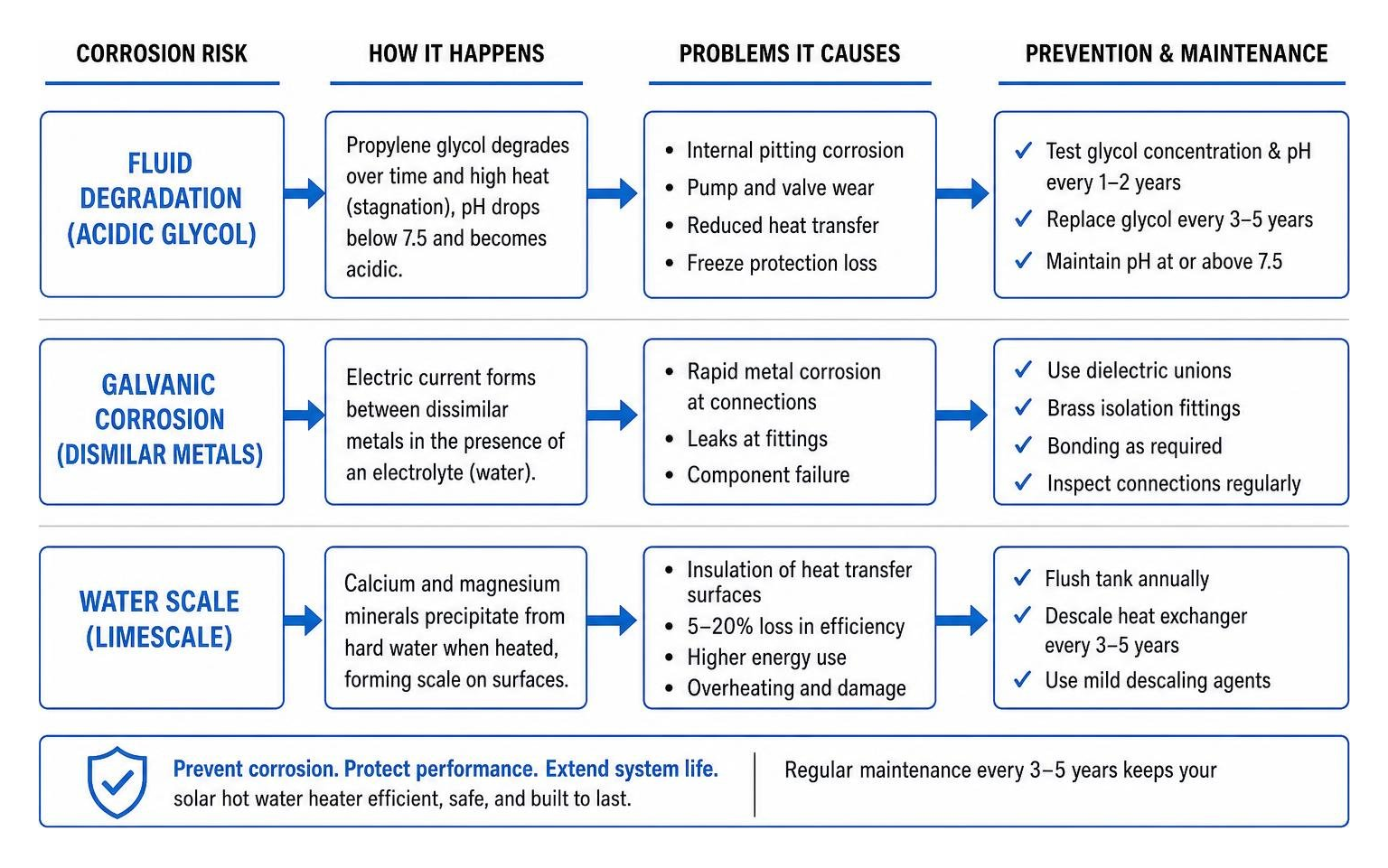
Corrosion also attacks the solar storage tank itself. Dissolved minerals in municipal and well water act as an electrolyte that corrodes exposed steel. Solar storage tanks prevent this using a sacrificial magnesium or aluminum anode rod. The anode rod purposefully corrodes first (cathodic protection), saving the inner steel tank lining. Once the anode rod wears out, the tank begins rusting directly. Replacing a $50 anode rod every 3 to 5 years protects your $2,000+ tank from premature failure!
Furthermore, when plumbing connection points join dissimilar metals—such as copper piping directly attached to a steel storage tank—galvanic corrosion occurs rapidly. Our technicians install dielectric unions and brass isolation fittings to block electrolytic reactions between metals.
Hard water is another hidden efficiency thief across Chicagoland, including areas like Roselle, Elmhurst, and Mount Prospect. Calcium and magnesium minerals precipitate out of heated water, coating lower heating elements and heat exchanger coils in thick, calcified limescale. Just 1/8 inch of scale buildup can reduce heat transfer efficiency by 5% to 20% annually! Flushing your tank annually and running a mild acidic flushing solution (such as food-grade citric acid or vinegar) through the solar heat exchanger loop every 3 to 5 years keeps heat transfer fast and efficient. For comprehensive plumbing support, explore our specialized Water Heater Services.
Warning Signs Your Solar Water Heater Needs Repair
How do you know if your solar water heater is struggling before you step into an ice-cold shower? Watch for these key warning signs:
- Lukewarm or Inconsistent Hot Water: If your system produces hot water during bright summer days but struggles on mildly overcast afternoons, your solar loop may have low fluid levels, trapped air locks, or a failing differential controller sensor.
- Sudden Spikes in Monthly Energy Bills: If your gas or electric utility bill suddenly jumps, your solar pre-heating loop may have stopped working entirely, forcing your backup electric element or gas burner to do 100% of the work unnoticed.
- Discolored or Oily Solar Fluid: If you notice pink, orange, or yellowish fluid dripping near your indoor expansion tank or relief valves, your glycol loop is leaking or blowing off fluid due to overheating. Clear water dripping indicates a potable plumbing leak.
- Grinding, Humming, or Gurgling Sounds: Loud humming or metallic rattling from your pump often points to dry-running caused by lost fluid pressure, an airlock, or worn motor bearings. Gurgling noises inside roof pipes indicate trapped air in the loop.
- Visible Pressure Drops: If your solar loop gauge continuously drops below its recommended static operating pressure (typically 25 to 40 PSI cold), you have an active fluid leak that needs professional repair.
If you spot any of these red flags, don’t wait until major components freeze or burn out. Review our practical guide on Signs Your Water Heater May Need Repair or Replacement to help diagnose whether you need a quick repair or a system check.
Climate Considerations and Common Maintenance Mistakes
Climate dictates how a solar water heater must be installed and maintained. In mild, frost-free regions, simple open-loop direct systems can heat domestic water directly in rooftop panels. But in Cook County and surrounding northern regions, winter temperatures regularly plummet far below freezing.
For cold climates, active indirect closed-loop glycol systems or specialized drainback systems are essential:
- Closed-Loop Antifreeze Systems: Circulate food-safe propylene glycol through collectors down to an internal tank heat exchanger. These require strict 3-to-5-year glycol testing to maintain freeze protection down to -20°F or lower.
- Drainback Systems: Use unpressurized pure water in the collector loop. Whenever the circulation pump stops, all water in the roof collectors automatically drains downhill into an indoor drainback reservoir tank via gravity. For a drainback system to work without freeze damage, all rooftop collectors and connecting copper lines must maintain a strict downward slope of at least 0.25 inches per foot (2.1 cm per meter). Slags or saggy copper pipes can trap pockets of water that freeze, split, and flood when thawed!
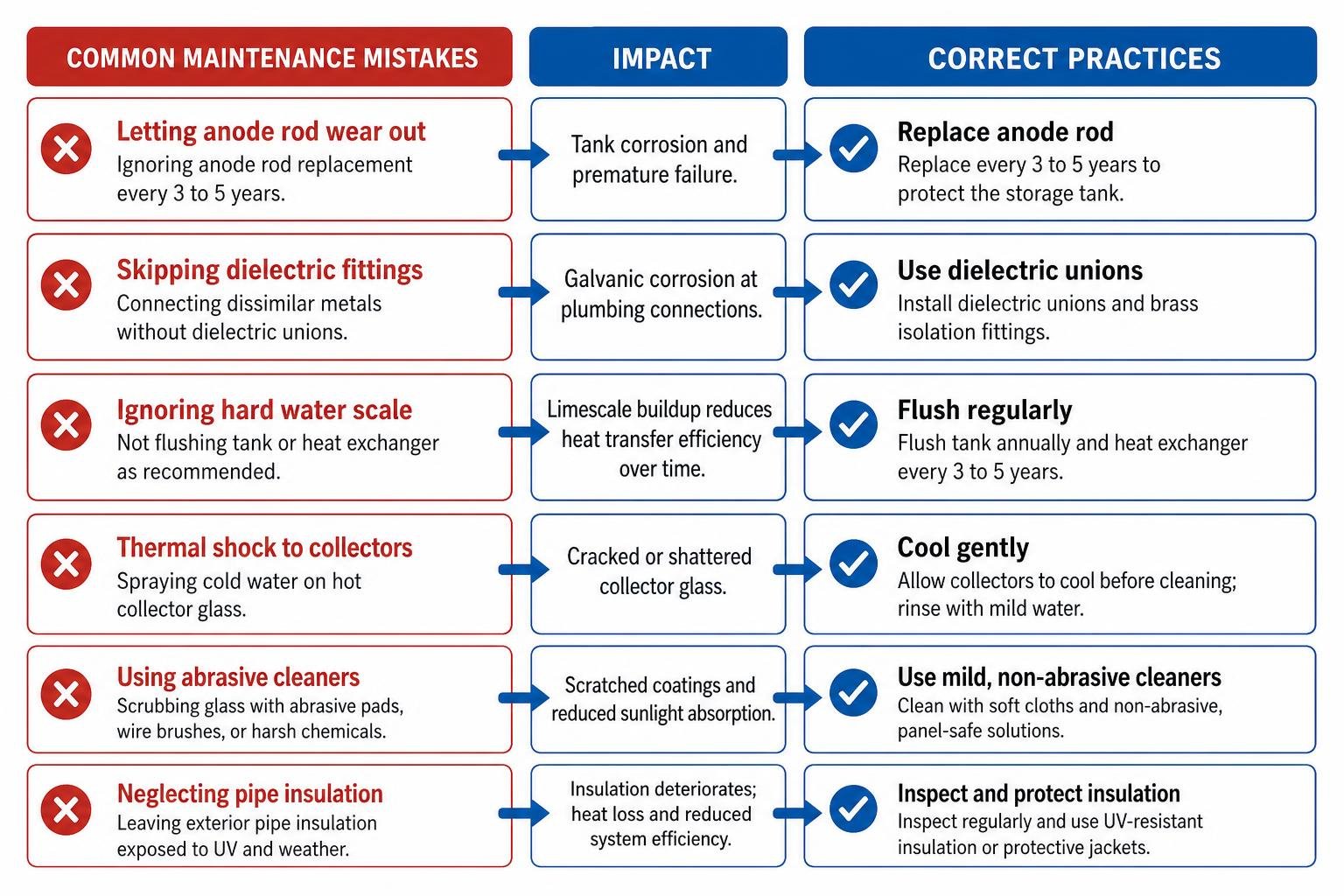
Homeowners often shorten their system’s lifespan through easily avoidable maintenance mistakes:
- Thermal Shock Damage: Spraying cold hose water on sun-baked solar collector glass on a hot afternoon can crack or shatter tempered glass instantly due to extreme thermal expansion stress.
- Using Abrasive Cleaners or Wire Brushes: Scouring dirty panel glass with abrasive pads, stiff wire brushes, or harsh chemical solvents scratches anti-reflective glass coatings, permanently reducing sunlight absorption.
- Neglecting Exterior Pipe Insulation: Leaving foam pipe insulation exposed to UV light causes it to crumble away within 2 to 3 years. Uninsulated outdoor pipes dump gathered solar heat right back into the cold outdoor air.
- Ignoring System Stagnation: Leaving a system running during long summer vacations with zero hot water usage causes extreme heat build-up. The collector loop overheats, bakes the glycol into acidic sludge, and blows open safety relief valves.
Role of System Controllers and Automated Monitoring
Modern digital differential controllers make maintaining a solar water heater far simpler than in decades past. Modern digital controllers continuously track temperature differentials between roof panels and storage tanks down to a fraction of a degree.
Advanced controllers feature real-time diagnostic alerts, digital temperature readouts, pump hour counters, and heat-yield energy meters. If a thermistor sensor fails, fluid circulation drops, or temperatures exceed safe thresholds, the controller immediately displays an error code or sounds an audible alarm. Equipping your system with a smart controller helps technicians pinpoint issues immediately, saving labor time and eliminating diagnostic guesswork during annual tune-ups.
Frequently Asked Questions About Solar Water Heating Care
How often should a solar water heater be professionally serviced?
We recommend a simple visual inspection and pressure check annually, paired with a full professional tune-up every 3 to 5 years. During the 3-to-5-year service, a technician must test glycol freeze-protection and pH levels, inspect and replace the sacrificial anode rod, test safety relief valves, calibrate electronic sensors, and flush internal scale deposits from the storage tank and heat exchanger.
How do you clean solar collector panels safely without causing damage?
To clean solar collector glass safely:
- Wash panels early in the morning or on a cool, overcast day when the glass is cool to the touch. This eliminates thermal shock risk.
- Use a soft cloth, microfiber mop, or non-abrasive sponge attached to an extension pole.
- Clean using clean water mixed with a mild, non-abrasive dish soap or specialized solar glass cleaner.
- Rinse thoroughly with low-pressure hose water. Never use high-pressure power washers, steel wool, or harsh chemical solvents that scratch or peel anti-reflective coatings. If your panels are mounted on a steep roof, hire an insured professional for safety.
What is the role of the sacrificial anode rod and when should it be replaced?
The sacrificial anode rod (made of magnesium or aluminum wrapped around a steel core) protects your solar storage tank from internal rust and corrosion through cathodic protection. Because magnesium is electrochemically more active than steel, corrosive minerals attack the anode rod instead of your tank’s inner walls. Anode rods should be inspected annually and replaced every 3 to 5 years—or sooner if more than 50% of the sacrificial metal has eaten away. Replacing this inexpensive rod prevents tank leaks and extends tank life significantly.
Conclusion
A residential solar hot water heating system is a fantastic long-term investment. Delivering free energy from the sun while cutting household carbon emissions by approximately 2,400 pounds of CO2 per year, a well-cared-for solar thermal setup offers lower lifetime operating costs than standard gas or electric units.
With consistent solar hot water heater maintenance—combining simple seasonal DIY visual checks with professional 3-to-5-year tune-ups—your solar hot water equipment can easily operate reliably for 20 to 30 years or more.
At VanDerBosch Plumbing Inc., we bring decades of licensed plumbing expertise to homes and businesses across Chicago, Cook County, and surrounding communities including Niles, Winnetka, Melrose Park, Oakbrook Terrace, Hyde Park, Sauganash, West Ridge, Ukrainian Village, and Roselle. We stand behind our work with a 100% satisfaction guarantee, transparent upfront pricing with zero hidden service charges, 24/7 emergency availability, and background-checked technicians.
Whether you are evaluating your current system, scheduling a 5-year glycol and tank tune-up, or learning about Choosing the Right Type of Water Heater for Installation, our team is ready to help. Contact VanDerBosch Inc. today to book your service check!