
Table of Contents
- How Steam Boilers Work in Older Homes
- Signs of Steam Boiler Failure You Should Never Ignore
- What You Can Safely Check Before Calling a Professional
- Boiler Repair vs. Replacement Cost Factors to Weigh
- Step-by-Step Maintenance Checklist for Vintage Steam Systems
- Modernization and Efficiency Retrofits for Old Steam Boilers
- When to Call for Steam Boiler Repair in Chicago’s Older Homes
- Frequently Asked Questions
Last Updated: September 16, 2026
How Steam Boilers Work in Older Homes
Steam boiler repair for old homes starts with understanding what’s in the basement. A steam boiler heats water into vapor, sends it through pipes to cast iron radiators, where it condenses and returns through the condensate return. No circulator pump moves the heat, pressure does the work.
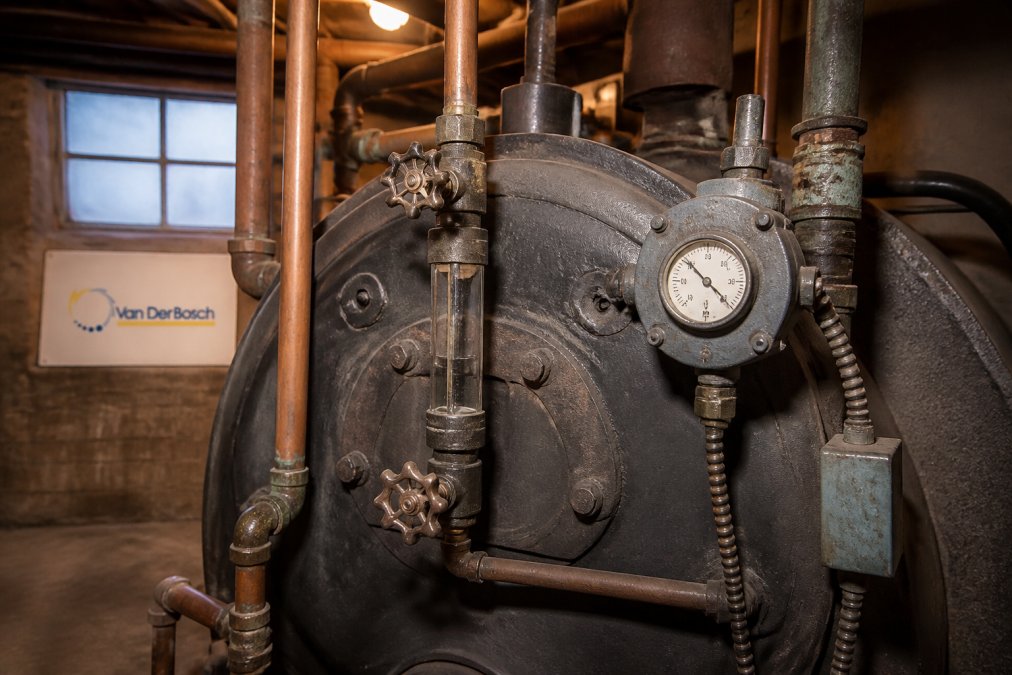
Key Components: Low Water Cut-Off, Pressuretrol, and Steam Traps
The low water cut-off shuts the burner down when water drops below a safe point. If it fails, the boiler can fire dry, a genuine hazard.
Signs of Steam Boiler Failure You Should Never Ignore
The clearest signs of steam boiler failure are a burner that won’t stay lit, cold radiators alongside hot ones, a sight glass that won’t hold level, and water pooling near the base. Any of these warrants professional diagnosis.
Watch for these symptoms:
- Uneven heat. Some radiators hot, others cold, often points to trapped air or a failed steam trap.
- Rust-colored water in the sight glass or bleeding from radiators.
- A boiler that short-cycles, firing briefly and shutting down repeatedly.
- Soot or yellowing at the burner, which suggests incomplete combustion.
- Any gas smell. Leave the building and call for emergency service. Do not attempt repairs.
Banging, Clanging, and Water Hammer Sounds
Clanging pipes usually mean condensate isn’t draining back and water is sitting in the pipes, where steam slams into it, water hammer. It’s not just noise; the force can crack fittings over time.
What You Can Safely Check Before Calling a Professional
Homeowners can safely check the thermostat, confirm the boiler has power, verify the sight glass water level, and make sure the gas valve is open. That’s the honest limit of safe DIY scope.
Reasonable checks:
- Thermostat is set to heat and calling for it
- Boiler power switch and breaker are on
- Sight glass shows water in the normal range
- Gas shutoff valve is open
- No water pooling around the base
- No gas odor anywhere in the basement
Boiler Repair vs. Replacement Cost Factors to Weigh
Repair is usually right when the boiler is otherwise sound and the failure is isolated to one component. Replacement makes more sense when multiple systems fail at once or the heat exchanger is compromised.
Weigh these factors:
- Age and repair history. A boiler with a long list of recent repairs is telling you something.
- Severity of damage. A cracked heat exchanger or a leaking section is generally not repairable.
- Recurring problems. Repeat failures on the same control point to a deeper issue.
- Efficiency and heating capacity. An undersized or oversized boiler never performs well.
- Accessibility. Tight basement access affects the labor involved in either path.
- Condition of surrounding components. Pipes, radiators, and near-boiler piping all factor in.
Age, Repair History, and System Condition
A well-maintained steam boiler can serve far longer than most modern equipment, so age alone shouldn’t drive the decision. What matters more is whether the pressure vessel is sound and the controls, traps, and piping are holding up.
Step-by-Step Maintenance Checklist for Vintage Steam Systems
Annual maintenance keeps an old steam system running safely through a cold snap. Most of it is inspection and tuning, not repair, and most of it is technician work. Homeowners observe and report; technicians test, adjust, and replace.
Here’s how the two sides split:
What a Homeowner Can Reasonably Do
- Check the sight glass weekly during heating season. The water line should sit at the mark on the glass. If it drops between checks, the system is losing water, a leak, failed feeder, or trap problem. Note it and call.
- Listen to the system on a cold start. A few ticks as pipes warm are normal. Sustained banging, knocking, or a whistle that doesn’t stop is not.
- Feel the radiators room by room. Cold at the bottom and hot at the top usually means water is sitting in the radiator; cold at the top and hot at the bottom means air isn’t venting. Both point to a vent or trap issue.
- Keep the boiler room clear. Boxes, paint cans, and decorations around a gas-fired boiler restrict combustion air and create a fire load, one of the most common and preventable problems in older basements.
- Watch for new rust streaks, soot, or water on the floor. Any of these is a call, not a wait-and-see.
What Belongs to a Technician
- Low water cut-off test. The low water cut-off is the most important safety control on a steam boiler and must be tested and flushed regularly, typically annually, more often on systems with dirty water. A cut-off that fails closed lets the boiler fire with no water, a genuine explosion risk.
- Boiler blowdown. Opening the blowdown valve drains sediment and sludge from the boiler bottom. Sediment insulates the heat exchanger, wastes fuel, and can make the water line read falsely high. Blowdown happens under pressure at scalding temperature, not a homeowner task.
- Steam trap inspection. A trap stuck open blows live steam into the condensate return and wastes fuel all winter; a trap stuck closed backs water into the radiator and causes water hammer. Traps are tested with a listening device or temperature check.
- Pressuretrol verification. The pressuretrol should be set to the system’s design pressure, which on most residential steam systems is measured in ounces, not pounds. A pressuretrol set too high stresses every joint and fitting in the system.
- Burner tune-up. Combustion is checked with an analyzer. A rich burner produces soot and carbon monoxide; a lean burner wastes fuel and shortens equipment life.
- Pipe insulation inspection. Damaged or missing insulation on steam mains and risers is heat you paid for and didn’t get. Repairing it is one of the highest-return maintenance items on an old system.
- Radiator vent and valve check. Air vents are wear items. A vent stuck closed keeps the radiator cold; one stuck open hisses steam and wastes heat.
Seasonal Timing
| Task | Frequency | Who Does It |
|---|---|---|
| Sight glass and radiator check | Weekly during heating season | Homeowner |
| Boiler room clearance and visual inspection | Monthly during heating season | Homeowner |
| Low water cut-off test and flush | Annually before heating season | Technician |
| Steam trap inspection | Annually before heating season | Technician |
| Boiler blowdown | Per manufacturer guidance | Technician |
| Burner tune-up and combustion test | Annually before heating season | Technician |
| Pipe insulation inspection and repair | Annually | Technician |
| Radiator vent and valve service | As needed, checked annually | Technician |
If you’re not sure when your system was last serviced, that’s the answer, it’s time. Schedule boiler service before the heating season starts.
Modernization and Efficiency Retrofits for Old Steam Boilers
You don’t have to rip out a working steam system to improve efficiency. These retrofits preserve the original radiators and piping while cutting fuel use, but each has a compatibility catch that generic advice skips, and each is where a technician who works on cast iron matters.
Thermostatic Radiator Valves
Thermostatic radiator valves replace the manual valve at each radiator with one that modulates steam flow by room temperature, often the biggest comfort improvement in a house where rooms were added over decades. The catch: steam systems need a valve rated for steam service, not the hot-water valves sold at most supply houses. A hot-water valve on a steam radiator will fail, and can fail open, leaving a room that never shuts off.
Steam Trap Repair and Replacement
Failed traps are the largest hidden efficiency loss on most old steam systems. A trap stuck open sends live steam into the condensate return, where it condenses and the heat is lost; a trap stuck closed backs water into the radiator and causes water hammer. Traps are wear items with a service life measured in years, not decades, and most old systems have at least one failed trap the owner doesn’t know about.
Pipe and Boiler Insulation
Steam mains and risers in an unheated basement lose heat all winter; insulating them is straightforward with fast payback. The catch: pipe insulation in a basement that has ever been wet needs inspection for deterioration, and some older materials require proper handling during removal. Boiler jacket insulation on a vintage boiler is often degraded and can be replaced without touching the pressure vessel.
Modern Controls and Smart Thermostats
A modern setback or smart thermostat can be added to a steam system, but steam heat responds slowly. Cast iron radiators hold heat long after the burner shuts off and take a long time to come back up. Aggressive setback schedules that work on forced-air systems can leave a steam-heated house cold in the morning and cause long recovery cycles.
What Retrofits Don’t Fix
Retrofits improve efficiency and comfort. They don’t fix a cracked heat exchanger, a leaking boiler section, or a dead low water cut-off. Those are repair-or-replace decisions, and no amount of insulation or new traps makes a compromised pressure vessel safe.
When a Full Conversion Makes Sense
If you’re weighing retrofits against replacement, talk to our boiler team about what your system actually needs.
When to Call for Steam Boiler Repair in Chicago’s Older Homes
Call for professional steam boiler repair when the burner won’t fire, the boiler loses water, radiators stay cold, or water hammer won’t quit. Those aren’t cosmetic issues, and they get worse in cold weather, not better.
Frequently Asked Questions
What are the most common signs that a steam boiler needs repair?
Loud banging or clanging pipes, uneven heating between rooms, a boiler that shuts off before reaching the set temperature, and visible water leaks around the boiler or radiators are all common indicators. A rising water level in the sight glass or a boiler that needs frequent refilling can point to internal issues. If you notice any of these signs, a licensed technician should inspect the system before the problem worsens.
Is it better to repair or replace an old steam boiler?
The decision depends on several factors: the boiler’s age, how often it has needed repairs, the severity of the current problem, and the condition of connected components like pipes and radiators. A single failed component on an otherwise sound system may be repairable. A boiler that has had multiple failures, is well past its expected service life, or has cracked sections may be a better candidate for replacement. A technician can assess your specific system and explain the trade-offs.
How often should a vintage steam boiler be serviced?
Annual servicing is recommended for steam boilers, especially in older homes where systems may have more wear. A yearly inspection lets a technician check the low water cut-off, test the pressuretrol, inspect steam traps, and look for leaks or corrosion before they cause a mid-winter breakdown. Regular maintenance can extend the life of the system and help it run more efficiently.
Why is my steam boiler making loud banging noises?
Banging or clanging sounds often come from water hammer, which happens when steam meets trapped water in the pipes or when condensate cannot drain properly. A dirty boiler, a faulty steam trap, or pipes that are not pitched correctly can all cause this. Ignoring the noise can lead to pipe damage or leaks. A technician can identify the source and recommend the right fix.
A steam boiler that’s banging, losing water, or leaving rooms cold won’t fix itself, and waiting usually means a bigger repair or a mid-winter emergency. VanDerBosch Plumbing Inc. brings licensed, insured technicians, no service charges, and same-day service to vintage steam systems across the area, seven days a week. Get started with VanDerBosch and get your heat back before the next cold snap.