
Table of Contents
- What Drives Tankless Water Heater Installation Cost
- Tankless Water Heater Installation Requirements
- Tankless Water Heater Conversion Cost: What Changes From a Tank System
- Tankless Water Heater Installation Cost Factors: Permits, Code, and Site Conditions
- Tankless Water Heater Installation Time: What the Project Timeline Looks Like
- Repair or Replace? Deciding When a Tankless Unit Is Worth Keeping
- How to Evaluate a Tankless Water Heater Installation Estimate
- Frequently Asked Questions
Last Updated: October 6, 2026
What Drives Tankless Water Heater Installation Cost
The tankless water heater installation cost you’re quoted reflects equipment, labor, and site conditions, not a flat rate. Two homes on the same street can receive very different figures because the work behind the wall rarely matches.
At VanDerBosch Plumbing Inc., the unit itself is only part of the equation. The rest is what it takes to connect it safely. Below, we’ll break down each factor so you can read an estimate with confidence.
Unit Capacity and BTU Rating
BTU rating measures how much heat a tankless unit can produce in an hour. Higher capacity costs more but serves more fixtures at once. Undersize the unit and you’ll get temperature swings every time someone runs a second shower, so capacity should follow your household’s actual demand, not the biggest number on the spec sheet.
Labor Hours and Installation Complexity
Labor is where estimates diverge most. A straightforward swap with a short, accessible vent run takes far fewer hours than a retrofit requiring new gas piping and a relocated exhaust. Complexity shows up in predictable places:
- Distance from the unit to an exterior wall for venting
- Whether the gas line needs upsizing
- Accessibility of the mounting location
Each adds time, and time is the largest variable in most quotes.
Tankless Water Heater Installation Requirements
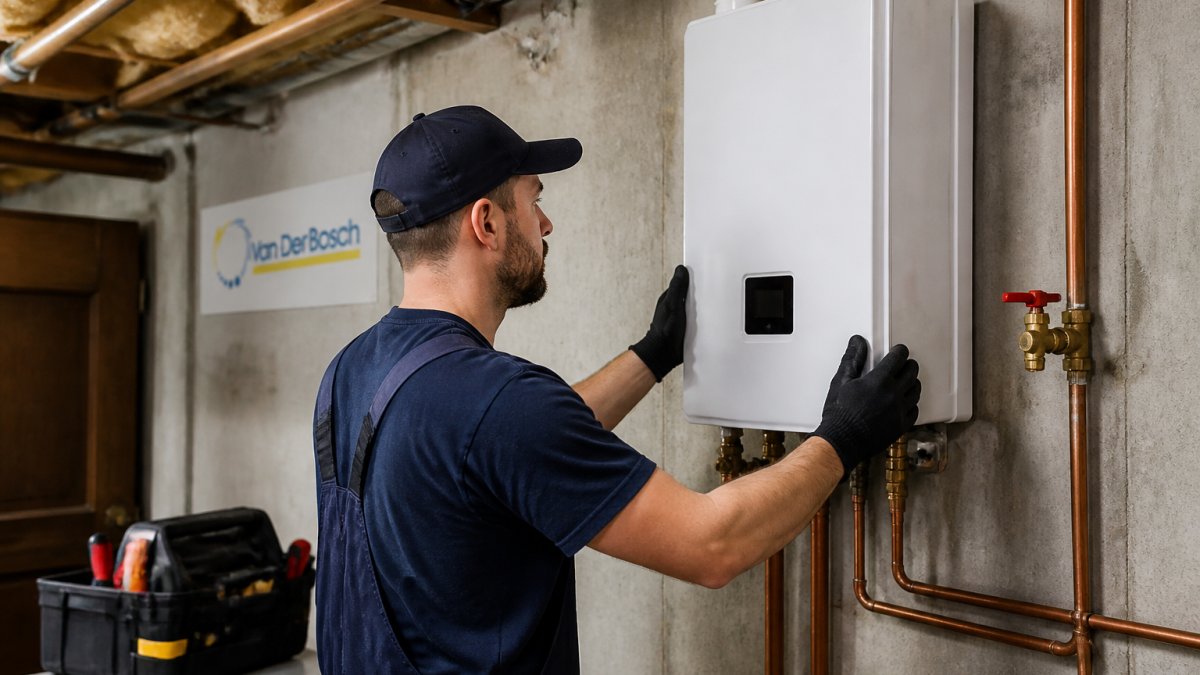
Tankless water heater installation requirements center on three systems: gas supply, venting, and electrical. These dictate what’s physically possible, so a unit that fits one home may be wrong for the next.
Gas Supply, Venting, and Electrical Needs
Gas-fired units need a supply line sized to match the unit’s BTU rating.
Venting matters just as much. Exhaust must route outdoors through approved materials, and run length and termination must meet local code.
Electric tankless models sidestep venting but typically require a dedicated circuit and often an electrical upgrade. That work belongs with a licensed electrician, not a homeowner.
Sizing for Household Demand and Flow Rate
Sizing is where most tankless regrets start. The unit must heat water fast enough to serve every fixture running at once, and that number, not square footage, sets required capacity. Three inputs drive the calculation:
- Peak flow rate, the combined gallons per minute (GPM) of every fixture likely to run at once. A standard shower head runs roughly 2.0-2.5 GPM, a bathroom faucet about 1.0-1.5 GPM, a kitchen faucet around 1.5-2.2 GPM, and a dishwasher or washing machine draws in bursts.
- Temperature rise, the gap between incoming ground water and your target output. Incoming water runs warmer in summer and colder in winter, so the same unit produces less hot water in January than in July.
- Ground water temperature, in northern climates, winter incoming water can sit in the low 40s°F, while summer water may reach the low 60s°F. That swing can cut a unit’s effective output by a meaningful margin, which is why sizing calculators built for warm climates steer homeowners toward undersized equipment.
A practical example: two showers, a kitchen faucet, and a dishwasher running together can demand 6-8 GPM at a 60-70°F rise. A unit rated for that flow at a 40°F rise won’t keep up in winter, showing up as temperature swings whenever a second fixture opens.
What to Check Before You Commit to a Unit
Before choosing a model, confirm:
- The gas meter and service line can deliver the unit’s rated BTU input alongside the furnace, range, and dryer.
- There is a code-compliant vent path to an exterior wall within the manufacturer’s allowed run length.
- The electrical panel has capacity for the controls, igniter, and any recirculation pump.
If any are in question, a licensed plumber should evaluate the site before a unit is ordered. Replacing a tank heater with a tankless model is not a like-for-like swap.
Tankless Water Heater Conversion Cost: What Changes From a Tank System
Tankless water heater conversion cost is usually higher than a like-for-like replacement because you’re changing the system, not just the box. A tank heater stores hot water; a tankless unit heats on demand, and that difference ripples through the installation.
What typically changes:
- Gas line sizing to match higher demand
- New venting routed to an exterior wall
- Electrical work for controls or a dedicated circuit
A conversion also means removing and disposing of the old tank. If you’re weighing whether the switch makes sense, our water heater repair and installation team can walk through your setup.
Tankless Water Heater Installation Cost Factors: Permits, Code, and Site Conditions
Permits, code compliance, and site conditions are the factors homeowners most often overlook when budgeting. They’re also the ones most likely to change a quote after work begins.
Permits and Inspections
Most jurisdictions require a permit for water heater replacement and gas work, followed by an inspection. Permit fees vary by municipality, and the inspection must pass before the job is complete, so the permit is a scheduled project step, not just a fee. A few things to know:
- Permit fees are usually set by the local building department and scale with the scope of work, not the equipment cost.
- Gas work and venting changes typically trigger a separate inspection from the plumbing rough-in.
- Some jurisdictions require the permit to be pulled by the licensed contractor performing the work, not the homeowner.
Ask any contractor to list permit and inspection costs as separate line items on the estimate. Bundled fees make it impossible to compare quotes fairly.
Code Requirements That Shape the Scope
Code requirements are not uniform, but a few themes show up across most jurisdictions:
- Venting, material, slope, run length, and termination point are specified. A vent exiting too close to a window, door, or air intake will fail inspection.
- Combustion air, gas-fired units need adequate air supply, which can require added openings or ducting in tight mechanical rooms.
- Gas line sizing, the line must deliver the unit’s rated BTU input at the required pressure, often meaning upsizing from the tank heater’s line.
Because these rules vary by jurisdiction, verify with the local authority having jurisdiction (AHJ) before work begins. A contractor who has pulled permits in your area will already know the local interpretation.
Site Conditions That Add Labor
Site conditions add their own layer. Older homes may have undersized gas lines, corroded fittings, or a vent path blocked by finished walls. Common examples:
- A finished basement ceiling that must be opened to run a new vent or gas line.
- A gas meter on the opposite side of the house from the water heater.
- A mechanical room too tight to meet combustion air or clearance requirements.
Each is a known cost driver, and a good estimate will call them out before work starts rather than after.
Rebates, Tax Incentives, and Financing
Upfront cost is not the same as net cost. Federal tax credits, utility rebates, and manufacturer promotions can offset part of a qualifying tankless installation.
- Federal incentives for high-efficiency water heating have changed over time; verify current rules and efficiency thresholds at purchase.
- Utility rebates are often tied to specific efficiency ratings and may require the installing contractor to submit paperwork.
- Manufacturer promotions typically have expiration dates and may require registration.
VanDerBosch Plumbing Inc. can walk through your setup, explain what permits and inspections your project requires, and help you understand which cost factors apply before work begins.
Tankless Water Heater Installation Time: What the Project Timeline Looks Like
Tankless water heater installation time ranges from a few hours for a simple swap to a full day or more when gas, venting, or electrical work is involved. The timeline follows the scope, not a fixed schedule.
U.S. Department of Energy guidance on water heating notes that proper sizing and installation affect both performance and operating efficiency, which is why rushing the setup rarely pays off.
Step-by-Step Overview of a Typical Install
Here’s how a professional install generally unfolds:
- Assessment and permit – Confirm sizing, gas capacity, and vent path; pull required permits.
- Shutdown and removal – Isolate gas and water, drain and remove the old tank.
- System modifications – Upsize gas lines, run new venting, or add electrical circuits as needed.
- Mounting and connection – Secure the unit, connect gas, water, and condensate drain lines.
- Testing and inspection – Check for leaks, verify flow and temperature, pass inspection.
- Cleanup and walkthrough – Restore the area and review operation with you.
Expected result: consistent hot water at the fixtures you specified, with the installation signed off by inspection.
|
Phase |
Typical Duration |
What Happens |
|---|---|---|
|
Assessment and permit |
Same day to a few days |
Sizing, gas check, permit filing |
|
Removal and modification |
2-5 hours |
Old tank out, gas and vent work |
|
Mounting and connection |
2-4 hours |
Unit set, lines connected |
|
Testing and inspection |
1-2 hours |
Leak check, code sign-off |
Repair or Replace? Deciding When a Tankless Unit Is Worth Keeping
Repair usually makes sense when a tankless unit is relatively new, the problem is isolated, and parts are available. Replacement tends to win when failures repeat or the unit no longer meets household demand. Work through these factors:
- Age and repair history – A unit with recurring issues may cost more over time than a replacement.
- Severity of the fault – A failed control board differs from a cracked heat exchanger.
- Efficiency and capacity – If your household has outgrown the unit, repairs won’t fix the shortfall.
We don’t push replacement when a repair is the reasonable call. Sometimes a descaling service or a replaced part is all a unit needs.
How to Evaluate a Tankless Water Heater Installation Estimate
A useful estimate separates equipment, labor, and materials so you can see where the money goes. A lump sum with no breakdown makes it impossible to compare like with like. Ask for these line items:
- Unit price and model number
- Labor hours and rate
- Materials – copper pipe, pipe fittings, ball valves, shutoff valve, pressure relief valve, condensate drain
Federal Trade Commission guidance on home improvement contracts advises getting written estimates and understanding what’s included before signing. That applies directly to plumbing work.
VanDerBosch Plumbing Inc. provides transparent pricing with no service charges. Our technicians are licensed and insured, and we back new equipment with a 90-day warranty.
Comparing tankless water heater installation cost estimates can feel like reading three different languages. The right approach is to compare scope, not just totals. VanDerBosch Plumbing Inc. offers same-day service, seven-day availability, and a 100% satisfaction guarantee, with no service charges to come take a look. Explore our tankless water heater installation service or call today to schedule your assessment.
Frequently Asked Questions
What factors affect the cost of installing a tankless water heater?
The biggest drivers are the unit’s BTU rating and heating capacity, whether your home has natural gas or propane, and how much modification the existing gas line, venting, and electrical system need. Labor hours, permit fees, and whether the install is a replacement or a first-time conversion from a tank system also affect the total. Because every home’s plumbing layout is different, the only reliable number comes from an on-site assessment and a written quote.
Does installing a tankless water heater require changes to gas lines or venting?
Often, yes. Many tankless units need a larger gas line than a tank water heater used, and they require a dedicated vent, either concentric PVC or stainless steel, rather than the atmospheric vent a tank unit typically uses. Electric models may need a dedicated circuit or panel upgrade. A plumber should confirm your existing connections, gas meter capacity, and vent path before quoting the job.
How long does tankless water heater installation take?
A straightforward swap where gas, venting, and water connections already meet code can often be completed in a few hours. A conversion from a tank system, or a job that requires new gas piping, venting runs, or an electrical upgrade, usually takes longer and may span more than one visit. Your plumber can give a realistic timeline after inspecting the installation site.
Is it worth converting from a tank water heater to a tankless model?
It depends on your hot water demand, available space, and how long you plan to stay in the home. Tankless units free up floor space and heat water on demand rather than storing it, which some homeowners prefer. The trade-off is a higher upfront installation cost, especially if gas line or venting work is needed. A plumber can help you weigh the conversion against simply replacing your existing tank.