
Table of Contents
- What Professional Water Heater Installation Involves
- Water Heater Installation Process: Step-by-Step
- Tank vs. Tankless Water Heater: Which System Is Right for You
- Water Heater Sizing: Getting the Right Capacity
- Water Heater Repair vs. Replacement: Making the Decision
- Why Licensed and Insured Technicians Matter
- Schedule Your Water Heater Installation Today
- Frequently Asked Questions
Last Updated: October 9, 2026
What Professional Water Heater Installation Involves
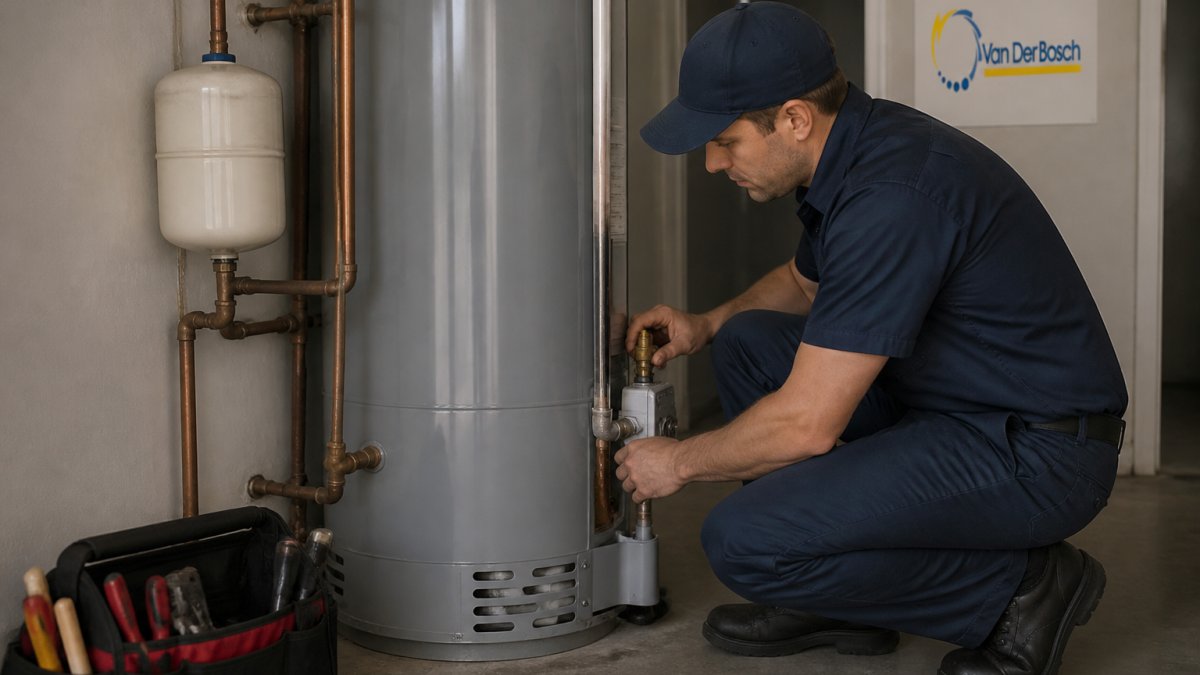
Professional water heater installation requires assessment, careful removal, code-compliant work, and thorough testing. At VanDerBosch Plumbing Inc., we handle each step so your system operates safely.
Site inspection and sizing
Before installation, a licensed plumber assesses the location, existing plumbing connections, gas or electric supply, and venting to determine whether your setup can accommodate the new unit or needs modifications.
Sizing is critical: an undersized unit runs out of hot water at peak usage, while an oversized one wastes energy and space.
Removal of the old unit
Removing the old unit means draining the tank, then disconnecting water lines, gas or electric connections, and venting. This prevents water damage, gas leaks, and electrical hazards, and the unit must be disposed of per local regulations.
Installation and connection
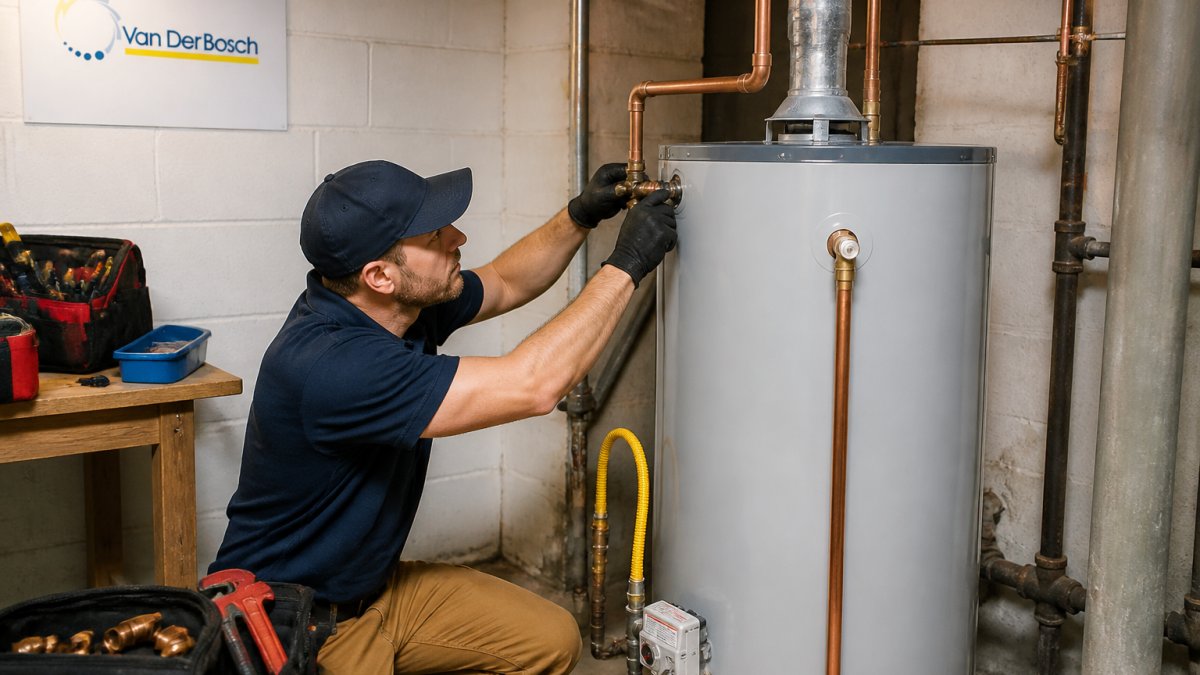
The new unit is positioned per code clearances from walls, combustibles, and access points.
Testing and verification
Before the system is used, the technician tests for leaks, water temperature, gas ignition, pressure relief function, and venting integrity, correcting issues before the job is complete.
Water Heater Installation Process: Step-by-Step
Here is what happens between the estimate and the first hot shower, including the permit and inspection steps most pages gloss over.
Step 1: Assessment and written scope
The technician confirms unit type, fuel source, capacity, and location, then checks whether the existing gas line, electrical circuit, venting, and water connections can support the replacement.
You should leave this step with a written scope that names the unit, the connections being made, and what happens to the old equipment.
Step 2: Permits and code requirements
Most jurisdictions require a permit before a water heater is replaced. The permit triggers an inspection that verifies the safety-critical parts of the job, and a licensed plumber typically pulls it and schedules the inspection.
What inspectors commonly look at:
- Venting: correct material, correct slope, proper termination, and adequate combustion air for gas units.
- Temperature and pressure relief valve: correct valve, correct discharge piping, and a discharge path that will not scald anyone standing nearby.
- Gas connections: approved fittings, leak testing, and correct pipe sizing for the unit’s input.
- Electrical: correct circuit, disconnect, and bonding where required.
- Clearances and access: space from combustibles and enough room to service the unit.
Skipping the permit creates problems later: unpermitted work can surface during a home sale, insurance claim, or future inspection, and correcting it usually costs more than doing it right the first time.
Step 3: Preparation and safety shutdown
Before removal, the water supply is shut off, the tank drained, and the fuel or power source isolated.
This is also when the work area gets cleared. If your utility space is packed with storage, moving it beforehand shortens the job and reduces damage to your belongings.
Step 4: Removal and disposal
An old tank holds several gallons of water even after it stops flowing freely, and sediment keeps it heavy. The unit is disconnected, removed, and disposed of properly, since many areas do not allow water heaters at the curb.
Step 5: Installation and connection
The new unit is set with correct clearances, then connected: water lines with shut-off valves, gas or electrical connections to manufacturer specifications, and sealed venting. On a tankless conversion, gas line upsizing, venting changes, or electrical upgrades happen here.
Step 6: Testing and verification
Before the job is called complete, the technician verifies:
- No leaks at any water connection.
- Correct outlet water temperature.
- Proper ignition and combustion on gas units, with no leaks at gas connections.
- The temperature and pressure relief valve operates correctly.
- Venting is intact and exhaust is leaving the space safely.
- The unit cycles on and off as designed.
Step 7: Cleanup and homeowner walkthrough
A complete job includes cleanup and a walkthrough covering thermostat setting, maintenance, and warning signs that should prompt a call. With hard water, ask about flushing intervals, since sediment buildup is a common reason tank units lose capacity and efficiency.
How to prepare before the crew arrives
- Clear the area around the old unit, including the path to the stairs or door.
- Confirm access to the gas shut-off, the electrical panel, and the water shut-off.
- Move anything stored near the unit that could be damaged by water or handling.
- Secure pets and children away from the work area.
- Have your questions ready: permit handling, inspection, warranty terms, and what the scope does and does not include.
The two questions that separate a thorough installation from a rushed one are simple: who pulls the permit, and what does the inspection cover? If a contractor cannot answer both clearly, that is a signal to keep looking.
If your unit is failing, water heater repair may be the right first step, and a professional assessment will tell you whether repair or replacement makes more sense.
Tank vs. Tankless Water Heater: Which System Is Right for You
Choosing between a traditional tank water heater and a tankless model involves weighing reliability, upfront cost, space, energy use, and your household’s hot water needs.
Tank water heaters: reliability and cost
Tank units are straightforward, durable, and relatively inexpensive to install, and repairs are usually simple.
Tank water heaters typically last 10-15 years. Replacement is straightforward since your existing plumbing and venting are already designed for a tank unit.
Tankless water heaters: efficiency and space
A tankless water heater heats water on demand as it flows through the unit.
Tankless units take up minimal space, ideal where basement or utility closet room is limited, and are more energy-efficient for moderate to high demand, potentially offsetting the higher upfront cost over time. Tankless water heater installation requires careful assessment of your home’s gas and electrical infrastructure to ensure compatibility.
The trade-off: tankless units cost more to purchase and install and often require gas line or electrical upgrades.
Tankless water heaters typically last 15-20 years, longer than tank units.
Conversion considerations
Converting from tank to tankless is not always straightforward. Gas-fired units may need a larger gas line, electric units a dedicated 240-volt circuit, and venting requirements differ.
A professional assessment determines whether your home’s infrastructure supports a tankless conversion and what upgrades are necessary.
Water Heater Sizing: Getting the Right Capacity
An undersized water heater runs out of hot water at peak usage, while an oversized unit wastes energy. Proper sizing balances your household’s needs with efficiency.
Calculating household demand
A licensed plumber evaluates household size, bathroom count, and typical hot water usage.
Tank capacity is measured in gallons; tankless capacity in gallons per minute (GPM) flow rate. A professional calculates the right size for your situation.
Undersizing and oversizing problems
An oversized tank wastes energy heating more water than you need. An oversized tankless unit wastes money on unnecessary capacity and may have longer warm-up times in some models.
Proper sizing ensures adequate hot water without paying for excess capacity.
Water Heater Repair vs. Replacement: Making the Decision
When your water heater fails, the repair-versus-replacement decision depends on practical factors. There is no universal rule.
Age and warranty status
A unit 5-7 years old and still under warranty is usually worth repairing.
Most tank water heaters last 10-15 years; tankless units often last 15-20 years, so repair may still make sense for an older unit if the cost is reasonable.
Repair history and frequency
A unit needing multiple repairs in the past year is showing declining reliability, and each repair adds up.
If you have already spent significantly on repairs recently, replacement may be more economical than continuing to patch problems.
Energy efficiency and long-term costs
An older water heater runs less efficiently than newer models. If your energy bills are noticeably high and the unit is aging, a modern efficient replacement may pay for itself through lower utility costs.
A professional can compare repair cost against replacement cost plus the energy savings a new unit would provide.
| Factor | Repair Makes Sense | Replacement Makes Sense |
|---|---|---|
| Age | Under 10 years | Over 12 years |
| Repair cost | Under 50% of replacement | Over 50% of replacement |
| Repair history | First or second repair | Multiple repairs in past year |
| Warranty | Still covered | Expired or minimal coverage |
| Energy efficiency | Acceptable | Noticeably high utility bills |
Why Licensed and Insured Technicians Matter
Every page says licensed, insured, professional, but that tells you nothing about what to verify before someone touches a gas line or 240-volt circuit in your home. Here is what those credentials mean in practice.
What licensing actually covers
Plumbing licensing is handled at the state and local level, and requirements differ by work type. A journeyman works under a licensed contractor; a master plumber can pull permits and supervise work.
Licensing is tied to code knowledge, not just trade skill.
What insurance actually protects
General liability insurance covers property damage during the job, such as water damage from a failed connection or damage to finishes during removal. Workers’ compensation covers technician injuries on your property, and if a contractor is uninsured, that exposure can come back to you.
Ask for a certificate of insurance before work starts, not after.
What to verify before you hire
- License number and status: ask for the license number and confirm it is active with the issuing authority.
- Insurance certificate: request a current certificate of general liability and workers’ compensation coverage.
- Permit handling: ask directly whether the company pulls the permit and whether the work will be inspected.
- Scope in writing: the written scope should name the unit, the connections being made, venting work, and what happens to the old unit.
- Warranty terms in writing: ask what is covered on labor and what is covered by the manufacturer on parts, and get it in writing.
A quick way to filter contractors: ask who pulls the permit. Companies that routinely skip permits tend to skip other steps too, because the inspection is what forces the venting, relief valve, and gas connection details to be correct.
Why this matters more in older housing stock
Older homes in the region frequently have original venting, undersized gas lines, or utility spaces never designed for a modern unit.
If you want to understand what a professional installation includes before you commit, review the water heater repair and installation services offered and ask about permit handling and inspection during your estimate.
Schedule Your Water Heater Installation Today
Water heater installation is a job for licensed professionals.
Contact VanDerBosch Plumbing Inc. to discuss your water heater installation needs. Our licensed and insured technicians will assess your home, recommend the right system, and handle the complete installation with code compliance.
Frequently Asked Questions
What should I expect during professional water heater installation?
A licensed technician will inspect your current setup, remove the old unit, install the new one, connect all water and gas or electrical lines, and test the system for proper operation. The process typically takes several hours. You’ll receive information about your warranty, maintenance needs, and how to operate the new system.
Is it cheaper to repair or replace a water heater?
That depends on the unit’s age, the type of repair needed, and how often you’ve had problems. A water heater nearing the end of its lifespan may not be worth repairing, even if the immediate fix seems less expensive. A professional inspection can help you understand whether repair or replacement makes sense for your situation.
How do I know what size water heater my home needs?
Size depends on your household’s peak hot water demand, which includes the number of people, simultaneous uses (showers, laundry, dishwasher), and your usage patterns. A professional installer will evaluate your home’s needs during the site inspection and recommend the appropriate capacity or flow rate for your situation.
Can I replace a tank water heater with a tankless model?
Yes, but there are considerations. Tankless systems require different venting, gas line sizing, or electrical upgrades depending on the fuel type. Your home’s plumbing layout and water pressure may also affect performance. A licensed installer can assess whether conversion is practical and what modifications your home may need.
If you’re facing a water heater failure or considering an upgrade, don’t delay. A professional water heater installation from VanDerBosch Plumbing Inc. ensures your system is sized correctly, installed to code, and tested thoroughly before you rely on it. Call today to schedule a consultation and get a clear understanding of your options.