
Table of Contents
- Water Heater Emergency Signs That Need Immediate Attention
- What to Do Before a Plumber Arrives
- Water Heater Repair vs. Replacement: Making the Right Choice
- What Happens During a Water Heater Repair Service Call
- Why 24/7 Emergency Response Matters for Water Heater Failures
- Questions to Ask Before Hiring an Emergency Plumber
- Frequently Asked Questions
Last Updated: October 12, 2026
Water Heater Emergency Signs That Need Immediate Attention
A water heater failure at 2 AM is nobody’s idea of an emergency you want to handle alone, which is why emergency water heater repair from a licensed professional is so important. Recognizing the warning signs of a serious water heater problem can mean the difference between a quick repair and a flooded basement.
The most critical emergency signs require immediate professional attention. Don’t wait for business hours if you notice any of these conditions.
Leaking water heater
A leak from your water heater tank itself is almost always a sign the unit needs to be replaced. Unlike a leaking connection or fitting, which a plumber can sometimes repair, a leak from the tank body means the steel has corroded through.
Active leaks create two urgent problems. First, you’re losing hot water and wasting energy. Second, pooling water in your basement or utility room can damage flooring, drywall, and stored items.
Small drips from fittings at the top of the tank are different. These can sometimes be tightened or repaired without replacing the entire unit. Still, any visible leak deserves professional diagnosis rather than guesswork.
No hot water or sudden loss of heat
Waking up to cold showers is frustrating, but it’s not always an emergency. However, if you’ve had hot water and it suddenly stops, or if you never get hot water even after running the tap for several minutes, something is wrong.
The cause could be a failed heating element, a broken thermostat, a tripped circuit breaker, or a gas control valve that’s malfunctioning. Some of these are quick fixes. Others mean the unit is nearing the end of its life.
If your water heater is electric, check your circuit breaker panel first. A tripped breaker can cut power to the unit. If the breaker has tripped repeatedly, that’s a sign of an electrical problem that needs professional attention.
Unusual noises or pressure relief valve discharge
A water heater that’s making loud popping, rumbling, or cracking sounds is telling you something is wrong. These noises usually mean sediment has built up inside the tank, or the heating element is failing. The sound gets worse as the unit ages, and it’s often a sign the tank won’t last much longer.
Water actively spraying or dripping from the pressure relief valve (a small pipe that typically runs down the side of the tank) is another red flag. This valve opens when pressure inside the tank gets too high.
Both of these conditions warrant a professional inspection. Unusual noises and pressure relief discharge don’t always mean immediate replacement, but they do mean the unit should be evaluated soon.
What to Do Before a Plumber Arrives
Taking a few quick steps before emergency service arrives can prevent further damage and help the technician diagnose the problem faster.
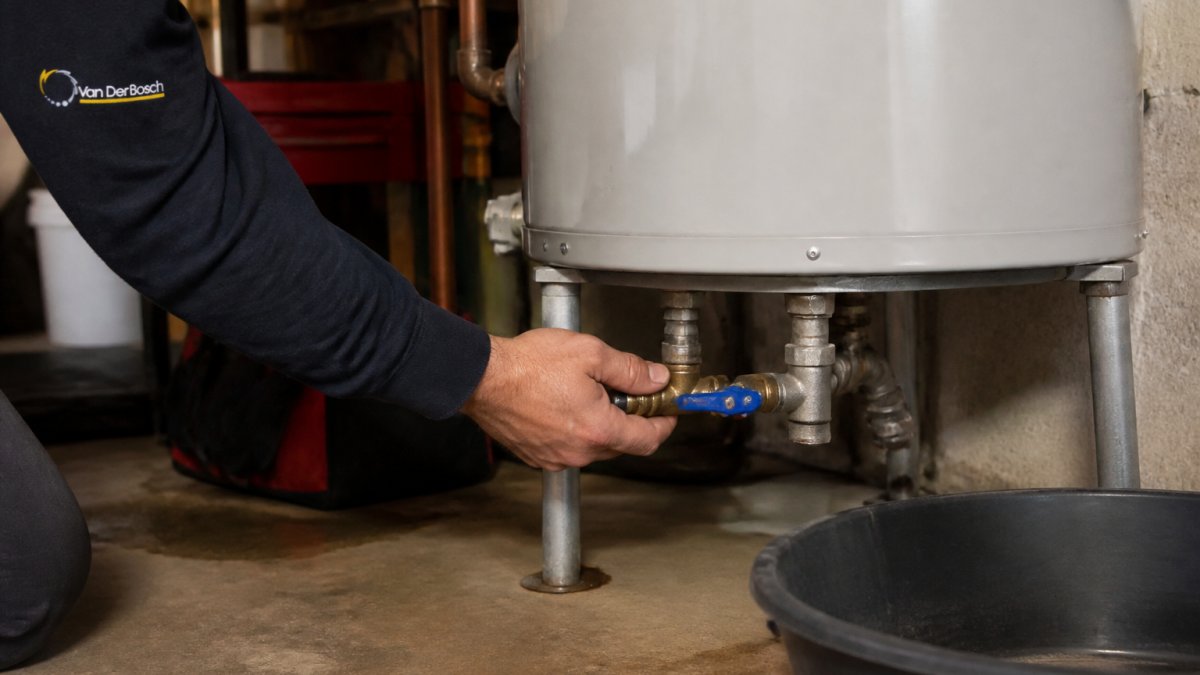
Shut off the water supply
If your water heater is leaking, the first thing to do is stop the water flow. Most water heaters have a shut-off valve at the cold water inlet, typically located at the top of the tank. Turn this valve clockwise until it stops. You’ll need to turn it by hand or with a wrench, depending on the valve type.
If you can’t locate the valve or it won’t turn, shut off the main water supply to your home. This is usually located near your water meter or where the water line enters the house.
Turn off power to the unit
For electric water heaters, switch off the breaker that controls the unit. You’ll find this in your home’s electrical panel. For gas water heaters, turn the control knob on the gas valve to the “off” position. Don’t try to relight it yourself. A professional should inspect the gas control and ignition system before the unit runs again.
Turning off power or gas prevents the heating element or burner from running while the tank is compromised. This is a safety measure that reduces the risk of damage or injury.
Document the problem with photos
Take a few photos of the leak, the water pooling, or any visible damage. Photos help the technician understand what happened and can be useful if you need to file an insurance claim. Capture wide shots showing the location of the damage and close-ups of the actual leak or problem area.
Note the time you discovered the problem and what you observed. Was the water hot or cold? Did you hear any unusual sounds before the leak started? These details help the technician narrow down the cause.
Water Heater Repair vs. Replacement: Making the Right Choice
When a water heater fails, the question isn’t always “replace it immediately.” Sometimes repair is the right call. Other times, replacement saves money in the long run. Here’s how to think through the decision.
Age of the unit
The age of your water heater is one of the strongest indicators of whether repair or replacement makes sense. Most tank water heaters last between 8 and 12 years. Tankless models often last 15 to 20 years (Save More with ENERGY STAR Gas Tankless Water Heaters).
A younger unit with a single fixable problem, like a failed heating element or thermostat, is often worth repairing. A 15-year-old unit with the same problem may be approaching the end of its useful life anyway.
You can find the installation date on the manufacturer’s label, usually on the side of the tank. If you don’t know the age and can’t locate the label, a professional can estimate it based on the model and condition.
Extent of damage and repair history
A single isolated problem is different from a unit with a history of failures. If your water heater has needed repairs multiple times in the last few years, replacement might be the smarter choice. Recurring problems suggest the unit is deteriorating overall, not just suffering from one fixable issue.
A leaking tank, as mentioned earlier, almost always means replacement. A failed heating element, a broken thermostat, or a malfunctioning gas control valve can sometimes be repaired. The extent of the damage and how accessible the failed part is will affect the repair cost and feasibility.
A professional inspection will clarify whether the problem is isolated or part of a larger pattern of decline.
Energy efficiency and long-term cost
Older water heaters are less efficient than newer models. If you’re considering replacement, a modern unit will use less energy and lower your utility bills. A tankless water heater installation, for example, heats water on demand rather than keeping a tank hot 24/7, which can significantly reduce energy consumption.
The upfront cost of replacement is higher than repair, but the long-term savings in energy and the reduced likelihood of future breakdowns can make replacement the better financial choice, especially for units that are already aging.
What Happens During a Water Heater Repair Service Call
Understanding what to expect during a professional service visit can help you prepare and know whether the technician is addressing your problem thoroughly.
Professional diagnosis of the problem
The technician will begin by examining the unit and asking questions about what you observed. They’ll check the water temperature, look for visible leaks, listen for unusual sounds, and test the heating elements or gas control. For electric units, they may use a multimeter to check electrical continuity. For gas units, they’ll verify that the burner is igniting and that the thermostat is controlling temperature correctly.
This diagnostic process takes time, but it’s essential. A proper diagnosis prevents guessing and ensures the repair addresses the actual problem, not just a symptom.
Repair options explained upfront
Once the technician has identified the problem, they’ll explain what’s wrong, what can be fixed, and what the repair will involve. They should discuss whether repair or replacement makes more sense given the age and condition of your unit. A professional will be honest about whether a repair is likely to be temporary or lasting.
You have the right to ask questions and understand the recommendation before work begins. If something doesn’t make sense, ask for clarification. A trustworthy technician will explain their reasoning in terms you can understand.
Same-day repair when possible
Many water heater problems can be fixed the same day. A failed heating element, a tripped breaker, or a thermostat adjustment might take an hour or two. A gas control valve replacement may take longer. The technician will give you a realistic timeframe before starting work.
Some repairs require ordering a part. If that’s the case, the technician will let you know and arrange a follow-up visit. In the meantime, you may have limited or no hot water. Ask whether temporary solutions are available, such as setting the thermostat lower to preserve some hot water or using an alternative source while you wait for the repair.
Why 24/7 Emergency Response Matters for Water Heater Failures
A water heater doesn’t fail during business hours. It fails at midnight on a winter night or on a holiday weekend when you have family visiting.
Water heater leaks can cause thousands of dollars in damage if left unaddressed. A flooded basement ruins flooring, drywall, stored items, and can lead to mold growth. The longer water pools, the worse the damage becomes.
Beyond the damage risk, a failed water heater means no hot water for showers, laundry, or dishes. For a family or a business, that’s a serious inconvenience.
VanDerBosch Plumbing Inc. is available seven days a week for emergency water heater calls.
Questions to Ask Before Hiring an Emergency Plumber
When you’re in an emergency situation, it’s easy to call the first plumber you find.
Ask whether the technician is licensed and insured. This protects you if something goes wrong during the repair. Ask about their experience with water heater repair and installation.
Ask for an explanation of the problem and the recommended solution before work begins. You should understand what’s wrong and why repair or replacement makes sense.
Ask about pricing before work starts. You have the right to know what you’ll pay.
Ask whether same-day service is possible.
A water heater emergency doesn’t have to leave you scrambling. Recognizing the warning signs, taking quick action, and calling a licensed professional ensures the problem gets resolved properly.
Frequently Asked Questions
What should I do if my water heater is leaking?
Turn off the water supply immediately at the main shut-off valve, then turn off power to the unit (flip the circuit breaker for electric models or turn the gas valve to off). Do not use hot water while it is leaking. Water pooling around the tank can cause structural damage and electrical hazards. Call for emergency water heater repair service right away, as leaks typically require professional diagnosis to determine whether repair or replacement is needed.
When is a water heater problem an emergency?
Water heater emergencies include active leaks, no hot water in winter, strange odors or sounds, or pressure relief valve discharge. Leaks and loss of hot water during cold months are urgent because they can lead to water damage, frozen pipes, or health risks. If you cannot safely use your water heater or suspect a gas leak (rotten egg smell), contact emergency plumbing service immediately rather than waiting for business hours.
How do I know if my water heater needs repair or replacement?
Factors include the unit’s age, extent of damage, repair history, and efficiency. A unit over 10 years old with a major leak or heating failure may be more cost-effective to replace than repair. A newer unit with a single component failure is usually worth repairing. A licensed plumber can assess whether the problem is fixable and discuss long-term reliability and energy savings with a new system.
What should I tell a plumber when requesting emergency water heater service?
Describe the specific problem: Is it leaking? No hot water? Strange noises? When did it start? Have you already shut off water and power? Note the location of the water heater, whether it is gas or electric, and approximate age if you know it. This information helps the technician arrive prepared with the right tools and parts, reducing diagnosis time and speeding up repair.