
Last Updated: November 3, 2026
Quick Summary
Residential plumbing costs are driven mainly by the type and scope of the job, how accessible the pipes and fixtures are, the parts and materials required, and whether you call for emergency service. Labor pricing method, permits, and restoration work also move the final bill.
- Job type is the first and largest cost driver, from single fixture repairs to whole-system replacements.
- Access is the factor homeowners underestimate most, since pipes behind finished walls or under slabs add time and risk.
- Flat-rate pricing quotes a set amount for a defined job, while hourly billing charges for time on site plus materials.
- Emergency and after-hours calls are typically priced differently than planned appointments because of on-call staffing and travel.
- A written estimate should separate labor, parts, permits, access and restoration, disposal, and contingency language.
Table of Contents
- What Actually Drives Residential Plumbing Costs
- The Type and Scope of the Plumbing Job
- Labor, Expertise, and How Plumbers Price the Work
- Parts, Materials, and Specialty Components
- Accessibility, Job Complexity, and Time Required
- How Emergency Plumbing Service Factors Change the Bill
- Using a Plumbing Repair Cost Estimator Without Getting Burned
- Repair or Replace? A Decision Framework for Older Systems
- Frequently Asked Questions
What Actually Drives Residential Plumbing Costs
Residential plumbing costs are driven less by the hourly rate than by what the job demands: scope, pipe accessibility, parts required, and when you call.
This guide breaks down the main factors that move a plumbing bill up or down, so you can read an estimate with a clear head.
Rates matter, but scope and access usually decide the final number. A plumber who quotes before seeing the job is guessing, and so is any homeowner who compares quotes without comparing what’s included.
The Type and Scope of the Plumbing Job
Job type is the first and largest cost driver. A single fixture repair and a whole-system replacement are different categories of work, and they price accordingly.
A dripping faucet, running toilet, or clogged sink trap involves one fixture, limited parts, and a short service call. A sewer line replacement, repipe, or water heater swap involves demolition, new materials, permits in many cases, and inspection. The gap between those ends is where most price variation lives.
Simple Repairs vs. Multi-System Projects
Simple repairs share three traits: one location, standard parts, and predictable time. Multi-system projects stack variables, a basement leak involving both a failed supply line and a cracked drain line means two repairs, two sets of materials, and more diagnostic time.
How Cost Drivers Differ by Room and System
Kitchen. Kitchen calls usually center on the sink, faucet, garbage disposal, supply lines, and drain trap.
Bathroom. Bathrooms concentrate more plumbing into less space than any other room, and that density drives cost. Replacing a shower valve behind tile is a different job than resetting a toilet.
Water heater. Water heater work is priced around removal and disposal of the old unit, the condition of venting and supply connections, code requirements, and whether the replacement is a like-for-like tank swap or a change in type. If you’re weighing those paths, the comparison of tank vs. tankless water heaters covers the trade-offs.
Drains and sewer. Drain work is priced by how far into the system the problem sits and how it is cleared. A main line backup may require a sewer video inspection to see pipe condition before anyone can say whether cleaning, hydro jetting, or sewer line repair is the right answer.
Whole-home repiping. Repiping is the largest residential scope here because it touches the entire supply or drain system at once.
Sump pumps and water filtration. These are smaller scopes but still system-level. A sump pump replacement is priced around pit condition, discharge routing, and whether a backup system is being added.
Labor, Expertise, and How Plumbers Price the Work
Labor is a major factor, and it is commonly priced in one of two ways. Understanding the difference helps you compare quotes fairly.
Flat-Rate Pricing vs. Hourly Billing
Flat-rate pricing quotes a set amount for a defined job before work begins.
Hourly billing charges for time on site plus materials. It can cost less on a straightforward job and more if the work uncovers surprises.
Neither structure is inherently better. What matters is that the scope is written down. A flat rate for an undefined job is just a guess with a firm tone.
Expertise level also affects labor. Older steam boilers and vintage heating systems call for specialized knowledge, and that expertise is a factor in how the work is priced.
Parts, Materials, and Specialty Components
Materials are the most transparent cost factor and the easiest to check. Standard parts like supply lines, shutoff valves, and common fixtures are widely available. Specialty components are a different story.
Older homes often need parts that aren’t stocked at a typical supply house: unusual pipe diameters, vintage boiler controls, or fixtures sized for a system that hasn’t been made in decades.
Material grade matters too. Choosing a more durable fixture can affect both its lifespan and the average repair costs that follow when plumbing parts wear out.
One thing worth confirming before you approve any parts purchase: what the warranty covers and what it excludes.
Accessibility, Job Complexity, and Time Required
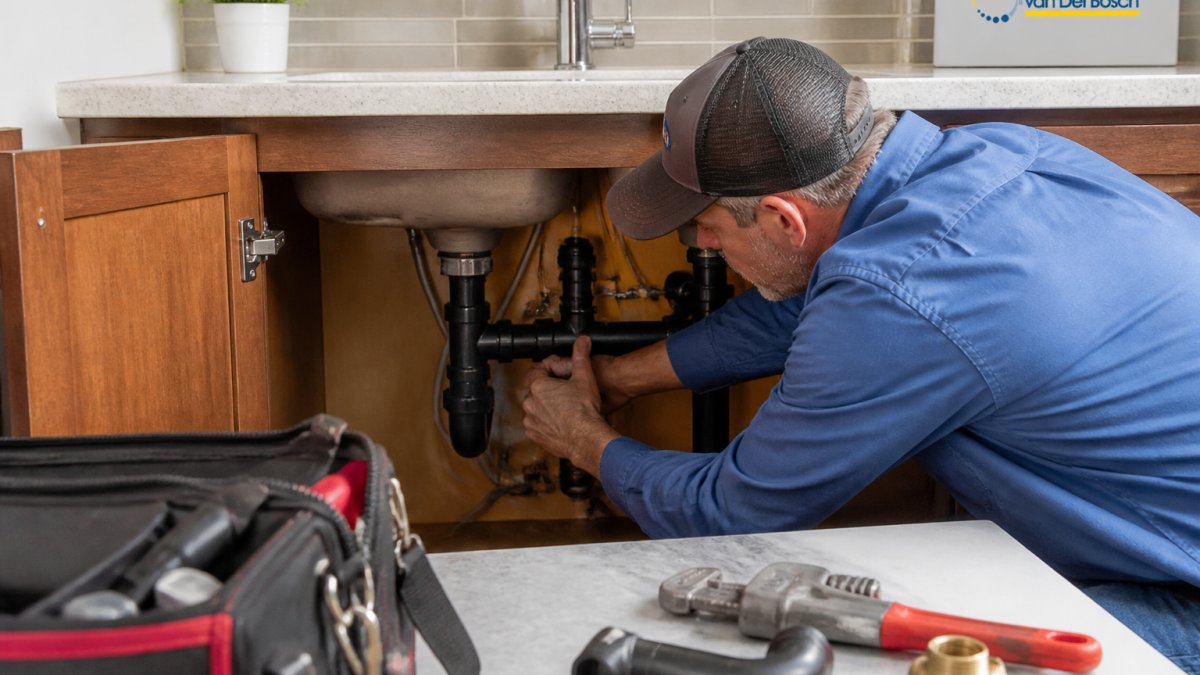
Access is where estimates most often go wrong, and it’s the factor homeowners underestimate most.
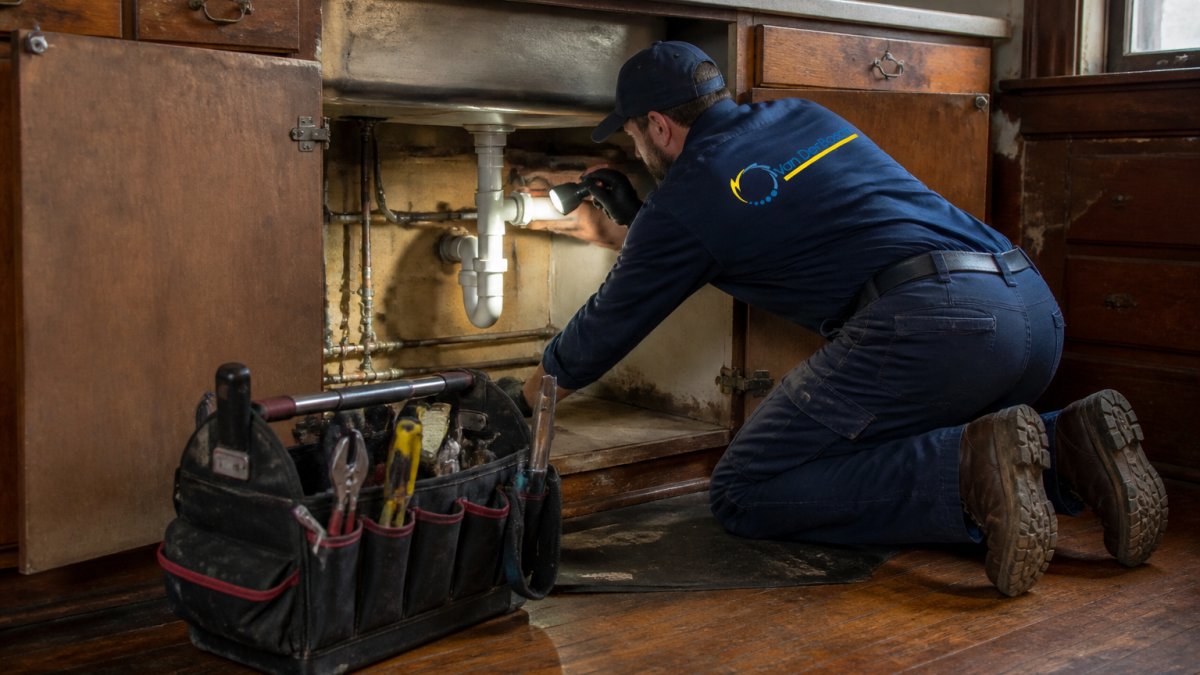
A toilet in an open bathroom is easy to pull and reset.
Complexity adds time in ways that aren’t visible from the outside. Cutting into a wall, restoring it afterward, and working around existing electrical or gas lines all extend the job.
Limited access doesn’t just add time. It adds risk, because a repair that’s hard to reach is also hard to inspect afterward.
How Emergency Plumbing Service Factors Change the Bill
Urgency changes the economics of the job.
That’s not a markup for its own sake. Emergency work typically carries real overhead, such as on-call staffing and travel at odd hours.
If you’re facing an urgent problem, the practical question isn’t whether emergency service costs more. It’s how to find help quickly without getting taken advantage of.
Watch out: don’t authorize emergency work from a contractor who won’t put the scope in writing before starting. Urgency is exactly when vague verbal estimates turn into disputed invoices.
Using a Plumbing Repair Cost Estimator Without Getting Burned
A plumbing repair cost estimator produces a rough planning figure based on job type and general conditions. It is not a quote, and treating it as one is where homeowners get disappointed.
Estimators are useful for setting a rough budget, deciding whether a repair is worth pursuing, and sanity-checking a quote that seems far outside the norm. They can’t account for what’s actually behind your wall.
How a Real Estimate Is Assembled
An online estimator and a written quote are built from different inputs. Understanding what goes into the written version is the fastest way to tell a real estimate from a number someone typed into an email.
A professional estimate is typically built from these components:
- Diagnostic or service call charge. The visit to identify the problem. Some companies fold this into the repair if you proceed; others bill it separately. Either way, it should be disclosed up front.
- Labor. Time on site, priced either flat-rate for a defined job or hourly. Labor reflects the skill level the job requires, not just the hours.
- Parts and materials. Fixtures, valves, pipe, fittings, and any specialty components. Good estimates list what is being installed, not just a lump sum.
- Permits and inspection. Required for many replacements and system-level work. These should appear as a line item or be explicitly stated as included.
- Access and restoration. Opening a wall or floor, and whether patching it back is part of the job or a separate trade.
- Disposal and cleanup. Removal of the old fixture, water heater, or debris.
- Contingency language. What happens if the job uncovers something the quote did not anticipate.
A quote that lists these separately is comparable to another quote that lists them separately. A quote that rolls everything into one number is not, no matter how similar the totals look.
Why Estimates Drift
Most disputes over plumbing bills come from conditions that weren’t visible when the estimate was written, not from dishonesty.
The honest way to handle this is a change order: the contractor stops, explains what was found, and gets approval for the additional work before proceeding. If a quote has no process for this, ask what it is before work starts.
Watch out: a verbal estimate given before anyone has seen the job is not an estimate. It is a placeholder, and it is the most common source of invoice disputes in residential plumbing.
Questions to Ask Before You Compare Quotes
Use any estimate as a starting point, then ask these questions of every contractor:
- Is the scope of work written down, line by line?
- Does the quote separate labor from parts and materials?
- Are permits and inspection included, or billed separately?
- Is there a diagnostic fee, a travel fee, or a service call charge?
- What happens if the job uncovers something the quote didn’t cover?
- Is the warranty on labor, parts, or both?
- Is restoration of any opened wall or floor included?
A quote that answers all seven is a quote you can compare. One that answers two is a number.
What Insurance and Warranties Change
Out-of-pocket cost is not the same as the invoice total. Homeowners insurance may cover sudden, accidental damage such as a burst supply line, but it typically excludes long-term leaks, maintenance failures, and the repair of the pipe itself. Manufacturer warranties on fixtures and water heaters usually cover the part, not the labor to install it, and labor warranties are separate.
When you’re ready to move from estimating to scheduling, you can contact our team to discuss the job and get a clear picture of what the work involves.
Repair or Replace? A Decision Framework for Older Systems
Repair is usually the right call when the equipment is sound and the failure is isolated.
Work through these factors in order:
| Factor | Points Toward Repair | Points Toward Replacement |
|---|---|---|
| Equipment age | Within expected service life | Near or past expected life |
| Failure pattern | First or isolated failure | Repeat failures on same system |
| Damage severity | Contained to one component | Widespread or structural |
| Repair history | Few prior repairs | Frequent repairs adding up |
| Efficiency | Still meets your needs | Noticeably underperforming |
| Surrounding components | In good condition | Also aging or failing |
| Accessibility | Reasonably reachable | Buried or hard to service |
The framework isn’t a formula, and it shouldn’t be applied mechanically. A single factor rarely decides it.
For water heaters specifically, the same logic applies with a tighter timeline, since a leaking tank rarely improves with time.
Plumbing costs are unpredictable because the conditions behind the wall are unpredictable, and no honest contractor can price what they haven’t seen.
VanDerBosch Plumbing Inc. provides residential and light commercial plumbing across the Chicagoland area. Our licensed and insured technicians handle a range of residential and commercial plumbing work.
Frequently Asked Questions
What factors typically influence the cost of a plumbing repair?
The biggest drivers are the type and scope of the job, the plumber’s labor rate and expertise, parts and materials, how accessible the pipes or fixture are, and whether the work is urgent. Permits, inspections, and the age of the home’s plumbing system can add to the total as well. Two jobs that sound identical on the phone can land far apart once a plumber sees what is actually behind the wall.
How does the accessibility of a plumbing fixture affect labor time?
A toilet with clear space around it takes far less time than one wedged into a tight alcove, and a basement drain with a clean floor is faster to reach than a pipe buried under a finished ceiling. Limited access means more time, more tools, and sometimes opening and restoring drywall or flooring. That added labor is one of the most common reasons an estimate moves after the plumber arrives.
Why do emergency plumbing service factors raise the final bill?
After-hours and weekend calls pull a technician away from scheduled work, so emergency plumbing service factors include overtime labor, priority scheduling, and the extra equipment needed to stop active water damage. Urgency also limits how much diagnostic work can happen before repairs start. If a burst pipe or sewer backup is active, call a licensed plumber right away rather than waiting for a weekday appointment.
Does the age of a home’s plumbing system impact repair complexity?
Yes. Older homes often have galvanized steel, cast iron, or mixed materials that corrode and seize, so a repair that looks simple can turn into a larger project once a fitting is opened. Vintage steam boilers and undersized supply lines add the same kind of complexity. A plumber with experience in older housing stock can usually tell you before work starts whether the surrounding pipe is likely to hold up.
