
Table of Contents
- Why Professional Plumbing Estimates Vary So Much
- Key Plumbing Repair Cost Factors That Drive Price Differences
- Flat-Rate Billing vs. Time-and-Materials Pricing
- The Hidden Cost of Diagnostics and Service Calls
- How Overhead and Market Conditions Affect Pricing
- Questions to Ask a Plumber Before Hiring
- What to Expect During a Plumbing Service Call
- How to Compare Estimates Fairly
- Frequently Asked Questions
Last Updated: October 4, 2026
Why Professional Plumbing Estimates Vary So Much
When you call a plumber for a repair, you might get quotes that differ dramatically. This confusion is normal. Professional plumbing estimates vary because the work itself is rarely straightforward.
A clogged drain in one home might take 30 minutes and minimal equipment. In another, the same symptom could signal a deeper sewer line problem requiring video inspection and specialized equipment.
Key Plumbing Repair Cost Factors That Drive Price Differences
Several concrete factors determine the final bill. None of them is arbitrary.
Scope of Work and Job Complexity
Replacing a faucet washer is straightforward. Complexity increases when the plumber discovers the valve body is corroded, the supply line needs rerouting, or the sink cabinet requires partial removal for access.
Factors that increase job complexity:
- Multiple problems discovered during diagnosis
- Hard-to-reach locations (crawl spaces, walls, underground)
- Existing damage or deterioration requiring additional repairs
- Code compliance work or permit requirements
- Need for specialized tools or equipment
- Coordination with other trades (electricians, contractors)
Age and Condition of Your Plumbing Infrastructure
Older homes present different challenges than newer construction.
Homes built before the 1970s often have galvanized steel pipes, cast iron drains, or corroded copper lines. Working on these systems requires different techniques and parts that cost more than modern equivalents.
How plumbing age affects pricing:
- Older materials need specialized knowledge and tools
- Corrosion or buildup may make repairs more time-intensive
- Finding matching parts for vintage systems costs more
- Risk of additional problems increases, requiring more diagnostic work
- Replacement may be more cost-effective than repair on very old systems
Material Costs and Equipment Selection
A drain cleaning job offers several options: a hand snake, a motorized auger, or hydro jetting equipment. Hydro jetting is more thorough and prevents future clogs, but costs more upfront.
Material and equipment considerations:
- Type of pipe material required (PVC, copper, PEX, galvanized)
- Quality grade of fixtures or equipment
- Specialty tools needed for the specific job
- Whether replacement parts must be ordered
- Disposal costs for old materials or debris
A water heater replacement estimate depends on whether you choose a traditional tank model or a tankless system, which requires different venting, gas line work, and electrical considerations.
Labor Expenses and Technician Experience
Labor is typically the largest component of a plumbing estimate. Labor cost depends on how long the job takes and the plumber’s hourly rate. Experienced technicians may charge higher hourly rates but finish faster.
Labor factors:
- Technician’s experience and specialization
- Complexity of the diagnosis and repair
- Time required for the specific job type
- Whether the job requires multiple visits
- Availability and scheduling urgency
Flat-Rate Billing vs. Time-and-Materials Pricing
Two common pricing models create different estimates for the same work.
Flat-rate billing means you pay a set price for a specific job, regardless of how long it takes. Time-and-materials pricing charges an hourly labor rate plus the actual cost of materials used. Ask the plumber which model they use and what it includes.
The Hidden Cost of Diagnostics and Service Calls
One of the biggest sources of confusion in plumbing estimates is the diagnostic fee or service call charge. Understanding why diagnostics are separate helps you evaluate whether a quote is fair.
Why Diagnostics Cost Separately
A diagnostic visit is fundamentally different from repair work. For simple, visible problems, a leaking faucet, a running toilet, a clogged sink, diagnosis is quick. For hidden or complex problems, a plumber may use specialized equipment like a sewer camera, run water pressure tests, or disassemble fixtures.
Common Diagnostic Fee Models
Plumbers use different approaches to charge for diagnostics:
Flat diagnostic fee. The plumber charges a set amount for the service call and inspection. Ask whether the fee is waived if you proceed with repairs, many companies do this.
Hourly diagnostic rate. Some plumbers charge their standard hourly rate for diagnostic time. This is transparent but can feel expensive if the problem requires extensive investigation.
No diagnostic fee. Some companies, including VanDerBosch Plumbing Inc., charge no service call fee. The diagnostic visit is included at no charge.
When Diagnostics Justify Their Cost
Sewer line inspection. A sewer video inspection uses a camera to examine the interior of your sewer line, pinpointing the exact location and nature of a problem, clog, crack, root intrusion, or collapsed section.
Water leak detection. Finding a hidden leak requires systematic investigation using acoustic listening devices, thermal imaging, or water pressure tests.
Complex system diagnosis. Older homes with steam boilers or vintage plumbing configurations require extended diagnosis to identify which component is failing.
Red Flags in Diagnostic Charges
Red flags include: a diagnostic fee for a simple, visible problem; a fee unusually high relative to typical repair costs; a cursory inspection that doesn’t deliver value; or a fee not credited toward repair work if you hire the plumber.
How to Evaluate Diagnostic Costs
When a plumber quotes a diagnostic fee, ask what it includes, how long diagnosis typically takes, whether the fee is credited toward repair, and what you’ll understand about the problem afterward. If you’re getting multiple estimates, use the first plumber’s diagnosis to get quotes from others without re-diagnosing.
How Overhead and Market Conditions Affect Pricing
A company with multiple service vehicles, office staff, insurance, licensing, and equipment maintenance has higher overhead than a solo operator. These costs get factored into hourly rates. During peak seasons, demand for emergency plumbing increases, and some companies adjust rates accordingly.
A professional company with strong insurance, licensed technicians, and reliable equipment typically charges more than an unlicensed operator. That premium reflects lower risk and accountability.
Questions to Ask a Plumber Before Hiring
Ask about the pricing model: Is this a flat rate or time-and-materials? What does the estimate include? What exactly will be done? What happens if additional problems are found?
Key questions to ask:
- Is there a diagnostic or service call fee? Will it be waived if I hire you?
- What’s included in this estimate?
- How long will the job typically take?
- What’s your warranty or guarantee on the work?
- What happens if you find additional problems during the repair?
- Are you licensed and insured?
- Do you charge extra for emergency or after-hours service?
- Can you provide references or recent project examples? Understanding these nuances helps clarify why varying service quotes are common across different home maintenance trades, including those that explain why AC repair quotes vary.
Ask about guarantees and warranties. A reputable company stands behind their work.
What to Expect During a Plumbing Service Call
Understanding the process reduces confusion about why estimates vary.
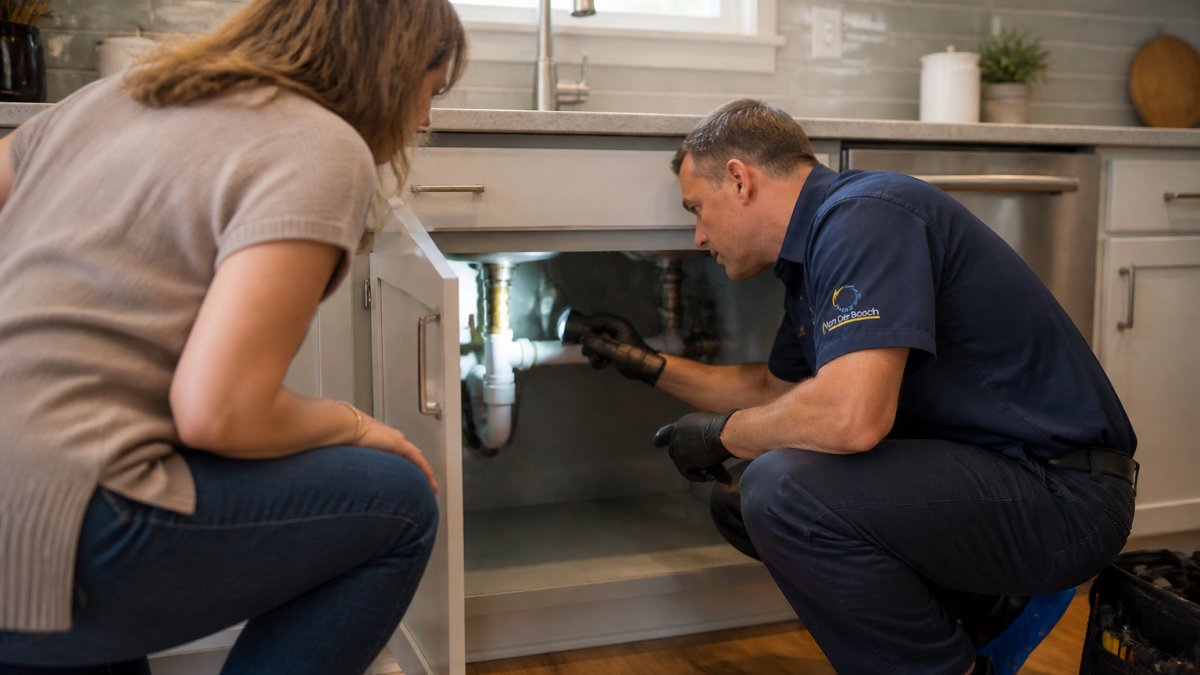
The plumber arrives and listens to your description of the problem. They ask clarifying questions: When did it start? What have you noticed? Have you tried anything already?
Next, they inspect the problem area. For some issues, this is quick.
Once they understand the issue, the plumber explains what needs to be done and provides an estimate. If you approve, they perform the repair.
What happens during a service call:
- Problem description and inspection
- Use of diagnostic tools if needed
- Explanation of the problem and repair options
- Estimate for the work
- Repair work and any necessary adjustments
How to Compare Estimates Fairly
Getting multiple estimates is smart, but comparing them requires discipline to avoid comparing apples to oranges.
Step 1: Verify the Diagnosis Is the Same
Before comparing any numbers, confirm that each plumber has diagnosed the same problem. If one plumber says you have a clogged drain and another says you have a sewer line issue, the estimates aren’t comparable. Write down the diagnosis from each plumber and ask follow-up questions if they differ significantly.
Step 2: Create a Detailed Estimate Comparison Sheet
For each estimate, document: the specific work to be performed, materials included, labor hours or flat rate, permits and inspections, disposal and cleanup, warranty or guarantee, payment terms, and any exclusions or caveats.
Example comparison:
|
Item |
Plumber A |
Plumber B |
Plumber C |
|---|---|---|---|
|
Work |
Motorized auger drain cleaning, kitchen sink only |
Motorized auger + sewer video inspection |
Hydro jetting, full line from sink to street |
|
Materials |
Included |
Included |
Included |
|
Labor |
Flat rate |
Flat rate |
Flat rate |
|
Permits |
Not needed |
Not needed |
Not needed |
|
Warranty |
30 days |
30 days |
1 year |
|
Exclusions |
None stated |
“If video shows damage, repair estimate separate” |
None stated |
Now you can see that these aren’t three quotes for the same job. Plumber A is doing basic drain cleaning. Plumber B is doing the same plus diagnostics. Plumber C is doing a more aggressive cleaning method on a larger scope.
Step 3: Identify What’s Actually Different
Look for real differences: Scope. Hydro jetting costs more than a standard auger but is more effective at removing buildup. Material quality. Are replacement parts the same grade? Labor time. One plumber may estimate 2 hours while another estimates 4 hours. Warranty. A shorter warranty is less protective than a longer one. Company overhead. A large company may charge more per hour than a solo operator, but you have recourse if something goes wrong.
Step 4: Watch for Red Flags
Watch for red flags: One estimate is dramatically lower. Ask why, the plumber may be less experienced, using lower-quality materials, underestimating the job, or not licensed or insured. One estimate is dramatically higher. They may recommend a more thorough solution or identify additional problems, but ask them to explain clearly. Vague or incomplete estimates. An estimate that says “drain cleaning” without specifying the method or scope is hard to compare. Estimates heavily hedged with caveats. Some variation is normal if additional damage is found, but excessive hedging suggests the plumber isn’t confident in their diagnosis.
Step 5: Consider the Whole Package, Not Just Price
Once you’ve compared the actual work, consider factors beyond the estimate number:
Licensing and insurance. Is the plumber licensed and insured? This protects you if something goes wrong.
Availability and responsiveness. How quickly can they schedule the work? Did they return your call promptly?
Communication and clarity. Did the plumber explain the problem clearly and answer your questions?
Warranty and guarantees. What stands behind the work?
References and reputation. Can the plumber provide references or online reviews?
What Not to Do
Avoid these mistakes: comparing prices without understanding the work, assuming the lowest price is best value, assuming the highest price is best quality, ignoring the warranty, or skipping the reference check.
Making Your Decision
After comparing estimates fairly, you should see which plumber offers the best value for your situation. That’s not always the lowest price, it’s the plumber who will solve your problem correctly, on time, and with accountability.
VanDerBosch Plumbing Inc. provides detailed, transparent estimates with no hidden fees or surprise charges. Our licensed technicians diagnose problems accurately and explain your options clearly. We stand behind our work with a 100% satisfaction guarantee.
Frequently Asked Questions
Do plumbers usually charge for estimates?
Many plumbers charge a diagnostic fee to inspect your plumbing system and identify the problem. However, some companies, like VanDerBosch Plumbing Inc., offer free service calls with no charge to evaluate your plumbing repair needs. When you call for an estimate, ask whether a diagnostic fee applies. If one does, confirm whether it will be credited toward the final repair cost if you move forward with that contractor.
Why do plumbing estimates vary so much between companies?
Estimates differ because contractors assess job complexity, material costs, labor rates, and overhead differently. One plumber may quote a flat rate while another uses time-and-materials pricing. The age of your home, accessibility of the problem area, required permits, and the contractor’s experience level all influence the final price. Getting multiple estimates helps you understand the range and identify which contractor offers fair value for the scope of work.
How does the age of a home affect plumbing repair estimates?
Older homes often have corroded pipes, outdated materials, or non-standard plumbing layouts that complicate repairs. Contractors may need to spend extra time diagnosing issues, replacing sections of pipe, or updating work to meet current code compliance. Homes with vintage steam boilers or cast-iron drain lines typically cost more to repair because fewer technicians have experience with these systems and materials are harder to source.
What is the difference between a plumbing estimate and a final invoice?
An estimate is a quote based on the contractor’s assessment of the work required. A final invoice reflects the actual work performed and may differ if unexpected problems arise during the job. Ask contractors to explain what could cause the final cost to exceed the estimate, such as discovering hidden damage once work begins. Request a written estimate that details the scope of work, materials, labor, and any conditions that might change the price.