
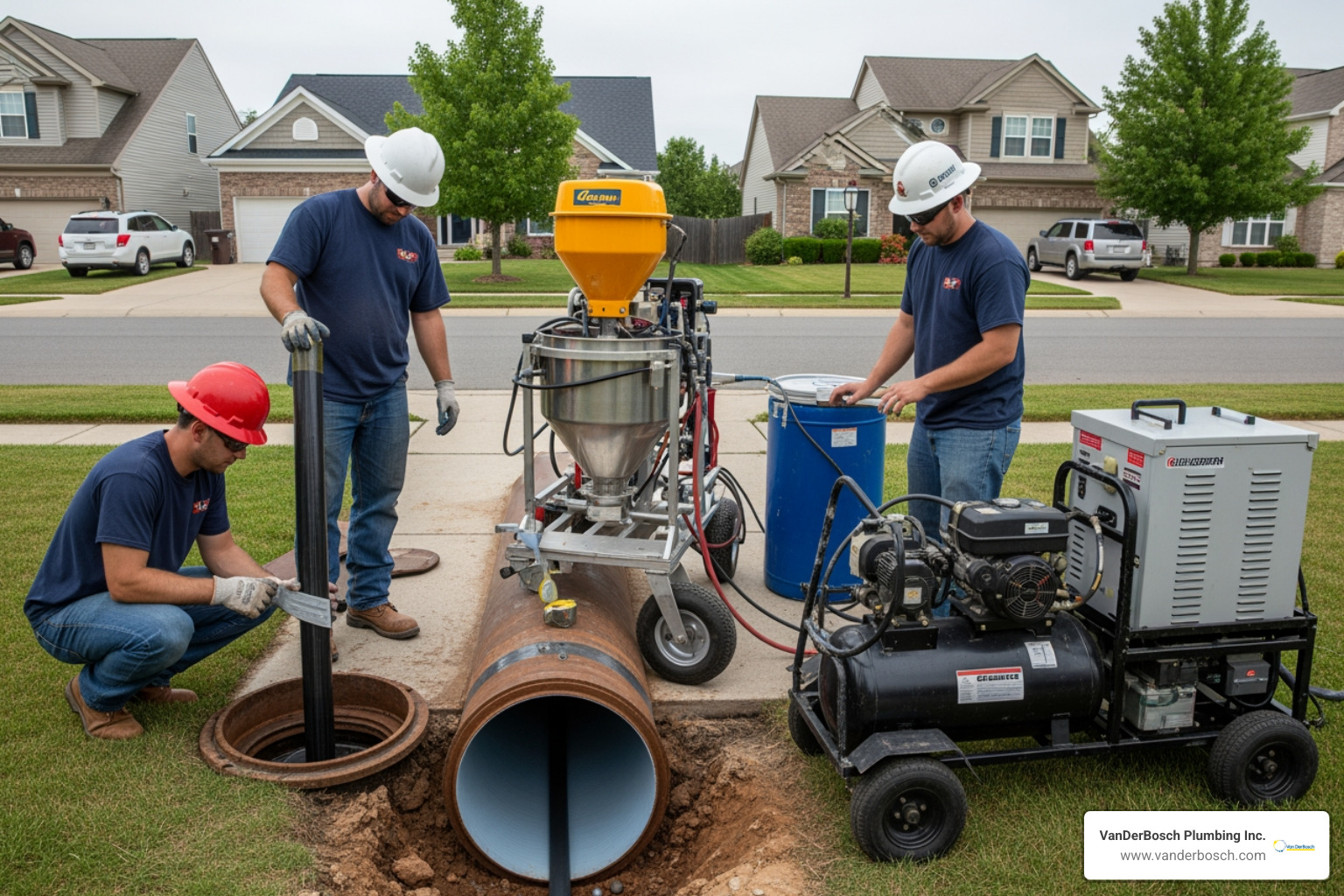
How Much Does Pipe Lining Cost? Here’s What to Expect
Pipe lining cost typically runs between $80 and $250 per linear foot, with most homeowners paying $4,000 to $10,000 for a full sewer line. Small sectional repairs start around $2,500, while complex jobs can reach $15,000 or more.
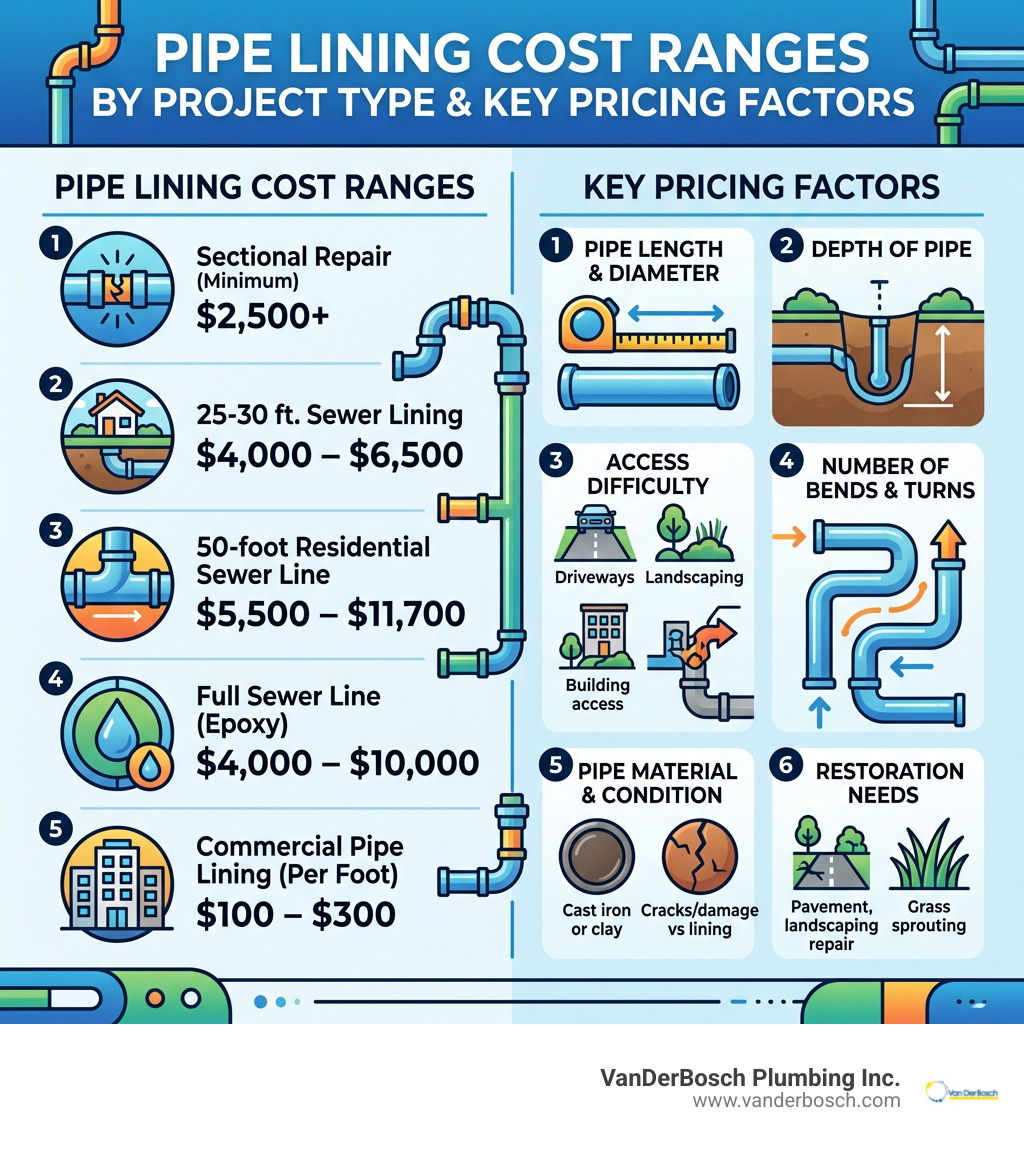
Here’s a quick snapshot of what you can expect to pay:
| Project Type | Typical Cost Range |
|---|---|
| Sectional repair (minimum) | $2,500+ |
| 25–30 feet of sewer lining | $4,000 – $6,500 |
| 50-foot residential sewer line | $5,500 – $11,700 |
| Full sewer line (epoxy) | $4,000 – $10,000 |
| Commercial pipe lining (per foot) | $100 – $300 |
These are ballpark figures. Your actual cost depends on pipe length, diameter, depth, and how easy it is to access the line.
If you’re a homeowner in the Chicagoland area dealing with slow drains, recurring backups, or a recent camera inspection showing cracks or root intrusion, you’re probably wondering whether pipe lining is worth it — and what it’s actually going to cost you. The honest answer is: it depends, but this guide will walk you through exactly what drives those numbers so you can budget with confidence.
I’m Hugh Hodur, President of VanDerBosch Plumbing Inc., and I’ve overseen hundreds of residential and commercial sewer repair projects across Chicagoland — including trenchless pipe lining jobs where understanding the true pipe lining cost made the difference between a smart repair decision and an expensive surprise. Let’s break it all down so you know exactly what you’re looking at before anyone starts work.
What is Pipe Lining and How Does it Work?
At its core, pipe lining is a “trenchless” technology. This means we can repair your sewer line without digging a massive trench through your pristine Sauganash lawn or tearing up your Hyde Park driveway. It is often referred to as Cured-In-Place Pipe (CIPP) lining.
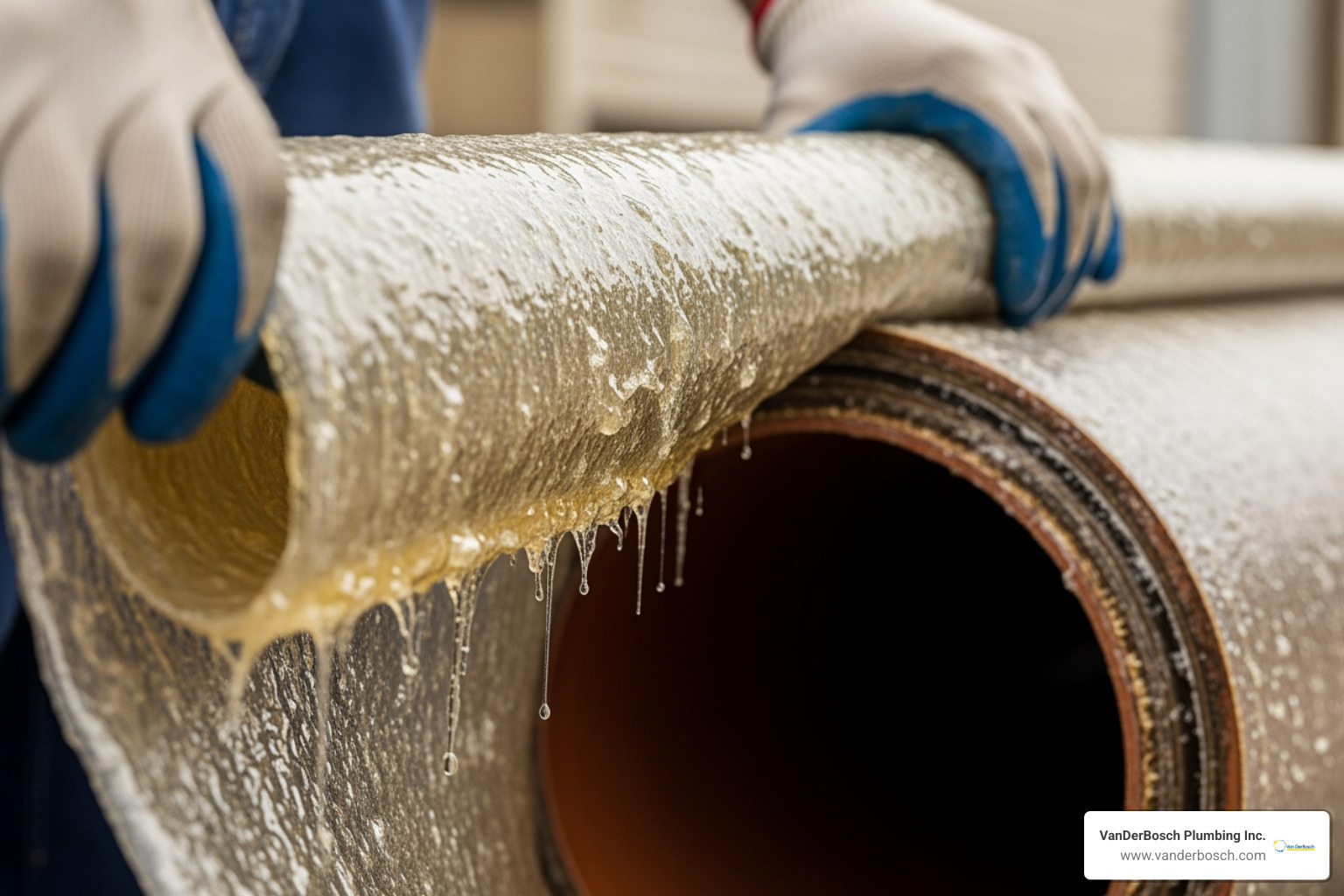
Think of it like putting a stent in an artery. We insert a flexible, resin-saturated tube (the liner) into your existing damaged pipe. Once in place, we inflate it so it presses against the inner walls of the old pipe. Through a chemical reaction or the application of heat/UV light, the resin hardens (cures), creating a brand-new, seamless pipe-within-a-pipe.
The result is a structurally reinforced line that is incredibly smooth, improving flow and preventing future root intrusion. Because there are no joints, those pesky tree roots in neighborhoods like Winnetka or Oakbrook Terrace have nowhere to break in. For a deeper dive into the mechanics, check out our guide on What to Know About Trenchless Pipe Repairs.
Common Materials Used in Trenchless Repair
The choice of material isn’t just about durability; it directly impacts the pipe lining cost. Not all resins are created equal, and we choose the best fit for the specific chemical and structural needs of your Chicago home.
- Epoxy Resin: The gold standard for residential sewer laterals. It bonds incredibly well to old cast iron, clay, and PVC. It is highly resistant to chemicals and can last over 50 years.
- Polyurethane: Often used for its flexibility, though epoxy is more common for structural CIPP.
- Glass-Reinforced Plastic (GRP): These liners are often used in larger commercial or industrial applications where high pressure or extreme temperatures are a factor. They have a higher upfront cost but offer superior strength.
- Thermoplastic Liners: These are heated and shaped to fit the pipe. They are excellent for specific industrial uses but less common in a standard home sewer repair.
To see how these materials are applied in the field, visit our Services: Trenchless Pipe Repair page.
Total Breakdown of Pipe Lining Cost
When you receive a quote for pipe lining, it’s rarely just a single number pulled out of thin air. It’s a calculation based on mobilization, materials, and labor complexity.
The average pipe lining cost per linear foot usually lands between $80 and $250. However, for smaller jobs, most contractors (including us) have a “minimum mobilization” fee. It takes the same amount of equipment and setup time to line five feet of pipe as it does to line twenty. This is why a small sectional repair usually starts at a minimum of $2,500.
For a full residential sewer line replacement using trenchless methods, you should budget between $4,000 and $10,000. If you are managing a business in Melrose Park or Roselle, commercial rates are slightly higher—typically $100 to $300 per foot—due to larger pipe diameters and more complex layouts.
| Factor | Residential Pricing | Commercial Pricing |
|---|---|---|
| Cost Per Foot | $80 – $250 | $100 – $300 |
| Average Total | $4,000 – $10,000 | $10,000 – $25,000+ |
| Minimum Job | $2,500 | $4,000 |
For more national data on these averages, you can reference this How Much Does Epoxy Pipe Lining Cost? guide.
Average Pipe Lining Cost for a 50-Foot Sewer Line
A 50-foot run is very common for residential laterals in Chicago neighborhoods like West Ridge or Ukrainian Village. For a project of this size, the pipe lining cost typically ranges from $5,500 to $11,700.
Why the wide range? It comes down to “economies of scale.” Once the crew is on-site and the equipment is set up, the cost of adding more footage is relatively low. However, if that 50-foot run has three 90-degree bends and is buried 10 feet deep under a concrete slab, the complexity (and the price) goes up. You can find more details on these specific length-based costs in this Sewer Line Replacement Cost: 2026 Pricing Guide.
Additional Expenses and Hidden Fees
(Sorry to be the bearer of bad news), but the liner itself isn’t the only thing you’re paying for. To ensure a successful, code-compliant installation in Cook County, there are several “add-ons” to consider:
- Permits: Depending on your specific municipality (like Niles or Elmhurst), permits for trenchless systems can cost anywhere from $150 to $1,000.
- Camera Inspections: We never fly blind. A pre-lining video inspection is mandatory to see the damage, and a post-lining inspection verifies the work. This usually adds $175 to $500 to the bill.
- Hydro-jetting/Cleaning: The old pipe must be “scoured” clean of grease, scale, and roots so the epoxy can bond. This specialized cleaning can cost $300 to $800.
- Backflow Preventers: We often recommend installing these to prevent city sewer surges from entering your home. Expect to pay $150 to $1,150 for parts and labor.
- Utility Tie-ins: If you have multiple lines (like a stack from the second floor and a basement floor drain) meeting at a junction, “re-instating” those connections after lining requires specialized robotic cutters, which adds to the labor.
If you aren’t sure if your line is a candidate for repair, look for these Signs a Sewer Line May Need Repair or Replacement.
Key Factors Influencing Pricing
Every property in Chicagoland is unique, and several variables can push your pipe lining cost toward the higher or lower end of the spectrum.
- Pipe Diameter: Lining a 4-inch residential line is standard. Lining an 8-inch commercial main requires significantly more resin and a larger, more expensive liner.
- Depth of Burial: While we don’t dig a full trench, we do need access points. If your sewer is 10 feet deep (common in some older Chicago homes with deep basements), shoring equipment might be needed for the access pit, increasing safety costs.
- Soil Conditions: If the ground is shifting or unstable, it can complicate the access point excavation.
- Number of Bends: Every turn in the pipe makes it harder to navigate the liner. High-complexity networks with multiple fittings require more time and precision.
- Access Point Availability: If you already have a “cleanout” (an access pipe that sticks up in your yard or basement), we can often work through that. If we have to create an access point, that adds labor.
Learn more about the technical side of these repairs at our Services: Sewer Line Repair page.
How to Reduce Your Total Pipe Lining Cost
No one wants to spend more than necessary on a sewer repair. Here are a few ways we help our customers keep the pipe lining cost manageable:
- Proactive Inspections: Don’t wait for a total collapse. Catching a crack early means we can use a simpler liner rather than needing a heavy-duty structural fix.
- Bundling Repairs: If you know your neighbor is also having sewer issues, or if you have multiple sections of pipe that need help, doing them all at once saves on mobilization fees.
- Utilizing Existing Cleanouts: If your home doesn’t have a cleanout, installing one during a routine maintenance visit can save you money later when an emergency arises.
- Financing Options: We understand that a $7,000 repair isn’t always in the monthly budget. Ask us about financing to spread the cost over time.
Is the investment worth it? Read our analysis: Is Trenchless Sewer Repair Worth the Cost?
Pipe Lining vs. Traditional Replacement: A Cost Comparison
This is where pipe lining really shines. At first glance, the “per foot” cost of lining might seem higher than just buying a piece of PVC pipe. But the “sticker price” of the pipe is only about 20% of the total project cost in a traditional dig.
With traditional replacement, you have to pay for:
- Excavators and heavy machinery.
- Dozens of man-hours for digging and backfilling.
- Restoration: This is the big one. If your sewer line runs under a custom brick paver driveway in Mount Prospect or a mature oak tree in Winnetka, replacing that driveway or landscaping can cost $10,000 to $30,000 on its own.
Pipe lining typically saves homeowners 30% to 50% in total project costs because we leave your yard, driveway, and sidewalk exactly as we found them. To see if your home is a candidate for a full repipe or just a lining, check out Do You Need Repiping?.
When to Choose Pipe Bursting Over Lining
Sometimes, pipe lining isn’t the right tool for the job. If your pipe has completely collapsed or “pancaked,” there is no space to insert a liner. In these cases, we might recommend pipe bursting.
Pipe bursting involves pulling a large “bursting head” through the old pipe, shattering it outward while simultaneously pulling a brand-new HDPE (High-Density Polyethylene) pipe into its place.
- Cost: Pipe bursting usually costs $150 to $190 per foot.
- Benefit: It allows you to “upsize” your pipe (e.g., turning a 4-inch line into a 6-inch line).
- Lifespan: HDPE is incredibly durable and also carries a 50+ year life expectancy.
If you’re seeing Signs Repiping Services May Be Needed, we can help you decide between lining and bursting.
Frequently Asked Questions about Pipe Lining Cost
How long does a lined pipe last?
A properly installed epoxy liner is designed to last 50 years or more. At VanDerBosch Plumbing, we use high-quality resins that are resistant to the corrosive sewer gases and chemicals common in Chicago’s infrastructure. Most manufacturers provide significant warranties on the material itself, and we back our labor with a 100% satisfaction guarantee.
Is pipe lining cheaper than digging?
Almost always, yes—when you factor in the “indirect” costs. While the plumbing labor might be comparable, the savings on landscaping, concrete, and asphalt restoration make trenchless methods the clear financial winner for most Chicagoland properties.
What are the signs I need pipe lining?
You don’t need to wait for a disaster. Keep an eye (and ear) out for:
- Slow Drains: If every sink in the house is sluggish, the problem is in the main line.
- Sewage Odors: Smelling “rotten eggs” in the yard or basement usually means a crack in the pipe.
- Recurring Backups: If you have to call a rooter service more than once a year, your pipe is likely compromised.
- Gurgling Noises: Air trapped by clogs or cracks causes toilets to bubble or gurgle.
- Lush Patches: If one spot of your grass is suspiciously green and fast-growing, it might be “fertilized” by a leaking sewer line.
Conclusion
Navigating pipe lining cost doesn’t have to be a headache. While the investment can range from $4,000 to $11,000 for most Chicago homes, the long-term value—50+ years of worry-free service and a preserved yard—is hard to beat.
At VanDerBosch Plumbing Inc., we’ve been serving the Chicagoland area for decades, from the North Shore down to Hyde Park and out to the western suburbs like Roselle and Oakbrook Terrace. We pride ourselves on transparent pricing, background-checked technicians, and a 24/7 availability that ensures you’re never left in a lurch.
If you’re worried about your sewer line, don’t guess. Let us provide an honest, expert assessment. Schedule your professional trenchless pipe repair assessment today and let’s get your plumbing back on track.