
Last Updated: October 30, 2026
Quick Summary
If your steam boiler pressure gauge reads zero, first check whether the radiators are heating and the burner is firing, since a true zero can mean low water or a control problem. Shut the boiler down and call a licensed technician if you notice leaks, banging, a gas smell, or a dripping relief valve.
- Check whether radiators are heating and whether the burner is firing before touching the gauge.
- Treat every zero reading as real until a real problem has been ruled out.
- Shut the boiler down if you see a gas smell, leaks, banging, or a dripping relief valve.
- Do not open the relief valve, remove hot caps, or add water to a hot boiler yourself.
- A clogged gauge siphon can keep the needle at zero while the boiler is working normally.
Table of Contents
- What a Zero Reading on Your Steam Boiler Gauge May Mean
- Safety First: When to Shut Down and Call for Help
- Checking Whether the Boiler Is Operating Normally
- Telling a Stuck Gauge From Genuinely Low Pressure
- Common Causes of Steam Boiler Pressure Problems
- When a Gauge Replacement or Repair Makes Sense
- Booking a Licensed Plumber to Check Your Steam Boiler
- Frequently Asked Questions
What a Zero Reading on Your Steam Boiler Gauge May Mean
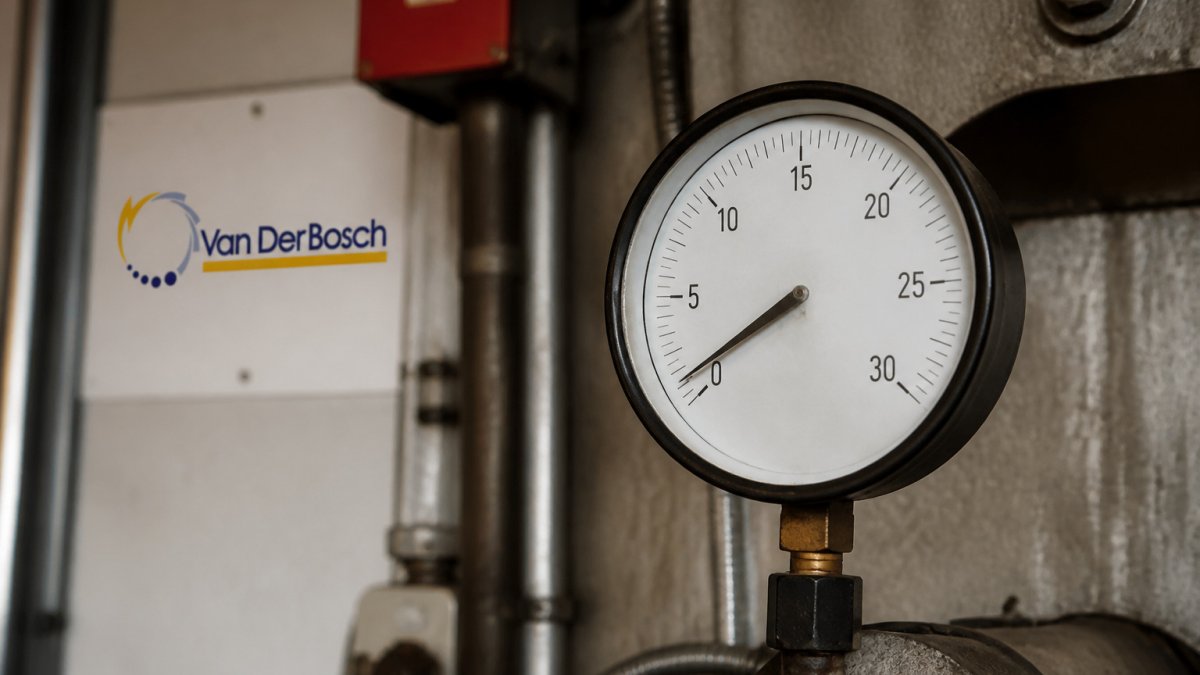
If your steam boiler pressure gauge reads zero, the boiler may have no steam pressure, or the gauge itself may be faulty. Both are possible, and the two call for very different responses.
A gauge stuck at zero is often a gauge problem. Dirt, corrosion, or a blocked gauge connection can keep the needle from moving.
The safest first step is to work out which cause fits what you see.
Safety First: When to Shut Down and Call for Help
Steam boilers hold water under heat and pressure. Some problems can become dangerous quickly, so know when to stop and call a licensed professional.
Shut the boiler down and call for service right away if you notice:
- A burning smell or visible smoke from the boiler or its burner area
- Water leaking around the boiler, or a puddle that keeps growing
- Loud banging, hammering, or pounding from the pipes or boiler
Do not open the pressure relief valve, remove caps from hot pipes, or add water to a hot boiler. If a gas smell or a gas line problem is part of what you are seeing, a gas line repair specialist should inspect the connection before the system runs again.
Checking Whether the Boiler Is Operating Normally
Before you touch the gauge, take a quick look at how the system is behaving. Note what you see and hear, since this information helps a technician later.
- Check the radiators. Are they heating up when the boiler runs?
- Listen to the boiler. Is the burner firing? Do you hear normal steam sounds, or silence?
- Check the pilot or ignition. On many units, a flame or ignition light shows the boiler is running.
If the boiler is not running, or the radiators stay cold, the zero reading is probably real.
Use this quick check to see which problem you may be dealing with before you touch the gauge.
| Check | What to look for | What it may mean |
|---|---|---|
| Radiators | Heating up when the boiler runs | Gauge may be faulty |
| Radiators | Stay cold | Zero reading may be real |
| Boiler sound | Burner firing, normal steam sounds | Gauge may be faulty |
| Boiler sound | Silence or no firing | Zero reading may be real |
| Ignition or flame light | Shows the boiler is running | Boiler is likely operating |
| Floor and base | Water present | Possible leak, call for service |
Telling a Stuck Gauge From Genuinely Low Pressure
A stuck gauge and a real zero-pressure condition can look identical on the dial, but they behave differently once you watch the system through a full cycle. The goal here is not to repair anything, it is to gather enough evidence to know whether the gauge is lying or the boiler is telling the truth.

What the gauge is actually measuring
On a steam boiler, the gauge reads the pressure inside the boiler shell, usually in psi (pounds per square inch).
A residential steam boiler typically runs at very low pressure, often just a few psi, and sometimes less than 1 psi on the gauge, so the needle sits close to zero even when everything is working. That is one reason a zero reading is easy to misread.
A safe visual sequence
Do this with the boiler running normally and without removing any parts, opening any valves, or loosening any fittings:
- Watch the needle through a cycle. Note where it sits when the burner is off, when it fires, and when steam is being produced. A working gauge will move, even slightly.
- Compare the gauge to the system behavior. If radiators are heating and the boiler is cycling on and off on its own, the system is producing steam, which means a hard zero on the gauge is suspicious.
- Look at the gauge face. Cracks, fogging, a loose bezel, or a needle that sits below the zero mark all point to a damaged gauge.
- Look at the siphon (pigtail). Under the gauge there is usually a small loop or coil of pipe designed to protect the gauge from live steam. If that loop is packed with rust, scale, or sediment, pressure never reaches the gauge and it reads zero even though the boiler is pressurized.
- Note any valve between the gauge and the boiler. Some installations have an isolation valve. Do not turn it. Just note whether it appears open or closed so you can tell a technician.
Do not remove the gauge, loosen the siphon, or open any fitting on a boiler that has been firing. Residual steam and hot water can cause severe burns, and the gauge connection is part of a pressurized system. Visual inspection only.
Signs the gauge is the problem
A faulty gauge is the more likely explanation when:
- Radiators heat normally and the boiler completes its cycles.
- The needle never moves, even a hair, across several cycles.
- The gauge face is damaged, fogged, or the needle rests past the zero pin.
Signs the zero reading is real
Treat the reading as genuine, and stop troubleshooting, when you also see:
- Cold radiators, or radiators that heat briefly and then go cold.
- A boiler that will not fire, short-cycles, or shuts down repeatedly.
- Water on the floor, dripping fittings, or a relief valve that is passing water or steam.
If any of those are present, the gauge is the least of the issues. Shut the system down per the manufacturer’s instructions and call a licensed technician.
Why this matters on a steam system
Steam boilers are not repressurized the way sealed hot-water (hydronic) boilers are. You do not “top up” a steam boiler to raise a gauge reading the way you might add water to a hydronic loop.
A licensed technician can confirm whether the gauge, the siphon, the pressuretrol, or the water level is at fault, and can repair or replace the gauge safely. If you have completed the visual checks above and the reading still does not add up, schedule boiler service so the system can be tested properly.
Common Causes of Steam Boiler Pressure Problems
When the gauge is accurate and the boiler truly is not building pressure, the cause is usually one of a handful of steam-specific issues. These are different from the causes you would look for on a sealed hot-water boiler, so generic “low pressure” advice often sends homeowners in the wrong direction.
Low water level
Steam boilers need the water line to sit at the level marked on the gauge glass (sight glass) on the side of the boiler.
Low water can come from a slow leak, a faulty feeder, a stuck float, or simply from a system that has not been maintained. Do not add water to a hot boiler yourself; let a technician check the water level, the gauge glass, and the low-water cutoff.
A clogged gauge siphon or blocked pressure connection
This is one of the most common reasons a steam gauge reads zero while the boiler is actually working. The siphon (pigtail) under the gauge is meant to keep live steam away from the gauge mechanism, but rust, scale, and sediment can plug it over time. When that happens, pressure never reaches the gauge, and the needle stays at zero even though the boiler is producing steam normally.
Pressuretrol or control problems
Steam boilers use a pressuretrol (pressure control) to cycle the burner on and off based on pressure. If the pressuretrol is set wrong, stuck, or failed, the burner may not fire, may short-cycle, or may run in a way that never builds normal pressure. Our boiler relief valve guide explains the valve types and failure signs that often accompany these pressure irregularities.
Leaks in the steam system
Steam and water can escape through leaking pipes, fittings, radiator valves, air vents, and the boiler itself. Our boiler leak diagnosis guide covers common leak causes and the immediate steps to take. A small leak may only show up as a slow loss of water level; a larger one may leave water on the floor or steam in the room. If a leak has already caused water damage to nearby pipes or flooring, a burst pipe repair service can help track down and fix the source.
Burner or fuel problems
A boiler that is not firing cannot make steam. Our pre-winter boiler repair signs guide lists the warning signs that a steam boiler needs professional attention before the heating season. Ignition problems, fuel supply issues, and flame sensor faults all show up as a cold boiler and a zero gauge. These are not homeowner repairs, gas and oil burner work requires a licensed technician.
Scale, sediment, and aging components
Older steam systems accumulate scale and sediment that affect water level sensors, gauge connections, and heat transfer. In older housing stock, original piping, aging vents, and worn valves all contribute to pressure and distribution problems. Maintenance, including checking the gauge glass, draining sediment per the manufacturer’s guidance, and having the low-water cutoff and pressuretrol tested, reduces the chance of a surprise shutdown.
On a steam boiler, a zero gauge reading is more often a gauge, siphon, water level, or control issue than a simple “needs more pressure” problem. Steam systems are not repressurized like hydronic boilers, so the fix is diagnosis, not a DIY fill.
Only a licensed technician can confirm which of these applies to your system. If the gauge reads zero and the boiler is not behaving normally, contact VanDerBosch Plumbing Inc. to have the boiler inspected and the cause identified.
When a Gauge Replacement or Repair Makes Sense
Replacing or repairing the gauge makes sense when the boiler is working normally but the needle stays at zero. A faulty gauge can be swapped out, and a technician can usually complete that job quickly.
Do not replace the gauge alone if radiators are cold or the boiler is not heating. In that case, the gauge may be telling the truth.
Booking a Licensed Plumber to Check Your Steam Boiler
A licensed plumber can tell quickly whether the gauge is faulty or the system has a real problem. Our guide to Chicago suburb plumbing companies explains what to look for in a licensed, insured plumber before you book.
Before the visit, write down:
- The date you first noticed the zero reading
- Whether radiators are heating
- Any noises, leaks, or smells
This information helps the technician find the cause faster. VanDerBosch Plumbing Inc. provides boiler repair and service, and a licensed technician can check the gauge, water level, controls, and leaks to help you determine whether the gauge or the boiler needs attention.
Frequently Asked Questions
What does it mean when a steam boiler pressure gauge reads zero?
A zero reading can mean two different things: the gauge is faulty or stuck, or the system has lost pressure. The gauge may be blocked by sediment, its connection may be clogged, or the needle may be jammed. Real pressure loss usually shows up alongside other signs, such as cold radiators, a boiler that will not fire, or a visible water leak. Because you cannot tell which it is from the gauge alone, treat a zero reading as something to verify with a licensed technician before restarting the system.
Is it safe to reset a steam boiler when the gauge reads zero?
Do not repeatedly reset or restart a steam boiler when the gauge reads zero, and do not add water to a steam boiler on your own unless you are trained to do so. Steam boilers operate under pressure, and improper water levels or restarts can damage the unit or create unsafe conditions. If the boiler is making unusual noises, leaking, or smells of gas, shut it off at the disconnect or the manual gas valve if it is safe to do so, leave the area, and call your gas utility or a licensed professional.
Can a steam boiler run if the pressure gauge is stuck at zero?
A stuck gauge does not always mean the boiler is not producing steam, but you should not assume the system is operating normally. Radiators that heat unevenly, or a boiler that cycles oddly, are reasons to have it inspected. Operating a boiler without reliable pressure information makes it harder to spot a real problem early. Have a licensed plumber check the gauge, its connection, and the water level before relying on the system.
When should I call a plumber about a steam boiler pressure gauge?
Call a licensed plumber if the gauge reads zero and the house is not heating, if you smell gas, see water pooling around the boiler, hear banging or rumbling, or notice the boiler shutting off repeatedly. A plumber can confirm whether the gauge is faulty, check the water level and system pressure, and recommend whether a repair or gauge replacement is appropriate.
