
Why Finding the Right Plumber for a Ceiling Leak Matters
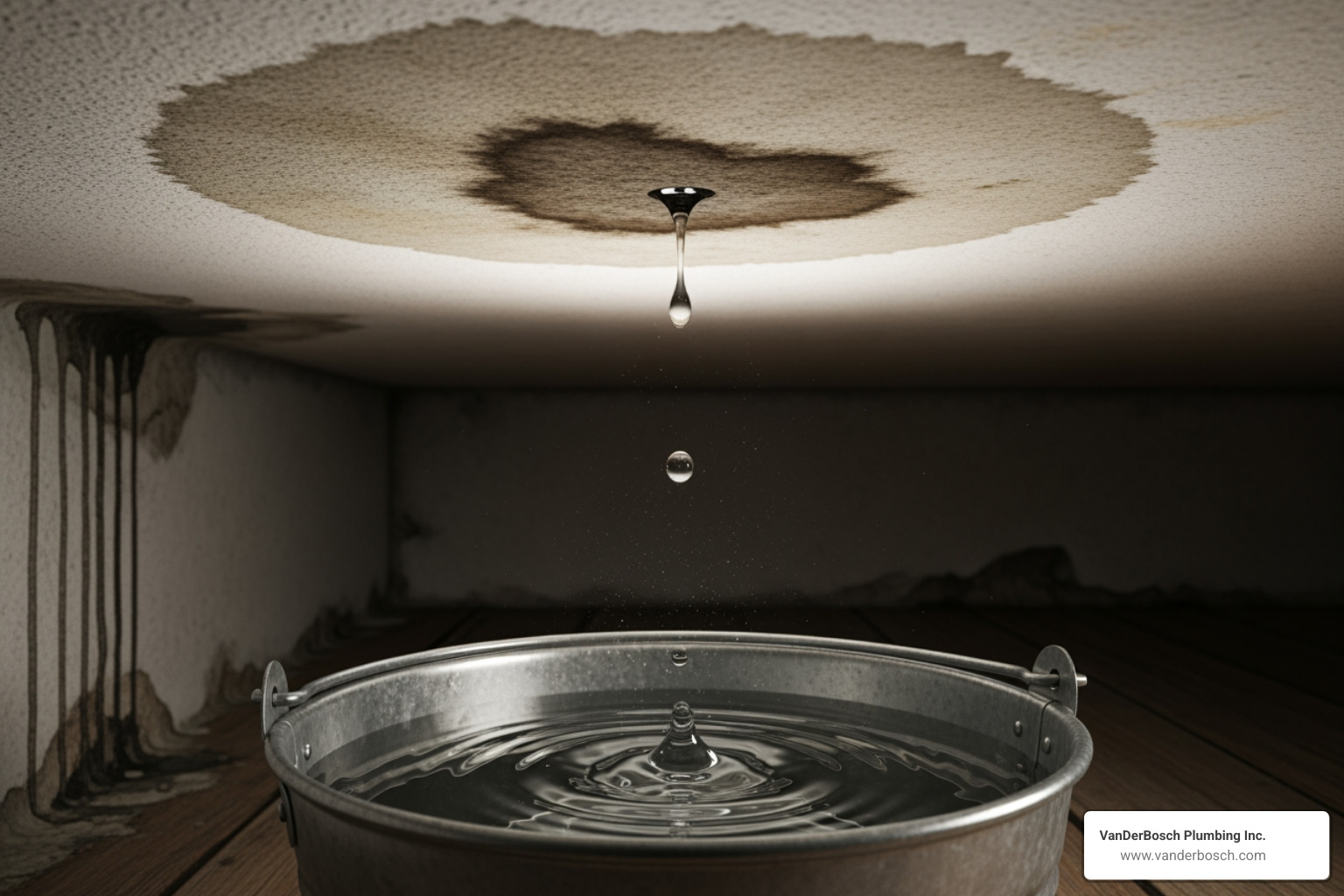
A plumber for ceiling leak emergencies is critical to call immediately because water damage spreads fast, mold can grow within 48 hours, and a gallon of water weighs 8.5 pounds—meaning your ceiling could collapse if water pools unchecked.
Quick Answer: What to Do Right Now
- Contain the water – Place buckets under drips and move furniture to safety
- Turn off your main water supply – If the leak is plumbing-related (not from rain)
- Call a licensed plumber immediately – For leaks below bathrooms, kitchens, or on lower floors
- Call a roofer instead – If the leak is on your top floor and appeared after rain
- Document everything – Take photos for insurance claims
When water leaks through your ceiling, every minute counts. The average cost to repair water damage is $3,600, and ceiling repairs run $45 to $55 per square foot. This doesn’t include fixing the leak source, which can add another $200 to $1,550.
Hiring the right professional quickly can save you thousands and prevent structural problems or mold. The challenge is knowing who to call—a plumber or a roofer—and finding a trustworthy pro who will diagnose the issue accurately and charge a fair price.
This guide offers five strategies to hire the right plumber for ceiling leak issues, understand the repair process, and prevent future disasters. You’ll know exactly what to do, from slow drips to active emergencies.
Strategy 1: Act Fast & Identify the Telltale Signs
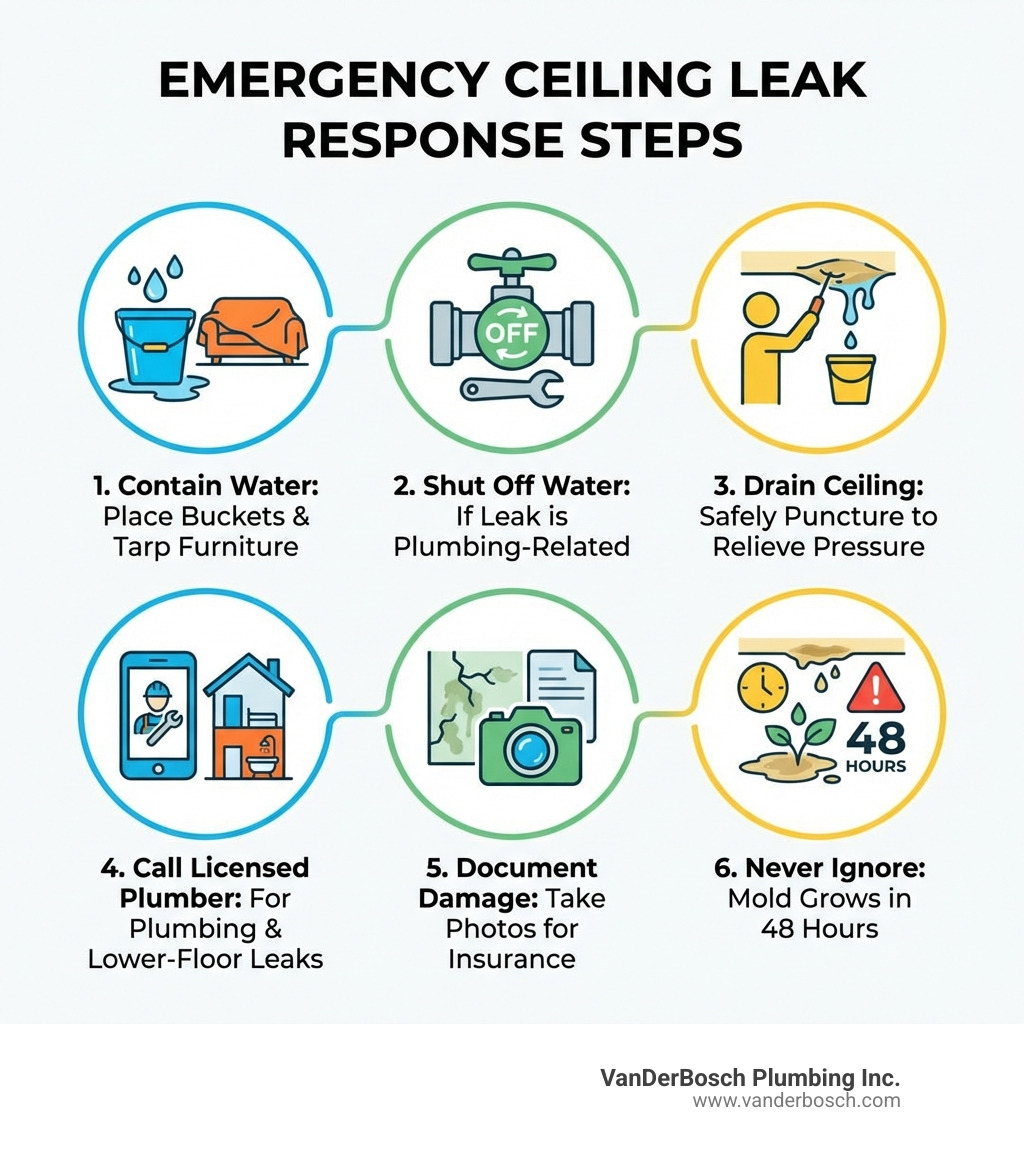
When water appears on your ceiling, urgency is a necessity. Water damage spreads rapidly, and mold can grow within 48 hours, compromising your home’s structure. There’s also a risk of ceiling collapse. A gallon of water weighs 8.5 pounds, and a small amount can overwhelm your ceiling’s structure. This weight pooling above your head is a serious threat that demands immediate action.
So, what immediate steps should you take?
- Contain the Leak: Grab buckets or large bowls and place them directly under the drip. Use old towels or plastic sheeting to protect flooring and furniture.
- Protect Your Valuables: Move furniture, electronics, and other belongings away from the affected area.
- Turn Off Your Main Water Supply: If you suspect a plumbing-related leak (not from rain), locate and turn off your home’s main water shut-off valve. This can drastically reduce water damage until a professional arrives.
- Safely Drain a Bulging Ceiling: A bulging ceiling indicates pooled water that could burst. Carefully puncture a small hole in the center of the bulge with a sharp object, placing a bucket underneath to catch the water. This relieves pressure and prevents a more destructive collapse.

Taking these immediate steps can significantly limit the damage while you wait for professional help.
Signs of a Plumbing-Related Ceiling Leak
Knowing the signs of a plumbing-related leak is crucial for knowing when to call a plumber for ceiling leak repair. Here’s what to look for:
- Water Stains: Look for discolored patches (yellow, brown, or rust-colored) that grow over time. Ring-shaped stains around light fixtures are also common.
- Peeling or Bubbling Paint/Wallpaper: Moisture causes paint to blister, peel, or crack. Wallpaper may bubble or separate from the wall.
- Musty Odors: A persistent musty smell indicates hidden moisture and potential mold, even without visible water. It’s a strong sign of a leak inside walls or ceilings.
- Dripping Sounds: Hearing water dripping when no faucets are on is a clear sign of a leak.
- Bulging or Sagging Drywall: Water-logged drywall becomes heavy and sags, bulges, or feels soft. This is a critical sign that a collapse could be imminent.
- Unusually High Water Bills: A sudden spike in your water bill without a change in usage could point to a hidden plumbing leak.
For a deeper dive into identifying these issues, you can find more information on our professional water leak detection services.
Strategy 2: Know Who to Call – Plumber vs. Roofer
When your ceiling leaks, you must determine if it’s a plumbing or roofing issue. Calling the wrong pro wastes time and money, leading to more damage. Knowing whether to call a plumber for ceiling leak issues or a roofer is the first critical step.
Here’s a quick comparison to help you understand their roles:
| Feature | Plumber for Ceiling Leak | Roofer for Ceiling Leak |
|---|---|---|
| Primary Role | Fixes leaks originating from internal water systems | Repairs leaks originating from the roof’s exterior |
| Typical Causes | Leaky pipes, faulty fixtures (toilets, showers, sinks), appliance hoses, water heaters, clogged drain lines | Damaged shingles, flashing, ice dams, inadequate roof slope, clogged gutters |
| Common Tools | Moisture meters, thermal cameras, pressure gauges, pipe wrenches, drain snakes, video inspection cameras | Ladders, roofing tools, sealants, shingle removers, safety harnesses |
| Area of Focus | Water supply lines, drain pipes, water heaters, fixtures, appliance connections | Roof surface, flashing, skylights, chimneys, gutters, attic |
When to Call a Plumber for a Ceiling Leak
Your first call should be to a licensed plumber for ceiling leak repair, like our team at VanDerBosch Plumbing Inc., if you notice the following:
- Leak on Lower Floors: A leak on a lower level of your home almost certainly points to a plumbing issue from an upstairs bathroom, kitchen, or laundry room.
- Leak Below a Bathroom or Kitchen: Dripping below these areas suggests a problem with pipes, fixtures, or appliances, such as a leaking toilet seal, faulty shower pan, or sink drain issue.
- No Recent Rain: If the leak appears during a dry spell, it’s highly unlikely that your roof is the cause.
- Leak Occurs When Using Fixtures: If the leak only appears or worsens when someone showers, flushes a toilet, or uses a sink, a fixture or its plumbing is the source.
- Stains are Consistent: Localized stains that don’t change with weather conditions often indicate a consistent internal source.
We are experts in diagnosing and fixing these types of plumbing-related ceiling leaks throughout Chicagoland, including areas like Roselle, Niles, and Elmhurst.
When to Call a Roofer
Conversely, a roofer is the specialist you need if:
- Leak on the Top Floor: If your ceiling leak is on the topmost floor, the roof is a primary suspect.
- Appears After Rain or Snow: Leaks that appear or worsen after rain, snow, or severe weather indicate roof damage.
- Visible Roof Damage: Missing shingles, cracked tiles, or damaged flashing are strong signs a roofer is needed.
- Dampness in the Attic: Wet insulation or water spots on the roof decking in your attic are clear signs of a roof compromise.
For a helpful guide on diagnosing leak sources, you can refer to this external resource: Helpful guide on diagnosing leak sources. Getting the right professional on the job from the start saves you time and stress.
Strategy 3: Understand the Professional Diagnostic & Repair Process
A professional plumber for ceiling leak repair does more than patch a hole. They use a systematic process to find the true source of the leak, which is often far from the visible water spot. This expert assessment is crucial for a lasting repair. We aim to make the process clear and stress-free for our customers across Chicago, Evanston, and beyond.
How a Plumber Diagnoses the Leak Source
Our licensed plumbers use specialized tools and techniques to pinpoint hidden leaks with minimal disruption:
- Visual Inspection: The process begins with a thorough visual inspection of the area around the leak and any accessible plumbing fixtures directly above it.
- Moisture Meters: These devices detect hidden moisture in walls, ceilings, and floors, helping trace the water’s path to the source.
- Pressure Testing: For hidden supply line leaks, plumbers can perform pressure tests on isolated sections of your pipes to identify if and where a leak exists.
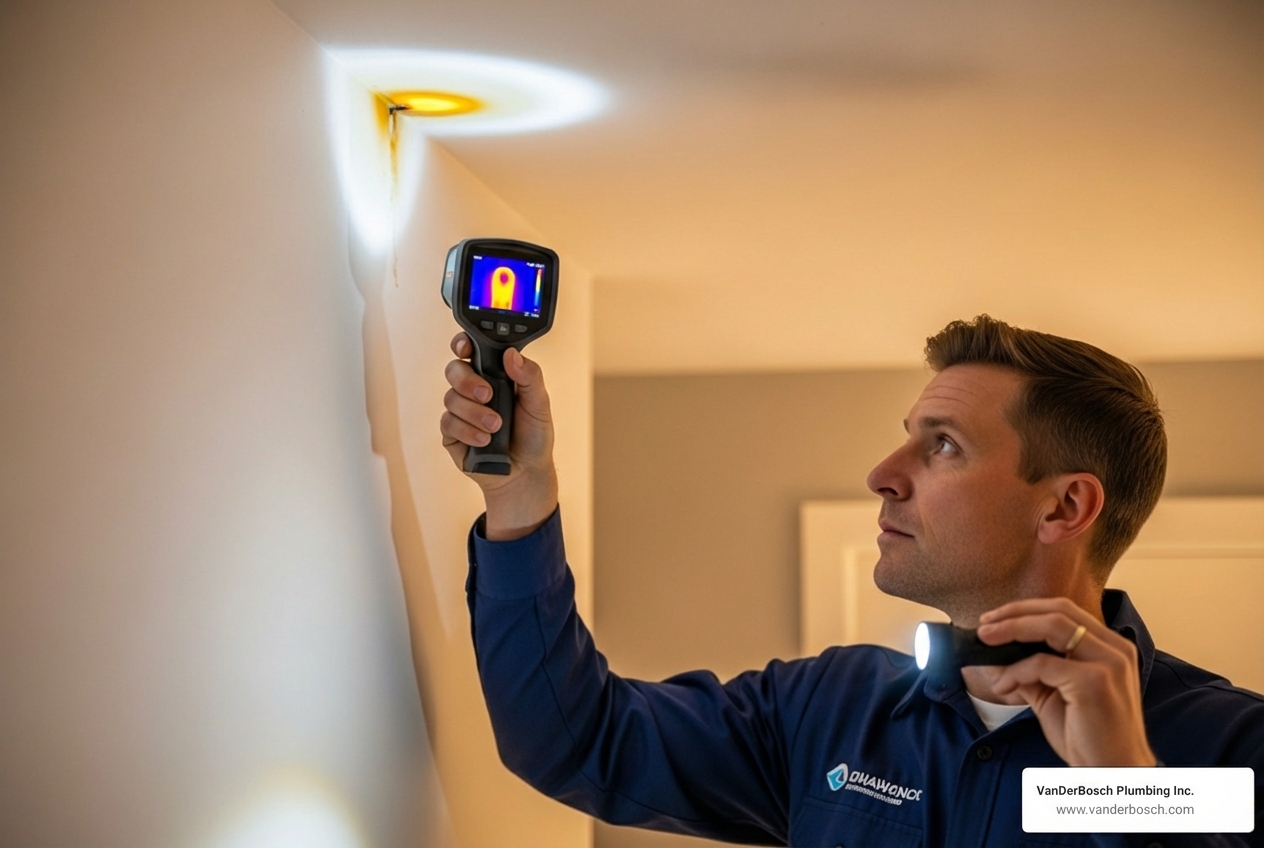
- Thermal Imaging Cameras: This advanced, non-invasive method detects temperature differences caused by leaking water. It allows us to see leaks through walls and ceilings with precision, often avoiding demolition.
- Sewer Video Inspection: If a drain line is the suspected cause, a small camera is inserted into the pipes to visually inspect for cracks, blockages, or other damage. Learn more with our guide to Sewer video inspection.
Once the source is located, our plumbers will explain the necessary repairs and provide an upfront, transparent estimate.
Common Plumbing Issues That Cause Ceiling Leaks
Most plumbing-related ceiling leaks stem from a few common culprits:
- Leaky Supply Lines: Pipes bringing fresh water to fixtures can develop pinhole leaks or cracks from age, corrosion, or high water pressure. This affects PEX, copper, and galvanized steel pipes.
- Burst Pipes: A sudden cause of major leaks, burst pipes often occur in winter when water freezes and expands. We offer specialized frozen pipes repair services. Learn more in our article on Why do pipes burst?.
- Clogged Drain Lines: When an upstairs drain line clogs, wastewater can back up and overflow, leaking through the ceiling below. This is common with sinks, showers, and toilets.
- Faulty Appliance Hoses: Hoses for washing machines, dishwashers, and refrigerators can degrade, crack, or burst, leading to significant leaks.
- Leaking Water Heaters: A water heater in an attic or upper-level closet can cause ceiling damage if the tank or its connections leak. Find out more about Why is my water heater leaking?.
- Worn Toilet Seals: A degraded wax ring at the toilet’s base can allow wastewater to seep into the subfloor and ceiling below, often causing musty odors. Loose toilet bolts or a cracked bowl can also cause leaks.
Our experienced plumbers are adept at handling all these issues, providing expert repair and preventative measures.
Strategy 4: Ask the Right Questions Before You Hire a Plumber for a Ceiling Leak
For a critical issue like a ceiling leak, you need the right professional, not just the first one available. Vetting your plumber for ceiling leak repair ensures quality service, transparent pricing, and peace of mind. Before you commit, ask these key questions to assess their expertise and professionalism, which aligns with our values at VanDerBosch Plumbing Inc.
Key Questions to Ask a Plumber for a Ceiling Leak
When you’re speaking with a plumbing company, don’t hesitate to ask these important questions:
- Are you licensed and insured in Illinois? This is non-negotiable. Licensing proves skill, and insurance protects you from liability during repairs. Our team is fully licensed and insured to work across Chicagoland, including areas like Skokie, Glenview, and Arlington Heights.
- Do you offer a warranty on your work? A reputable plumber stands behind their repairs with a warranty, assuring you that if the same issue recurs, they will fix it without additional charge.
- Can you provide an upfront, itemized estimate? Transparent pricing is key. Get a detailed breakdown of costs before work begins to avoid hidden fees. We pride ourselves on providing clear, upfront pricing with no hidden service charges.
- What is your experience with hidden leaks like mine? Ask about their experience with leak detection technologies like thermal imaging or moisture meters.
- How will you access the leak and minimize damage? A skilled plumber will discuss their plan for accessing the leak, aiming to minimize damage to your property.
- Is cleanup included in your service? Confirm if they include basic cleanup of the work area in their service.
- Can you provide references or show examples of similar work? A company with a strong track record should be able to provide testimonials or references.
- Do you charge a flat rate or by the hour? Understanding their pricing structure helps manage expectations. Our pricing is job-based, not hourly, ensuring you know the cost before we start.
Asking these questions empowers you to choose a plumber for ceiling leak repair who is competent, reliable, and trustworthy.
Strategy 5: Plan for Costs, Aftermath, and Prevention
Fixing a ceiling leak is the first step. The job isn’t over until you address the water damage and take steps to prevent future incidents. Understanding the total scope, cost, and roles of different professionals is crucial for a complete resolution.
Estimating the Cost of Repair
The total cost of dealing with a ceiling leak varies based on the leak’s source and the extent of the damage. Here’s a breakdown:
- Leak Source Repair Costs: Fixing the plumbing issue typically ranges from $200 to $1,550. This covers repairs like pipe patching or fixture replacement.
- Water Damage Repair Costs: The average cost to repair water damage to a ceiling is around $3,600. This includes drying the area and assessing structural integrity.
- Ceiling Repair Costs: Expect to pay $45 to $55 per square foot to repair or replace damaged drywall, insulation, and repaint.
These figures highlight why acting quickly is essential to minimize overall costs.
Dealing with Water Damage & Aftermath
After our plumber for ceiling leak repair fixes the source, the next step is addressing the water damage. It’s important to understand who does what:
- Plumber’s Role vs. Restoration Company: Our plumbers find and fix the leak’s source. For the subsequent water damage, you’ll need a restoration company or a general contractor. They specialize in drying affected areas, removing damaged materials, and preventing mold.
- Drying Time: A ceiling can take days or weeks to dry fully, depending on the leak’s severity. Proper ventilation, fans, and dehumidifiers are often needed to ensure thorough drying and prevent more damage.
- Mold Remediation: Since mold can grow within 48 hours, prompt drying is critical. If mold is detected, a restoration company will safely remove it and treat the area.
- Structural and Aesthetic Repairs: This involves replacing damaged drywall, insulation, and possibly structural wood. A handyman or painter can then repair and repaint the ceiling. If old pipes are the issue, consider a more extensive solution. Read our guide on the Signs you may need whole home repiping to see if this is a long-term solution.
How to Prevent Future Plumbing Leaks
An ounce of prevention is worth a pound of cure. Here are proactive steps to safeguard your home:
- Regular Plumbing Inspections: Schedule periodic inspections to identify early signs of wear or corrosion before they become major leaks.
- Insulate Pipes: In cold Chicago winters, insulating pipes in unheated areas like basements and attics can prevent them from freezing and bursting.
- Prevent Frozen Pipes in Chicago: Beyond insulation, keep cabinet doors open to allow warm air to reach pipes and let faucets drip during extreme cold. Find more tips in our article on Frozen Pipes in Chicago, IL: What Homeowners Need to Know.
- Know Your Main Shut-Off Valve Location: Ensure everyone in your household knows where the main water shut-off valve is and how to use it.
- Address Minor Leaks Immediately: Don’t ignore small drips. Fix them promptly to prevent significant water damage over time.
- Consider Water Leak Detection Devices: Smart home devices can provide an early warning by alerting you to leaks before they become visible.
By being proactive, you can significantly reduce the risk of needing a plumber for ceiling leak repair in the future.
Frequently Asked Questions about Ceiling Leaks
We often hear similar questions from homeowners dealing with ceiling leaks. Here are answers to some of the most common ones:
Is a ceiling leak an emergency?
Yes. An active drip or bulging ceiling is an emergency. It can cause structural damage, mold growth, and even collapse. Even a small stain needs prompt investigation to prevent the problem from worsening. Call a professional immediately.
Can a plumber fix the water damage to my ceiling?
Generally, no. A plumber’s expertise is finding and fixing the leak’s source (pipes, fixtures, etc.). For water damage restoration—drying, mold remediation, and repairing drywall—you will need a restoration company or a general contractor. Our plumbers can recommend trusted partners for these services.
Does homeowners insurance cover ceiling leaks?
It often depends on the cause. Insurance typically covers damage from “sudden and accidental” events like a burst pipe, but not gradual leaks from poor maintenance. Flood damage is also usually excluded. Always review your policy and contact your provider immediately. Documenting the damage with photos is crucial for any claim.
Conclusion: Your Next Steps for a Leak-Free Home
A ceiling leak is stressful, but these five strategies help you manage the situation and minimize damage. Acting fast, identifying the source, understanding the repair process, vetting your plumber, and planning for prevention are your best defenses.
For a reliable, licensed, and experienced plumber for ceiling leak repair in Chicagoland, including areas like Winnetka, Melrose Park, Oakbrook Terrace, and Hyde Park, look no further than VanDerBosch Plumbing Inc. We pride ourselves on our 100% satisfaction guarantee, transparent pricing with no hidden service charges, and experienced, background-checked technicians who are available 24/7 for your emergency needs.
Don’t let a drip turn into a disaster. For expert water leak detection and repair, schedule an appointment with our team today. We’re here to help you restore peace of mind and keep your home safe and dry.