
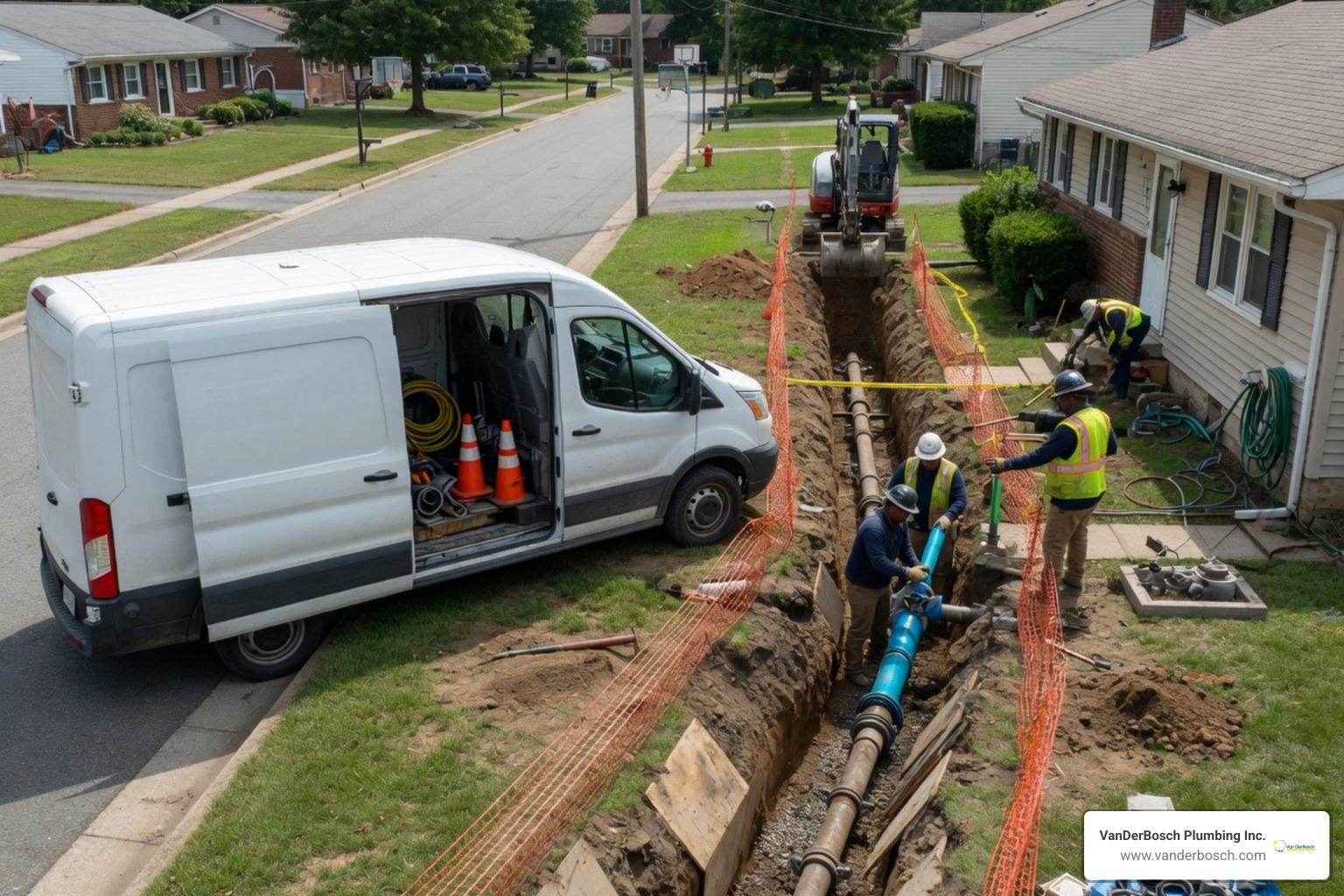
What You Need to Know Before Replacing Main Water Line from Meter to House
Replacing the main water line from meter to house is one of the most significant plumbing projects a homeowner can face. Here’s a quick overview of what it involves:
Key facts at a glance:
- What it is: Replacing the underground pipe that carries water from your street meter to your home’s plumbing system
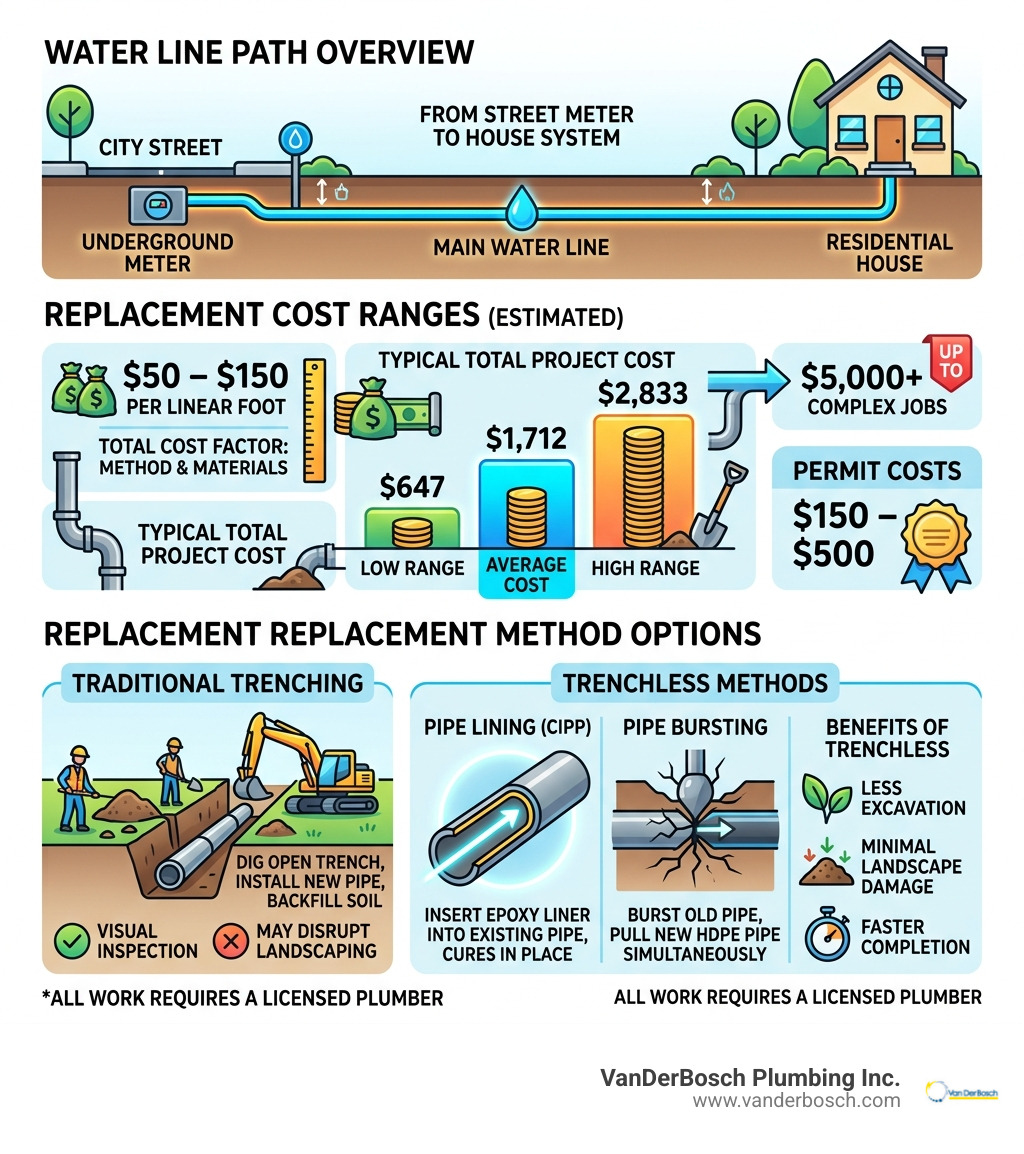
- Average cost: $1,712, with a typical range of $647 to $2,833 (up to $5,000+ for complex jobs)
- Cost per linear foot: $50 to $150, depending on method and materials
- Methods: Traditional trenching or trenchless (pipe lining or pipe bursting)
- Time to complete: A few hours to several days, depending on length, depth, and method
- DIY-friendly? No — this work requires a licensed plumber in nearly all jurisdictions
- Pipe materials: PEX, PVC, copper, or HDPE — each with different costs and lifespans
- Permits required? Yes, in most municipalities — typically $150 to $500
Your water line is buried underground and quietly does its job every day. Most homeowners never think about it — until something goes wrong. A sudden drop in water pressure, a soggy patch in the yard, or an unexplained spike in your water bill can all point to a failing line that may need more than a simple repair.
I’m Hugh Hodur, President of VanDerBosch Plumbing, and I’ve overseen hundreds of water line projects across the Chicagoland area — including complex cases involving aging infrastructure, lead pipe removal, and trenchless replacement. My team deals with replacing main water line from meter to house regularly, so I’ll walk you through everything you need to know to make a confident, informed decision.
Understanding the Importance of Your Main Water Line
The main water line is the lifeline of your home. It is a single, pressurized pipe that connects the municipal water supply (usually at a meter located near the sidewalk or street) to your home’s internal plumbing system. This pipe is responsible for delivering every drop of potable water you use for drinking, bathing, and cleaning.
Because this line is under constant pressure, any compromise in its integrity can lead to significant issues. In the Chicagoland area, where we experience deep freezes, the depth of this line is critical. It must be buried below the frost line—which can be up to 4 to 5 feet deep in our region—to prevent the water inside from freezing and expanding. When this happens, the physical stress can cause the pipe to split. You can learn more about this in our guide on Why Do Pipes Burst?.
Beyond just functionality, the health of your water line impacts your home’s value and the safety of your water. Older homes in Chicago, Melrose Park, or Oakbrook Terrace may still have lead or galvanized steel service lines. These materials degrade over time, potentially leaching contaminants into your water or suffering from internal corrosion that restricts flow. Recognizing Signs Repiping Services May Be Needed is the first step in ensuring your family has access to clean, high-pressure water for decades to come.
Cost Breakdown for Replacing Main Water Line from Meter to House
When budgeting for replacing main water line from meter to house, it’s important to understand that no two jobs are exactly alike. In 2026, the national average for this project sits around $3,500, though many straightforward replacements fall between $1,500 and $3,000. If you are dealing with a short run—say, a 10-foot line from a sidewalk meter to the foundation with light digging—you might see costs as low as $700 to $1,200.
However, for most Chicagoland homeowners, the distance is longer and the digging is deeper. You can expect to pay between $50 and $150 per linear foot for standard installation, though this can climb to $250 per foot if we have to navigate around heavy landscaping, driveways, or deep frost lines.
2026 Cost Comparison Table
| Factor | Estimated Cost Range |
|---|---|
| National Average Total | $1,712 – $3,500 |
| Cost Per Linear Foot | $50 – $150 |
| Material (Pipe only) | $0.40 – $13.00 per foot |
| Labor (35% – 40% of total) | $45 – $150 per hour |
| Permits & Inspections | $150 – $500 |
| Trenchless Method | $75 – $250 per foot |
Labor typically accounts for a large portion of your estimate, often 35% to 60% of the total price. This is because the equipment required—whether it’s a backhoe for trenching or a hydraulic ram for pipe bursting—requires skilled operators. For more detailed data on how these prices fluctuate, you can view the How Much Does Main Water Line Replacement Cost? [2026 Data] | Angi report.
Signs You Need to Consider Replacing Main Water Line from Meter to House
How do you know if you’re looking at a minor Water Line Repair or if it’s time for a full replacement? Often, the symptoms of a failing line are subtle before they become catastrophic.
- A Sudden Drop in Water Pressure: If your morning shower feels more like a light drizzle, and it’s happening at every faucet, the main line might be leaking or clogged with mineral buildup.
- Discolored Water: Rusty or brownish water often indicates that an old galvanized steel pipe is corroding from the inside out.
- Unexplained High Water Bills: If your usage hasn’t changed but your bill is skyrocketing, water is likely escaping somewhere between the meter and your house.
- Soggy Patches in the Yard: If it hasn’t rained in a week but your lawn has a “marshy” spot, you’ve likely found the location of your leak.
- Foundation Cracks or Damp Basements: Water leaking near the foundation can cause soil to shift or seep through the walls.
If you are experiencing these issues, it is worth investigating whether Do You Need Repiping? for the rest of the home as well, as the same conditions affecting your main line may be affecting your indoor plumbing.
Methods for Replacing Main Water Line from Meter to House
At VanDerBosch Plumbing, we evaluate every property to determine which replacement method is the most cost-effective and least disruptive.
Traditional Trenching
This is the “old school” way. We use an excavator or backhoe to dig a trench from the meter all the way to the house.
- Pros: Allows for a visual inspection of the entire path; often cheaper if there are no obstacles like driveways.
- Cons: Extremely disruptive to landscaping; requires backfilling and reseeding.
- Cost: $50 to $200 per linear foot.
Trenchless Pipe Bursting
This modern method is a favorite for homeowners who love their manicured lawns. We dig two small access points at either end of the line. A heavy-duty cable pulls a new pipe through the old one, literally “bursting” the old pipe apart as the new one takes its place.
- Pros: Minimal digging; preserves driveways and gardens.
- Cons: Requires specialized equipment.
- Cost: $50 to $200 per linear foot.
Trenchless Pipe Lining (CIPP)
Often called “cured-in-place pipe,” this involves inserting an epoxy-saturated felt tube into the existing pipe. Once it cures, it creates a “pipe within a pipe.”
- Pros: No digging required; creates a seamless, jointless line.
- Cons: Can slightly reduce the diameter of the pipe.
- Cost: $75 to $150 per linear foot.
For many of our clients in Chicago and the surrounding suburbs, Trenchless Pipe Repair is the preferred route. You can find more information on these “no-dig” solutions in our Trenchless Pipe Repair in Chicago: A Guide to No-Dig Solutions guide.
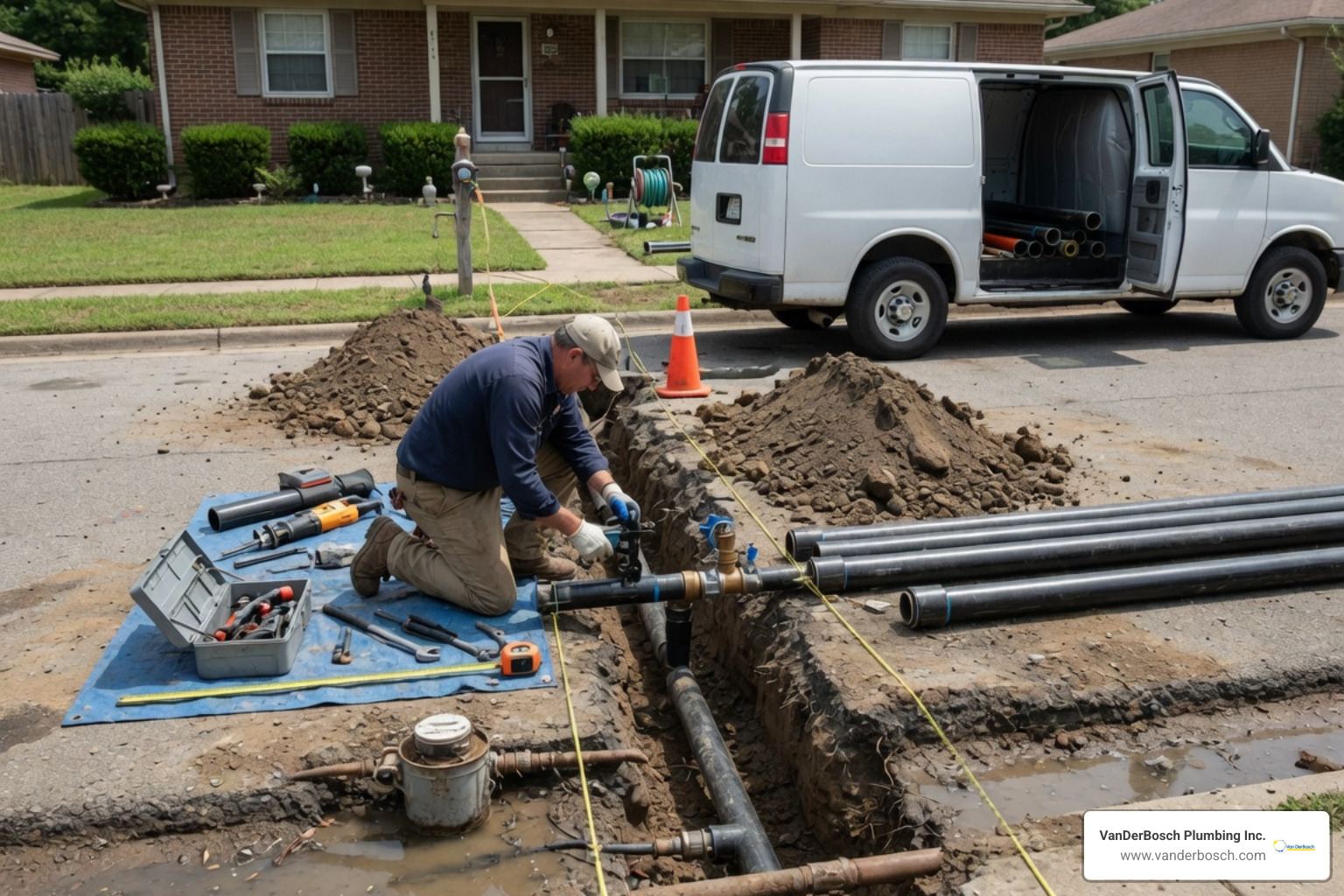
Material and Labor Factors in 2026
The material you choose for your new water line will impact both the upfront cost and how long the line lasts. In 2026, we primarily see four materials used for residential service lines:
- Copper tubing ($2 – $10+ per foot): The gold standard for durability. Copper is resistant to corrosion and has a lifespan of 50 to 100 years. It is often required by local codes in many Chicago neighborhoods.
- PEX (Cross-linked Polyethylene) ($0.40 – $2 per foot): Extremely flexible and resistant to scale and chlorine. Its ability to expand makes it highly resistant to freeze-bursting.
- HDPE (High-Density Polyethylene) ($1 – $5 per foot): This is the preferred material for trenchless “pulls” because it is incredibly strong and comes in long, seamless coils.
- PVC ($0.50 – $5 per foot): While common and inexpensive, PVC can be more brittle than HDPE or PEX, especially in cold climates.
If you’re considering a larger project, such as a Whole Home Repipe, we often coordinate the main line material with your internal plumbing for maximum longevity.

Additional Expenses: Permits, Valves, and Landscaping
When we provide an estimate for replacing main water line from meter to house, we make sure to include the “hidden” costs that often surprise homeowners:
- Main Shut-off Valve Replacement: If you’re replacing the line, it’s the perfect time to replace an old, crusty gate valve with a reliable ball valve. This typically adds $400 to $800 to the project.
- Pressure Regulators: If your municipal water pressure is too high, a regulator ($150 – $350) protects your appliances from damage.
- Permits and Inspections: Most local governments in Cook County require a permit for water line work, costing between $150 and $500. This ensures the work is inspected and meets safety codes.
- Lead Service Line Considerations: In Chicago, there are specific initiatives for Lead Service Line Replacement – Lead-Safe Chicago. The city often waives permit fees (up to $3,100) if you are proactively removing lead lines.
- Landscaping Restoration: If we have to trench, you may need to budget for new sod or repair to a driveway. Trenchless methods significantly reduce these costs.
Professional vs. DIY: Why Expertise Matters
We’ve seen the “DIY” videos online, and while we admire the gumption, replacing main water line from meter to house is not a weekend project for a hobbyist. In fact, in most of our service areas—like Niles, Winnetka, and Elmhurst—it is illegal for an unlicensed individual to perform this work.
Here is why professional expertise is non-negotiable:
- Utility Locating: Before we even touch a shovel, we call 811. Hitting a gas line or an underground electrical main isn’t just expensive; it’s deadly.
- Specialized Equipment: You can’t rent a pipe-bursting hydraulic ram at a local hardware store.
- Code Compliance: We ensure the pipe is at the correct depth and uses approved materials. If you do it yourself and it’s not to code, you may have to dig it all up again when you try to sell your house.
- Warranty and Insurance: VanDerBosch Plumbing provides a 100% satisfaction guarantee. If something goes wrong, we’re the ones who fix it—not your bank account.
Our team of background-checked, experienced technicians is available 24/7 to handle these high-stakes Services.
Frequently Asked Questions about Main Water Line Replacement
How long does a main water line replacement take?
For most residential properties, the actual replacement takes one to two days.
- Trenchless methods are often the fastest, with the new pipe being pulled in just a few hours once the access points are ready.
- Traditional trenching takes longer because of the extensive digging and the time required to properly backfill and compact the soil. You will typically be without water for 4 to 8 hours on the day the final connections are made.
Does homeowners insurance cover the cost?
Standard homeowners insurance policies usually do not cover water line replacement if the cause is “wear and tear” or age. However, you might be covered if:
- The damage was caused by a sudden peril (like an explosion or a third-party contractor hitting the line).
- You have a specific “Service Line Coverage” rider on your policy. We always recommend checking your policy for these riders, as they are often very affordable and can save you thousands.
How often should I inspect my water line?
If your home is over 50 years old, you should have a professional plumbing inspection every 1 to 3 years. We use acoustic sensors and cameras to check for small leaks that haven’t surfaced yet. Soil conditions in the Chicagoland area—especially clay-heavy soils—can shift and put stress on pipes, so regular check-ups are a smart preventative measure.
Conclusion
Replacing the main water line from meter to house is a significant investment, but it’s one that pays off in peace of mind, improved water pressure, and the long-term health of your home’s infrastructure. Whether you choose the surgical precision of trenchless technology or the tried-and-true method of traditional trenching, the goal is the same: a reliable, clean water supply for the next 50+ years.
At VanDerBosch Plumbing, we pride ourselves on transparent pricing and expert service throughout Chicago and the surrounding suburbs. If you’ve noticed the signs of a failing line—or if you’re ready to proactively replace an old lead service pipe—don’t wait for a basement flood to take action.
Ready to secure your home’s water supply? Contact us today for a professional assessment and a clear, honest quote on your Water Line Repair or replacement in Chicago, IL.